


By Dr. Curtis Varnell
The media was flooded with images and stories of the horrific events occurring in South East Asia as former allies, Cambodia and South Vietnam, were over-ran by their communist counterparts. The U.S. signed the Paris Peace Accords in 1973, effectively removing our fighting forces from the countries but leaving hundreds of advisors, military aides, and humanitarian groups in place to assist the South Vietnamese in continuing the war. That effort lasted less than two year and, by April of 1975, the communist forces were pouring into the south and preparing to take over Saigon. Americans began a rapid evacuation of all personnel. Thousands of Vietnamese, anti-communist and allies to America, knew they would receive little sympathy and probably death if they remained in their homeland.
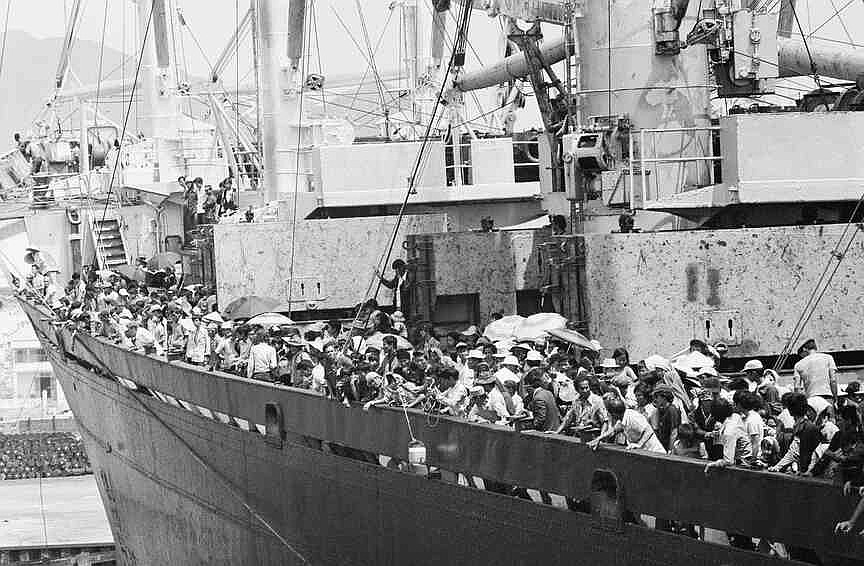
Determined to assist and avoid wide-scale slaughter, President Ford and congress acted to assist the refugees in relocating. One of the most endearing but forgotten efforts was called Operation Babylift, a program that would eventually bring more than 2,500 refugee babies to America for adoption. Operation New Life evacuated more than 50,00 adults through airlifts, many literally clinging to helicopters as the communist poured into the airports. As the communist took over the country, others fled by boat, hoping and praying to be picked up and delivered to safety. Eventually, more than 130,000 Vietnamese escaped and made their way to America.
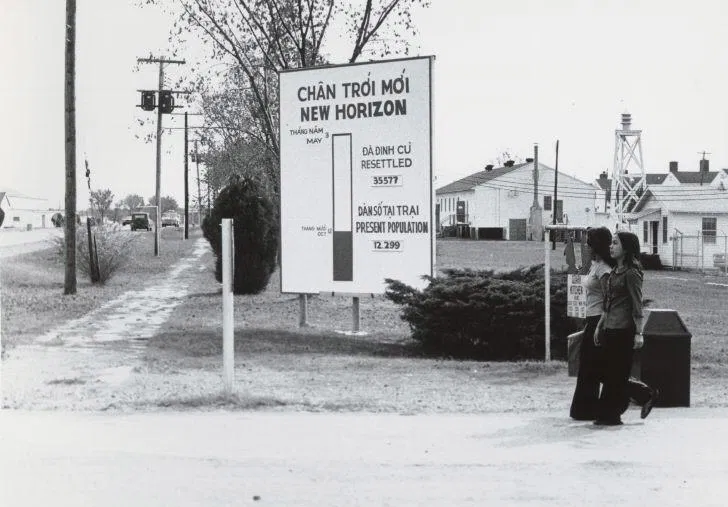
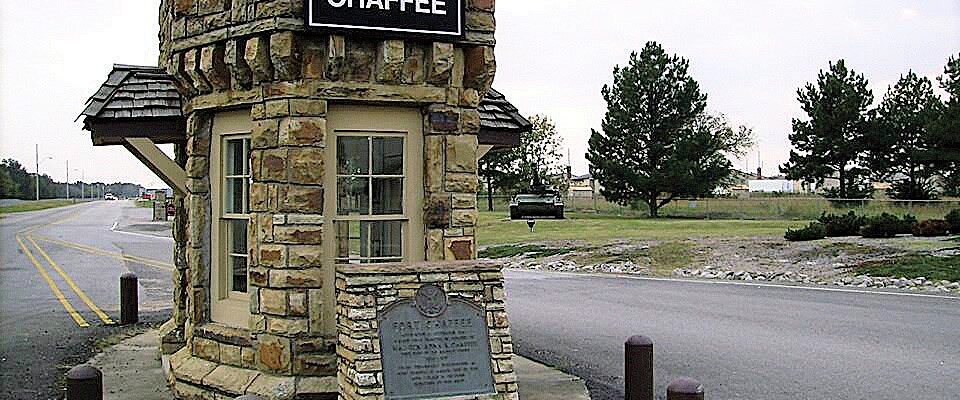
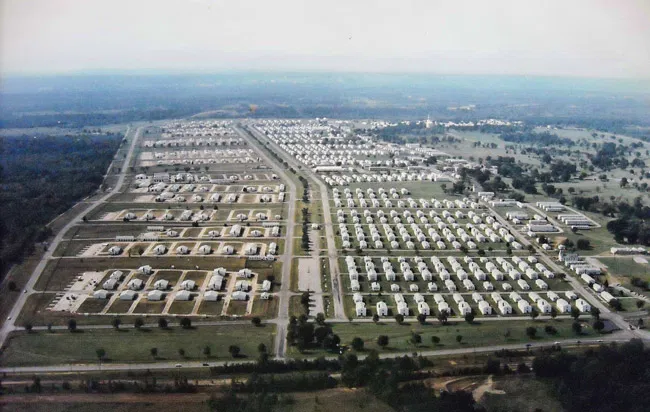
There were four points of entry for refugees into the United States; Camp Pendleton in California, Eglin Air Force Base in Florida, Fort Indiantown Gap in Pennsylvania, and Fort Chaffee in Arkansas. Notified in late April that the Vietnamese were on their way, Governor David Pryor and other dignitaries were on hand on May 2, 1975 when the first plane carrying 70 refugees arrived at the Fort. By the end of that month, 25,812 refugees had arrived. More than 6,000 people were employed to assist in the processing and preparing the grounds for the influx of refugees, making the fort one of the biggest employers in the state and creating an economic windfall for the area.
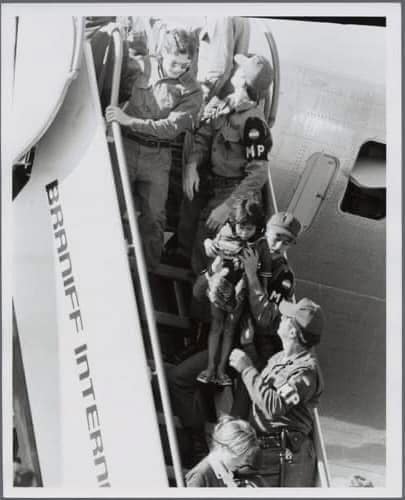
Not all individuals were happy with the situation and rumors abounded. Locals feared the refugees would never leave the area and would be future competition for jobs. Others felt that secret communists and perhaps even criminals would eventually be loosed on the local communities. Eventually 50,809 refugees were processed through Chaffee and most of the fears proved groundless.
The normal procedure was to gradually acclimate the refugees to American culture and to teach them the basics of English. Classes were set up at near-by West-Ark colleges to assist in the process. Little did most people working with the refugees realize that they were not a homogenous population with one religion, culture, or even language. Included in the group were Vietnamese, Cambodians, Hmong, and Laotian. The majority were probably Buddhist in faith but with a large per-centile of Catholic. After a period of acclimation, people from across the U.S. would “host” a family and help them to become a part of the American culture.
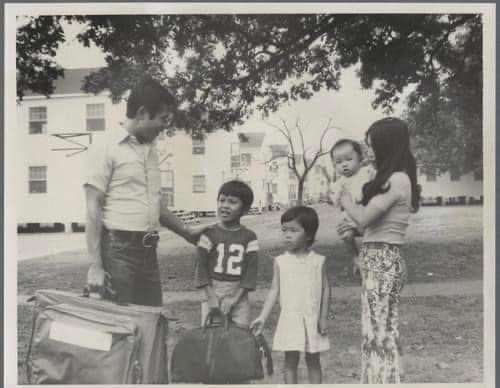
The transition sometimes created “cultural shock” for the new comers. One family described the first Halloween, a tradition unknown in S.E. Asia. To go to an unknown home, knock on a door, and demand candy or a trick was completely alien to the children. Christmas and Thanksgiving were just as strange and required some getting used to. Kevin Tran described his experiences as a four-year old refugee. “I remember the flight from Guam to the U.S. because it was my first time drinking a Coca-Cola,” recalls Tran. “It was one of those first memories of my life.” He recalls landing at Fort Chaffee, spending time at the fort, and then later growing up with his host family. He is now Lt. Col Tran, the Director for the Pacific Air Force in Hawaii.
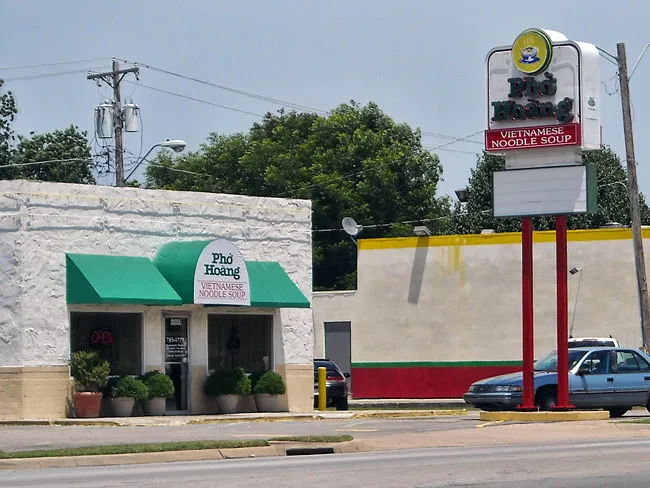
Like Tran, most of the former refugees have established themselves successfully into the American system. According to the 2000 census, about 4,000 people of Asian descent live in Sebastian County, some 3.5% of the population. A trip through down-town Fort Smith reveals several businesses and some of my favorite restaurants ran by Vietnamese families. When teaching at the local schools, I run across a few of the names I can’t pronounce but the students just smile and try to assist me in pronouncing their names correctly. More than 50 years has elapsed since their parents and grandparents arrived and enriched our culture and state with their presence.