



By Dr. Curtis Varnell
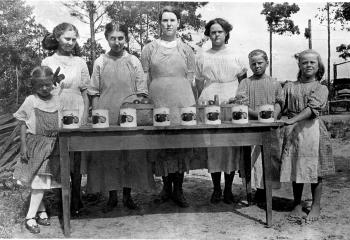
Vocational and agricultural education has always been a big factor in the Arkansas educational system. For many years, farming was and perhaps still is, the base for the economy of Arkansas so it is natural so much emphasis is placed on using the best and most scientific methods to increase production. The University of Arkansas and UAPB were both formed as land-grant colleges and were tasked with offering instruction in agriculture, engineering, and other sciences. In 1909, the General Assembly created four more colleges (ATU, ASU, SAU, and Monticello) as state agricultural school in order to offer coursework in every corner of the state.
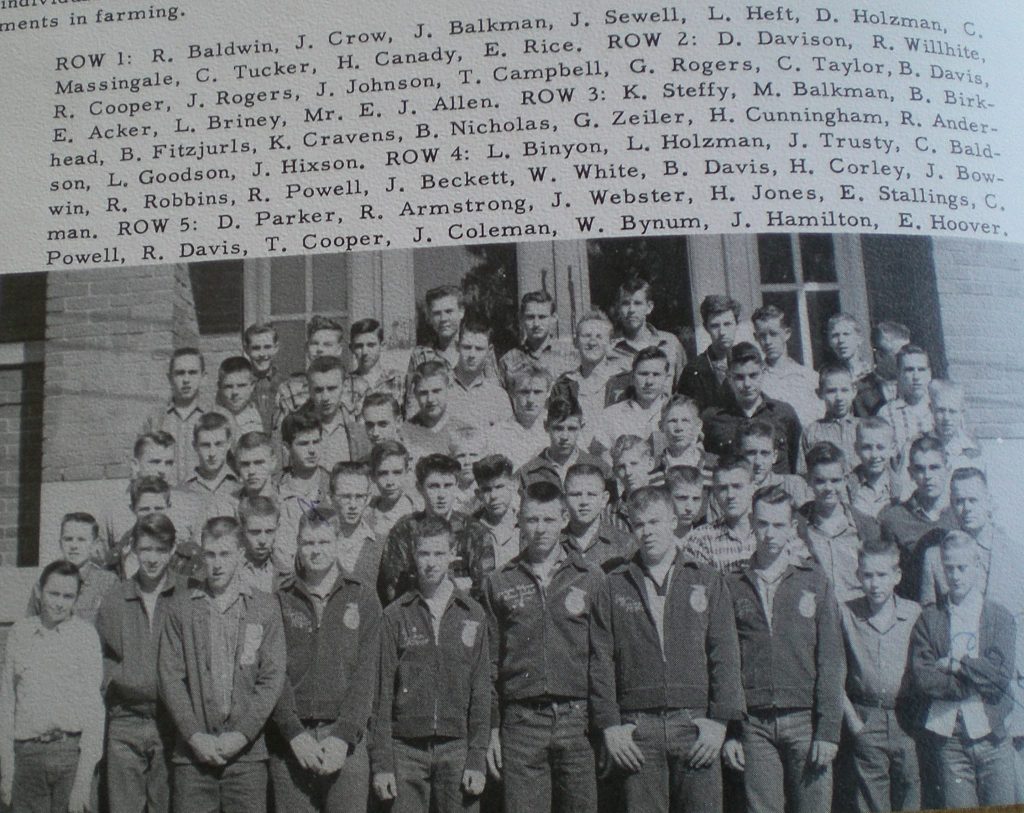
The Cooperative Extension service was created in 1905 to extend the educational arms of the university. This created the county extension offices as well as the 4H organization to train kids. The Smith-Hughes Act of 1917 and the George-Barden Act of 1946 financed high-school instruction in farming and resulted in the development of agricultural and vocational studies in public schools. In schools, the primary focus was in classroom instruction, supervised actual experience in vocational skills, and the involvement in the national Future Farmers of America (FFA). The counterpart to that was the Future Homemakers of America (FHA) which provided training in home-care, cooking, and other tasks related to providing safe, secure, wholesome households.
By the 1940’s, virtually every rural school in Arkansas hadactive classes in vocational education as well as active clubs participating in the above national organizations. Most students, regardless of future occupation, took several courses in vocational education. Being more academically inclined, I still took three courses of vocational classes and was an FFA member throughout high school. During the instruction, my colleagues and I learned valuable lifetime skills. I can still use most wood-working tools, weld terribly, and can-do minor carpentry. Some of the best times in life were participating in FFA camps in Hot Springs and judging cattle at the Arkansas and Arkansas Oklahoma state fair. The key to success in many endeavors is to become a part in a really good group and they can cover for your mistakes. I had three good friends and I rode their talent in order to participate. My real goal was to get a day out of school, to ride carnival rides, and try to pick up an FHA girl from one of the area schools. My success at that was about as awesome as my judging talent.

Both organizations offered kids a chance to test our vocational skills, meet people from throughout the state, and to see the opportunities that might not necessarily be available in our smaller communities. Who would have ever predicted when I was chosen to represent our county in the state environmental camp that it would become a part of my life-time career. A list of former successful FFA members include President Jimmy Carter, singers Johnny Cash and Willy Nelson, and NFL members Bo Jackson and Josh Allen.
In recent years, public schools have realized that the best career paths for many of our students is through career and vocational education. With a slightly over 20% college graduation rate for the state, vocational education offers a faster and often cheaper route to a successful career. Fort Smith has a very successful concurrent program with schools offering students the opportunity to train and receive certificates in nursing, computer technology, machine shop, and welding. Logan /Franklin County and ATU have teamed up to offer concurrent courses in welding, nursing, and even electrical applications. N.W. Arkansas schools offer a wide range of opportunities to obtain life-time training that might not necessarily involve the traditional college routes. A group from Bentonville recently wrote, filmed, and edited a video of a local historical event. While one group filmed, others were using drones to study the landscape and survey areas for city development. The educational landscape is changing and our schools are doing a great job of adapting to the current vocational needs of our students.