



In an era when reputations can be reshaped by rumor and past allegations can resurface without context, the principles of fairness and truth become essential. Public trust depends not only on holding people accountable but also on ensuring that individuals are not unfairly judged by claims that lack credibility or have already been disproven. It is in this light that former Paris Police Department officer Howard Bates is speaking out, after an old, previously closed investigation has resurfaced and revived questions about allegations made against him nearly a decade ago.
Bates, who worked as a patrolman and narcotics investigator for the Paris Police Department in 2017, was questioned by state police that year over claims made by a confidential informant (CI) while she was incarcerated in a county jail. The inmate alleged that Bates had picked her up and taken her to a park in Logan County where the two allegedly had sex. Bates denies the claim, calling it “completely false.”
“I cooperated fully,” Bates said in an interview. “I gave them my phone, and they downloaded everything. The only messages between me and the CI were strictly about her work.”
Bates also volunteered to take a polygraph test, even before it was suggested. According to him, the results indicated deception on one question: whether he had sex with the informant. Bates disputes the result.
“There’s a reason polygraphs aren’t admissible in court,” Bates said. “They’re not 100% accurate. Independent studies place their reliability between only 50% and 70%. The questions have to be asked a certain way, and there’s always an element of human error. One false result doesn’t define a person.”
No courts recognize polygraph results as proof of innocence or guilt. The fundamental issue, experts note, is that a polygraph cannot measure honesty itself — only physiological responses such as heart rate, blood pressure, and breathing patterns, which may or may not be connected to truthfulness. For that reason, Arkansas courts, like most across the country, do not accept polygraph results as evidence.
According to the U.S. Department of Justice, “For many years, the courts of appeals have upheld the exclusion of polygraph evidence on the ground that polygraphs are not ‘generally accepted’ by the scientific community.”
Bates emphasized that he never had a sexual relationship with the informant and pointed to repeated inconsistencies in her story. “From my understanding, after that, the investigation didn’t move forward,” he said.
The Arkansas State Police also investigated the allegation and found no evidence to validate the claim against Bates. Investigators uncovered similar inconsistencies in the informant’s account, which ultimately led them to close the case. Bates noted that the informant later recanted her allegations in conversations with other officers and with him directly. Most recently, she wrote a letter of apology, admitting the claims were false and explaining that she had been deeply addicted to drugs and in a desperate state of mind at the time.
In the letter recanting the allegations she had made in 2017, the informant wrote: “The incident between Howard Bates and me, with him sexually assaulting me, never occurred. I was deep in my drug abuse and just wanted attention.”
Bates holds no ill will toward the informant. “I understand how addiction can make people act,” he said. “I don’t judge her for her past; I only care about helping people move forward and make better choices.”
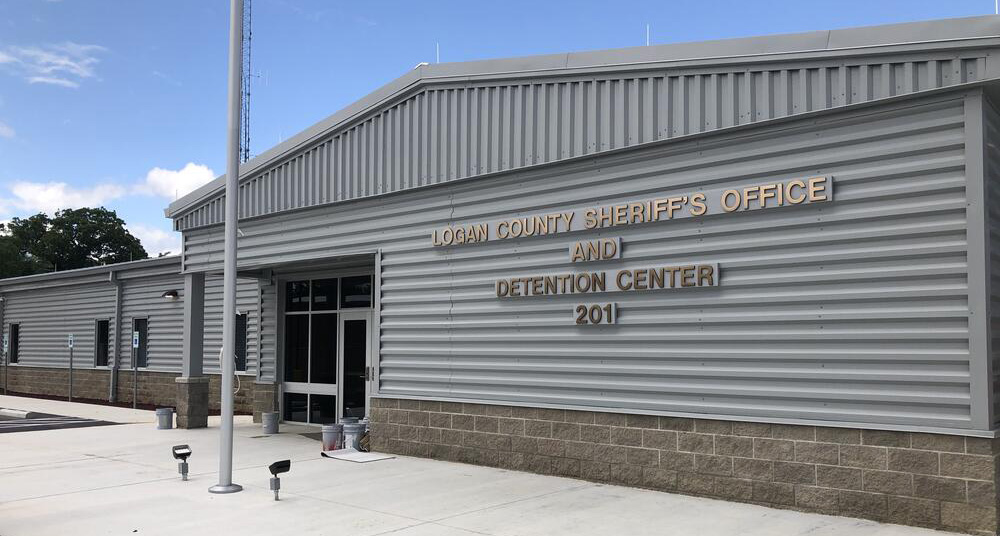
Bates, who has served as a narcotics investigator with the Logan County Sheriff’s Office for nearly five years — a milestone he will reach in December — has also been recognized for his work with honors such as Deputy of the Quarter and Deputy of the Year.
His life has been deeply shaped by personal experiences with addiction — not his own, but within his family. His mother was addicted to methamphetamine; his father, a cocaine user, died in a drunk driving crash during Bates’ senior year of high school. The loss left him briefly homeless until extended family stepped in to help.
“I lost everything as a kid — my home, my trophies, my clothes,” Bates recalled. “But I made a choice to break that cycle.”
Despite his upbringing, Bates has never used alcohol, cigarettes, or drugs. A high school and college graduate, he has dedicated much of his law enforcement career to drug enforcement and community outreach.
“That’s why I do what I do,” he said. “That’s why I hate drugs with a passion. I’ve seen what they do to families. I’ve arrested parents, their kids, and their grandkids. It’s a cycle — and I wanted to be the one who broke it.”
Bates has made it a personal mission to support youth and individuals struggling with addiction. He frequently speaks at schools, organizes outreach events, and has even used his own resources to help people in need.
“We’ve paid for hotel rooms for people who didn’t have a place to go, bought groceries for families in need,” he said. “This department cares about this community.”
As a teenager, Bates found solace and clarity through activities like fishing, which he said gave him the space to reflect and find peace. “Addiction is an illness,” he said. “And people need to know there’s another way.”
It remains unclear why the original investigation — closed years ago — is suddenly being recirculated. Bates confirmed he has not been contacted for comment but said he is aware of rumors regarding his employment status.
“I appreciate transparency,” Bates said. “And I’ve called out officers myself when there’s wrongdoing. But I’ve always been honest. If I’d done something wrong, I’d admit it — even if it cost me my career.”
Throughout his law enforcement career, Bates has received only one official write-up — for briefly turning off his body camera during a private conversation about a coworker’s personnel matter. “I was guilty of that,” he said. “And I took full responsibility.”
Bates also spoke to the harm caused by misinformation and speculation on social media. “Just because you don’t like someone doesn’t give you the right to slander them online,” he said. “People forget — we have families too.”
He added that he has apologized to the sheriff for any unwanted attention the department may have received due to the original allegation, though he firmly maintains his innocence.
“This profession isn’t perfect,” Bates said. “But this is a good department, filled with people trying to do the right thing. That’s all I’ve ever tried to do — what’s right.”
Bates remains steadfast in his commitment to public service and transparency. He acknowledges the weight of the badge and the scrutiny that comes with it but says his integrity — and the support of those who know his character — have kept him grounded.
“At the end of the day, I know who I am,” Bates said. “I’ve dedicated my life to breaking cycles, helping people, and doing what’s right.”