



By Dr. Curtis Varnell
Virtually every old family living in the Arkansas River Valley claim to have some Indian blood, most often Cherokee. Often blue-eyed, sometimes blond-headed, and without a feature generally accepted as native, in most instances they are probably correct. The Cherokee are an integral part of the culture and history of the region.
The original homeland of the Cherokee Indians was western North and South Carolina, north-ern Georgia, and northeastern Tennessee. As American settlers encroached upon their native lands, many of the Cherokee willingly left their homeland. Others, more resistant, fought in court and on the battle field against this encroachment but were ultimately defeated. One of the more resistant of the warriors, a chief by the name of Dragging Canoe, made an impassioned appeal to his people during the 1775 treaty of Sycamore Shoals, “the whole country, which the Cherokees and their fathers have so long occupied, will be demanded, and the remnant of the Real People — will be compelled to seek refuge in some distant wilderness. There they will be permitted to stay only a short while, until they again behold the advancing banners of the same greedy host. Not being able to point out any further retreat for the miserable Cherokee, the extinction of the whole race will be proclaimed.” Much of his proclamation became fact.
By 1780, many of these “old settlers” moved westward into Spanish territory and settled in eastern Arkansas near the Saint Francis River only to once again face American encroachment as the result of the 1803 Louisiana Purchase. After the New Madrid earthquake of 1811-12, they moved even further westward and settled along the Arkansas River. Eventually, a treaty with the U.S. provided them a land-grant that was said to be equal to the size of their original homeland with territory from the Arkansas to the White River. An 1816 treaty termed the Lovely Purchase established a boundary between the warring Cherokee and Osage and extended tribal land as far west as Tulsa.
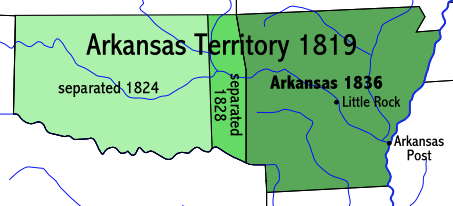
The Old Settlers established scattered family farmsteads and farms and developed a life-style little different than their white counterparts. Many owned cattle and other livestock and some grew cotton and owned slaves. The Cherokee established small villages at Mulberry, Illinois Bayou, Galla Creek, Pottsville, and south into Yell county at Dutch Creek. One of the more disgruntled groups moved as far south as Texarkana, hoping to again enter Spanish territory.
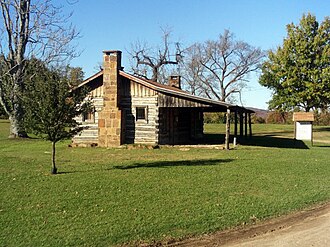
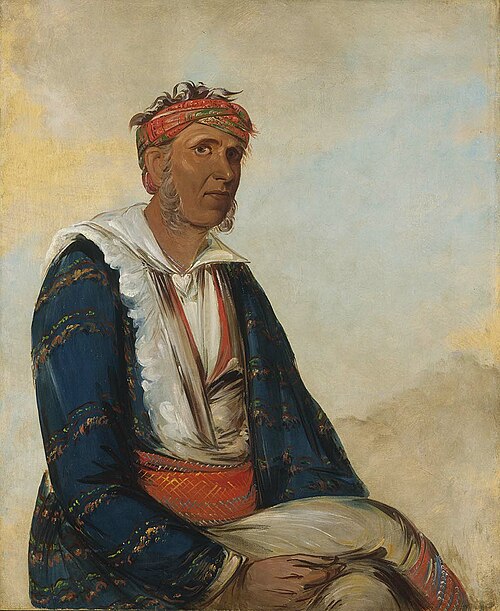
The Arkansas group included several well-known individuals. A document detailing those attending a meeting at the Indian trading post at Spadra included John Jolly, the principal chief of the Cherokee, and his famous adopted relative, the Raven (Sam Houston). Both were listed as living in the Horsehead Creek area. Another of the settlers, Walter “Wat” Webber became well-known for settling at the famous falls named after him in Oklahoma. One of the more famous of the group was George Gist, also known as Sequoyah, who may have developed a part of his alphabet while living near present day Clarksville. Dwight Mission, a school where Cherokee children could learn American ways, was established near Russellville in 1820.
In 1819, the author Thomas Nuttal described the area along the river as “lined with the houses and farms of the Cherokees, and though their dress was a mixture of indigenous and European taste, yet in their houses, which are decently furnished, and in the farms, which were well fenced and stocked with cattle… argue a propitius [sic] progress in their population.”
The peaceful life of the Cherokee soon came to an end. In 1828, the Treaty of Washington uprooted the Cherokee, moving them westward into Oklahoma and forcing them to abandon the prosperous farms they had established. To expedite the removal, every displaced native was given: “…a good rifle, a blanket, a kettle, and 5 lbs. of tobacco when he agreed to move…” while any displaced frontier settler was awarded with: “…up to 320 acres of public domain land in Arkansas Territory for every head of household over the age of 21 years.”
The Eastern Cherokee, those who had stayed in the original homeland, were soon to be removed as well. Their trip was called the “Trail of Tears.”