


By Dr. Curtis Varnell
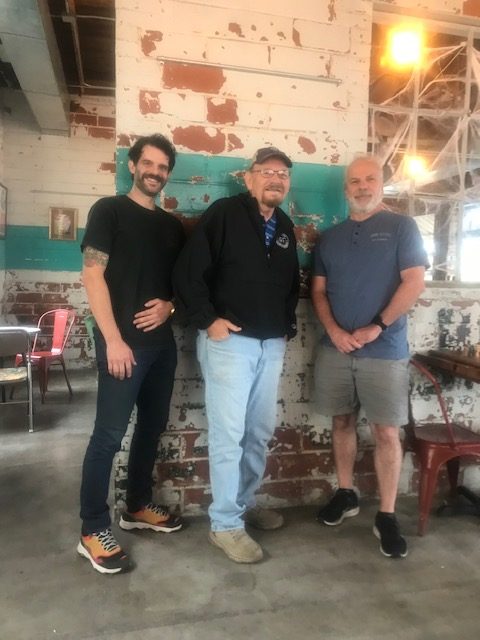
Recently, Travis Boley and Chip Ashby of the Oregon-California Trails association visited the Fort Smith area to film a series of documentaries on the importance of the region during the California Gold rush days as a departure point to the many westward trails. In 1849-50, Senator Borland of Arkansas promoted Fort Smith as the natural jumping off point for people heading to the gold field. Using his political clout, he was able to get wagon trains a military guard that would protect the migrants as they crossed the dangerous Indian territory. Eventually, 3,000 immigrants and over 900 wagons left from various sites in western Arkansas.
Boley and Ashby are a part of the Oregon-California Trails Association, an organization that seeks to preserve and protect the history and heritage of the various trails west. Working out of Independence, Missouri, they partner with the National Park service to achieve the goal of, not only preserving the sites, but promoting an understanding of the historical significance of the trails and the movement westward. Nationally, the Independence group serve as a hub for more than a dozen sister groups across the U.S.
A big part of their efforts has been creating documentaries that tell the history and significance of the people and events surrounding the movement westward, one of the biggest being the Gold Rush. Over the past few years, they have created a series of documentaries ranging from simply following the trail westward to telling the individual stories of people that suffered the hardships and trials of crossing what was then known as the Great American Desert. Ranging from titles of The Mountain Man to the Curious Case of Sarah Thomas’ Tombstone, they describe the life and times of one of the most exciting periods in American history.
Local historians, Bob Crossman, Dr. Curtis Varnell, and UAFS professor Tom Wing were area consultants for the project.
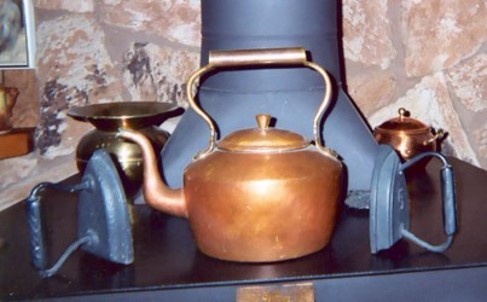
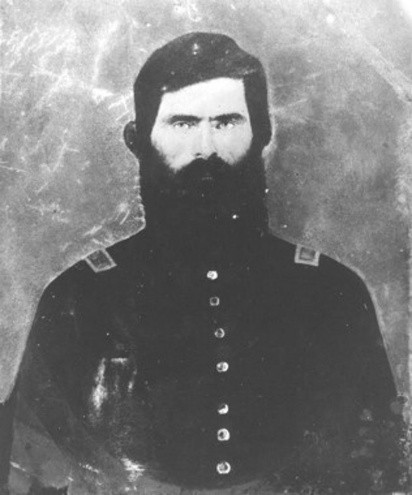
During November, the crew visited and filmed the Old Fort, the Fort Smith Museum, and the debarkation points along the river. During visits with Dr. Varnell, the crew decided to do one of the first documentary programs on the life of local pioneer James Garner. Garner was a colorful character and much involved in local and state history. He left Arkansas for California during the gold rush and was successful in finding a wealth of the shiny mineral. Bringing the gold dust home in a teapot, he was able to buy a large homestead and a grist mill on the side of Magazine Mountain. He was a Union captain during the Civil War, a state representative for Logan County, and the first sheriff of the county. That segment is expected out in March of 2026 followed by other segments documenting the importance of this region to the western movement.
Individuals interested in the trail’s organization can access the website at www.octa-trails.org and www.octa-journals.org. The best was to see some of the prior work is to simply go to Youtube at www.youtube.com/@octatrails . The series has been made available on-site free for public use. They are also available on Youtube TV.
Interviews with local historians and others with appear in several clips as the documentaries are made but the program on Garner and some of the other stories will air as complete programs. The first of these should be available in March of 2026.