


Timepiece: Trading with the Natives
By Dr. Curtis Varnell
Crypto money, bit-coms, checks, and credit cards are all products of recent economies but people have always managed to exchange goods, some quite well, without the use of money. My father, a product of the depression years and a used car-salesman, was a notorious wheeler-and-dealer. He would trade, buy, and sale virtually anything- once trading the shoes he was wearing for a pair of moon hub caps for his car during an Illinois snowstorm. His most famous trade probably involved the purchase of an old frontier coffin at a sale in Canton, Texas. My mom refused to allow him to carry it home in the truck. Without other recourse, he traded it for a gun or two which he then exchanged for an antique clock, a purchase much more amenable to my mother. Trading and exchange are nothing new, just during the past week or so one of the biggest trade fairs and exchanges was held on Petit Jean mountain. Everyone enjoys the friendships and comradery from making a good trade and the completion of a “deal” is nothing new to Arkansas.
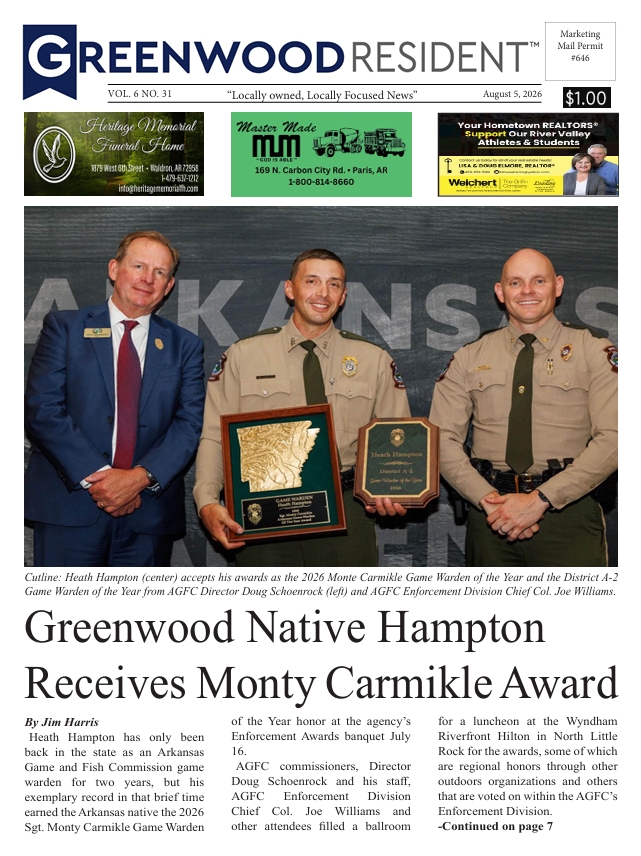
De Soto’s journey into Arkansas touched off trading and commerce between Europeans and Natives. The natives had food, animal skin and other essentials needed by the Europeans who could offer weapons, beads, metal utensils, and other goods in exchange.
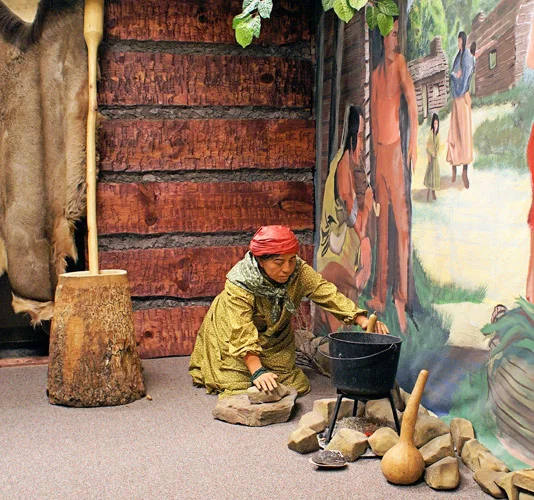
By the late 1700’s, a robust trade based on barter was conducted between the Natives of the area and the Spanish and French settlers of Louisiana. Natives had no need or desire for money but they certainly enjoyed many of the items that the European’s offered. Over a period of time, an economy based on relative worth was established and was the basis for exchange. Traders would travel up the major rivers, especially the Arkansas, and would meet at various agreed upon locations and a market, similar to today’s trade fairs, would occur. Names associated with those still exist today. Just west of Lavaca, Arkansas at the confluence of the Vache Grasse Creek and the Arkansas River, traders would arrive in canoes and flat-boats and a lively trade in buffalo meat, hides, and other animal skins would ensue. Buffalo meat and hide were a prime commodity in Western Arkansas, the name Vache Grasse meaning fat cow and La Vaca meaning the cow, both referring to the availability of buffalo for sale. Dr. Sabo of the University of Arkansas and others have described the lively exchange noting some of the typical values of the exchanged goods. Five strands of glass beads were equal to 1 deer skin, one gun was equal to 16 deer skins but it took 3 deer skins to purchase a buffalo hide.

The key feature of the new economy included the native production of goods required by the colonists and the exchange of these goods for the manufactured goods in face-to-face bartering. The exchange eventually developed into a dependency on both sides -some positive and some negative. Natives, now providing food and fur for a much larger population, often overhunted an area and depleted the wildlife. This resulted in movement of the population but also changed the traditional livelihood of the Arkansas natives whose primary way of existence included farming of corn, squash, and beans.
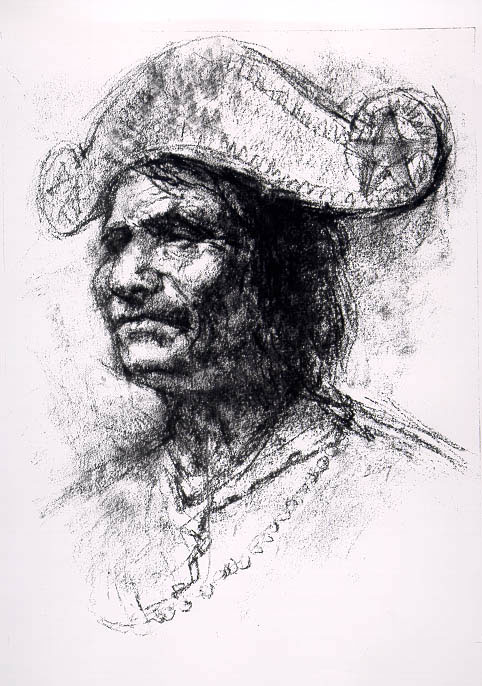
After the Louisiana Purchase, the Cherokee and other Eastern tribes moved into a part of Arkansas and trade persisted. The U.S. established trade “factories” along the rivers and enticed the natives to become more westernized by trading them iron plows, weapons and manufactured goods for animal skins. At Spadra, near present day Clarksville, the 1822 shipment was recorded as four tons of deerskin as well as hundreds of bear, racoon, and beaver skins. It is noteworthy that only one buffalo skin was included, indicating vast overhunting and virtual extermination of the buffalo in the state. Friedrich Gerstacker mentions he killed a buffalo on the Cache River in 1840 and there was a reported buffalo killed in Saline County after the Civil War.
The closing of the Frontier Economy did not end barter and trade in Arkansas. It is still alive and well throughout the state and one can stop at about any flea marker or antique shop in every city and still engage in a lively and entertaining trade. No money required!!
Extension expert offers tips for parents of teenagers starting high school this fall

By Rebekah Hall
University of Arkansas Division of Agriculture
For families with teenagers starting high school this fall, the transition to new social pressures and academic responsibilities can feel intimidating for both parents and children.
Brittney Schrick, extension associate professor and family life specialist for the University of Arkansas Division of Agriculture, said parents should keep in mind that a desire for increased independence is a natural developmental milestone.
“Transitioning to high school brings an expectation of more independence,” Schrick said. “Depending on the school, they may be three or four years younger than the oldest students in the building. This can be intimidating and bring with it a lot of pressure to seem older or more confident than a younger student may actually feel.”
Schrick said parents should prepare to be intentional and ask their high school students a lot of questions.
“Especially if kids are transitioning to a much larger environment, they will experience changes and growing pains,” Schrick said. “Even kids who are outgoing or socially fearless can experience anxiety and difficulty adjusting to a new environment.
“Parents can tell when their kids are acting differently or seem stressed,” she said. “It’s okay to be annoying in asking follow-up questions but try to let your kids handle their own relationships, conflicts and teacher interactions as much as possible.”
It’s also important for parents to avoid comparing their own high school days with the experiences of their children, Schrick said.
“It is common for parents to relive their own high school experiences and project their fears or expectations onto their kids,” Schrick said. “But most parents of high school age kids didn’t go to high school with social media or smartphones. They had a computer lab and textbooks they took home instead of eBooks and Blackboard.
“It has always been difficult to relate to teens, but the gap is now very wide,” she said. “Asking questions with a goal of learning instead of correcting is always a good place to start.”
New school jitters
For many students, high school takes place on a new campus. Schrick said families starting at a new school, big or small, should take the time to walk through their child’s schedule before school starts.
“Most schools will allow students to walk their schedule on the day they pick it up,” Schrick said. “For kids with anxiety, this type of low-stakes activity can make all the difference when starting the year. If they can walk the halls when they aren’t in a hurry or when the halls are not full of students, the student can build confidence in their ability to navigate and make the first few days easier on everyone.”
If a schedule walk-through is not an option, use a campus map or other tool to “help your student mentally walk through their schedule and rehearse for the first day,” Schrick said.
The transition to high school can also bring new, more rigorous academic responsibilities. Schrick said helping students balance this new workload with social and extracurricular activities is tricky.
“Parents want their kids to learn to manage their own time and build the skills needed to make it through high school and beyond,” Schrick said. “However, the increase in schoolwork, social expectations and extracurricular activities can sometimes overwhelm teens and parents alike.”
Setting expectations early in the year that homework is done before social activities can help set the tone for the year, Schrick said.
“Avoid overscheduling your kids,” Schrick added. “This can set them up for failure by making it nearly impossible to meet overwhelming expectations.”
Navigating new social pressures
Schrick said social pressures can increase in high school as independence increases and the potential negative outcomes of risky behavior become more life-altering.
“High school-aged kids’ brains are not fully developed, but they often look like adults,” Schrick said. “This mismatch can sometimes trick teens and their parents into thinking that they are fully capable of making and understanding adult decisions.
“Especially for kids who are academically successful, show responsibility and independence by holding a steady job, or contribute to family income or sibling care, the expectations of acting like an adult while still having a teen brain can lead to unexpected difficulties,” she said.
Make sure that children know what you expect of them, even if they roll their eyes and say they already know, Schrick said.
“It doesn’t hurt them to hear again that you expect them to avoid drinking and drugs, not to smoke or vape, or not to have sex,” Schrick said. “It is important that they hear you say that you think their grades are important, that they should ask you before getting in a car with a new driver, that they can ask their teachers questions, that they can get in trouble with the police if they send nude photos.”
Schrick said parents sometimes assume that their kids aren’t listening because they seem distracted or annoyed.
“However, they’re listening, and they’re watching, and they’re making decisions based on a lot of different factors, including what they think the adults in their lives would do, or what those adults would prefer the kid do,” Schrick said.
‘But everybody is doing it!’
A sense of belonging is a basic human need, and one that can feel especially powerful during the high school years, Schrick said. But helping children build confidence to stand up for their beliefs or desires — at the risk of being left out — is critical.
“Some ways parents can foster this type of confidence is to avoid forcing kids to do things that they aren’t comfortable doing unless they are absolutely necessary,” Schrick said. “For example, letting them wear what they want to, even if you think it is awful, letting them eat until they are full rather than forcing them to clean their plate, letting them refuse to hug someone they don’t want to hug or letting them choose activities for their own enjoyment instead of appeasing an adult.”
These examples and many others help kids build up knowledge of their own minds and preferences and “pay attention to their inner feelings that help them know when something doesn’t feel good to them,” Schrick said.
“If kids only learn to avoid certain situations so they won’t get in trouble with an adult, they are more likely to be sneaky or take risks when they are sure they won’t be caught,” she said.
Building this kind of self-trust also helps children learn that not “everyone” is, in fact, doing “it,” Schrick said, whatever “it” is.
“Their brains will have a hard time grasping that, especially when social media and personal interactions can sometimes increase the feeling that they are the odd one out,” Schrick said. “But building confidence in a teen’s ability to participate in a group but say, ‘No, thanks,’ is a tool that will serve them well throughout life.”
Schrick suggested parents reach out to their children’s schools for additional resources or personnel, such as guidance counselors, available for students and families. Families with older children who have navigated this territory before can also be helpful, she said.
Visit the Personal & Family Well-Being page on the Cooperative Extension Service website for more family life resources.
To learn about extension programs in Arkansas, contact your local Cooperative Extension Service agent or visit uaex.uada.edu. Follow us on Facebook and Instagram. To learn more about the Division of Agriculture, visit uada.edu. To learn more about ag and food research in Arkansas, visit the Arkansas Agricultural Experiment Station at aaes.uada.edu.
Waldron Resident Gives Back Through Community Cleanup
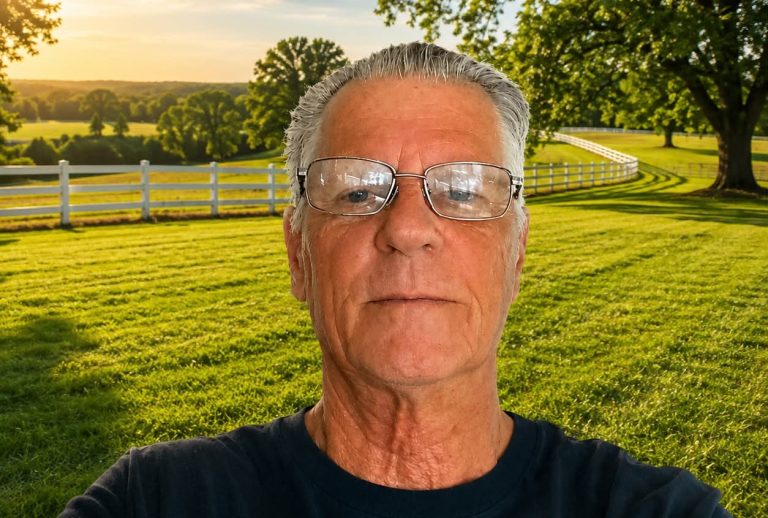
Inspired by yard transformation videos on YouTube, one local man has been quietly working to improve the appearance of Waldron one cleanup project at a time.
After moving with his wife to what they call “Paradise Acres” off Highway 248, Richard Grimmett said he found himself inspired by watching neglected places become beautiful again.
“I like watching something go from ugly to beautiful just because someone took the time and a little bit of money to make a change,” Grimmett said.
Over the past five years, he has completed several cleanup projects around Waldron without asking for recognition or payment. Most recently, he pressure washed the exterior of the Green Ridge Community Center.
“I did not charge anything to do it,” he said. “I just saw that it was a community center that needed cleaning.”
As a thank-you, the ladies at the community center surprised him with a handmade quilt.
“I was totally amazed and surprised,” he said.
His latest project has focused on clearing overgrown weeds along the ditch near Sixth Street and Main Street. He said the area had become an eyesore and hopes his efforts will encourage others to take pride in the community.
Living about 15 miles east of Waldron, he believes he notices things that longtime residents may pass by without a second thought.
“When I come to town, I guess I see things that people who live here overlook,” Grimmett added.
He said there are still several areas along Sixth Street that need attention and plans to continue working as time allows. He also welcomes anyone who would like to volunteer.
“If anyone is interested in helping me finish that ditch, I’d be glad to talk to you,” he said. “The stalks on the weeds are pretty thick, and my little weed eater has a hard time cutting through them.”
State Capitol Week in Review from Senator Terry Rice

Members of the Arkansas Senate and House of Representatives were recently invited to the White House to meet with key staff from the White House Office of Intergovernmental Affairs for the White House State Leadership Conference. The purpose of the meeting was to offer a forum for state elected leaders to have meaningful dialogue and an exchange of ideas with federal Executive Branch leaders on policies that impact Arkansans. The White House Office of Intergovernmental Affairs, commonly referred to as IGA, was created in 1955 under President Dwight D. Eisenhower to bridge relationships and interactions between federal and state governments. Today, IGA serves as the primary liaison between the White House and governors, state legislators, mayors, county officials, and tribal leadership. IGA staff work to ensure proper coordination between federal agencies and the states. Speakers included staff from the White House Intergovernmental Affairs team, as well as Secretaries, Deputy Secretaries, Directors and Deputy Directors from a broad range of federal agencies.
Ashley Walukevich, the Director of White House Office of Intergovernmental Affairs, opened the meetings and welcomed the members of the Arkansas Senate and House. Director Walukevich encouraged members to utilize staff and engage the White House on any federal agency or White House policies that impact Arkansas. Emily Domench, Executive Director of the Permitting Council, discussed her role in coordinating and fast-tracking the permitting process for large scale business and infrastructure projects across multiple federal agencies including the Environmental Protection Agency, the Department of Energy, and the Department of the Interior. Most recently, Arkansas was able to utilize the “Fast 41” program (Title 41 of the Fixing America’s Surface Transportation Act) to expedite the lithium bromine extraction project in the Smackover Formation.
Sean Cairncross, National Cyber Director, discussed the need to strengthen our nation’s defense against critical infrastructure cyber-attacks through scalable state-federal pilot programs as well as public-private partnerships to enhance innovation and reduce bureaucratic burdens. Director Cairncross also discussed the need for AI data centers and emphasized the importance of their development as a matter of national security, while recognizing that the data centers should also pay their share in the development of power generation necessary to operate.
JC Miller, Senior Policy Advisor, discussed the Supplemental Nutrition Assistance Program and recently approved waivers for healthy foods and work requirements for able-bodied working adults aged 18-64.
The conference concluded with remarks from Secretary of Homeland Security Markwayne Mullin. He detailed the extensive coordination among federal, state, and local officials to ensure safety during the World Cup and the nationwide America 250 celebrations. Mullin also discussed how local police forces could partner with and receive funding from federal law enforcement agencies, including funding available through the 287(g) program. Local law enforcement agencies that are interested in participating should contact the Department of Homeland Security.
“Just Roll with It” Serving up Recipes and Humor

Hello everyone! What a much-needed rain we got last night. I’m sorry to those who didn’t get any.
I don’t know if I have made this public or not, but my son, Jacob, and his wife, Loren, are having their first baby. It is a little girl, and she is due January 15th. To say I am excited is an understatement. Most of you know my husband’s name was Charles, and they are naming her Charley Beth. I love the name. If y’all see me walking on the clouds, you’ll know why.
I know I always tell stories about my husband and all the crazy things he used to do. I can tell you this—he was a lot of things, but boring and predictable weren’t among them. The only thing he was predictable about was being late. Always, always, no matter what.
I want to be early, or at least on time. When we were first married, we lived and worked in Owego, New York. We worked at the same place and rode together to work. Every morning I would be sitting in the car waiting for him, about to blow my top, and he would come out just in the nick of time to get to work by 7:00, or a couple of minutes after.
One particular morning it was the same scenario. I was waiting, and I decided I was going to leave him and go on to work. So I did.
He started walking, and our boss—who was always late too—came along and gave him a ride. Did we have a fight? Yes, we did. But let me tell ya, he was up and around from then on when he rode with me.
The only reason he wasn’t late for his funeral is because Sammy Callahan from Heritage Memorial had his ashes there before it was time for the memorial. I had already warned him, “You will have a flat or something is going to happen because you are bringing my husband.” But they made it.
My husband traveled a lot for his job, and he actually lived part-time in Conway for a few years. It was time for his two weeks off, and here he comes pulling into the driveway with a trailer on the back of his truck with a huge mound on it. I had no clue what he had on there.
He pulled in and got the boys to help him unload it. I know y’all are dying to know what he had bought.
It was a huge—and I mean huge—bean bag the size of the trailer. I am not exaggerating at all. They barely wrestled it through the front door.
I said, “Why? Why? Why would you buy that?”
He was so proud of himself, and it filled up the whole middle of our living room floor. All the kids and grands loved it, but I could hardly move it to vacuum. There was nothing I could do but shake my head and welcome the albatross to the family, along with all the other crazy stuff he had bought over the years.
Sometimes I wish I had kept the bean bag. It finally got a hole in it, and I had sewn it up multiple times. One time, when he was out of town, I got rid of it. Yes, he was mad at me again.
We sure had some good times.
This is a good crock pot recipe. You can throw it all in and forget about it.
Crock Pot Smoked Sausage Meal
1 pound smoked kielbasa, sliced into thick rounds
1½ pounds small potatoes (or regular potatoes, quartered)
1 pound baby carrots
1 package dry ranch seasoning
4 tablespoons butter, melted
2 tablespoons chicken broth
Black pepper to taste
Slice the kielbasa into rounds and place the potatoes and carrots in your crock pot. In a small bowl, mix the ranch seasoning, melted butter, and chicken broth until well blended. Pour the mixture over the potatoes and carrots, then toss until everything is coated.
Nestle the kielbasa slices on top of the potatoes and carrots. Cover and cook on low for 6–7 hours or on high for 3–4 hours. Make sure the potatoes are fork-tender, then give everything a good stir before serving.
Have a great week, and hug those husbands of yours, no matter how bad they can get on your nerves.

Scott County Election Commission Hears Concerns Over Mansfield Polling Site Closure
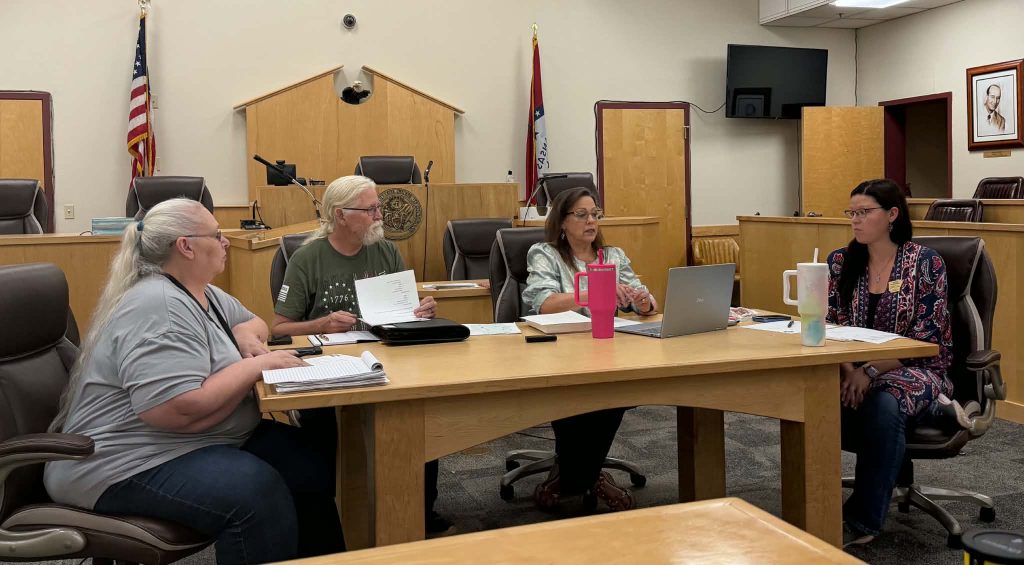
The Scott County Board of Election Commissioners met Thursday afternoon at 2 p.m. at the Scott County Courthouse in Waldron. Commissioner Barbara Templeman called the meeting to order.
Templeman introduced and congratulated newly appointed Interim Scott County and Circuit Clerk Jade McDaniel. The board also welcomed guest speaker JoDawn Carter, Logan County election coordinator, who addressed commissioners on election-related matters.
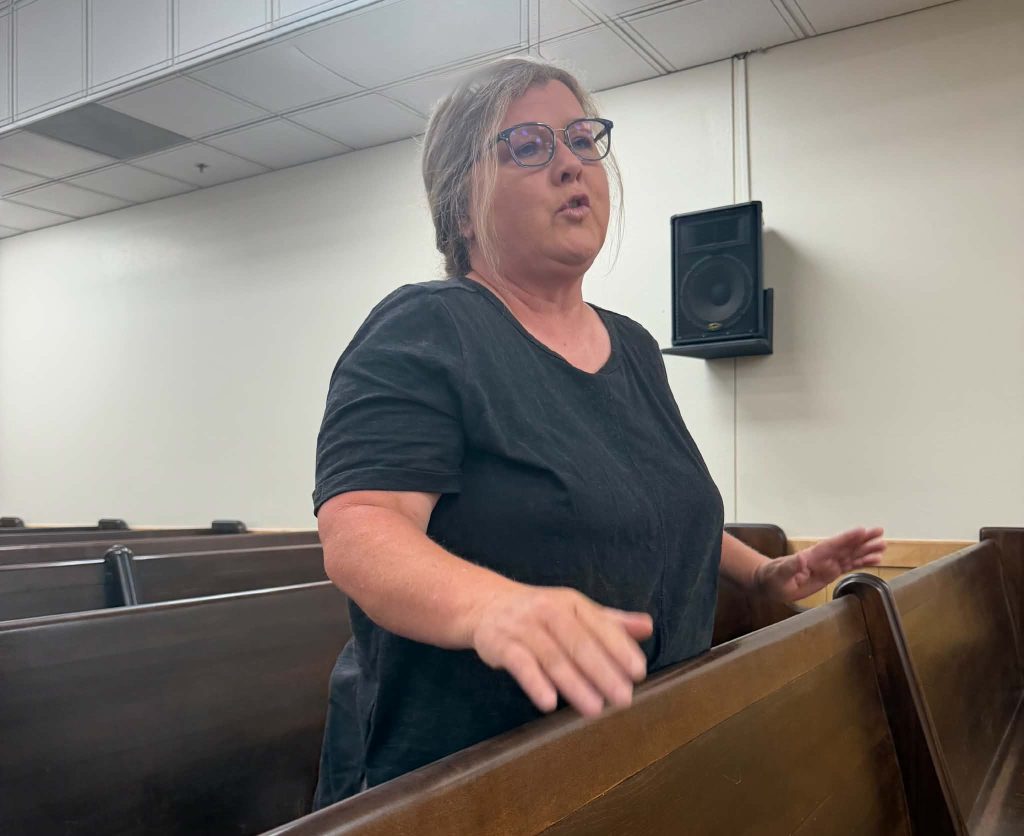
After completing the items on its agenda, the commission opened the floor for public comments, with much of the discussion centering on the recent decision to close the Mansfield polling location.
Scott County Assessor candidate Sheri Thompson and Scott County Sheriff candidate Jason Daggs both told commissioners they had received concerns from Mansfield-area voters about the polling site changes. Under the commission’s decision, the Mansfield polling location will be eliminated, with the Abbott Generational Building serving as the nearest voting center. The Packsaddle polling site has also been closed.
Templeman said the commission has faced increasing pressure from the state to reduce the number of polling locations and has also struggled to recruit enough poll workers.
“The average distance voters now have to drive from their homes to their polling place is approximately 2.5 miles,” Commissioner Ken Stricker said.
Scott County Judge Brian Jones acknowledged that with both the Mansfield and Packsaddle locations closing, Abbott was selected because it serves as a central location for voters in that area.
Mansfield Mayor Buddy Black questioned the commission’s decision, saying he did not understand why Abbott was chosen over Mansfield, noting that Mansfield has a significantly larger number of registered voters.
Carter responded that the locations should be viewed as county voting centers rather than community-specific polling places.
“You cannot think of it as a Mansfield polling site,” Carter said. “It is a county polling site because these are voting centers.”
Mansfield Alderman James Steele also addressed the commission. Steele had previously criticized the decision on social media, writing that “the privileges to vote within the city have been rescinded by the election commission” and calling the requirement to travel outside the city to vote “unconscionable.”
During Thursday’s meeting, Steele reminded Templeman that he had previously emailed her and offered to serve as a poll worker.
“That is illegal,” Templeman responded. “You are an elected official, and you cannot be a poll worker.”
Steele then offered to recruit six qualified poll workers if the commission would reconsider reopening the Mansfield location.
“We have made the decision to close Mansfield,” Templeman replied.
Steele also questioned the overall cost of operating the Mansfield polling site.
“I told you I could get you poll workers, and you said I am full of (expletive),” Steele said.
Steele argued that closing the polling place would disproportionately affect senior citizens and strip them of the convenience and dignity of voting within their community.
McDaniel reminded those in attendance that absentee voting by mail remains available to eligible voters and described the process as secure.
“We are not taking anyone’s rights away,” McDaniel said. “We are just moving the location.”
Steele responded that requiring voters to vote absentee or travel farther to cast a ballot forces them to “jump through hoops.”
Former Mansfield Mayor Glen Hurt also spoke during the public comment period. Hurt said the previous polling system had served residents well but acknowledged that changes in state election laws have significantly altered the election process for both voters and candidates.
“It is too much rule by the state,” Hurt said.
Templeman concluded the meeting by emphasizing that her responsibility as election commissioner is to follow Arkansas election law.
“My top priority as commissioner is to follow the law,” Templeman said. “We welcome anyone with questions or concerns to reach out to us.”