



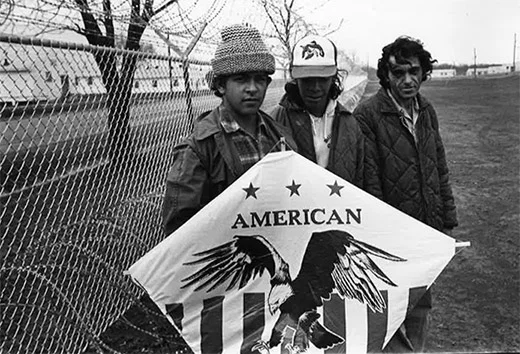
A 27-year old Cuban English teacher was about to become a member of perhaps the most unwanted migrant groups to ever arrive on American soil. Walking down the street, he encountered a mass of humanity headed to boats that would transport them to America, into an environment and location totally unprepared for their arrival.
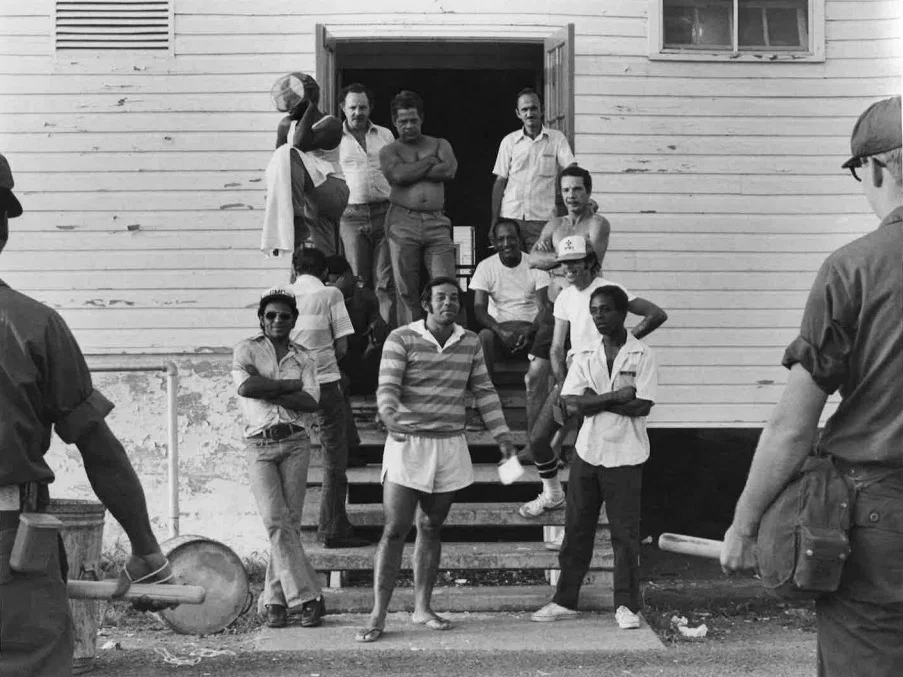
On April 11, 1980, a group of Cubans drove into the Peruvian Embassy in Havana and demanded political asylum. Fidel Castro, probably willing to get rid of dissidents, failed to react in the typical dictatorial manner and force their return. Thousands more joined the small group and overwhelmed the embassy. Peru asked for assistance in providing help and President Jimmy Carter, a man who had already declared that America would welcome political refugees with open arms, quickly offered to sponsor 3-4 thousand of the refugees. Castro saw this as an opportunity to rid himself of problems and three the ports open to American boats. In days, more than 300 American boats maned by private citizens arrived, loaded hundreds of refugees, and transported them to Florida. Over the following weeks, boat-load after boat load brought thousands to Eglin Air Force Base, quickly overwhelming the capability of the base to process them. Within a few months, over 125,000 Cubans arrived on American soil. Although denied by the U.S. government, many were undesirables and would not normally be allowed as migrants. Earlson, a Cuban teacher frankly stated, “they stated if you want to go, you have to be a prisoner, an ex-convict, or a homosexual.” Most people that left were not one of the above but simply people like Earlson that wanted to flee communism. Castro’s statements that he released scum and degenerates did little to alleviate fears of Americans.
The U.S. government announced plans to use Fort Chaffee, Arkansas as one of the temporary housing and processing centers. A total of 25,390 refugees arrived in the river valley and Barling quickly went from a rural community to the 11thlargest city in the state. Some of the refugees were quickly assimilated and sponsored by families or friends, others were to remain for months creating an untenable situation for an area where only a few could even speak Spanish and communicate with the migrants and felt threatened by a people and culture they did not understand.
It appeared there was no plan or coordination to the camp. Refugees wondered around at will, going into surrounding communities. National Guard and government officials were told to offer little restrictions and to refrain from using force. Local police, state police, and the sheriff’s office did not share those views. When locals complained of shop lifting, theft, and vagrancy, the Cubans were exposed to the American system of law. Typical of bureaucracy, there was supposedly a line of communication from the White House to locals but, coming down the chain of command, nobody was in charge. Everyone wanted the other guy to do the job. On Memorial Day, immediately after the Old Fort Days Rodeo and one of the biggest days in the region, a group of refugees rioted and blocked highway 71 for hours. Six days later, the same rioting blocked highway 22 at Barling. In Arkansas, blocking a person from work or travel is not a wise choice. Personally, I knew a few of the individuals involved. Returning from work in the oil fields, they were not going to be detained by “foreigners” they already resented. Citizens from the surrounding communities poured in, weapons fully cocked and loaded. Some gunfire erupted, a few were shot, 62 were injured, four seriously. The Cubans soon decided that Fort Chaffee might be a lot safer than the highway.
Life became much regimented and restricted afterward. Protective fence was built, guard stations were set up, and 2,000 armed guards protected the parameter of the fort. Problems within the fort still persisted with some barracks burned or destroyed as well as fighting, stealing, and disturbances within the population. The government began to bring in assistance that understood the culture, spoke the language, and set up programs to keep the refugees occupied. Frank White, running for governor against first term Bill Clinton, used the crisis as a political football and was able to defeat Clinton in the election that fall. Regan, using the Cuban crisis as well as the Iranian hostage crisis, defeated Jimmy Carter as president. On February 4, 1982, the final boatload person was removed from Chaffee. Records indicate that 20% of all of the Cuban boat people were housed at the fort at some time. Unlike the Vietnamese, many of whom became valued citizens of the area, most of the Cubans moved away, much to the delight of my neighbors who still speak ill of the “unwanted” refugees.