
Unattended baby wild animals may not be abandoned
By Randy Zellers
Arkansas is blessed with abundant wildlife and their offspring. As the green march of spring continues to increase outdoor recreation opportunities, many landowners and outdoor adventurers are likely to come across unattended baby wild animals. Offering a helping hand is not only a recipe for disaster; in some cases, it can be illegal.
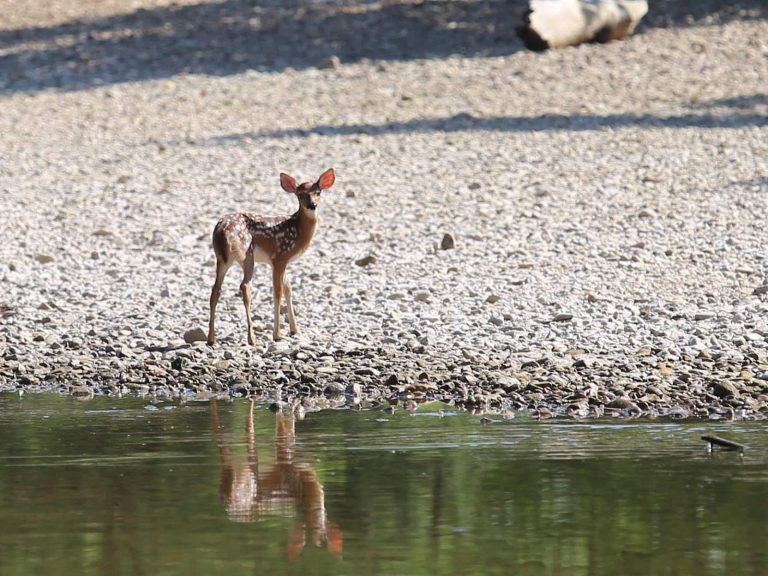
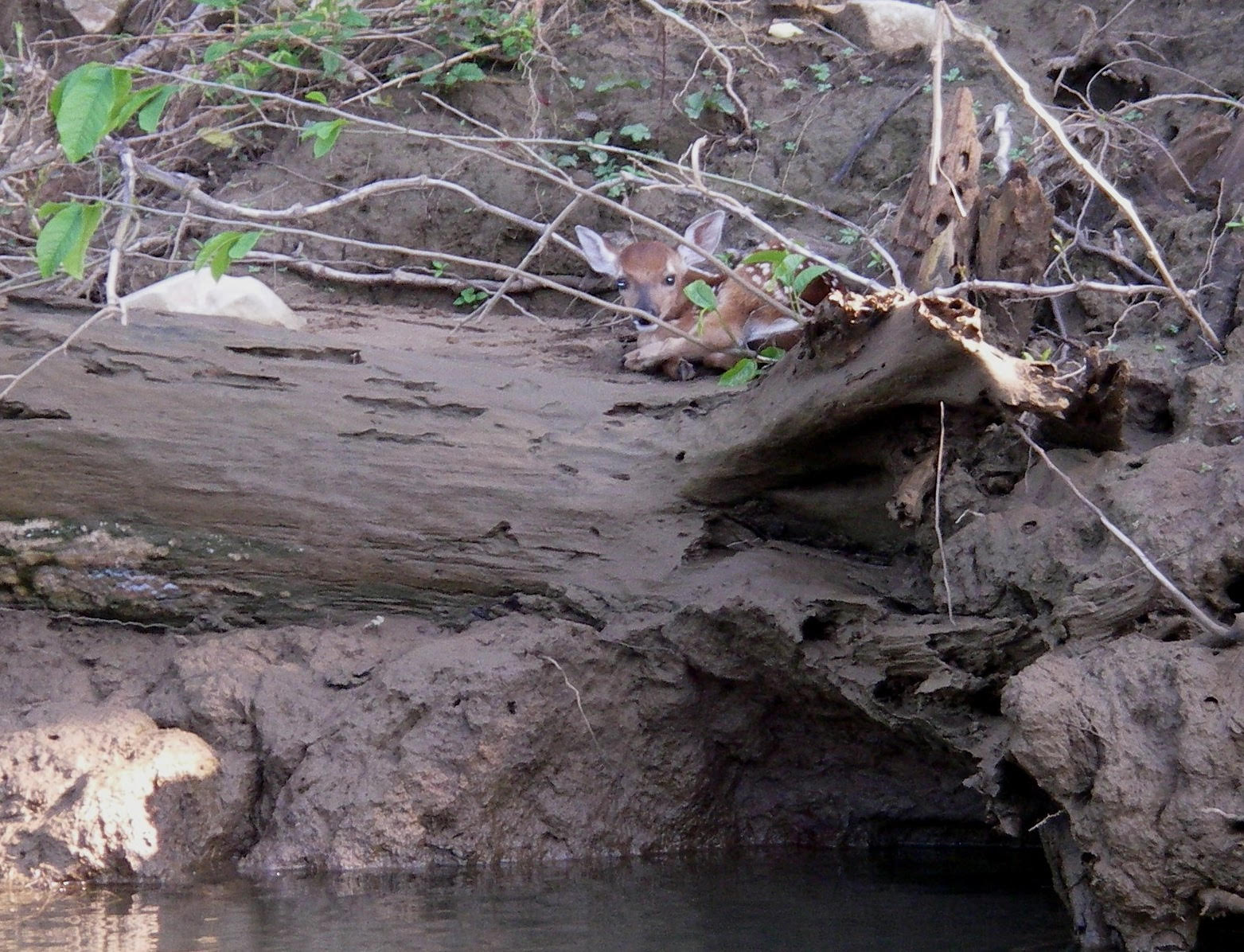
First and foremost, don’t assume that these animals have been abandoned. One or both parents may be out of sight, waiting for you to leave. The spots on a fawn are nature’s version of camouflage; their strategy to avoid predators is to stay perfectly still and let the danger pass. The mother leaves the fawn alone for much of the day to feed and build up her milk supply for her young. Deer aren’t the only animals that use the stay away, stay safe strategy. A female rabbit only spends about one hour out of every 36 with her young. Many well-meaning good Samaritans have picked up a helpless baby deer only to have inadvertently stolen it from its mother.
Concerns over chronic wasting disease have made it illegal to rehabilitate deer in Arkansas because the removal of the infectious agent once a facility is exposed to the disease has proven impossible. As a result, taking an abandoned fawn also leaves the well-intentioned person in a sticky situation with no one to take it in and no way to care for it themselves.
Many landowners call the Arkansas Game and Fish Commission in spring when they see baby birds that have fallen from their nest. Some may want to put the bird back in the nest, but, again, the best course of action is often to leave things be and let nature take its course. Baby birds almost ready to fly often will hop around in the tree branches, exercising their wings and fall out of the tree. Parents will feed these youngsters where they find them on the ground.
In some cases, the young animal may have a disease or some other issue that led to being abandoned by its mother on purpose. Trying to place this bird back in the nest may cause the problem to spread and create a complete nest failure.
Even in the best-case scenario, the young of such prolific species as rabbits, mice, songbirds and other small species have a 20 percent chance of survival through their first year. The survival strategy for these animals is to simply reproduce more young than will die from predation, disease and environmental causes.
It’s best to observe the young animal from a distance and prevent any unnecessary danger from pets and children. Housecats and feral cats are by far the biggest predators of songbirds in the United States, so keeping your cat away from the backyard birds is a good practice, no matter the time of year.
In addition to the baby deer mentioned earlier, federal laws may make it illegal to possess other animals. Migratory birds such as cardinals, mockingbirds and other songbirds fall into this category, as do hawks and owls. Even possessing the feathers of these birds requires a special permit issued by the U.S. Fish and Wildlife Service, and rehabilitating them also requires special training and permitting.
The AGFC lists licensed rehabilitators on its website at www.agfc.com/rehab to help connect people with these resources when they don’t heed the warning to leave abandoned wildlife alone. These rehabbers are not paid for their services and only do it as a labor of love. Please contact the rehabber before taking the animal from its setting, as they have space limitations and can only take in so many animals at a time.
Arkansas battles feral hog invasion: A timeline of eradication efforts
By Randy Zellers
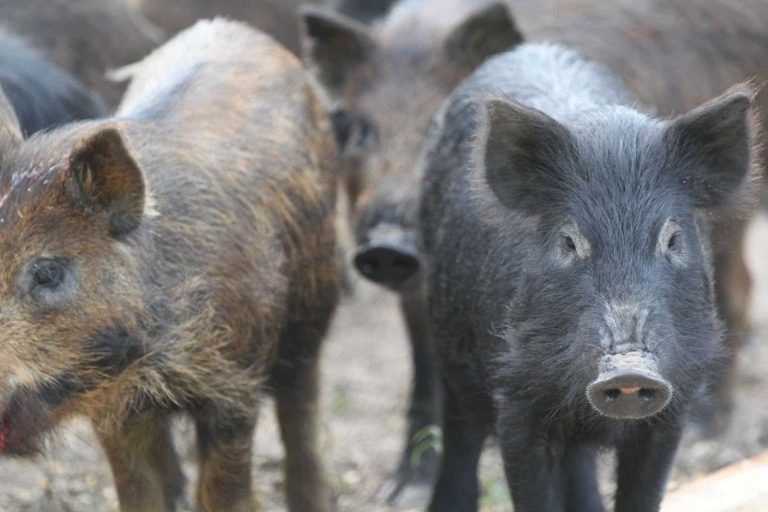
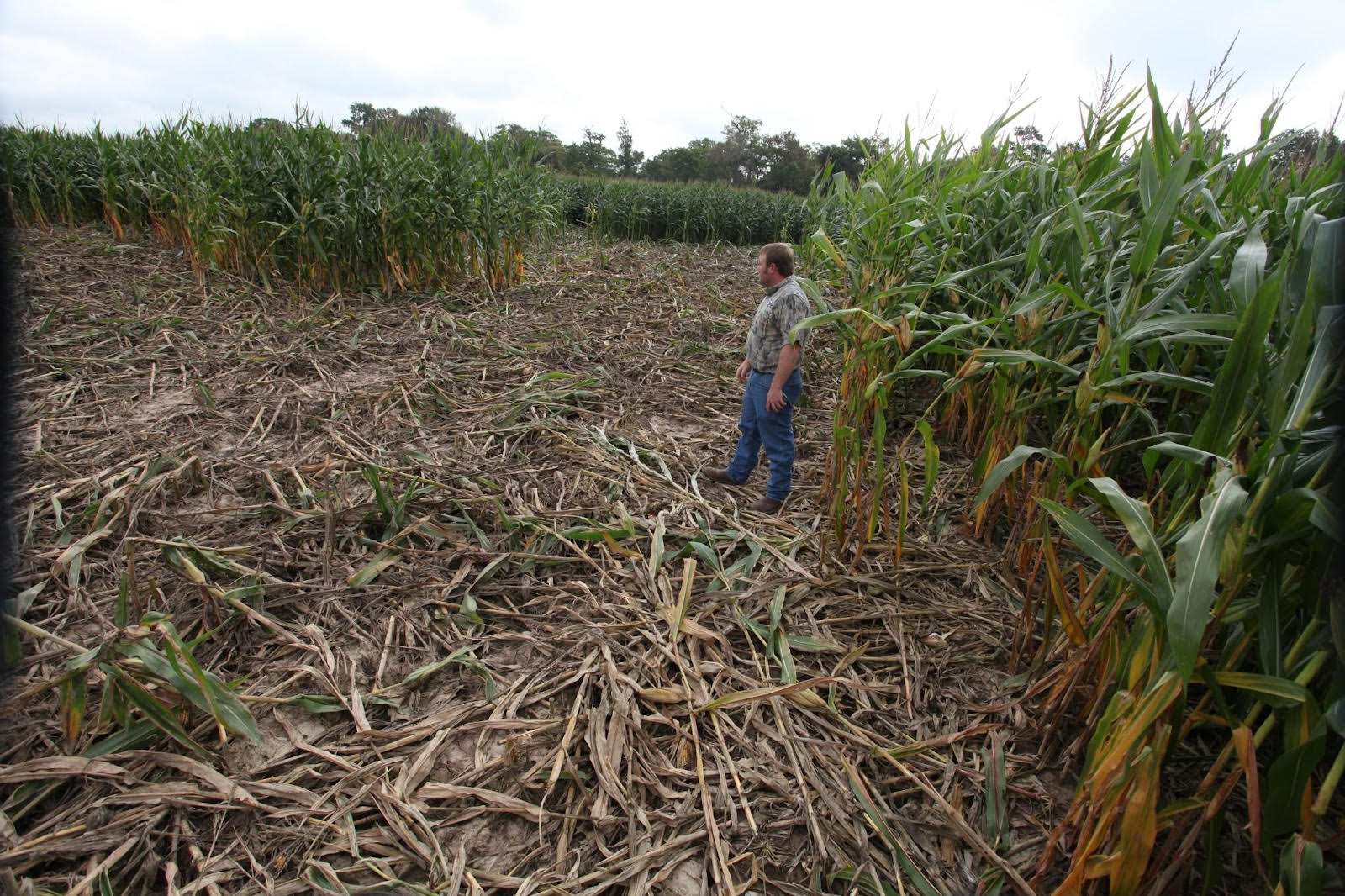
Feral hogs have been a growing menace in Arkansas for decades, wreaking havoc on crops, livestock and the environment. A concerted effort, over a decade in the making, is showing signs of progress.
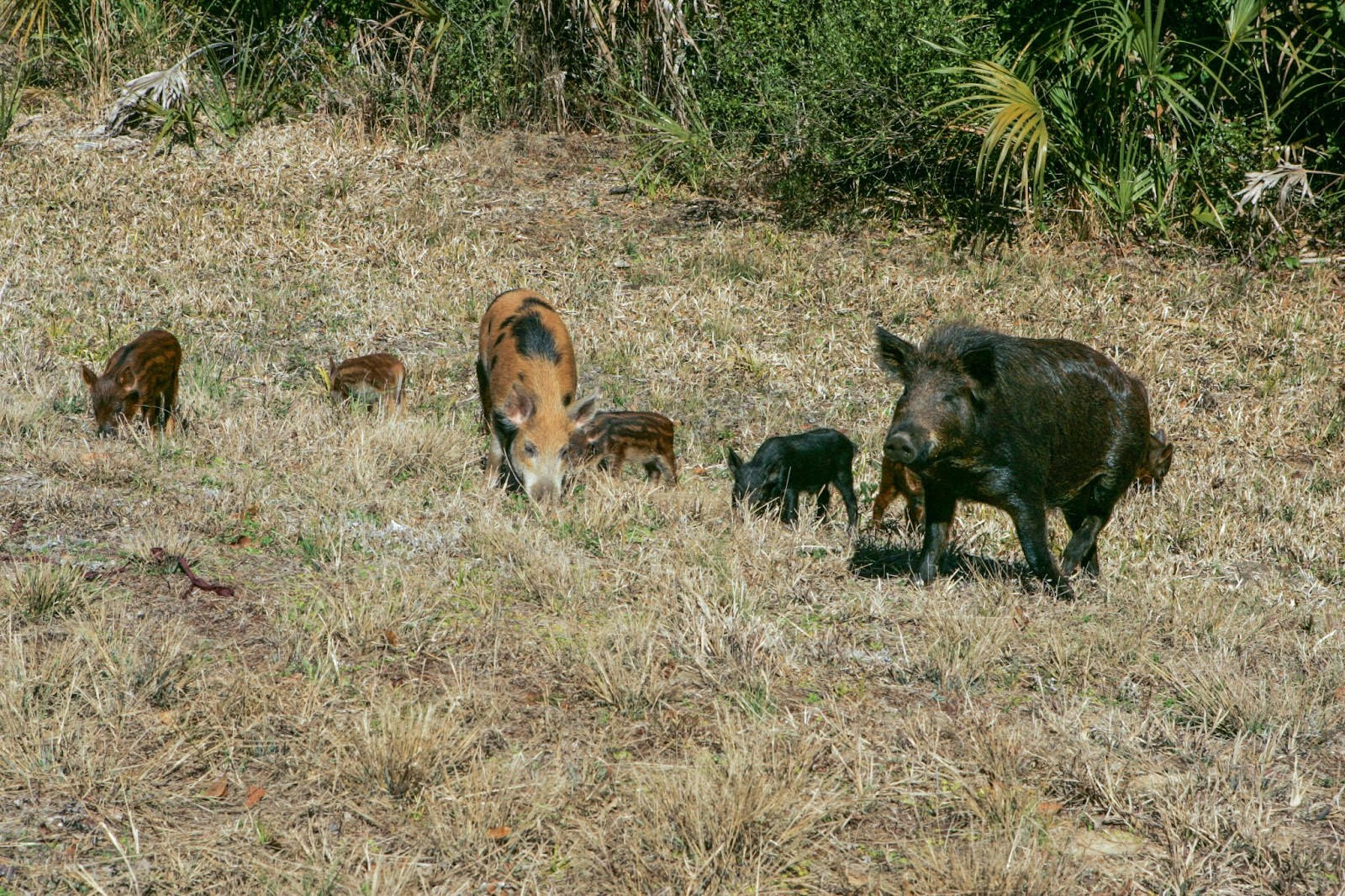
Feral hogs, descendants of animals brought by early explorers and later supplemented by Eurasian wild boars for sport hunting, have been present in North America since the 1500s. By 1999, some people recognized the growing problem, but scattered populations, complex issues and a lack of coordinated effort stalled significant action.
These invasive pests, estimated at over 6 million nationwide, cause $30 million to $41 million in damages annually in Arkansas alone. They are not just agricultural nuisances, but vectors for human and animal disease and destroyers of native habitats.
The Arkansas State Legislature established the Feral Hog Eradication Task Force in 2017. This unfunded task force, which consisted of 20 federal, state and nongovernment agencies, was charged with developing an eradication plan. The initial year was spent gathering information, studying successful strategies from other states and crafting a plan. Early efforts by individual agencies were fragmented. Workshops on “do-it-yourself”; trapping, boots-on-the-ground; removal services and trap-loan programs were scattered across the state, often in areas with the most severe infestations or local interest. These efforts, while helpful, lacked a unified, statewide approach.
The task force identified a critical gap: dedicated personnel for removal efforts. Successful trapping requires specialized knowledge and technology, which can be a barrier for small landowners who can’t justify the expense. The USDA Feral Swine Control Project, created in the 2018 Farm Bill, offered funds to combat this deficiency.
The task force leveraged these funds to hire full-time trappers through county conservation districts and the USDA APHIS Wildlife Services.
In 2019 the USDA Farm Bill awarded $3.4 million to fund pilot projects. The Arkansas Department of Agriculture, in partnership with USDA APHIS Wildlife Services and conservation districts, took the lead in training feral hog technicians. These technicians learned to use advanced trapping technologies and equipment, working alongside APHIS personnel. Thanks to local knowledge and landowner connections, this collaboration opened doors to previously inaccessible areas.
By 2024, the efforts were showing results. The Feral Swine Control Project, operating in 12 counties across four project areas (North Central Ozarks, West Arkansas River Valley, Southeast and Southwest), assisted on 483 properties covering about 500,000 acres. More than 13,000 feral hogs had been removed, with nearly 4,500 removed using conservation district resources. Landowners reported more than $2.5 million in damages caused by feral hogs on these properties. Future damages can be avoided with increased efforts by the agencies involved, and, more importantly, by landowners willing to address this growing issue.
One landowner who has benefited from this project is James Mitchell. James lives in Yell County and has noticed a drastic reduction in the number of feral hogs around his property. James attributes the reduction of feral hogs to the implementation of whole sounder trapping strategies on his property and, just as importantly, on his neighbor’s property.
One major accomplishment of the task force was designating USDA APHIS Wildlife Services as the initial point of contact for the statewide removal of feral hogs on private property. Today, landowners can call (501) 835-2318 for assistance. Beyond the pilot projects, USDA APHIS Wildlife Services significantly increased its presence in Arkansas, growing from seven field personnel in 2018 to more than 22 technicians and biologists in 2024. Special projects like those in the Buffalo River Watershed and the Northeast Arkansas Elimination Project have further targeted feral hog populations.
Aerial operations conducted by USDA APHIS and permitted operators have also played a role. While flights are limited to certain times of the year, they have reduced hog numbers in some areas, especially when combined with trapping programs.
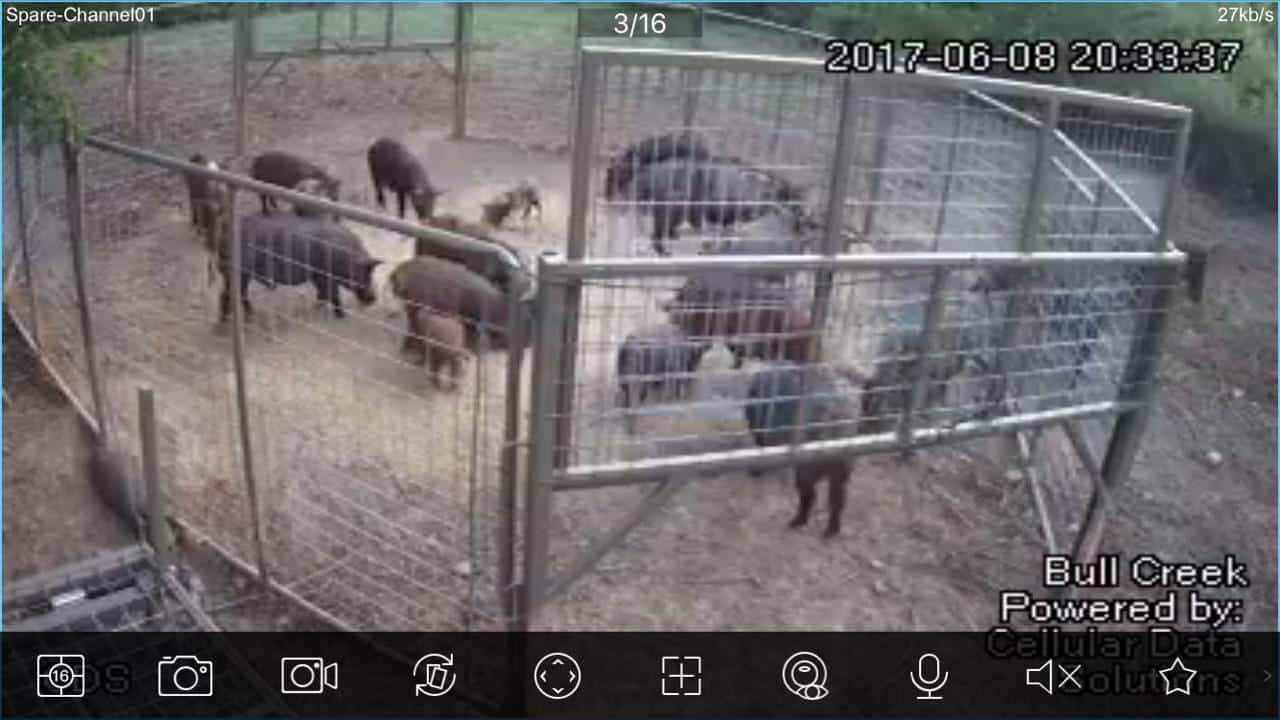
Participation in the Arkansas Game and Fish Commission’s Conservation Incentive Program (CIP), funded by the Arkansas General Assembly in 2023, is a more recent accomplishment of the task force. One of the most popular practices in the 2024 CIP pilot year was a cost share with private landowners for feral hog traps. The agency dedicated $1.2 million to this practice, accounting for about 37 percent of the total CIP funds. The feral hog trapping practice was set up on a first-come, first-served basis for applicants, and Arkansans were incredibly interested in it, with more than 400 applications. By the end of the program, 224 applicants had been awarded funding, resulting in hundreds of landowners purchasing approved trap systems.
Before receiving funding, applicants were required to demonstrate they had recently experienced feral hog damage on their property and undergo online training on trapping best practices. Once applicants purchased their selected trap system, they had to submit their first trap event on a mobile application to receive their full reimbursement. Through the efforts of Arkansas landowners, the practice reported the removal of 6,693 feral hogs, impacting 52 counties and helping protect more than 900,000 acres across the state. These numbers are a baseline, as the traps are still in the landowners’ hands and are being used. The task force expects the actual removal numbers through the program’s efforts to be much higher.
The approach of full-time trappers working across the state and providing landowners with the right tools, such as reliable trap systems, provides a framework for eradicating feral hogs from large areas of the state. Landowners in heavily trapped areas have reported reduced feral swine and associated damages. The task force will continue to explore other management strategies and additional tools, such as toxic baits and research into a boar sterilant at the University of Arkansas-Fayetteville.
As efforts continue, the Arkansas Feral Hog Eradication Task Force remains committed to its mission. With a united front and a growing toolbox, Arkansas is making strides in the fight against this destructive invasive species.
To track feral hog removal efforts, the Arkansas Department of Agriculture maintains a feral hog dashboard. Users of the dashboard can see the number of hogs removed by county and by year. The dashboard, a list of task force partners, and additional information can be found on the task force page on the Arkansas Department of Agriculture website (https://agriculture.arkansas.

Obituary: James “Ray” McMahan (1954-2025)

James “Ray” McMahan, 70, of Greenwood, Arkansas passed away Tuesday, May 13, 2025 in a Fort Smith hospital. He was born October 12, 1954 in Benton, Arkansas to Oliver Morgan and Ethel Lucille (Owens) McMahan. He was a retired diesel mechanic and a member of the Northside Church of Christ.
He is survived by his wife of 53 years, Elizabeth McMahan; two sons, James Gregory McMahan and Brennon McMahan and wife, Jill; one brother, Ronny McMahan and wife, Vicky; four grandchildren, Garret McMahan and wife, Kelsey, Payton McMahan, Jackson McMahan and Bentlee McMahan and two great grandchildren, Rhett McMahan and Riggs McMahan. He was preceded in death by two brothers, William McMahan and Danny McMahan and one sister, Martha Evans.
A memorial service will be held 2 p.m., Friday, May 16 at McConnell Funeral Home Chapel in Greenwood. The family will visit with family and friends after the service. Inurnment will be at Mayberry Cemetery at a later date.
Obituary: Ma Edita Ransom (1951-2025)

Ma Edita Ransom of Waldron, Arkansas passed from this life, Friday May 9th, 2025 in Fort Smith, Arkansas. Ma Edita was born March 31, 1951 in Caloocan, Philippines to Francisco Tambungui and Corazon Jesusa (Dizon). Ma Edita was 74 years old. She attended Evening Shade Baptist Church in Waldron, Arkansas.
Ma Edita was married to the love of her life, Richard Ransom. She had a deep passion for being a wife, mother, and homemaker. Ma Edita was a wonderful cook. She loved preparing meals with love for her family and friends. Ma Edita enjoyed traveling a great deal. She loved seeing new places and finding adventure. When Ma Edita was not at home caring for the needs of her family, she enjoyed fishing and spending time outdoors. Ma Edita loved life and lived it to the fullest.
Ma Edita leaves behind to cherish her memory, her daughter Mercedita Manuzon of the Czech Republic, her son, Jeff Manuzon of the Philippines, her sister, Maria Slater of Waldron, Arkansas, her brother, Manolo Tambungui, her niece, Esther Slater and her dear friend, Robert (Bobby) Slaten. Edita will be greatly missed by all who knew her.
Ma Edita is preceded in death by her husband, Richard Ransom, and her parents Francisco Tambungui, and Corazon Jesusa.
Ma Edita’s memorial service date and time will be held at the Evening Shade Baptist Church in Waldron, Arkansas. The memorial service arrangements are pending to allow for long distance travel for Ma Edita’s friends and relatives to be in attendance.
Obituary: Melba Pugh (1931-2025)
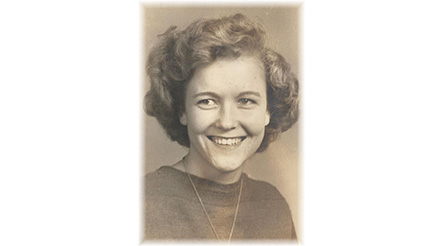
Melba June Pugh
January 3, 1931 to May 13, 2025
Melba lived from the Model T era to Space X! What a life!! She married George “Wayne” Pugh on April 9, 1949 after dating for four months. It only lasted 54 years.
Wayne and Melba had two children within one year in 1950. Jerry was born in January, and Brenda in December. They then moved to the big town of Peoria, IL, in 1951. Caterpillar lured them North with promises of work and steady wages. Melba looked so young, door-to-door salesmen would ask if her mother was home.
Their son, Randy came next in 1955. The only Yankee born in the family. Melba learned to drive a stick-shift, and went to night school to freshen up some secretarial skills, which landed her a 30 year career with the state of Illinois Highway Department. She worked as a basic clerk, then on up to Executive Secretary.
The years flew by. Arkansas called Melba and Wayne back home after retirement. First to Waldron, then to Fort Smith. Many family members have passed on over the years such as her parents Roscoe Gentry and Lima Gentry; siblings Doris Bottoms and I. Lee Gentry; nephews Michael Gentry, Gary Bottoms, and Larry Bottoms. Even her beloved Wayne and son Jerry.
Many joys were mixed into the years as well. Sweet granddaughter Lacey was born, and in time, Lacey married Georgi Hristov. Then came Julia, the precious great granddaughter in 2019. Better than Space X!!
Memories will sustain us. Sending our love to you, now and forever. Brenda and Tom Downs; daughter and son-in-law; Randy Pugh, son; Lacey and Georgi Hristov and Julia, granddaughter, grandson-in-law, and great granddaughter; Terry and Jenny Bottoms nephew and niece.
There will be a private service and burial, as Melba wished. If you choose to honor her memory, please make a donation to your local animal shelter. Thanks!
Special Thanks to the staff of Alma Health and Rehab for providing such loving care of Mother for many years, and to Arkansas Hospice as well.


“Rattler Scholars” Recognized at 4th Annual Banquet
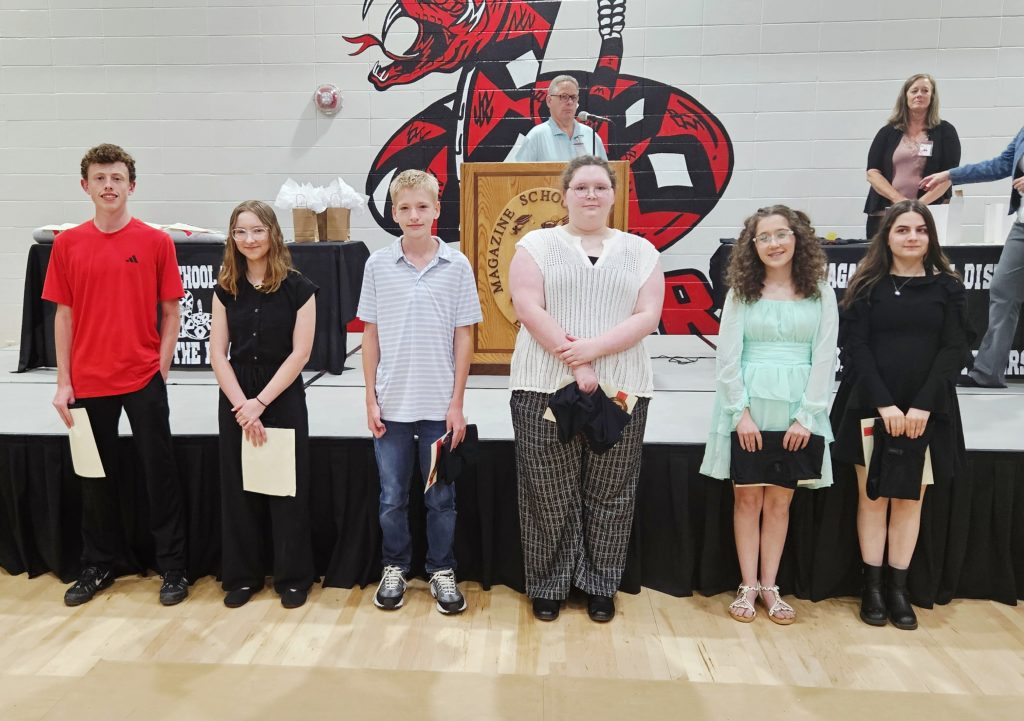
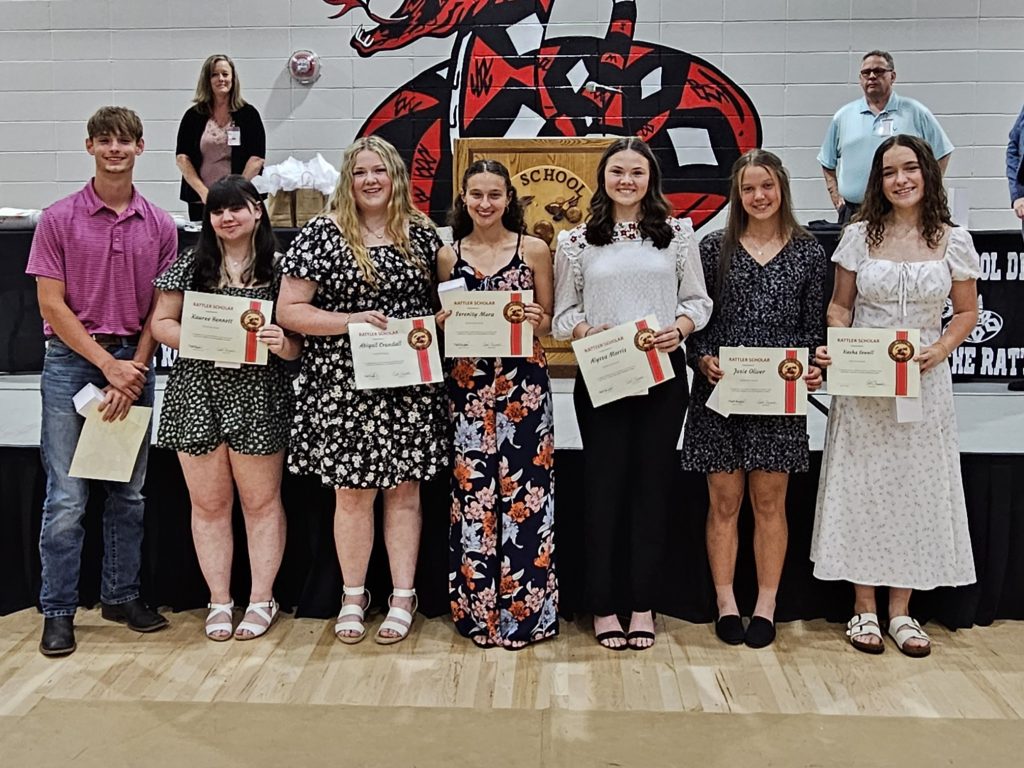
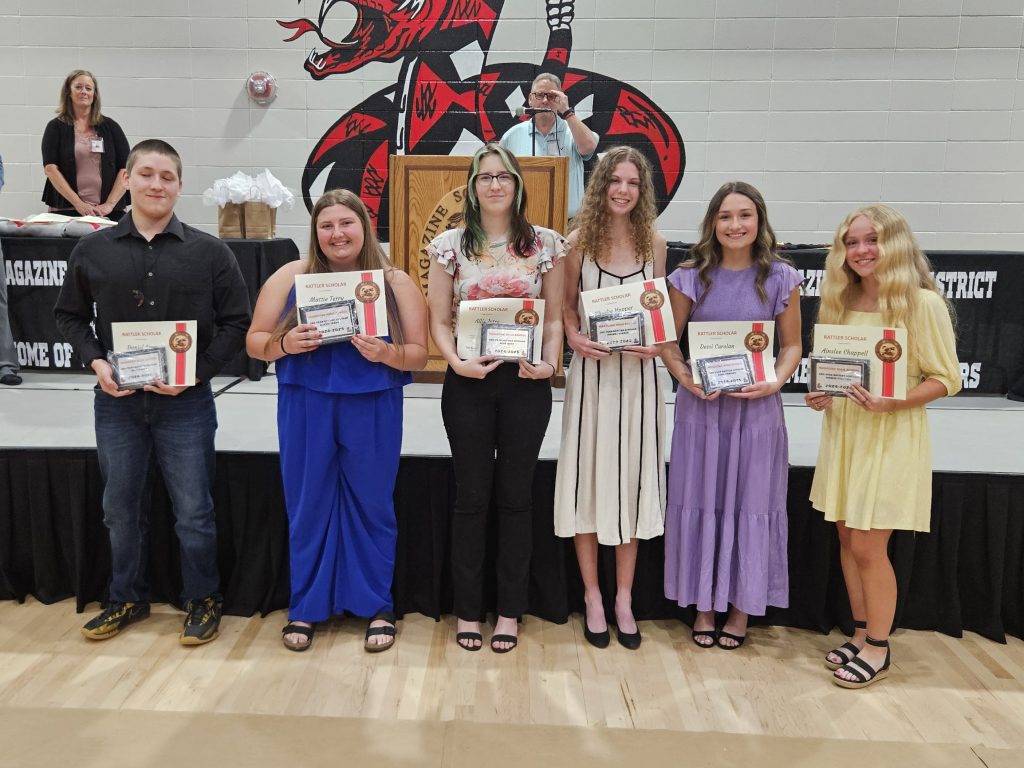
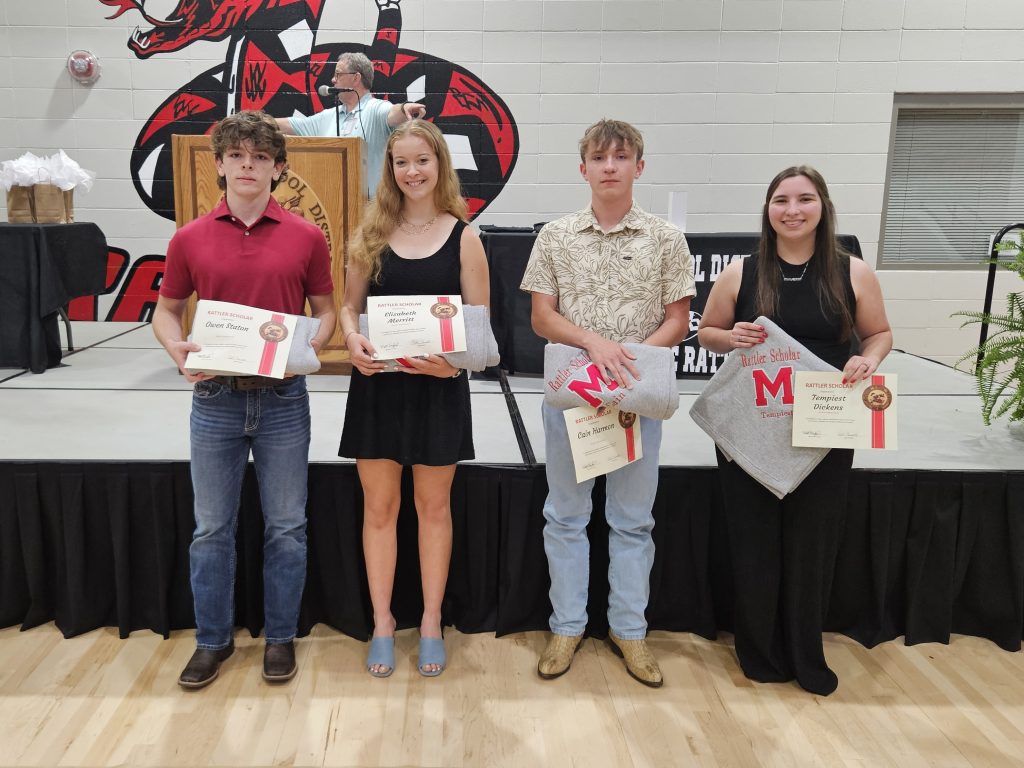
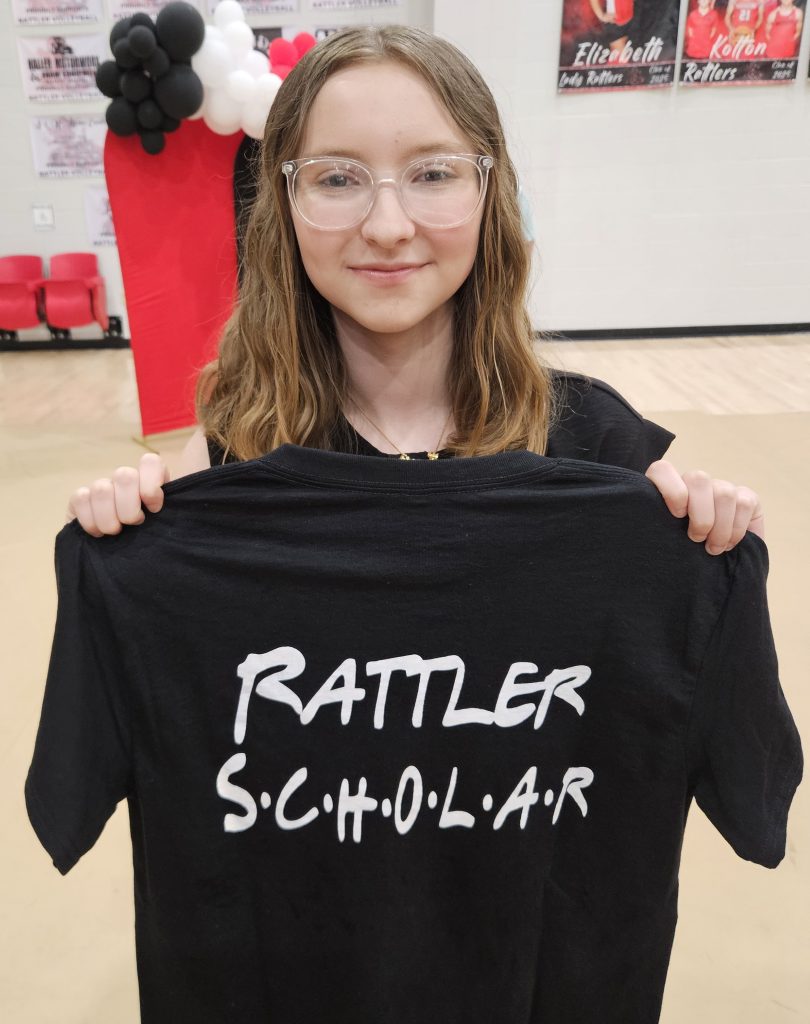
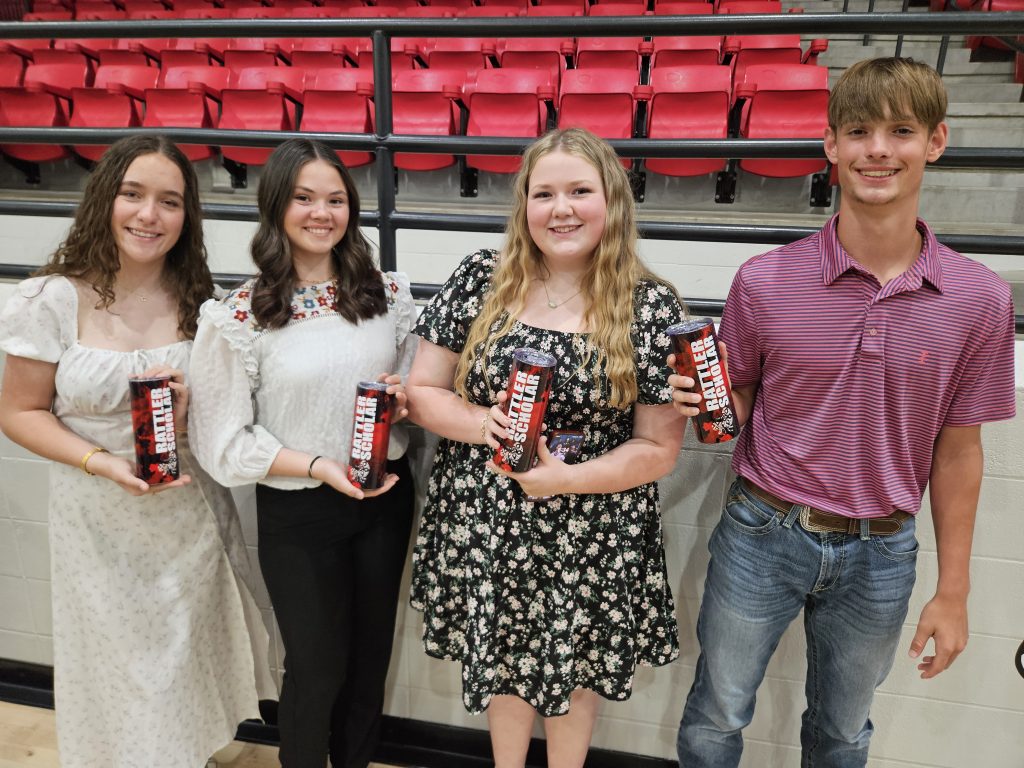
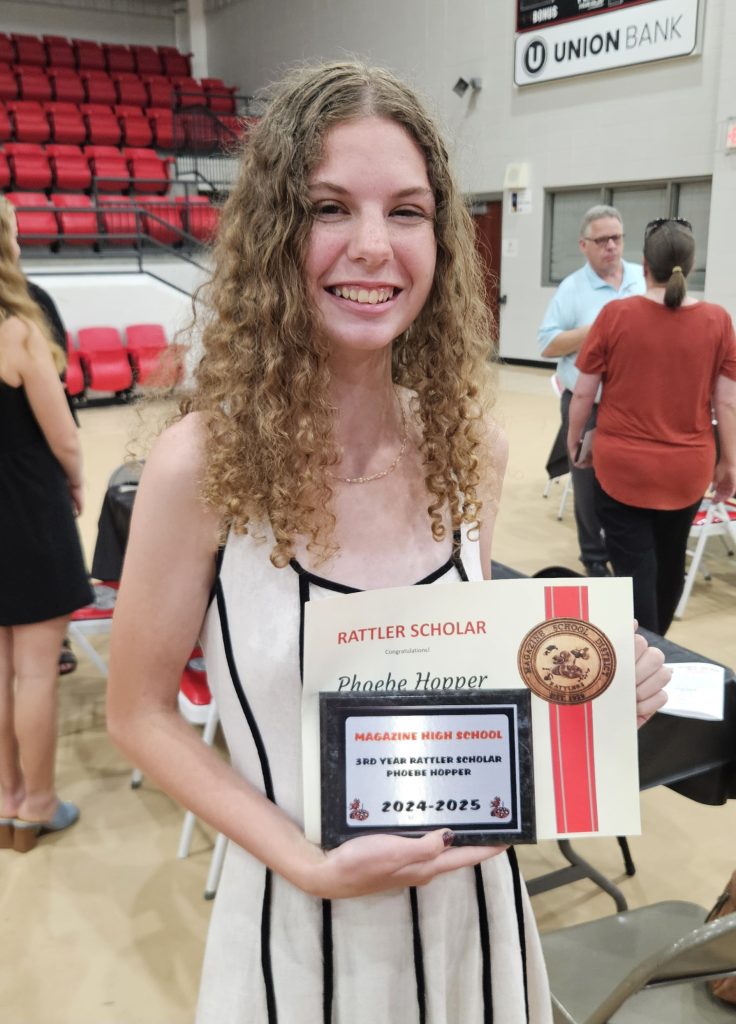
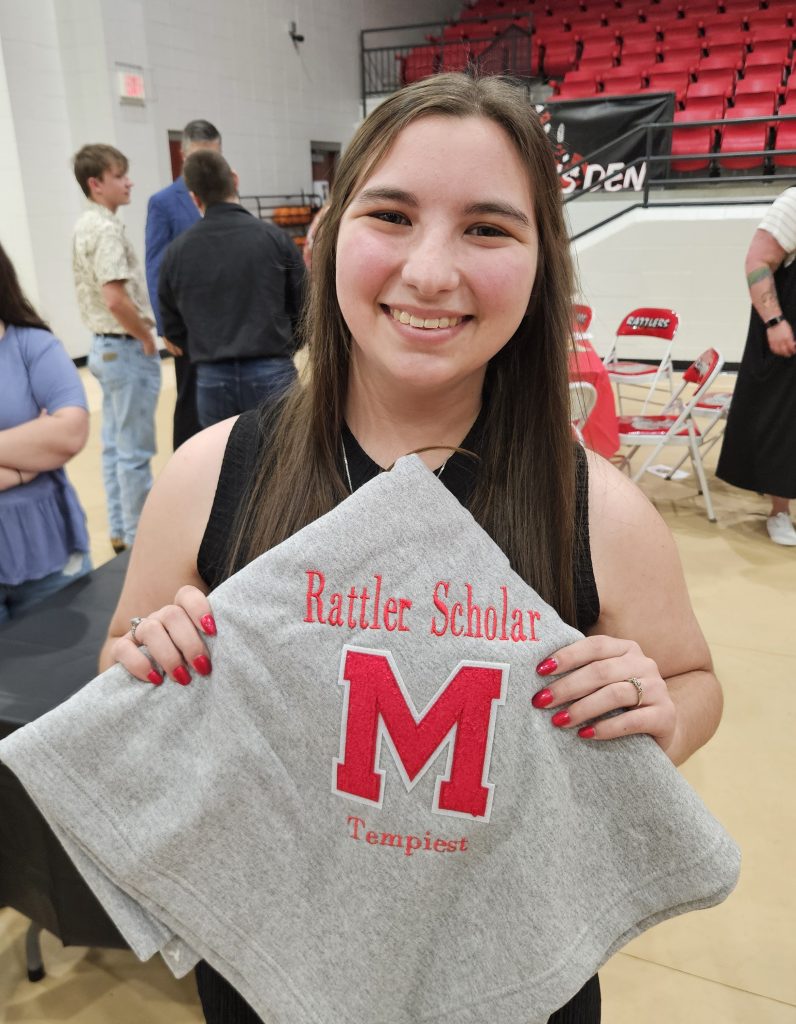
On Tuesday, May 13, Magazine High School held its 4th Annual Scholars Banquet. To be recognized, students must earn a 3.5 or higher GPA each semester. Students are recognized as either a first, second, third, or fourth year scholar, depending on the cumulative number of semesters they are eligible. Students recieve a gift for each year: First Year Scholars recieve a t-shirt, Second Year Scholars recieve an insulated cup, Third Year Scholars recieve a plaque, and Fourth Year Scholars recieve a personalized “letter” blanket. As this was only the fourth year of the program, is was the school’s first opportunity to recognize the 4th Year Scholars.
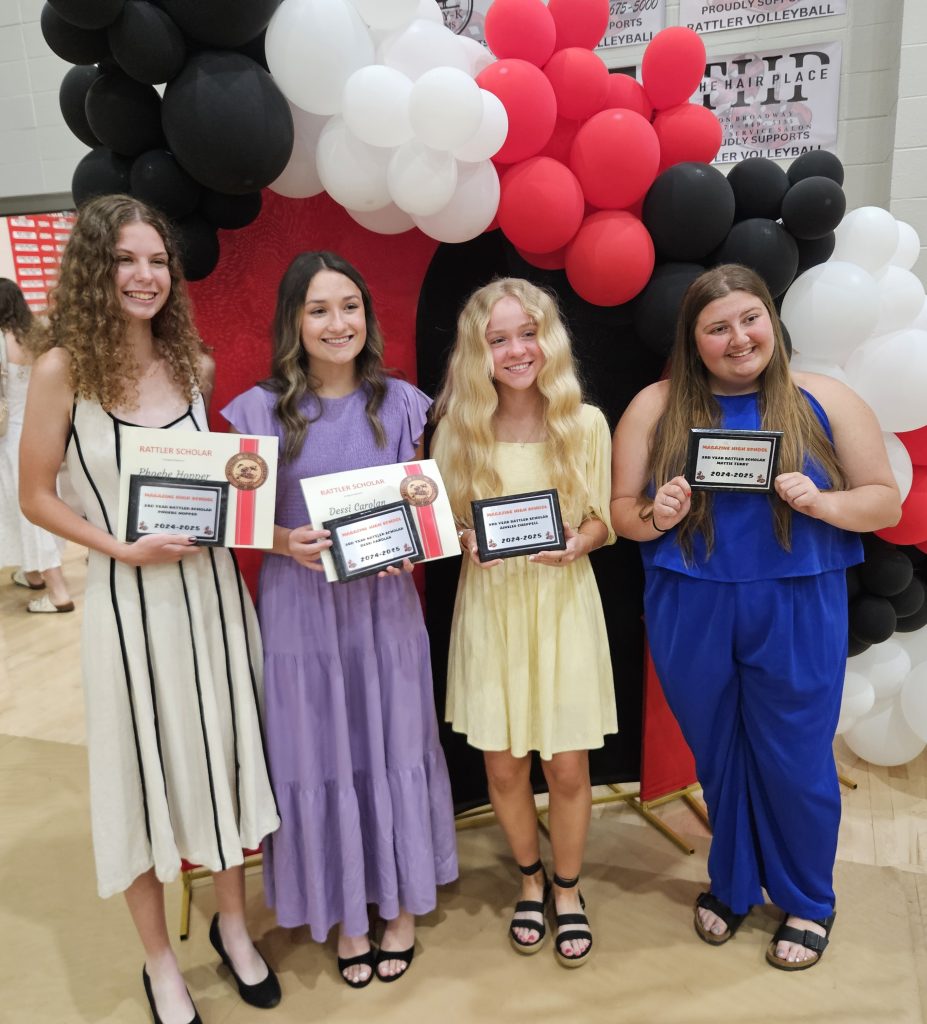
At each banquet, a former Rattler is asked to return to their Alma Mater to speak to the current scholars. This year’s guest speaker was Bryan Beck, valedictorian from the class of 1991.
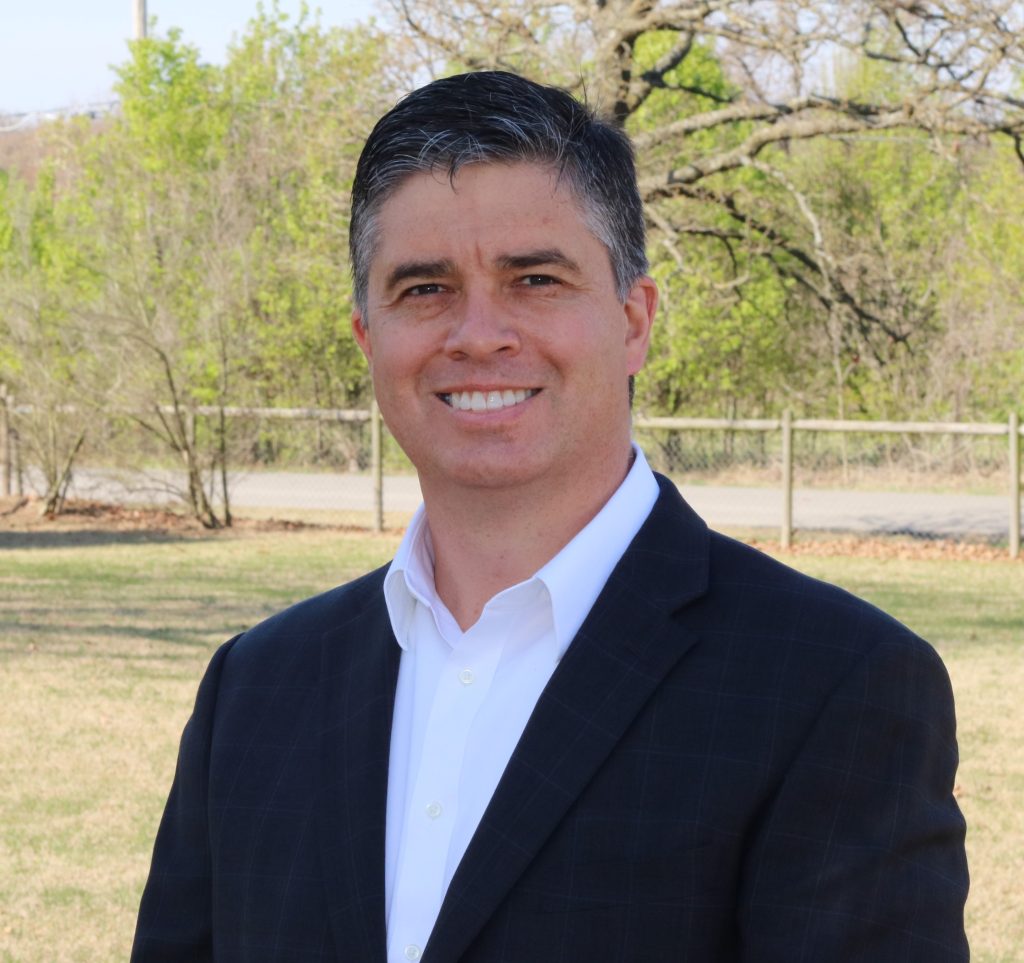
Bryan attended the University of Arkansas Fayetteville where he graduated Cum Laude in 1995 with his Bachelor of Science in Mechanical Engineering He joined the U.S. Navy straight out of college, where he was a Qualified Submarine Chief Engineer. He left active duty in 2002 with the rank of Lieutenant. Bryan continued his education, earning his Master of Science in Industrial Engineering from the University of Florida in 2002. He is a Licensed Professional Engineer in the State of Oklahoma. Bryan currently resides in Tulsa with his wife, Katy, son Lex, and daughter Reagen. Currently, Bryan travels all over the world as a Global Product Strategies manager for John Zink, a Tulsa-based provider of specialty combustion equipment.
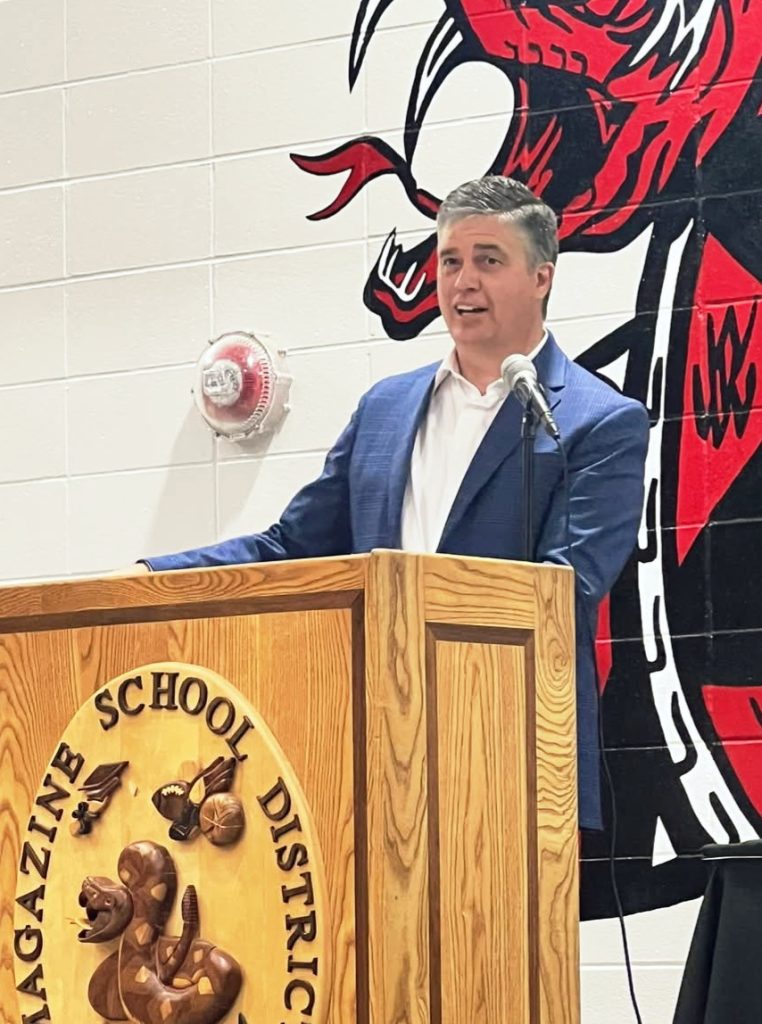
In addition to recognizing the students for their hard work, the Administration also recognized multiple staff members who continued their education this school year and earned Bachelor’s or Master’s degrees while continuing to work full time. These staff were praised for setting an example for their students by being life-long learners.
Students and their families and guests enjoyed a dinner of chicken spaghetti, green beans, garlic toast, and strawberry shortcake prepared and served by the Magazine cafeteria staff.