

Make a Splash and Donate with Our Blood Institute

Get ready to dive in and make waves! Make a splash by donating blood with Our Blood Institute this May and June to help save lives!
Starting May 1, 2025, successful Our Blood Institute donors will receive a limited-edition shark-themed T-shirt, while supplies last.* Plus, donors will get one free ticket to Magic Springs Theme and Water Park!
Our Blood Institute will hold a blood drive with Walmart Booneville on Friday, June 20, from 1:30 p.m. to 6 p.m. on the bloodmobile.
“Just like sharks never stop swimming, the need for blood donations never stops,” said Dr. John Armitage, president and CEO of Our Blood Institute. “By rolling up your sleeve, you’re making a lifesaving impact for patients in need. It’s a simple act of generosity that keeps our community strong.”
When you visit Magic Springs Theme Park and Water Park, you get two parks for the price of one! Immerse yourself in over 80 attractions including Arkansas Twister roller coaster and thrill rides such as Plummet Summit and The Gauntlet. When you’re ready to cool off, head over to Crystal Falls to take a dip in the pool and action-packed water slides. There’s something for everyone at Magic Springs.
Anyone who is healthy and 16 years old* or older can give blood. Donation typically takes only about an hour, and one donation saves up to three lives. Appointments to donate can be made online at obi.org or by calling 877-340-8777. Walk-ins are also welcome.
*16-year-olds must weigh at least 125 pounds and provide signed parental permission; 17-year-olds must weigh at least 125 pounds; 18+ year olds must weigh at least 110 pounds. Photo ID required.

Obituary: Robert Douglas Wagner (1966-2025)

Robert Douglas Wagner of Waldron, Arkansas passed from this life, Tuesday, June 3, 2025 in Fort Smith, Arkansas with his family by his side. Robert was born October 5, 1966 in Danville, Arkansas. He was the youngest child of John B. (JB) and Margaret Wagner.
Robert was raised in the Nola community and Fourche Valley area. He loved the outdoors, where he could hunt, fish and run dogs. Hunting (or just hanging out) with his best friends, Lenny Allen and Ronnie Powell was a special treat for him. Robert walked to the beat of his own drum, but he had a good heart. He was always willing to help a friend in need.
Robert leaves behind to cherish his memory son, Tyler (Samantha) of Lavaca, Arkansas and daughter Lauren (Ty) of Lavaca, Arkansas and bonus daughter Samantha VanCleave of Honolulu Hawaii. Robert was especially loved by his grandchildren: Havana, Easton, Blakely, Walker, Abigail, Charlotte and Emrys. He is also survived by sister Tammie Sparks (Roger) of Waldron, Arkansas, brothers: Bruce Wagner (Mickey) of Maumelle and John Wagner (Shelley) of Houston, Texas, a special friend Libby Wagner. Robert will be missed by all those he touched on his journey through life, including a host of nieces, nephews, cousins and best friends Lenny Allen and Ronnie Powell and family.
Robert was preceded in death by one son Zach Wagner, his parents JB and Margaret Wagner and older brother Mark Wagner.
Robert’s celebration of life will be 11:00 a.m. Saturday, June 7, 2025 at the Heritage Memorial Funeral Home Chapel in Waldron, Arkansas with Bro. Johnny Wagner officiating. Interment will follow in the Parks Cemetery in Nola, Arkansa. Arrangements are being entrusted to the Heritage Memorial Funeral Home in Waldron, Arkansas.
Robert’s pallbearers will be Tyler Wagner, Derick Nelson, Ty Stokes, Daniel Bazar, Moe Shores and Cort Sparks. Honorary pallbearers will be Bruce Wagner, John Wagner and Roger Sparks.
Vesta Methodist Church in Charleston Welcomes New Pastor
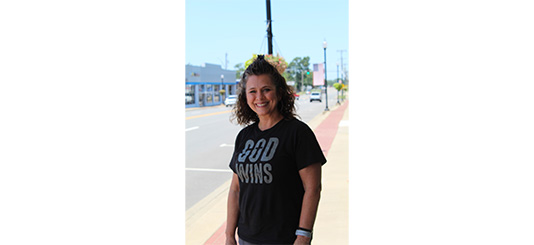
We, at Vesta Methodist Church, are excited to welcome Pastor Gina Hamlin and her husband Steve to our Global Methodist congregation! Pastor Gina will begin her ministry with us on Sunday, July 6th, 2025, in our 9:00 AM Worship Service!
Pastor Gina has both her Bachelors and Master’s Degrees in Education from Arkansas Tech University in Russellville and is the Library Media Specialist for the Middle School and High School in Roland, OK. This is her 30th year in Education…with some years in Arkansas, but many more in Oklahoma, just 30 minutes away from their home in Alma. Her husband, Steve, is Shipping Supervisor at International Paper in Fort Smith. Pastor Gina adds, “He has been there for 36 years. This is hard to believe, since he’s only 30!” He has also been a referee for many years and has called games just about everywhere!

Pastor Gina and Steve enjoy fishing, going to Christian concerts, and watching football, boxing, and other sports. The pastor also loves to run, sing, go to consignment stores, and spend time with family and friends! Between the two of them, they have three grown children: Cody, Bethany, and Christian.
Pastor Gina says, “First, I would like to thank God for assigning my husband, Steve, and myself to Vesta Methodist Church! We have always believed that God calls us for a season and a reason. And, we can’t wait to see what He has in store for all of us during this time! So thankful that God can use me and my hubby to serve Him!”
She adds, “I have felt a calling since I was young to preach, but my mother confirmed my calling back in 2013, before she passed away. I was blessed to be raised in church and have much gratitude for my dad and mom’s influence. I went to Local License to Preach School in Conway, took Continuing Pastoral Classes, and then disaffiliated from the United Methodist Church. I was ordained as a Deacon in The Global Methodist Church in 2024. However, I may continue taking classes.”
To Vesta Methodist congregants and the surrounding communities, Pastor Gina says, “Can’t wait to get to know you all! Praying for you already. Please pray for us!”
All are welcome to worship with Vesta Methodist Church (8833 Hwy 217, Charleston, AR) on Sundays at 9 AM. Sunday School classes, for all ages, are held from 10:15 AM to 11 AM as well. Hebrews 10:24-25 says, “And let us consider one another in order to stir up love and good works, not forsaking the assembling of ourselves together, as is the manner of some, but exhorting one another, and so much the more as you see the Day approaching.”
State Capitol Week in Review from Senator Terry Rice
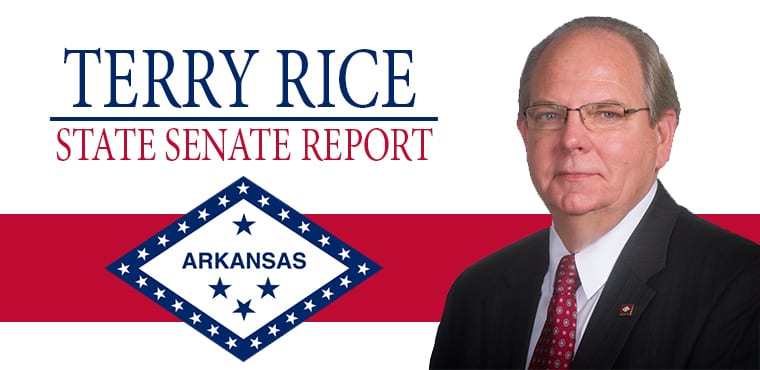
LITTLE ROCK – Arkansas ranks first in the nation in election integrity, according to the most recent study by the Heritage Foundation.
Last year Arkansas ranked number eight. At a press conference at the Capitol, the Governor, the Secretary of State and members of the legislature announced the newest ranking.
They attributed the state’s moving up in the rankings to prioritizing in recent years the passage of laws that secure the integrity of voter registration and processing ballots.
According to one senator, the Heritage Foundation rankings have long been the gold standard for comparing how well states prevent voter fraud.
Arkansas scored 91 out of 100 on the recent scorecard, including 20 out of 20 in the category of voter ID implementation. We scored three out of three in granting access to election observers, four out of four in verification of citizenship of voters, three out of three in requiring identification of people who assist others to vote and three out of three in prohibiting election officials from receiving pay or benefits from private sources.
Arkansas scored six out of six in how we monitor voter registration to prevent fraud. For example, Arkansas does not allow registration on the same day as elections. Requiring voter registration ahead of an election allows more time to verify the accuracy of applications.
However, Arkansas scored 26 out of 28 in the category that measured the accuracy of voter registration lists. One negative score was for not including photographs of voters on the lists of registered voters, where they are kept electronically.
The legislature’s approval of Act 840 of 2025 may correct a negative score in the Heritage rankings. The act allows the Secretary of State to share voter registration lists with federal courts, which use them for jury selection. In return, the courts will notify the state of ineligible voters such as non-citizens, convicted felons, dead people or non-residents of the state.
The Heritage Foundation scorecard did not include a package of bills enacted earlier this year that prevent deceptive practices when canvassers collect signatures in order to place an issue on the ballot.
However, the governor specifically mentioned several of them, such as Act 218 of 2025 to require canvassers to inform people, before collecting their signatures, that petition fraud is a Class A misdemeanor. The disclosure could be verbal, or in a separate written document that would be shown to people before they sign.
She also mentioned Act 240 to require canvassers to view a photo ID of each person signing the petition. If canvassers are unable to verify someone’s identity, they may not collect a signature.
The governor mentioned another bill that strengthens the protections of the signature-gathering process – Act 241. It requires canvassers to submit a sworn statement that they have complied with all state laws governing the collection of signatures, and with the Constitution. Unless canvassers submit the sworn statements, any signatures they submit will not be counted.
The Secretary of State listed measures to ensure the accuracy of voter registration lists, such as partnering with credit bureaus to determine that people actually live where they say they do on applications. Agreements with other states reveal whether people are registered in more than one state.
Arvest Invites Community to Million Meals Campaign Reveal June 12

FORT SMITH, Ark. (June 4, 2025) – Arvest Bank will host a community event to reveal fundraising totals from its 15th annual Million Meals campaign. The event will run from 11 a.m. to 1 p.m. on Thursday, June 12, in the parking lot of the Arvest Bank Tower at 5000 Rogers Ave. in Fort Smith. Food trucks will be on-site for attendees to purchase food, with a portion of the proceeds to benefit next year’s campaign.
The annual Million Meals campaign, which ran April through May this year, helps raise awareness about food insecurity and collects donations to donate directly to the bank’s more than 80 food partners throughout Arkansas, Oklahoma, Missouri and Kansas. Arvest associates from the Fort Smith region will also present checks to their food partners during the reveal.
The event, which will feature leaders from the city of Fort Smith and area food partner organizations, will also include a special presentation to honor the late Charolette Tidwell, who founded Antioch for Youth & Family in Fort Smith 25 years ago.
“We’re very excited to celebrate another successful Million Meals campaign and recognize the food partners who work tirelessly all year long to help those in need,” said Jennifer Caldwell, Community Marketing Manager for Arvest Bank – Fort Smith Region. “While our campaign just ended, their work continues, and we want to take a moment to say thank you to them and everyone who contributed to this year’s initiative.”
Money collected during the Million Meals campaign goes directly to the bank’s food partners to help them meet an increase in demand during the summer months when many families with children don’t have the benefit of free or reduced lunches at school. Over 14 years, the campaign has provided more than 25 million meals and collected more than $4.6 million in donations through 2024.
For more information about Million Meals and local food partners, visit arvest.com/millionmeals.