


Mike Jones Announces Candidacy for State Representative, District 52

Mike Jones has officially announced his candidacy for State Representative for Arkansas House District 52, entering the Republican Primary set for March 3, 2026. District 52 encompasses Scott and Yell Counties, along with a portion of Sebastian County. The seat is currently held by Marcus Richmond, who is not seeking re-election.
In his announcement, Jones expressed enthusiasm about the opportunity to serve the district.
“I am excited about running for State Representative and being a voice for our district at the Capitol in Little Rock,”Jones said. “I am a pro-life Christian, a proud supporter of our gun rights and believe in private property rights. I know we need access to good healthcare, educational opportunities that include vocational training, and economic growth. I am looking forward to visiting with people and finding out what they feel are the important issues impacting our communities.”
Jones brings deep ties to the region and a background rooted in agriculture. He operates a cow/calf farm and a row crop operation spanning Yell and Pope Counties. He is a lifetime member of the Arkansas Gun Owners Association and the American Quarter Horse Association. His community involvement also includes memberships in the Yell County Wildlife Federation, Delta Waterfowl, and the Arkansas Cattlemen’s Association.
Family and faith play a central role in Jones’ life. He has three children and two grandchildren. His oldest son, Colton, works alongside him in the family’s ranching operation. His son Zeke is set to attend the U.S. Air Force Academy this fall, while his daughter Lalou is currently a student at Dardanelle Middle School. Jones is an active member of First Baptist Church of Dardanelle.
For more information on Mike Jones and his campaign, visit www.mikejonesforstaterep.com.




State Capitol Week in Review From Senator Terry Rice

LITTLE ROCK – The Arkansas legislature and the governor agreed earlier this year that food stamps should not be used to buy candy, soft drinks and junk food.
Now it appears that the federal government also agrees. The U.S. Department of Agriculture recently approved a waiver that allows Nebraska to impose the first ever restriction against using food stamps to purchase soda and energy drinks.
Arkansas officials are waiting for approval of a similar waiver, but one that would go even further. It would allow Arkansas to prohibit food stamp purchases of soft drinks and candy. The candy prohibition will extend to confectionary products made with flour. The soda prohibition will include fruit and vegetable drinks with less than 50 percent natural juice.
If approved, the waiver would allow people to buy hot rotisserie chicken with food stamps, which they cannot do now. In a letter to federal officials the governor said that allowing rotisserie chicken is a common sense reform because it is high in protein, easily affordable and can feed a family.
The food stamp program is officially known as the Supplemental Nutrition Assistance Program (SNAP). It does not pay for alcohol and tobacco products. The changes in the Arkansas food stamp program would take effect July 1, 2026.
In February, about 239,000 Arkansas residents received SNAP benefits. The average benefit last year was $299.36 a month for each household.
The governor used forceful language in her letter to the Secretary of Agriculture urging his agency to approve the waiver.
“It is clear that the current system encourages and subsidizes the overconsumption of unhealthy, highly processed, and addictive food and beverages,” she wrote.
The legislature supports the change. Earlier this year, during the regular session, lawmakers approved Act 969 of 2025 to require state officials to seek the waiver.
According to state officials, about 23 percent of SNAP benefits are spent on soft drinks, snacks, candy and desserts. National surveys indicate that Americans are consuming more sweet drinks every year. Obesity, heart disease, high blood pressure and diabetes and other chronic illnesses cost Arkansas Medicaid about $300 million a year to treat.
State officials will work with retailers to help them make changes in cash registers so that they can identify which foods can be paid for with an EBT card. It’s like a bank card except it is loaded with SNAP benefits. EBT stands for Electronic Benefits Transfer.
Community Assistance Grants
Cities, counties, unincorporated communities and non-profit organizations have until July 31 to apply for grants of up to $1.5 million from the Arkansas Economic Development Commission.
The grants can pay for renovations, equipment and new construction of public buildings and facilities such as parks, ball fields, picnic areas and trails. They can pay for training expenses related to workforce development. They cannot be used for private fairgrounds, lobbying, entertainment or the purchase of alcohol. They cannot pay off debt or any expenses incurred before the grants are awarded.
Publication reveals soil lab use, fertility findings for blackberries, row crops, forages
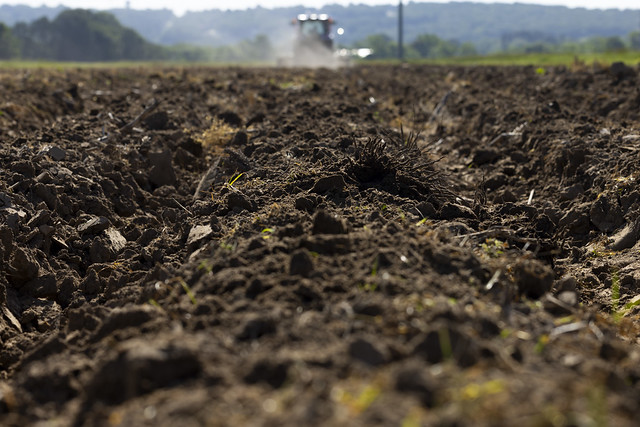
By Maddie Johnson
University of Arkansas System Division of Agriculture
Arkansas Agricultural Experiment Station
When you test more than 200,000 soil samples in a year, you not only learn something about how Arkansans grow crops, gardens and lawns, but also the value of recommendations that result from soil test results.
Each year, the Arkansas Agricultural Experiment Station publishes the Wayne E. Sabbe Arkansas Soil Fertility Studies. The latest edition, released in spring, features 12 research reports prepared by scientists with the University of Arkansas System Division of Agriculture and the Dale Bumpers College of Agricultural, Food and Life Sciences at the University of Arkansas.
This edition includes investigations into the effects of fertilization on row crops, blackberries, forage and soil, plant tissue nutrient testing and perceptions of stakeholders when it comes to the state’s public soil testing program.
Each year, the feature article summarizes the chemical properties of soil samples to the Arkansas Soil Testing Program. In 2023, Arkansas clients submitted a record of 201,896 soil samples — representing approximately 1.5 million acres of land — to the experiment station’s Marianna Soil Test Lab. The article found that row crop use accounted for 74 percent of sampled acreage, hay and pasture uses accounted for 15 percent, and home lawns and gardens accounted for 2.3 percent. Mississippi County submitted the most samples, with 26,953; Clay was next at 23,141 and Poinsett County was third with 22,669 samples.
A study led by Aurelie Poncet, assistant professor with the crop, soil, and environmental sciences department, found that 81 percent of those who submitted samples to the soil test lab used lime and fertilizer recommendations from the Division of Agriculture to improve soil fertility.
“We have a very comprehensive record each year about the status of soil fertility across the state of Arkansas,” said Nathan Slaton, who edited the publication and serves as associate vice president for agriculture and assistant director of the experiment station.
Slaton noted how the publication’s reports are of interest to a variety of stakeholders, from horticulturists to rice producers, reflecting the widely applicable nature of the work.
The online publication sees hundreds of downloads from across the United States — and the world — Slaton said. Ultimately, the publication helps university researchers validate or develop new fertilizer and soil nutrient management recommendations.
“It’s important that as production systems change and new genetics are released into the hands of farmers … that soil fertility data that evaluates the reliability of soil test information is checked over time,” Slaton said.
The 2024 Arkansas Soil Fertility Studies include:
- Arkansas soil-test summary for samples collected in 2023
- Sulfate runoff dynamics from edge-of-field losses at selected Arkansas Discovery Farms
- Potassium fertilization effects on cotton yield and tissue-K concentration in Arkansas
- Assessment of potassium loss by runoff in different cotton production systems
- Bermudagrass forage yield and soil test response to phosphorus and potassium fertilization
- Verifying nitrogen rate recommendations for blackberry grown in Arkansas
- Effectiveness of in-season potassium fertilization on irrigated corn production
- NUMBERS: Nutrient management database for effective rate selection
- Assessing producers’ engagement with the services provided by the Marianna Soil Test Laboratory
- Updated profit-maximizing potash fertilizer recommendations for corn
- Cotton response to nitrogen on silt loam soils: Year two results
- Cover crop and phosphorus and potassium application rate effects on soil-test values and cotton yield
Leading free soil testing
All Arkansans can submit soil for free testing thanks to the Arkansas Fertilizer Tonnage Fee Program. Fertilizer tonnage fees are used to support routine soil testing services, soil fertility research, and the regulation and enforcement of fertilizer-related laws that benefit both farmers and the broader public.
Residents can submit soil samples to an Arkansas Cooperative Extension Service county office, which will then forward them to the Marianna lab. These extension offices are located in each of Arkansas’ 75 counties. The extension service is the outreach arm of the Division of Agriculture.
The lab’s routine analysis sheds light on soil pH and nutrient availability for selected nutrients, providing recommendations to achieve optimal soil fertility based on crop. The testing is used by individuals from golf course superintendents and farmers to home gardeners and landscapers.
Poncet’s study assessed producers’ use and satisfaction when it comes to the Marianna lab. Researchers collected 98 responses that were considered representative of Arkansas producers’ practices.
Responses revealed that most of the state’s producers collect soil samples to inform their management practices and use the free soil testing services provided by Marianna lab. Overall, most Arkansas producers are satisfied with the lab and its services.
The Marianna lab, which is the second-largest public soil testing program in the United States, accounts for 80 to 85 percent of the analysis for all of the samples collected in Arkansas, according to Slaton.
To learn more about the Division of Agriculture research, visit the Arkansas Agricultural Experiment Station website. Follow us on X at @ArkAgResearch, subscribe to the Food, Farms and Forests podcast and sign up for our monthly newsletter, the Arkansas Agricultural Research Report. To learn more about the Division of Agriculture, visit uada.edu. Follow us on X at @AgInArk. To learn about extension programs in Arkansas, contact your local Cooperative Extension Service agent or visit uaex.uada.edu.