



Obituary: Bobby Don Shores (1935-2025)
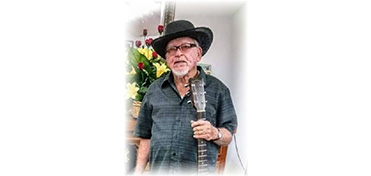
Bobby Don Shores of Waldron, Arkansas went to be with his Lord and Savior, Thursday, April 10, 2025 in Waldron, Arkansas with his family by his side.Bob was born September 22, 1935 in Waldron, Arkansas to Samuel Shores and Vonnie Mae (Cook) Shores. He was 89 years old.
Bobby Don grew up in and around Waldron. He left Waldron and went to Missouri where he met and married the love of his life, Peggie Sue. He worked for 40 plus years for Continental Baking Company. Together they lived and made life for 67 years. After retirement they relocated to Waldron and made many wonderful friends and made the music circuit. Bobby and Peggie were notorious for their love of music. Sharing their talents by playing in many churches, senior centers and nursing homes across this part of Arkansas and beyond. Bobby played by ear. He could remember lyrics from his childhood. Bobby was a kind and warm person. He had a gift for being a people person. Throughout the years, he helped many family members who continued to check in, stop by and call on a regular basis just because. Bobby enjoyed having fun, laughing and spending time with his loved ones.
Bobby Don leaves behind to cherish his memory, one son, Larry Don Shores and wife Cindy, grandsons: Trenton Don Shores (Christy) and Jacob Lee (Angel) and great grandchildren: Logan, Evan, Riley, Brendan, Emily, James and Kylee and great great grandchildren, Adeline and Nevaeh. Bobby Don will be missed by all that knew him and the many whose lives he impacted including a host of extended family, friends and loved ones.
Bobby Don was preceded in death by his loving wife of 67 years, his parents, Samuel and Vonnie, and all his siblings.
Bobby Don’s life celebration will be 2:00 p.m. Saturday, April 19, 2025 at the Heritage Memorial Funeral Home in Waldron, Arkansas with Rev. Doyle Reynolds officiating. Interment will follow in the Pilot Prairie Cemetery near Waldron, Arkansas. Arrangements are being entrusted to the Heritage Memorial Funeral Home in Waldron, Arkansas.
Bobby Don’s visitation will be Saturday, April 19, 2025 from 1:00 p.m. until 2:00 p.m. at the Heritage Memorial Funeral Home in Waldron, Arkansas.
Church Makes Donation to Local Emergency Services Provider
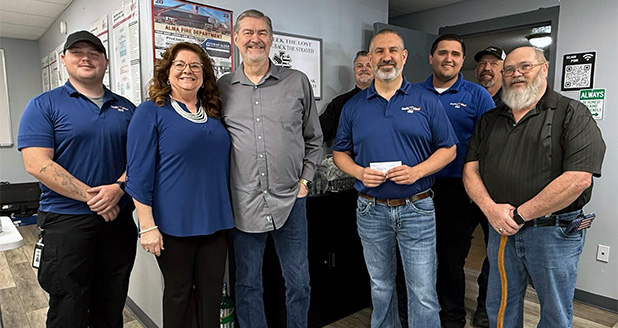
A church’s mission to carry the gospel outside their four walls proved to be a blessing to a local EMS provider.
On Saturday, April 12, the pastor, his wife and several congregational members of the Family Worship Center in Van Buren presented Southwest EMS with a check for $4,000.
“We have a lot of givers in our church, and we want to be a blessing to our community,” shared the pastor’s wife, Penny Ring. Pastor Terry Ring agreed, stating, “We are blessed to be a blessing. Not a handout to just receive, but to reach out and be a blessing.”
A blessing it was, as Mike Hines, SWEMS Director of Operations, accepted the donation. “This money will be used to equip our trucks with ultrasound equipment.”
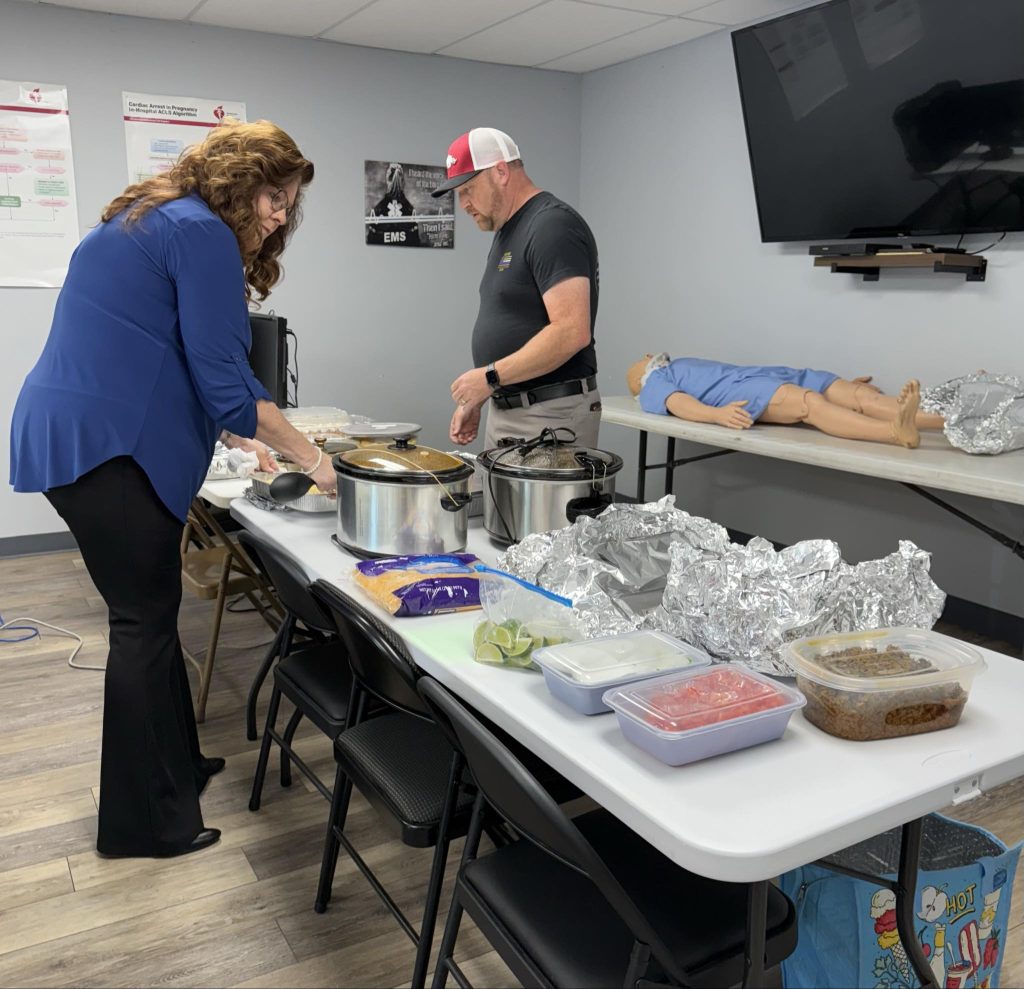
Members of the congregation were not only generous to donate financially, but they also catered a meal to crew members. Two SWEMS alumni and members of the church, Tommy Gregory and Ronnie Schader, enjoyed reminiscing about their days of service.
With sincere appreciation for the service the men and women of SWEMS provide on a daily basis, the church extended a prayer of gratitude. That same expression and ministry in action that they have, in the past, extended to the Crawford County Sheriff’s Department, and King’s Elementary School.
“We are so grateful for this church,” commented SWEMS Education Director Ryan Rowe. “We are humbled that they choose us, and we want to continue to provide the very best service we can to our community… This donation will certainly help us do that.”
Benefits of using natural dyes, plastic dyeable eggs this Easter

By Rebekah Hall
U of A System Division of Agriculture
Dyeing and decorating eggs is a longstanding part of Easter celebrations for many families, but for people concerned about egg prices and food allergies, Cooperative Extension Service experts suggest giving natural dyes and dyeable plastic eggs a try this year.
Angie Freel, Howard County extension family and consumer sciences agent for the University of Arkansas System Division of Agriculture, said high egg prices due to highly pathogenic avian influenza may have some families reconsidering using real eggs for Easter decorating.
“Many people may be wondering if it’s worth the current investment to dye ‘real’ eggs for Easter this year, at nearly $6 to $7 per dozen at some stores,” Freel said. “Fortunately, there is an alternative to using real eggs to dye. Dyeable plastic Easter eggs are available online for $1 to $3 per dozen and may even be available at local discount stores.”
Plastic dyeable eggs often come with a dyeing kit and instructions for use. In addition to being cost-effective, using plastic eggs also eliminates the food safety element that comes with using real eggs.
“With a plastic egg, if it’s been hidden outside and you don’t find it for a few weeks, you won’t have a terrible smell,” Freel said. “And if you do choose to use real eggs for dyeing, do not eat them if they have been out of the refrigerator for more than two hours. If the temperature is above 90 degrees, leave them out no longer than one hour.
“Realistically, it’s not a very safe option on the chance someone eats an egg that has been out of the refrigerator for more than two hours,” Freel said. “There is also a risk of bacterial contamination while dying the eggs.”
Natural dyes
Freel said families may also want to consider using natural ingredients to create dyes for their eggs.
“If people choose not to use natural dyes, the artificial ingredients used to make some dyes could produce an allergic reaction in some people,” Freel said. “Some food dyes have been banned, but people might use one kit for several years before using it up.”
Natural dyes also allow families to experiment with many different colors, and Freel said the natural dyes produce deeper, richer colors.
“Using natural dyes on your eggs gives them a subtle yet gorgeous color, and the longer you leave them in the dye, the darker they become,” Freel said. “You may want to experiment with color variations by combining one or more of the dyes and leaving them in the refrigerator overnight in the dye bath to darken the color.
“You can add designs to the eggs by wetting and sticking small leaves and flowers to the egg, wrapping them tightly in a strip of pantyhose and securing the top with a string or rubber band before submerging in the dye,” Freel said. “And once the eggs are dyed and dried, I like to rub the eggs with a coat of vegetable oil for a beautiful sheen.”
Freel said families should use the following method to dye real or plastic eggs with natural ingredients:
Combine one quart of water with two teaspoons of vinegar, doubling or tripling this recipe as necessary. Submerge either hard-boiled eggs or your dyeable plastic eggs. You can even hard boil the real eggs in the dye for a brighter outcome. Bring the water to a boil, then add your natural ingredients:
- Red onion skins create an orange/red color
- Turmeric creates a bright yellow color
- Beets create a pink color with white eggs or maroon color with brown eggs
- Red cabbage creates a blue color
- White onion skins or leftover coffee create a tan color
The heat from boiling helps to release the color from the item into the water, and the vinegar helps the dye adhere to the egg. If using real eggs, boil the eggs as usual, then add the vinegar and dye item after boiling, although doing it all at once speeds up the process.
For more information on eggs, substitutions in cooking, or natural egg dyes, visit the Life Skills and Wellness Resources page on the Cooperative Extension Service Website.
To learn about extension programs in Arkansas, contact your local Cooperative Extension Service agent or visit www.uaex.uada.edu. Follow us on X and Instagram at @AR_Extension. To learn more about Division of Agriculture research, visit the Arkansas Agricultural Experiment Station website: https://aaes.uada.edu. Follow on X at @ArkAgResearch. To learn more about the Division of Agriculture, visit https://uada.edu/. Follow us on X at @AgInArk.
About the Division of Agriculture
The University of Arkansas System Division of Agriculture’s mission is to strengthen agriculture, communities, and families by connecting trusted research to the adoption of best practices. Through the Agricultural Experiment Station and the Cooperative Extension Service, the Division of Agriculture conducts research and extension work within the nation’s historic land grant education system.
The Division of Agriculture is one of 20 entities within the University of Arkansas System. It has offices in all 75 counties in Arkansas and faculty on three campuses.
Pursuant to 7 CFR § 15.3, the University of Arkansas System Division of Agriculture offers all its Extension and Research programs and services (including employment) without regard to race, color, sex, national origin, religion, age, disability, marital or veteran status, genetic information, sexual preference, pregnancy or any other legally protected status, and is an equal opportunity institution.
CBD Oils: Do you know what’s inside?

By Maddie Johnson
University of Arkansas System Division of Agriculture
Arkansas Agricultural Experiment Station
Since the 2018 Farm Bill effectively legalized hemp-derived cannabidiol — better known as CBD — there’s been an exponential growth in products hitting the market, but a newly published study suggests consumer understanding of the products has not kept pace.
“You’ve now got new products on the market that have never been there before, and so there’s a pretty long learning curve for the average consumer,” said Brandon McFadden, professor and researcher of agricultural economics and agribusiness in the Dale Bumpers College of Agricultural, Food and Life Sciences and for the Arkansas Agricultural Experiment Station, the research arm of the University of Arkansas System Division of Agriculture.
CBD oils go by many names and contain a variety of ingredients. For example, “CBD isolate” only contains CBD, but “full-spectrum CBD” contains other compounds such as terpenes and flavonoids, which can contribute to aroma, flavor and overall therapeutic effects.
Full-spectrum CBD also can contain up to up to 0.3 percent delta-9 tetrahydrocannabinol, or THC, by weight — the legal threshold set by the federal government for hemp-derived CBD products.
Products with THC levels above this threshold would be classified as marijuana and considered illegal under federal law. THC is known for its psychoactive properties, but there is debate on whether any psychotropic or intoxicating effects are felt for THC levels below 1 percent, McFadden noted.
Considering the many types of CBD products and their distinctions, McFadden led a study surveying consumers to gauge their confusion when it came to product names. Those surveyed completed two product selection tasks. In both selection tasks, consumers chose between CBD isolate, hemp oil, full-spectrum CBD and broad-spectrum CBD, which is a middle ground between the isolate and full-spectrum choices and contains no THC.
In one task, respondents were provided the common name of three CBD oil products, as well as hemp oil, and were asked to imagine they were purchasing 1000-mg CBD oil for themselves or a loved one. In the other task, they were faced with the same choice but were given more information about the products’ contents. The content information included concentration levels of CBD and THC, as well as the presence of additional compounds.
The consumers surveyed included those who had reported previous CBD purchases and those who had not.
The study, “Consumer Confusion About Product Names Commonly Used to Describe Hemp-Based Oils,” was published in the Journal of Consumer Affairs in February.
McFadden said he was surprised by the study’s finding that there was significant interest in CBD isolate among those surveyed who had not previously used CBD products.
“It did seem like there were consumers who were potentially interested in purchasing CBD, but because there was such a learning curve and a lack of knowledge, they wouldn’t participate in the market,” McFadden said.
The findings also showed that for consumers with a strong preference, it was not easy to identify their preferred product based on product name alone. In fact, some consumers who reported previously purchasing CBD products had difficulty distinguishing between CBD oil types.
Co-authors of the study included Kawsheha Muraleetharan, University of Arkansas graduate research assistant studying food science and technology; Benjamin Campbell, University of Georgia professor of agricultural and applied economics; Adam Rabinowitz, Auburn University professor of agricultural economics and rural sociology; Tyler Mark, University of Kentucky associate professor of production economics; and Michael Popp, Harold F. Ohlendorf Professor of agricultural economics and agribusiness with the Division of Agriculture. Popp is also a Bumpers College faculty member.
The work was supported in part by a grant from the Federal-State Marketing Improvement Program from the U.S. Department of Agriculture’s Agricultural Marketing Service, project USDA-AMS-TM-FSMIP-G-20-0004.
Labeling made modern
To combat consumer misconceptions, McFadden pointed to the use of “smart labeling,” which uses technologies such as QR codes on product labels to allow consumers to gain more information than would fit on a printed label, especially the small bottles and containers in which CBD products are often packaged.
“It’s a very powerful tool across all products to provide more consumers with more information, fostering consumer education, which is particularly important for things like new products like CBD,” McFadden said.
McFadden added that these QR codes can take consumers not just to text on product information but to other media, such as videos, to aid in educating those who may not have done prior research.
“So that’s why providing them information at the point of purchase can be very important because they’re unlikely to spend much time before going to a store selling it,” he said.
Mention or depiction of product names does not imply endorsement by the University of Arkansas System Division of Agriculture.
To learn more about the Division of Agriculture research, visit the Arkansas Agricultural Experiment Station website. Follow us on X at @ArkAgResearch, subscribe to the Food, Farms and Forests podcast and sign up for our monthly newsletter, the Arkansas Agricultural Research Report. To learn more about the Division of Agriculture, visit uada.edu. Follow us on X at @AgInArk. To learn about extension programs in Arkansas, contact your local Cooperative Extension Service agent or visit uaex.uada.edu.
About the Division of Agriculture
The University of Arkansas System Division of Agriculture’s mission is to strengthen agriculture, communities, and families by connecting trusted research to the adoption of best practices. Through the Agricultural Experiment Station and the Cooperative Extension Service, the Division of Agriculture conducts research and extension work within the nation’s historic land grant education system.
The Division of Agriculture is one of 20 entities within the University of Arkansas System. It has offices in all 75 counties in Arkansas and faculty on three system campuses.
Pursuant to 7 CFR § 15.3, the University of Arkansas System Division of Agriculture offers all its Extension and Research programs and services (including employment) without regard to race, color, sex, national origin, religion, age, disability, marital or veteran status, genetic information, sexual preference, pregnancy or any other legally protected status, and is an equal opportunity institution.

An egg-straordinary time

By Rebekah Hall
U of A System Division of Agriculture
The national average wholesale price of eggs has declined, but consumers may have a wait before seeing lower prices at the grocery store, said Jada Thompson, associate professor and poultry economist for the University of Arkansas System Division of Agriculture.
Wholesale price changes can take up to three weeks to be reflected in retail stores, so consumers are only now starting to see shelf prices gradually decline, according to the March 28 Egg Markets Overview from the U.S. Department of Agriculture. In February, the average price of a dozen eggs came to $5.90.
“In the same way that just because the barrel price of oil goes down does not mean that gas prices immediately go down, there’s a delay here,” Thompson said. “Retailers get to choose their own price, and they took a lot of losses when prices were exceptionally high. They may be saying, ‘I’ve lost money over here, so I’m going to let what I have in stock go out at the price it currently is before I lower the price, to compensate for that earlier loss.’”
Thompson said that retailers often use eggs as a “loss leader,” meaning the product is sold at a price below its market cost to stimulate the sales of more expensive goods. She said that it serves as an incentive to bring that retail price back down.
However, with highly pathogenic avian influenza — or HPAI — still in the background and typically higher demand at Easter, there could be some price fluctuation.
“Eggs are a basic product that everybody puts in their basket, so I think there will be a pretty quick response to that,” Thompson said. “The only caveats to that are more cases of HPAI and the holiday demand. You’re going to have a little bit of extra demand for the holiday season, so you’re not necessarily going to see the prices go up, but you may see fewer eggs on the shelf. That might drive a little of the competition for those wholesale market eggs, which is eventually going to bump that price a little.”
Transportation and production input costs, including feed, can also impact the price of eggs, Thompson said.
“The cartons, the cleaners, all the things that are going into the inputs, we don’t necessarily manufacture in the United States, so with any disruption in trade there will likely be changes in cost of good, and some of those are going to affect the price of eggs or the price of inputs for those eggs,” Thomspon said.
The price of feed also goes into the cost of producing eggs, and Thompson said those change with corn and soybean prices, “so that has a whole commodity bend to it.”
Though the price of eggs is coming down, Thompson said the extent of the decline would be market-based.
“Some of the markets have been recovering,” she said. “They’ve already had new birds coming online and laying eggs again.
“Some markets are still hit pretty hard,” Thompson said. “I don’t think we’re going to see $1.99 eggs anytime soon, but I think that everybody is working really hard to get back to that.”
HPAI impact and recovery
The outbreak of HPAI in 2024 had a significant impact on the number of egg layers in the country. In 2024, 38 million layers were affected by the bird flu. An additional 30 million layers were affected in January and February 2025, impacting the total number of eggs that end up on grocery store shelves.
“Prior to the disease outbreak, we were producing about 8 billion eggs on a monthly basis,” Thompson said. “For February of 2025, we produced about 6.6 billion. From a scalability perspective, that’s why when people were talking about the high egg prices, it’s because we just don’t have the eggs.”
Thompson said that though the number of layers is still low, she is seeing those numbers coming back up.
“We see really high recovery and replenishment rates in eggs in incubators,” Thompson said. “It looks like the industry is doing an awful lot to try to bump up the number of birds as quickly as possible so that those egg numbers recover as quickly as possible.”
To learn about extension programs in Arkansas, contact your local Cooperative Extension Service agent or visit www.uaex.uada.edu. Follow us on X and Instagram at @AR_Extension. To learn more about Division of Agriculture research, visit the Arkansas Agricultural Experiment Station website: https://aaes.uada.edu. Follow on X at @ArkAgResearch. To learn more about the Division of Agriculture, visit https://uada.edu/. Follow us on X at @AgInArk.
About the Division of Agriculture
The University of Arkansas System Division of Agriculture’s mission is to strengthen agriculture, communities, and families by connecting trusted research to the adoption of best practices. Through the Agricultural Experiment Station and the Cooperative Extension Service, the Division of Agriculture conducts research and extension work within the nation’s historic land grant education system.
The Division of Agriculture is one of 20 entities within the University of Arkansas System. It has offices in all 75 counties in Arkansas and faculty on three campuses.
Pursuant to 7 CFR § 15.3, the University of Arkansas System Division of Agriculture offers all its Extension and Research programs and services (including employment) without regard to race, color, sex, national origin, religion, age, disability, marital or veteran status, genetic information, sexual preference, pregnancy or any other legally protected status, and is an equal opportunity institution.
On Better Roads
“I have learned that the swiftest traveler is he who goes afoot,” or so claimed Henry David Thoreau in his book “Walden.” According to Henry David, a friend had to work all day to earn enough money to take a train ride, while if he walked he could enjoy the birds, eat blackberries and arrive at the end of that same day. I’ve heard Thoreau referred to as the first hippy because of his rejection of materialism, his wish to live a simpler life and his deep appreciation of nature. But his was then, and still is, a minority view. Most of us want to get there fast, and this requires roads. Good roads.
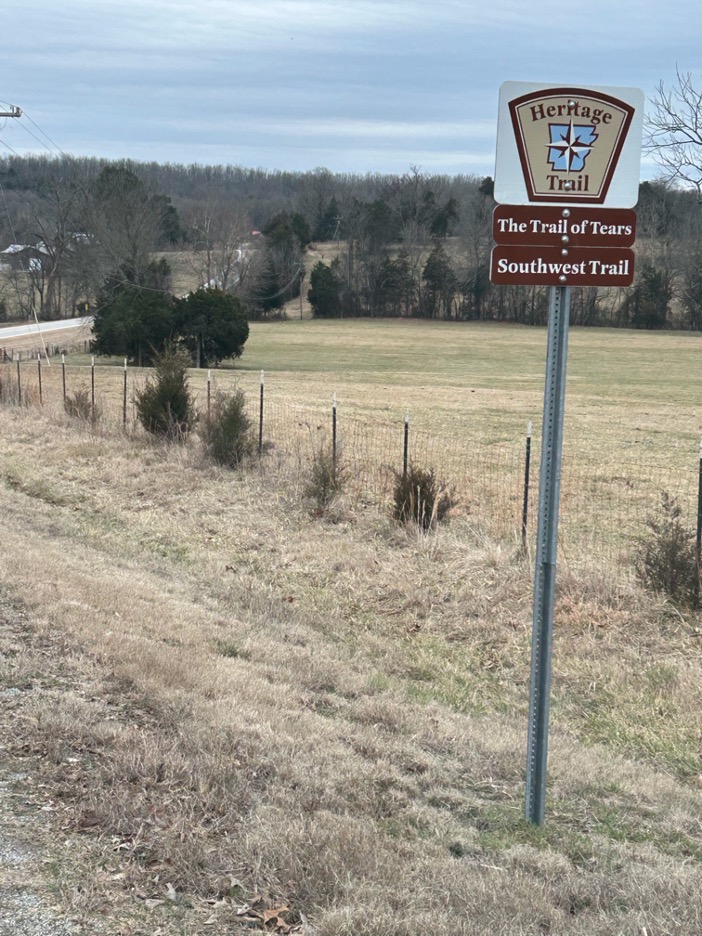
Roadways are a part of civilization. And believe it or not, we need to work together to accomplish the things needed to create a functioning society. Not surprisingly. the first roadways through the backwoods of Arkansas followed trails established by Native Americans. These early trails, usually referred to as military roads, were improved in the 1820s by the Army as a means of getting supplies to far-flung western forts. The Southwestern Trail that ran from St. Louis to the Red River across central Arkansas and the later-named Butterfield Trail route from Springfield, Missouri to Fort Smith are examples.
The Memphis to Little Rock military road was one of the most important early new roads completed prior to statehood. It went through the swampland of the Delta and followed roughly the route of I-40 today. Between the 1830s and 1870, the federal government, to facilitate better mail service and marketing of agricultural goods, spent money on improving and adding what became known as post roads.
But in the 19th century, most people didn’t go far from home. And if they did, they had only to travel to the nearest train station. Local roads were just that, local. In the territorial days before statehood, county courts were given authority over road construction. If 12 property owners wanted a road, a subset of this group would determine its route. Usually, these roads were farm-to-market roads that went from growing areas to a town or a nearby shipping point. All able-bodied men between ages 16 to 45 were required to work on the road within their township. With statehood, these preexisting roadways were declared public property and the local approach to road building was codified.
But there was a wee problem. Once a road was built, there was no provision for maintenance. The state’s residents steadfastly refused to pay taxes for road repair because it was usually large land owners who wanted the roads. Even military roads and post roads suffered because the federal government paid for their construction but decreed maintenance was a local responsibility. Arkansas, because of its mountainous and swampy terrain, became known as having some of the worst roads in the nation.
Then a new fad swept through the land: Bicycling. It was slow to arrive in Arkansas, but by the end of the 19th century, young and boisterous suburbanites wanted better roads on which to ride their new toys. In the early 20th century, this led to the Good Roads Movement, which just happened to coincide with Mr. Ford’s decision to begin mass-producing Model T Fords. Finally, in 1913, the Arkansas Highway Commission was created and established a fledgling statewide system for building and maintaining state roads.
In the spirit of “keeping roads local,” the state legislature passed legislation in 1915 that allowed local officials to create road improvement districts and finance projects with bond money. In a decade, 527 new districts were created, although many began to fail because they couldn’t pay off the bonds. Two years before the stock market crash, the state passed legislation assuming responsibility for paying off the road improvement bonds.
It was during the mid-1920s when the federal government became more influential in dictating roadway construction by dangling the promise of more money if their guidelines were followed. Funding for roadway construction and maintenance shifted away from property owners to road users via gasoline tax. I just renewed the tag on my new plugin hybrid car and learned the state adds a $100 surcharge to the price of my car tag because I now burn a lot less gas.
This week I finished doing my taxes. For one, I don’t really mind paying taxes though it does sting a bit when I have to write out a big check. But, while Mr. Thoreau urged us all to walk, it isn’t going to happen. We humans live in a hive society just like the carpenter ants, nesting in the elm tree by my lawn chairs, who created a nice series of trails leading off in all directions. They did it by working together.
| Gerald Klingaman is a retired Arkansas Extension Horticulturist and retired Operations Director for the Botanical Garden of the Ozarks. After more than two decades of penning the popular Plant of the Week column, he’s taking a new direction, offering views on nature as he pokes about the state and nation. Views and opinions reflect those of the author and are not those of the University of Arkansas System Division of Agriculture. If you have questions or comments for Dr. Klingaman about these articles contact him at musingsonnature@gmail.com. |
Arkansas 4-H members get cracking at 4-H Poultry Judging State Contest
By Rebekah Hall
U of A System Division of Agriculture
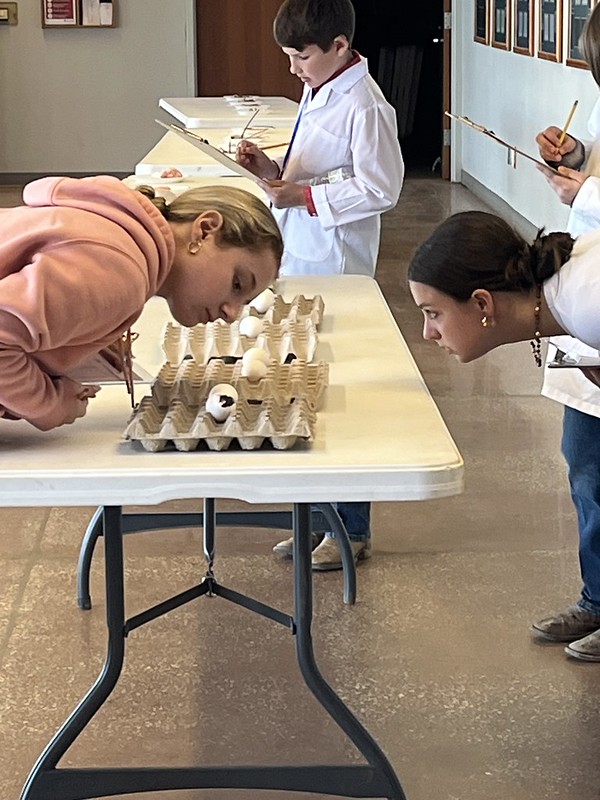
Arkansas 4-H teams from Izard and Sebastian counties tested their knowledge of poultry production, studying eggs inside and out, at the 4-H Poultry Judging State Contest, held April 1.
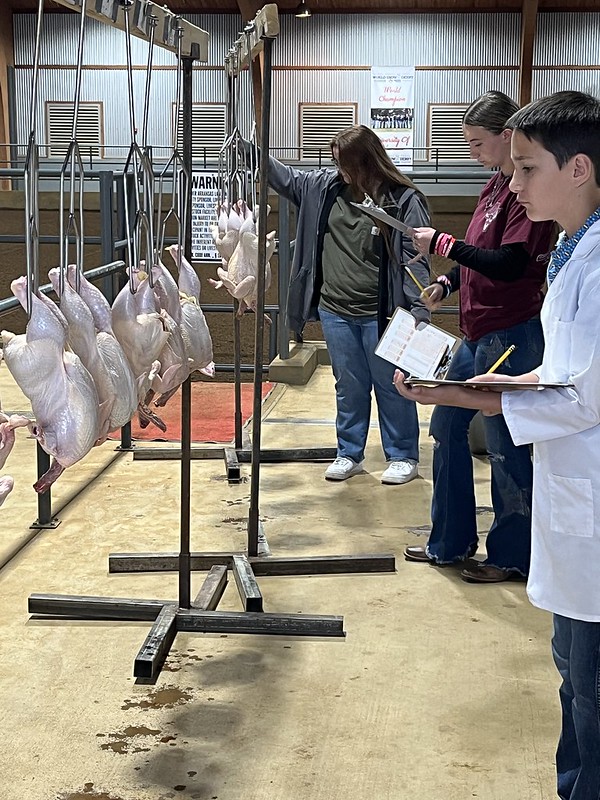
The contest took place at the Pauline Whitaker Arena in Fayetteville, Arkansas. One team of senior 4-H members from Izard County and one team of junior 4-H members from Sebastian County competed in several judging events, including parts identification and assessment of the interior of eggs through a process known as “candling.”
“Candling eggs is when you hold a light source to the egg to see inside of it,” said Andrew Bolton, extension poultry instructor for youth programs for the University of Arkansas System Division of Agriculture. “We do this to check the air cell in the egg, which is an indicator of freshness and quality. It starts tiny when first laid and grows as the egg becomes older.”
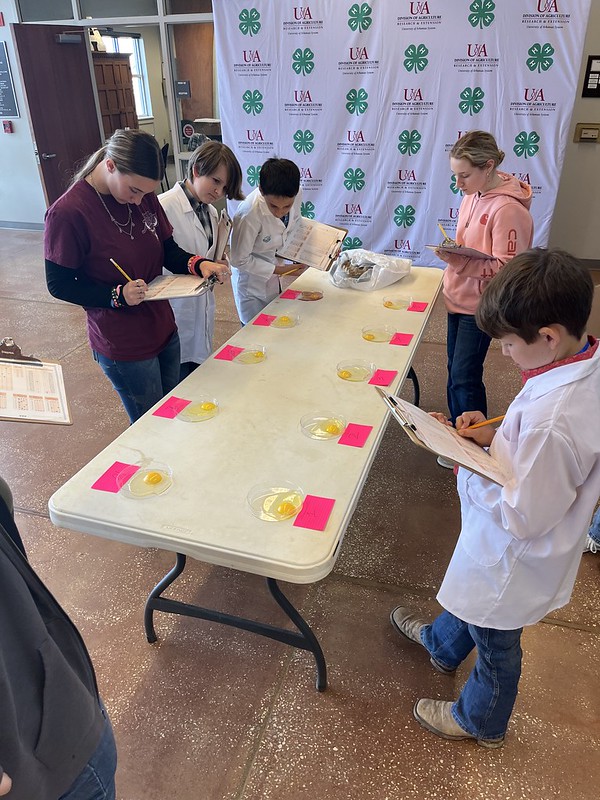
Judging events also included Past Production Hens, where participants assessed how productive a set of hens had been at laying eggs, and Ready to Cook Carcasses, where they graded whole carcasses looking for cuts, missing meat and other defects that could lower a product’s grade. In the Broken-out Eggs event, participants judged the quality of the yolk and albumen, or egg white.
“The markers they look for are the size and thickness of the albumen,” Bolton said. “A smaller and thicker egg white is an indicator of a fresh egg.”
Bolton said participants also argued in defense of their placing judgments.
“Participating in the Poultry Judging Contest is a great way for our 4-H’ers to learn about the poultry industry, learn skills that are used daily in the industry, as well as build their confidence in public speaking,” Bolton said.
Junior individual winners from Sebastian County:
First place: Beckett Allen
Second place: Finn Payne
Third place: Anakin Payne
Senior individual winners from Izard County:
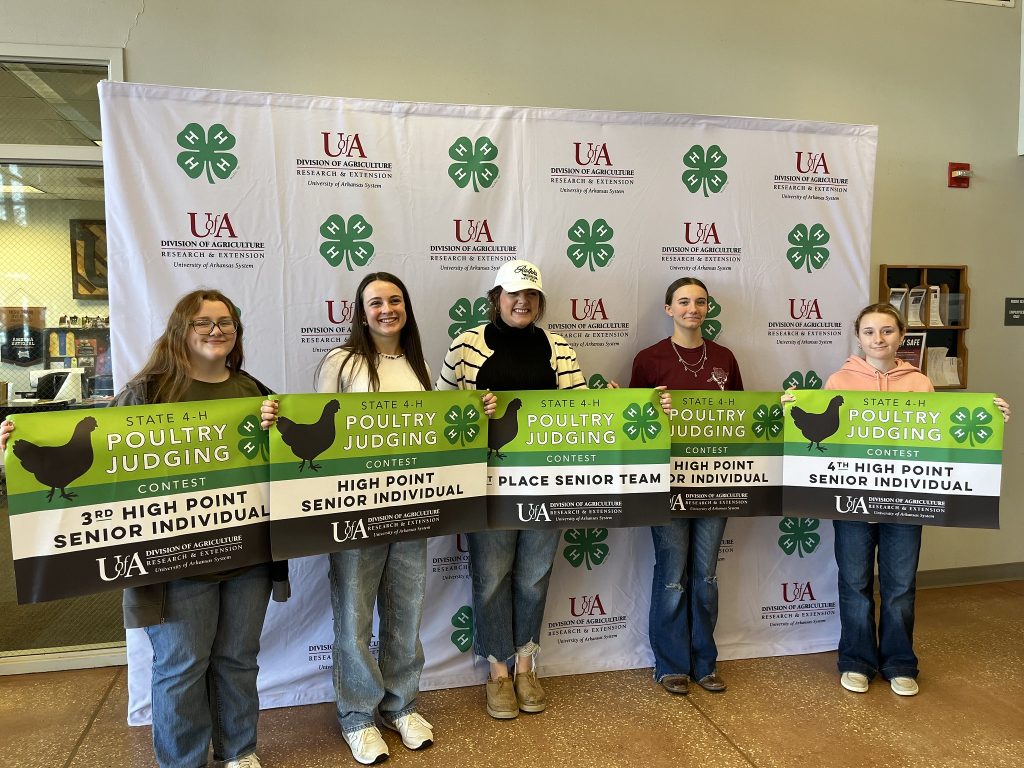
First place: Makaelynn Wood
Second place: Kennedy Manacke
Third place: Delilah Montalbo
Fourth place: Sage Wells
The Izard County team will move on to compete at the National 4-H Poultry Judging Contest later this year, which is held as part of the National 4-H Poultry and Egg Conference in Louisville, Kentucky.
Bolton said the contest is a great opportunity for 4-H members interested in pursuing a career in the poultry industry, but it has benefits for all participants.
“I would say this contest is a great hands-on experience in the poultry field,” he said. “I believe that it offers a leg up for anyone interested in poultry but holds invaluable lessons for anyone to practice and compete in.”
For more information about 4-H poultry programs, contact Bolton at abolton@uada.edu or visit4h.uada.edu/poultry/plant-animal/poultry.aspx.
To learn about extension programs in Arkansas, contact your local Cooperative Extension Service agent or visit www.uaex.uada.edu. Follow us on X and Instagram at @AR_Extension. To learn more about Division of Agriculture research, visit the Arkansas Agricultural Experiment Station website: https://aaes.uada.edu. Follow on X at @ArkAgResearch. To learn more about the Division of Agriculture, visit https://uada.edu/. Follow us on X at @AgInArk.
About the Division of Agriculture
The University of Arkansas System Division of Agriculture’s mission is to strengthen agriculture, communities, and families by connecting trusted research to the adoption of best practices. Through the Agricultural Experiment Station and the Cooperative Extension Service, the Division of Agriculture conducts research and extension work within the nation’s historic land grant education system.
The Division of Agriculture is one of 20 entities within the University of Arkansas System. It has offices in all 75 counties in Arkansas and faculty on three campuses.
Pursuant to 7 CFR § 15.3, the University of Arkansas System Division of Agriculture offers all its Extension and Research programs and services (including employment) without regard to race, color, sex, national origin, religion, age, disability, marital or veteran status, genetic information, sexual preference, pregnancy or any other legally protected status, and is an equal opportunity institution.
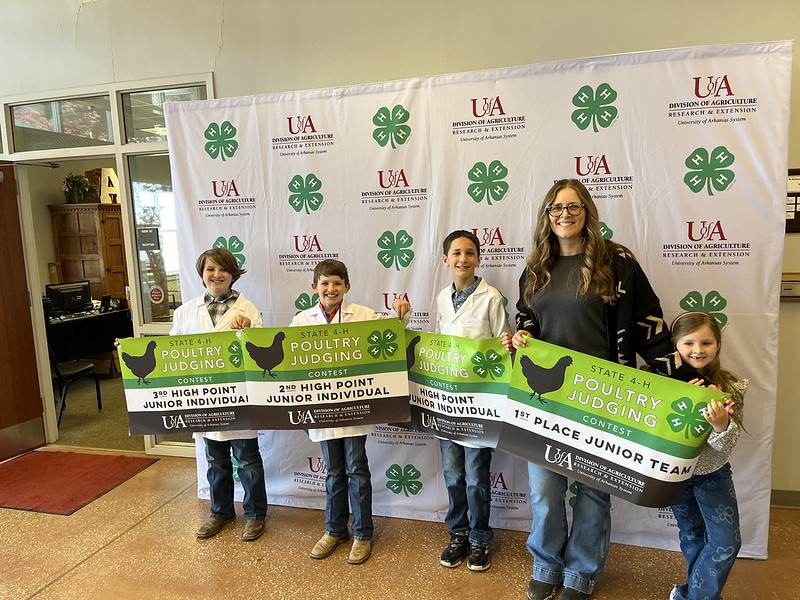
JUNIOR TEAM — The Izard County 4-H junior team shows off their winning banners. (Division of Agriculture photo.)
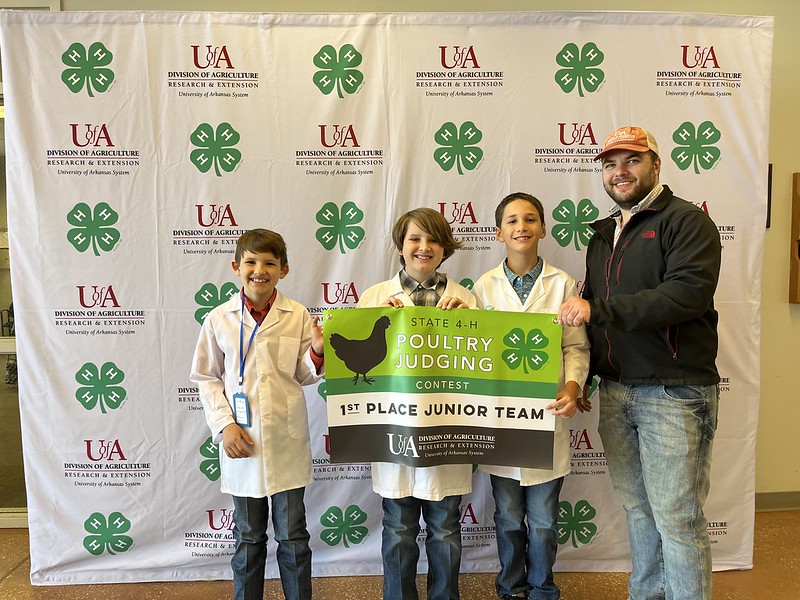
JUNIOR TEAM — The junior team from Sebastian County included team members Finn Payne, Anakin Payne and Beckett Allen. Andrew Bolton, extension poultry instructor for youth programs, poses with the team. (Division of Agriculture photo.)