


State Capitol Week in Review From Senator Terry Rice

LITTLE ROCK – The Senate voted to create a new and sustainable property insurance plan to help school districts meet the rising cost of property insurance.
Senate Bill 481 is the result of two years of work by legislators, school administrators and state officials. Two years ago the governor and legislators agreed to help schools pay for about 30 percent of the cost of increased premiums, noting that on average the cost of property insurance for schools was rising at an average of 130 percent a year.
The sponsor of SB 481, when presenting the bill before a Senate committee, said that some schools had experienced “staggering” increases of 180 to 200 percent in the cost of insurance premiums.
SB481 will create a captive insurance plan, administered by the state, which will combine the participants in three current plans. The larger risk pool will allow more efficient management of costs and risks. The goal is to have the plan in operation by July 1, and savings could be as much as $15 million in the first year.
The legislature will consider a separate funding bill that will capitalize the new insurance program with about $136 million.
In other news, the House of Representatives approved a bill to extend coverage from 60 days to a year for women on Medicaid who have a baby. In nationwide studies of maternal health care, Arkansas ranks near the bottom.
According to state Medicaid officials, during a three-month period last year 39 percent of women on Medicaid lost their coverage after 60 days.
Public health experts say that providing coverage for 12 months will improve the health of both the baby and the mother. One reason is that it eliminates concerns the mother may have about paying for visits to the doctor.
In other news the Senate approved legislation intended to preserve order and dignity in women’s restrooms, changing rooms and sleeping quarters where they have traditionally enjoyed privacy and safety. It is SB 486. If a woman enters a restroom and encounters someone of the opposite sex, she would be able to sue the shelter or facility.
The bill would not apply if the person of the opposite sex was cleaning or doing maintenance, responding to a medical emergency or a natural disaster or performing law enforcement duties.
The Senate also approved SB 426 to enhance criminal penalties against illegal aliens who commit a violent offense. The enhancement depends on the severity of the felony. An illegal alien convicted of a Class A, Class B or Class C felony would receive an additional 10 years to their prison sentence. The enhanced sentence for a Class D felony would be four years.
Two years ago lawmakers passed Act 689 to require social media companies to verify the age of users, and to impose fines when social media companies fail to do so. It was blocked by lawsuits, however.
This year, SB 611 has been filed to give parents greater control over their children’s Internet usage. Also, SB 612 would allow lawsuits against social media companies that encourages use of drugs, self harm, suicidal behavior or eating disorders.
“Just Roll with It” Serving up Recipes and Humor

By Sheri Hopkins,
Lifestyle Contributor
Hello everyone! We have had a gulley washer here in the River Valley. Supposed to be storms today, and I already have a huge tree limb down in my front yard from Wednesday’s winds.
We had the Culpepper Merriweather Circus in town on Saturday. To say I had fun is an understatement. Since I am the Chamber of Commerce President, they asked me to speak to the crowd and welcome everyone. I asked the Ringmaster if I could say “Ladies and gentlemen, boys and girls of all ages” when I announced. She said, “of course you can, this is your day to shine.” So, in my loud voice with microphone in hand, I yelled “Ladies and gentlemen, boys and girls of all ages, welcome to the circus!” I have wanted to do that for as long as I can remember. Mark that off my bucket list.
We had a customer come to the drive thru this week and ask Teresa, “who are y’all going to get to replace Sheri?” Teresa is confused wondering what’s going on. He says, “I heard she left with the circus. He heard I was announcing at the circus. If I joined the circus there are three jobs I could do: bearded lady, fat lady and clown. I qualify for all three. Enough about the circus, I run a a three-ring circus at my house.
My friend, Joy, made these cherry bars and brought to the Chamber of Commerce fundraiser and they were delicious and everyone bragged on them, including me. They are easy and good. Y’all have a great week, and if you see me doing a side gig at the circus, don’t be surporised.
CHERRY BARS
1 cup butter
1 ¼ cup sugar
4 eggs
1 tsp vanilla
3 cups flour
1 ½ tsp baking powder
½ tsp salt
1 can cherry pie filing
Frosting: 1/3 cup powdered sugar and milk
Cream butter and sugar. Add eggs one at a time. Add flour, baking powder, and the rest of ingredients gradually, beating well after each addition. Take out 1 ½ cup of batter. Pour the rest of the batter into a 12 x 16 or 9 x 13 greased pan. Spread cherry filling on top of batter. Drop the rest of the batter by teaspoonfuls over the top of the cherries. Bake for 30 min at 350° or done. Mix powdered sugar with milk into thin icing and drizzle over still warm bars.
Obituary: Jodi Evans (1980-2025)

Jodi Ann Evans of Waldron, Arkansas went to be with her Lord and Savior Monday, March 31, 2025 in Waldron, Arkansas. Jodi was born December4 21, 1980 in Norman, Oklahoma to Joel Earl Potts and Charolett Ann (Copeland) Potts. She was 44 years old.
Jodi was a devoted member of the Waldron Pentecostal Church of God. She loved the Lord and desired to serve him more and learn all she could. Helping others was her passion. Jodi enjoyed being a homemaker and taking care of her family. She treasured time and memories made with her children and grandchildren.
Jodi leaves behind to cherish her memory, her loving husband Jeff Evans, her mother Charolett Potts of Waldron, and her children: Shanna Sanders of Atkins, Arkansas, Sage Hardie of Van Buren, Arkansas, Arrabela Hardie of Van Buren, Arkansas, Jenna Evans of Waldron, Arkansas, Jolie Evans of Ft. Smith, Arkansas, Jaclyn Evans of Ft. Smith, Arkansas, Jace Sanders of Waldron, Arkansas, Dalton Sanders of Waldron, Arkansas, Jerry Don Briggs of Waldron, Arkansas, Kobe Evans of Ft. Smith, Arkansas. She will forever remain in the hearts of her grandchildren: Aspin Petchenik, Olivia Petchenik, Jacelyn Sanders, Chase Sanders, River Sanders. Jodi will be missed by all that knew her and the many whose lives she impacted including a host of extended family, friends, neighbors and loved ones.
Jodi was preceded in death by her father, Joel Potts, one daughter Taelyon Dawn Briggs, and one sister, Marissa Kaye Potts.
Jodi’s celebration of life service will be 11:00 a.m., Tuesday, April 8, 2025 at the Heritage Memorial Funeral Home Chapel in Waldron, Arkansas with Rev. Konnor McKay and Rev. Travis May officiating. Interment will follow in the Buffalo Cemetery. Arrangements are being entrusted to the Heritage Memorial Funeral Home in Waldron, Arkansas.
Jodi’s pallbearers will be Richard Freeman, Kevin Keeler, Brent Deetcherage, Travis May, Kurtis Bell and Josh Sanford.
Jodi’s visitation will be Monday, March 7, 2025 from 4:00 p.m. until 6:00 p.m. at the Heritage Memorial Funeral Home in Waldron, Arkansas.

Tags needed to bag a turkey this spring; nonresidents limited to single gobbler
By Randy Zellers
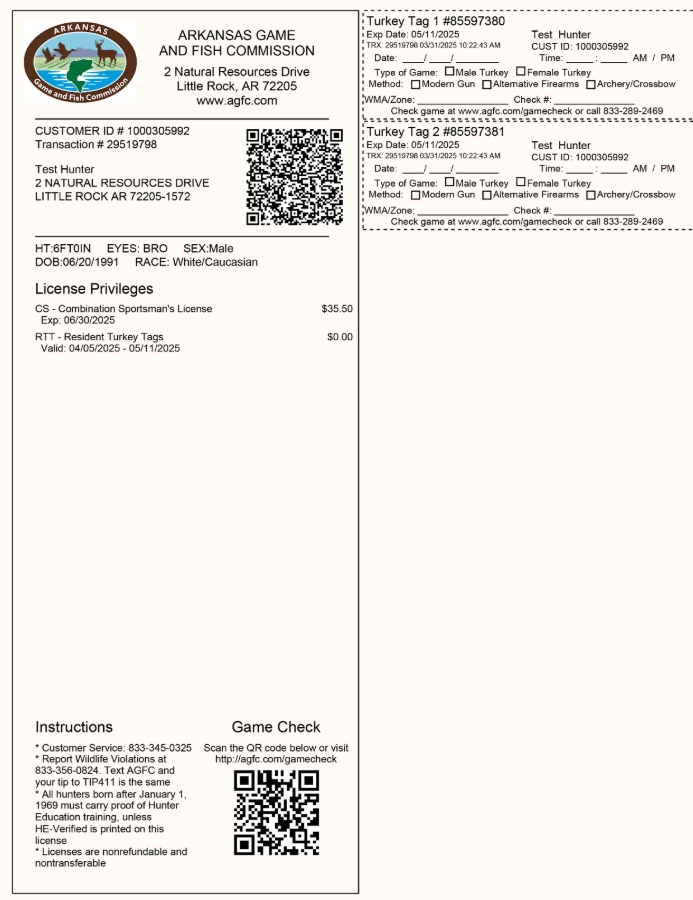
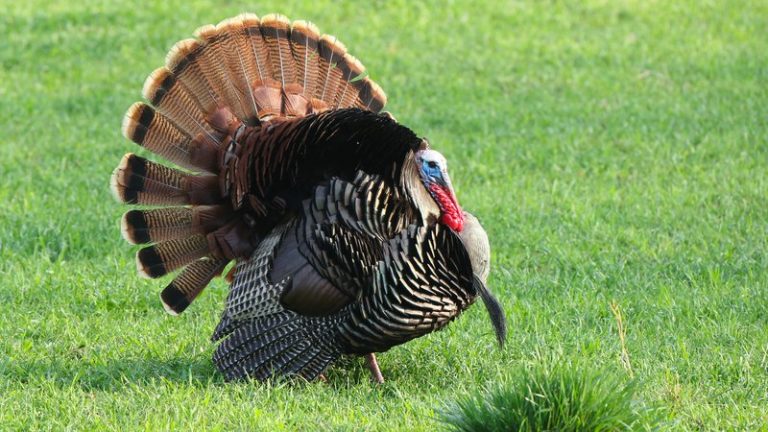
Arkansas turkey hunters will need to add one more item to their hunting vest this season: an Arkansas Turkey Hunting Tag. The tags and a valid hunting license are required to enable the Arkansas Game and Fish Commission to more accurately judge the number of hunters taking to the field in the search of a gobbler.
The resident versions of the turkey tags, labelled RTT for adults and YTT for youth hunters, are free but must be acquired through the AGFC’s licensing system before the hunter takes to the woods. Even residents who hold lifetime licenses and disability licenses are required to add this free permit to their licensing account before hunting. Checking out the tags will enable all resident hunters a total of two legal gobblers.
Nonresidents have a few more hoops than resident hunters to jump through if they wish to chase an Arkansas turkey. For nonresident hunters under 16, the Nonresident Youth Turkey Tag remains free and will be the only license they need. Adult hunters, on the other hand, will need to either purchase a Nonresident Turkey Tag (NRTT) for $100 in addition to their Nonresident Annual Hunting License (NBG), which costs $410, or they may opt for the newly created Nonresident Annual Turkey Hunting License (NRTL), which includes a tag, for $325.
“Many hunters who chase turkeys in Arkansas may not have an annual license from last deer season, so we wanted to offer this $325 license as a more affordable option for nonresidents wanting to pursue turkeys in Arkansas,” Brad Carner, deputy director of the Arkansas Game and Fish Commission, said. “If you already hunt deer here, you can just buy the $100 tag to add to your annual license as well. Whichever way is more economical will work.”
Nonresidents who hold a Non-expiring Lifetime Hunting and Fishing Permit from their time as residents in Arkansas will still need to get the Nonresident Turkey Tag in the license system, but will not be charged the $100 fee when they check out of the system.
Regardless of the license, all nonresidents will need to choose wisely this spring, as all nonresident options are limited to a single legal turkey per year.
“The Commission has heard from many hunters through the regulations public comment process as well as during informal conversations about the idea of reducing bag limits for turkeys to one per year in order to preserve hunt quality and protect Arkansas’s turkey flock,” Carner said. “Although very few hunters actually harvest two birds, the Commission did decide to opt for a more conservative limit on nonresidents after many discussions.”
According to Susan Porter, AGFC licensing manager, one additional turkey tag option may appear in Arkansas’s license system for some hunters. The code NBLTP represents another free turkey tag, this one specifically for Mississippi residents who are hunting land that falls under the Arkansas/Mississippi reciprocal agreement.
“They will need to have all licenses required to hunt in Mississippi, but some of these lands are on the Arkansas side of the Mississippi River, so they will need to get this free turkey tag to transport their bird back across state lines to check it with Mississippi’s license system,” Porter said. “That is the only scenario where a hunter in Arkansas would need this particular tag on their license profile.”
Arkansas’s turkey season opens April 21 statewide. In Turkey Zone 1, it closes April 29; it continues through May 11 in Turkey Zone 2. The Special Youth Turkey Hunt for hunters younger than 16 is April 12-13. A full list of turkey regulations is available in the 2024-25 Arkansas Hunting Guidebook.
All turkeys harvested in Arkansas must be checked via agfc.com, the AGFC mobile app or by phone within 12 hours of harvest. If they are checked immediately upon harvest, the turkey does not need a physical tag attached to it. If the hunter is unable to immediately check the bird, then they must affix a possession tag indicating the hunter’s name, CID number and the date and time of harvest that must remain with the bird until it is checked. Checking should also be more convenient this season, as the AGFC plans to roll out a new “express check” option on its website beginning with the Special Youth Turkey Hunt. Visit www.agfc.com/licenses to procure your turkey tag.