


“Just Roll with It” Serving up Recipes and Humor

By Sheri Hopkins, Lifestyle Contributor
Hello everyone! We got some much-needed rain in the River Valley today. Such beautiful weather we are having. It’s mowing season, and I have already had the yard mowed. The only reason I had it mowed this early is because JR, my four-pound chihuahua, would go out to do his business and it was taller than him.
One summer when the boys were teenagers, I decided to buy a push mower so they could start mowing the yard. I came home and I said, “boys, I have bought y’all a present.” They wanted to know what it was. I said, “I have bought y’all a push lawn mower, so y’all can start mowing the yard.” As serious as he could be and I mean serious, Evan says, “Nana, why did you buy us a lawnmower when it’s hot weather, why didn’t you wait till the wintertime.” Well, I said, “Evan the yard does not have to be mowed in the wintertime.” I decided to make them take turns mowing and I never thought about showing them how. So, Evan goes first, and he is out there just a mowing away and I decided to go check on him. If y’all can visualize this in your mind, the figure eight was an understatement. He had mowed in every direction possible. Just willy nilly all over the front yard. I had to laugh because it looked like a blind person had mowed. Let’s just say his mowing career never took off.
It’s that time of year, lawn mowers going, birds a singing, ants everywhere, red wasps flying around and flies everywhere. Y’all have a great week and enjoy the pretty weather!
This week’s recipe is for a peach cobbler:
1 cup flour
1 cup sugar
1 tsp. baking powder
pinch of salt
1 cup milk
1 cup of butter
1 large can peaches with syrup
Melt butter in a 9×13 baking dish in a 350-degree oven and set aside. Mix all dry ingredients and add milk, blending well. Pour batter evenly into a baking dish. Pour sliced peaches with syrup on top of the batter, do not mix. Place in a 350-degree oven and bake until golden brown, approximately 45 minutes. Serve warm with vanilla ice cream.
State Capitol Week in Review from Senator Terry Rice

LITTLE ROCK – Beginning on May 7, Arkansas residents will need to produce a “Real ID” in order to board a domestic flight, enter a federal building or visit a military base.
If you don’t have a Real ID, you must present additional forms of identification along with your driver’s license.
On May 7 the federal government will no longer accept drivers’ licenses and ID cards issued by states that do not include the additional security measures required to get a Real ID. Arkansas has been issuing the enhanced licenses and ID card to participate in the national effort to stop identity theft and combat terrorism.
You can get a Real ID driver’s license at your local revenue office, where you have always gone to get a traditional driver’s license and renew you motor vehicle tags. The Real ID costs the same as the old licenses, $40. If it isn’t time to renew your license, it will cost $10, which is the cost of getting a duplicate.
You will have to bring more documentation than before. For example, you must provide a birth certificate or current passport to indicate you were born in the United States. As proof of identity bring a current driver’s license, a concealed carry permit, a student ID, a vehicle registration title, a military ID, a tax return dated within the past year, a marriage certificate, a pilot’s license or a prison release document.
You must show a Social Security card or a DD214 document showing your certificate of release or discharge from active duty.
To prove your residency you must bring two documents, such as utility bills, with your name and address. Bank statements, lease agreements, health or auto insurance bills, tax returns, personal property tax receipts, voter registration, medical or dental bills, pay slips, tuition invoice or school records.
You can still get a Real ID after May 7.
Infrastructure Funding
The Senate passed legislation to continue a loan program administered by the Arkansas Natural Resources Commission, which will issue $500 million in bonds and make loans available for water, waste disposal, pollution control, abatement, flood control, irrigation and drainage projects. Irrigation projects may account for no more than $165 million of the total.
The measure is Senate Bill 421. The general obligation bonds must be approved in a statewide election in November of 2026, unless the governor calls a special election before then.
In related news the House of Representatives approved House Bill 1681 to create a $50 million grant program within the Natural Resource Commission for water and sewage treatment facilities. Even the bill’s sponsors admitted that deteriorating water and sewer infrastructure throughout Arkansas is so extensive, the grants funded by HB 1681 would only be a “band-aid.”
Under the bill, 80 percent of the grants will go to “shovel-ready projects” in cities with more than 1,200 people, or rural water and wastewater systems serving more than 1,200 customers.
The other 20 percent of funding will go to cities and rural water systems with fewer than 1,200 people, with no requirement that projects be shovel-ready.

Obituary: Roger Dale Lance (1958 – 2025)

Roger Dale Lance, age 67, of Mansfield, Arkansas passed away on Sunday, March 23, 2025, at his home. He was born on Wednesday, February 12, 1958, to Carl Lester and Dorothy Mae Lyon Lance in Mena, Arkansas.
Roger was a straight-shooter who loved life and the people in it. He was the kind of man who’d do anything for his family, especially his kids and grandkids, who were his pride and joy. He had the patience of a saint when it came to the kids in his family. Roger never met a stranger —always finding a way to connect with people. Roger had a deep love for farm life, raising cows, chickens, and always keeping a few good dogs around. He was a die-hard Arkansas Razorbacks and Dallas Cowboys fan, never missing a game, and sports radio was always playing in the background. He had a passion for classic cars and cars in general, adding to his collection and working on them in his spare time. He enjoyed hitting up auctions for a good deal. Roger had a sharp memory, a way with people, and a love for the simple things in life. He will be missed but never forgotten.
Roger is preceded in death by his parents; one brother, Paul Lance; and one sister, Darlene Lay.
Roger is survived by one son and daughter in law, Joshua and Emily Lance of Arizona; two daughters, Tiffany Lance and partner, Christopher Hester, of Colorado, and Desiree Lance and husband, Nathan Wilcoxon, of Colorado; three brothers and sisters in law, Charles and Joni Lance of California, Gene Lance of Oklahoma, and Gerald and Dorothy Lance of Mena; one sister and brother in law, Sharon and Galen Dumler of Bonnerdale, Arkansas; grandchildren, Braedyn, Xander, Elijah, Paxtyn, and Archie; his longtime partner, Delorise Cross, her three children, Valerie, Donald, and Joseph, and their children; several nieces and nephews and a host of other relatives and friends.
A funeral service will be held on Tuesday, April 1, 2025 at 2:00 PM at the Abundant Life United Pentecostal Church in Mena, Arkansas with Brother Jack Smith officiating. Interment will follow the service at the Mount Gilead Cemetery in Mena, Arkansas under the direction of Bowser Family Funeral Home in Mena, Arkansas. A visitation will be held on Monday, March 31, 2025 from 5:00 – 7:00 PM at the Bowser Family Funeral Home Chapel in Mena, Arkansas.
Pallbearers will be Joshua Lance, Braedyn Lance, Nathan Wilcoxon, Christopher Hester, David Dumler, and Jonathan Dumler.
Honorary Pallbearers are Paxtyn Lance-Wilcoxon and Archie Lance.
Online Guestbook: www.bowserffh.com
With spring on its way, put those hummingbird feeders out a little earlier than you’re used to
By Ryan McGeeney
U of A System Division of Agriculture
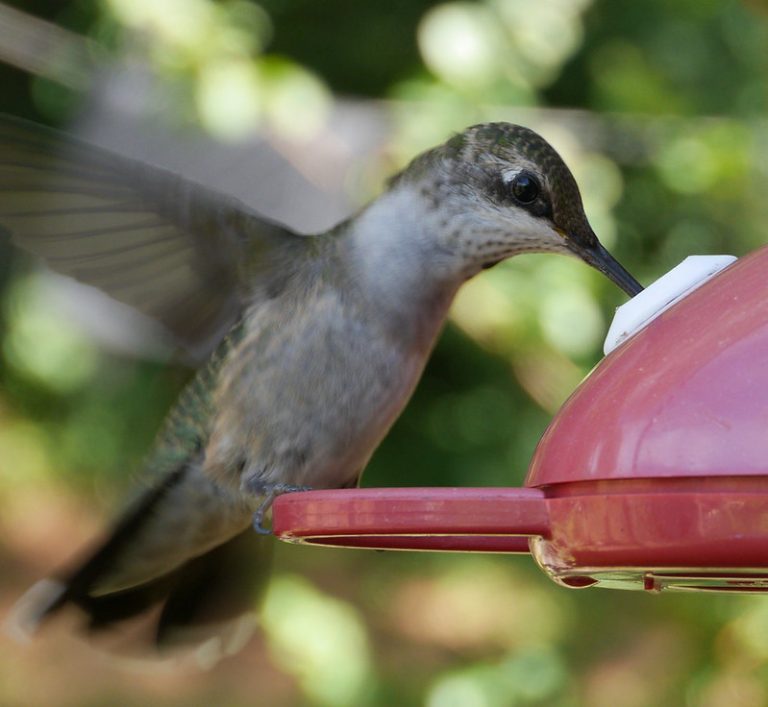
While many Arkansas hummingbird lovers have typically filled their first feeders in mid-April, extension experts say the best way to support the migration is to hang those feeders with the first signs of spring, if not earlier. And in 2025, “earlier” is even sooner than you think.
Ruby-throated hummingbirds have already been sighted across the southeastern United States, from eastern Texas to Florida, according to Hummingbird Central, a hub for volunteer hummingbird migration sightings. The group’s 2025 migration page shows about a dozen sightings in Arkansas, including one as far north as Russellville.
Sherri Sanders, White County agricultural extension agent for the University of Arkansas System Division of Agriculture, said the mid-April “rule of thumb” is likely based on a common misunderstanding of the spring gardening checklist.
“People wait until April 15 or so to put out their hummingbird feeders, I think because they correlate that with planting warm-season vegetables,” Sanders said. “But we need them out about a month before that, because our little babies are coming through Arkansas on their way to Canada.
“We need to get the word out to help them with a pit stop so they can refuel,” she said.
In a blog post for the Cooperative Extension Service, Sanders recommended several prime locations for viewing hummingbirds in Arkansas, including Mount Magazine State Park, Petit Jean State Park, Hot Springs State Park and the Buffalo National River.
And of course, backyard gardens are always a great way to welcome in the migratory beauty. Sanders recommended planting native flowers, avoiding pesticides, providing shelter with trees and shrubs and maintaining water sources such as bird baths and fountains.
Becky McPeake, extension wildlife biologist for the Division of Agriculture, said the occasional burst of unseasonably warm air from the south may drive the birds north ahead of their expected migration schedule.
“Hummingbirds are going to follow the weather,” McPeake said. “So if there’s enough nectar for them to consume, enough plants blooming, they’re just following the weather north in the spring.”
Both Sanders and McPeake said that Arkansans who haven’t put their feeders out already should make it a point to do so as soon as possible.
“There’s concern for birds in general, that there’s been a downward trend in population,” McPeake said. “Hummingbirds not only eat nectar, but also occasionally eat insects — so the perception that insect populations are decreasing also has implications for our songbirds, including the hummingbird.”
McPeake recommends a sugar-to-water ratio of 1:4. Red dye isn’t necessary to attract the birds, she said, and can in fact be harmful to them.
“Go ahead and put your feeder out early,” she said. “You might have to clean it a few times and replenish the sugar, but you’ll be ready when they come through, whenever that might be. Look for the signs of spring, such as blooming flowers. That’s when you need to have your feeders out.”
McPeake and Sanders said hummingbird lovers should also keep watch for the southern migration, which occurs in September and October, as flocks return south.
“We ask that people keep their feeders out later in the year, until there are no hummingbirds seen,” McPeake said. “People don’t need to take their feeders down by any certain date — they just need to watch their feeders and keep them up until there just aren’t any stragglers.
“Some of these birds are heading south from as far north as Canada,” she said. “They need to stop and replenish themselves for a few days before they continue their journey south.”
To learn about extension programs in Arkansas, contact your local Cooperative Extension Service agent or visit www.uaex.uada.edu. Follow us on X and Instagram at @AR_Extension. To learn more about Division of Agriculture research, visit the Arkansas Agricultural Experiment Station website: https://aaes.uada.edu/. Follow on X at @ArkAgResearch. To learn more about the Division of Agriculture, visit https://uada.edu/. Follow us on X at @AgInArk.
About the Division of Agriculture
The University of Arkansas System Division of Agriculture’s mission is to strengthen agriculture, communities, and families by connecting trusted research to the adoption of best practices. Through the Agricultural Experiment Station and the Cooperative Extension Service, the Division of Agriculture conducts research and extension work within the nation’s historic land grant education system.
The Division of Agriculture is one of 20 entities within the University of Arkansas System. It has offices in all 75 counties in Arkansas and faculty on three campuses.
The University of Arkansas System Division of Agriculture offers all its Extension and Research programs to all eligible persons without regard to race, color, sex, gender identity, sexual orientation, national origin, religion, age, disability, marital or veteran status, genetic information, or any other legally protected status, and is an Affirmative Action/Equal Opportunity Employer.