


And they’re off! Crop planting is underway in Arkansas
By Mary Hightower
U of Arkansas System Division of Agriculture
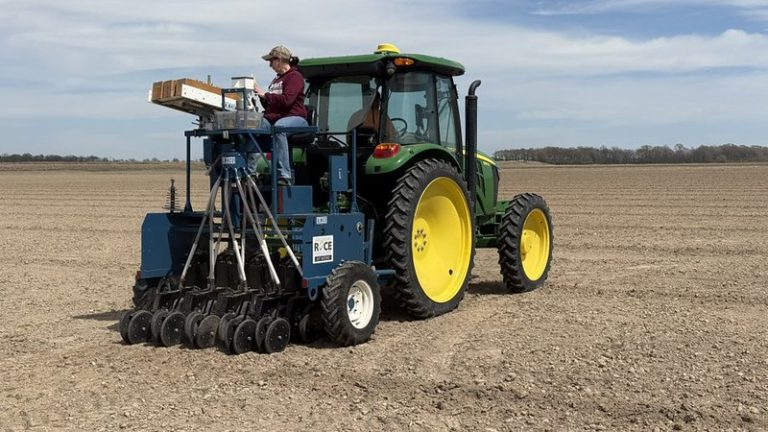
LITTLE ROCK — Planting season is underway for Arkansas farmers, with corn growers first to getting seed in the ground, according to the Crop Progress report from the National Agricultural Statistics Service.
The statistics service, part of the U.S. Department of Agriculture issues weekly crop progress and condition reports during the growing season.
Monday’s report showed Arkansas corn 2 percent planted, compared to 1 percent at this time last year and the 1 percent five-year average.
The report also said that 3 percent of the state’s winter wheat was forming grain heads. That compared to 1 percent at this time last year and to the zero percent five-year average. More than half of the winter wheat crop — 58 percent — was rated in good to excellent condition.
Corn
Jason Kelley, wheat and feed grains agronomist for the University of Arkansas System Division of Agriculture, said planting corn now is not unexpected.
“It’s 80 degrees and it’s dry and it’s mid-March,” Kelley said. “It’s hard to not plant something, but producers still have concerns about a potential late season cold snap, so up to date, planting has started slow but will be picking up speed as we near late March.”
In some years, corn planting may start on a very limited basis as early as late February in the southern tier of counties in Arkansas, but not this year due to wet weather.
“With corn, our planting date studies have shown there is a fairly wide window when we can maximize yields, generally up to late April, so planting early may be beneficial some years, but getting the optimum stand is what we are really shooting for,” Kelley said
“I think overall the acreage will be up this year,” he said. “2024 was a little bit of a down year as far as acreage with 500,000 acres. In 2023, we had about 750,000 acres.
Kelley said he expected 2025 to see “a little bit of a rebound” given a somewhat more optimistic outlook for corn prices than other commodities.
Rice
While corn was the only crop to make the report for planting, Jarrod Hardke, rice extension agronomist for the Division of Agriculture said there may have been two or three rice growers who got started last week.
This week, many rice growers were doing field prep, but “planting is beginning to pick up speed and by this coming weekend it will really be getting cranked up,” Hardke said.
Weather is a concern, with very low humidity and high winds. The March 14 storms that spawned deadly tornadoes, didn’t bring a lot of rain.
“Rains were variable with some growers receiving 1-2 inches while others may have technically gotten a little rainfall overnight, but by the morning they didn’t know whether they had or not because it was so dry,” he said.
Red flag warnings covered most counties of the state on Wednesday, with wind advisories covering the rest. The next opportunity for rain would be on Sunday.
“That rain will be welcome to put a little moisture back to the soil and encourage a bigger start to planting,” Hardke said.
Soybeans
Jeremy Ross, extension soybean agronomist, said soybean planting was just getting started.
“A lot of ground is ready to plant, but we didn’t see the February planting that we have seen the last two years due to rain events over the past month,” he said. “If the weather holds, we could have a significant portion of the soybean crop planted in the next few weeks.
“I’m anticipating soybean acreage to be about what we have seen the past two years,” Ross said. “Our acreage should remain around the 3 million acres mark, but we could see some changes one way of the other depending on how planting progresses over the next two months.
“We are just now getting into the early planting window for the southern part of the state, and we still have time to get the soybean crop planted to maximize yields,” he said.
Cotton and peanuts
“Both cotton and peanuts will start probably the third week of April,” said Zachary Treadway, extension agronomist for cotton and peanuts.
“If you’re planting past the last day of May you’ve gone too late,” he said. “In a perfect world all of our planting will come between April 20 and May 20 — that’s if the planting season is kind to us.”
“We have some issues last year where it was cool and rained and planting got dragged out and some planting got abandoned all together,” Treadway said.
Soil temperature is the cue for cotton growers to get seed in the ground. “They need a consistent 65 degrees at about four inches of soil depth, he said.
Treadway said that considering the market, he expects to see cotton acres decline slightly in Arkansas while peanut acres may increase.
Price and acreage rollercoaster
Scott Stiles, extension economics program associate, said the markets may do some reshaping of expected acres. USDA will issue its annual Prospective Plantings report on March 31, giving an overview of farmers’ intentions for the 2025 growing season.
Like Treadway, Stiles expected cotton acres to run lower.
The National Cotton Council “had Arkansas’ cotton acres down 7 percent to 604,000,” Stiles said. “That’s not a surprise and some think cotton acres may be even lower than that. Cotton prices for the 2025 crop touched 70 cents last Friday and again Monday but didn’t stay there long.
“With the heavy supply situation in cotton, there’s little incentive today for it to encourage acres. With so much of the U.S. cotton crop grown in Texas, we may see some weather-related price improvement later in the growing season,” Stiles said.
Corn and soybean prices peaked around February 20th, but “unfortunately, both of those have run out of gas,” Stiles said. There was quick run-up in rice last week, but that rally fell flat too.
“Corn is about 40 cents off its February highs and soybean about 60 cents off its highs,” he said.Since making a recent top March 11, new crop rice futures have pulled back about 23 cents per bushel. The commodities are nervously watching all the global trade dynamics and trying to figure it all out.
“Seasonally, we generally see prices for corn and soybeans work higher through planting and oftentimes peaking by mid-June if crop conditions are favorable,” Stiles said.
If there’s any good news to report, it’s probably the pullback in diesel prices.
“Diesel futures are trading around $2.20 today and that’s 45 cents off the January high,” Stiles said on Wednesday. “It’s a little relief there as field work gets underway.”
To learn about extension programs in Arkansas, contact your local Cooperative Extension Service agent or visit www.uaex.uada.edu. Follow us on X and Instagram at @AR_Extension. To learn more about Division of Agriculture research, visit the Arkansas Agricultural Experiment Station website: https://aaes.uada.edu. Follow on X at @ArkAgResearch. To learn more about the Division of Agriculture, visit https://uada.edu/. Follow us on X at @AgInArk.
About the Division of Agriculture
The University of Arkansas System Division of Agriculture’s mission is to strengthen agriculture, communities, and families by connecting trusted research to the adoption of best practices. Through the Agricultural Experiment Station and the Cooperative Extension Service, the Division of Agriculture conducts research and extension work within the nation’s historic land grant education system.
The Division of Agriculture is one of 20 entities within the University of Arkansas System. It has offices in all 75 counties in Arkansas and faculty on three campuses.
The University of Arkansas System Division of Agriculture offers all its Extension and Research programs to all eligible persons without regard to race, color, sex, gender identity, sexual orientation, national origin, religion, age, disability, marital or veteran status, genetic information, or any other legally protected status, and is an Affirmative Action/Equal Opportunity Employer.
Obituary: Donald R. Hill

Donald R. Hill of Waldron, Arkansas, formerly of Ada Oklahoma, passed from this life, Tuesday, March 18, 2025, in Waldron, Arkansas at his home. Samson as he was lovingly known was born in California to Otha Hill and Tenalee (Starr) Hill. He was 79 years old.
Donald grew up in and around the Union Hill area. He joined the United States Marines where he served in the Vietnam War for 32 months with a total service of 4 years. Working his way through the ranks making Sargeant, he proudly served his country earning multiple commendations, awards, ribbons and 2 purple hearts.
Donald lived in California where he met and married the love of his life, Polly. Together they made a life in Oklahoma where Donald was owner/operator of his own truck. He loved being out on the open road, seeing new places and meeting new people. When time allowed Donald enjoyed camping. After retirement, Donald and Polly relocated to what Donald affectionately called home in the Waldron area. He loved being in Arkansas and living in the country with his view of the picturesque mountains, sitting on the deck and listening to the birds sing and feel the wind blowing.
Donald leaves behind to cherish his memory, his loving wife of 55 years, Polly of the home, and his sons: Ronnie Coyle of Waldron, Arkansas, Brian Hill and Adam Hill both of Ada, Oklahoma. Papa will forever remain in the hearts of his grandchildren: Amanda, Mindy, Jonathan, Riley, Leandria and Raiden as well as 3 great grandchildren. Donald will be missed by all that knew him and the many whose lives he impacted including a host of extended family of nieces and nephews and many wonderful friends he loved dearly.
Donald was preceded in death by his parents, Otha and Tenalee and all of his siblings.
Donald’s family will host a private celebration of life service at a later date.

Obituary: Tina Jean Duncan (1966-2025)
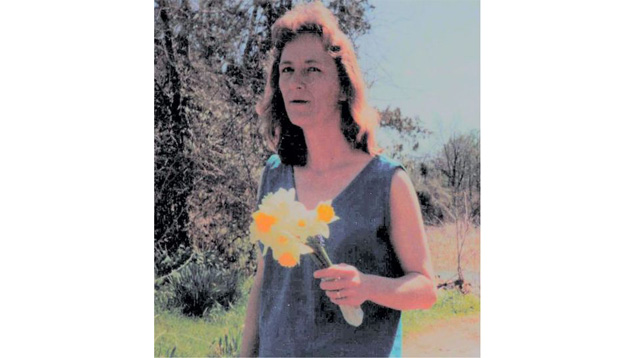
Tina Jean Duncan of Waldron, Arkansas passed from this life, Monday, March 17, 2025 in Mena, Arkansas. Tina was born June 13, 1966 in Waldron, Arkansas to Vernis McKinzie and Billie Jean (Gathright) McKinzie. She was 58 years old.
Tina was raised in the Hon area. She graduated from Waldron High School and continued to live in and around the Waldron area. She loved her boys and attending whatever activities they were in. She was happiest being surrounded by family and when she was outside. It didn’t matter if she swimming, picking flowers or just front porch sitting, Tina enjoyed being in nature.
Tina leaves behind to cherish her memory, her mother Billie Jean of Hon, Arkansas and two sons: Ian McKinzie and Stevie Duncan both of Hon, Arkansas and one grand daughter, Leah Shorts. Tina will be missed by all that knew her and the many whose lives she impacted including a host of extended family of aunts, uncles, cousins and friends she loved dearly.
Tina was preceded in death by her father, Vernis McKinzie and her brother Vernis McKinzie II.
Tina’s memorial life celebration will be 3:00 p.m., Saturday, March 22, 2025 at the Hon Baptist Church in Hon, Arkansas. Arrangements and cremation are being entrusted to the Heritage Memorial Funeral Home in Waldron, Arkansas.
Tina’s visitation will be Wednesday, March 19, 2025 from 2:00 p.m. until 5:00 p.m. at the Heritage Memorial Funeral Home in Waldron, Arkansas.

Tiger Nifty Nine Stellar At Intimate Ozark Meet

Nine event wins and six second place finishes highlighted Mansfield’s senior girls as they scared Pottsville in the team standings at Ozark on March 23. What’s impressive is that Mansfield did so while competing with only nine players for a nifty runner-up team finish at the Hillbilly Senior High Relays.
Because of the short roster, a common theme in Mansfield women’s athletics this school year, the Lady Tigers were unable to enlist in three of the 18 scheduled events. Ultimately, those three resulting zeroes cost the red and white. In a tightly contested meet between two teams that broke away from the pack of 11 scoring schools, MHS fell 10 points shy of the championship.

Pottsville, a 4A-4 school outside of Russellville, scored in every event but pole vault, winning seven. Their full squad effort, which was in doubt until the final two events, accumulated 164 total points for the team title. Twenty of their points came in the last two races as Mansfield clung to a small four point lead headed into the 3200m run and the 4x400m relay.
“To be honest, we were happy to have the numbers we had for the first outdoor meet of the season,” commented John Mackey, Mansfield’s mentor for the 2025 season. “Some of our softball players, we were able to enter them into some limited events at the last minute. They became available after the cancellation of a home game versus Dover.”
What Mansfield brought to the table was decidedly quality bites albeit in small morsels. Laney Wood, one of only a few full time MHS track athletes, ran a maximized individual schedule to give the Tigers its main menu. The senior scored 37.5 points through 4 individual events and 2 relays for high point honors. Her best marks included a 9’ 0” pole vault and a 31’ 10” triple jump. Both were blue ribbon winners.

Daisy Nelson, last season’s class 2A state champion in the 100m dash, won three individual events and anchored the winning 4x100m relay. Her individual production peaked at 32.5 points in limited duty. She was intentionally left off a maximum routine for precautionary reasons due to softball commitments limiting her track practice. The junior won the long jump (15’ 6”), 100m hurdles (17.44), 100m dash (13.06), and anchored the first place sprint relay (55.39).
Trinity Triska, Danielle Lowery, and Ashlynn Whittaker joined Nelson in the 4x100m cooperative. Triska, a senior, hasn’t been in the sprint event since her freshman year. Whittaker, almost exclusively a distance relay person, was a solid first time member in the short relay.
Triska and Whittaker were actually on the same plan for the night. Because of their limited track time as dual sport kids, each was enrolled in only relays. The pair competed in the longer 4x800m and 4x400m baton passes to go along with the shorter sprint relay. Mansfield did not have enough members to field a 4x200m squad.

Lowery, a full time track participant, maximized her scoring efforts as the Tigers’ second leading scorer. The versatile weapon contributed 33 points in an array of skill sets. At the top of her point production came a ten tally win at the high jump. The junior also placed second in the shot, third in the discus, and fourth in the 400m run to complete her individual entries. As part of two different ensembles, Lowery anchored the third place 4x400m grouping with Wood, Triska, and Whittaker then took the back stretch in the faster 4x100m troupe.
Throwing teammate Kaylee Ward wowed the crowd with a personal record win in the women’s shot put. The junior All-State athlete lofted an incredible landing of the 36’ 0” for 4 kg ball toss. The next best mark in the event was from Mansfield’s Lowery who’s second place measure was six feet and one half inch shy of Ward’s winner.

Ward totaled 18 points on two events. In addition to her 10 point haul at the shot put ring, another eight point score came from her 78’ 6” second place distance out of the discus circle.
“Kaylee is an incredibly strong thrower,” noted Mansfield’s coach. “She’s just now coming over from basketball and has not had a lot of practice, especially in the discus. I think she’ll easily eclipse the state standard in the shot put by the time we get to the first qualifying meet.”
Bailey London was terrific in the distance races for Mansfield. Last year’s newcomer of the year rallied for a 6:16.81 metric mile and a 2:49.37 metric half-mile. She placed second in both long races behind a strong distance core out of Pottsville. The sophomore also anchored the second place 4x800m relay squad with Triska, Whittaker, and Wood in the lineup.

Wood finished second in the long jump (14’ 8”) and third in the 300m hurdles (56.24) to push the Lady Tiger ledger. Eva Trinh scored in the 800m run while newcomer Mercedez Jones entered two sprint events for Mansfield.
Mansfield’s senior team is scheduled for an appearance in Booneville on March 17 before entering their first qualifying meet at Alma on March 20.