

85.3 F
Fort Smith
Wednesday, July 1, 2026
Home Blog Page 126

Tiger Nifty Nine Stellar At Intimate Ozark Meet

Nine event wins and six second place finishes highlighted Mansfield’s senior girls as they scared Pottsville in the team standings at Ozark on March 23. What’s impressive is that Mansfield did so while competing with only nine players for a nifty runner-up team finish at the Hillbilly Senior High Relays.

Because of the short roster, a common theme in Mansfield women’s athletics this school year, the Lady Tigers were unable to enlist in three of the 18 scheduled events. Ultimately, those three resulting zeroes cost the red and white. In a tightly contested meet between two teams that broke away from the pack of 11 scoring schools, MHS fell 10 points shy of the championship.

Mansfield seventh grader Kamryn Bolin continues to produce for the Lady Tiger track team from the shot put and dicus rings.

Pottsville, a 4A-4 school outside of Russellville, scored in every event but pole vault, winning seven. Their full squad effort, which was in doubt until the final two events, accumulated 164 total points for the team title. Twenty of their points came in the last two races as Mansfield clung to a small four point lead headed into the 3200m run and the 4x400m relay.

“To be honest, we were happy to have the numbers we had for the first outdoor meet of the season,” commented John Mackey, Mansfield’s mentor for the 2025 season. “Some of our softball players, we were able to enter them into some limited events at the last minute. They became available after the cancellation of a home game versus Dover.”

What Mansfield brought to the table was decidedly quality bites albeit in small morsels. Laney Wood, one of only a few full time MHS track athletes, ran a maximized individual schedule to give the Tigers its main menu. The senior scored 37.5 points through 4 individual events and 2 relays for high point honors. Her best marks included a 9’ 0” pole vault and a 31’ 10” triple jump. Both were blue ribbon winners.

Lady Tigers Trinty Triska and Ashlynn Whittaker run three relays for Mansfield at the Ozark senior high track meet.

Daisy Nelson, last season’s class 2A state champion in the 100m dash, won three individual events and anchored the winning 4x100m relay. Her individual production peaked at 32.5 points in limited duty. She was intentionally left off a maximum routine for precautionary reasons due to softball commitments limiting her track practice. The junior won the long jump (15’ 6”), 100m hurdles (17.44), 100m dash (13.06), and anchored the first place sprint relay (55.39).

Trinity Triska, Danielle Lowery, and Ashlynn Whittaker joined Nelson in the 4x100m cooperative. Triska, a senior, hasn’t been in the sprint event since her freshman year. Whittaker, almost exclusively a distance relay person, was a solid first time member in the short relay.

Triska and Whittaker were actually on the same plan for the night. Because of their limited track time as dual sport kids, each was enrolled in only relays. The pair competed in the longer 4x800m and 4x400m baton passes to go along with the shorter sprint relay. Mansfield did not have enough members to field a 4x200m squad.

Mansfield All-State athlete Kaylee Ward records a personal best 36′ 0″ throw in the shot put at Ozark’s Hillbilly Relays.

Lowery, a full time track participant, maximized her scoring efforts as the Tigers’ second leading scorer. The versatile weapon contributed 33 points in an array of skill sets. At the top of her point production came a ten tally win at the high jump. The junior also placed second in the shot, third in the discus, and fourth in the 400m run to complete her individual entries. As part of two different ensembles, Lowery anchored the third place 4x400m grouping with Wood, Triska, and Whittaker then took the back stretch in the faster 4x100m troupe.

Throwing teammate Kaylee Ward wowed the crowd with a personal record win in the women’s shot put. The junior All-State athlete lofted an incredible landing of the 36’ 0” for 4 kg ball toss. The next best mark in the event was from Mansfield’s Lowery who’s second place measure was six feet and one half inch shy of Ward’s winner.

MHS sprinter and long jumper Daisy Nelson brings home four blue ribbons for the Lady Tigers from Ozark.

Ward totaled 18 points on two events. In addition to her 10 point haul at the shot put ring, another eight point score came from her 78’ 6” second place distance out of the discus circle.

“Kaylee is an incredibly strong thrower,” noted Mansfield’s coach. “She’s just now coming over from basketball and has not had a lot of practice, especially in the discus. I think she’ll easily eclipse the state standard in the shot put by the time we get to the first qualifying meet.”

Bailey London was terrific in the distance races for Mansfield. Last year’s newcomer of the year rallied for a 6:16.81 metric mile and a 2:49.37 metric half-mile. She placed second in both long races behind a strong distance core out of Pottsville. The sophomore also anchored the second place 4x800m relay squad with Triska, Whittaker, and Wood in the lineup.

Mansfield freshmen Payton Meyers, Miley Clopton, and Abby Smith pace the Lady Tiger junior high track team at the Booneville Bearcat Relays.

Wood finished second in the long jump (14’ 8”) and third in the 300m hurdles (56.24) to push the Lady Tiger ledger. Eva Trinh scored in the 800m run while newcomer Mercedez Jones entered two sprint events for Mansfield. 

Mansfield’s senior team is scheduled for an appearance in Booneville on March 17 before entering their first qualifying meet at Alma on March 20.

“Just Roll with It” Serving up Recipes and Humor

By Sheri Hopkins, Lifestyle Contributor

Hello everyone! If you are reading this then I guess the wind didn’t blow you away on Friday. Good thing I am a plus size gal, because a skinny gal would be in Mississippi by now.

Speaking of plus size gals, I know this subject is the elephant in the room, and nobody wants to talk about it, but I am back at funerals. I was talking with a friend of mine and I won’t tell you her name, but she is the editor of a local paper. I know a lot of people don’t know this, but my husband, Chuck, was cremated. He told me before he died to cremate him, and I told him that when he died that I would do anything I wanted. He knew how stubborn I was.

Some people don’t know this but if you are a large person, you have to special order a casket and they cost more money. I would have to have ordered a casket, so I decided to let him have his wishes. It was very hard for me to do because that would have been the last thing I could have been rebellious over.

I am telling y’all all of this to tell you that you can order large caskets online cheaper, and I would do that but if I did, where would I store it? My friend suggested we could store it and put moth balls in it. We would go into eternity smelling like an old lady’s winder coat. There are pros and cons to buying in advance.

So not only do I have to find eight pallbears, I have to order an extra-large casket. If my obituary reads that I was cremated, you will know that Jacob decided to take a vacation to Bora Bora, and he will be on the first flight out after the service. Well, that is if I decided not to have the service where my mom and dad are buried because that’s too far for him to drive.

I just wanted to make y’all laugh this week. My son does love me, he just doesn’t want to drive far for a funeral service. I guess I could buy him a gift card for gas if I decide to have it at Bud Davis Cemetery outside of Booneville. Y’all have a good week and don’t dwell on your funeral, just let your folks worry with it.

PEACH CAKE
1 box of yellow cake mix
1 15 oz. can of sliced peaches (do not drain)
3 eggs
1/2 cup vegetable oil
FROSTING
8 oz. of cream cheese
4 tablespoons of butter
1 teaspoon of vanilla
2 cups of powdered sugar
Preheat oven to 350. The recipe calls for a bundt pan, but mind sticks, so cake pan it is. Spray your cake pan with non-stick spray. In a large mixing bowl, combine the cake mix, eggs and oil. Mix well and add the peaches and the juice (I would take my potato masher and chop up the peaches a little). Bake for approximately 45 minutes or until done. Let it cool before you spread the icing on. If you don’t want to use the cream cheese icing, a vanilla canned frosting will work. Enjoy!

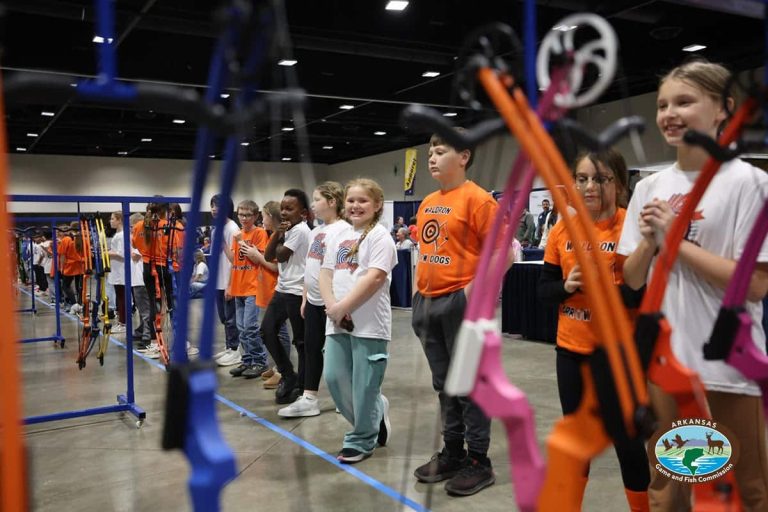
Waldron, Charleston School Districts Headline at State Archery Championship 

This content is reserved for RESIDENT INSIDER members.

Please or subscribe to view.

State Capitol Week in Review from Senator Terry Rice

The Senate passed legislation with far-reaching changes in how state-supported colleges and universities divide state aid, and how students qualify for scholarships.

One of the most noticeable changes will be in how much is awarded the first year to students who qualify for an Academic Challenge Scholarship. Now, students receive $1,000 during their first year, and that will go up to $2,000.

The scholarships are funded with revenue from the state lottery. Since Arkansas voters approved the lottery in 2008 in a statewide election, it has paid for more than 770,000 scholarships. Their value is about $1.4 billion.

Students at the University of Arkansas at Fayetteville have received 147,000 scholarships valued at $262 million. At Arkansas State University in Jonesboro, almost 85,000 scholarships have been awarded. They’re valued at $155 million.

At Arkansas Tech, more than 74,000 scholarships worth $132 million have been awarded since the lottery began.

Students at Southern Arkansas University in Magnolia have received more than 26,000 scholarships since the beginning of the program. They’re valued at $44.8 million.

At the University of Arkansas at Monticello, more than 5,400 scholarships valued at $9.5 million have been awarded.

Senate Bill 246 also changes other and smaller scholarship programs. It will expand Workforce Challenge Scholarships by $9 million. This program helps students in workforce training who take classes in the high-demand areas of health care, information technology and industry. Students may take non-credit classes if they fit within those qualifying categories.

Access to higher education will become easier because the bill standardizes course numbering and will make application forms uniform for all state institutions.

It broadens the types of advanced placement courses that students may take in order to earn college credits while still in high school. It broadens the types of standardized tests that institutions will accept as admission tests.

The fiscal impact for colleges and universities will not be fully known for several years. The bill will change the state’s formula for distributing state aid to include a “return on investment” metric that aligns with the state’s economic and workforce needs.

The Senate also approved House Bill 1634 to allow colleges and universities to operate raffles, to raise money to pay players on their athletic teams. In recent seasons, college sports have changed dramatically because players are no longer amateurs. They can accept payment for the use of their name, image or likeness (NIL).

In other news, the Senate approved SB 307 to allow utilities greater flexibility to recover investments in new power plants. Supporters of the bill said that other states have similar laws, and Arkansas must become more competitive in energy production because demand is expected to increase steadily in the future.

Under current law, utilities incur finance charges during construction. SB 307 would allow utilities to begin recovering costs from ratepayers during construction, and thus avoid some finance charges. Those savings would then be passed along to customers. SB 307 now goes to the House of Representatives.      

Timepiece: Arkansas Trucking

This content is reserved for RESIDENT INSIDER members.

Please or subscribe to view.

Division of Agriculture researchers to help investigate farmers’ attitudes toward risk and water

By the U of A System Division of Agriculture

Two researchers with the University of Arkansas System Division of Agriculture will be part of a three-year study examining how farmers’ risk preferences impact water use during drought.

Mike Daniels, professor and extension soil and water conservation scientist, and John Pennington, extension water quality educator, are collaborating with co-principal investigators Kevin Befus, associate professor of geosciences at the University of Arkansas, and Kent Kovacs, associate professor of accounting, economics and finance at the University of Arkansas at Little Rock.

The National Science Foundation’s Division of Research, Innovation, Synergies, and Education awarded $745,594 to the four researchers.

“This grant is an incredible opportunity to address a complex societal challenge —ensuring sustainable water use in agriculture,” Kovacs said. “No single discipline can solve this problem alone. We need interdisciplinary teams that combine economic modeling with hydrological data to understand how farmers respond to risk and changing water availability.”

The three-year project will integrate economic, hydrological and social science models to examine farmers’ irrigation decisions, particularly in groundwater-dependent agricultural systems like the Lower Mississippi River Basin. The research findings will help policymakers and water resource managers develop strategies for sustainable water use amid increasing climate challenges.

The Division of Agriculture, a sister entity to UA-Little Rock within the University of Arkansas System, conducts the land-grant missions of outreach and research and brings those unique skills to this project.

Both Pennington and Daniels have lengthy experience dealing directly with landowners, farmers and other Arkansas stakeholders across the state. Pennington has facilitated a series of watershed cleanup efforts in the Buffalo River watershed, and Daniels is director of the Arkansas Discovery Farm program, which addressed soil and water health by reducing nutrient runoff, with an eye to water quality in the lower Mississippi.

“Our role in the project is to organize, coordinate, and conduct the public outreach meetings with the producers,” Pennington said. “We look forward to sharing information and gaining insight into their valuable and critically important perspectives regarding climate resiliency, their use of irrigation water and the related challenges and concerns.” 

“We are excited to work with Dr. Kovacs and Dr. Befus to help protect the groundwater resources of our state and to ensure that agriculture remains sustainable,” Daniels said.

Thomas Clifton, interim dean of the College of Business, Health and Human Services, said the study will address a critical challenge “for Arkansas and beyond,” and that the findings “will provide valuable insights that can help shape more sustainable agricultural practices and water conservation strategies.”

Agriculture requires enormous amounts of water in the United States and elsewhere, and drought can severely impact crop production. The study will use farmer surveys to measure their risk preferences and incorporate this data into economic and hydrological models. These models will simulate how irrigation decisions change over time, particularly during prolonged droughts, and predict whether farmers will adapt to drier conditions or overuse aquifers, potentially necessitating future public policy interventions.

“If our models suggest a rapid decline of aquifer resources, it may indicate the need for policy changes—whether through water use regulations, incentives, or conservation programs,” Kovacs said. “Billions of dollars are invested in irrigated crop agriculture in Arkansas, making it the state’s second-highest revenue-generating agricultural activity after poultry. Understanding how irrigated farming impacts our goods and services from water resources is crucial for the livelihoods of Arkansans and the future of our state’s economy.”

The project will include three stakeholder workshops with farmers, researchers, businesses, state and federal agencies and policymakers to ensure the research is grounded in real-world challenges and practical solutions.

The grant will also support education and outreach initiatives, including curriculum development and student training, with an emphasis on engaging non-traditional students in water resource management research.

“I’m thrilled to receive this grant,” Kovacs said. “This research will not only contribute to scientific understanding but also provide practical insights for farmers and policymakers, helping ensure long-term water sustainability for future generations.”

To learn about extension programs in Arkansas, contact your local Cooperative Extension Service agent or visit www.uaex.uada.edu. Follow us on X and Instagram at @AR_Extension. To learn more about Division of Agriculture research, visit the Arkansas Agricultural Experiment Station website: https://aaes.uada.edu/. Follow on X at @ArkAgResearch. To learn more about the Division of Agriculture, visit https://uada.edu/. Follow us on X at @AgInArk.

About the Division of Agriculture

The University of Arkansas System Division of Agriculture’s mission is to strengthen agriculture, communities, and families by connecting trusted research to the adoption of best practices. Through the Agricultural Experiment Station and the Cooperative Extension Service, the Division of Agriculture conducts research and extension work within the nation’s historic land grant education system. 

The Division of Agriculture is one of 20 entities within the University of Arkansas System. It has offices in all 75 counties in Arkansas and faculty on three campuses.  

The University of Arkansas System Division of Agriculture offers all its Extension and Research programs to all eligible persons without regard to race, color, sex, gender identity, sexual orientation, national origin, religion, age, disability, marital or veteran status, genetic information, or any other legally protected status, and is an Affirmative Action/Equal Opportunity Employer.

Morgan Celebrated for 15 Years with the City of Mansfield

This content is reserved for RESIDENT INSIDER members.

Please or subscribe to view.

Economists tackle estimating consumer effects following the loss of billions of birds and eggs lost to avian influenza

By Mary Hightower
U of Arkansas System Division of Agriculture

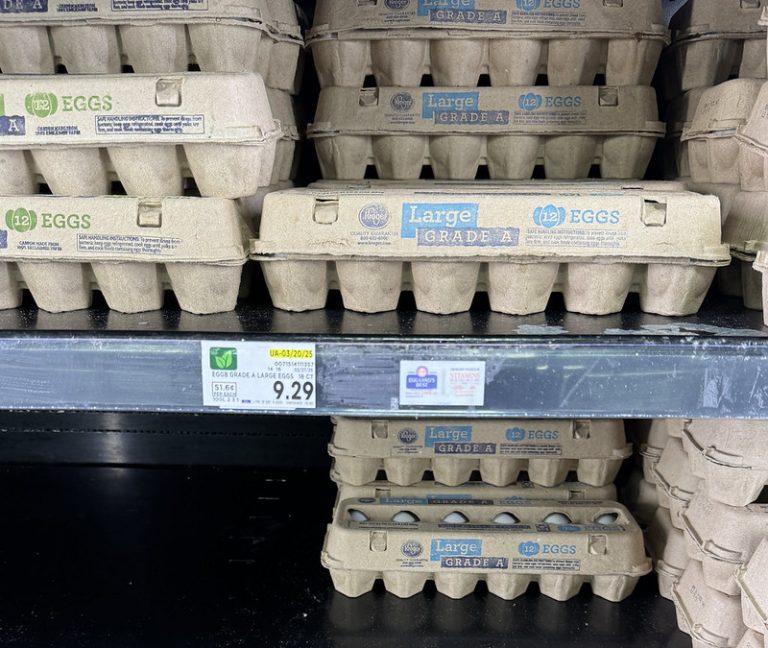
Fewer and more expensive eggs in 2024 put estimated $1.41 billion burden on consumers in 2024, according to study by a trio of researchers examining the impact of highly pathogenic avian influenza — HPAI — on the economy.

Expectations are for the price burden to continue through 2025 as producers work to repopulate laying hens lost to HPAI.

The study, “The Economic Impact of HPAI on U.S. Egg Consumers: Estimating a $1.41 Billion Loss in Consumer Surplus” was published last month by the Fryar Price Risk Management Center. It was conducted as an extension to an earlier paper, “Biological lags and market dynamics in vertically coordinated food supply chains: HPAI impacts on U.S. egg prices,” published in the journal Food Policy in 2024.

The Fryar Center is part of the University of Arkansas System Division of Agriculture and the Dale Bumpers College of Agricultural, Food and Life Sciences.

James Mitchell, assistant professor and extension economist for the Division of Agriculture, was the lead author on both papers, which were written with Jada Thompson, associate professor and Division of Agriculture economist and Trey Malone, an economist formerly at the University of Arkansas, but now at Purdue University.

According to the U.S. Department of Agriculture’s Animal and Plant Health Inspection Service, HPAI affected 38.4 million commercial egg laying birds and 29 flocks in 2024.

“As a result, we estimate an average week-to-week increase of 9 percent in retail egg prices, independent of other sources of egg price inflation,” the authors said. Using own-price elasticities — a measure of demand responsiveness to price changes — they estimated that price increases lowered demand for eggs by 2 percent on average.

“This reduction in consumption, coupled with higher prices, led to an estimated consumer surplus loss of $1.41 billion,” the researchers said. “This estimate reflects the economic burden on consumers due to reduced availability and affordability of eggs following HPAI outbreaks.

“The magnitude of these losses underscores the importance of understanding how disease outbreaks in the egg supply chain influence consumer welfare and market dynamics,” the three authors said.

The cost of eggs

While the cost of eggs may seem to be a simple supply vs. demand equation, determining the size of the economic loss is quite a bit more complex, say the economists.

“Someone not familiar with broiler or turkey or egg production might say, ‘oh, a bird died today because of bird flu and egg prices today are impacted by that’,” Mitchell said.

HPAI has been hitting broilers, egg layers and turkey production in the U.S. and globally hard since 2022, resulting in the loss of billions of commercial birds, not to mention birds and other animals in the wild.

“Our main thesis is that you have to consider a longer timeframe,” Mitchell said. “What’s happening today is a function of what happened six months ago.”

Because of the fierceness of the current strain of HPAI, which has a mortality rate of higher than 75 percent, whole flocks are destroyed once the disease is detected. Mitchell said if a flock has to be depopulated because of avian influenza or another cause, “you’re losing egg production from that flock.

“But you don’t just replace that flock tomorrow. It takes about six months for the new birds to reach maturity and start laying eggs,” he said.

Mitchell said that when they started their initial analysis looking at 2022 data, the challenge was “how much consideration had to be given to disentangling the impacts of bird flu from other things that were happening in 2022.”

Economic aftershocks from the COVID pandemic and the Ukraine war and resulting higher grain prices “were something we had to be careful about,” he said.

Price rollercoaster

When egg prices rise, so do the number of media interview requests for Thompson.

“The questions that are asked right now are, ‘Why are prices are high?’ And ‘when are they coming back down?’” Thompson said. She noted that in 2022, HPAI led to some 43 million laying hens being taken out of egg production” in the U.S.


That was possibly the largest loss of layers in one quarter, at least until 2024-25.

“In the fourth quarter of 2024, there was a loss of 20 million birds,” Thompson said. “And in the first two months of this year, some 30 million birds. That’s an astronomical number of birds being affected by HPAI.”

Much of the nation’s commercial egg production is concentrated in a fairly small area, including Minnesota and Iowa, Mitchell said.

There have been proposals within the industry to bring broiler eggs to the market, but both Thompson and Mitchell say that’s not an easy fix because the broiler and egg production systems don’t interact.

“It’s not the first time we’ve had this conversation,” Thompson said. “There are limitations on what can be done when dealing with a different system. How do we collect these eggs? How are we going to store and clean them? This will mean additional transportation costs.

“And egg prices are really high already,” she said. According to the Bureau of Labor Statistics retail egg prices reached $4.95 per dozen in January 2025, an increase of 96 percent compared to January 2024.

The research comes with a few important caveats. First, the estimate assumes that consumer preferences and purchasing behavior remained stable, meaning that consumers responded to price increases in the same way as they have in the past.

Second, the analysis focuses on the direct impact of HPAI on egg prices and consumer surplus, meaning it does not account for any indirect effects, such as potential changes in producer behavior or government policy responses.

“Despite these considerations, this estimate provides a clear and useful benchmark for understanding how HPAI affected egg prices and consumer spending in 2024,” the authors said.

To learn about extension programs in Arkansas, contact your local Cooperative Extension Service agent or visit www.uaex.uada.edu. Follow us on X and Instagram at @AR_Extension. To learn more about Division of Agriculture research, visit the Arkansas Agricultural Experiment Station website: https://aaes.uada.edu. Follow on X at @ArkAgResearch. To learn more about the Division of Agriculture, visit https://uada.edu/. Follow us on X at @AgInArk. 

About the Division of Agriculture

The University of Arkansas System Division of Agriculture’s mission is to strengthen agriculture, communities, and families by connecting trusted research to the adoption of best practices. Through the Agricultural Experiment Station and the Cooperative Extension Service, the Division of Agriculture conducts research and extension work within the nation’s historic land grant education system. 

The Division of Agriculture is one of 20 entities within the University of Arkansas System. It has offices in all 75 counties in Arkansas and faculty on three campuses.  

The University of Arkansas System Division of Agriculture offers all its Extension and Research programs to all eligible persons without regard to race, color, sex, gender identity, sexual orientation, national origin, religion, age, disability, marital or veteran status, genetic information, or any other legally protected status, and is an Affirmative Action/Equal Opportunity Employer.

Motorcycle Crash in Scott County Leaves One Dead

This content is reserved for RESIDENT INSIDER members.

Please or subscribe to view.

Huntington Citizens Question Excessive Water Runoff

This content is reserved for RESIDENT INSIDER members.

Please or subscribe to view.