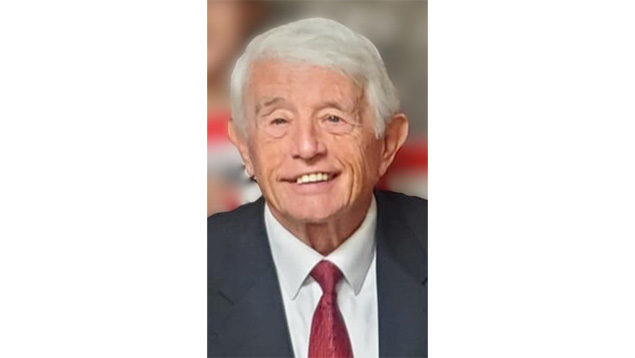
Larry Vincent Horne, 74, of Clarksville, Arkansas, was born in Durham, North Carolina, on December 7, 1950. He passed away on March 4, 2025, in Rogers, Arkansas. He was a Pastor at Southside Baptist Church in Paris, Arkansas.
His mother, Nina Smith, and his stepfather, Earl Smith, preceded him in death.
Survivors include his wife, Peggy Horne; his son, Aaron Vincent Horne; his daughter, Sarah Elizabeth Scott and husband, Brent; his brother, Ned Horne; his sister, Donna Matney; and his grandson, Lance Hunter Scott.
Visitation is from 5 p.m. until 7 p.m., Friday, March 7, 2025, at the Hardwicke Funeral Home Chapel in Clarksville, Arkansas.
Funeral Services are at 1 p.m., Saturday, March 8, 2025, at Southside Baptist Church in Paris, Arkansas, with Brother J.R. DeBusk, Brother Ben Jerod Hardgrave, and Brother Brent Scott officiating. Burial will follow at Union Grove Cemetery in Clarksville, Arkansas. Harold Whittenburg, Bob Parks, Rusty Hardgrave, Anthony Walters, Tom Dicus, and Travis Kimbrel are pallbearers. Reed Haynes, Jim West, Richard Mirus, Gene Brown, the men of Southside Baptist Church, and his nieces and nephews.
In lieu of flowers, memorial contributions may be made to Southside Baptist Church at 1311 S Elm St, Paris, AR 72855.
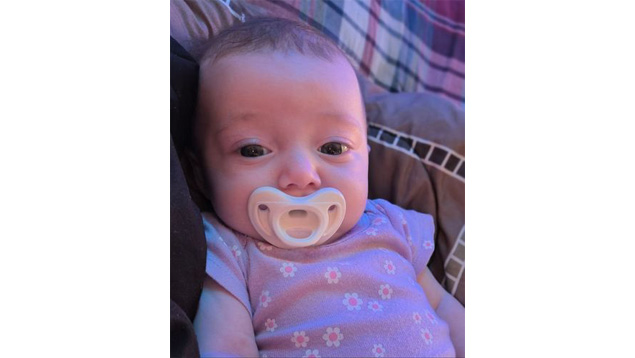
Elizabeth Jaquline-Carnell Stinson of Boles, Arkansas was carried into Jesus’ arms, Monday, March 3, 2025. Elizabeth was born November 5, 2024 in Mena, Arkansas to her parents Jesse Stinson and Shelbie Lovett. She was 4 months old.
Elizabeth was a ray of sunshine and touched the lives of many family and friends throughout her short yet very precious life. She was very loved by all and her sweet memory will forever be treasured.
Elizabeth leaves behind to cherish her memory, her father Jesse Stinson and her mother Shelbie Lovett, her siblings Alsie, and Daxton. She is also survived by her Godfather Cody Shores, grandparents Tonya Blevins, Bob Lovett, Vickie Lovett and Chad and Amber Stinson, Larrain Smith as well as uncles and aunts Dayton Lovett and David Blevins (Cheyanne), Cheyenne Allred (William) and cousins Layla, Cooper and Kayleigh. Elizabeth will hold a special place in the hearts of many extended family, friends and loved ones.
Elizabeth was preceded in death by one aunt Southern Brown and one uncle Robert Griffin and great grandparents: Jewelene Lovett, Gaylord “Buck” Lovett, Marvin Odean Phillips, Homer Stinson, Bobby Joe Claunts, John G. Forrest Jr., great aunts and great uncles Leona Fisher, Howard Lee Fisher III, and Hershel Lovett.
Elizabeth’s life celebration will be 3:00 p.m. Monday, March 10, 2025 at the Lamb Church near Waldron, Arkansas with Pastor John Wagner officiating. Interment will follow in the Lamb Cemetery near Waldron, Arkansas. Arrangements are being entrusted to the Heritage Memorial Funeral Home in Waldron, Arkansas.
Elizabeth’s pallbearers will be Cody Shores, David Blevins, Dayton Lovett and Mark Isham.
James Monroe, Nelson Mandela, Henry David Thoreau, Frederick Chopin, Doc Holiday, and Eleanor Roosevelt; what does this diverse group of famous people have in common? They all died from tuberculosis (TB). Tuberculosis was a horrible disease, afflicting without impunity the rich, the poor, the famous, and the unknown. TB is a chronic bacterial infection that affects the lungs but can spread to infect the bone, spine, brain, lymph glands, and other parts of the body. Treatable today, for centuries TB plagued countries across the world and caused innumerable deaths. It is passed from individual to individual through the air by coughing, sneezing, or from spit.
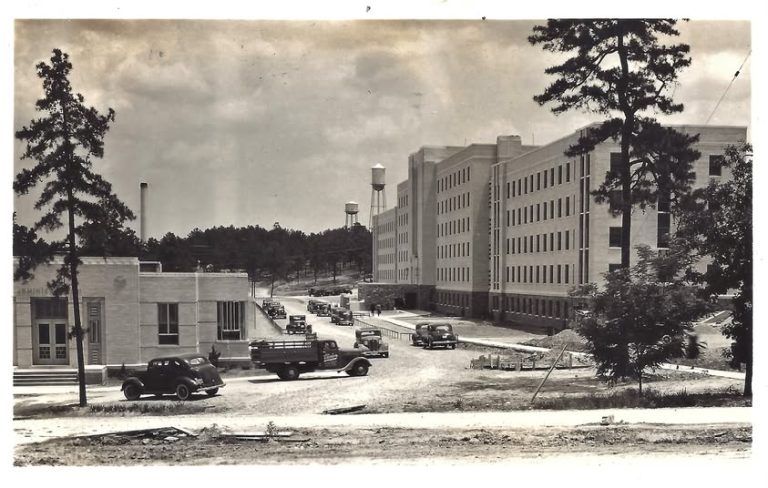
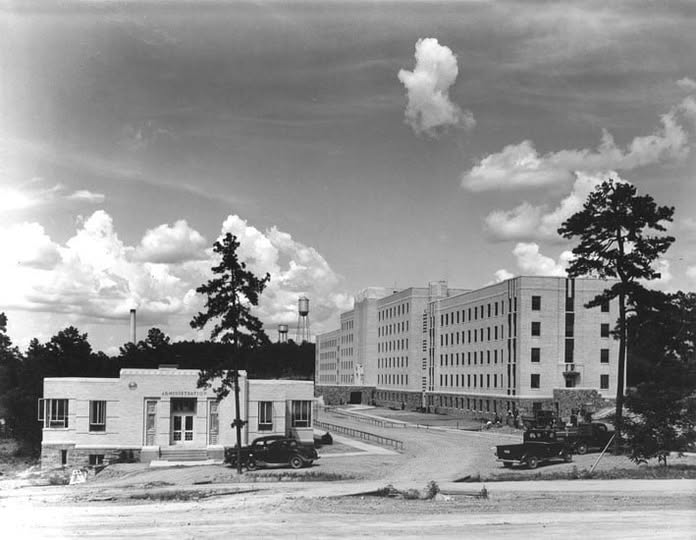
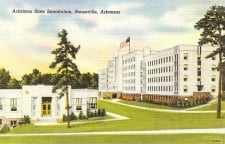
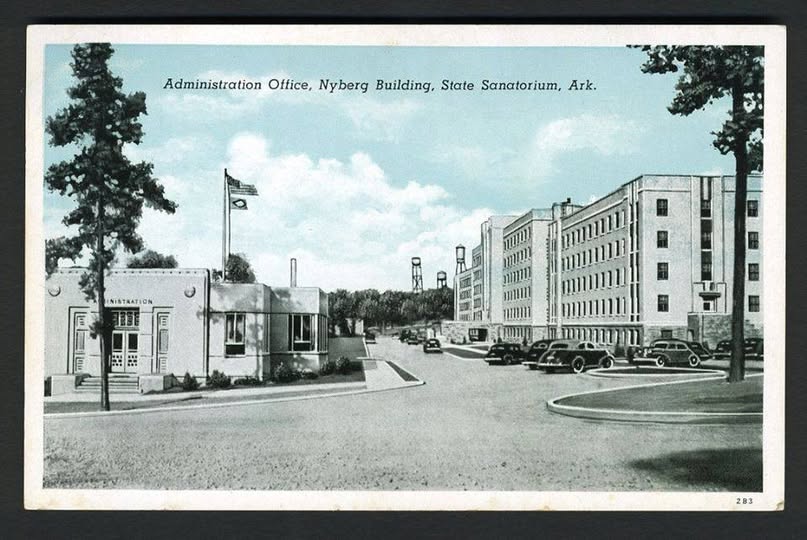
During the early 1900’s, Arkansas had a huge number if infected individuals. Medicine had become more proactive in preventing the spread of disease and states had begun isolating patients in special hospitals that allowed patients fresh air, lots of rest, and some treatment. The main goal was to isolate those with the disease in order to prevent its spread. An 800-acre site just south of Booneville, Arkansas was selected by the state and construction began on the sanitorium. The initial goal was to establish a facility that was virtually self-sufficient and a town itself. The sanatorium grew rapidly, eventually housing up to 5,000 patients at a time. From 1909 until it closed in 1973, more than 70,000 patients passed through the facility. The largest building, the Nyberg building was built in the 1930’s. A monstrous building, it is a tenth of a mile long and its several floors contain more than 140,000 square foot of space.
Across the state, people of all ages identified as having lung complications were sent to the sanitorium. Taking your family to the facility was viewed as a death sentence. Initially more than 70% of those sent never returned. Over the years, the Arkansas sanatorium became one of the best known in the world and reduced that rate to less than a 10% mortality rate.
The real story is a biographical rather than a statistical history. The stories told by survivors relegated to spend months and even years in the facility resound with hurt, fear, and sometimes bitterness. The University of Arkansas and the Arkansas Public broadcast system recorded many of the stories. Many of those recorded were only children when forced into the isolation of the hospital. Initially the treatment involved isolation in individual rooms and total bed care. A journey through the Nyberg building today allows one to experience the coldness and loneliness experienced by patients. The environment is sterile, the walls and building as dark and forbidding as the mental hospital in the Batman series.
It is estimated that more than 50% of the 70,000 or so patients died. The medical staff wished to isolate and prevent patients from knowing about death. One of the survivors describes the horror of death on your floor. Immediately, nurses went down the hall, closing the doors to each room. The hollow building would resound as the doors were slammed, beginning at the end of the hall. The patients would count the door slams and time intervals and figure which door was not closed in the sequence and know which friend had passed. Soon the squeaking sound of the gurney was heard as the attendants collected the body to be delivered downstairs in the cold room.
Days and months would pass in complete boredom. Richard Myers, one of the survivors was asked what life was like, “Every day was a Tuesday, he replied. “Tuesday because nothing ever happens on Tuesdays.” One of the ladies described the joy of a nurse bringing them hamburgers brought from Booneville. Treatment was sometimes painful. One method involved pulling the arm upward, deflating the lung, and placing ping-pong balls into the chest thereby collapsing the
lung to allow it rest. Many of the methods of treatment were experimental but successful and the facility became known as one of the best TB sanitoriums in the world.
The TB sanitorium was closed in 1973. Many of the buildings still stand and the facility today serves as a state mental hospital. There are so many stories to tell about the facility, including modern day ghost stories. Each visit, I hear the whispers of those stories in my mind as I walk the hall and remember the horrors of a disease man is now able to contain and cure. For a more complete story, go to Sanatorium Hill https://www.pbs.org/video/sanatorium-hill-kkf1gw/
Hello everyone! Beautiful day here in the River Valley. Well, I received several responses from women wanting to go to the Booneville Walmart after my last article. I guess we need to rent a van and take a load of ladies down there. It would be a fun trip for sure. We could all go eat out then hit the Walmart. This week we will continue on the subject of men.
I have told y’all multiple stories on the crazy things that Chuck Hopkins has done. Just a FYI I have done some crazy things to him also. I used to have, as we like to call it, Jones temper, or fit. It came from my mom’s side of the family. My mom was a very sweet person, but you did not want to make her mad for sure. I have seen that side of her, and it was scary.
One morning I had cooked breakfast as I always done, and Mr. Hopkins decided to say something about the food on his plate. I always thought you don’t want to bite the hand that feeds you. I guess he went a little too far, I walked over to the table where he was sitting, picked up his plate and chunked the plate, food and all, out the front door as far as I could throw it. Now was that a nice thing to do? No, it was not. But, like I said, the Jones came out in me.
One time I got mad at him (keep in mind this was years ago), he had gone out with a friend of his named Sporty Jim. Needless to say, they stayed out pretty late doing who knows what and so I decided to make a sign and put it on the door and lock them out. On this sign it read: “cozy corner motel, no vacancy.” When they got home, I stood at the door and listened to them as they read that sign. It was soooo funny. Yes, I eventually let them in.
Let me say this, time never meant anything to Chuck Hopkins. The only reason he was not late to his funeral is the fact that Sammy Callahan drove his urn to the funeral. We rode together to work when we first got married because we worked at the same establishment. I wanted to leave a little early, I did not want to be late. Not him, he slid in on two wheels with 30 seconds to spare. One morning I just got tired of it and left him and went on to work. He started walking and his boss stopped and picked him up. Yes, he was mad but from then on, he was on my time schedule, ha, ha! Those were the good old days, sure miss that fella. We had lots of fun and laughs together.
This week’s recipe is a simple but delicious one. I hope you enjoy! Have a wonderful week!
APPLE PIE BISCUITS 8 frozen buttermilk biscuits, thawed (or you can use the big can biscuits) 1 21 oz. can of apple pie filling (chop the apples up) 1/2 cup melted butter 1/2 cup light brown sugar 1 tablespoon cinnamon 1 teaspoon vanilla 1/8 teaspoon nutmeg 1/3 cup chopped nuts (optional) Heat oven to 375 degrees. Rub some butter over your pan or skillet. In a small bowl, mix the brown sugar, cinnamon and nutmeg till all combined. Dip each biscuit into the butter then roll in the sugar mixture on both sides. Arrange in the skillet. Make sure you chop your apples up fine and add the vanilla to the pie filling. Arrange the pie filling evenly over the biscuits and sprinkle with nuts if you like them. Pour the melted butter over the top and sprinkle the remaining sugar mixture on top. Bake for 30-35 minutes until golden brown and bubbly. In a small bowl, whisk together some powdered sugar and milk and add a little vanilla to make a glaze. Drizzle on the biscuits and serve. Delicious!