75.3 F
Fort Smith
Sunday, June 21, 2026
Home Blog Page 13

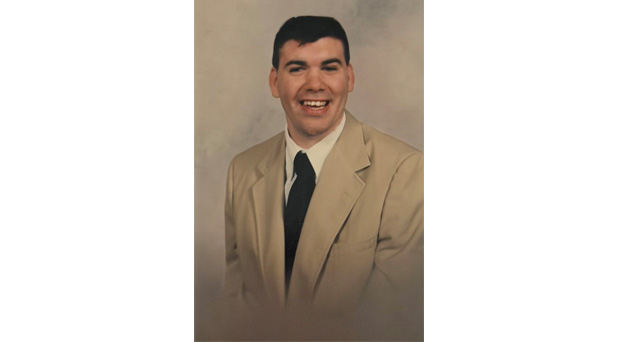
Obituary: Chad A. Lane (1971-2026)

Chad Ashley Lane was a force to be reckoned with. Born on December 12, 1971, he met challenge after challenge, yet did not stop trying to be more than they said he would ever be. They said he would never walk, but he did. They said he would never talk, but he did. They said he would not have a full life, but he did! He learned to spell, count, and run even when the odds were not in his favor. He could quote numerous Bible verses and prayed with complete trust that God was hearing him. Chad was funny, witty, and did not hold back his opinion. He could communicate in ways most only wish they could. Chad loved well and was also loved well. He loved his mom the most and preferred her over all others. Their bond was unbreakable.

Chad Ashley Lane stepped into eternity and into the arms of Jesus on Friday, April 23, 2026. He spoke often of the Lamb’s Book of Life and made sure his name was written in it. He lived with confidence in the fact that his time on earth was temporary and that someday he would get to go to his forever home where he would see Jesus and experience the fullness of His promises. We can only imagine the things he now sees and experiences, but maybe a big banner was hung that said, “Welcome home, Chad, Welcome HOME!”

Chad Lane is survived by his mother Carolyn Lane, brother Cameron Lane (Krista Lane), brother Clark Lane, sister Courtney Lane ( Gregory Greenich), three nephews, four nieces and seven great nieces and nephews.

Chad was preceded in death by his father Collins Lane.

A Celebration of Chad’s life will be held Monday, April 27, at Connect Church in Russellville at 6 PM. A graveside service will be held Saturday, May 2, at the Hon Cemetery in Hon, Arkansas at 11 AM. Arrangements are being entrusted to the Heritage Memorial Funeral Home in Waldron, Arkansas.In lieu of flowers the family request contributions be made to Gideon’s International.

Greenwood Promotes Jason Gill to Head Coach

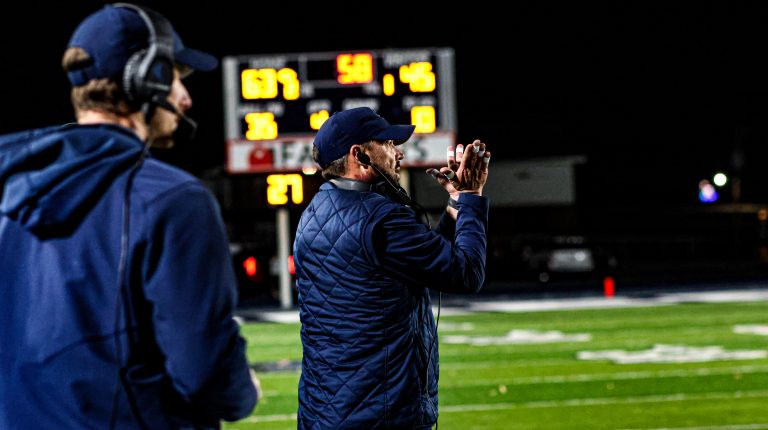
In the 104 years of Greenwood Football, there have been just nine coaches to command the sidelines. At the start of the 2026 season, it will be 10. Since 2013, Jason Gill has been a part of the Greenwood Football program. Coached in Fordyce by former Greenwood assistant coach Jim Cox, which culminated in two state championships. Coach Gill went on to serve as an assistant coach under Clay Totty during his run of state championships at Rison. From there, Coach Gill went to Mansfield, just south of Greenwood. At Mansfield, he coached the Tigers to their first Conference Championship and a 47-33 record in his seven seasons. Then it was on to Greenwood. Coach Gill started as the Junior High head coach, earning back-to-back Conference Championships.

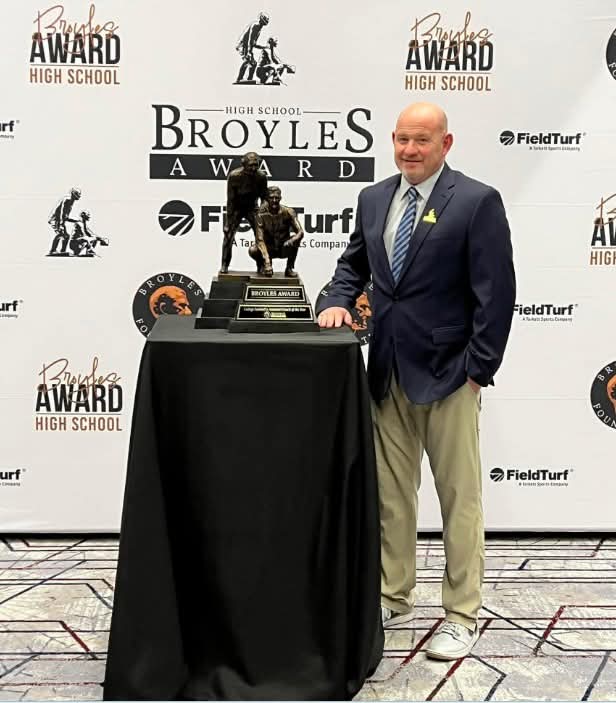
For the 2015 season, he was promoted to Defensive Coordinator under then Head Coach Rick Jones. A position he has held ever since. Along the way, he coached not only his son, Parker Gill, into a standout linebacker but also a Bulldog defense that held teams to a touchdown or less in 44 games. Including a three-game streak of holding a highly potent Lake Hamilton offense to zero points. For his work as the Defensive Coordinator, he received the 2024 Broyles Award, Arkansas High School Assistant Coach of the Year.

“I’m really excited with Coach Gill taking over. Obviously, we’ve been successful here at a level that hadn’t been seen. [at Greenwood]” Athletic Director Chris Young said. “I think Coach Gill is definitely prepared for this. He’s worked under three State Championship coaches.”

“He’ll be able to pull from each of us, I think that he’s worked under, and he’s had good experience as a head coach.” Chris Young added.

Since Chris Young took over a dual role as Head Coach and Athletic Director three years ago. Coach Gill was tasked with taking on a more Head Coach role when Coach Young was handling other duties.

“It’s something that probably all coaches think about, taking over a program like this. It’s awesome for me. I’ve gotten to experience and see two great head coaches here. I just hope that I can live up to that standard.” New Head Coach Jason Gill said.

“I’ve coached at other places. I was a Head Coach at Mansfield. I was happy here. I was happy my families here. I could have went and been a Head Coach somewhere else. But, I don’t know if it was in the plan, but if it ever came up, I was willing to step in.” Coach Gill said. “Coach Young has taken on a lot, he took on the AD, so over the last 2 or 3 years, he’s transitioned some of the stuff that he usually took care of.”

“He put that on me, and he’s talked about he’d walk away one day. I didn’t think it would happen, but it’s happened. Probably quicker than he wanted.” Coach Gill added.

Coach Jason Gill starts Spring Practice at 6am on May 4th and will be looking to fill several key roles, but has a large crop of returning players, especially on defense.

End of a Coaching Era: Chris Young Moves to Administration

The Coaching carousel in Arkansas High School football has seen some large moves this offseason. Fayetteville’s Casey Dick left for Texas High School football; in turn, former Razorback and Pulaski Academy Head Coach Anthony Lucas took over the 7A West program. With the opening at the Little Rock private school, Sylvan Hills head coach Mark Kelley was named Head Coach of the Bruins. Coach Kelley had engineered a turnaround at Sylvan Hills that had them in the Semi-Finals in just one season. Legendary Arkansas Head Coach Clay Totty was released by Wynne, then hired by Hazen. When it looked like Greenwood was going to go another season with minor changes, then Wednesday morning happened.

Chris Young to step into Administrative role

In February, Junior High Defensive Coordinator Brandon Godfrey was announced as the Safeties coach in place of Percy Arnold. Former Bulldog Parker Gill was hired in March to fill the spot opened on the Junior High staff.

Wednesday morning, Head Coach Chris Young met with the team to announce that he was stepping into an administrative role as Director of District Operations and Activities. It will be a dual role for the longtime Greenwood coach, combining his Athletic Director role with the duties and tasks of Kevin Hesslen. Hesslen was hired as the Superintendent of Alma Public Schools in March.

Chris Young started his coaching career at Greenwood as part of the Junior High coaching staff in 2000. Coach Young was the only coach on the staff who had been part of all 12 State Championships and 18 of the 19 State Title appearances. In his tenure as a Head Coach, the Bulldogs went to six consecutive state title games and posted a 71-8 record, including three State Championships. During that 26-year run as a coach, he mentored Bulldog household names like Drew Morgan and Kane Archer.

“Congrats, man. You played one of the most important roles in my career. Foundational. Forever thankful. Sincerely. Best wishes in the new adventure. Great opportunity ahead.” Former Bulldog and Arkansas Razorback Drew Morgan sent in a text message to Coach Young.

“Coach Young was the most detailed and THE MOST honest coach I ever had.” Former Bulldog and current Utah Ute Kane Archer said. Archer set national and state records in his four years under Chris Young. “He made everyone buy in and personally made me want to run through a brick wall at times, and I can never say that I’ve said that about anyone else,” Archer said with a laugh. “Coach Young has made one of the biggest impacts in my life, in my time playing for him. I will always be grateful.”

In the shadow of cleared shelves and State Championship rings, Coach Young reflected on his time as Head Coach. “It’s been a dream job. When Rick [Jones] left six years ago, I think there was a lot of fear about me taking over. I think we’ve taken it to another level, even our culture. The way the kids act, the way they treat each other in the locker room, the way they work. I think it’s better than it’s ever been; our numbers are better. We have 107 out for varsity right now. We have 200 in Junior High; we’ve never had numbers. You always want to leave a program in a good or better shape than when you took it. And I think we’ve done that.”

“When I combined Jobs and took the Athletic Director three years ago, I knew that you couldn’t do both forever. Obviously, at that point, there was kind of a plan. The school board has to make those decisions, but I kind of saw there was going to be an opportunity to move up into upper administration. I sure didn’t think that Mr. Hesslen was going to get hired as Superintendent at Alma right now and speed up the process, but that is essentially what happened.” Coach Young said.

“It’s going to be awesome. I’m going to have the ability to spend time with my wife and kids that I haven’t had in 27 years of working on the weekends. My wife (Kelly Young) has been a huge, huge part of my success personally, but just always being there for me. Now it’s a time, maybe I can do something with her and the kids and my parents that I haven’t been doing in the past.” Coach Young said about life after leading a team like Greenwood.

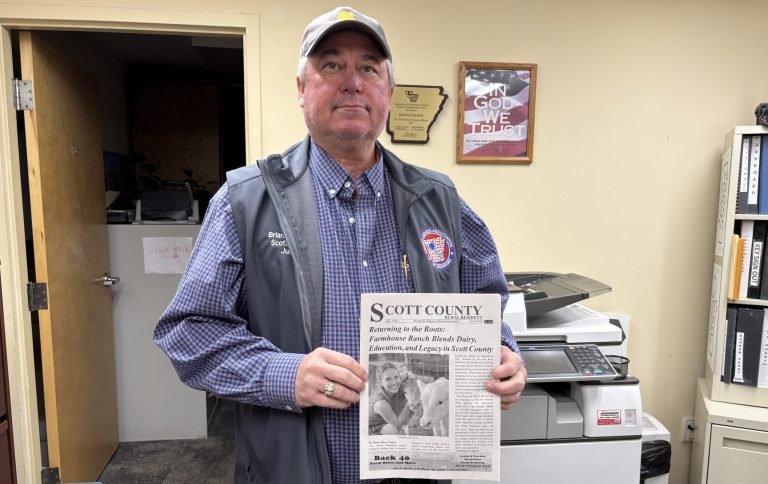
Resident News Launches Rural Publication

Resident News Network Owner and Publisher Jason Baggett has announced the addition of a new publication to its growing family of newspapers—a monthly edition dedicated to the rural residents of Scott County.
The new publication, titled Scott County Rural Resident, will focus on locally curated content tailored to the interests and lifestyle of the county’s rural communities. While some stories will be shared with Resident News Network’s weekly publication, much of the content will be unique to the monthly edition.
The Rural Resident will be distributed free of charge at locations throughout Scott County. However, due to limited quantities, paid subscriptions will also be available for those who wish to receive a guaranteed copy each month.
Content will include coverage of farming and ranching, community news, and stories authored by local residents, offering a platform for neighbors to share their voices and experiences.
“We are truly honored to meet, and hopefully exceed, the expectations of our readership and following.” Baggett said. “We are the only 100 percent locally owned news source printing in county. We believe firmly in local supporting local. We aren’t driven by political agendas, and we hold tight the promise to report fair, accurate news.”
That promise includes the “do no harm” principle, recognizing that while reporting serves the public interest, care should be taken to minimize unnecessary harm. “We do not file unnecessary FOIA requests, nor do we use them as a weapon,” continued Baggett. “We do not use our position or influence to overpower entities, agencies, or individuals.”
For more information about the Scott County Rural Resident, contact Resident News Network at 479-207-2268.

Resident Press (Lavaca, Charleston, Paris edition) 4/22/26 Vol. 5 No. 17

This content is reserved for RESIDENT INSIDER members.

Please or subscribe to view.

Greenwood Resident 04/22/26 Vol. 6 No. 17

This content is reserved for RESIDENT INSIDER members.

Please or subscribe to view.

Resident Press (Scott & So. Sebastian County edition) 4/22/26 Vol. 8 No. 17

This content is reserved for RESIDENT INSIDER members.

Please or subscribe to view.

Obituary: Sam McCutcheon (1935-2026)

Sam McCutcheon, 94, beloved husband, father, and innovator, passed away Tuesday, April 21, 2026 in Paris, Arkansas leaving a legacy of determination and achievement. Born of humble beginnings in Stidham, Oklahoma, Sam’s early life was marked by resilience as his family moved to California during the Dust Bowl in 1935. His father worked as a hired farm hand, and the family relocated frequently according to the crop seasons, eventually settling in the San Joaquin Valley of California.

He graduated from Ceres High School in 1949, serving as President of his class and participating in track & field as a hurdler, as well as the Marching Band playing the Sousaphone. Upon graduation, his father secured him a job at a parts store, but Sam aspired to pursue higher education and set his sights on college.

Sam joined the Air Force weather service, spending most of his time during the Korean War in Fairbanks, Alaska. He flew weather missions up to the North Pole and enjoyed sharing stories about “flying around the world in 2 minutes!” After his honorable discharge, he used the G.I. Bill to attend California Polytechnic University in San Luis Obispo. There, he earned a bachelor’s degree in electrical engineering and was later recognized as an Honored Alumni by the Engineering school.

After working for various electronic firms, Sam founded his own company, Autek Systems, in Silicon Valley (Sunnyvale). He quickly became one of the top 10 leaders in the U.S. in Testing Systems, acquiring over 30 patents. His innovative systems served the US Government and NASA, marking him as a pioneer in his field.

He met Dr. Lee Lane, who worked in the same industry, and they were married on May 30th, 1987. Together, they raised a blended family of eight children. Sam and Lee made their home in Coronado, working together in San Diego alongside Sam’s oldest son, Dan McCutcheon, until their retirement.

Airplanes were Sam’s lifelong passion. When not working, he was flying—often taking his family on vacations that revolved around airports. He never met an engine that didn’t fascinate him, and he loved sharing his technical knowledge with others. Sam held rankings for many aircraft types, including jets and seaplanes, and from his early 30s into his 60s, always owned and flew his own airplane. He taught two sons and a daughter to fly, and inspired his stepson, David Lane, to become a professional pilot with the Marines and later with UPS. While in San Diego, Sam became president of the Experimental Aircraft Association (E.A.A.).

In retirement, Sam and Lee moved back to Lee’s hometown of Paris, Arkansas. Sam continued to blend his engineering expertise with his love for aviation, continually designing his own airplane. Even as dementia took away some of his brilliance, he remained kind-hearted and generous, cherished by all who knew him. He is greatly missed.

He is survived by his wife of 38 years, Dr. Lillie Lee Lane of (Paris, AR), his children; Jan Stewart (husband Richard) of San Ramon, CA, Marlene Hogge (husband Steve deceased) of Arroyo Grande, CA, Carol Aguilar (husband Luis) of Los Gatos, CA, Daniel McCutcheon (wife Brenda) of San Diego, CA, David McCutcheon (wife Karen) of San Jose, CA, Robert McCutcheon (wife Elsa) of Fremont, CA, David Lane (wife Hannah) of Carlsbad, CA and Alan Lane (wife Terri) of Fayetteville, AR; 14 grandchildren and 2 great-grandchildren.

A Celebration of Life service will be held on what would have been his 95th birthday, June 29, 2026 at the First Christian Church in Paris, AR.

State Capitol Week in Review from Senator Terry Rice

Some highlights from the third week of the Arkansas General Assembly’s Fiscal Session:

Senator Dave Wallace sponsored a bill to declare April 21 as Arkansas Lineworker Appreciation Day. A large group of electrical lineworkers were present in the public galleries. These dedicated workers serve our state at great risk, often under harsh weather conditions.
Senator Greg Leding honored the late Senator Uvalde Rex Lindsey for his contributions to the state and his community. Senator Lindsey served the 4th District in the Arkansas Senate from 2013 to 2019, after previously serving in the House from 2009 to 2013. He passed away in July 2025.

Senator Reginald Murdock honored the Earle High School basketball teams. The Earle Bulldogs and Lady Bulldogs are both 2026 Class 1A State Champions. It’s rare for both the boys’ and girls’ teams from the same school to win the state championships!
The Senate approved the introduction of a bill to increase the Homestead Property Tax Credit, an Industrial Development Authorities Expansion bill, and a Protection from Sharia Law Property Rights bill.
Senator Matt McKee congratulated students from the Arkansas School for Mathematics, Sciences, and the Arts on their science fair competition accomplishments. The students will compete in the Regeneron International Science and Engineering Fair in May. It is the world’s largest STEM competition, featuring nearly $9 million in awards.

The Joint Budget Committee passed the report of the Special Language subcommittee. Among other items, the report included language added to HB1007 to manage separation funding for isolated school districts. Proposed by Senator Missy Irwin, this addition deals with funding and asset division for small, isolated schools that are separating from larger districts with which they were previously consolidated.

The Senate wrapped up the third week of the Fiscal Session by approving appropriation bills, including those related to the University of Arkansas, the Arkansas School for the Deaf and Blind, and departments and state agencies such as the Department of Agriculture, the Division of Career and Technical Education, and more.

Senator Jim Petty honored Justin Tate, a Special Olympian from Arkansas. Justin is one of only eight Special Olympians chosen as Guardians of the Flame in the final leg of the Law Enforcement Torch Run for the 2026 Special Olympics USA Games. Justin will carry the Flame of Hope to the opening ceremonies. He will run across the United States starting May 30, 2026 until the beginning of the opening ceremonies in Minneapolis on June 20, 2026.

The legislature’s sessions are open to the public. You can attend in person at the State Capitol complex in the committee rooms or in the public galleries of the Senate and House chambers. You can also watch meetings live and on demand at https://senate.arkansas.gov.

You can read and download PDFs of the bills that have been filed for the session at https://arkleg.state.ar.us/.  Click on “Bills” in the menu, where you can search by keyword or filing date.

New project ‘floats’ idea of solar panels on irrigation reservoirs

By John Lovett
University of Arkansas Division of Agriculture

Electricity and water don’t usually mix, but technological advancements in floating solar arrays open the potential to generate electricity while decreasing impacts on farm irrigation reservoirs and agricultural land.

Michael Popp with the Arkansas Agricultural Experiment Station is undertaking a new research project to test solar arrays on the reservoir at the Rice Research and Extension Center in Stuttgart.

“The goals are to not convert agricultural land to solar panel use, save irrigation water and create a synergy between utility companies, solar investors, farmers and policymakers,” said Popp, the Harold F. Ohlendorf Professor of Farm Management in the department of agricultural economics and agribusiness for the experiment station and the Dale Bumpers College of Agricultural, Food and Life Sciences at the University of Arkansas.

The experiment station is the research arm of the University of Arkansas Division of Agriculture.

Floating solar systems are also not visually intrusive when compared to traditional land-based photovoltaic systems, Popp said, because the embankments of the reservoir serve as a barrier to block sight of the systems.

Ryan Loy, an assistant professor and extension agricultural economist with the Division of Agriculture, recently joined Popp to talk about the project in an episode of the “Morning Coffee and Ag Markets” podcast for the Fryar Price Risk Management Center of Excellence.

Public perception survey

Popp and his collaborators are currently surveying Mid-South households and farmers on their perceptions of floating solar arrays and their willingness to pay for not diverting agricultural land to solar. The survey is set to expire on May 15.

The survey is available online.

Collaborators on the project, which is funded by Popp’s endowed chair position and the Division of Agriculture, include Chris Henry, professor and water management engineer, and Yi Liang, associate professor emeritus — both with the department of biological and agricultural engineering — and a cadre of graduate and undergraduate honors students.

Anchors aweigh

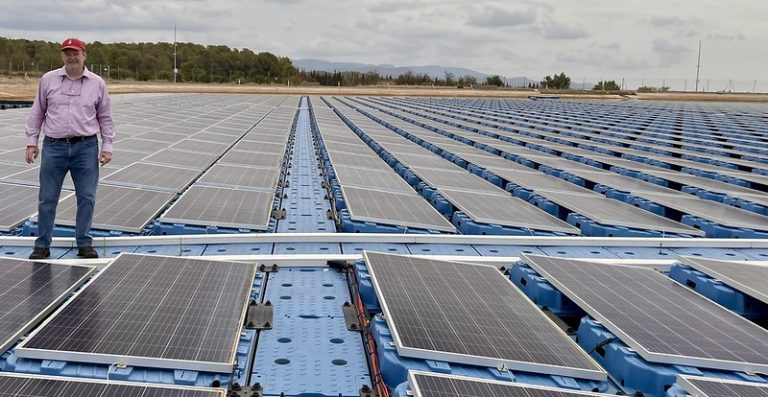
At the Rice Research and Extension Center, anchors have been placed for buoys to hold the 70-kilowatt, 96-panel floating solar array on about 0.1 acre of a 40-acre reservoir, along with 24 more panels on the reservoir embankment. The panels are expected to be installed in May, Popp said.

Although used in other parts of the nation and world, the research project will help determine economic feasibility within Arkansas, as well as practical operation and maintenance routines of a floating solar array for the unique characteristics of Arkansas. For example, Arkansas’ Delta is situated in the Mississippi Flyway, and Popp would like to see how migratory birds may react to the floating solar array.

The system will also provide a platform for new areas of research for graduate students in agricultural economics and agricultural engineering.

Potential benefits of floating solar

In addition to not taking up farmland for solar energy, Popp said the benefits of floating solar systems include a reduction of water evaporation by 25 to 50 percent, depending on the amount of coverage over the water body.

It remains to be definitively seen on smaller systems, Popp said, but by blocking light on the water, the floating panels may also reduce algal growth that fouls irrigation equipment.

Because floating solar panels are installed at a lesser angle than land-based systems, a 2020 study in Brazil also suggested less area is needed to produce the same amount of electricity.

“Our calculations suggest that of the available surface areas of water and embankments on irrigation reservoirs, it would require approximately 2.2 to 2.6 acres per megawatt,” Popp said.

That’s about half as much as land-based systems, which require about 5.5 to 9 acres per megawatt because of shading issues and the need to manage vegetation.

“Land installations tend to have a larger surface area footprint,” Popp said. “Not only are we not using agricultural land, but we’re also using less surface area per megawatt.”

Driving forces of solar on farmland

Solar land leases have become a financially attractive proposition to farmers in relation to what they could get from leasing it to a tenant farmer, Popp said. Utility-scale solar installations were projected last year to occupy about 0.2 percent of Arkansas’s 13.7 million acres of agricultural land, rising to an estimated 1.7 percent of cropland in select counties.

With preference for land-based solar arrays given to cleared, level and well-drained land, parcels commonly displace cropland near transmission stations but can also be found on marginally productive farmland, Popp said.

A solar land lease can range from about $450 to as much as $2,500 an acre. Comparatively, cash rent per acre for tenant farmers in Arkansas has averaged about $50 an acre for non-irrigated cropland, $150 for irrigated cropland, and $20 for pasture, according to a 2024 report by the U.S. Department of Agriculture’s National Agricultural Statistics Service.

To learn more about ag and food research in Arkansas, visit aaes.uada.edu. Follow the Arkansas Agricultural Experiment Station on LinkedIn and sign up for our monthly newsletter, the Arkansas Agricultural Research Report. To learn more about the Division of Agriculture, visit uada.edu. To learn about extension programs in Arkansas, contact your local Cooperative Extension Service agent or visit uaex.uada.edu.

About the Division of Agriculture

The University of Arkansas Division of Agriculture’s mission is to strengthen agriculture, communities, and families by connecting trusted research to the adoption of best practices. Through the Agricultural Experiment Station and the Cooperative Extension Service, the Division of Agriculture conducts research and extension work within the nation’s historic land grant education system. 

The Division of Agriculture is one of 20 entities within the University of Arkansas System. It has offices in all 75 counties in Arkansas and faculty on three system campuses.  

Pursuant to 7 CFR § 15.3, the University of Arkansas Division of Agriculture offers all its Extension and Research programs and services (including employment) without regard to race, color, sex, national origin, religion, age, disability, marital or veteran status, genetic information, sexual preference, pregnancy or any other legally protected status, and is an equal opportunity institution.