

76.6 F
Fort Smith
Thursday, July 2, 2026
Home Blog Page 133

State Capitol Week in Review from Senator Terry Rice

The Senate approved legislation to improve maternal health care in Arkansas, especially in areas where existing medical services are lacking.

Also, a bill to provide a free breakfast every day to all students continued to breeze through the legislature and should soon be sent to the governor for her signature. It is part of her legislative agenda.

Senate Bill 213, known as the “Healthy Moms, Healthy Babies Act,” changes Medicaid regulations to make prenatal care much more accessible in areas of the state that have been designated as maternal care deserts, because of a lack of obstetricians.

It establishes presumptive eligibility for pregnant women who apply for Medicaid. This allows them to get immediate prenatal care, while they’re waiting for a full application to be processed.

Also, SB 213 authorizes Medicaid to reimburse doulas and community health workers, including for visits to the pregnant woman’s home if the visit is related to prenatal or postpartum care.

Medicaid coverage will include office visits, laboratory fees, tests ordered by a physician, blood work, remote monitoring, fetal nonstress tests and glucose monitoring to detect possible gestational diabetes. Self measurement blood pressure devices will be covered also.

The House passed an identical bill. Improving maternal health care is part of the governor’s legislative agenda.

The Senate also approved a package of bills intended to prevent deceptive practices when canvassers collect signatures from registered voters, in order to place an issue on the ballot.

SB 207 would require canvassers to inform people, before collecting their signatures, that petition fraud is a Class A misdemeanor. The disclosure could be verbal, or in a separate written document that would be shown to people before they sign.

SB 208 would require canvassers to view a photo ID of each person signing the petition. If canvassers are unable to verify someone’s identity, they may not collect a signature.

SB 209 directs the Secretary of State to not count signatures on a petition if a preponderance of evidence indicates that the canvasser has violated state laws or provisions in the state Constitution regarding canvassing, perjury, forgery or fraudulent practices in getting signatures.

SB 210 would require people to read the ballot title of a ballot issue before signing the petition. The ballot title is a summary of all the provisions in the proposed constitutional amendment or initiated act. The bill allows for the ballot title to be read to the person signing, in the presence of the canvasser.

SB 211 would require canvassers to submit a sworn statement that he or she has complied with all state laws governing the collection of signatures, and with the Constitution. Unless the canvasser submits the sworn statement, any signatures he or she turns in will not be counted by the Secretary of State.

SB 59 would provide a free breakfast to all public school students, regardless of their family income, beginning in the 2025-2026 school year. It has been passed by the Senate and cleared a Senate committee.
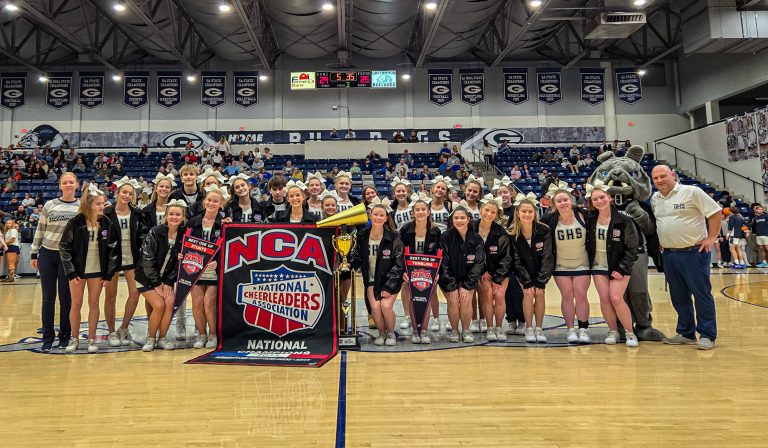
Greenwood Cheer Coaches To Step Down At End Of School Year

This content is reserved for RESIDENT INSIDER members.

Please or subscribe to view.

Extension expert offers spring pruning tips

By Rebekah Hall
U of A System Division of Agriculture

Timing is key when it comes to pruning flowering and fruiting plants. Randy Forst, extension educator for consumer horticulture for the University of Arkansas System Division of Agriculture, said late February is an optimal time to prune plants that bloom in the summer.

“In general, plants that bloom in the spring should be pruned immediately following blooming, and plants that bloom in the summer should be pruned before growth begins in late February,” Forst said. “Pruning encourages new wood growth and more flower buds, and roses and cane-producing plants especially benefit from pruning.”

Some plants, including big leaf hydrangeas, oak leaf hydrangeas and gardenias don’t follow this rule.

“These plants all bloom in the summer, but they set their flower buds at the end of the summer into early fall,” Forst said. “If you prune them before growth begins, you will not have flowers this summer. The time to prune them is when the flowers begin to fade.”

Forst, who also coordinates the extension Master Gardener program, said gardeners should research specific information about the plant they want to prune, as some plants do not need pruning at all.

“Some of the most common mistakes people make is pruning too intensely, especially when it comes to crape myrtles,” Forst said. “Instead of dehorning — or entirely removing the top branches of a crape myrtle — gardeners should instead selectively remove branches so that the tree maintains its height.”

Forst said the following plants need to be pruned at the end of February and in early March:

·        Ornamental grasses

·        Roses

·        Fruit trees

·        Blueberries

·        Blackberries, by removing old dead canes

·        Buddleia, also known as butterfly bush

·        Summer blooming spiraeas

In addition to timely pruning, Forst said pruning with the correct tool is important to a plant’s success.

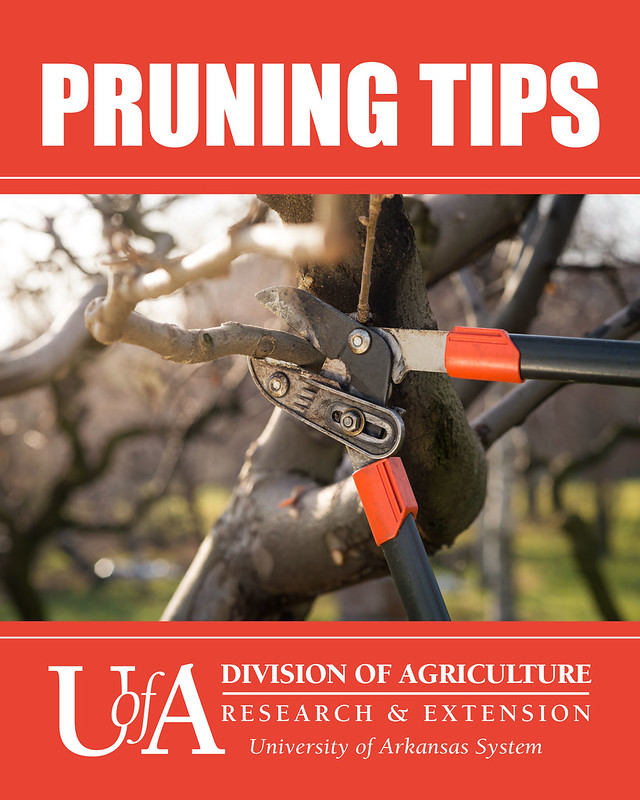
“The size of material to be pruned reflects the best tool for the job,” he said. “Most of the time, it would be a bypass blade hand pruning shear. On larger branches, it might take lopping shears. On tree branches, it might require a bow saw. On any pruning device, it is very important that the blades are sharp, and you are getting a clean cut.”

Visit Arkansas Yard and Garden Pruning Resources, Spring Pruning Tips and Crape Myrtle Pruning for more information, or contact Randy Forst at rforst@uada.edu.

To learn about extension programs in Arkansas, contact your local Cooperative Extension Service agent or visit www.uaex.uada.edu. Follow us on X and Instagram at @AR_Extension. To learn more about Division of Agriculture research, visit the Arkansas Agricultural Experiment Station website: https://aaes.uada.edu. Follow on X at @ArkAgResearch. To learn more about the Division of Agriculture, visit https://uada.edu/. Follow us on X at @AgInArk. 

About the Division of Agriculture

The University of Arkansas System Division of Agriculture’s mission is to strengthen agriculture, communities, and families by connecting trusted research to the adoption of best practices. Through the Agricultural Experiment Station and the Cooperative Extension Service, the Division of Agriculture conducts research and extension work within the nation’s historic land grant education system. 

The Division of Agriculture is one of 20 entities within the University of Arkansas System. It has offices in all 75 counties in Arkansas and faculty on three campuses.  

The University of Arkansas System Division of Agriculture offers all its Extension and Research programs to all eligible persons without regard to race, color, sex, gender identity, sexual orientation, national origin, religion, age, disability, marital or veteran status, genetic information, or any other legally protected status, and is an Affirmative Action/Equal Opportunity Employer.

Timepiece: Comedy of Errors

By Dr. Curtis Varnell

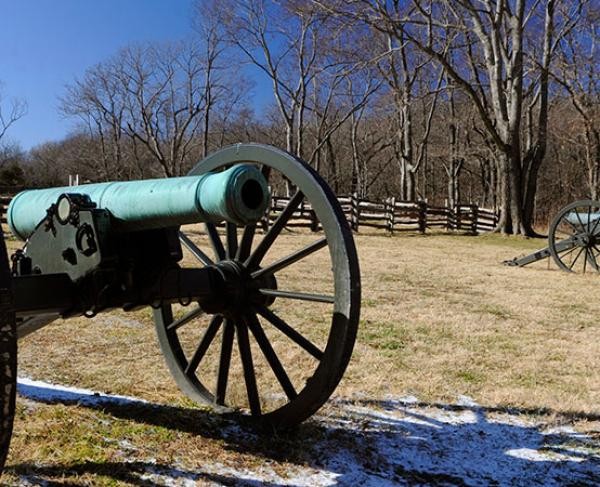
A pivotal point in the Civil War occurred on March 7 and 8th of 1862 at the Battle of Pea Ridge, AR. The battle, marking the last realistic effort of the Confederacy to expand into Missouri, ended in an abysmal defeat of the superior Confederate forces and effectively wiped out much of the leadership for Confederate forces west of the Mississippi. For both armies, led by men with distinguished military reputations, the resulting battle appears a battle of calamitous mistakes and errors.

The southern forces were led by General Earl Van Dorn. Van Dorn was chosen for leadership of the forces over General Sterling Price and General Ben McCollough. Van Dorn, a relative of Andrew Jackson, had a reputation as a man with an aggressive nature who would get the job done and he wished to live up to the reputation. Arriving in Fort Smith, he determined to quickly move his men north to the Missouri border to counter any advance from the Union Army of the Southwest under General Samuel Curtis.

March 1862 was a cold, wintery season and Van Dorn was under the weather. Hearing that Union troops were in the Fayetteville area and on the move, he ordered his 16,000 men troops to ready themselves to march northward. Van Dorn was in a hurry. Ordering his men to take only 40 rounds of ammunition, what food they could carry on themselves, and no tents, his troops left Van Buren and double-timed northward. Van Doren traveled along in an army ambulance, supposedly to ill to walk with his men. His supply wagons were left far behind.

By the time the men had marched the seventy miles to Bentonville, they were cold, worn out, sleep-deprived and poorly prepared for battle. Anticipating his arrival, General Samuel Curtis had concentrated his troops on a ridge above Sugar Creek, just west of present-day Rogers. Van Dorn wisely decided to not attempt a frontal attack up the steep slope above the creek. Van Dorn left a small encamped force that marched around, set -up tents, started roaring fires and, in general, convinced Curtis that he was facing the entire Rebel Army.

The Confederate forces than determined to march up Bentonville road behind the union forces and attack from the north. Splitting his forces, Van Dorn circled north of Pea Ridge while General McCulloch took the more direct route toward Elkhorn Tavern and the telegraph line. More than likely, all would have been lost for the Union had they not encountered a scouting force lead by Colonel Peter Osterhaus. Osterhaus, possibly the hero of the entire battle, was greatly outnumbered but refused to retreat. Fighting valiantly, they held off the much larger force commanded by McColloch. In a series of bad judgements and mistakes, McColloch decided to reconnoiter the front to determine the size of the force he was facing. Approaching to near the front, he was shot and killed. Shortly thereafter, his second in command, James McIntosh suffered the same fate. All was not lost, third in command, Colonel Louis Hébert and his troops still had numerical superiority over the Union forces. Unfortunately for the Confederates, he became lost while going through the surrounding woods and was captured. Albert Pike, with his own troubles surrounding the use of the Cherokee troops, failed to rally the men.

In the meantime, Curtis finally pulled his troops back from Sugar Creek and rushed to Telegraph Road to cut off Van Dorn. During the ensuing melee, the Elkhorn Tavern became the center of the bloody battle. Wounded from both sides filled the house and surrounding area. Bullets whined and cannon shot whirled overhead as medical staff desperately tried to staunch the flow of blood while removing broken limbs. Individuals caught in the deadly flow of the battle described the carnage wrecked on both armies. As evening approached, the union forces were driven from the area. The Confederates, arriving at the tavern, happened upon tents and food left as the Union fled the area. Starving and without ammunition, the men began to devour the food they discovered, too exhausted to continue to fight. The ammunition wagons were still far behind and the opportunity to win the battle was lost.

The Union troops recovered and set-up a line of defense just down the road. Brigadier General Seigel, a man described as, ““superior in tactics, incompetent in battle and hell on retreat,” became the unlikely hero, Siegel, commanded a line of rifled, accurate cannon that blocked and encircled the telegraph road. Knowing defeat would mean death or imprisonment, Seigel and his artillery stood firm as the Rebel Army expended its limited ammunition and unlimited blood. The Union suffered 1,384 casualties, the Rebel army over 2,000.

Always a great place to visit, the Pea Ridge National Park will commemorate the battle on March 7, 8, 2025.

Waldron School Board Meets

This content is reserved for RESIDENT INSIDER members.

Please or subscribe to view.

Registration opens Feb. 24 for spring edition of Walk Across Arkansas

By Rebekah Hall
U of A System Division of Agriculture

For Arkansans looking to achieve their fitness goals or develop new healthy habits this spring, Walk Across Arkansas offers an eight-week, group-based exercise program that helps get people moving.

The free program is offered each spring and fall by the Cooperative Extension Service, the outreach arm of the University of Arkansas System Division of Agriculture. Participants can sign up in teams of up to 30 people, and they log their total number of minutes spent being physically active each day.

“We encourage participants to get creative with the types of exercise they engaged in, not just walking,” said Heather Wingo, extension health program associate for the Division of Agriculture. “If you’ve been curious about yoga, strength training, or taking a Zumba class, this is a great time to try that out. Any moderate to vigorous physical activity counts, as long as you get your heart rate up.”

Individuals can participate in the program alone, but Wingo encourages Arkansans to participate alongside their peers.

“This program is free and encourages friendly competition between groups of friends, family members, co-workers or church members,” she said. “Anyone who wants to work together towards their physical activity goals would benefit from Walk Across Arkansas.”

Registration for the spring 2025 session opens Feb. 24. Participants can register and log exercise minutes at walk.uada.edu/walk/. The competition starts March 10 and ends May 4.

Health benefits

During the fall 2024 Walk Across Arkansas session, 160 teams of 1,757 individuals from 39 counties reported more than 1.9 million minutes of physical activity.

Wingo said past participants have reported that through Walk Across Arkansas, they had more energy, slept better, strengthened their relationships and lost weight or inches. They also reported lower stress levels and improved their blood pressure and blood panels.

Anyone can participate in Walk Across Arkansas. Division of Agriculture employees must use a personal email address, not their work email address, to register. Visit walk.uada.edu/walk/ to learn more and register or contact your local county extension agent.

To learn about extension programs in Arkansas, contact your local Cooperative Extension Service agent or visit www.uaex.uada.edu. Follow us on X and Instagram at @AR_Extension. To learn more about Division of Agriculture research, visit the Arkansas Agricultural Experiment Station website: https://aaes.uada.edu. Follow on X at @ArkAgResearch. To learn more about the Division of Agriculture, visit https://uada.edu/. Follow us on X at @AgInArk. 

About the Division of Agriculture

The University of Arkansas System Division of Agriculture’s mission is to strengthen agriculture, communities, and families by connecting trusted research to the adoption of best practices. Through the Agricultural Experiment Station and the Cooperative Extension Service, the Division of Agriculture conducts research and extension work within the nation’s historic land grant education system. 

The Division of Agriculture is one of 20 entities within the University of Arkansas System. It has offices in all 75 counties in Arkansas and faculty on three campuses.  

The University of Arkansas System Division of Agriculture offers all its Extension and Research programs to all eligible persons without regard to race, color, sex, gender identity, sexual orientation, national origin, religion, age, disability, marital or veteran status, genetic information, or any other legally protected status, and is an Affirmative Action/Equal Opportunity Employer.

Greenwood Resident 2/12/25 Vol. 5 No. 7

This content is reserved for RESIDENT INSIDER members.

Please or subscribe to view.

Resident Press (Lavaca, Charleston, Paris edition) 2/12/25 Vol. 4 No. 7

This content is reserved for RESIDENT INSIDER members.

Please or subscribe to view.

Resident Press (Scott & So. Sebastian County edition) 2/12/25 Vol. 7 No. 7

This content is reserved for RESIDENT INSIDER members.

Please or subscribe to view.

City of Mansfield Holds Study Session

This content is reserved for RESIDENT INSIDER members.

Please or subscribe to view.