90.1 F
Fort Smith
Friday, July 3, 2026
Home Blog Page 135

Rep. Johnson Sponsors Bill to Levy Fire Dues

(R) State Representative Lee Johnson has filed house bill 1416, allowing municipal fire departments servicing unincorporated areas of the county to levy dues.

This bill would allow municipal fire departments to levy tax on personal property to those who do not live in their municipality or an area with a volunteer fire department.

HB1416 states: A municipal fire department providing fire protection services outside of its corporate limits to unincorporated areas of the county as described in this section may have dues collected from a property owner located in the designated unincorporated area in accordance with § 14-20-108.

The bill, which can be read in its entirety –HERE-, is being co-sponsored by (R) Senator Kim Hammer.

Arrest Reports: 2/1

This content is reserved for RESIDENT INSIDER members.

Please or subscribe to view.

“Just Roll with It” Serving up Recipes and Humor

By Sheri Hopkins, Lifestyle Contributor

Hello everyone! Winter, spring, summer or fall–all you have to do is wish for it and you will get one of the four seasons in Arkansas. Today is cool but tomorrow is supposed to be beautiful. We shall see.

Y’all know how my niece Kelly is always leaving her purse or wallet somewhere or losing an inheritance check, etc. Well, I have decided that our editor, Tammy Teague, is part of my family. Her hubby, Jason a.k.a. Johnny Paul Jason was eating out and they were checking out and the waitress runs up to her and says, “ma’am, you left your purse.” I had to tell y’all about it. It made me laugh to think she left her purse at a restaurant. We have to be kin folk!

Last Friday night my nephew, y’all know the one I am talking about, calls me and says, “we will have all three granddaughters if you want to come over.” I go over and sure enough all three of them are there and it’s wild. One would take a toy and the other would chase her and this went back and forth all night. I said, “I wish there was a half dozen of them!” It was crazy and I loved every minute of it. The neighbor down the road had gotten a new dog. My nephew and his wife have three of their own. When I say neighbor, we are talking like half a mile down the road. We are all talking and visiting and all of sudden total chaos breaks out. Dogs are barking, kids are screaming and running in circles. Well low and behold looking in the back glass door is the neighbor’s dog and it’s the size of a Shetland pony. His name is Rocco and Rawlings is scared to death of dogs, so she is in my lap, and Ivy Jane is on the couch and Sutton is the only one that is not bothered. Michael goes out the back door to try to run Rocco home, and low and behold we are sitting there and in runs Rocco. If you thought things were crazy before, you should have seen and heard it then. The three dogs of my nephews are barking and going more nuts than they already were. Rocco is laying in the middle of the living room floor with his legs in the air wanting his belly rubbed and the girls are hysterical. He was a gentle giant. I said, “if we had a saddle for Rocco, we could give pony rides.” I could not make this stuff up, I had more fun over there. I told them I needed some more popcorn to watch the show. An amusement park would not have been any more fun. Never a dull moment with my family. We always have some kind of chaos going on when we are together.

This week’s recipe is a pecan dessert, and I haven’t made it, but I bought the stuff to make it. It sounds so good!

PECAN PIE DELIGHT
Crust: 1 stick of butter, 2 cups graham cracker crumbs mixed together till combined and pressed in a 9×13 dish. Set in the refrigerator for about 15 minutes.

You can buy one of the tubs of the Philadelphia cheesecake filling, it’s about $6 a tub or you can make your own recipe for cheesecake filling. Spread this on the graham cracker crust.

Filling: 1 cup brown sugar, 1/2 cup Karo syrup, 2 eggs, 1 teaspoon vanilla, 4 tablespoons of butter, 2 cups chopped pecans. Mix all this together and cook over medium heat till bubbly and sugar is disolved. Remove from heat and let cool completely. Spread over the cream cheese layer. Spread 1 8 oz. Cool Whip on the top and sprinkle chopped pecans on top. Keep in the refrigerator.

I know it is going to be good; I cannot wait to make it. Have a blessed week. Don’t forget your Valentine.

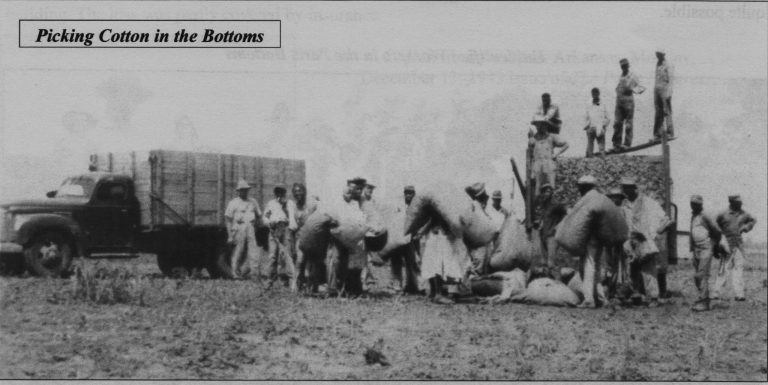
Timepiece: Cotton Picking Time

This content is reserved for RESIDENT INSIDER members.

Please or subscribe to view.

Our Blood Institute Urges Community to Donate as Illnesses Strain Blood Supply

Seasonal illnesses, including the flu, are significantly impacting blood donations. Arkansas is among the hardest-hit states, with widespread flu cases leading to school closures, missed appointments and canceled blood drives. Many adults caring for sick family members are also unable to donate, further straining the local blood supply.

Our Blood Institute is calling on all healthy, eligible individuals to donate as soon as possible to help ensure patients receive the lifesaving care they need.

“We are doing everything we can to prevent a critical blood shortage, but we need the community’s help,” said Dr. John Armitage, Our Blood Institute president and CEO. “When regular donors get sick, it creates a gap in donations. That’s why we’re asking those who are healthy to step up and donate now.”

Blood is needed every day for trauma patients, surgeries, cancer treatments and other medical emergencies. There is no substitute for donated blood, and it must be readily available when patients need it.

“If you’re feeling well, we encourage you to make an appointment as soon as possible,” Armitage added. “Your donation can make a real difference.”

As a thank-you, successful donors will receive a superhero-themed T-shirt, and those who donate at an OBI donor center will also get a special kid-sized donor T-shirt.

Blood can be donated every 56 days. Platelets can be donated as often as every seven days, up to 24 times a year.

Anyone who is healthy and 16 years old* or older can give blood. Appointments to donate can be made online at obi.org or by calling 877-340-8777. Walk-ins are also welcome. 

*16-year-olds must weigh at least 125 pounds and provide signed parental permission; 17-year-olds must weigh at least 125 pounds; 18+ year olds must weigh at least 110 pounds. Photo ID required. 

Cool-season annual grasses offer high-value hay, baleage, silage to Arkansas producers

By Mary Hightower
U of Arkansas System Division of Agriculture

Livestock producers who grow their own hay often find themselves playing “beat the clock” when it comes to harvest, knowing that once a seedhead appears, the forage quality declines.

This race to beat the clock is heightened when wet springs keep farmers from making dry hay.

“Producers have increasingly turned to round bale silage, or baleage, to improve the timeliness of harvest operations,” said Jonathan Kubesch, extension forage specialist for the University of Arkansas System Division of Agriculture.

“Silage, traditionally corn, was popular with the state’s dairy industry,” he said. “Grass silage is often referred to as ‘baleage’ in the southeast.

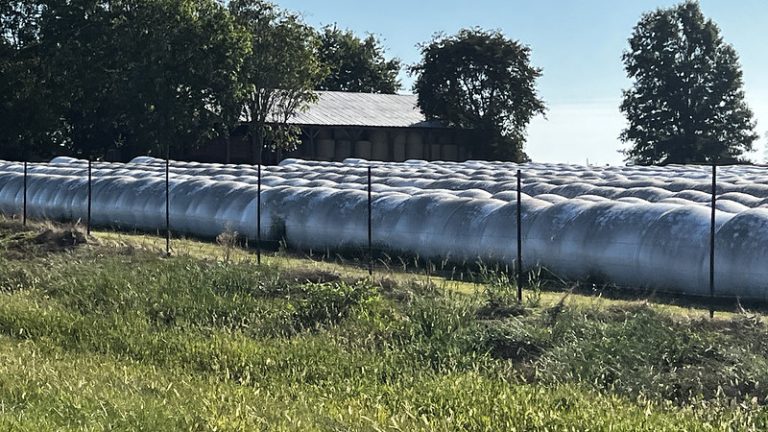
“Grass sileage, or ‘baleage,’ is a growing opportunity to produce high-quality forage at a time when it is hard to produce dry hay — think rainy April,” Kubesch said. Baleage involves wilting cut forages to 45 to 65 percent moisture, then rolling them into round bales wrapped in plastic.

Cool-season annual grasses, such as annual ryegrass or the small grains like wheat, oats and cereal rye, are routinely planted to provide forage for livestock. “These plants provide excellent forage quality while in vegetative, but protein and digestibility can quickly decline following emergence of the seed head,” Kubesch said. In the southeastern United States, harvest of small grains for hay in the spring is often delayed by spring rains.

“Maturity at harvest has a large impact on quality,” he said.

Kubesch discusses research on cool-season annual grass opportunities in a newly revised fact sheet available for download from Cooperative Extension Service, Using Cool-Season Annual Grasses for Hay and Silage.

He noted three key takeaways from the new fact sheet:

  • Winter annual forages offer a lot of nutritional value in Arkansas forage programs
  • Multiple cool-season annual grasses can be used to stagger production in early spring. Harvesting these forages on time at the correct moisture level is crucial to making hay, baleage or grass silage.
  • Late winter plantings are a possibility for farmers to make up for missed fall plantings.

Kubesch reported new late winter planting recommendations. Farmers might consider annual ryegrass or spring oats for planting between late February to mid-March for early hay, baleage, or silage.

“We’ve been having dry falls which preclude the typical planting window of September-October,” he said. “We ran a three-year trial at Jonesboro in collaboration with Arkansas State University to develop these late winter recommendations.”
For more information on baleage, see: Baled Silage for Livestock.

To learn about extension programs in Arkansas, contact your local Cooperative Extension Service agent or visit www.uaex.uada.edu. Follow us on X and Instagram at @AR_Extension. To learn more about Division of Agriculture research, visit the Arkansas Agricultural Experiment Station website: https://aaes.uada.edu. Follow on X at @ArkAgResearch. To learn more about the Division of Agriculture, visit https://uada.edu/. Follow us on X at @AgInArk. 

About the Division of Agriculture

The University of Arkansas System Division of Agriculture’s mission is to strengthen agriculture, communities, and families by connecting trusted research to the adoption of best practices. Through the Agricultural Experiment Station and the Cooperative Extension Service, the Division of Agriculture conducts research and extension work within the nation’s historic land grant education system. 

The Division of Agriculture is one of 20 entities within the University of Arkansas System. It has offices in all 75 counties in Arkansas and faculty on three campuses.  

The University of Arkansas System Division of Agriculture offers all its Extension and Research programs to all eligible persons without regard to race, color, sex, gender identity, sexual orientation, national origin, religion, age, disability, marital or veteran status, genetic information, or any other legally protected status, and is an Affirmative Action/Equal Opportunity Employer.


State Capitol Week in Review from Senator Terry Rice

The Senate voted to provide all public school children with free lunches, regardless of their income, beginning in the 2025-2026 school year.

Also, the Senate passed legislation to restrict students’ cell phone use during the school day.

State budget officials estimate that it will cost $14.7 million a year to ensure that all students get one free breakfast every day. The governor has publicly announced her support of the measure, Senate Bill 59. It is co-sponsored by a bipartisan group of 25 senators.

When children go hungry their long-term health is negatively affected, and their grades suffer. Hunger affects a child’s academic performance and increases their chances of being punished for behavioral problems and missing classes, according to testimony before the Senate Education Committee.

National studies indicate that students who have eaten breakfast perform better on standardized tests. Students improve academically in general, and some studies show that they specifically do better in mathematics.

After passing SB 59 the Senate sent it to the House of Representatives, where it has sufficient co-sponsors to guarantee passage.

Currently, students are eligible for free or reduced-price meals depending on their family income. The legislature passed Act 656 in 2023 to prohibit schools from charging students a copayment.

SB 142, to restrict cell phone use by students, also passed overwhelmingly but with a few dissenters who said the measure should also apply to students in private schools. Supporters countered that most private schools already have policies that restrict cell phone use.

SB 142 requires all school districts to adopt a policy to restrict the use of cell phones “from bell to bell.” Its sponsor said the bill’s purposes include eliminating distractions in the classroom and improving the mental and emotional health of young people.

Some students have an individualized education program (IEP) because they have special needs. An IEP may include the use of electronic devices or cell phones. Students with an IEP would be exempt from the restrictions in SB 142.

The state already had been helping school districts with cell phone restrictions. Last year the state provided about $7 million to 180 school districts pay for magnetic pouches and other devices for storing cell phones during the day.

Expanded Child Care

The state Education Department has added 2,600 children to a program that helps families pay for child care, bringing the program to its greatest capacity of about 18,300 student.

According to the department, Arkansas gets about $100 million a year in federal grants to help low-income families pay for child care, thus better preparing them for kindergarten.

Last year the department expanded the program to make more families eligible. The Office of Early Childhood anticipates a waiting list, due to higher demand, beginning this month. However, teen parents and those on welfare, homeless families, children with special needs and foster children will be exempt from the waiting list.

U.S. food, drug makers have 2 to 3 years to remove banned Red No. 3 from products

By Rebekah Hall
U of A System Division of Agriculture

The Food and Drug Administration has revoked use of the synthetic dye Red No. 3 — approved to provide color in food and drugs since 1969 — but is giving U.S. food manufacturers and drug companies two to three years to remove it from their products.

The Jan.15 ban comes in response to a 2022 petition that requested the FDA review studies that showed cancer in male lab rats exposed to high levels of Red No. 3. It addition to food and medication, it has been used in cosmetic items such as hair dyes.

Quad Whitson, extension culinary nutrition program associate for the University of Arkansas System Division of Agriculture, said the FDA revoked the use of Red No. 3 in food and drugs due to the Delaney Clause, part of the Federal Food, Drug and Cosmetic Act.

“The clause explicitly prohibits the use of any chemical that is found to cause cancer in humans or animals based on carcinogenic testing,” Whitson said. “Data presented by the FDA in 2022 showed that in large doses, Red No. 3 had the potential to cause cancer in male lab rats due to its effects on processes that control the release and action of hormones in the body of male rats.”

Red No. 3 is primarily used in food products, such as candy, cakes, cupcakes, frozen desserts and frostings, as well as some ingested drugs.

Whitson explained that “revoking” the use of something like a food additive “means that you are formally taking away the privilege to use an additive that was previously allowed.” He said Red No. 3 was initially approved for food in the United States in 1969.

Complex process

The ban on Red No. 3 immediately affects food imported from other countries. Manufacturers in the United States will have until Jan. 15, 2027, to remove the dye from food products, and until Jan. 18, 2028, to remove it from drug products.

Whitson said these deadlines are extended “due to the complex process of product reformulation.”

“Changing a product’s recipe can be lengthy, due to the extensive testing required to ensure that the new product or products maintain the desired taste, texture and functionality of the original product,” Whitson said. “They want to ensure they can maintain customer satisfaction despite the changes.”

There is not an official comprehensive list or resource that details all the food and drug products that contain Red No. 3, which Whitson said is due to the “difficulty of capturing every new and pre-existing food or drug product on the market containing the dye.”

Read the label

“If consumers aim to remove products containing Red No. 3 from their households and dietary patterns, the best way to do so is to review the ingredients of food labels,” Whitson said. “Under current FDA food labeling regulations, certified color additives must be made known to consumers.”

The color additive No. 3 can appear in the following ways on the ingredients of a food label:

·        FD&C Red No. 3

·        FD&C Red 3

·        Red 3

Learn more about food safety on the Cooperative Extension Service’s website or contact Whitson at qwhitson@uada.edu.

To learn about extension programs in Arkansas, contact your local Cooperative Extension Service agent or visit www.uaex.uada.edu. Follow us on X and Instagram at @AR_Extension. To learn more about Division of Agriculture research, visit the Arkansas Agricultural Experiment Station website: https://aaes.uada.edu. Follow on X at @ArkAgResearch. To learn more about the Division of Agriculture, visit https://uada.edu/. Follow us on X at @AgInArk. 

About the Division of Agriculture

The University of Arkansas System Division of Agriculture’s mission is to strengthen agriculture, communities, and families by connecting trusted research to the adoption of best practices. Through the Agricultural Experiment Station and the Cooperative Extension Service, the Division of Agriculture conducts research and extension work within the nation’s historic land grant education system. 

The Division of Agriculture is one of 20 entities within the University of Arkansas System. It has offices in all 75 counties in Arkansas and faculty on three campuses.  

The University of Arkansas System Division of Agriculture offers all its Extension and Research programs to all eligible persons without regard to race, color, sex, gender identity, sexual orientation, national origin, religion, age, disability, marital or veteran status, genetic information, or any other legally protected status, and is an Affirmative Action/Equal Opportunity Employer.

Obituary: Virginia Yandell (1934-2025)

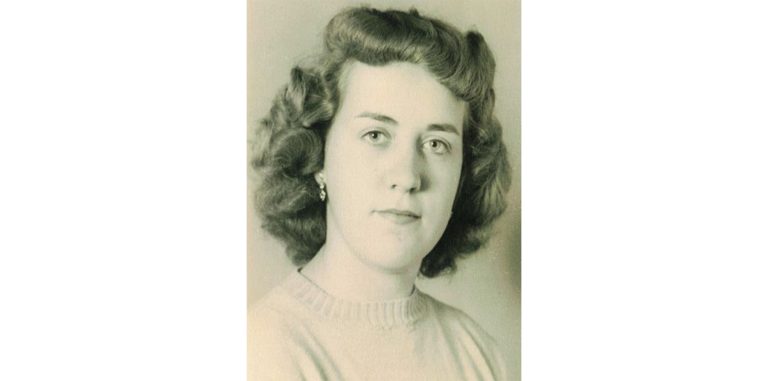
Virginia Mae (Maxey) Yandell of Waldron, Arkansas (formerly of Harvey Arkansas) went to be with her Lord and Savior Wednesday, February 5, 2025 in Waldron with her loving family by her side. She was born March 21, 1934 in Mauldin community near Mt. Ida, Arkansas. Her parents were Louis Franklin Maxey, Sr. and Edna Ruth (Smith) Maxey. She was from a very large family being one of the only set of twins.

She married her loving husband of 64 years-LD Yandell on September 9, 1950. They raised a family in their beloved community of Harvey where they supported their church-Harvey Assembly of God. Virginia spent many Sundays preparing lunch for the pastors and their spouses. She was a loving wife, mother and grandmother to her family. Her hobbies included reading, gardening, tending flowers, needlework and sewing. She also served as the bookkeeper to her husband’s logging business.

Virginia is survived by three daughters: Sharon Evans (Larry), Cathy Barnett (Kerry), and Karen Culbertson ( Lane); five grandchildren: Travis Evans (Hala), April Shockey (Jonathan), Derek Barnett (Krystal), Amber Culbertson, Rachel Khanal (Dilen); and five great grandchildren: Hunter, Gage, Karli, Gunner Evans and Brayden Barnett. She is also survived by three siblings: Joe Maxey (Shirley), Patsy Owens (Ules Ray), and Norma Pierce (Phillip) and a host of nieces and nephews.

Virginia is preceded in death by her husband, parents and sisters: Lucille Speigle, Charlene Haggard, Francis Maxey, Euginia Maxey, Maxine Brown, Ann Wise, Linda Yandell and brothers: Bud Maxey, Whit Maxey, Edward Lee Maxey, Don Maxey and Jerry Mac Maxey.

Virginia’s life celebration will be 3:00 p.m., Friday, February 7, 2025 at the Heritage Memorial Funeral Home Chapel with Rev. Mike Shaddon officiating. Interment will follow in the Monroe Cemetery in Harvey, Arkansas. Arrangements are being entrusted to the Heritage Memorial Funeral Home in Waldron, Arkansas.

Virginia’s pallbearers will be Kerry Barnett, Lane Culbertson, Travis Evans, Jonathan Shockey, Derek Barnett and Hunter Evans. Honorary pallbearers will be her Harvey Church family.

Virginia’s visitation will be Friday, February 7, 2025 from 2:00 p.m. to 3:00 p.m. at the Heritage Memorial Funeral Home Chapel in Waldron, Arkansas.

Obituary: Billy Ray Harwell (1946-2025)

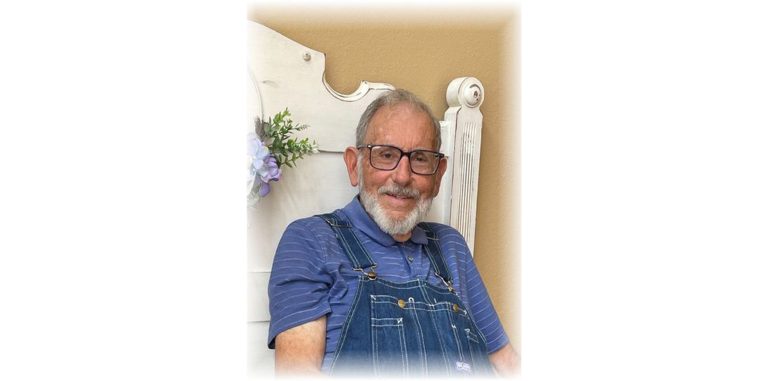
Billy Ray Harwell of Waldron, Arkansas went to be with his Lord and Savior, Sunday, February 2, 2025 in Waldron, Arkansas with his loving family at his side. Billy was born March 16, 1946 in Waldron, Arkansas to James and Madlein Harwell. He was 78 years old. 

Devoted, faithful, kind, compassionate and caring are just a few of the words used to describe Billy Harwell. He was truly a committed man of God and he led by example and humility. He was ordained in 1983 as a Reverend and spent the better part of his years ministering in different churches in and around Scott County. The number of lives he has touched is immeasurable. Leading young and old alike to know God, baby dedications, weddings, funerals, visiting the sick, praying for those in need, and lending a listening ear are just a few of the many things Billy did and he did it with ALL the love in his heart. He was active in the men’s prayer breakfast and was always happy to fill in the pulpit for others. He was a mentor for many and highly respected by all.

Billy was a carpenter by trade. Mastering everything from framing to finish work. However, over the years, he had worked in several different industries learning many occupations and expanding his knowledge and experience. With all of Billy’s vast opportunities, by far the most treasured of that was being a husband, father and Pawpaw. His love for his family was like no other. He looked forward to time spent with his family and extended family and friends. 

Billy leaves behind to cherish his memory, his wife, companion and best friend Lanis of the home and sons: Steve Harwell and wife Jeannie of Belleville, Arkansas, Alan Harwell and wife Michelle of Hector, Arkansas, Derek Brashear and wife Melissa of Urbana, Illinois, Darrell Brashear and wife Julie of Greenwood, Arkansas and daughter in law Merianda Harwell. Pawpaw Harwell will forever remain in the hearts of his grandchildren: Hunter Hughes, Caleb Harwell and wife Kelsey, Lucas Harwell and wife Lexie, Abigail Harwell, Blake Harwell, Kaleb McGlothlin, Trevor Brashear and wife Brooke and Ryan Harwell as well as great grandchildren: Rhett Brashear, Wrenley Brashear, Hazel Harwell, Scarlett Harwell and Lynndy Harwell. He is also survived by one sister Ann Bingham. Billy will be missed by all that knew him and the many whose lives he impacted including a host of extended family, friends, and loved ones dear to his heart.

Billy was preceded in death by one son James Harwell, his parents, James and Madlein, siblings: Cecil Harwell, William Harwell, MaryLavene Mays and his first wife Eutha Harwell.

Billy’s life celebration will be 2:00 p.m. Saturday, February 8, 2025 at the Waldron Pentecostal Church of God with Rev. Jeff Wilkinson and Rev. Gary Martin officiating. Interment will follow in the Bush Cemetery in Waldron, Arkansas.

Billy’s pallbearers will be Blake Harwell, Caleb Harwell, Kaleb McGothlin, Lucas Harwell, Winston Philmon and Todd VanDeWiele.

Billy’s visitation will be Saturday, February 8, 2025 from 12:00 noon until 2:00 p.m. at the Waldron Pentecostal Church of God.