90.4 F
Fort Smith
Thursday, July 2, 2026
Home Blog Page 136

Nominations Now Open For MHS Wall of Fame

According to an announcement by the directors of the Mansfield High School Tiger Wall of Fame, the process for expanding the exclusive club membership has already begun. Nominations for induction are now open. With it, plans are moving forward to have the WOF Class of 2025 ready for selection by this summer followed by a forthcoming fall induction event.

Nominations for potential inclusion onto this year’s memorial wall are now being accepted until June 30. Written nominations using a copy of the designated nomination form should be sent to the Mansfield Administrative Building in care of the administrative secretary. Completed forms may also be submitted electronically using a fillable document provided on the Mansfield Public School’s website. 

From their homepage at “mansfieldtigers.org”, click the “community” tab and select “Mansfield Wall of Fame” from the drop down menu. There for your convenience you’ll find a first line selection offering a fillable nomination form that can be submitted electronically. The third line selection offers access to a pdf copy of the nomination form which can be printed and completed in writing. In between, a second line click offers a list of past inductees. 

Official nominations will go through a screening process to verify accuracy and eligibility. The WOF Board, made up of community volunteers with a unique and tangible knowledge of Mansfield history, will compare the list of qualifying candidates and then select by vote this year’s class of inductees.

WOF membership consideration shall be given to individuals or teams that meet criteria established by the directors of the program. Notable benchmarks looked upon as a premium include individual or team state championships, state or national recognition, diverse and district recognition, varsity and civic recognition, and scholastic or benefactress contributions. Any candidate regarded as being in good standing that meets one or more of the recommended criteria may be nominated at any time. Exceptions exist for Mansfield graduates. A waiting period of five years from the date of their high school graduation is required of a MHS alumnus before they can become eligible for admission.

Recently revised by-laws drafted by the WOF Board of Directors and its officers have included a stated preamble and purpose for the organization. Simplified, the operation’s preamble defines the Wall of Fame as a memorial to the outstanding students who through their athletic endeavors and achievements and/or other individuals whose endeavors or achievements have brought honor to themselves, the school, or community. The abridged purpose of the WOF is to acknowledge individuals who have brought honor to MHS, to establish a motivating influence, and to foster community pride.

Phelps Repeats As K-12 Culinary Connection/MHS Student Chef Showdown Champion

By Jonathan W. Gipson
MAGAZINE SCHOOLS MEDIA RELATIONS

MAGAZINE – Magazine senior James Phelps successfully defended his title of K-12 Culinary Connection/Magazine High School Student Chef Showdown Champion on Friday afternoon at the Magazine High School cafeteria.

Phelps edged fellow MHS student Gracelyn Jones to win his second title in a row and put himself in contention for a spot in the eighth annual K-12 Student Chef Showdown overall competition later this spring. His winning dish was a Fried Jicama Pulled Pork Tostada with Blueberry Sauce.

It was the second MHS competition. Phelps won the inaugural competition last year with his Orange Honey Sriracha Chicken Gyros with Sweet Pea Hummus dish. He advanced to the overall competition and was among six student chefs around the state to reach the final round of the competition. Phelps finished fifth overall with an impressive 45/50 score, receiving a Kitchenaid food processor among other items.

Egg prices: What goes up usually comes down

By Mary Hightower
U of Arkansas System Division of Agriculture

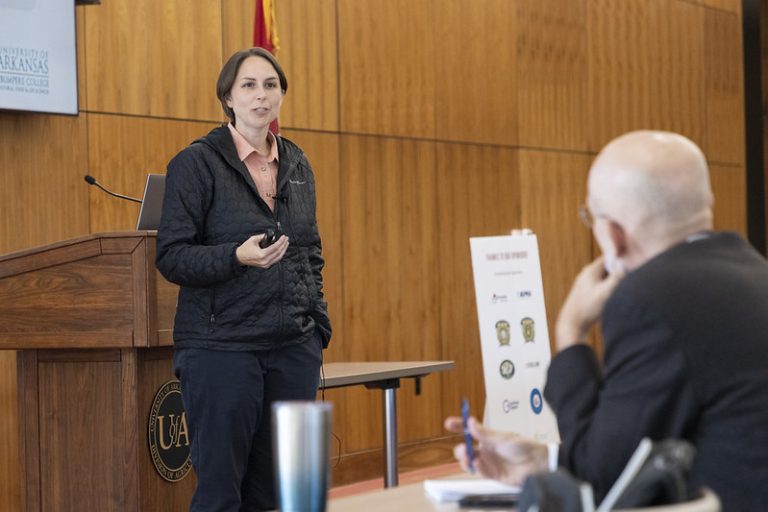
That omelet is costing more again thanks to highly pathogenic avian influenza, but Jada Thompson says the egg price rollercoaster has a downhill side too.

According to the Animal and Plant Health Inspection Service, since February 2022, HPAI has been detected in more than 1,400 flocks affecting 149.96 million birds. From Jan. 1-30 of this year, more than 19.63 million birds have been affected including 71 commercial flocks and 43 backyard flocks. The Animal and Plant Health Inspection Service, or APHIS, is part of the U.S. Department of Agriculture.

“The same similar thing happened at the end of 2022 and into 2023,” said Thompson, associate professor and poultry economist with the University of Arkansas System Division of Agriculture.

“What you have is very tight supply,” she said. “We were down about 3 percent in egg layer supply at the time and we’re down about 3 percent in supply right now.”

The number of egg crates in the grocery stores is also affected by a tiny bit of “just-in-case” buying by consumers.

“We see the egg prices, and then consumers are responding,” Thompson said. “There’s a bit of people buying all the eggs because they’re concerned about the availability”

Flu cycles

While the season for bird flu cycles with spring and fall wildfowl migrations, the rhythm of the egg cycle has its own complexities. Thompson said the retail cycle moves with the holidays when consumers tend to buy more eggs. And then there’s the biology.

“The high demand tends to coincide with periods of the year where egg laying kind of drops off a little, due to it being colder and the amount of light changes. There are hormonal effects to egg laying,” she said. “Then in summer, the bird flu starts ebbing and then it picks up in the fall.”

When bird flu is detected, the flocks need to be depopulated because the current strain of the disease has such a high mortality rate. Whether it’s turkeys, broilers or egg layers, it takes time to replace the birds — “there’s also kind of a bit of a biological lag in that price recovery system and for the supply chain.”

Looking back at 2023, as spring moved on, “we didn’t have as many cases of bird flu. We didn’t have as many birds out of the system, and so prices kind of recovered, and those stories fall away, and we don’t think about it,” Thompson said.

However, 2024 is reminding consumers of what was forgotten in the summer of 2023.

“We started seeing a bit more of an uptick. We saw a little bit more shocks to the market,” she said.

For comparison:

  • In 2022, 43 million table egg layers were affected by HPAI
  • In 2023 12 million layers were affected
  • In 2024, 38 million layers were affected.

“Right now? We’re already at 13 million in 2025,” Thompson said.

However, Thompson expects the supply will recover.

“Our food supply is healthy, our egg supply is healthy,” Thompson said. “I can tell you that the eggs are coming back on the market.”

Dairy and poultry

Another part of the avian influenza story is the dairy industry.

“There’s a linkage between the dairy industry and the poultry industry, and it’s probably the closest linkage we’re ever going to see right now,” Thompson said. “And it’s that dairy cows are susceptible to bird flu, and it reduces production.

“You can see milk prices starting to go up a little bit,” she said. “When the cows are sick, they producers have to dump the milk and that’s reducing some production levels.”

Affected dairy cows are isolated or segregated from the herd and owners are advised to contact their herd veterinarian for additional procedures, sampling, and confirmatory testing. It has been reported that on average, animals have been reported to recover within 30-45 days.

According to APHIS, 16 states reported dairy cow infections in January. The Food and Drug Administration says on its site that “pasteurization and diversion or destruction of abnormal milk are two important measures that are part of the federal-state milk safety system.

“Even if the virus is detected in raw milk, the current pasteurization process, HTST or high temperature, short time, will inactivate  the virus,” according to the FDA’s site.

To learn about extension programs in Arkansas, contact your local Cooperative Extension Service agent or visit www.uaex.uada.edu. Follow us on X and Instagram at @AR_Extension. To learn more about Division of Agriculture research, visit the Arkansas Agricultural Experiment Station website: https://aaes.uada.edu. Follow on X at @ArkAgResearch. To learn more about the Division of Agriculture, visit https://uada.edu/. Follow us on X at @AgInArk. 

About the Division of Agriculture

The University of Arkansas System Division of Agriculture’s mission is to strengthen agriculture, communities, and families by connecting trusted research to the adoption of best practices. Through the Agricultural Experiment Station and the Cooperative Extension Service, the Division of Agriculture conducts research and extension work within the nation’s historic land grant education system. 

The Division of Agriculture is one of 20 entities within the University of Arkansas System. It has offices in all 75 counties in Arkansas and faculty on three campuses.  

The University of Arkansas System Division of Agriculture offers all its Extension and Research programs to all eligible persons without regard to race, color, sex, gender identity, sexual orientation, national origin, religion, age, disability, marital or veteran status, genetic information, or any other legally protected status, and is an Affirmative Action/Equal Opportunity Employer.


Arrest Reports 1/26

This content is reserved for RESIDENT INSIDER members.

Please or subscribe to view.

FTO Challenges Fire Fighters: ‘Train Like Your Life Depends on It… Because it Does’

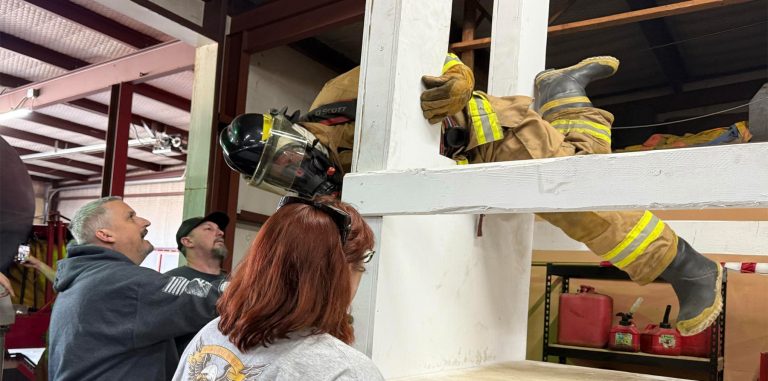
Countywide fire training was held in Hackett over the weekend, with longtime veteran fire instructor Todd Johnson at the helm. Twenty-two volunteers represented the following departments: Greenwood Rural (2), EMP (2), White Bluff (2), Sugarloaf (5), Bonanza (2), Mansfield (1), and Hackett (8).

The introduction to fire/safety and personal protective equipment are two of three basic and required courses by the Arkansas Fire Academy. Johnson spent the first portion of each course presenting informational content and the second half working hands-on. From head to toe, Johnson made sure each firefighter had a working understanding of their gear and its purpose. “We need to make sure we go back to the basics, routinely,” stated Johnson.

After learning to properly suit up, each firefighter repetitively practiced until they could complete the task in under a minute. Standouts competed against each other, and in the end, two young men, one from Hackett and another from Greenwood Rural, suited up in less than 45 seconds.

Next came the SCBAs, Self-Contained Breathing Apparatus. “Look around at each other,” instructed Johnson. “To a child, you look unrecognizable and scary. That is why it’s important to go to schools and educate.”

The seasoned instructor encouraged his students to implement buddy checks with fellow firemen when training together as a department. “Also know that your mutual aid department may have different equipment so it’s good to learn from them as well.”

Johnson would go on to issue a challenge to all fire chiefs in the surrounding area: “That they spend time on their meeting nights doing gear drills.”

Before concluding the class, Johnson demonstrated the SWIM method and led volunteers through a training course that simulated a second-story building. “Train like your life depends on it, because it does.”

Resident Press (Scott & So. Sebastian County edition) 2/5/25 Vol. 7 No. 6

This content is reserved for RESIDENT INSIDER members.

Please or subscribe to view.

Greenwood Resident 2/5/25 Vol. 5 No. 6

This content is reserved for RESIDENT INSIDER members.

Please or subscribe to view.

Resident Press (Lavaca, Charleston, Paris edition) 2/5/25 Vol. 4 No. 6

This content is reserved for RESIDENT INSIDER members.

Please or subscribe to view.

Eagles inspire awe, appreciation for conservation efforts

By Randy Zellers

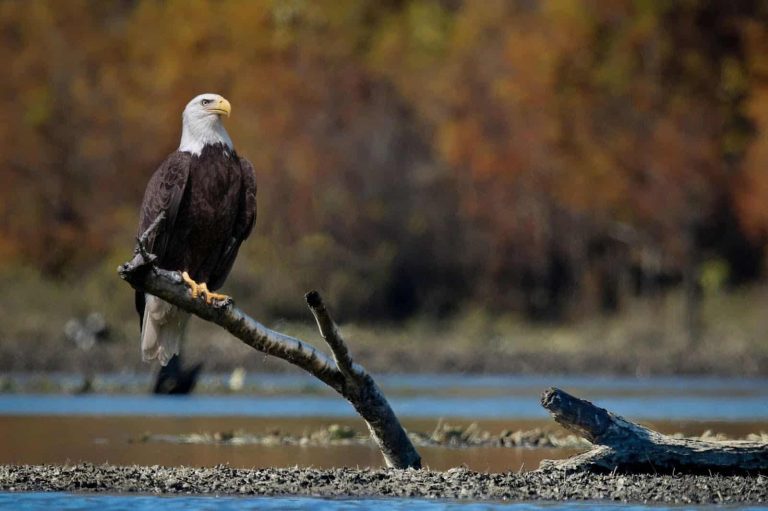
When America’s founding fathers affixed a bald eagle to the Great Seal of the United States in 1782, they likely had no idea they were highlighting what would become one of the greatest wildlife comeback stories of all time.

America’s symbol stood on the brink of extinction in the 1960s, when it was placed on the federal Endangered Species list. At that time, less than 500 nesting pairs of bald eagles were documented throughout the entire United States with no nesting pairs observed in Arkansas. Two of the primary culprits for their decline were the pesticide DDT, causing eggshell thinning in birds that ate DDT-contaminated fish, and lead poisoning as a result of lead shotgun pellets ingested when eagles preyed upon crippled and dead waterfowl. Thanks to tighter regulations on pesticide use and a ban on lead shot in waterfowl hunting, scientists and conservationists have been able to turn the tide on the eagles’ plight, with more than 13,000 breeding pairs estimated in 2007 when the species was officially “delisted” from the Endangered Species Act.

The bald eagle’s recovery hit a major milestone at a local level in 1983, when the first eagle nest since the 1950s was documented on Dale Bumpers White River National Wildlife Refuge. Since that time, the number of nests have gradually increased. Although the AGFC no longer has a formal survey for breeding pairs of eagles in the state, Karen Rowe, AGFC Nongame Bird Program Coordinator, estimates the number to be between 150 and 160.

“It could be higher, but once bald eagles were taken off the federal Endangered and Threatened Species list, the funding devoted to their monitoring had to be shifted to focus on recovering other species of birds that were still experiencing steep declines in the state,” Rowe said. “According to the U.S. Fish and Wildlife Service, which monitors their numbers in the continental U.S., breeding bald eagle populations have only continued to increase since their delisting, so it’s likely that the Arkansas population has followed suit. Considering the original goal for recovery in Arkansas was only 10 breeding pairs of nesting bald eagles, we’re in phenomenal shape.”

Rowe says winter is one of the best times to view bald eagles if one is willing to bundle up and brave the chilly weather. Concentrations of eagles and other raptors travel south just like ducks, shorebirds and other migrating species. As lakes and rivers freeze in the northern states, it cuts off the supply of fish and other marine animals the eagles prey upon. Their other major food source, birds like waterfowl, head south for winter, and the eagles follow the food.

“Anywhere you find flocks of migrating waterfowl, you’re likely to come across bald eagles in winter,” Rowe said. “But the best locations are tied to our large rivers, Army Corps of Engineers reservoirs and seasonally flooded rice fields. As duck seasons wind down, you’ll find quite a few birders take more trips to some of the AGFC’s waterfowl-focused wildlife management areas to enjoy watching the many other species the habitat on these areas attracts, eagles included.”

For folks wanting to get out and take in the sight of eagles perched over the wetlands, Rowe suggests keeping an eye out for superdominant trees along the shorelines or field edges.

“Holla Bend National Wildlife Refuge and DeGray Lake on the west side of the state are two of Arkansas’s most well-known eagle-watching locations, but the Delta hosts hundreds of birds each year, especially along the White and Cache rivers.”

How do you tell an eagle from a hawk or a vulture (incorrectly called a “buzzard” by some Arkansans)? First of all, size is a major factor. An eagle’s wingspan is nearly twice as wide as most hawks and owls, often reaching 7 to 8 feet. Black vultures and turkey vultures have similarly sized wingspans, but they have different flight characteristics than raptors.

“Eagles and hawks soar with their wings extended on a flat horizontal plane,” Rowe said. “Vultures hold their wings in a ‘V’ shape. And the white head and tail of both male and female adult bald eagles is a striking contrast from its brown body that will give it away.”

Rowe says golden eagles, which are similarly sized but not as common as bald eagles in Arkansas, have brown heads and tails and legs covered with feathers down to the feet. Another, often more obvious difference is their beak; the bald eagle has a very large, bright yellow beak, while the golden eagle’s is small and black. Immature bald eagles that have not attained their adult plumage also are predominantly brown with white mottling and are often confused for this lesser-known species.

“Juvenile bald eagles gradually shift toward their adult plumage as they get older and usually have the species’ trademark look by year five,” Rowe said.

Rowe said birders who wish to help track eagle nests can email her at karen.rowe@agfc.ar.gov. Please be prepared to give exact GPS coordinates for the nest to help biologists make the best use of their follow-up time.

“It’s always great to hear the excitement in someone’s voice when they see an eagle or a nest, but we really need people to make sure that the nest is active with a breeding pair and we really need exact locations to help our monitoring efforts,” Rowe said. “We get hundreds of reports each year, but many can’t be used because we don’t have an exact location of an active nest to document.”

Small School, BIG Talent

By Brandy Young

When you hear about an award-winning Show Choir and Performing Arts group, you might not immediately think of Magazine High School. But Magazine Beta Club is working hard to change that misconception in a big way. At the 2025 Arkansas State Beta Convention, Magazine Beta added a long list of awards to their ever-growing collection including State Champion in both Show Choir and Performing Arts Group for the second year in a row. Competing against much larger schools with expansive performing arts programs, Magazine walked away with top honors and are still looking to bring home more titles at nationals.

Donna Riddle, Beta Club sponsor for each of her 37 years at Magazine, is very proud of what this club has accomplished. “We started competing in show choir about 7 or 8 years ago, and we’ve never failed to be in the top 5, which means we’ve never failed to qualify for nationals. For the past two years, we have been in the top 10 at nationals. That is a testament to the vocal talent and work ethic of these kids, as well as to the work of our very talented choir director, Mrs. Alisa Green. Our show choir has evolved as we have figured out what the judges are looking for. We have gotten better at knowing how to use our 8 allotted microphones for the best sound, which makes our relatively small show choir able to compete with much larger groups. We have also stepped up our game in the area of choreography, which I think has made a big difference in our scores. We’ve done group talent for much longer, and we’ve placed at state fairly consistently over the past 6 or 7 years.”

The Performing Arts group on stage during the finals at the State Beta Convention
Nat Ervin receiving first place award at the Senior High convention 

For this year’s show choir performance, the students chose a selection of songs by Adele. The students performed songs from the movie “Grease” for the Performing Arts competition.

But Beta isn’t just about performing arts. National Beta Club is an honor society that centers around four “pillars”: academic achievement, character, leadership, and service. It is the largest independent educational organization for students in the United States. Each year, participating states hold their state conventions where students participate in competitions in numerous academic subjects, engineering, arts, performing arts, and community service. The students compete at the state level to qualify for the national convention. This year, the Magazine Beta Club earned 16 separate awards, each qualifying to compete at the national convention in June.

Junior High:
4th Place – Performing Arts Small Group
5th Place – 7th Grade U.S. History, Isaac Staton

Senior High:
1st Place – Show Choir
1st Place – Performing Arts Large Group
1st Place – Poetry-Division II, Nat Ervin
2nd Place – Quilling, Abby Crandall
2nd Place – 9th Grade Math, Connor Hopper
3rd Place – 10th Grade Health & PE, Abby Crandall
4th Place – 11th Grade Psychology, Pheobe Hopper
4th Place – Painting-Division II, McKenzie Morris
4th Place – On-Site Painting-Division II, McKenzie Morris
5th Place – Engineering, Cain Harmon, McKenzie Morris, Caleb Staton, and Owen Staton
5th Place – Digital Art-Division II, Nat Ervin

In addition to these awards, 3 students, Ainslee Chappell, Daniel Green, and Kauree Bennett, were given a “Golden Ticket” and invited to be Premier Performers at the National Convention opening session.

Premier Performers Ainslee Chappell, Daniel Green, and Kauree Bennett earned their “Golden Tickets” to nationals
Issac Staton receiving his award at the Junior High convention

The National Convention will be held this June in Orlando, FL. If anyone wishes to make a donation to help these students with the costs of the convention, donations can be delivered in person at the address below or mailed to:
Magazine Beta Club 485 E. Priddy St Magazine, AR

Show Choir performs in the finals at the State Beta Convention
Show Choir – photo by Amber Canada Photography Back row (L-R) Nat Ervin, Trinidy Harding, Daniel Green, Madison Kilgore, Briare Harding 3rd Row (L-R) Kalynn Downs, Pheobe Hopper, McKenzie Morris, Carissa Webster 2nd Row (L-R) Everlee Chappell, Alyssa Morris, Abby Crandall, Josie Oliver, Zoey Thurman First Row (L-R) Dessi Carolan, Ainslee Chappell, Serenity Mora (Kauree Bennett and Kennedy Schrader-not pictured)