75.3 F
Fort Smith
Sunday, June 21, 2026
Home Blog Page 14

Charleston Archers Shine at State 3D Championship

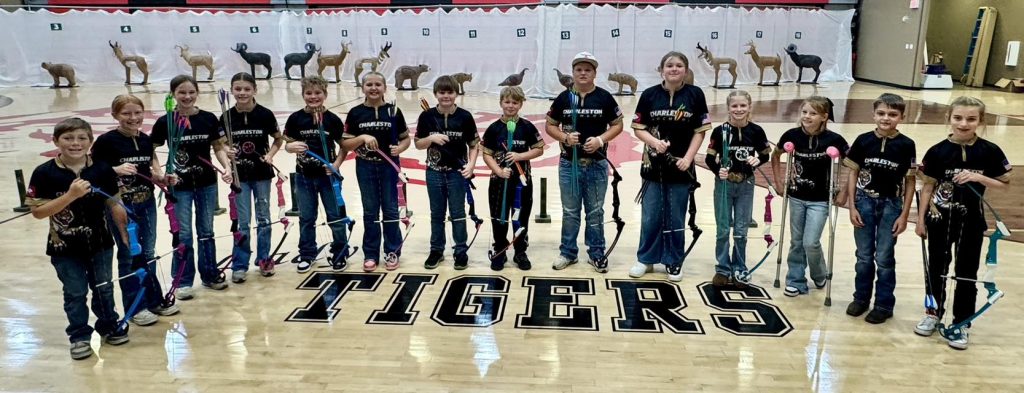
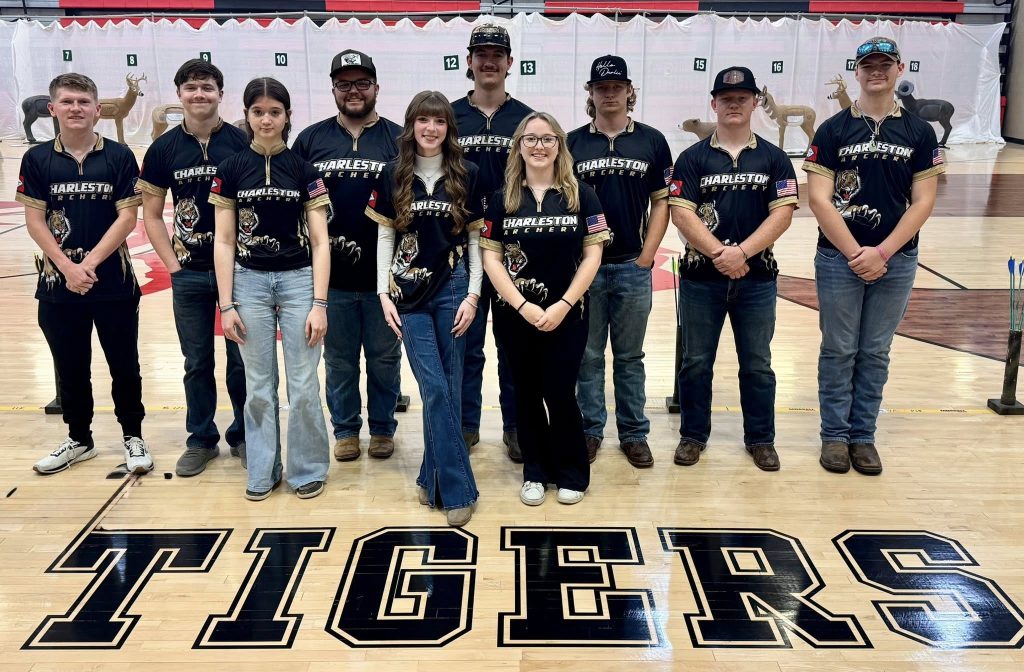
CHARLESTON — Charleston School District archers turned in a strong showing at the Arkansas Game and Fish Commission’s Archery in the Schools 3D State Championship, highlighted by multiple top finishes across high school, middle school, and elementary divisions.

Sophia McDonald – 2026 Middle School Female Centershot Bullseye State Champion

Competing April 10–11 at Pangburn High School, Charleston athletes demonstrated consistency and skill against some of the top programs in the state, with standout performances led by high school archer Maddie Johnson. 

Johnson earned a second-place finish in the High School Girls Division, narrowly missing the top spot by just two points in a tightly contested competition. The margin came down to a single slightly off-target shot, underscoring the precision required at the state level. 

Jessy Moore- Elementary Male Centershot 3D State Champion!

Charleston’s success extended into the middle school ranks, where Charleston Elementary secured a third-place team finish. Individually, Isabelle Turner claimed the state title in the Middle School Girls Division, bringing home first place and leading a strong showing for the program. 

At the elementary level, Charleston Elementary again placed third as a team, with Cash Smrecker finishing fifth in the Elementary Boys Division to round out the district’s top individual performances. 

State Champions x2 Congratulations to the team of Dixie Shotzman, Sadie McDonald, Jessy Moore, Saige Vaughn, Cash Smreker & Jadyn Silva for winning both the elementary bullseye and 3D divisions in the Centershot State Tournament!

The statewide event drew 694 archers from 43 schools, competing in a 3D format that challenges participants to shoot at life-sized animal targets positioned at varying distances. 

Charleston’s results reflect continued growth and competitiveness within its archery program, as student-athletes across all grade levels contributed to the district’s success on the state stage.

3D State Tournament 2026

Timepiece: Trolleys and History

by Dr. Curtis Varnell

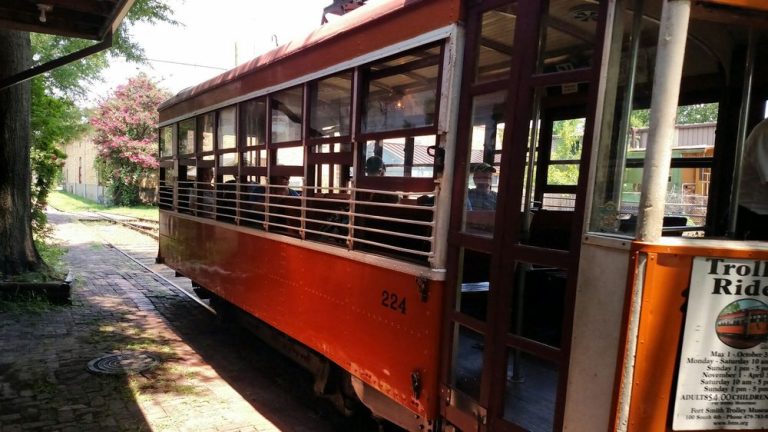
A long line of students snaked around the museum, eagerly awaiting their turn to ride the historic Fort Smith Trolley.  On an outing from Paris schools, the group had already toured the grounds of the historic Fort Smith National Park and Judge Parkers courtroom.  The trolley ride and then a trip to the Marshalls museum would round out the day for students and provide an historical background for much of the early history of Western Arkansas. 

The historical trolley, restored and in operation since 19991, features electric powered streetcars that travel a route through downtown Fort Smith while the conductor provides historical narrative.  The trolley looks much like it did in the late 18000’s and passes through the downtown area, stops at the Bass Reeves monument and the then reverses to travel past the Trolley Museum, the National Cemetery, and journeys a short distance into the downtown area.  It often stops at the museum, allowing the students to clamber over old trains and streetcars that the association has collected over the years. 

The Fort Smith trolley serves to remind of an era long gone, the period of time before the automobile when travel through town and into the suburbs was accomplished by a light rail system that carried passengers to and from outlying areas.  

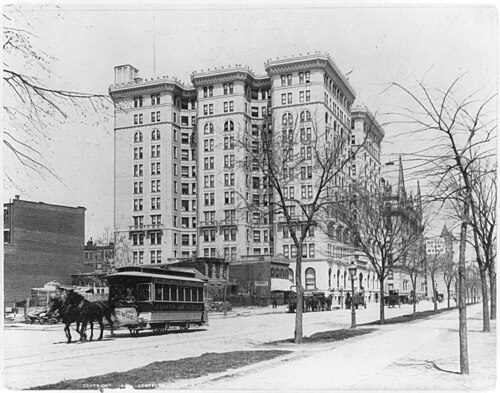
In the early 1800’s, engineers determined that horse-drawn vehicles set on rails would allow animals to carry many more passengers at a much more rapid rate than simple horse-drawn carriages.  Rail systems developed throughout America, beginning in New York and spreading to Philadelphia, Detroit, and south to Memphis and New Orleans.  After the Civil War, several of the lines switched to steam to power the trolleys and lines extended out greater distances into the countryside.  Not only were the steam engines more efficient, they also eliminated the constant street cleaning associated with horse and mule power.

By the late 1800’s, electric power became the chosen source of power and electric lines were strung along the track with extensions running from car to electric wire powering the vehicles.  Fort Smith had mule-drawn trolleys as early as 1883 but transitioned to electric in 1899.  Other lines operated in Hot Springs. Little Rock, and other towns in the state.  Especially in the larger towns, the lines allowed residents to move out of the downtown area and into the suburbs.  The trolleys ran regular service to city attractions, amusement parks, and to the ever-popular baseball games.   

The introduction of the automobile changed America.  By the 1920’s, the road system opened up America to fast and easy transportation from business right back to your own personal driveway.  Rail travel declined to a point it was no longer economical and the trolley system died; Fort Smith shutting down by 1933.  Only a few trolleys systems survived, those being two of my favorites, New Orleans and San Francisco. 

By the late 1900’s, many cities realized the benefit of restoring the history and ambiance of the downtown area and began efforts to attract customers and visitors back to the city.  What better way than to provide an historic tour in an historic vehicle that had not been on the streets in over one-hundred years.  Little Rock, Memphis, Eureka Springs, Hot Springs, and Fort Smith purchased an restored a part of our historical past and street cars again travel the rails through town.  

The students disembark from the trolley, excited about the experience of actually touching history.  Heading to the museum, the kids enjoy an ice cream float in the turn of the century drug store and soda shop.  Nothing can substitute real-life experience or provide memories that last a life-time like school field-trips.

The Fort Smith Trolley Museum is open daily, and trips can be arranged by phone.  They are always happy to see new and happy faces as they share with us our heritage. 

“Just Roll with It” Serving up Recipes and Humor

By Sheri Hopkins, Lifestyle Contributor

Hello everyone! I love this weather we have been having. My A/C hasn’t been on in a couple weeks. As I said, we had our big Wagoner family Easter on Saturday. I knew I would have stories to tell.
First off, let me tell ya that all the kids call our get-togethers Aunt Sheri’s Christmas, Aunt Sheri’s Thanksgiving, Aunt Sheri’s Halloween, and Aunt Sheri’s Easter. My niece Tonya invited her brother and his family. They have two sons and a daughter-in-law. The oldest son is a little shy, and when he arrived, he saw all the vehicles and said, “What’s going on?” Tonya started to tell him that it’s Sheri’s, and he said, “Did she die?!!” He thought they were having a memorial service for me. He saw all the family and cars and just thought they were having a memorial. She said, “Nooo, it’s just Aunt Sheri’s Easter.”
I had a pretty good turnout, but I sure expected more people. We did have a good potluck, though. Nobody said any kind words about me—I guess I better start planning my memorial service and get some speakers lined up.
Jacob will not be able to plan a service, y’all know it and I know it. Let me remind y’all of something—the time we were having my niece Kelly’s dog JoJo’s funeral and my brother’s big white outside dog hiked its leg and wet all over my leg and shoe. I felt something warm and thought, “Did I wet my pants?” I looked down and he had his leg hiked.
At the Easter (my “memorial service”), I was holding my nephew’s dog Lulu. Keep in mind she is getting old—she passed some gas and I didn’t think a thing about it. A few minutes later, I looked down and she had pooped on my lap. Yes!! You read it right. I don’t know why it shocked me—crazy follows me everywhere I go. So now I have been peed on and pooped on by a dog.
I couldn’t stay mad—I love Lulu and I know she couldn’t help it. Everyone laughed and laughed and thought it was hilarious. Note to self: always take a change of clothes and extra shoes, just like packing a baby’s diaper bag. I already carry a spare pair of underwear in the glove box.
Life would be boring if everything was just humdrum. I like to live on the edge and fly by the seat of my pants.
Y’all have a great week. Hug your loved ones and always tell them you love them. This week’s recipe is Dorito Taco Salad—nothing sweet.
Dorito Taco Salad
1 pound ground beef
1 packet taco seasoning
1 bag Doritos, crushed
2 cups shredded cheese
1 cup diced tomatoes
1 head shredded lettuce (or pre-shredded—use your best judgment on amount)
½ cup Catalina dressing
Cook your ground beef, drain excess fat, add taco seasoning and a little water, and simmer for 5 minutes. In a large bowl, combine the lettuce, tomatoes, cheese, and crushed Doritos. Add the warm beef on top, drizzle with dressing, and toss lightly. If you want more dressing, wait until serving to add it. Serve immediately.

Arrest Reports 4/12

This content is reserved for RESIDENT INSIDER members.

Please or subscribe to view.

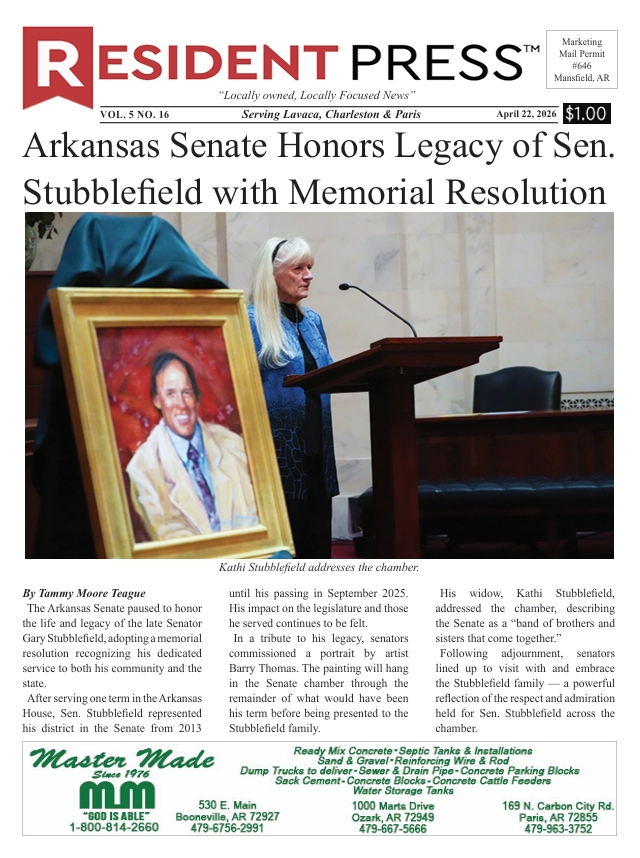
Resident Press (Lavaca, Charleston, Paris edition) 4/22/26 Vol. 5 No. 16

This content is reserved for RESIDENT INSIDER members.

Please or subscribe to view.

Greenwood Resident 04/22/26 Vol. 6 No. 16

This content is reserved for RESIDENT INSIDER members.

Please or subscribe to view.

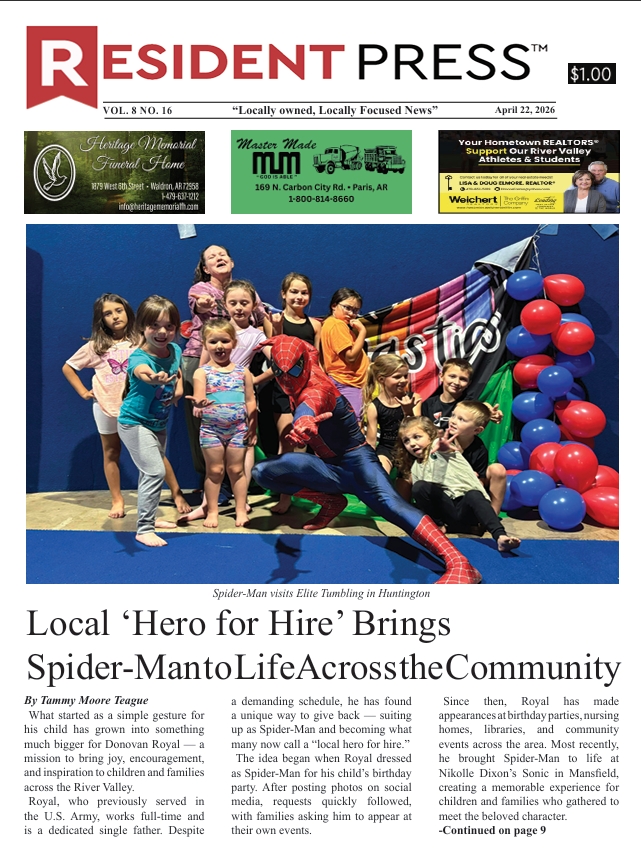
Resident Press (Scott & So. Sebastian County edition) 4/22/26 Vol. 8 No. 16

This content is reserved for RESIDENT INSIDER members.

Please or subscribe to view.

“Just Roll with It” Serving up Recipes and Humor

By Sheri Hopkins, Lifestyle Contributor

Hello everyone!! Been wet in the River Valley. We needed it, so that’s okay. We are having our family Easter this Saturday at my nephew’s—you all know the one—so I am going to have some stories to tell next week. We are going to cook out and have a big egg hunt for the kids.

Did you all ever hang posters on your wall when you were teenagers?? Back in my day it was Tom Selleck, aka Magnum P.I. I had a poster of him on my wall, and most of the guys back then had Farrah Fawcett. My younger sister was in love with Leif Garrett—she thought he was dreamy. If you are my age, you remember Teen Beat magazine.

Speaking of magazines, there was the National Enquirer. If you ever checked out at the local grocery store or Walmart, you got to stand there and read all the headlines. It was all fake news—like they would have a giant snake swallowing a man or a half-man, half-alligator. You couldn’t help but look at all that crazy stuff.

I had an older brother—his name was Jerry. If it was in the National Enquirer, he believed it. You could not convince him it was not true. We made fun of him, but he didn’t care—it was all true in his eyes.

There was also National Geographic—my dad loved that magazine. There was also True Grit, and those old West magazines. My dad loved all of those. Those were the good old days. My dad passed when I was 18, and let me tell you, I have never stopped missing him.

I had two older brothers, and they were both in the Army. My brother Larry reenlisted and retired from the Army. They were stationed in Panama City, Panama. Keep in mind, Wagoner men are pretty tall, and the Panamanians were not tall people—Wagoners are just big people. My brother and sister-in-law decided to have a yard sale, and she had put in some of my brother’s jeans. One of the customers held a pair up and kept repeating, “Grande!! Grande!!”—which we all know means large!! Needless to say, I don’t think they sold any of them.

You all have a blessed week—hug your loved ones hard.

NO BAKE COCONUT COOKIES
1 ¾ cup sugar
½ cup butter or margarine
½ cup milk
¼ cup unsweetened cocoa powder
2 teaspoons vanilla
2 cups quick oats
1 cup coconut
optional chopped almonds
In a a large saucepan, heat the butter, sugar, milk and cocoa. Bring to a full rolling boil and boil for one minute. Remove from the heat and add the vanilla, oats, coconut and almonds (optional) and mix well. Drop by the spoonful onto parchment paper. Let it stand for one hour. Hope you enjoy these. Have a wonderful week and always count your blessings.

Spotted a honey bee swarm? Stay calm and call a beekeeper

By Rebekah Hall University of Arkansas Division of Agriculture

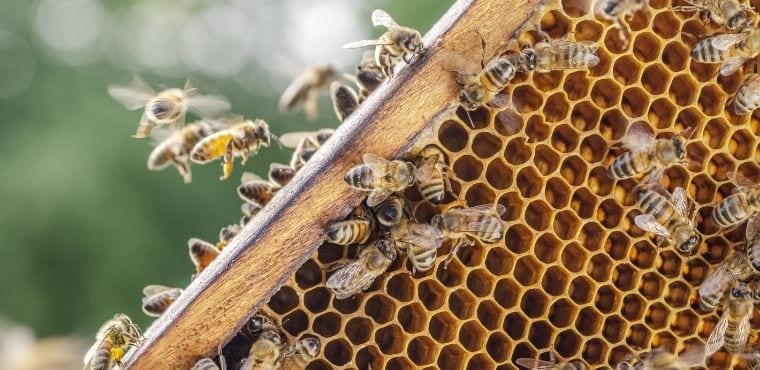
LITTLE ROCK — As spring blooms in Arkansas, honey bee populations are swarming, but there’s nothing to be afraid of — most swarms are harmless, and the colony will soon fly away to establish its new home.

“A honey bee swarm is an incredibly complicated, amazing and majestic process,” said Jon Zawislak, extension assistant professor of apiculture and urban entomology for the University of Arkansas Division of Agriculture. “Swarming is the honey bees’ response to crowded conditions in the springtime when there is an abundance of food — nectar or pollen. When spring comes, the population of the beehive starts to increase exponentially.”

“As a result, the bees will begin raising a new queen bee, and then the old queen leaves the hive,” he said. “She takes anywhere from one-half to two-thirds of the worker bees with her and they fly away. Their goal is to establish a new colony.”

The swarm will land nearby and settle on a tree limb or a fence post, or sometimes on the wall of a building.

“I’ve seen them on picnic tables, mailboxes and stop signs,” Zawislak said. “But usually, they’re up in trees. When people see a giant mass of bees hanging off a limb, inside of that is the queen and thousands of worker bees, along with a few male bees that we call drones. It could be anywhere from a few thousand bees to 50,000 bees.”

These bees are in a temporary resting location, which is sometimes called a bivouac. While the appearance of so many honey bees can be frightening, a new swarm is usually gentle in temperament and they rarely sting, Zawislak said.

If you come across a swarm, Zawislak said the most important practice is to do no harm.

“Leave it alone — don’t throw rocks at it or squirt it with a garden hose or spray it with an insecticide,” he said. “If you wait and don’t do anything, chances are those honey bees will just disappear and find another home.”

However, in an urban environment, “we don’t want to risk that the bees will move into the wall of a home or building because it becomes much more difficult to relocate them when they’re inside of a wall,” Zawislak said. Zawislak recommends contacting your local county extension office, as many counties maintain a list of local beekeepers who can quickly come and collect the bees.

The Arkansas Beekeepers Association is also a helpful resource, Zawislak said. The organization has a county-by-county list of beekeepers who will collect swarms, including those who will collect bees from inside of a wall.

House hunting for a new hive

Honey bees have been swarming in different parts of Arkansas for almost a month, Zawislak said.

“They reach their peak around mid-April to mid-May. That’s when we see most of them,” he said. “But especially in the southern part of the state, where spring comes a bit earlier, you may see it sooner, and you’ll see it later in the northern part of the state. It just depends on how many flowers are in bloom around the hives of individual colonies.”

Once the bees have swarmed and are resting in their temporary location, several hundred become scout bees who then “travel in all directions looking for a new place to live,” Zawislak said.

“This could be a hollow tree or a cavity that’s the right size and easily defensible,” he said. “If it looks like a place where they think their family would be happy, the scout bees go back to the swarm and do a dance on the backs of the other bees as they are all piled on top of each other.

“They do a figure-8 dance that we call a waggle dance,” Zawislak said. “It conveys information about which direction the potential new home is, how far away it is and the quality of the new site.”

Over the next few hours to a few days, the bees “reach a quorum decision, where enough of the bees have checked the new place out and decided it will be the best home for them,” Zawislak said.

To travel to their new destination, the scout bees guide the rest of the group using a pheromone, or chemical odor, that they emit as they fly through the crowd of bees.

“One minute you have this big cluster of bees hanging on a limb, then it looks like utter chaos, then they will suddenly all take off in one direction, and they’re gone within a few minutes,” Zawislak said. “The first thing they must do there is build honeycomb because they can’t do anything else if the queen doesn’t have space to lay eggs and they can store food. They start building it right away, and they’ll often have built a comb the size of your hand in 12 hours.”

Zawislak said he encourages beekeepers to be vigilant and try to manage swarms by keeping a close eye on bees in the springtime and collecting swarms right away. Watch the Division of Agriculture’s “Why Do Honey Bees Swarm?” video on YouTube or visit the Beekeeping in Arkansas page on the Cooperative Extension Service website to learn more about swarms, honey bees and beekeeping.

The extension service is the educational outreach arm of the Division of Agriculture.

To learn about extension programs in Arkansas, contact your local Cooperative Extension Service agent or visit uaex.uada.edu. Follow us on Facebook and Instagram. To learn more about the Division of Agriculture, visit uada.edu. To learn more about ag and food research in Arkansas, visit the Arkansas Agricultural Experiment Station at aaes.uada.edu.

About the Division of Agriculture

The University of Arkansas Division of Agriculture’s mission is to strengthen agriculture, communities, and families by connecting trusted research to the adoption of best practices. Through the Agricultural Experiment Station and the Cooperative Extension Service, the Division of Agriculture conducts research and extension work within the nation’s historic land grant education system.

The Division of Agriculture is one of 20 entities within the University of Arkansas System. It has offices in all 75 counties in Arkansas and faculty on three campuses.

Pursuant to 7 CFR § 15.3, the University of Arkansas Division of Agriculture offers all its Extension and Research programs and services (including employment) without regard to race, color, sex, national origin, religion, age, disability, marital or veteran status, genetic information, sexual preference, pregnancy or any other legally protected status, and is an equal opportunity institution.