

85 F
Fort Smith
Thursday, July 2, 2026
Home Blog Page 145

YEAREND: Dry weather, armyworms and high input costs made 2024 a rough year for Arkansas cattle producers

By Sarah Cato
U of A System Division of Agriculture

Although cattle prices remain high, Arkansas producers had no shortage of obstacles to keep profit margins thin in 2024.

“What we all know in the cattle industry is that prices are up. When those prices will peak is still a big question,” said Maggie Justice, beef cattle extension specialist for the University of Arkansas System Division of Agriculture. “But prices are high, so when weather started to get hard on us this year, guys started selling again. Because although prices are high, we’re still not seeing the profit margins you’d think we’d see.”

Justice said input costs, paired with some less-than-ideal conditions have left many producers not retaining heifers in their herds.

“With still high input costs, we’re still seeing a big pool of heifers into the feed yards and guys aren’t purchasing heifers to raise and put back into our national herd, so our national herd numbers are still going down,” Justice said. “If we see a high number of heifers in the feed yards, the national herd won’t grow. Because we would have to retain those heifers, grow them so they can keep having calves.”

Environmental challenges

High input costs aren’t the only thing holding cattle producers back. Jonathan Kubesch, extension forage specialist for the Division of Agriculture, said that wet and dry weather impacted hay quality this year.

“Because it was wet for a lot of folks, we had a delayed first cut and so we had over-mature grasses,” Kubesch said. “We had a really good second cut, but for those of us in the fall drought, we didn’t have a third cut.”

While some portions of the state faced conditions too wet to cut, other areas struggled with drought, and heavy armyworm infestations were felt statewide.

“In general, I would say statewide we were at 80 percent of our production potential, but in our really drought affected areas we lost maybe half or more of our production,” Kubesch said. “We had a lot of armyworm pressure dry spell and we were offset on our hay cut schedule.”  

Health and disease

Cattle producers also felt the effects of multiple regulatory changes to the industry in 2024, with the biggest change being the availability of over-the-counter antibiotics. The U.S. Food and Drug Administration issued guidance requiring drug manufacturers to change labels on animal antibiotics to require a veterinary prescription. This guidance went into effect in June of 2023.

“This year we finally started to see the full impact of the FDA’s regulation on antibiotics,” Justice said. “Although it went into effect last year, anything that was on store shelves could still be sold. So really this year is when you saw people going to the store and it wasn’t there anymore.”

Justice said while the regulation will help prevent antibiotic overuse, the shortage of large animal and rural veterinarians in the state will be problematic for producers that do not have an established relationship with a veterinarian.

Multiple insects have also been a concern for Arkansas cattle producers this year such as the Asian longhorned tick, known to transmit a protozoan parasite called Theileria orientalis which is deadly for cattle.

“We had our first confirmed death caused by Theileria in June of this year. We confirmed Asian longhorned tick presence in the state prior to this, but this was our first known death,” Justice said. “Although this is scary, the good news is now we know it’s here and we can test for it.”

Justice said because Theileria mimics anaplasmosis, a common disease in Arkansas cattle, awareness and testing will make a huge difference in cattle health.

Screwworm, a devastating pest that was eradicated in the U.S. and Panama in 2006, was recently found in the established “barrier zone” between the U.S. and areas where screwworm is endemic. Because of this the U.S. Department of Agriculture Animal and Plant Health Inspection Service suspended the importation of ruminants from Mexico as of Nov. 22.

“When you think about beef production in general, in an already small national herd, if they’re not importing cattle from Mexico, that will impact us in a couple of months,” Justice said. “Though the USDA is working to resume cattle imports again as soon as possible.”

Those interested can stay up to date on current issues and research-based recommendations for beef cattle production by following Arkansas Extension Beef Systems on Facebook.

To learn more about Division of Agriculture research, visit the Arkansas Agricultural Experiment Station website: https://aaes.uada.edu. Follow on Twitter at @ArkAgResearch. To learn more about the Division of Agriculture, visit https://uada.edu/. Follow us on Twitter at @AgInArk. To learn about extension programs in Arkansas, contact your local Cooperative Extension Service agent or visit www.uaex.uada.edu.

About the Division of Agriculture

The University of Arkansas System Division of Agriculture’s mission is to strengthen agriculture, communities, and families by connecting trusted research to the adoption of best practices. Through the Agricultural Experiment Station and the Cooperative Extension Service, the Division of Agriculture conducts research and extension work within the nation’s historic land grant education system.

The Division of Agriculture is one of 20 entities within the University of Arkansas System. It has offices in all 75 counties in Arkansas and faculty on five system campuses.

The University of Arkansas System Division of Agriculture offers all its Extension and Research programs and services without regard to race, color, sex, gender identity, sexual orientation, national origin, religion, age, disability, marital or veteran status, genetic information, or any other legally protected status, and is an Affirmative Action/Equal Opportunity Employer.

Magazine Schools Ranks High in State ACT Benchmarks

By Jonathan W. Gipson
MAGAZINE SCHOOLS MEDIA RELATIONS

MAGAZINE – Magazine Schools was recently ranked in the Top 8 percent of all school districts in the state of Arkansas for juniors meeting all four of the ACT readiness benchmarks (Math, Science, English and Reading) during the 2023-24 school year.

Magazine, which was 22nd out of 249 districts, prides itself in providing the best academic opportunities for its students as well as offering student services and extracurricular opportunities to ensure its students a well-rounded education.

Students at the South Logan County school can receive college credit through free concurrent college courses and are offered trade and college and career readiness opportunities to prepare for life after high school, and Magazine Elementary is the only elementary school in Logan County to receive the prestigious R.I.S.E Award for reading initiatives.

All Magazine students receive free breakfast, gourmet lunch and afternoon snack each school day and have the benefit of an on-campus health-and-wellness center throughout the school year.

Magazine offers several student organizations and activities for students of all interests, like an award-winning Beta Club, Future Farmers of America Chapter, Future Business Leaders of America Chapter, Band and Choir to name a few.

Magazine students have the opportunity to compete in a total of 15 varsity sports for boys and girls, including a tradition-rich and highly-successful cross country program and a recently added volleyball program that qualified for the region tournament in its first season of eligibility.

Magazine Schools was the first school district in Logan County to receive the prestigious Purple Star School Designation in recognition of its support for students and families of military members. The school not only offers services for military families and their students but also recognizes them throughout the school year. 

For families who do not live within the Magazine School District but wish to attend, the Arkansas School Choice Act is an option. Arkansas School Choice enables students in grades K-12 to attend a school in a nonresident district.

The application process for Arkansas School Choice for the 2025-26 school year begins Jan. 1 and runs through May 1. Applications are available at the Magazine Schools Administration Building and online by visiting www.magazineschoolsk12.com//page/school-enrollment.

For questions about Magazine Schools or about enrolling your child in Magazine Schools through the Arkansas School Choice Act, please contact Superintendent Dr. Beth Shumate at 1-866-900-2001.

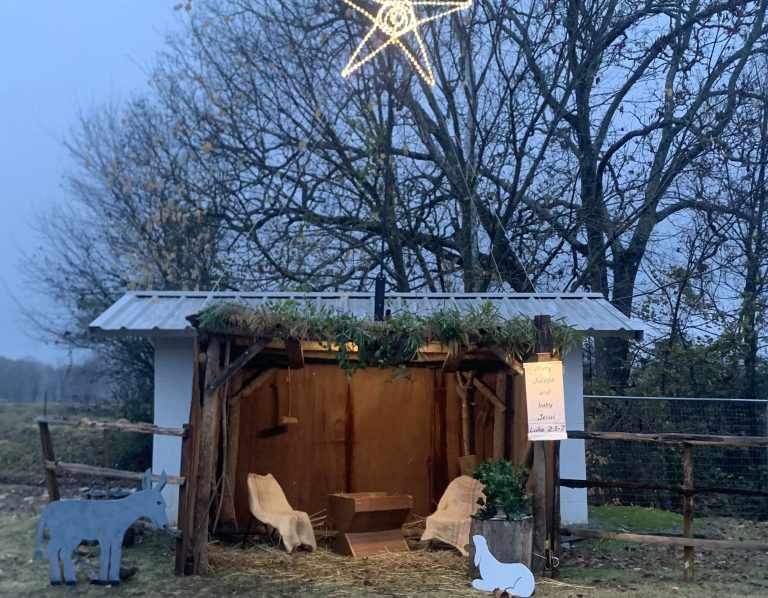
Winfield Baptist puts on Live Nativity

Friday Night started Winfield Baptist Church’s fourth year of their live Drive Through Christmas Presentation. Journey back to through the story of Jesus’ birth! 

The free event begins at the Candy Cane stop to help you get ready for your experience. The volunteer actors act out each scene for every car that comes through, while the story plays through your radio. Upon arrival to the church tune your radio station to 89.1 and enjoy the loop being played to narrate the story as you begin your journey.

It’s a tradition for our family, we make sure to attend every year, even multiple times; and I haven’t gone a year without tearing up. Bring tissues if you’re a crier, you will likely need them. 

Bro. William Crelia is the pastor of Winfield Baptist Church and he says of the drive thru “We started it in 2020. It was something people could do during covid. We try to improve it some each year. We as a church enjoy putting it together and enjoy the fellowship while building the scenes. Our hope is that it brings joy to the community but most of all that is tells the story of Jesus birth. For people to know Jesus as their personal Lord and Savior is the greatest joy anyone can experience.”

What a great time to find Jesus than at the time we celebrate his birth!

The drive through will continue Saturday (12/14) and Sunday (12/15) 6-8pm at Winfield Baptist church 9768 W Hwy 248 Waldron, AR 72958, 5 miles west of Waldron. Watch for the signs to guide you on your way! 

Too far away to visit this year? You can go on a video walk through here.

“Just Roll with It” Serving up Recipes and Humor

By Sheri Hopkins

Hello everyone! Hope y’all are having fun shopping and enjoying all the traffic in Fort Smith, AR. It does not matter what day you go; it is crazy traffic. I am almost done with my shopping, now the wrapping is another story. When I was young, I loved to wrap, and I would go to my moms and wrap all her gifts, and I loved it. But nowadays, I wish I had a wrapping fairy to do all mine.

I love this time of year and my big crazy family. Our party is the 21st so I will have a lot of stories to tell after that. My nephew Michael and my niece Kelly will probably get into an argument. I will have stuff to tell.

I always like to think back to my memories when our children were small and how much fun Christmas was. We always had a real tree. They looked like Charlie Brown trees until we started going to Lowes and buying the pretty ones. There is just something special about a real tree. Most of y’all know about my crazy husband and all the crazy gifts I received at Christmas. I have new readers, so I have to tell them about some of the gifts. When we were dating, I always got great gifts, and then I said, “I do” back in 1985 and the gifts went downhill from there. I believe the first of the crazy gifts was a clock and it was carved out of wood. It was in the shape of a turkey. I was young, like first year of marriage and I get a turkey clock, and it had a beard and all. If I am not mistaken it’s still hanging in Chuck’s little shop. Then the year I got the famous confederate soldier statue, yes you read it right. I was sooo mad over that confederate soldier statue I threatened to knock Chuck in the head with it. It was carved out of some kind of metal. It would have hurt. That same year I got a moo moo, for you young people, that have no clue, it is a big flowing gown that usually had a big flower print all over it. Girls this did not come from Victoria’s Secret, trust me on that. I admit I wore the moo moo, it was comfortable. I was mad about it though. It sure came in handy when I used my flashlight, that he also bought me, when I had to go outside at night. Hot pink flashlight, I might add. Come to think of it, I believe it matched my moo moo. Those were the good ole days. I usually ended up mad on Christmas, I always got over it and we had a good day. The list is endless of the 28 years we had together, and I miss him dearly. Hug those big lugs this Christmas and tell them you love them.

This week’s recipe is for a blueberry dump cake. I love the cherry version, too. Make this recipe and slap a big scoop of vanilla ice cream on the side and enjoy.

BLUEBERRY CHEESECAKE DUMP CAKE
1 21 oz. can of blueberry pie filling
1 15 oz. package of yellow or lemon cake mix
8 oz of whipped cream cheese (you can buy it or make your own)
1/2 cup (1 stick) of butter very thinly sliced
Preheat your oven to 350 degrees and grease or spray your 9×13 pan. Pour the pie filling into the bottom of the pan, spread to the corners. Top with 1/2 of the cake mix, then spoon the cream cheese over the top. You can do little spoonfuls all over the top because it’s hard to spread. Top with the remaining cake mix and top with the butter slices. Bake for 35-40 minutes. It will be a golden brown. Cool for about 15 minutes and enjoy.

Warm, dry fall helping fall foliage hang on — but not for long

Arkansas’ colorful foliage has had an unusually long run this fall. Sadly, it likely won’t last much longer, said Jaret Rushing, extension forestry instructor for the University of Arkansas System Division of Agriculture.

Just 10 days before the first day of winter, Central Arkansas was still alive with golds, browns and reds from hickories, maples and oaks.

Michael Blazier, dean of the College of Forestry, Agriculture and Natural Resources at the University of Arkansas at Monticello, said “I’ve been strongly suspecting a relatively warm fall for postponing the leaf senescence process.”

Senescence is the final act in a leaf’s life, when it changes color and falls from the tree. Trees need frosty temperatures to cue senescence.

Blazier offered a graph that showed the 150-year average autumn temperature, with red peaks indicating above-average and blue valleys showing below-average temperatures.

“2024 is the highest deviation from the long-term average temperature in the past 150 years,” he said. “And that higher-temp fall falls within a year that blows all prior years out of the water in terms of deviation from long-term temperature.”

Blazier also noted that “this fall’s lengthy period without freezing temperatures likely made leaf color change particularly vibrant this year.”

Arkansas has also seen its share of drought. As of the first week of December, the United States Drought Monitor map showed nearly 75 percent of the state as being either abnormally dry or in some stage of drought.

Some rain did arrive in November, however.

“One thing to remember is that about the time when senescence was supposed to happen this year, we actually started getting rain again — finally,” Rushing said. “So trees were sucking up water and reallocating that water towards different parts of their crown and their branches and everything else.”

Rushing said that rainfall, plus the arrival of some frosts, could end the long fall show.

“In November, you start getting those winds coming in from the north as the jet stream shifts and starts to send cooler air south,” he said. “Whenever that happens and you get heavier winds, that typically aids in leaf fall.”

This November was relatively quiet from a freeze and storm perspective, Rushing said.

“I would estimate that we’ll have complete leaf fall probably within a week-and-a-half to two weeks,” he said.

Rushing said he was getting quite a few calls about the leaves, including one from a squirrel hunter, who turned his dog out for a hunt.

“The dogs had a really good training episode but they can’t find the squirrels in the trees because the leaves are too thick,” he said. Squirrel season in Arkansas started in May and runs through the end of February 2025.

To learn about extension programs in Arkansas, contact your local Cooperative Extension Service agent or visit www.uaex.uada.edu. Follow us on X and Instagram at @AR_Extension. To learn more about Division of Agriculture research, visit the Arkansas Agricultural Experiment Station website: https://aaes.uada.edu. Follow on X at @ArkAgResearch. To learn more about the Division of Agriculture, visit https://uada.edu/. Follow us on X at @AgInArk. 

About the Division of Agriculture

The University of Arkansas System Division of Agriculture’s mission is to strengthen agriculture, communities, and families by connecting trusted research to the adoption of best practices. Through the Agricultural Experiment Station and the Cooperative Extension Service, the Division of Agriculture conducts research and extension work within the nation’s historic land grant education system. 

The Division of Agriculture is one of 20 entities within the University of Arkansas System. It has offices in all 75 counties in Arkansas and faculty on five system campuses.  

The University of Arkansas System Division of Agriculture offers all its Extension and Research programs to all eligible persons without regard to race, color, sex, gender identity, sexual orientation, national origin, religion, age, disability, marital or veteran status, genetic information, or any other legally protected status, and is an Affirmative Action/Equal Opportunity Employer.

Hackett Councilwoman Arrested

Hackett City Councilwoman, Tamara Neidecker, was arrested by Bonanza Police on Wednesday December 11. According to the incident report by the arresting officer, Neidecker, 39, was pulled over after allegedly crossing the white line multiple times.

At 8:54 p.m., Bonanza Police Sergeant Montana Sims, was parked at the country store in Bonanza when he noticed a white SUV use its turn signal to turn into the parking lot next to him. However, it rapidly accelerated southbound on Highway 45. “I turned out behind the vehicle and began to follow it observing it cross the white fog line at least four times between Maple St. and Bear Hollow Rd., at one point both of the vehicles right tires crossed over the line and onto the shoulder. I activated my emergency lights on my vehicle at Bear Hollow Rd., however the vehicle continued to maintain its speed and direction south on Highway 45 passing multiple places to stop as well as a very large shoulder on that section of the highway. I activated my siren, and the vehicle continued south until it turned onto Lake Ln and stopped.”

Sims approached the vehicle and noticed that the driver, later identified as Tamara Neidecker, was the sole occupant of the vehicle. Sims also noted the strong odor of intoxicants from inside the vehicle. “I also observed that she was holding her phone up at the window and the name read Sean White. I asked her why she was on the phone with (Hackett Police) Chief White, and she stated, ‘I called him.'”

Sims would advise Neidecker of the reason for the traffic stop and inquired how much she had been drinking. “…She did not answer. At this point I noticed that her eyes were very blood shot and watery.” Sims asked for and was provided Neidecker’s driver’s license. “I also asked two more times how much she had been drinking, and she still did not answer. I asked if she was going to answer any of my questions and she shook her head no.”

Sergeant Sims would ask Neidecker to step out of her vehicle, to which she replied, “I’m gonna do a couple of things” while allegedly slurring her speech. “Ms. Neidecker then began to remove her seat belt and told me she was going to roll her window up, but I told her to leave it down and just step out of the vehicle. “However, she responded with ‘can I roll my window up in case my car
gets towed.'”

Neidecker complied, exited the vehicle and walked toward the patrol car. “Once at my car, Ms. Neidecker began to walk around to the driver side of my unit, and I had to redirect her attention to me and bring her back up to the front. I then again asked her how much she had to drink, and she only stared at me while holding her hands in the air. I then asked if she would take the standardized field sobriety tests (SFST’s) and she shook her head no with her hands in the air. After one more opportunity to complete the SFST’s she still shook her head no, so I placed her into handcuffs and advised her that she was under arrest for suspicion of driving while
intoxicated. I then attempted to complete a search on Ms. Neidecker, but she started to pull her arm away from me while loudly saying ‘no sir, I have no weapons, I have no anything’ slurring her speech the entire time. After a search of her pockets was completed, I again offered for her to do the SFST’s but she provided no answer and just continued to stare at me.”

At this time, Hackett Police Officer Levi Thomas arrived on the scene. While checking the vehicle, Sergeant Sims observed a purple marijuana container in the door pocket of Neidecker’s vehicle.
An inventory search of the vehicle was conducted. The following items were seized: One glass jar containing loose marijuana; two purple pre-roll marijuana container containing marijuana; one wooden container holding marijuana and smoking device; and one vape pen suspected of containing THC. An empty small bottle of Tito’s vodka was also located and seized.

Arrangements were made for Neidecker’s vehicle to be towed, and she was transported to the Fort Smith Police Department for a certified breath test. “While enroute to their station I had to pull over and check on Ms. Neidecker at the country store because she would not respond to
me when I was asking if she was ok,” Sims’ report stated. “As I opened the back door, she lifted her head up and acknowledged me. Once we arrived at FSPD we entered the breath test room and her handcuffs were moved to the front. I handed her the Arkansas statement of rights form so that she could read along as I read it to her. When asked if she understood the section I read she wouldn’t verbally acknowledge me but would only point at the next section so I continued on. Once it was completed, I asked her if she would submit to the breath test and she shook her head no, I also asked if she would initial next to the sections I had read and she tossed the paper on the floor. After setting up the certified breath machine I gave her three opportunities to submit a sample of her breath, but she refused all three by shaking her head no. While in the breath test room Ms. Neidecker refused to sign any paperwork including her temporary driver’s license”

Neidecker was then transported across the street to the Sebastian County Adult Detention Center. According to Sim’s report, while inside, Neidecker began yelling and becoming combative with detention deputies. “While they were attempting to dress her out, I could hear her screaming and refusing to follow their commands. After a short while they opened the door to the
changing room and Ms. Neidecker intentionally exposed her breasts to the deputies and us behind the intake counter while filling out the paperwork.”

Hackett Police Chief Sean White included a supplemental statement to Sim’s report: “I… received a call at 8:54 p.m. from Tamara Neidecker. Upon answering the call Mrs. Neidecker stated that she was being pulled over. I asked her where she was. She stated that she was being pulled
over by Bonanza Police Department. I asked why she was being pulled over she would not say, so I asked her again. Again, she would not state why she was being pulled over. At that time, she asked if I would stay on the line, so I did as asked. I then heard Officer Sims’ voice and he asked ‘why didn’t you stop?’ And ‘I see that you have Chief White on the phone’. He then asked ‘How much have you had to drink? I can smell the alcohol.’ I stayed on the line but did not interact… The phone was hung up after I heard Mrs. Neidecker state that she wanted to call her lawyer.
The call lasted approximately six minutes.”

Neidecker was ultimately charged with Possession of Controlled Substance – Schedule VI Misdemeanor <4oz. and Driving While Intoxicated 1st Offense. She was released on legally sufficient bond December 12, 2024 at 2:47 a.m. Neidecker is scheduled for her first court appearance on December 16 at 12:30 p.m. in Greenwood.

We reached out to Neidecker for comment but have yet to hear back.

AGFC monitoring avian influenza in Arkansas 

By Randy Zellers

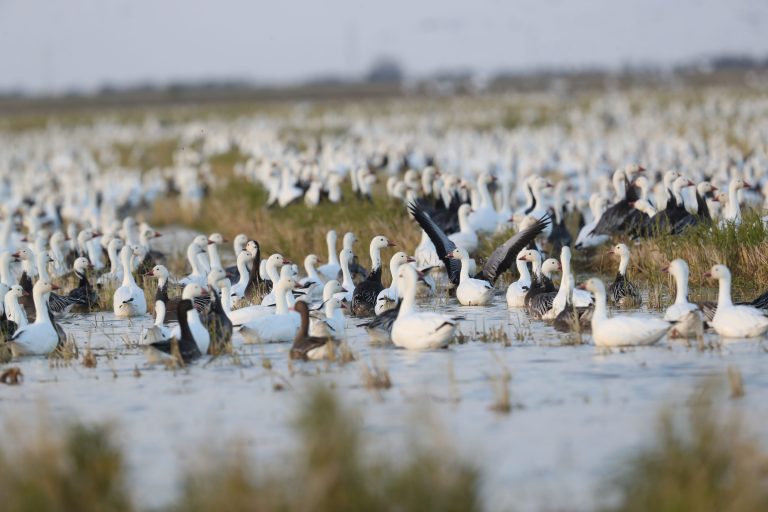
The Arkansas Game and Fish Commission is asking waterfowl hunters and wildlife watchers heading to the field to keep an eye out for any sick or dead birds they find in the wild that may be the result of avian influenza. The risk of humans contracting the disease remains low, but hunters can minimize that risk by following a few simple precautions.

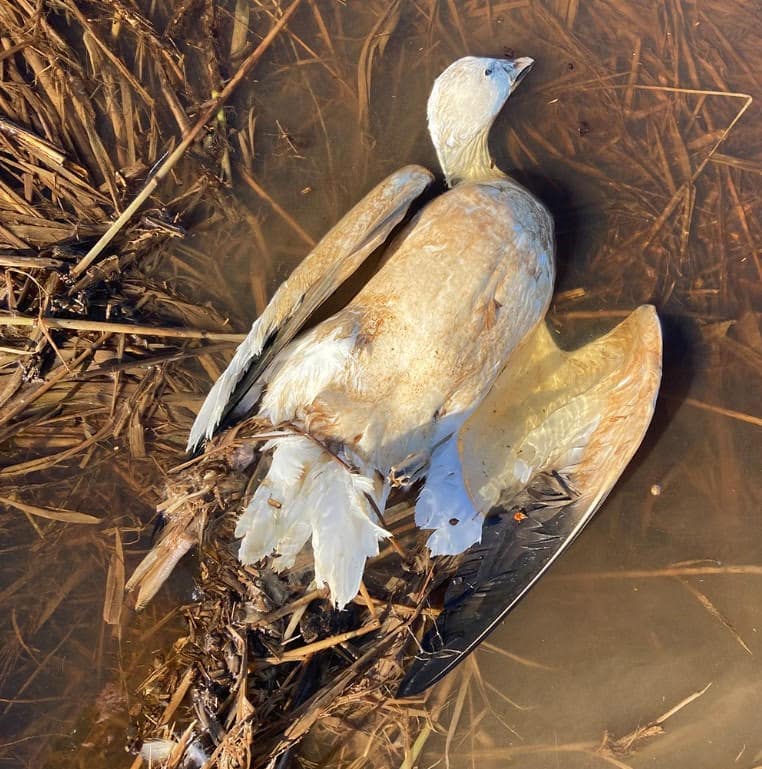
Hunters and wildlife watchers who observe concentrations of sick or dead birds should contact the AGFC’s wildlife health program through www.agfc.com/avianflu with information about the species, number of birds affected and location.

According to Dr. Jenn Ballard, AGFC state wildlife veterinarian, this is the third year since Highly Pathogenic Avian Influenza was detected in the U.S. and it’s likely that periodic outbreaks will continue to occur.

“We’re getting reports consistent with cases in previous years and confirmation testing is underway,” Ballard said. “The reports so far this year have been almost exclusively snow geese with most being juveniles.”

According to Ballard, various low pathogenicity strains of influenza always circulate in wild bird populations, but HPAI has much more potential to spread and has caused billions of dollars of damage to domestic poultry production in Asia, Europe and North America.

Waterfowl hunters may remember finding dead and dying snow geese in 2022, particularly at the beginning of the waterfowl season in Arkansas rice fields.

“Mortality in 2022 was primarily found in those snow goose populations, but a few other duck species and raptors were affected as well,” Ballard said. “Eagles and hawks that may have preyed upon sick or dying geese were confirmed with the HPAI pathogen.”

According to the Centers for Disease Control and Prevention, the risk for humans to contract HPAI is still low, but people who find birds that are obviously sick or bewildered should report them to the AGFC and refrain from handling them. The pathogen has also been found to affect dairy cattle, so anyone who works around any poultry or livestock should use extreme caution and practice good hygiene practices when handling, cleaning and preparing harvested waterfowl.

Safety Guidelines for Hunters

  • Harvest only waterfowl that act and look healthy. Do not handle or eat sick animals.
  • Wear disposable gloves when handling and cleaning game and field dress outdoors or in a well-ventilated area. Wash hands thoroughly with soap and water afterward.
  • Dispose of unwanted parts in a manner that prevents scavenging by domestic animals and wildlife.
  • Thoroughly cook all game to an internal temperature of 165 degrees Fahrenheit before eating it.
  • Do not feed pets or domestic animals uncooked portions of waterfowl.
  • Avoid contact between poultry and livestock and wild birds or their parts. After handling waterfowl, change or clean clothing, shoes and other equipment before coming into contact with domestic animals and livestock, including commercial production facilities and backyard flocks.

More information on avian influenza is available at USDA APHIS’s website.

Timepiece: The TV Generation

By Dr. Curtis Varnell

Television is one of the most used appliances in the American home, so much so that most homes are equipped with huge wall-covering sets in almost every room.   From watching news in the early morning to the late show and sports in the evening, most homes have one of more of the sets running constantly.  They keep us entertained, informed, and sometimes just serve as background noise from dawn to bedtime.  It’s difficult to believe that television has been around only a couple of generations. 

The first television stations broadcasting began in 1928 but was experimental and limited to a small region near Washington D.C.  It was 1939 before the first company (NBC) began regular broadcasting and, even then, it was limited to a small audience of less than 10,000 New Yorkers.  The television sets were expensive, running from $200-$500 per set, a huge sum in comparison to the typical yearly salary of $1,368. Once WWII ended, mass production of the T.V. and the increase in wages lead to a rapid increase in the number of homes containing a T.V.  Ownership of a television became a status symbol; so much so that some individuals who couldn’t afford the television, set up antennas to impress neighbors. By 1951, 12 million Americans owned a set. 

Television came to Arkansas on April, 5, 1953 when Little Rock KRTV began broadcasting as a UHF station. UHF was soon supplanted by the VHF stations whose signal could carry for a longer distance and required a much less sophisticated antenna.  KARK, Channel 4 in Little Rock, began business on April 15, 1954 and is still in operation.  It was followed by Channel 5, KFSM in Fort Smith and other regional stations. 

The first T.V.s were vastly different than the sleek, two-inch-thick wall-hanging sets of today.  A true piece of furniture, nice sets were composed of decorative wood paneling concealing a massive picture tube surrounded by electrical circuits.  In many homes, if the picture tube went out, the home owner would keep the old TV and use it as a decorative table or as a base for the small plastic replacement TV. Like my generation adapting to the cell phone and internet, there was reluctance on the part of older people acclimating to the new appliance.  One grandparent felt they were the work of the devil (she may have been right) and the other felt that “if I can see them, they can see me.”  Eventually, both succumbed to temptation, watched a few episodes of Andy Griffith and Bonanza and were hooked. We still had to be fully dressed to watch TV in grandparent number two’s home.  

My father purchased a cheap plastic enclosed set in 1964 and a larger color T.V. set a year later.  You could buy a used car for the price paid for a new color T.V. There was little argument between the kids in the family about what we would watch since KFSM Fort Smith and PBS were the only stations we could receive with clarity.  As a part of the T.V. generation, we learned quickly how to manipulate the set to obtain the best picture. Watching the Little Rock station required someone going outside, turning the antenna just right, and then watching a program through what seemed a massive snow storm.   Turning the TV set on in the early morning required a five-minute delay as the picture tube “warmed up” enough to broadcast.  My kids would never believe that the stations turned off transmission at 12 A.M. and the test pattern came on for the rest of the night.

Cities developed cable TV which allowed a wider range of available programming but the next real development in reception came with the satellite dishes.  It is hard to believe today that people would purchase a ten-foot circular apparatus that looked like something from a space movie and set it up in their yard, but thousands did so.  Again, it required the entire family’s participation to locate the razorback football game.  One family member would go outside in the cold, move the antennae across the sky to pinpoint the right satellite, while the information was relayed from one family member to another until received by the person watching the TV.  Many more stations were available but you had to be careful for some of the channels were definitely not PG, lending credence to my grandmother’s original opinion.

Today, streaming TV stations bring hundreds of programs into the home.  We have yahoo, Netflix, Disney, ESPN, and a host of others.  A common refrain from my kids, “there is just nothing on TV.” I don’t worry about it too much, I just watch reruns of Andy Griffin and Bonanza

Interested in Arkansas TV, visit the Fort Smith Museum of History, 320 Rogers Avenue Fort Smith, Arkansas 72901  info@fortsmithmuseum.com

State Capitol Week in Review from Senator Terry Rice

0

LITTLE ROCK – Arkansas won a long and hard-fought legal battle against large pharmaceutical manufacturers when the United States Supreme Court let stand a lower court ruling in the state’s favor.

The decision means that Act 1103 of 2021 is constitutional and remains in effect. “This is a big win for Arkansas’s drug access law,” the state Attorney General said in a statement after the Supreme Court ruling.

In essence, the Supreme Court upheld Arkansas law that allows hospitals to use contract pharmacies without financial penalty, under a federal drug pricing law commonly known as the 340B program. It requires pharmaceutical companies to offer discounts to eligible hospitals in order for their drugs to be on the approved list of drugs paid for by Medicaid and Medicare.

Some hospitals pass along the savings to patients, while others use the savings to pay physicians and nurses, or to expand services. The Supreme Court has noted that “340B hospitals perform valuable services for low-income and rural communities…”

A few years ago pharmaceutical companies began refusing to offer the discount to drug stores under contract with hospitals. The manufacturers would only offer the discounts to in-house pharmacies located within hospitals, a development that had a significant financial impact on many hospitals.

Only four percent of hospitals use their own in-house pharmacies, according to evidence entered in the case. More often, hospitals contract with pharmacies all around the state, which means that patients who have been treated in a Little Rock hospital don’t have to return to Little Rock to get their prescriptions filled. They can get their prescriptions at a contract pharmacy closer to their hometown.

Act 1103 of 2021 was a bipartisan bill, with sponsors from both political parties. It passed the Senate by a vote of 35-to-0.

Pharmaceutical manufactures quickly sued the state Insurance Department, alleging the Act 1103 was unconstitutional and that it was an attempt by the state to pre-empt federal regulations and that it violated federal patent law. A federal judge in Little Rock ruled in favor of the state and his ruling was upheld by the Eighth Circuit Court of Appeals in St. Louis.

Also, some pharmaceutical companies argued that some hospitals used the discounts to boost profits, rather than to add services or lower prices for patients.

By refusing to hear any further appeals, the U.S. Supreme Court affirmed the lower court rulings and essentially declared Act 1103 to be constitutional.

The Insurance Department said earlier this year that 23 of 32 listed pharmaceutical manufacturers are now in compliance with Act 1103.

The original legal challenge was filed by a trade group, the Pharmaceutical Research and Manufacturers of America, also referred to as PhRMA.Arkansas was the first state to enact a law requiring pharmaceutical manufacturers to offer equal discounts to contract pharmacies. Louisiana followed suit in 2023 and in 2024 six other states have enacted similar laws.

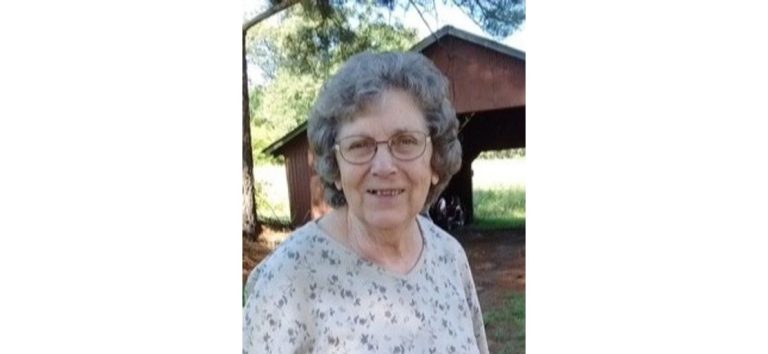
Obituary: Sue Barnett (1935-2024)

Sue Barnett, 89 of Waldron, Arkansas passed from this life Wednesday, December 11, 2024, in Waldron, Arkansas.

Sue was born May 17, 1935, in Hickman, Arkansas (Scott County) to the late Seborn and Lillie (McCormick) Powell. She was married to Arthur Barnett for 57 years where she was a homemaker, avid quilter and seamstress as well as raised beautiful chickens. She was a part of the Greenridge Quilters. Who made lap quilts and quilts for those in need and several charities.

Sue is survived by her son Kerry and wife Cathy Barnett of Waldron, AR. Granddaughter April and husband Jonathan Shockey of Fort Smith, AR. Grandson Derek and wife Krystal Barnett of Waldron, AR. Great grandson Brayden Barnett of Waldron, AR. Sue is also survived by her loving sister Mona Powell of Waldron, AR. Two nieces Kim Hewitt of Waldron, AR and Michele Pyle of Lincoln, AR. Also, brother-in-law Junior and wife Juanita Barnett of Waldron, AR and Sister-in-law Clara House of Waldron, AR. Along with Barnett nieces and nephews: Richard and Danny Barnett, Connie Cox, James House, Steve House, Vicki Richmond, Ann House, Randall and Rudy Barnett. A host of friends and family will greatly miss Sue, as well.

Sue is preceded in death by her father and mother Seborn and Lillie Powell. Her brother Troy Powell. Along with her husband Arthur Barnett and son Emmet Barnett. 

Sue’s funeral service will be 10:00 am Saturday, December 14, 2024, at the Heritage Memorial Funeral Home with Rev. Ricky Hunt and Rev. Konner McKay, officiating. Interment will follow in the Mt. Pleasant Cemetery near Waldron, AR. Arrangements are being entrusted to the Heritage Memorial Funeral Home & Crematory in Waldron, Arkansas.

Her pallbearers will be: Derek Barnett, Jonathan Shockey, Brandon Hewitt, Clayton Owens, Caleb Sherrill and Dalton Dozier. Honorary pallbearers will be: Randall and Rudy Barnett, Mike House, Skyler Hewitt and the Greenridge Quilters.

Sue’s visitation will be 9:00 am Saturday December 14, 2024, at the Heritage Memorial Funeral Home in Waldron, AR. 

Memorial contributions can be made in lieu of flowers to Greenridge Community Building Fund c/o Charlie Moudy 11587 Willow Ridge Rd. Waldron, AR 72958.