90.1 F
Fort Smith
Friday, July 3, 2026
Home Blog Page 154

ASPSF Accepting Applications for Spring 2025 Single Parent Scholarships

Single parent students across the state can now apply for a Spring 2025 Scholarship of up to $1,600 from the nonprofit Arkansas Single Parent Scholarship Fund(ASPSF).

To apply, single parents can go to aspsf.org/applynow and fill out an online form with supporting documentation by Dec. 1.

If awarded, single parents directly receive the financial aid. They can use it to pay for daily household expenses — like child care, groceries, and gas — while going to school. Additionally, ASPSF staff and volunteers provide mentoring, resources, and professional development. 

“This scholarship is making my dreams come true of becoming a special education teacher,” said Fall 2024 Recipient Megan Thiesse who is working on a bachelor’s degree at Arkansas State University. “This program is living proof that single parents can make it. With the right support and the right guidance, anything is possible!”

Megan Thiesse, pictured with her 4-year-old son, has received a scholarship from Arkansas Single Parent Scholarship Fund since the Fall 2023 semester. Thanks to the support, she graduated with her associate degree this summer and now is working on her bachelor’s. She plans to eventually get a master’s degree and become a special education director. (Photo Courtesy ASPSF)

ASPSF accepts scholarship applications three times a year from single parents who are working toward skilled-trade certificates, associate degrees, and bachelor’s degrees that lead to professional careers with family-supporting wages.

Recipients must have a GED or high school diploma but have not yet earned a bachelor’s degree. They must also have a 2.0 GPA and earn medium to low income. A full list of ASPSF’s eligibility guidelines is here: aspsf.org/eligibility.

These scholarships for single parents are made possible thanks to generous donors, organizations, schools, businesses, and foundationswho believe in the incredible power of education. Thanks to community support, ASPSF awarded over 800 scholarships totaling $1.1 million this year.

For more information, contact ASPSF Communications Director Jen Para at jpara@aspsf.org or 501-550-6304.

About Arkansas Single Parent Scholarship Fund: For more than 30 years, Arkansas Single Parent Scholarship Fund has worked to create stronger, more educated, and more self-sufficient families. Through scholarships and services, ASPSF opens doors for low-income single parents, helping them pursue education, secure employment, and transform the future for their families. With the help of volunteers and community support, ASPSF creates multigenerational change, transforming lives for both single parents and their children. For information about scholarships, volunteer opportunities, and ways to give, visit www.aspsf.org.

Arkansas Single Parent Scholarship Fund Fall 2024 recipients from East Arkansas accept their scholarship awards at a ceremony hosted Oct. 2 at Phillips Community College in Helena. (Photo Courtesy ASPSF)

State Capitol Week in Review from Senator Terry Rice

Direct care nurses who work at long-term facilities operated by the state are eligible for a bonus of $5,000. Newly hired nurses are also eligible for bonuses, but the $5,000 would be paid in installments over several months.

The goal is to reduce the state’s use of “travelling” nurses, who are hired through agencies temporarily. Last fiscal year the state paid for about 173,000 hours of contract nursing.

The state Department of Human Services operates the State Hospital in Little Rock for people with mental illness. It also operates the Arkansas Health Center formerly known as the Benton Services Center, a psychiatric nursing home for the elderly and people with disabilities.

The department also operates five Human Development Centers for people with severe intellectual and developmental disabilities. They are in Arkadelphia, Booneville, Bradley County, Conway and Jonesboro. 

Registered nurses and licensed practical nurses will be eligible for bonuses, but certified nurse assistants will not.

The department proposed the bonuses, which were approved by the Personnel Subcommittee of the Legislative Council. The joint Committees on Public Health, Welfare and Labor also reviewed details of the bonus program before it took effect on November 1.

Legislators and DHS officials acknowledged that one-time bonuses would not be an adequate long-term fix for staffing shortages. Higher salaries for nurses at state facilities will be addressed during the 2025 regular session, when legislators consider a new state employee pay plan. The session begins in January.

The state’s top personnel director told lawmakers that nurses’ salaries would be a priority in the pay plan.

In Fiscal Year 2024, which ended on June 30, the state paid contract nurses $4.8 million to work about 70,000 hours at the State Hospital. The state paid $3.2 million for 50,000 hours of nursing at the Arkansas Health Center and $3.24 million for 53,000 hours at human development centers. However, the center at Booneville did not require the use of any contract nurses. In comparison, the cost of bonuses to full-time nurses will total $1.26 million, department officials said.

Legislators have heard from family members of clients at the human development centers about the use of contract nurses. No legislator voiced concerns about the quality of care provided by travelling nurses, but several said that full-time nurses could get to know better the long-term needs of clients. Thus, permanent nurses could provide better care simply by providing continuity of care.

In trying to make salaries of full-time state nurses competitive with travelling nurses, the department doesn’t have to match salaries dollar for dollar. That’s because the state doesn’t have to pay for fringe benefits for travelling nurses. The value of fringe benefits provides an additional 30 to 32 percent to the compensation paid to state nurses, a department official said.

The fringe benefits brings state nurse salaries closer to a competitive level. Recently, the department re-hired seven nurses who had gone to work for contract nursing agencies.

State facilities will probably continue to rely on contract nurses, if at reduced levels, in order to maintain staffing levels. Long-term care facilities must have available a certain number of nurses per client, to be licensed and to qualify for federal funding.  

Timepiece: The Steamboat

By Dr. Curtis Varnell

For much of Arkansas’s early history, roads were abysmal. Travelers’ found roads that consisted of no more than wagon tracks through the forests and marshes. Tree stumps, cut just below what was thought to be the height of wagon axles, dotted the roadways. During the rainy season, the roads became impassible quagmires of mud and swollen streams provided obstacles that the hardiest of travelers found impossible to traverse. The steamboat, an oft forgotten part of our past, became the most important means of transportation for the state.

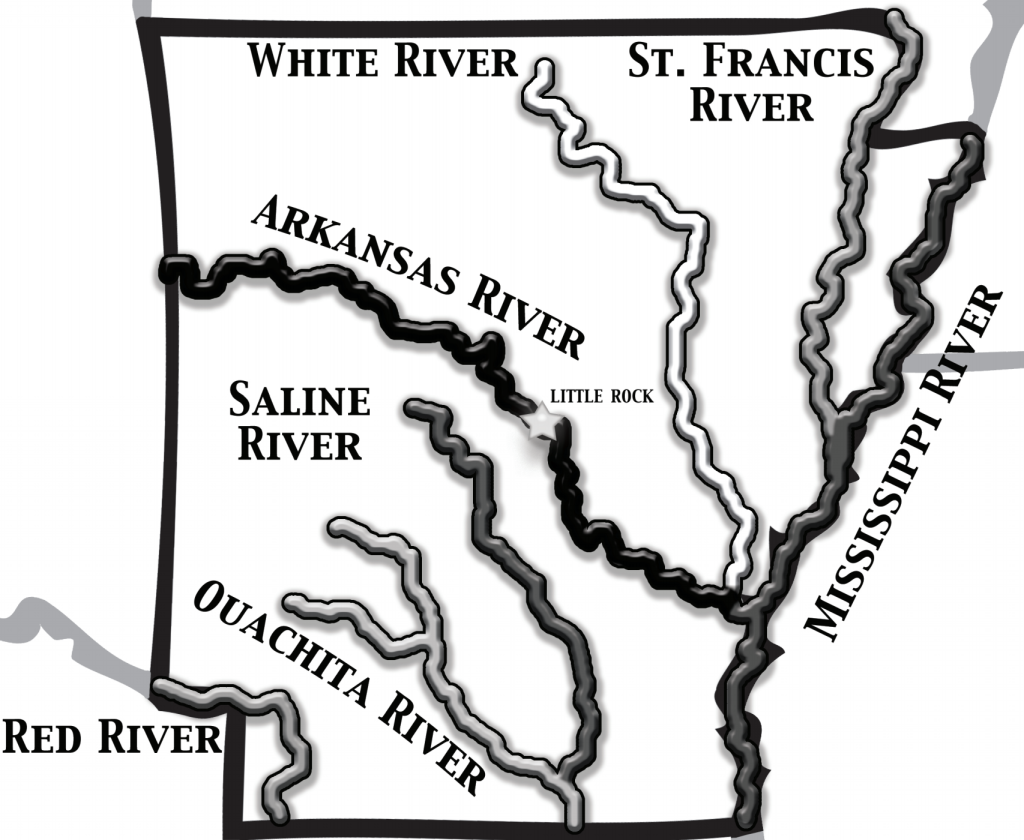
Everyone remembers studying the miraculous invention of the steamboat by Robert Fulton in 1807 but few realize how rapidly this mode of travel became of importance to the U.S. expansion to the west. Within years, steamboats plied the Ohio and Mississippi River, carrying every imaginable good to the frontier. Arkansas towns along the Mississippi were a part of that trade. In 1820, the Comet made stops at Arkansas Post on its way to New Orleans. Two years later, the Eagle steamed by Little Rock on its way up the Arkansas River to Dwight Mission near present day Russellville. Later that year, the Robert Thompson was able to steam all the way to the Arkansas border at Fort Smith.

The original steamboat, as developed by Fulton, required too much depth of water to navigate on most of the rivers in Arkansas. Henry Shreve, more famous for clearing the Red River of the its raft of fallen timber, engineered a boat with such shallow draft it was said to be able to traverse water less than a foot and a half deep. The typical Arkansas steamboat was long and narrow, not much different than a keel boat with an engine. The hull of the boat was virtually flat and contained little or no cargo. Decks or cabins were stacked above the hull with the first deck containing the engines and boilers. Looking little like the romantic boats depicted in history, cargo was stacked on the main deck. The passengers’ cabin and a kitchen was on deck two, and the pilot’s quarters sat above that. Many of the boats had hulls wrapped with iron bands which helped to hold the boat together when it encountered snags or rocks. The average life-span for an Arkansas river boat was five years.

Smaller versions of the steamboat steamed up the Ouachita, the Black, and even the Buffalo River but most could operate only a few months during the high-water stages. The Arkansas River could not be traversed above Dardanelle for a big portion of the year. Journals from the Trail of Tears years of the 1830’s describe passengers debarked from boats west of Conway and forced to walk for miles along the riverbank until sand-bars and rapids were traversed. Rivers constantly changed course, sand bars developed, and tree snags often blocked passage. In 1874, the Trader travelled far up the river to Batesville. Realizing the water was too shallow to proceed, the pilot turned his boat downstream and tied up to a tree for the night. The river dropped even more during the night and he found himself fifteen feet from the water line the next morning. His boat remained stranded for thirteen months before the river flow became great enough to travel again. Even more dangerous than the physical hazards were the steam explosions that could occur when the boilers became encrusted with mud and erupted, destroying the boat and many of its passengers. The Sultana explosion of 1865 is said to have killed more than 1,500 men returning from Civil War prison camps. The river boat captains that could avoid these hazards were revered. Mark Twain, a famous steamboat captain himself, stated “a pilot has to know the river with such absolute certainty that he could steer by reading the picture in his head rather than the one before his eyes.”

Steamboats opened up Arkansas to the world. The whistle of the steamboat as it approached shore was an anticipated event and everyone in the community would stand and await the boat’s arrival. The boats provided the means for farmers to deliver cotton, corn, wheat, and livestock to outside markets. Steamboats, running on regular schedules, delivered passengers, mail, and luxury goods such as piano’s, fancy dinnerware, and furniture to those wealthy enough to purchase the goods. For more than seventy-five years, the steamboat was the driving force behind the economic and cultural growth of the state. After the Civil War, railroads boomed and, just as quickly as they arrived, the steamboat disappeared. The paddles no longer turn, the whistles sound no more, and the days of the steamboats are part of a forgotten past.

Budgeting Tips for Holiday Shopping

November ushers in the official holiday shopping season, and Arvest Bank is sharing tips to help shoppers get the most out of their shopping budgets.

The National Retail Federation expects 2024 holiday spending to grow between 2.5% and 3.5%from last year, which equates to nearly $989 billion in expected holiday spending. At the same time, a recent holiday spending report from NerdWallet shows that 28% of holiday shoppers who used credit cards last year are still paying off those purchases.

“It’s easy to find yourself using a credit card more during the holidays, especially if you’re wanting to take advantage of a rewards program or additional discounts,” said Jeannette Pham, Sales Coordinator with Arvest Bank – Fort Smith Region. “Whether you’re using cash or a credit card, creating a budget is key to not overspending and could reduce additional stress during the holiday season.”

Pham shares these tips to help shoppers spend wisely.

Create a Budget Per Person
While you may create an overall budget for gifts, plan out who you’re buying gifts for and set a budget for each person. For example, you might get your parents a large, joint gift but buy separate, smaller gifts for friends or siblings.

Start Shopping Early to Find Deals
With shipping delays and other issues, there’s no time like the present to start choosing and buying holiday gifts. Some retail companies offer premium subscriptions that give you access to fast, free shipping along with special deals and early access to sales. Many retailers also offer sales leading up to Black Friday and the holidays, so keep an eye out for and take advantage of those sales.

Compare Prices Before Making a Final Purchase
If you’ve started early, then you have time to compare prices before you make the purchase. Many online retailers have price comparison apps to help you find the best deals. Google also allows you to track the price of items over time. Also, don’t be afraid to ask for a price match.

Take a Break if You Start Browsing for Yourself
When seeking out deals, it can be tempting to find something you want for yourself. Remember to stick to your list. If you feel tempted to add something for yourself to your cart, take a break from shopping, whether it’s stepping out of the store, setting your phone or tablet down or closing your laptop.

Stay Alert for Fraud
Avoid fraud by monitoring your purchases frequently, only using secure websites when shopping online and setting up alerts so you know when purchases are made using your credit or debit card. Many financial institutions offer fraud protection programs. At Arvest, we offer ID Protect with certain account types for an added layer of protection. Using a credit card instead of your debit card can also be a good way to protect your bank accounts during your holiday shopping.

Keep an Eye on Your Credit Card Spending
If you’re using a credit card along with money from your checking or savings account, don’t forget to include it as part of your spending budget. Here are some other credit card tips to consider:
● Use a separate credit card outside of your normal card and set an alert to notify you when you hit a certain balance.● Consider budgeting to pay off your credit card balance so you avoid paying interest.● Make payments on time to avoid late fees and keep any introductory rates.

It’s Not Too Early to Plan for 2025
You might want to start planning for 2025 now. Setting up a recurring, automatic transfer from your checking account to your savings account is one of the easiest ways to do this. You can also set the transfer amount and frequency (monthly, weekly, or per pay period).

New partnership heats up wildlife habitat enhancement in Arkansas

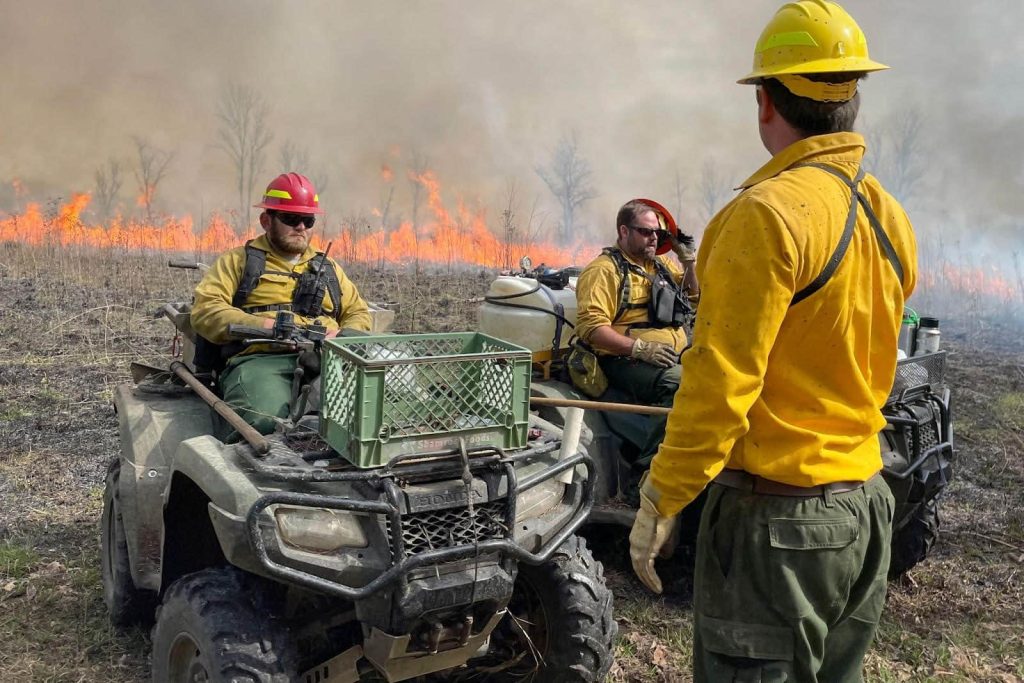
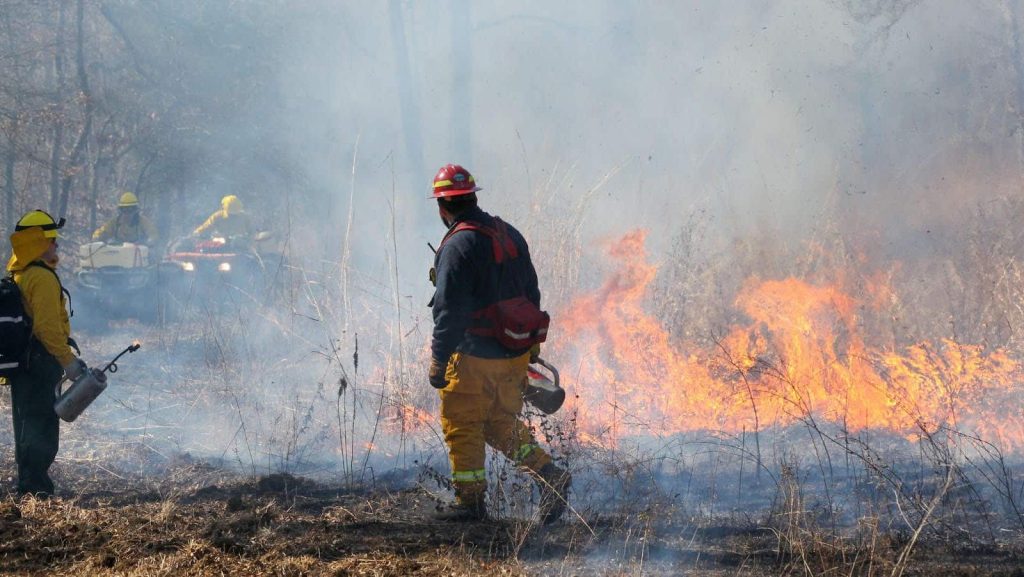
Properly conducted prescribed burns take teams of trained individuals, which is where prescribed burn associations help. AGFC photo. 
By Randy Zellers

The newly formed Arkansas Prescribed Burn Association held their first meeting in mid-October, marking a new era for habitat enhancement throughout The Natural State.

It may seem odd to talk about setting fires for habitat management while the state is in the midst of a burn ban-inducing drought, but prescribed burns are one of the best ways to combat the wildfires that have county judges concerned.

“Properly planned prescribed burns reduce the fuel load which can lessen or even eliminate wildfires,” Thomas Baldridge, one of the APBA’s three directors, said. “But that’s only part of the benefit of prescribed fire. It’s the number one tool available to land managers to increase wildlife habitat for turkeys, quail, deer and all sorts of other species.”

According to a recent study conducted by Kenneth Rosenberg and highlighted by the National Audubon Society, North American bird populations have declined by more than 2.9 billion birds in the last 50 years, and the loss of grassland habitat is one of the largest contributors to that loss. Fire helps open up dense underbrush to promote seed-producing grasses and forbs that are beneficial to grassland species on a year-round basis.

AGFC staff often work with prescribed burn associations, training and coordinating activities for maximum wildlife habitat benefit. AGFC photo.

Instead of manipulating land through dirt work or planting food plots, many landowners can turn the tide on the loss of wildlife habitat with the proper use of prescribed fire.

“Fire provides the best return for the least amount of cost, and depending on how and when you conduct the fire, it can promote a variety of plant species that benefit wildlife in different ways,” Randy Brents, assistant chief of the AGFC’s Private Lands Habitat Division, said. “AGFC private lands biologists and wildlife management biologists have been working for decades to put more fire on the landscape to increase habitat for game and nongame wildlife. Last year, our staff burned 18,903 acres on private land and WMAs and assisted partner agencies in burning 28,702 more acres.  Prescribed burn associations are the way to increase those numbers exponentially.”

Baldridge says the formation of the APBA was a natural evolution to what the AGFC and other partnering organizations had been standing up during the last few years.

“The AGFC started building prescribed burn associations a few years ago, and most of our members have been fortunate to have worked with many of the staff from the AGFC, Quail Forever and the U.S. Fish and Wildlife Service on burns and other private land habitat projects. The APBA just sort of seemed to be a missing piece to the puzzle that was already being put together,” Baldridge said.

The APBA works as an umbrella organization, recruiting and maintaining new groups of landowners to conduct prescribed burns throughout the state. Hunter Johnson from Des Arc and Catrina Mendoza from Searcy share director duties with Baldridge, who also lives in Searcy.

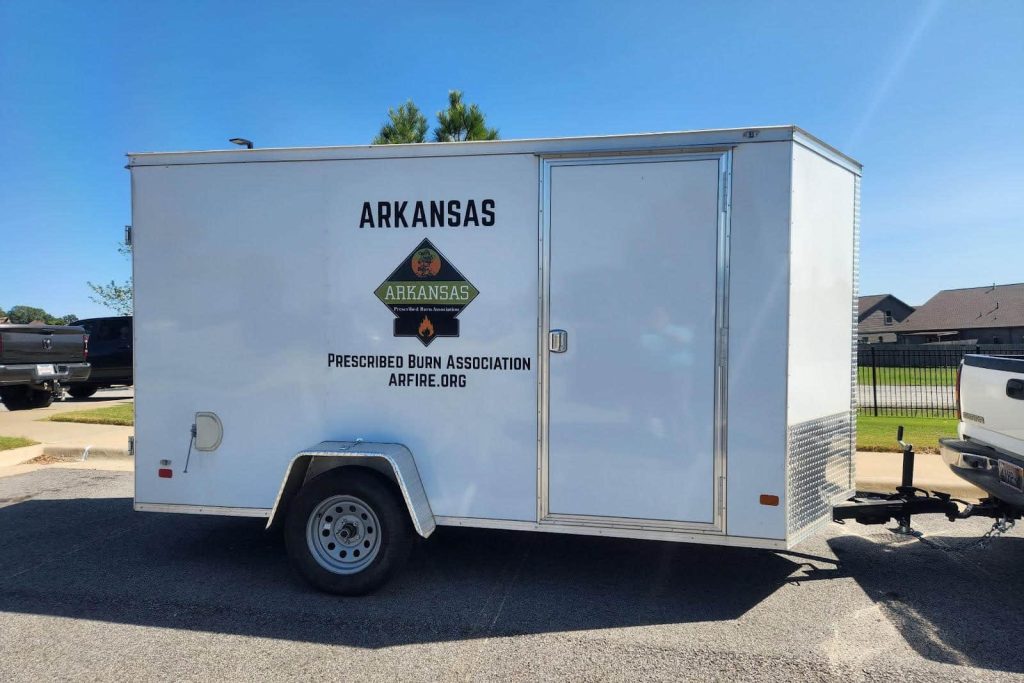
Nine previously formed PBAs attended the first meeting of the Arkansas Prescribed Burn Association, each with trailers and equipment to be used for wildlife habitat improvements through fire. AGFC photo.

“We had nine previously existing prescribed burn associations show up to our first meeting, and we’re looking for ways to reach out to new groups of landowners and build this into something large enough to really make a difference on Arkansas’s landscape.

Baldridge says the APBA used states like Oklahoma and Florida as templates to follow in their formation. “Oklahoma really sets the standard for a statewide prescribed burn association. They’ve grown to a massive organization with a budget over $1 million and eight full-time staff members to support all of their chapters.”

The AGFC, Arkansas Game and Fish Foundation, USFWS and Quail Forever all pitched in to help the new association build a firm foundation. The AGFC granted the organization $25,000 and USFWS gave it $50,000, and Quail Forever provided $17,000 derived from its specialty license plate sales. Baldridge says trailers, safety gear and other prescribed burn necessities also were donated to the APBA, increasing its startup assistance to more than $200,000 in funding and equipment. Since the organization is entirely volunteer-based, all of this funding is put directly into putting prescribed fire on the landscape.

Prescribed burns are the best and most economical way to create more food and cover for northern bobwhite, turkeys, deer and a host of other upland wildlife species.

“Quail Forever and AGFC had procured the trailers and equipment to help work with prescribed burn associations in the state, so transferring them to us was a natural next step,” Baldridge said.

Equipment to conduct prescribed burns is one of the benefits of joining a prescribed burn association. Drip torches, fire rakes, leaf blowers and other accessories can build up quite a bill for a landowner to only use once every two or three years, so sharing the equipment removes one of the barriers some people have to building better habitat.

“The other huge benefit of a prescribed burn association is personnel,” Baldridge said. “Someone may have a few hundred acres to burn, but they need a small group of people to conduct it safely,” Baldridge said. “By joining a PBA, everyone pitches in to help everyone else in the group.”

Visit www.arfire.org for more information about the APBA and to learn how to set up a new prescribed burn association in your area.

Three Dead, One Critically Injured in Greenwood House Fire

Greenwood, AR (October 30, 2024): Two Greenwood School District students and their mother are dead after a residential structure fire broke out shortly after midnight on October 30, 2024. Daniel Isaiah Arrington, 18, Vivian Medrano, 5, and their mother, Wendy Medrano, 46, all perished in the fire. One other occupant of the residence is critically injured and currently hospitalized.

While firefighters battled multiple unrelated fires throughout the day on Tuesday, crews responded shortly after midnight to a residential fire in the 1000 block of East Hickory Street in Greenwood. Police and firefighters worked tirelessly throughout the night into the morning hours to combat the fully engulfed house.

In accordance with Arkansas law, the victims’ bodies have been sent to the Arkansas State Crime Laboratory for identification verification. The official cause of the fire remains unknown, but the Greenwood Police Department alongside fire investigators will continue to investigate this tragic incident and will provide updates as they become available.

We extend our gratitude to the neighbors who initially responded to the fire, as well as to the Greenwood Fire Department, the Fort Smith Fire Department, and all first responders who worked diligently during this emergency.

Free youth deer tags available at AGFC.com

Arkansas’s annual Special Youth Modern Gun Deer Hunt dates are Nov. 2-3 and Jan. 4-5 statewide. AGFC photo. 


By Randy Zellers

The first segment of the 2024-25 Arkansas youth deer hunting season runs Nov. 2-3, and many young guns will be celebrating their first deer hunting trip, first deer of the season and the beginning of their conservation journey as a hunter. Make sure they have all the tools for success, including the deer tags they will need to use to check their harvest with the Arkansas Game and Fish Commission.

Hunters aged 6 to 15 will be required to have a set of deer tags loaded to their license account while deer hunting this year. The tags are completely free, and are simply an extension of previous checking requirements to help gauge the number of youth hunters participating in deer hunting and their overall success rate.

“The renewable Youth Customer Identification Number that was used last year was essentially the same thing as deer tags, but it counted all youth hunters applying for any hunts as possible deer hunters,” Kyle Curry, AGFC assistant chief of information technology, said. “By setting up these free Youth Deer Tags, we’re able to get more reliable data on our young hunters and hopefully clarify things for all hunters in the long run, because the process to check a deer will be the same for youths as it is for adult hunters.”

To obtain youth deer tags, your youth hunter will need to have their own account in the AGFC licensing system. Visit www.agfc.com and click “Get a License” on the top right hand corner of the website. Youth licensing options only appear under youth accounts, so if your youth hunter already has an account from previous years, be sure to sign in under their account. If you’ve never set up an account for your new hunter, click the “Create an Account” button to set them up. Their free deer tags will be listed under the Hunting section of the license system and will have the license code #YDT for residents and #YDTN for non-residents.

If you use the AGFC smartphone app, be sure to log out of your name and log into the youth’s account to obtain and use the youth’s deer tags.

Once their deer tags are obtained, youths will check their harvest just like adults. They may use the mobile app, www.agfc.com or call 833-289-2469 to check their deer at the location of harvest, and as long as their deer remains within their immediate vicinity until it is home, it does not need to be tagged with a physical tag. If you are unable to immediately check your deer through one of the three options (app, website or phone), you must place a temporary physical tag on the deer indicating the hunter’s name, customer identification number, date, time, zone or WMA of harvest and the method they used. This paper tag must stay with the deer until it is checked. Hunters have 12 hours after the time of harvest to check their deer.

If a checked deer is going to go to a processor, taxidermist or will be at a deer camp or other location outside of the hunter’s immediate vicinity, the hunter must attach a paper tag to identify it as theirs. This tag should indicate the above data as well as the check confirmation number they receive once they finish checking their deer.

Visit www.agfc.com/deer for more information on deer hunting in Arkansas, including a complete list of season dates and bag limits throughout the state.

Visit https://ar-licensing.s3licensing.com to get your free youth deer tags or to check your harvest.

Obituary: Michael Scantling (1988-2024)

Michael John Scantling of Waldron, Arkansas embarked on his heavenly journey, Saturday, October 26, 2024, in Fayetteville, Arkansas enveloped by the unwavering love of his family. Born December 28, 1988, in Fort Smith, Arkansas to Ron and Lisa Scantling, Michael’s life shone brightly for 35 remarkable years.

Michael, a master mechanic trained by his grandfather Robert Newman, had an incredible ability to fix anything, driven by his dedication to supporting others. As a loving husband, father, son, brother and uncle, Michael cherished his family, finding joy in creating lasting memories. With a heart over flowing with love, he was a guiding light touching countless lives through his generosity and care.

Michael leaves behind to cherish his memory, his loving wife, Lindsey, his children: Haven, Zayden and Rhorie Jean all of Waldron, his parents, Ron and Lisa Scantling of Waldron and his siblings Danielle Meyer of Van Buren and Ronnie Scantling of Van Buren. Michael is survived by his mother-in-law Denise Sims, father-in-law Heath Wright Sr., grandmother-in-law Debra McKinney, brother-in-law Heath Wright Jr. and wife Amanda, sister-in-law Shelly and Mikey Hamm, Aunt Debbie Eaves, Aunt Laura Emhoolah as well as his nieces and nephews: Logan, Ashlyn, and Talon Chronister, Avery and Addalynn Hamm, Porsche, Chase and Naomi Scantling. Michael’s cousins: Jeremy and Jesse Eaves, Lorri, Burke, and Melanie Thorpe, little Leonard and Bobby Scantling, Jennifer Valdez, Anita, Nikita, Chelsea and Darren Mckiski have fond memories to last forever. Michael will be missed by all that knew him and the many whose lives he impacted including special friends, Felicia Jett, Sarah Cox, Morgan Barker, Debbie Owens and Lyndy Woodard, a host of extended family and friends dear to his heart.

Michael was preceded in death by his grandparents: Robert and Willie Jane Newman, Bob and Zola Scantling, grandmother, Dolly Scantling Fields, great grandparents: Orville and Etta Newman, father-in-law Stanley Sims, Aunt Delores Scantling, Uncles: Rory Scantling and Steve Eaves.

Michael’s life celebration will be 2:00 p.m., Wednesday, October 30, 2024 at the Heritage Memorial Funeral Home Chapel in Waldron, Arkansas with Travis May officiating. Interment will follow in the Center Point Cemetery in Hon, Arkansas. Arrangements are being entrusted to the Heritage Memorial Funeral Home in Waldron, Arkansas.

Michael’s pallbearers will be Jong Yang, Morgan Barker, Keith Vorpagel, Drake Williams, Talon Chronister, Logan Chronister, Heath Wright Jr., Jesse Eaves and Jeremy Eaves. Honorary pallbearers will be Haven Scantling, Zayden Scantling, Mikey Hamm, Christian Massey, Kevin Truont and Timmy Tran. 

Michael’s visitation will be Tuesday, October 29, 2024, from 4:00 p.m. until 6:00 p.m. at the Heritage Memorial Funeral Home Chapel in Waldron, Arkansas.

Arrest Reports 10/20

Arresting agency – Arkansas State Police Troop H:
Abigail Ruth Baird of Paris was booked into the Sebastian County Detention Center on October 25 at 4:07 p.m. and remains at the SCADC without bond. Baird was charged with Failure to Appear – Class B Misdemeanor and Assist Outside Agency-Misd.

Karma Christine Jones of Greenwood was booked into the Sebastian County Detention Center on October 24 at 6:50 p.m. and released on legally sufficient bond October 25 at 1:10 p.m. Jones was charged with DWI I – Drugs Misdemeanor, Criminal Mischief in the Second Degree > $1,000 but < $5,000, Refusal to Submit to Arrest Misdemeanor.

Arresting agency – Sebastian County Sheriff’s Office:
Benjamin Levi Black of Huntington was booked into the Sebastian County Detention Center on October 23 at 4:15 p.m. and remains at the SCADC without bond. Black was charged with Petition to show cause, Petition to Revoke – Felony, and Reckless Burning-destroys/damaged structure of another person.

Darion Terrence Brumfield of Greenwood was booked into the Sebastian County Detention Center on October 23 at 12:26 p.m. and released on legally sufficient bond October 23 at 4:32 p.m. Brumfield was charged with Violation of a Protection Order Misdemeanor.

Carl James Chapman of Huntington was booked into the Sebastian County Detention Center on October 25 at 11:28 p.m. and remains at the SCADC without bond. Chapman was charged with Assist Outside Agency-Misd., Assault on Family or Terroristic Threatening in the First Degree, Household Member-2nd Degree, and three counts of Endangering the Welfare of a Minor in the Third Degree.

Katharina Alethea Cook of Greenwood was booked into the Sebastian County Detention Center on October 20 at 2:54 a.m. and released on legally sufficient bond October 20 at 12:09 p.m. Cook was charged with Domestic Battering in the Third Degree – Purposely.

Oliver Phillip Frith, Junior of Booneville was booked into the Sebastian County Detention Center on October 23 at 1:56 a.m. and released on signature bond October 23 at 9:09 a.m. Frith was charged with Contempt-willful disobedience (Failure to Pay Fine).

Thomas Benjamin Meeker of Greenwood was booked into the Sebastian County Detention Center on October 26 at 12:42 p.m. Meeker was charged with Fugitive from Justice Out of State.

Jason M Mosley of Paris was booked into the Sebastian County Detention Center on October 23 at 10:07 p.m. and released on cash bond October 24 at 4:54 p.m. Mosley was charged with Failure to Appear – Class C Misdemeanor.

Luke James Phillips of Subiaco was booked into the Sebastian County Detention Center on October 22 at 11:40 p.m. and released on cash bond October 23 at 7:49 a.m. Phillips was charged with Petition to Revoke – Felony.

Aaron Alan Pierce of Lavaca was booked into the Sebastian County Detention Center on October 25 at 3:14 p.m. and released on legally sufficient bond October 25 at 3:53 p.m. Pierce was charged with Domestic Battering in the Third Degree – Purposely.

Mark Sanders of Lavaca was booked into the Sebastian County Detention Center on October 25 at 11:31 p.m. and released on signature bond October 28 at 11:41 p.m. Sanders was charged with DWI I – Drugs Misdemeanor.

Brandon Shane Townsend of Huntington was booked into the Sebastian County Detention Center on October 25 at 5:28 p.m. Townsend was charged with Fugitive from Justice Out of State.

Arresting agency – Hartford Police Department:
Jacob Nathaniel Bowman of Hartford was booked into the Sebastian County Detention Center on October 24 at 6:24 p.m. and remains at the SCADC without bond. Bowman was charged with Fleeing -Vehicle, and parole violation.

Arresting agency – Fort Smith Police Department:
Tyler Lane Chappell of Mansfield was booked into the Sebastian County Detention Center on October 25 at 11:25 p.m. and released on signature bond October 26 at 5:18 a.m. Chappell was charged with Contempt-willful disobedience (Failure to Pay Fine).

Jeremiah Luke Edwards of Greenwood was booked into the Sebastian County Detention Center on October 22 at 5:45 p.m. and released on time served October 24 at 1:32 p.m. Edwards was charged with Contempt-willful disobedience (Failure to Pay Fine).

Arresting agency – Lavaca Police Department:
Draper Gene Crone of Lavaca was booked into the Sebastian County Detention Center on October 20 at 10:29 a.m. and released on signature bond October 20 at 12:26 p.m. Crone was charged with Contempt-willful disobedience (Failure to Pay Fine).

James Anthony Miller of Lavaca was booked into the Sebastian County Detention Center on October 20 at 8:54 p.m. and transferred to an outside agency on October 24 at 4:53 p.m. Miller was charged with Contempt-willful disobedience (Failure to Pay Fine), Failure to Appear – Class B Misdemeanor, and Assist Outside Agency-Misd.

Arresting agency – Bonanza Police Department:
Delapaz, Steven Wayne of Hackett was booked into the Sebastian County Detention Center on October 20 at 11:33 p.m. and released on October 23 at 11:11 p.m. Delapaz was charged with Possession of Drug Paraphernalia – Misdemeanor.

Arresting agency – Greenwood Police Department:
Sylus Hardin of Greenwood was booked into the Sebastian County Detention Center on October 24 at 6:25 p.m. and released on time served October 29 at 1:17 a.m. Hardin was charged with two counts of Criminal Trespass – Premises, and Disorderly Conduct – Disrupt Assembly.

Jason Neil Vines of Greenwood was booked into the Sebastian County Detention Center on October 26 at 10:52 p.m. and remains at the SCADC without bond. Vines was charged with two counts of aggravated assault.

Arresting agency – Logan County Sheriff’s Office:
Nathan Rios, 31 of Paris, was booked into the Logan County Detention Center on October 22 at 4:19 p.m. Rios was charged with body attachment, failure to appear, residential burglary, and theft of property.

James Emberson, 63, was booked into the Logan County Detention Center on October 25 at 12 p.m. Emberson was charged with probation violation.

Dustin Mayer, 40, was booked into the Logan County Detention Center on October 25 at 12:19 p.m. Mayer was charged with two counts of failure to appear.

Horrace Smith, 46 of Fort Smith, was booked into the Logan County Detention Center on October 25 at 1:19 p.m. Smith was charged with failure to appear.

Arresting agency – Franklin County Sheriff’s Office:
Heath Ian Dollar, 35 of Russellville, was booked into the Franklin County Detention Center on October 21 at 6:50 a.m. Dollar was charged with failure to appear on unclassified misdemeanor (FTA).

Michael Earl, 66 of Fort Worth, TX, was booked into the Franklin County Detention Center on October 22 at 8:32 p.m. Earl was charged with failure to register – failure to comply with reporting requirements.

Christopher Dale Nelms, 49 of Ozark, was booked into the Franklin County Detention Center on October 23 at 2:30 p.m. Nelms was sentenced to days.

**The charges against those arrested are allegations and the cases are still pending in the courts.**


Man Arrested, Charged with Rape

The Greenwood Police Department announced on Tuesday morning, October 29, that a rape suspect had been taken into custody in a joint effort with the 12th/21st drug task force and the Arkansas State Police.

According to the announcement by their office, the arrest warrant was issued following a thorough investigation by the Greenwood Criminal Investigation Division.

That suspect, David John Vaughn, 36 of Van Buren, was booked into the Sebastian County Detention Center at 9:35 a.m. Vaughn is currently being held on a $250,000 bond at the Sebastian County Detention Center. He has been charged with rape – forcible compulsion, a class Y felony and as a habitual offender.

Vaughn’s court date is set for Wednesday, November 6 in a Fort Smith Circuit Court.