

62.3 F
Fort Smith
Tuesday, May 12, 2026
Home Blog Page 157

Get it Before it’s Gone! Bigfoot Returns to Save Lives!

The legend returns! Our Blood Institute’s popular Bigfoot shirt is back with a new summer twist. Save lives by giving blood with OBI to get Bigfoot’s shirt before it’s gone! Who knows when Bigfoot will be spotted again.

Our Blood Institute (OBI) will host the Lavaca Community Blood Drive on Thursday, August 15, from 4 p.m. to 7 p.m. on the bloodmobile parked at Steffy’s Pizza.

Successful donors will receive a free Bigfoot Returns T-shirt and choice of one free entry to Magic Springs Theme Park and Water Park, Frontier City or Six Flags Hurricane Harbor.

“You may be ready for some fun in the sun this summer, but accidents still happen,” said Dr. John Armitage, president and CEO of Our Blood Institute. “Your blood donation can save the lives of up to three people and is essential in keeping up the blood supply in your local hospitals. We are extremely thankful for our partnerships with Magic Springs Theme Park and Water Park, Frontier City and Hurricane Harbor for recognizing the importance of blood donations in our community.”

When you visit Magic Springs Theme Park and Water Park, you get two parks for the price of one! Immerse yourself in over 80 attractions including Arkansas Twister roller coaster and thrill rides such as Plummet Summit and The Gauntlet. When you’re ready to cool off, head over to Crystal Falls to take a dip in the pool and action-packed water slides. There’s something for everyone at Magic Springs.

There’s no shortage of fun at OKC’s Frontier City Theme Park! Experience thrilling coasters, dining, shopping, attractions and more for kids, adults and everyone in between! Adrenaline junkies won’t resist taking a ride on the classic Wildcat wooden roller coaster or the Silver Bullet’s high-speeds coaster. Not one for thrill rides? Take a ride around the Grand Centennial Ferris Wheel or drive back in time with Tin Lizzy’s electric-powered, antique cars. 

Looking to cool off as the season heats up? Look no further than Six Flags Hurricane Harbor for pulse-pounding water slides, relaxing lazy rivers and family-friendly play areas. There’s something for the whole family at Hurricane Harbor!

Every two seconds, someone needs blood, and the supply must be constantly renewed. It takes approximately 1,200 donors a day to meet those needs.

Anyone who is healthy and 16 years old* or older can give blood. Appointments to donate can be made online at obi.org or by calling 877-340-8777. Walk-ins are also welcome. 

*16-year-olds must weigh at least 125 pounds and provide signed parental permission; 17-year-olds must weigh at least 125 pounds; 18+ year olds must weigh at least 110 pounds. Photo ID required. 

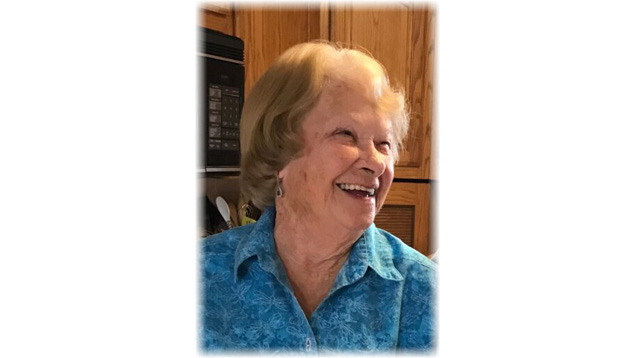
Obituary: Patsy Sehorn (1940-2024)


Patsy L. Sehorn of Waldron, Arkansas passed from this life on July 31, 2024 in Waldron, Arkansas. Patsy was born August 25, 1940 in Waldron, Arkansas around the Lamb community. She was 83 years old.

Patsy was a hard worker and took care of the family home and farm. She loved her horses, camping with friends and family, dancing and she especially enjoyed learning about family history.

Patsy leaves behind to cherish her memory, her loving husband Richard of the home,

one daughter Simone Ray of Waldron, Arkansas, and step children Dana Shanks of Joplin, Missouri and Richard Allen Sehorn of Edmond, Oklahoma. Patsy is also survived by one brother in law Raymond Sehorn of Van Buren, Arkansas. Patsy will be missed by all that knew her and the many whose lives she impacted including a host of extended family, friends and loved ones dear to her heart.

Patsy is preceded in death by her parents: Ellis Lovett, Dessie Mae Lovett Crain and Hershel Crain as well as one daughter Shannon Ray, one brother Dewey Lovett Crain.

A private memorial will be held at a later date. Arrangements and cremation are being entrusted to the Heritage Memorial Funeral Home & Crematory in Waldron, Arkansas.

Show Your Support for Waldron First Responders by Giving Blood at a Boots & Badges Blood Drive! August 15

Roll up your sleeve and support your local first responders by giving blood with Our Blood Institute at a local Boots & Badges blood drive!

Our Blood Institute (OBI) will host the Waldron Boots and Badges Blood Drive on Thursday, August 15, from 2:30 p.m. to 6 pm at the First Baptist Church Fellowship Hall.  With your blood donation you’ll receive a free entry to Magic Springs Theme Park and Water Park in Hot Springs, AR.

Successful donors will also receive a limited-edition Boots & Badges T-shirt, while supplies last.*

“Our first responders see the daily need for blood first-hand when the people they rescue require life-saving treatment,” said Dr. John Armitage, president & CEO of Our Blood Institute. “We can’t say enough about the service our police, fire and EMSA provide, and we owe it to them to do our part in making sure blood is available in emergency situations.”

Anyone who is healthy and 16 years old* or older can give blood. Blood can be donated every 56 days and platelets can be given as often as every seven days, up to 24 times a year.

Appointments to donate can be made online at obi.org or by calling 877-340-8777. 

*16-year-olds must weigh at least 125 pounds and provide signed parental permission; 17-year-olds must weigh at least 125 pounds; 18+ year-olds must weigh at least 110 pounds. Photo ID required.

Sebastian County added to Arkansas Quilt Trail

The South Sebastian County Historical Society is excited to announce that our county has been added to Arkansas Quilt Trails.

Quilters Judy Dedmon and Jennifer Cook made the addition a reality. A tour of the trail will be a fun activity for visitors to our annual Airing of the Quilts quilt show and will draw visitors to our county.

Classes will be offered to the community so individuals and businesses can create their own barn quilts. 

There are three barn quilts at the Old Jail Museum. Follow the link to see Sebastian County’s entries:

Enter Trail #24, the Sebastian County Quilt Trail – Arkansas Quilt Trails

Silvey Solutions – It’s All in the Details

It’s a rare occasion to witness a young prodigy excel in their field. Even more so, one whom has achieved adult-level skills early on in life. For Mansfield’s Colton Silvey, that is the end result of self-discipline, determination, ambition, and hard work.

At the age of 21, Silvey has already achieved milestones that most spend a lifetime pursuing. He is the oldest son of local business owners, Shawn and Amy Silvey, and the grandson of Ronnie and Carla Silvey. The family legacy courses through the young man’s veins, incorporating classic and modern Corvettes, maintenance, restoration, as well as a new automotive detail product line.

A young Silvey pictured with his grandfather while the pair worked to restore the 1968 Corvette.

Silvey’s early passion was chronicled in an article released in a National Corvette Restorers Society (NCRS) magazine in 2023:
“My love for Corvettes started at a very young age when my grandparents brought me a tee shirt from the National Corvette Museum that read, ‘When I Grow Up… I’m Driving a Corvette… LOOK OUT!’ I was six years old at the time, and I fell in love with the red C6 on the shirt. By the time I was 10, my grandfather Ronnie Silvey decided to restore the 1968 Corvette that he had bought in 1970 when he was 20 years old. The car had the same blue and white paint scheme, white top, black interior, and manual transmission that’s on it today. I remember helping him with the car. When I turned 14, my grandfather and I began restoration of a 1976 Corvette that he had bought at an auction. We spent the next few summers on that car, doing everything ourselves: interior, engine, and chassis. We did all the body work together, and my father painted the car. When we had finished, my grandpa gave me the keys and said that it was mine. I will always cherish the hours he and I have spent on Corvettes.”

At the age of six, Silvey’s grandparents gifted him a tee shirt from the National Corvette Museum that read, “When I Grow Up… I’m Driving a Corvette… LOOK OUT!”

Silvey would join the National Corvette Restorers Society (NCRS) with a set goal–to have a Top Flight and McLellan Award-winning car.

In order to fund that goal, Silvey would begin work at his own detailing and restoration business. “…I started saving money. At the age of 15, I started a detailing and restoration business that has given new life to many vehicles over the years. Many people that know me will say that I have the highest standard around for automobile cleanliness. And if you’ve ever seen my own car, you would probably agree; that’s just what I do.”

In 2021, Silvey graduated from Mansfield High School and enrolled at the University of Arkansas in the fall to study electrical engineering. “A week before college began, I found a 1988 35th Anniversary Corvette for sale on Facebook Marketplace,” continued Silvey. “Since I was already an NCRS member, I knew that there was something special about this car. I told my mom that I would really like the car, and she urged me to message the seller. She said that it would be a great way to build my credit score. I debated on it for hours and finally sent the seller an offer. To my surprise it was accepted. We picked up the car that weekend.”

Once he got the car home, the labor of love began. He ordered the NCRS 1987-1989 judging guide and began going through the car using the manual. “I quickly realized that this car was way more original than I thought and reached out to several members asking how to get a car judged. I spent the next year between college work and detailing the ’88 for NCRS judging. I remanufactured a set of lumbar bags for the sport seats, rebuilt the speaker amps, headlight motors, and repaired the original antenna mast.”

His first NCRS event was the Oklahoma Chapter meet, where he earned his first Top Flight Award. He found encouragement from other members to continue the car through the system. Then, in the fall of 2022, Silvey and his grandfather took the car to the Frisco Regional where it received the Top Flight Award with a score of 99.8%.

Silvey has received numerous accolades and recognitions for his meticulous restoration and automotive cleanliness. One of which, the signature on the interior hood his 1988 Corvette by the namesake of the Mark McLellan Mark of Excellence Award.


The Grandfather and Grandson Top Flight Award is earned when the pair’s vehicle receives a top flight together. Silvey noted, however, their roles were reversed. “Usually, it’s the grandfather owning the vehicle bringing his grandson with him, but I owned the car and brought my grandfather with me.”

Silvey would go on to achieve yet another prestigious award, the National McLellan Mark of Excellence, scoring a 99%. “The car still has its original tires from 1988, and has won the prestigious national McLellan Mark-of-Excellence award and many other preservation and restoration Awards. The car has also won awards for Performance verification, meaning that everything operates as it rolled off the factory line and testing was completed without a single failure.”

While working in the automotive detailing business, Silvey found some products, like glass cleaner, inefficient. “After six years of automotive detailing, like many, I quickly realized that glass cleaning is hard. It was challenging to find a glass cleaning product that could be strong enough to remove dirt film from windows but gentle enough to be used on window tints while leaving a streak-free finish. After many failed products, I decided to start making my own. After years of using it in my detailing business it has proved itself effective at removing tough films and leaving a streak-free finish. Soon after I decided to make a detail spray formula that would make detailing vehicles much easier. A detail spray that could make any exterior surface hydrophobic and feel very slick to the touch making a “non-stick” level of surface protection.”

As Silvey continued working on restoring his 1988 35th Anniversary Corvette, he found that some parts were simply unavailable to purchase. Components such as Corvette Sport Seat Lumber Bladders, 1984-93 Corvette Lumbar pump diaphragms, and 1994-96 Corvette Sport Seat Lumbar Bladders. “I was able to use the impression of the original part in the foam of my seat to design and produce seat lumber bladders…I initially made two sets. Someone posted in one of my groups asking about them and I offered to send them the spare I had made…I checked the post the next morning and there were several replies asking to buy them. That’s when I thought I may be on to something.”

The idea for “Silvey Solutions” was born with the notion to tie all his products and passions together. He recalled the moment he came up with his company name. “I was driving, and my dad was in the passenger seat. I had all this time to think…I wanted something that had a special meaning…When I pulled over, I got a napkin out of the console and sketched my logo…I wish I had kept that napkin!”

Silvey Solutions is continuously growing and currently offers Detail Spray, Glass Cleaner, 1984-93 Corvette Sport Seat Lumber Bladders, 1984-93 Corvette Lumbar pump diaphragms, and 1994-96 Corvette Sport Seat Lumbar Bladders. “All of these products are made and produced in the USA. I personally engineered and designed the tooling and processes to manufacture these products.”

Silvey Solutions products can be purchased at Cherokee Tire in Mansfield, Amazon, eBay, and Corvette Central.

“I plan to continue growing this company and expand my product line,” concluded Silvey. Additionally, he has been offered an electrical engineering internship with Rheem working in ATI (Advanced Technology Integration.)

With the monumental success that this young man has seen over years, there is no limit to his undoubtedly bright future. For Silvey, the success is all in the details!

Walker Receives Master Municipal Clerk Designation

Rebecca Walker, MMC, City Recorder/Treasurer for the City of Mansfield, AR, received her Master Municipal Clerk designation on July 25, 2024, from the International Institute of Municipal Clerks.

“On behalf of the Board of Directors, it is my pleasure to inform you that you have been awarded the International Institute of Municipal Clerks’ designation of Master Municipal Clerk…IIMC grants the MMC designation only to those Municipal Clerks who complete demanding education requirements; and who have a record of significant contributions to their local government, their community and state. In light of the speed and drastic nature of change these days, lifelong learning is not only desirable, it is necessary for all in local government to keep pace with growing demands and changing needs of the citizens we serve. We applaud your educational accomplishments and achievement of this milestone and congratulate you on your personal pursuit of professional excellence.”

Walker becomes one of 1,600 MMCs in IIMC’s 15,000 membership population base. Walker has been an IIMC member since 2013. She obtained her Certified Municipal Clerk designation in August 2016 and continued her professional development journey toward her MMC.

IIMC features two distinguished certification programs – the Certified Municipal Clerk and the Master Municipal Clerk – with the CMC designation becoming a prerequisite for employment as a Municipal Clerk in many Municipalities.

Clerks aiming to become CMCs must achieve points in Education and Experience categories, acquiring education from university-based Institutes, State Association Conferences, IIMC Annual Conferences and other forms of leaning to acquire their points. The MMC program is IIMC’s advanced continuing education program leading to the MMC designation and is IIMC’s highest level of educational achievement. The MMC curriculum employs similar learning platforms along with a more rigorous education program.

Founded in 1947, IIMC is a professional nonprofit association with more than 15,000 members throughout North America and 12 other countries, representing municipalities with populations of 1,000 to more than 10 million. Governed by a 28-member Board of Directors, IIMC prepares its membership to meet the challenges of the diverse role of the Municipal Clerk by providing services and continuing professional development opportunities in 46 permanent college-and university-based learning centers. IIMC offers Municipal Clerks a Certified Municipal Clerk Program (CMC), a Master Municipal Clerk Academy (MMCA) Program and other opportunities to benefit members and the government entities they serve.

Timepiece: Arkansas Earthquakes

By Dr. Curtis Varnell

Two huge events have done more than anything else to shape the history of Arkansas; The Civil War and the occurrence of the New Madrid Earthquake of 1811-12.  Much more is known of the Civil War and the bitterness, destruction, and death it engendered than is known of the enduring desolation and hardships created by the earthquake.  Arkansas, just recently brought into the Union as a result of the Louisiana purchase, was sparsely populated so there was little loss of property and life, but the long-lasting effects of the quake was to change the entire history of the state.

The first tremors hit in late 1811 and was followed by several other quakes within the next few months.  Although the 1906 San Francisco earthquake is the one most discussed in America, the New Madrid was larger and more extensive in nature.  The quake caused the ground to rise and fall, opening deep cracks into the earth and setting off huge landslides.  Water, sand, and gravel erupted from fissures deep within the earth, shooting into the air like geysers.  From Cairo, Illinois, to Memphis, Crowley’s Ridge, and into Tennessee the land buckled and shifted, forming lakes and swamps in one area while pushing land into uplifted areas nearby.  Large waves were generated on the Mississippi River, creating a waterfall flowing northward.  Keelboats and small schooners were washed miles upriver, leaving a path of destruction in its wake.

Eyewitness accounts described the terror and carnage created by the quake. “Our family all were sleeping in a log cabin, my father leaped out of bed crying aloud, the Indians are on the house, only to discover it was far worse than the Indians.  The cattle came running home bellowing with fear.  Our house cracked and quivered so we thought it would fall to the ground,” stated John Reynolds, who later became the 4th governor of Illinois.  John Bradbury, a worker on a boat stated, “Perpendicular banks above and below us, began to fall into the river in vast masses. I could hear the crash of falling trees and the screaming of water fowl.  The noise was inconceivably loud and terrific.”  Agitated by the estimated 7.5 magnitude quake, church bells as far away as North Carolina and Washington D.C. clanged.  

The region most seriously affected were the sunken lands, fissures, and sinks of the delta regions.  Eastern Arkansas was devastated.  Lake St. Francis in eastern Arkansas, some 30 miles long and over a mile wide in places, was created when the St. Francis River shifted due to the earthquake.  Sinks, swamps, bayou’s, and downed timber made much of the delta virtually unpassable to overland travel.  Damage to the region was so severe that William Clark, famous for his travels with Meriwether Lewis and in 1812, governor of the Louisiana Territory, became the first to request federal relief to assist the people of the region. 

As late as 1836, a group of Indian on the Trail of Tear arrived in Memphis with all of their belongings.  Women were shipped across the delta up the Arkansas River by boat while their men-folk and animals travelled by land.  The women arrived in Little Rock and waited.  Two-weeks later, a rescue group back-tracked down the river and found the men near the present day town of Lonoke.  The animals and men suffered from malaria, foot rot, and other illness brought on by the trek over the sunken lands.  

Travel through much of the region was difficult at best, impossible for much of the year.  While rail systems were developing elsewhere, Arkansas lagged behind with less than 30 miles of track laid as the war began in 1861.  

In 1849 the great California gold rush began.  The most logical way west would have been from Memphis, across Arkansas, and then west following what is now interstate 40.  In that scenario, the jump-off place to the west would have been Fort Smith and perhaps the Gateway Arch would have been located on the banks of the Arkansas River.

The people of the delta and Eastern Arkansas live with the possibility of future earthquakes.  They mid-point of the cycle for the New Madrid quake is about 200 years.  Let’s see, 1812, 1912, 2012—- we live with the very real possibility of future earthquakes in Arkansas.

Fall armyworm still menacing pastures

By Mary Hightower
U of Arkansas System Division of Agriculture

The early summer buildup of fall armyworms in Arkansas may have spurred memories of 2021’s “wormaggedon,” but their numbers in field crops seems to have plateaued, said Nick Bateman, extension entomologist for the University of Arkansas System Division of Agriculture.

Armyworms are so named because the caterpillars appear in enormous numbers with an appetite to match. They can make grass — whether lawns, meadows or rice — disappear within a day or two.

The buildup prompted state agriculture officials to seek an emergency exemption to use the insecticide Intrepid 2F in rice to knock down populations, which was granted July 11.

Adding to the urgency was a weakened response to Lambda-cyhalothrin, a standby for farmers seeking to manage armyworms.

“Since 2021, we’ve been seeing poor control with Lambda,” Bateman said. “And that was our No. 1 control in rice.”

In 2021, farmers were finding 100 armyworms per 10 sweeps with a net in Arkansas fields. This year, farmers in southwest Arkansas started reporting armyworms in pastures as early as mid-May and by June 1, they were being found in St. Francis County rice fields.

The good news, at least for rice growers, is that the numbers of armyworms in rice seem to be static. On Monday, Bateman said  “we’re getting 20-30 in 10 sweeps.”

“Rice can compensate for those numbers,” he said. “They can outgrow the damage caused by armyworms.”

Late planted rice is at the most risk right now, Bateman said, and that’s where the Section 18 for Intrepid will be of most use.

Other rice will be ready for harvest in a week or two and “we’re not worried about that rice.”

As the pressure decreases, so has Bateman’s phone time.

“My phone calls have been way down. I was getting 15-20 armyworm calls a day for 10-14 days,” he said. “Now it’s four to five calls.”

Pressure in pastures

However, farmers with pastures and hay meadows shouldn’t let their guard down just yet.

Kevin Lawson, Faulkner County extension agent for the Division of Agriculture, advised hay and forage growers on Monday to “scout if you have hay that has bermuda or crabgrass in it. Armyworms are bad again in the county.”

Kelly Loftin, extension entomologist for the Division of Agriculture based in Fayetteville, said that fall armyworm populations were “well above threshold in multiple areas of the state.

“We are seeing caterpillars of uniform size and mixed sizes that indicate overlapping generations,” he said. “Population levels of over 20 fall armyworms per square foot are not uncommon.”

Loftin said caterpillar populations have reached treatment levels around Van Buren in the western edge of Arkansas.

“From Van Buren east to Conway, south to Danville and north to Batesville, many fields with high fall armyworm numbers are being treated and have been for a while,” Loftin said.

“Some producers have having very good results with the lambda-cyhalothrin/dimilin tanks mix and others are not — leaving some bigger worms in the field,” he said. “Vantacor and Prevathon are performing very well.”

Jonathan Kubesch, extension forage specialist for the University of Arkansas System Division of Agriculture, said “I’ve seen some hard-hit fields at Hope and in Grant County. There are some other areas where I haven’t seen any at all. It seems like the best-managed forages are getting hit first, but we’ve even had some fall armyworms eating bahiagrass demonstrations in the Ouachita district” which is composed of 25 counties in the southwestern corner of the state.

“If the fall armyworms weren’t enough, Loftin said “we are also seeing readily apparent Bermudagrass stem maggot damage in bermudagrass and sugarcane aphids above treatment levels sorghum-sudangrass.”

Treatment options for fall armyworm in pastures and hayfields can be found in this factsheet, “Managing Armyworms in Pastures and Hayfields.”

Mention of product names does not imply endorsement by the University of Arkansas System Division of Agriculture.

To learn about extension programs in Arkansas, contact your local Cooperative Extension Service agent or visit www.uaex.uada.edu. Follow us on X and Instagra.m.at @AR_Extension. To learn more about Division of Agriculture research, visit the Arkansas Agricultural Experiment Station website: https://aaes.uada.edu. Follow on X at @ArkAgResearch. To learn more about the Division of Agriculture, visit https://uada.edu/. Follow us on X at @AgInArk. 

About the Division of Agriculture

The University of Arkansas System Division of Agriculture’s mission is to strengthen agriculture, communities, and families by connecting trusted research to the adoption of best practices.

Through the Agricultural Experiment Station and the Cooperative Extension Service, the Division of Agriculture conducts research and extension work within the nation’s historic land grant education system. 

The Division of Agriculture is one of 20 entities within the University of Arkansas System. It has offices in all 75 counties in Arkansas and faculty on five system campuses.  

The University of Arkansas System Division of Agriculture offers all its Extension and Research programs to all eligible persons without regard to race, color, sex, gender identity, sexual orientation, national origin, religion, age, disability, marital or veteran status, genetic information, or any other legally protected status, and is an Affirmative Action/Equal Opportunity Employer.

Timepiece: Arkansas Watermelons

By. Dr. Curtis Varnell

Watermelons and summertime are synonymous memories of most of us in Arkansas.  By late July, farmers began checking under the dark green vines, watching as the big melons rapidly expand and ripen.  Kids began thumping the melons, hoping for the deep bass sound they felt indicated that the melon was sweet and ready to sample.  More adept growers rotated the melons, checking the expansion of the yellow underside to more accurately determine the quality of the melon.  Whatever the method, when the big day arrived when the melons were dark red, sweet, and juicy were times to be remembered.

Arkansas has always had a fondness for the melons; possibly because some of the largest and sweetest watermelons found are produced in the state.  Hope, Arkansas proclaims to be the home of Bill Clinton, Mike Huckabee, and the worlds’ largest watermelons.  I am not sure which they are most proud of but they hold a watermelon festival in August of each year.  The biggest melon recorded there weighted in at a whopping 268.5 pounds.  

Not to be outdone, Cave City, Arkansas lays claim to the sweetest watermelons in the world.  A three-day festival in late July attracts hundreds of visitors celebrating the famously sweet watermelons produced locally.

Growing up, most farmers planted, with varying degrees of success, cantaloupes and watermelons as a part of their garden.  Some locations; those with sandy loam soils, plentiful water, and good drainage, just produced better melons and those sites were known to all the teenage watermelon lovers in the community.  Many a farmer discovered that his crop often diminished drastically overnight as visitors “sampled” a few of his products.  My uncle Larry loved watermelon and was very proficient at purloining a few of Byron Trusty’s best melons.  Observing a dramatic drop in melon production, Mr. Trusty determined the put a stop to some young men’s bad habits.  Sitting his shotgun near the back door, he waited patiently until Larry and a couple other young thieves had their hands full of melons.  In fact, Larry wasn’t content with just the melon he could carry, he inserted a small one into the front of his shirt.  Stepping out the back door, Mr. Trusty let out a yell and began firing into the air.  Three young men left the melons they carried and galloped across the garden and rolled under the fence.  Forgetting the melon in his shirt, Larry rolled under the bottom strand only to discover a squishy softness and a red liquid dripping from his waist down.  “I’m shot guys, he done shot me,” he screamed to his companions who burst into laughter as they realized his wound was the product of the five-pound melon tucked into his shirt.

There are a vast variety of melons, ranging from the small crimson sweet melons to the larger striped and Charleston Grey melons.  Many in Arkansas prefer the dark skinned and red meat Black Diamond.  A personal favorite is the yellow-meat watermelon gown on Sand-Ridge near Subiaco, Arkansas by Irban White.  Mr. White grew hundreds of melons yearly, placing them for sale in front of his house.  He left a price for each melon, a collection box for the customer to leave money in, and stated he never had a customer to cheat him or to take the money.  Each year, everyone gathered at his house or at the local church for a watermelon party.  The Arkansas Razorbacks did much the same in Fayetteville with a group bringing up a big load of melons from Hope and celebrating with the team during the hot, exhausting two-a-day practice sessions. 

Arkansas has more than 200 commercial farms harvesting more than 1,500 acres of watermelons.  The crops add more than 5 million dollars per year to the state economy.  Many small farmers harvest roadside crops sold locally.  One of the best known farmers in the River Valley is former Ozark school teacher Clinton King who sales hundreds of the best watermelons produced in the state.  With his big straw hat and a pickup load of melons, he visits the county court houses throughout the valley and sales melons to those traveling through town.  Now, his patch is somewhere just off the road near the river, not too distant from my home.  A good moonless night, my four-wheeler. Hummmmm!

Obituary: Alice Singleton (1944 – 2024)

Alice Faye Singleton, a beloved wife, mother, grandmother, peacefully passed away on July 29, 2024, at the age of 80 surrounded by her loving family. Alice was born July 9, 1944 to James and Hazel Mason in Lindsay, California.

Alice was a compassionate soul who dedicated her life to taking care of others. Alice was an incredible woman of faith. She was one of Jehovah witnesses and her spiritual beliefs guided her compassionate nature and caring demeanor. She had a deep-rooted love for her family, especially her grandchildren. Known for her warmth and generosity, Alice left a lasting impact on all who had the pleasure of knowing her. She was described as kind-hearted, selfless, and always willing to lend a helping hand to those in need.

Alice is survived by her husband, Vernal Singleton and four children: Leonard Singleton and wife Sherry of Y-City, Arkansas; Donna McCullum and husband Dennis of Y-City, Arkansas; Steven Singleton of the home; and Vernal Carl Singleton and wife Teresa of Y-City, Arkansas. Alice is also survived by many grandchildren, great grandchildren and great-great grandchildren.

Alice was preceded in death by her parents James and Hazel Mason, a granddaughter, Jenna Singleton; her sister and brother-in-law Betty and Lee Singleton and her brother James Mason.

Cremation arrangements are being entrusted to the Heritage Memorial Funeral Home in Waldron, Arkansas.