62.3 F
Fort Smith
Tuesday, May 12, 2026
Home Blog Page 166

“Just Roll with It” Serving up Recipes and Humor

By Sheri Hopkins, Lifestyle Contributor

Hello everyone! Hot day here in the river valley. We knew it was coming, just was hoping not till July.

If my family ever disowns me because I tell stories on them, just know they are true. Craziness runs in our family. If you marry one of us, eventually you will start acting like us, just FYI. You know “my nephew” I talk about is always pulling a stunt. He wears these crazy t-shirts. He has a Garfield one, bird nerd (because he is a bird watcher), Floyd from the Andy Griffith show, and a shirt that is pink and says Pink Floyd. The list is endless. He’s a nerd and he knows it. He is over the Awanas at his church. They were having a party, and it was his job to go get a cake. Keep in mind, his wife is nothing like him. So, he goes to the Walmart bakery and asks them if they can write on a cake. Of course they can, they would be happy to do it. Instead of getting something like “party time” or “have a great summer,” he has the lady to write “good luck Hal on your surgery.” He doesn’t know a Hal and done it as a joke. He takes it to church, and they have the party, and everyone is looking at the cake and wondering who this Hal is that is having surgery. If they were like me, they would want all the details on poor Hal. His poor wife thinks he bought it because it was on sale because someone didn’t pick up this cake for Hal. I have to admit, it was a good one. I wish I would have thought to do something like that. Some of the church ladies were whispering, “who is Hal?” I’m sure there was a Hal somewhere in the world having surgery. He does stuff like this all the time.

My brother, his wife and me are going on vacation next month. We are going to Mt. Airy, North Carolina, Andy Griffith’s hometown. I am sure I will have a lot of stories when I get back. Have a wonderful week, and remember when you are smiling, the whole world smiles with you!

This week’s recipe is a good dessert to make for the hot weather. It is light and easy, enjoy!

CHERRIES IN THE SNOW POKE CAKE
1 15.5 oz. box of white cake mix (made according to the box instructions)
3.4 oz. box of instant white chocolate pudding
2 cups cold milk
8 oz. tub of Cool Whip
21 oz. can of cherry pie filling
Bake the cake according to the box directions in a 9×13 pan. When the cake is done, while still warm, poke holes in it. I use the end of a wooden spoon or a plastic spoon. In a bowl combine the two cups of milk with the pudding and whisk or mix it good. Pour the pudding into the holes on the warm cake. Spread it around all over the top. Put the cake in the refrigerator for a couple hours till completely cooled. Put the Cool Whip on top and then dollop the cherry pie filling on top of the cake. You can mix it and make it look all swirly if you would like. Eat it while it’s cold and enjoy. Keep it in the fridge. For a twist you can use cheesecake flavored pudding instead of white chocolate.

Mansfield’s O-Line May Be Undersized, But They Won’t Be Underrated In 2024

Experience is a vital part of any sport. The longer a player or team has played their part, the more likely they will be better at it. Last season, the Mansfield Tigers boasted one of the state’s youngest, smallest, and least experienced groups of linemen. Mansfield’s 2023 starting offensive line consisted of four sophomores and one senior while only having two backups to rotate in games. That kind of lineup is likely why the line was pegged as the Tiger’s weakest link in the 2023 preseason polls. But don’t expect the same kind of underrated treatment from the preseason polls this season. Nearly every player from the group of linemen that helped lead the Tigers in multiple offensive school records last year will be back again in 2024. Still, this time they’ll have a year’s worth of in-game experience and extra coaching to help them become even better.

The Tigers pushed with an even flow against Prescott in Mansfield’s 2023 State Semifinal game

The Tigers offense pushed their way to having not one, but two 1,000-yard rushers in 2023 behind the pads of then sophomores Logan Ore (5’11 / 235 lbs), Cadien Ore (5’10 / 230 lbs), Ethan Martin (5’8 / 215 lbs), Zander Walters (6’0 / 220 lbs), and senior All-State lineman, Turner Wright. None of Mansfield’s starting linemen were larger than the linemen they faced in their Tigers conference opponents or even in the State Playoffs against Centerpoint, Hoxie, Salem, and Prescott but the Tigers still were able to hold their own in the trenches. After showing their grit against the massive behemoths they lined up against all season, both Ores, Martin, and Walters found their names on the 2023 3A-1 All-Conference list when the season ended. With four of the five linemen only being sophomores, Mansfield will return four All-Conference starters on the offensive line this season which would make just about any coach in the 3A jealous. Tack on the fact that this group will have a full offseason under head coach, Whit Overton, to get bigger, stronger, and more skilled in the Tiger’s flexbone offense and one can only imagine what they’ll be able to bring to the table in 2024.

Zander Walters (#55) gives a Hackett defender the ol’ “heave ho” while Ethan Martin (#78) and Logan Ore (72) earn themselves a pancake block.

Last season, veteran lineman coach Keith Stovall, had to quickly train the youngsters in a matter of just one month to fit Mansfield’s newly installed flexbone offense. Stovall was successful in doing so again proving how important having experience is to a program. Coach Stovall will not have to do it solo this year though as the Tigers added a new face to work with Stovall and the linemen. Overton was able to hire Trevon Moore, one of his former players, to the coaching staff. As a protege of Coach Overton’s time coaching as an assistant in Lavaca, Moore came in last season as a student coach for Mansfield and worked his magic from the press box during games. Coach Moore brings an extra factor of firsthand knowledge of Overton’s offense to the players and is always eager to help each lineman in the details of their job. They say that old age and treachery always beats youth and exuberance. While that may be true, the Tiger’s new duo of lineman coaches work extremely well with each other’s different attributes. Stovall’s treacherous knowledge coupled with Moore’s youthful exuberance creates one heck of a coaching combo for an already dangerous group of players to work under.

Mansfield linemen were nearly flawless goal-line plows in 2023.

While returning four All-Conference linemen is great, replacing an All-State lineman such as Turner Wright is never an easy task. This holds especially true when there’s a minimal number of linemen to choose from. That is the way of the game in high school football for small schools so the Tigers will be working overtime to fill the void left by Wright. Players such as Dakota Deer (6’2 / 210 lbs), James Bausley (6’0 / 285 lbs), Matthew Burton (5’8 / 190 lbs), Alex Hecox (6’2 / 180 lbs), and Nathan Dyer (6’1 / 230) have been pushing their way through the offseason to help Mansfield’s overall line continue to improve. Deer was an unstoppable All-Conference monster on the defensive line in 2023 but will likely be pulling double duty this season working on both sides of the ball as the only senior lineman on the 2024 roster. Upcoming juniors, James Bausley and Matthew Burton will bring size, strength, and some bonus experience to the group as both subbed in multiple times during the Tiger’s regular season games and Mansfield’s State Playoff run last year. Junior, Alex Hecox, has a beanpole build which would not be considered that of a lineman. That being said, Hecox stepped up to the challenge and is catching on relatively quickly with his new position. Sophomore, Nathan Dyer, has the physical attributes to be a difference maker once he gets into the groove of the faster-paced game at the senior high level.

Matthew Burton showed that it’s not the size of the Greyhound in the fight, it’s the size of the fight in the Tiger that matters against Salem in 2023.

With the Tigers linemen having a year of experience under their belt, the Mansfield coaching staff has focused heavily on getting them stronger over the offseason. Overton’s weight room regimen has proven to be quite effective with these trench warriors too as Deer, Martin, Burton, Bausley, Walters, and both Ore’s have earned their way into the 1,000-pound club. Many of Mansfield’s linemen even competed well in the State Lifting competition in early May. The added strength has already shown to be very beneficial so far in Mansfield’s summer practices and camps as the Tigers have looked impressive thus far against the likes of Ozark, Pottsville, Mena, etc. Unlike the 2023 season where the Tiger’s offensive line was limited on speed, strength, knowledge, and experience, this season Mansfield has all of those attributes as well as two proven lineman coaches to lead them into their 2024 battles. While none may measure up to the 6’4 and 250-pound dream blueprint that most coaches desire, they will still be a nightmare for their opponents. Simply put, the Tigers linemen will not be their weakest link this year. Not by a long shot.

Top, Left to Right: Ethan Martin, Daniel Burton, Matthew Burton, Andrew Burton, Samuel Burton, Dakota Deer, Zander Walters
Bottom, Left to Right: Cadien Ore, Logan Ore, James Bausley

Arkansas Summer Landscaping Resources

Petunias

Basic Gardening Tips

During the hot summers of Arkansas it is important to monitor watering.  Get our gardening tips

strawberries

Home Garden Fruit Production

All fruit crops need full sun and supplemental watering during dry periods. Fertilization schedules and pest problems vary by crop. Explore our fruit resources for the home garden

Amaryllis Flower

Summer Bulb Care

Most people think of spring blooming bulbs like daffodils and tulips, but there are a whole range of summer bulbs to choose from! Choose the right bulbs for your garden

Cucumber Beetle

Summer Pest Control

Insects and weeds of all kinds are in abundance this season, so scout your garden often and find them before they take over. Learn how to identify and treat summer pests

State Capitol Week in Review From Senator Terry Rice

The deadline to register to vote in the November 5 general election falls on Monday, October 7.

Keep in mind that county clerks may not accept voter registration forms signed digitally, unless they are submitted by certain state agencies.

The state Board of Election Commissioners has approved an emergency rule concerning digital signatures and it has been approved by the Executive Subcommittee of the Legislative Council.

Previously, some county clerks were accepting electronic signatures and some clerks were not. The emergency rule is meant to clarify that all 75 county clerks in Arkansas should only accept a “wet signature” on voter registration applications. That means it was signed with an ink pen.

In response to the emergency rule, advocacy groups have sued the Secretary of State and the Board of Election Commissioners in federal court. They contend that the rule amounts to voter suppression, and they argue that people can use electronic signatures to finalize financial statements, loan applications, mortgages, legal papers and various documents required by banks and corporations.

The attorney general issued an opinion in April that said “while an electronic signature or mark is generally valid under Arkansas law, the registration form must be created and distributed by the Secretary of State. A third-party organization cannot create and use a different form of its own to register voters.”

A spokesman for the third-party organization said that her group was using forms created by the Secretary of State, and that volunteers had simply been helping people fill out applications digitally.

Amendment 51 to the state Constitution outlines the rules for registering to vote. It allows a person to register in person at the county clerk’s office.

The amendment also allows people to register to vote at state Revenue Offices, when they renew car tags and drivers’ licenses. Also, they can register at DHS county offices when people apply for food stamps, Medicaid and Aid to Families with Dependent Children (AFDC) and long term care. Amendment 51 specifically authorizes those state agencies to use computers.

The Health Department administers a food program for Women, Infants and Children, commonly called WIC. Offices that administer WIC are also specifically authorized in Amendment 51 to register people to vote, and to use a computer to do so.

Under ordinary circumstances, when a person registers to vote it is permanent. However, if you move you should notify the county clerk, so your registration moves to your new location.

If a county clerk is notified by the post office that you have moved, they may send you a letter to confirm your address. If you don’t respond and don’t vote for two election cycles, your registration may be cancelled. If so, you will have to register again from your new residence.

People who are convicted of a felony will have their registration cancelled and cannot vote. They can regain the right to vote after serving all of their sentence, including probation and parole, and after paying all court costs, fines and restitution.

When it comes to joro spiders, don’t believe everything you hear

By Austin Jones

“Giant.” “Venomous.” If those adjectives weren’t enough to pique America’s arachnophobic interests, some are also tagging joro spiders as “flying.”

Sensational headlines are popping up across the country about the latest species introduced to the US, the joro spider Trichonephila clavata.

However, these sensationalized claims, just like the spiders themselves, do not have wings, and as with much of the news today, there is less to worry about than headlines suggest.

What are joro spiders? 

Joro spiders are an impressive-looking species of orb-weaving spider with females exhibiting bright yellow markings on their body and legs. Orb-weavers create the iconic angular-yet-circular spider webs that are often depicted in everything from children’s books to low budget horror films.

The spider family Araneidae (A-rain-E-ah-day) contains about 3,500 species of orb-weavers, with more than 150 species being native to the US. The closest native relative of the joro spider is very similar in overall body shape, habits, and size, and is known as the golden orb-weaver — Trichonephila clavipes. Golden orb-weavers have actually been farmed for silk production and females can be separated in appearance from joros by coloration that is less striking and presence of obvious tufts of hair on three of their four pairs of legs.

Other native orb-weavers and friends of the garden, the garden spiders — Argiope aurantia and A. trifasciata — could also be mistakenly identified as joros by the public as they are also large and colorful yellow and white orb-weavers. Garden spider females can actually get larger than joros and can be differentiated by how their web contains a zig-zag pattern reminiscent of a zipper that runs right up the middle of the orb web. This structure is called a stabilimentum.

Asian Joro spiders have been seen in other states, but not in Arkansas. However, it might be easy to mistake them for common garden spiders. (U of A System Division of Agriculture image)

Are they giant and can they fly? 

Of course, “giant” is relative, but it would probably only be used to describe the mature females that can reach a body length of about 1.25 inches, not including legs. So, these are not carry-away-your-pets-kind-of-big by any means, but quite a bit larger than jumping spiders or black widows for instance. Females still fall far short of tarantula size and males would not be noticed by most people as they lack the striking coloration of the females and only reach a little over .25 inch in body length.

As for the flying, well technically, no, they cannot fly, and adults will never be airborne unless they have fallen or been picked up by wind, just like any other spider could.

However, baby joro spiders do partake in an activity known as ballooning. This is when the tiny and very lightweight spiderlings push out some web into the breeze and catch it much like a miniature kite. Where ballooning spiders land is generally up to the winds of fate instead of targeted destinations.

It has also been shown that some spiders can not only balloon on wind currents, but also electromagnetic fields. Could a joro spider land in your yard from the sky? Sure, but would an individual be enough for you to notice upon landing? Probably not. Each spring, overwintering egg sacs will spill forth with tiny ballooning daredevils that, if successful, will become mature by fall and will perish in late autumn or winter.

Where are joro spiders found?

 Joro spiders are native to Japan and many other parts of Asia and are not known to have been reported in Arkansas at the time of this article. However, a lone report from Bartlesville, Oklahoma, was made on the app iNaturalist with the user mentioning that it was likely transported from a recent road trip to Athens, Georgia, (so it probably came through Arkansas!).

Athens is very close to where the joro was first documented in the U.S. in 2014, and a known hotspot of joro activity. This highlights the ability of these spiders to hitchhike in goods and on vehicles to new areas. With much of the Eastern U.S. habitable to this species of spider it is likely a matter of time before they become more widespread via this type of relocation, both as adults or as egg sacs.

Are joro spiders venomous or dangerous? 

For starters, of the more than 40,000 known species of spiders, only one single species is known to feed solely on plants, the rest are predators. Of these predators, only one single family is known to not be venomous. Uloborid spiders vomit on their prey instead of injecting venom and consist of more than 300 species globally.

For practical purposes one could say that all spiders are predators and that all spiders are venomous and be right almost all the time. So, yes, they are venomous, but their venom is of no more danger or potency than native spiders which are nearly all of little concern.

In North America the widows — Latrodectus — and recluses — Loxosceles— are the only two spider genera documented to have medically important bites and between them consist of 10 species Two of those species have also been introduced to the U.S. — the brown widow, Latrodectus geometricus, and the Mediterranean recluse, Loxosceles rufescens.

As populations of joro spiders spread they will compete with native species for prey and may displace or outcompete some leading to conservation issues. Should these spiders outcompete native species assemblages and reach large populations due to a lack of natural predators or disease, it could also impact imperiled pollinator insect groups such as butterflies and bees, but these situations have not manifested yet.

Otherwise, having a joro or two in the yard eating other pestiferous species could potentially be seen as a benefit. After all, spiders are our friends when it comes to eating insects, and if joro spiders lived up to the hype of being giant, flying, venomous homewreckers, gun control laws would likely be less hotly debated.

In a nutshell

  • Are joro spiders giant? They are large for web-building spiders, but not near the size of a tarantula.
  • Can joro spiders fly? Technically no, but they can balloon. Only juveniles can become airborne and do so by riding the wind with kites made of spider web when they are still quite small.
  • Are joro spiders venomous? Yes, but nearly every spider is and their venom is not medically important.
  • Are joro spiders dangerous? No, they are not aggressive and would only bite if provoked. They do pose some threat to natural spider populations and ecosystem integrity.

To learn about extension programs in Arkansas, contact your local Cooperative Extension Service agent or visit www.uaex.uada.edu. Follow us on X and Instagram at @AR_Extension. To learn more about Division of Agriculture research, visit the Arkansas Agricultural Experiment Station website: https://aaes.uada.edu. Follow on X at @ArkAgResearch. To learn more about the Division of Agriculture, visit https://uada.edu/. Follow us on X at @AgInArk.

About the Division of Agriculture

The University of Arkansas System Division of Agriculture’s mission is to strengthen agriculture, communities, and families by connecting trusted research to the adoption of best practices. Through the Agricultural Experiment Station and the Cooperative Extension Service, the Division of Agriculture conducts research and extension work within the nation’s historic land grant education system.

The Division of Agriculture is one of 20 entities within the University of Arkansas System. It has offices in all 75 counties in Arkansas and faculty on five system campuses.

The University of Arkansas System Division of Agriculture offers all its Extension and Research programs and services without regard to race, color, sex, gender identity, sexual orientation, national origin, religion, age, disability, marital or veteran status, genetic information, or any other legally protected status, and is an Affirmative Action/Equal Opportunity Employer.

Summer Travels Can Land Bears in Hot Water

By Randy Zellers

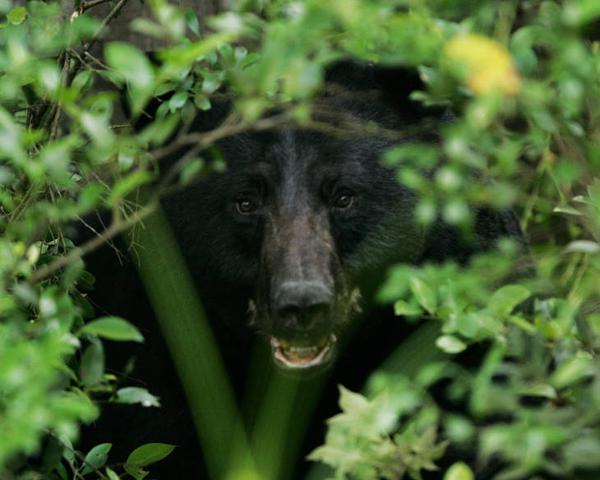
As if on cue, a bear sighting near Rock Creek Monday morning reminded everyone that Arkansas is home to the most successful reintroductions of a large carnivore in history. The Natural State’s bear population is definitely a source of pride for many wildlife enthusiasts here in Arkansas, but it also means the occasional male bear wanders too close to town when on the search for new territory each May and June. Unfortunately, a young bear has a hard time telling the difference between a blackberry thicket and corn feeder or trash can when it comes to finding calorie-rich treats.

“Most of the calls we get about bears getting too close to towns and cities come during a few months in summer and they’re almost always young males,” Myron Means, large carnivore program coordinator for the Arkansas Game and Fish Commission, said. “They’ve overwintered with their mother twice and now it’s time for them to find new homes.”

According to Means, yearling bears have two life paths after they emerge from dens in spring, based on their sex. Female yearlings will be allowed to stay near their mother, setting up territories adjacent to hers. Males, however, are shown the door and are pushed away to find new homes.

“This prevents inbreeding and promotes expansion of the species,” Means said. “For some of these young males, it’s the first time they will encounter people.”

According to the website Bearwise.org, a site maintained and managed by bear biologists and the Association of Fish and Wildlife Agencies, these young bears are much like teenagers striking out on their own for the first time. Most quickly discover that human places should be avoided, but if they find out that your trash bins or wildlife feeders are easy pickings for a snack, they’re liable to set up shop and claim your backyard as their own.

“Probably 90 percent of the bear nuisance calls we get can be handled by simply taking away whatever food source the bear has found,” Means said. “That’s going to be the first thing I tell a landowner when they call. Take away that easy food, and the bear almost always moves on quickly.”

Corn feeders and easily tipped trash cans are obvious targets for inquisitive bears, but other food sources, such as birdfeeders and barbecue grills with uncleaned drip pans also attract these trouble bruins. A full checklist is available at Bearwise.org to help landowners in Arkansas’s bear country prepare for the possibilities.

The few female bears that spur nuisance complaints often are searching for food to keep their weight on while tending to their cubs. Early summer foods like leaves and grasses are not as calorie-rich as berries and acorns that are soon to be abundant in most of the state. During this time, a female may also wander in for a free meal if food is left out for the taking.

“Bears are opportunists, but they’re really not aggressive unless you’ve let them stick around and get comfortable,” Means said. “If you did miss something and they begin to hang around. Remove the food and make sure the bear knows they aren’t welcome in your backyard. It usually doesn’t take much to get them to move on if you do it when they first show up. Most of the times we’ve had to trap and remove bears have been the result of people thinking it was neat to have one around and letting them stay long enough to think they belonged there. That always leads to trouble down the road, not only for the landowner who let a bear stay, but for neighbors and other landowners who then have to deal with a bear that’s lost its fear of humans.”

In addition to being a bad idea, intentionally baiting or feeding bears to attract them to an area is illegal. The only exception to this is from 30 days before bear hunting season begins until it ends. Placing certain wildlife feeders on your property also is illegal if you live in an area at risk for Chronic Wasting Disease, a disease found in deer and elk.

More information about bear awareness and bear safety can be found on the cooperative website www.Bearwise.org.

Timepiece: The Cloud Maker

By Dr. Curtis Varnell

A towering bank of steam rose from the distant tower, billowing into a cotton-candy cloud formation that can be seen from miles away.  When young, my children called it the cloud-maker.  The cooling tower at Arkansas Nuclear One is nearly 450 high and is the most notable feature of the electric generation plant owned by the Entergy corporation.  Located near Russellville, Arkansas the two-units are the only source of nuclear electricity generation in the state.

During the 1960’s, electric power generation by nuclear plants was deemed both economic and safe and several plants were constructed across the U.S.  Russellville was elated to be chosen to become the building site for the Arkansas plant.  A multi-year and multi-billion-dollar endeavor, the first reactor went online commercially in December of 1974.  It was followed by ANO-2 on March 26,1980.  

The two reactors have the capability of producing enough energy to meet 56% of the total energy demand of Entergy Arkansas’s 700,000 customers.  The plant was an economic boom for Pope county and Entergy hires a combined total of nearly 1,000 employees at the site.  

The use of nuclear power has always engendered concern among people worldwide.  The partial meltdown of unit 2 at Three Mile Island, Pennsylvania in 1979 created even more fear.  That incident resulted in 140,000 people being evacuated and over 2 million people being exposed to minor amounts of radiation.  Followed by other incidents at Chernobyl and in Japan, many question the use of nuclear energy.  ANO has had a couple of incidents; a crane malfunction in 2013 resulted in one death and the injury of several other workers.  In 2015, a reactor vessel head was found be defective and had to be replaced.  In no known instance has there been an explosion or nuclear release danger to the public.

As a teacher intern in 1997, I worked the summer as a chemist at ANO.  Each employee is required extensive training before ever allowed admittance into the plant.  Every part of the reactor is color-coded to allow employees to know radiation and danger areas.  Every employee is subjected to a full-body scan before hired and periodically afterward to determine if exposed to radiation (during my time there I absorbed more from the sun than from my work.)  Access to the nuclear part of the facility requires a swipe card, a picture ID, a physical check matching your face with your ID, passing through a port similar to that at an airline, and then, to get into any portion of the building itself, you had to key in your personal number to access the door.  Every person had to individually key themselves into each facility.  Access to the control center- which reminded me of the bridge on Star Trek with its banks of computers and lights- requires even more security. 

Every aspect of running the plant is checked constantly in the control room as well as at various stations throughout the plant.  Every part has a safeguard. For every computer check, the chemist had to make rounds doing a physical check to verify and cross-check the same information.  Environmental scientists make a daily check of trees, plants, fish, and animals in the zone around the facility.

The nuclear plant is not much different than a coal-burning plant except for the use of nuclear power to heat the water.  The water heated by radiation is contained and never released to the lake or atmosphere.  It simply passes through pipes and heats water in adjacent pipes which then generates power.  The cloud making tower- standing inside of it is awesome -but it is nothing more than a huge sauna where the excess steam generated by one of the reactors is returned to the atmosphere.

Living near a nuclear generating plant has now become old hat.  Locals are used to seeing the tower and occasionally hearing the sirens for nuclear practice evacuation.  Recently, ANO operation license was extended by the Nuclear Regulatory Commission until 2034 for unit one and until 2036 for unit 2. By that time the cloud-maker will have been with us for fifty-years. 

Farmers markets play vital role in boosting state’s economy, access to food

By Tracy Courage
U of A System Division of Agriculture 

Arkansas’ farmers markets play a crucial role in supporting the agricultural economy while improving access to fresh produce in rural communities.

Earlier this month, Gov. Sarah Sanders signed a proclamation recognizing June 9-15 as Arkansas Farmers Market Week,highlighting the benefits the state’s 111 farmers markets provide to Arkansas’ agricultural producers, consumers and communities. Arkansas Agriculture Secretary Wes Ward readthe proclamation during a June 6 ceremony at Dunbar Community Garden in Little Rock.

The Cooperative Extension Service, part of the University of Arkansas System Division of Agriculture, works year-round with many growers, producers and farmers market operators to support their success.

“Farmers markets play an important role in our communities, boosting local economies, providing a local source of high-quality food products, and providing a place for people to come together,” said John Anderson, senior associate vice president for agriculture-extension and director of the Cooperative Extension Service. “The Division of Agriculture is proud to provide our support to the state’s farmers markets. Our research-based tools and information – from cutting-edge production practices for farmers to safe handling best practices and food preparation tips for consumers – help ensure that everyone gets the most out of their farmers market experience.”  

For Arkansans living in communities that lack a nearby grocery store, farmers markets can mean the difference between having fresh produce or not.

“Farmers markets are a huge asset to communities,” said Leigh Ann Bullington, extension family and consumer sciences educator. “Many Arkansans live in rural communities where they either don’t have access to produce, or they can’t afford it. Many farmers markets accept EBT cards so they can use their Supplemental Nutrition Assistance Program — SNAP —benefits to buy food and participate in the Double Up Food Bucks, which gives them twice the amount of produce.”

Economic Boost

Farmer direct-to-consumer sales are used by more than 1,400 Arkansas farmers and are valued at more than $8.5 million, Ward said. 

Ron Rainey, economics professor for the Division of Agriculture,provides guidance on establishing and managing markets and helps individual vendors find marketing strategies to promote their products.

“While the growth in the number of markets has slowed a little since pandemic highs, interest in the fresh flavor profiles delivered by the array of farm products continues to grow,” he said.

Rainey oversees Market Maker, a free online resource where farmers can promote their operations and consumers can find markets near them. Consumers can also find farmers marketsthrough the U.S. Department of Agriculture’s Arkansas Grown program at arkansasgrown.org/.

Extension’s Local Regional & Safe Foods Team also works year-round to support market managers and vendors. 

“Our Local Foods team offers support to those interested in learning more about how they can participate in farmers markets around the state,” said Rip Weaver, a food systems and food safety program technician with the team. “In years past, we have created fact sheets on farmers market guidelines during the COVID pandemic; provided technical assistance to growers and market managers on the Arkansas Food Freedom Act and selling safely at markets; and visited with vendors at markets to keep a pulse on their needs, challenges, and successes.”

The team provides:

• Produce Safety training and technical assistance on best practices for growing, harvesting, handling and holding of fresh produce 

• Technical assistance on Cottage Food Law and farmers market guidelines passed by the Arkansas Department of Health

• Webinars on produce safety for school, community and backyard gardens and food processing for farmers and food businesses

More Extension resources related to farmers markets

Market Maker – Is a free online resource where farmers can register to promote their operations and products. The searchable database allows consumers to locate markets and farm businesses in their areas. https://uaex.uada.edu/market-maker

National Ag Law Center — Find legal resources to understand the liability and regulatory issues of local food marketing. https://nationalaglawcenter.org

Produce Safety Workshops – Find produce safety information and training at https://uaex.uada.edu/producesafety

To learn about extension programs in Arkansas, contact your local Cooperative Extension Service agent or visit www.uaex.uada.edu. Follow us on X and Instagram at @AR_Extension. To learn more about Division of Agriculture research, visit the Arkansas Agricultural Experiment Station website: https://aaes.uada.edu/. Follow on X at @ArkAgResearch. To learn more about the Division of Agriculture, visit https://uada.edu/. Follow us on X at @AgInArk.

About the Division of Agriculture

The University of Arkansas System Division of Agriculture’s mission is to strengthen agriculture, communities, and families by connecting trusted research to the adoption of best practices. Through the Agricultural Experiment Station and the Cooperative Extension Service, the Division of Agriculture conducts research and extension work within the nation’s historic land grant education system. 

The Division of Agriculture is one of 20 entities within the University of Arkansas System. It has offices in all 75 counties in Arkansas and faculty on five system campuses.  

The University of Arkansas System Division of Agriculture offers all its Extension and Research programs to all eligible persons without regard to race, color, sex, gender identity, sexual orientation, national origin, religion, age, disability, marital or veteran status, genetic information, or any other legally protected status, and is an Affirmative Action/Equal Opportunity Employer.

Magazine Schools Provides Summer Reading Programs For Students

By Jonathan W. Gipson
Magazine Schools Media Relations

MAGAZINE – Magazine Schools encourages students in Pre-K through 12th grades to continue reading during the summer break and provides several fun, educational, engaging opportunities for them to improve their literacy skills.

Students can participate in the “Lunch & Learn With Local Authors” series, the “Rattler Library on Wheels” Program and the “Rattler Summer Reading Challenge”. All programs are free to students and are made possible through grants written by Magazine Schools District Administrator for Federal Programs/Curriculum Karen Gipson and awarded to Magazine Schools by SOAR and Dollar General.

“Lunch & Learn With Local Authors”

Students of various grade levels are encouraged to come and listen to local authors discuss their love of writing and the art of storytelling in the fiction, nonfiction, historical and how-to/human interest genres. Lunch will be free to students 18 and under in the high school cafeteria, and free books are available.

Anita Beeler Downs, a 1981 Magazine graduate and author of “Persons of Speech” will speak to Pre-K through sixth-grade students on Tuesday, June 18, from 11 a.m.-12 p.m.The session is open to anyone wanting to attend.

Dr. Curtis Varnell, author of “Thunder Mountain: Le Magazine”, “Shadow of the Mountain” and other works, will speak to Pre-K through 12th-grade students on Thursday, July 11, from 11 a.m.-12 p.m. The session is open to anyone wanting to attend.

Janet Kirbo, a Magazine alumna and author of “A Garden Journal: This Is How I Do It”, will speak to Pre-K through 12th-grade students on Friday, July 12, from 11 a.m.-12 p.m. The session is open to anyone wanting to attend.

Mark Green, longtime Magazine basketball PA announcer and author of 32 books, will speak to seventh through 12th-grade students on Thursday, July 18, from 11 a.m.-12 p.m. The session is open to anyone wanting to attend.

“Rattler Library on Wheels”

Students keep a reading log documenting the number of minutes they read each day. A minimum of 20 minutes each day is recommended. Students reading 20 or more minutes daily will be rewarded with field trip experiences. Free Books are available in the high school cafeteria.   

Tentative field trip opportunities include Mount Magazine State Park (July 12), Logan County Coal Miners Museum (July 19), Daddio’s Pinball Arcade (July 28) and Turpentine Creek Wildlife Refuge-Virtual (Aug. 2). 

“Rattler Summer Reading Challenge”

Computers are set up in the high school cafeteria for students to take Accelerated Reader (AR) tests on their summer reading selections. Students will receive prizes for completing AR tests.

For more information on these summer reading programs, email Gipson at [email protected].

Hartford Mayor Tenders Resignation

0

On Thursday, June 6, a special meeting was called for members of the Hartford City Council. Two items were listed on the agenda, issues within the water department, and the resignation of the mayor.
Mayor Richard Hartsfield had won his first term, and was in his second term, in which he ran unopposed.
Hartsfield’s resignation letter tendered effective 9:30 a.m. on June 6, stated “…this (is) a decision I regret, but I feel I have to.”
The Hartford City Council is required to make an appointment of a new mayor at their next regularly scheduled meet on Monday, June 24.
Recorder/Treasurer Danielle Woodard advertised the newly opened position on the city’s social media page on Friday, June 7. Woodard outlined the criteria for any candidate and stated letters of interested must be submitted to city hall by Wednesday, June 19.