

69.9 F
Fort Smith
Sunday, August 2, 2026
Home Blog Page 177

Mansfield’s Defense Aims To “Stripe” Down 2024 Opponents

There are a lot of football players who love the offensive spotlight and who can blame them? To bask in the cheers of fans for scoring touchdowns, making wild one-handed catches, and pulling off ankle breaking jukes is something to soak up. But on the other side of the ball, there is a group of dogface gremlins that love nothing more than to shut off those spotlight moments for their opponent’s offense and instead, make them stare at the stars. These smashmouth heavy hitters were born for what the sport of football calls defense. For defensive players, the name of the game is to induce pain, and as wild as it may sound, they enjoy every single second of dishing it out…..especially in Tiger country.

The 2023 Mansfield Tigers defense was one that most opponents tried to steer clear from. The Tigers led the 3A-1 in points allowed by only allowing 117 points in regular season play and 202 points overall in their 14 game season. Mansfield kept eight of their 2023 opponents to one score or less while only allowing an impressive 15.5 point average per game for the whole year. That defensive stat put the Tigers as the best defense in the 3A-1 and third-best in the entire state (Hoxie-10.9, Glen Rose-13.1). While sorting through a recap of last season’s defensive stats, one could wonder if the Tigers defense can be just as stingy this season. In short, absolutely. While Mansfield will have to replace graduated defensive lineman, Turner Wright, and corners Peyton Martin and Tyler Turnipseed, they will still return eight starters on defense in 2024. Five of those eight were in the top ten in the 3A-1 for tackles combining for 331 takedowns last season.

Mansfield’s entire linebacker corps from the 2023 season will again suit up for 2024 and that could be a problem for their opponents. Senior outside linebackers, Jeremy Strozier and Samuel Burton, were a dangerous duo last season, but after a full offseason of training to be stronger and faster, their threat to opposing offenses is likely to rise significantly. With both already having a keen ability to sniff out the run plays and zeroed-in hands to intercept passes, Strozier and Burton will have the perimeters under lock and key. All-Conference middle linebacker, Zander Walters, was a downright bully to the Tigers opponents in 2023. Walters’ headhunter mentality created some loud pops last season and he’s only gotten better since then. Built like a cinder block, Walters has spent the offseason polishing up on his linebacker techniques to become even more of a force to be reckoned with. Walters and Strozier finished the 2023 season as the second and third-ranked tacklers in the 3A-1 with Walters having 87 total tackles and Strozier rolling up 86 takedowns. Senior Trey Powell will likely also be put in the mix as he was last season to utilize his blinding speed to blitz while Junior Alex Hecox will resume his 2023 role as a solid option to rotate the starters out for breathers. From top to bottom, the linebacker corps for Mansfield’s defense should be enough to detour a lot of points again this season in both the pass and run game of their opponents.

Pressure in a backfield creates chaos for offensive game plans. All of the X’s & O’s of a big play tend to fall apart when a defensive lineman is up in the ball carrier’s face. Mansfield will return defensive linemen Dakota Deer, Ethan Martin, and the ever-effective rotation of the Ore brothers (Logan and Cadien) in 2024. Senior, Dakota Deer, is so well renowned for his ability to breeze past an offensive line and make vicious hits in the backfield that the phrase “Fear the Deer” should be printed on a T-shirt. With his 53 tackles in 2023, Dakota Deer will likely draw a lot of attention from offensive linemen this season, but his fellow defensive linemen cannot be overlooked. Juniors Ethan Martin, Logan Ore, and Cadien Ore were the perfect mix of size, strength, and uncanny speed in 2023. As scary as it may sound, those players have been working hard to boost those attributes up even higher over the offseason. With having their first full offseason in Head Coach Whit Overton’s strength and conditioning regimen under their belts, the Tigers defensive line has only gotten bigger, faster, and stronger. Utilizing additional players such as James Bausley and Matthew Burton to rotate in key possessions will definitely beef up the Tigers already great defensive wall. Tack on having two excellent linemen coaches, Keith Stovall and Trevon Moore, to polish off the line’s tricks of the trade, and you all of a sudden have an elite group of players who could walk on and start for any team in the 3A.

Mansfield’s defensive back squad took the hardest hit after the 2023 season by losing starters Peyton Martin and Tyler Turnipseed. While losing the pair of All-Conference players will leave a void, the Tigers still have a talented pool of athletes to fill in the open field. Safeties Daniel Burton and Andrew Burton will be returning in the starting positions which should be a big factor in the pass defense department. Andrew Burton finished the 2023 season fifth in tackles in the 3A-1 with 58 tackles while his older brother, Daniel, was able to snag interceptions and force opponents to send their pass attempts in the other direction. Seniors, Trey Powell and Leland Powell, will both likely spend plenty of time in the secondary also. Trey Powell’s immaculate speed is unmatched and closes passing windows quickly while Leland Powell has a nose for the ball and steel trap hands which can lead to multiple interceptions for the Tigers. Junior, Cooper Edwards, is the Tigers wildcard in the defensive backfield. Edwards has a high IQ of the game and loves making heavy hits which makes him very dangerous at any position the coaches want to put him at. Defensive backs, Chandler Wisman and Rylan Nichols, have made an impression on their teammates and coaches and could wind up coming out of nowhere to shock opponents in the open field.

While the stats of being the number one defense in the 3A-1, number three defense in the state, and having five tacklers in the top ten of the 3A-1 all are nice for the 2023 season, they mean nothing right now as the Tigers start with a clean slate in 2024. Whereas the Tigers were an unknown force in 2023, the defensive cat has been let out of the bag and everyone in the 3A knows what Mansfield is capable of going into 2024. Mansfield’s first test of the 2024 season will be against the Bismarck Lions who take pride in their high-octane offense. The Lions racked up a total of 507 points in 2023 which is impressive for any program. The Lions will return their starting quarterback who passed for 1,956 yards and a pair of running backs who combined for 1,264 yards in 2023. Just as with the Tigers though, those numbers mean nothing for Bismarck’s offense as every team in the state starts their season with all zeros on their stat sheets. The question of “can” the Mansfield Tigers defense be just as good as last season can be answered with a resounding yes. But the real question of “will” the Tigers be as good or even better than last season will only be known if you purchase your ticket, have a seat in the stands, and see for yourself.

Photos courtesy of Joey Bolin and Jeannie Keomoungkhoune

Magazine Schools To Offer Free Breakfast, Lunch, Afternoon Snack To All Students

0

By Jonathan Gipson, Magazine Schools Media Relations

MAGAZINE — Magazine Schools will be participating in the School Breakfast Program, National School Lunch Program and Afterschool Snack Program during the upcoming 2024-25 school year.

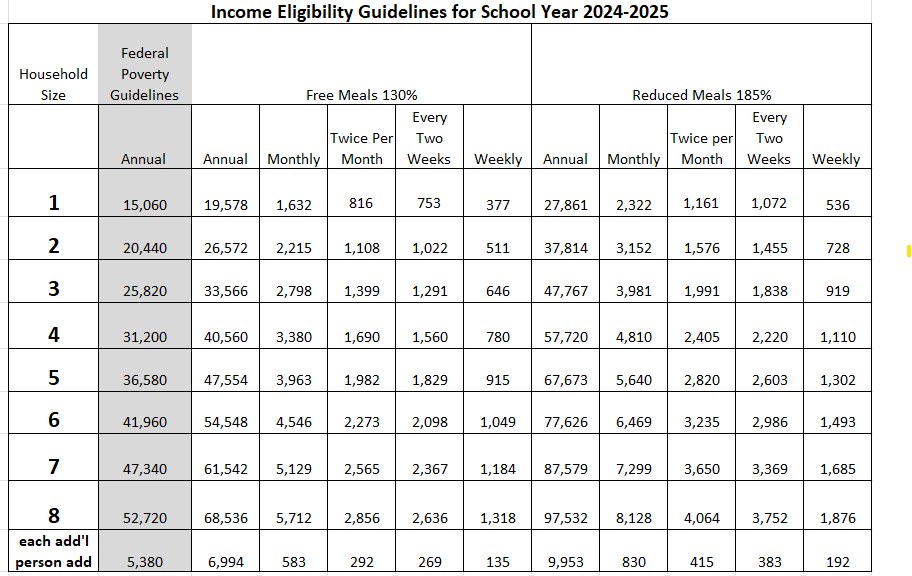
The Magazine School District will provide meals at no charge to the household regardless of program eligibility. Households, however, are still encouraged to apply for meal benefits in order for Magazine Schools to maintain this provision. 

Applications will be sent home with high school and elementary students on the first day of school (Monday, Aug. 12) and also may be picked up at the Administration Building. Households that participate in the Special Supplemental Nutrition Program for Women, Infants and Children (WIC) may be eligible for free or reduced price meals.

To apply for free or reduced price meals, households must complete and return the application. Applications will be considered incomplete if all information is not provided as described in the instructions provided with the application. Applications may be submitted at any time during the school year as circumstances change provided that the loss of income causes the household income during the period of unemployment to be within the eligibility criteria.

Households with children who received Supplemental Nutrition Assistance Program (SNAP) benefits, may submit an application with abbreviated information as described in the application instructions. SNAP households should complete an application if they are not notified of their eligibility by September 1, 2024.  

       All applications are subject to verification. Parents or guardians dissatisfied with the ruling of the determining official may wish to discuss the decision with the determining official on an informal basis.  Parents wishing to make a formal appeal for a hearing on the decision may make a request to: Dr. Beth Shumate at 866-900-2001.

       Children certified as foster, migrant, homeless or runaway by the district are categorically eligible for free meals.  Contact Karen Gipson at 866-900-2001 with questions regarding foster, migrant, homeless or runaway meal benefits.

       Households who are notified of their eligibility but who do not want their children to receive free meals must contact the school.  

       In the operation of child feeding programs, no child will be discriminated against because of race, sex, color, national origin, age or disability.

Non-Discrimination Statement

       In accordance with federal civil rights law and U.S. Department of Agriculture (USDA) civil rights regulations and policies, this institution is prohibited from discriminating on the basis of race, color, national origin, sex (including gender identity and sexual orientation), disability, age, or reprisal or retaliation for prior civil rights activity.

Program information may be made available in languages other than English. Persons with disabilities who require alternative means of communication to obtain program information (e.g., Braille, large print, audiotape, American Sign Language), should contact the responsible state or local agency that administers the program or USDA’s TARGET Center at (202) 720-2600 (voice and TTY) or contact USDA through the Federal Relay Service at (800) 877-8339.

To file a program discrimination complaint, a Complainant should complete a Form AD-3027, USDA Program Discrimination Complaint Form which can be obtained online at: https://www.usda.gov/sites/default/files/documents/USDA-OASCR%20P-Complaint-Form-0508-0002-508-11-28-17Fax2Mail.pdf, from any USDA office, by calling (866) 632-9992, or by writing a letter addressed to USDA. The letter must contain the complainant’s name, address, telephone number, and a written description of the alleged discriminatory action in sufficient detail to inform the Assistant Secretary for Civil Rights (ASCR) about the nature and date of an alleged civil rights violation. The completed AD-3027 form or letter must be submitted to USDA by:

Mail

U.S. Department of Agriculture
Office of the Assistant Secretary for Civil Rights
1400 Independence Avenue, SW
Washington, D.C. 20250-9410

Fax

(833) 256-1665 or (202) 690-7442; or

Email

program.intake@usda.gov

This institution is an equal opportunity provider.

Obituary: Betty Hawkins (1941 – 2024)

Betty Sue (Dillard) Hawkins was born October 18, 1941 in Sims, Arkansas to Wilmon Green Dillard and Esther Rebecca (Phillips) Dillard. She married Paul Hawkins on June 29, 1962. Betty was a loving and caring person who always put others before herself. Betty went to be with her Lord and Savior, Tuesday, July 23, 2024 at her home in Olathe, Kansas surrounded by her loving family.She was 82 years old.

Betty started working on her family’s farm at a young age peeling fence posts with her brothers. She was known for working just as hard and sometimes outworking them. They received a penny for each post peeled. After high school she worked at a glove factory until she married. Betty and her husband, Paul, met and married in Arkansas and then moved to the Kansas City area in 1963. Betty had several jobs in retail including Sears Surplus, Home Quarters, and Dillards. She had perfect attendance at Sears for 20 years. She enjoyed gardening, cooking, going to her children’s sporting events, and looking for bargains when she shopped. She enjoyed game night with her friends at church, as well as playing dominoes and card games with her family. Betty was an avid KU and Arkansas Razorbacks basketball fan as well as the Kansas City Chiefs. She loved to listen to Elvis on the radio. 

Betty leaves behind one daughter, Paula (Scott) Whitehead of Lenexa, Kansas and one son, Shannon (Julie) Hawkins of Olathe, Kansas. She will forever remain in the hearts of her grandchildren: Melissa (Derek) Bradshaw, Grant (Savanna) Whitehead, Taylor Hawkins, Vanessa (Chris) Patton; two great grandsons: Ellis and Ethan Patton. Betty is also survived by two siblings: Charles Dillard and Kathy (Loyd) Lewis; as well as, brother in law Bill (Valva) Hawkins, brother in law Clifford Daily. Betty will be missed by the many whose lives she impacted, including a host of cousins, nieces, nephews, extended family, friends, members of her Sunday School class and neighbors she loved dearly.

Betty was preceded in death by her husband, Paul Hawkins of 59 years, her parents Wilmon and Esther Dillard, sister Lillie Belle (Dillard) Bryant, brother Kenneth Dillard. 

Visitation will be on Saturday, August 3, 2024 at 9:00 a.m., with celebration of life following at 10:00 a.m. at the Heritage Memorial Funeral Home Chapel in Waldron, Arkansas with Rev. Wally Beckman officiating. Interment to follow at Hawkins Cemetery in Parks, Arkansas. Arrangements are being entrusted to Heritage Memorial Funeral Home in Waldron, Arkansas.

Betty’s pallbearers will be Grant Whitehead, Derek Bradshaw, Keith Saveall, Jamie Saveall, Drake Hawkins, and Dane Hawkins. 

Memorial contributions may be made to Hawkins Cemetery, ℅Chambers Bank, PO Box 838, Waldron, AR 72958 or Waldron First Church of the Nazarene, 1816 Rice St, Waldron, AR 72958.

State Capitol Week in Review from Senator Terry Rice

LITTLE ROCK – The Arkansas sales tax holiday this year will be on the first weekend in August, Saturday and Sunday, August 3 and 4.

Consumers will not have to pay sales tax on any articles of clothing that cost less than $100.

The exempted items include pants, shirts, dresses and shoes. Also free from sales tax are bathing suits, baby blankets, underwear, raincoats, uniforms, hats and caps, aprons, neckties, scarves and steel-toes boots.

Diapers, even disposal diapers, are included on the list of exempt items. However, sports equipment will not be exempt, so you will pay sales tax on cleats, baseball gloves, goggles, life preservers, shin guards and shoulder pads.

Accessories are also on the list of exempted items, as long as they cost less than $50. The list of articles is extensive, and includes handbags and purses, sunglasses, jewelry, hair notions, wallets, watches and wigs.

More than 65 categories of cosmetics are exempt from the sales tax, such as mascara, many types of hair products, fingernail polish and fingernail remover, bath salts, artificial eyelashes, perfume and stretch mark cream.

School supplies will be exempt from the sales tax. Officially the first weekend of August is called the sales tax holiday, but many people refer to it as the “Back to School” sales tax holiday. That’s because the legislature intentionally scheduled it for early August, to benefit families with children going to school.

School supplies include pens, pencils and paper as well as art supplies.

Thanks to Act 944 of 2021, approved by the legislature earlier this year, some electronic and computer equipment were added to the list of tax exempt items.

Laptops, desktops, tablets, printers, keyboards, calculators, cell phones, e-readers and monitors are exempt from the sales tax.  However, video games, stereos and televisions are not included.

Arkansas families will save an estimated $2.6 million on purchases of electronic and computer equipment.

The sales tax exemption applies to single articles, and is not based on the overall cost of everything you buy. For example, you can buy three shirts $25 each and a pair of pants for $50 and you will not be charged the sales tax, even though the total is $125. Because each item is less than $100, the exemption is applied.

However, if you buy a pair of shoes for $120, you will have to pay the sales tax on the full amount of the purchase.

When you take advantage of a sale that allows you to buy one item and get another for a reduced price, the holiday exemption applies only to the items costing less than $100. For example, a store may offer a pair of jeans for $120 and you can get a second pair for half price, or $60. The sales tax exemption will apply only to the second pair.

The exemption applies to all sales taxes, not just state sales taxes. That means exempt items are free of all city, county and local sales taxes.

All retailers have to participate. Articles cannot be separated in order to lower their price under the $100 and $50 thresholds. Men’s suits and pairs of shoes, which normally are sold as one unit, cannot be split into separate purchases.

“Just Roll with It” Serving up Recipes and Humor

By Sheri Hopkins, Lifestyle Contributor

Hello everyone! I am back from vacation. I will say that was the best vacation I have had in a long time. My brother Larry, his wife Peggy and I went. We left on a Tuesday and stopped in Nashville to see my nieces and visited with them. We had dinner and then headed out the next morning to Mt. Airy, North Carolina, AKA Mayberry.

If you know our family, we all love the Andy Griffith show. Mt. Airy is his hometown and a lot of the show is based on characters from Andy’s childhood. They have a main street that has all the Mayberry shops, Floyd’s Barber, Ms. Ellie Walkers Soda Fountain, Mayberry Trading Post, Barney’s Cafe, Snappy Lunch, Opie’s Candy Store, Earl Theater, Mayberry on Main, Loaded Goat Restaurant, a replica of the courthouse and Wally’s filling station. We saw Andy’s childhood home and took a tour in the squad car. I am telling you everybody in that town was very friendly. Just like being in Mayberry.

We were riding in the squad car, and we were at a stop light and some guy in a truck pulls up beside us and starts yelling “citizen’s arrest, citizen’s arrest.” I yelled back in a hick voice, “you just go up an alley and holler fish.” We were all laughing. If you ever get the chance to visit, they have Mayberry Days in September and Andy Griffith’s daughter and her best friend come to it and dress up as the fun girls, Skippy and Daphne, and walk up and down the street kissing all the men.

For you older folks, Mt. Airy is also the birthplace of Donna Fargo. She comes every year on the Fourth of July and sings during their celebration. We also toured the Andy Griffith Museum. They had a sidecar that Barney had when he bought the motorcycle. He used it at Check Point Chickie to watch the El Truckos. I also go to stop at Bucees, it was my first time and I loved it. They have everything you can imagine and the cleanest bathrooms this side of the Pecos.

We left the wonderful town of Mt. Airy and headed to Atlanta, Georgia. Talk about traffic. I told my brother, “I need a pinch of a nerve pill!” It was crazy. We went to two Braves baseball games, my brother’s favorite team. I had so much fun sitting by these kids. They thought I was crazy. They were not far off on that. I had the best hotdog I ever had. Nothing like a ballpark hotdog. We headed home on Sunday. I had the best time but was ready to get home in my own bed and see my little JR dog.

We had stopped to eat at Wendy’s on the way there and my brother had to get some of their chili. Him and my nephew, Michael, loves the chili from Wendy’s. Of course he got some on his shirt. That evening we were going to eat, and he said, “should I change my shirt?” Peggy says, “yes, you are changing your shirt.” She handed him a shirt and he said, “why can’t I wear that other shirt,” pointing to one in the suitcase. She said, “that’s my pajama shirt!” Keep in mind, it’s bright yellow and has some design on it. The man is a hoot to go on a trip with. Every time we stopped and would get back in the car, I would ask if everyone had their phones, wallets, bras, teeth and gun. After my brother left his phone in the bathroom on our last trip to Nashville, I wanted to make sure nobody forgot anything.

I will have more stories next week. This week’s recipe is a red velvet dump cake. My granddaughter loves red velvet cake.

RED VELVET DUMP CAKE
20 oz. can of crushed pineapple
21 oz. can of cherry pie filling
1 box of red velvet cake mix (dry)
1 stick of butter (I used a stick and a half)
Preheat oven to 375 degrees. Spray a 9×13 pan with non-stick spray. Dump the cherry pie filling in first, then the can of pineapple next (do not drain). Spread the dry cake mix on top of that, then add the melted butter on top. Bake for 40-45 minutes. Enjoy with some vanilla ice cream on top.

Protecting Arkansas Volunteer Fire Departments

Across The Natural State, selfless men and women protect their communities from danger through service with local, volunteer fire departments. They deserve our thanks and support, particularly at a time when their ability to carry out that work is under threat. 

The Occupational Safety and Health Administration (OSHA) recently proposed a rule that would impose unnecessary and, frankly, debilitating regulations on Arkansas’s volunteer fire departments, search and rescue units, and emergency medical services providers. 

Deeply concerned about the implications of this proposal, emergency personnel from across the state have engaged with my office to express their dismay and worries. Through these discussions, we’ve gained greater insight into the noble services and support they provide to their fellow Arkansans, and the harmful impact this mandate could have throughout our state. 

These requirements mandated by OSHA could force many fire stations, particularly those in rural areas that are mainly staffed with selfless and brave volunteers, to close their doors, eliminating services vital to the survival and safety of these communities. 

The current proposal would require all fire stations and other emergency response centers, regardless of their resources, to meet impractical standards. Fire departments will face constraints such as using trucks no older than fifteen years regardless of feasibility and availability considerations, costly medical examinations, and time-consuming and expensive facility assessments. 

Out of Arkansas’s 1,003 fire departments, 974 are at least partially staffed by volunteers. It is these volunteer-based departments, already operating on tight budgets, that will struggle the most to comply with OSHA’s new standards. 

OSHA estimates these new regulations will cost fire departments $15,000. Given the breadth of the requirements, that figure seems highly unrealistic and doesn’t account for the likely unintended consequences, including the need for in-house lawyers and compliance staff necessary to implement the 250-page rule. It is easy to understand why our local leaders and volunteer fire services view this rule as daunting and unworkable. 

While I appreciate OSHA’s efforts to ensure the safety and effectiveness of our emergency services personnel, this is another example of a blanket federal regulation that does more harm than good. It jeopardizes the safety of small communities across Arkansas and our country by decimating local fire station staff and potentially leaving them without adequate systems for protection and mitigation. 

I understand the importance of local volunteer fire departments to Arkansans. In many cases, they are the backbone of our rural communities, composed of courageous volunteers who take great pride and responsibility in serving their fellow citizens. Without them, our communities face greater fire risks, leading to widespread safety concerns and higher home insurance premiums for everyday Arkansans.  

Needlessly threatening to eliminate these long-standing community institutions is not only sad, but unwise. 

That’s why I was proud to join the rest of Arkansas’s congressional delegation, led by Congressman Rick Crawford, in denouncing OSHA’s new rule and requesting its immediate rescission. We will continue working to protect our volunteer fire departments and the important mission they fulfill for communities in every corner of our state.  

Commission clarifies nonresident deer dog regulations, early archery hunt 

By Randy Zellers

The Arkansas Game and Fish Commission today approved a dozen clarifications to regulations passed during May’s Commission meeting. While most changes were simple clarifications in wording, four changes may affect hunters during upcoming deer and turkey seasons.

The first change was the reinstatement of a $100 nonresident turkey permit that can be purchased by holders of a Nonresident Annual Hunting License. The Commission adopted a separate $325 Nonresident Turkey Hunting License in May to allow hunters only interested in turkey hunting to save money compared to purchasing a $410 annual license and $100 turkey permit. The previous permit was accidentally stricken from the code, but today’s action reinstated it, allowing nonresidents two options for turkey hunting licenses in Arkansas.

The second set of revisions clarifications clarified that handguns used during the new alternative firearms season are required to be non-semi automatic and shoot straight-walled cartridges .30 caliber or larger to match the requirements for rifles during this season.

Arkansas’s new early archery deer hunt also saw a clarification during today’s meeting. The code was modified to ensure hunters could only legally harvest a single buck and no does during this three-day hunt preceding regular archery season.

Finally, a regulation concerning nonresidents who use dogs to pursue deer in Arkansas saw a clarification at today’s meeting. According to the newly modified code, nonresidents using dogs to chase deer, whether for training purposes or hunting, may only do so during the final nine days of regular modern gun deer season in those private and public land zones where it is legal to pursue deer with dogs. They also will be restricted to a limit of one deer while using dogs.

All regulation changes passed today were formally presented during the Commission’s June 20 meeting.

The Commission also authorized a real-estate easement today at White Oak Lake in Ouachita County to allow Ouachita County Electric Coop to run underground fiber-optic cables along an existing easement for overhead power lines along Arkansas Highway 387.

A video of the meeting is available on the AGFC’s YouTube Page.

BACK TO SCHOOL: Tips for handling homework

By Rebekah Hall
U of A System Division of Agriculture

The start of a new school year typically marks the dreaded return of homework for students and parents. Brittney Schrick, extension family life specialist and associate professor for the University of Arkansas System Division of Agriculture, said it’s key for parents to give children plenty of free time, manage their own expectations and think outside the box regarding homework help.

Schrick said that it’s crucial for children — especially elementary and middle school-aged students — to have a period of free time after they get out of school, instead of immediately sitting down to focus on homework.

“Adults often have this perspective of, ‘All you’ve been doing is sitting in a chair all day, why are you tired?’” Schrick said. “But it’s exhausting. They have to focus all day and not move around, when what they want to do is move around, so it’s really important that when they get home, they are given time to do something else with minimal expectations.”

In the last 20 years, schools have reduced free play time, including recess, and prioritized academics much earlier for younger students, Schrick said.

“Historically, kindergarten and first grade were really about learning how to go to school, and they were learning about how to be in a classroom with other kids, the basic building blocks of social interaction and rule-following,” she said. “It’s gotten to the point where parents are concerned when their kids can’t read before they go to kindergarten.

“Those are kind of unrealistic expectations because kids haven’t changed – it’s the expectations that are placed on them that have changed,” Schrick said.

More homework, more problems

Schrick said the emphasis on academics for younger students has led to teachers assigning them more homework, which often harms more than it helps.

“I would argue that homework is not developmentally appropriate for kids below high school, but definitely not below junior high,” Schrick said.

Schrick said that if parents are concerned about the amount of homework their child is bringing home, the first step is checking in with his or her teacher.

“In high school, all bets are off, but in elementary school, there’s no reason for them to be getting a ton of homework,” she said. “So if they are, that’s a conversation to have with their teachers.”

While too much homework does not benefit children, consistently reading together at home is vital for elementary and middle school students.

“Reading is really all that younger students need to be doing regularly at home,” Schrick said. “There are some math concepts that probably would benefit some kids to practice at home, especially if they’re struggling, but with low stakes. The benefit is literally just fluency, it’s not mastery. It’s not about learning new information.”

Think outside the box for homework helpers

Doing homework together can be a significant source of conflict for families. When tensions rise, Schrick said it may be necessary for a parent or child to take a break and walk away from the task.

“When you get into those high-stress moments, when your kid has reached their limit, pushing them because ‘It’s homework and you have to do it,’ is not helpful in the long run, and I think it’s not helpful in the short run either,” Schrick said. “It can cause damage to a relationship, and it can cause damage to the relationship a kid has with school.”

Schrick said it’s helpful to figure out which parent or guardian to turn to for each school subject. For example, one parent may have a better grasp on math problems, while another may be the go-to for language arts homework. And for a family with multiple children, one parent may be better equipped to help one child than another.

Schrick also suggested seeking homework help from family friends or community members.

“It’s a matter of thinking outside the box of who could help,” she said. “Sometimes we think it has to be someone in the immediate family, and that’s not necessarily true. Especially for single parents, or grandparents who are raising grandchildren, think of alternatives. 

“Use your close resources first,” Schrick said. “Maybe your aunt is an accountant, maybe your grandfather used to be in a science field. Think about the retired teachers in your life. Teachers don’t stop being teachers – there’s a reason that educators gravitate towards education. Reach out to the recent college graduates in your circle.”

Manage expectations, adapt to changing needs

Schrick said managing one’s expectations of their child is a significant part of managing conflict with them. The way a parent might think to approach a homework problem is going to be different than how their child approaches it. Acknowledging and accepting this difference can lead to smoother interactions.

“Their effort doesn’t need to look exactly like how I would do it, because I’m a grown adult,” Schrick said. “And when I’m watching my third grader do homework, she’s going to be doing it differently than I would.”

It’s also important for parents to determine what kind of guidance their child needs when it comes to planning and task completion.

“Some kids need very little, and others need a ton. Do they need to write everything down? Do they need little reminders about when things are due?” Schrick said. “Adults either tend to be ‘hands-off’ because they feel it’s the kid’s responsibility, or they’re so involved that the kid doesn’t learn how to manage it. It’s about trying to find that happy medium.”

Finding that happy medium will take trial and error — and a willingness to make mistakes and learn from them. Schrick said that in her experience as a parent, the most helpful strategy usually must come from the child themselves.

“I’ve learned that often, whatever the management strategy is, it has to be their idea,” she said. “They have to have some ownership over it. If you have a kid who won’t try anything, imposing something might be your only option, but typically, adult-imposed solutions just become more work for the adult.”

Schrick said parents must understand that these time management and planning solutions will need to change over time as the child grows and their responsibilities become more demanding.

“As kids get older and family dynamics change, all of these strategies have to be fluid,” she said. “You have to be willing to adapt to changing needs and changing schedules, and changing expectations from the school, changing expectations from your kid. What worked last year may not work this year, especially if your child is going to a different school, or especially if they’re going to junior high or high school. Everything is going to change.”

For more information about family life resources, visit the Cooperative Extension Service’s Personal and Family Well-Being page, or contact Brittney Schrick at bschrick@uada.edu.

To learn about extension programs in Arkansas, contact your local Cooperative Extension Service agent or visit www.uaex.uada.edu. Follow us on X and Instagram at @AR_Extension. To learn more about Division of Agriculture research, visit the Arkansas Agricultural Experiment Station website: https://aaes.uada.edu. Follow on X at @ArkAgResearch. To learn more about the Division of Agriculture, visit https://uada.edu/. Follow us on X at @AgInArk. 

About the Division of Agriculture

The University of Arkansas System Division of Agriculture’s mission is to strengthen agriculture, communities, and families by connecting trusted research to the adoption of best practices. Through the Agricultural Experiment Station and the Cooperative Extension Service, the Division of Agriculture conducts research and extension work within the nation’s historic land grant education system. 

The Division of Agriculture is one of 20 entities within the University of Arkansas System. It has offices in all 75 counties in Arkansas and faculty on five system campuses.  

The University of Arkansas System Division of Agriculture offers all its Extension and Research programs to all eligible persons without regard to race, color, sex, gender identity, sexual orientation, national origin, religion, age, disability, marital or veteran status, genetic information, or any other legally protected status, and is an Affirmative Action/Equal Opportunity Employer.

Practice caution to prevent heat-related illness

By Rebekah Hall
U of A System Division of Agriculture

With the heat of summer 2025 on, it’s important to follow heat safety guidelines to prevent sunburns, heat exhaustion and heat stroke.

Bryan Mader, extension assistant professor of health for the University of Arkansas System Division of Agriculture, said people should practice caution when temperatures reach above average highs for their specific region.

“While there is not a specific temperature — such as 100 degrees Fahrenheit — at which we should be more concerned than another, a simple way to think about being extra cautious around heat is when temperatures and humidity are above average for a given geographic area,” Mader said. “Because some places are hotter than others, this depends on what’s considered average for a particular location at that time of year. Humid and muggy conditions can make it seem hotter than it really is.”

Heat-related illnesses are preventable if precautions are taken, Mader said. These illnesses, such as heat exhaustion or heat stroke, occur when the body is not able to properly cool itself.

“While the body normally cools itself by sweating, during extreme heat, this might not be enough,” Mader said. “In some cases, a person’s body temperature rises faster than it can cool itself down. This can cause damage to the brain and other vital organs.”

Though everyone is susceptible to heat-related illness, Mader said there are special populations who should take extra caution during heat exposure. Those at increased risk include adults 65 and older, infants and children, pregnant women and people with chronic illnesses such as heart disease or cancer. People without access to air conditioning, athletes and outdoor workers are also at a higher risk.

Signs of heat-related illness

·        Heat stroke: A high body temperature greater than 103 F; hot, red or dry skin; fast pulse; dizziness, nausea, confusion and loss of consciousness.

·        Heat exhaustion: Heavy sweating; cold, pale and clammy skin; fast, weak pulse; nausea or vomiting; muscle cramps, tiredness or weakness; dizziness; headache and fainting.

·        Heat cramps: Heavy sweating during intense exercise; muscle pain or spasms.

·        Heat rash: Red clusters of small blisters that look like pimples on the skin, usually on the neck, chest, groin, elbows or on the anterior side of arms.

Heat-related illness prevention tips

·        Wear lightweight, loose-fitting clothes to improve airflow and aid in natural cooling.

·        Stay indoors when able, and avoid using appliances that give off heat.

·        Do not leave children, or anyone else, in cars unattended. Double check all the seats in your vehicle before walking away.

·        Schedule outdoor activities with a plan in place. Try to limit outdoor activities during the hottest parts of the day. Rest, often, in shaded areas to limit heat exposure.

·        Wear sunscreen to protect your skin, and wear hats, long sleeves and pants when able, and when it does not restrict your movements or your ability to sweat naturally.

·        Drink plenty of fluids, and do not consume sugary or alcoholic beverages when you are in the heat.

·        Replace salts and minerals, such as electrolytes, frequently during heat exposure. Sweating eliminates electrolytes, which can be replaced using a sports drink, or another source for replenishing minerals.

·        Stay informed about changes in the weather, especially related to extreme temperatures, humidity and UV exposure.

·        Use a buddy system, especially for outdoor workers or athletes, to ensure safety.

·        Check on those who are at high risk, especially if they do not have air conditioning in their home or place of employment.

Mader said that while working in the heat, it is recommended to drink at least 8 ounces of water every 15-20 minutes. This translates to approximately 24-32 ounces per hour of heat exposure.

For more information about healthy living, visit the Cooperative Extension Service’s Health in Arkansas website.

To learn about extension programs in Arkansas, contact your local Cooperative Extension Service agent or visit www.uaex.uada.edu. Follow us on X and Instagram at @AR_Extension. To learn more about Division of Agriculture research, visit the Arkansas Agricultural Experiment Station website: https://aaes.uada.edu. Follow on X at @ArkAgResearch. To learn more about the Division of Agriculture, visit https://uada.edu/. Follow us on X at @AgInArk. 

COSL announces regional tax auction results

The recent auction of tax-delinquent properties in Crawford, Franklin, Logan, Sebastian and Scott counties raised over $1.4 million dollars, the Commissioner of State Lands announced.

The regional auction drew 180 registered bidders, who purchased 90 of 99 parcels for $1,455,743.01 Results were as follows:

Crawford County: 28 parcels offered; 27 parcels sold; $342,722.81 total; $22,072.70 taxes collected

Franklin County: 4 parcels offered; 4 parcels sold; $60,000.00 total; $3,017.58 taxes collected

Logan County: 7 parcels offered; 7 parcels sold; $60,000.00 total; $7,308.53 taxes collected

Sebastian County: 47 parcels offered; 39 parcels sold; $921,520.20 total; $95,143.84 taxes collected 

Scott County: 13 parcels offered; 13 parcels sold; $71,500.00 total; $4,872.18 taxes collected

The auctions offered real estate parcels with taxes delinquent since 2019. 

“We only auction a fraction of the parcels certified for delinquent taxes,” Commissioner Tommy Land said. “By far, most owners redeem their property by paying the delinquent taxes. Naturally we hope property is redeemed if the owners want to keep it, but it is vital that the parcels return to the county’s active tax rolls.”

The COSL office forwards taxes and interest to the county, whether that money is collected through redemption or sale. 

“Last year, the Commissioner of State Lands Office sent more than $21 million to school districts and county governments,” Land said. “Of that, $1,517,722.58 went to these five counties, helping fund everything from roads to schools.”

Those turnback amounts were:

Crawford County: $389,298.89.

Franklin County: $122,756.95.

Logan County: $83,084.31.

Sebastian County: $897,587.07.

Scott County: $24,995.36.

Auction sales are final. 

Unsold parcels may be redeemed online at www.cosl.org, using a credit or debit card, or owners can call 501-324-9422 to request a Petition to Redeem. Redemption does not grant ownership; it simply makes the taxes current.

Parcels that did not sell at the public auction will be available after 30 days and can be purchased through an online auction by viewing the Post-Auction Sales List at www.cosl.org.