2024 State of the City
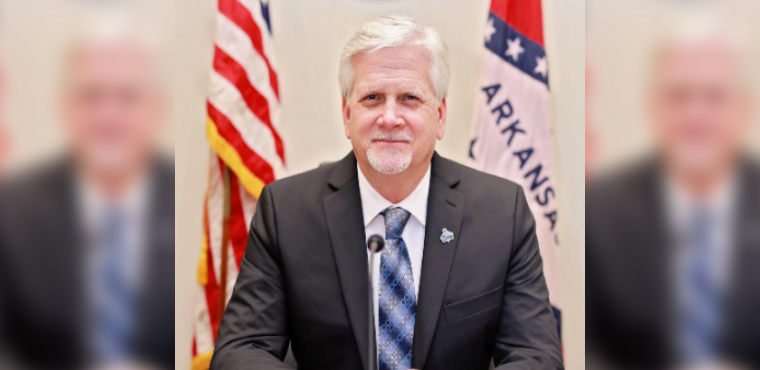
By Mayor Doug Kinslow
City of Greenwood
“Reaping the Harvest”
So, I want to thank you all for being here tonight; absolutely appreciate the crowd that’s here
tonight and I would like to thank our city council members: AC Brown, Ralph Meeker, Rod
Powell, Daniel McDaniel, Tim Terry, and Roger Rainwater; our City Clerk/Treasurer Sharla
Derry, and our City Attorney Travis Plummer; our Commission Chairs: Water/Wastewater Chair
Theresa Burchett, Parks Chair Joel Goldstein, Planning Chair Ragon Clements, and A&P Chair
Mike McAlister. I also want to recognize our Department Heads: Fire Chief Stewart Bryan, our
new Police Chief Brad Hobbs, Street Department Jeff Turner, Water Tim Posey, Wastewater
Dalton Moore, Water Treatment Greg Cross, Finance Tom Marsh, Parks Casey Craig, Planning
Department Sonny Bell, and our brilliant Human Resources and Executive Assistant Danielle
Smith. So, I would also at this time, the logo that you see on the screen was designed by Miss
Erica Wahl, she is our logo gal this week; I’ve never had a logo before, thank you so much.
As the saying goes, behind every successful man is a strong woman. My wife Pam has always
been by my side for over 45 years, the only time she has been behind me is to hold me up
through the tough times, so thank you.
I would like to report to you tonight, that the state of our city is indeed strong. I know you
heard a financial report that didn’t lean itself that way but there’s reasons for that and we’re
going to take care of that. 2023 combined City and County Sales Tax Revenue collections
exceeded 2022 collections by 5.34%, with City Sales and Use Tax up 5.20% over fiscal year end 2022. Projected 2024 combined Sales Tax Revenue growth is budgeted to increase 4.5%.
Projected revenue from all city revenue sources is projected to increase in 2023 by 9.47%. The
current 2024 approved city budget is $25.6 million dollars made up of an operations budget of 12
million and 13.6 million in capital spending. One thing I have discovered over the 9 ½ years as
mayor is growing a city resembles the farming process. The first step in any project is
preparation, we look at the reason why and the actual need, because not all good ideas are
necessarily city projects. Then we examine the feasibility and design the plans for it. The next
step is planting the seeds, which in our case means funding. The third step is protecting the crop.
As a board member of the River Valley Film Society, I heard once that every movie doesn’t want
to be made, meaning that it takes diligence to complete a production. The same is true for city
projects, because there are a number of factors that can kill it from the very beginning, from start
to finish. If a plant survives all of these steps, then you get to reap the harvest of your labor,
which we did on Friday with the Trey Burgess Memorial Highway. We have been talking about
having a bypass for over 25 years. In 2019, we took our plans to ARDOT. Former director Scott
Bennett showed us a stack, no joke, of past ideas, but they thought this one might be viable. He
said we needed three things. First, money. Second, we needed land to build the highway on.
Third, the willingness to take over the old Highway as a city street, and then he continued with
the money, I’ve heard that a couple of times. Fortunately, Dr. James Burgess was with us at the
meeting and explained that he was willing to provide his property for the project. In planting this
project, we needed to secure the funding. The City would be responsible for 20% of the cost,
10 which at the time was estimated to be $26 million. We needed to find $5 million, so I walked
into our Finance Director, Tom Marsh’s office and asked if this was even possible, and I shut the
door real quick. He developed a bond issue that would require a vote of the citizens. Bob Purvis,
Chamber of Commerce Director, put together a committee consisting of some of the folks that
are here tonight: Farrah Shoppach, Buddy Lloyd, Sonny Bell, Tammy Briley, Todd Basham,
Sean Lin, Jeff Bryant, Cheryl Garner, Michael Lejong, Dr. Brandon Chase Goldsmith, and
myself to campaign for the issue, which by the way passed by an overwhelming 76%. Once the
funding seeds were planted, we had to protect the project. The next step was to secure the land
and pass all the various ARDOT studies and permits. While this process was happening,
unfortunately, my good friend and yours Dr. Burgess passed. The last time we talked he told me
how he hoped he would get to see the highway completed in his lifetime. He was sitting in my
office, and he kind of leaned over to where he could see me a little better, and he sized me up
and said, “We need to see this in your lifetime.” I will be forever grateful to him and his family
who honored his wishes and provided the land to the City. Truly, without their help, this would
have never happened. Last Friday, we held the groundbreaking ceremony, led by ARDOT
Director Lori Tudor along with Congressman Steve Womack, State Senator Gary Stubblefield,
State Representative Lee Johnson, and State Highway Commissioner Keith Gibson – quite a
crew here in Greenwood. They talked about the city, state, and national collaborations it took to
make the Trey Burgess Memorial Highway possible. The current estimate for the project is $57.8
million, remember it was $26 five or six years ago, meaning by locking in the original $5 million
in 2019, we saved the citizens of Greenwood $6 million dollars. Quite simply, this highway is
indeed a dream come true. Apart from the safety aspects and traffic relief, it will create
additional, to your point, sir, economic opportunities for our citizens for decades to come. The
process of growing Greenwood is ongoing.
Today, I am going to highlight projects that are in the preparation, planting, and protection
phases and we will celebrate the harvest of all of our hard work.
Prepare the Soil
The first step in the farming process is preparation of the soil and land. The Greenwood School
District prepares our kids for success. I know this firsthand; my wife Pam was an elementary
teacher for 27 years and still subs when she’s needed. Our district continues its excellence in
education with a 13:1 student teacher ratio and a 96% graduation rate. As the 40th largest city in
Arkansas we are ranked the 3rd best district in the State, 2nd best to teach, and 1st best school
district for athletics in Arkansas. Our football team won their 11th State Championship with a
13-0 season. Last year, we had state championships in girls’ cross country, individual wrestling,
and cheerleading. Our girls’ basketball team are on their way to a three-peat and will be
competing for the state championship on Friday afternoon. Greenwood School District welcomes
military families and students. They are currently ranked 4th in military student enrollment in the
state, with 247 military students in our district. I recently had the honor and privilege of
attending a ceremony with Colonel Sara Stigler, Special Assistant to the 188th Wing
Commander. Local Greenwood ROTC member Laura Reynolds received the Brigadier General
Bill Mitchell Award and was promoted to Cadet Second Lieutenant at the Civil Air Patrol; really
a cool moment to be in. The Greenwood School District is proud to partner with Ebbing Air
Force Base in Fort Smith. The Department of Defense Foreign Military Sales Mission is
happening; it’s no joke. The Fort Smith Airport runway is currently being extended for the F-35
training mission. As they are preparing for the Singaporeans, the first pilots from Germany and
Poland are expected to arrive this year to train on F-16 fighters, so you will hear the sound of
freedom once again over our heads. The Foreign Military Sales Mission will boost, are you
ready, the River Valley economy – I didn’t make this up – by $1 billion a year and that includes
us. I have met with all the regional mayors along with local and international military officials to
discuss how we prepare for the influx of families, military personnel and support staff who will
be relocating here. This is a big honkin’ deal, people – it is! We have several projects that are in
the preparation phase. Chamber Director Bob Purvis and the economic development committee
are working with, this is cool, Game and Fish to locate a site for a public shooting range that will
also provide a competition area for school shooting teams, which would bring in thousands of
visitors. They have one of these in Jacksonville, it’s amazing. They are also actively pursuing
federal electric vehicle charging station grants to make Greenwood an official stop, who
would’ve thought? As part of phase 2 of the bypass we are exploring annexing the properties
along the route; this will allow us to put together zoning and infrastructure plans so that South
Greenwood’s economic development grows smartly. The planning needs to happen now. The
City has accepted another historical bridge from the Frog Bayou creek in Alma, of all places
we’re going to get a bridge from Alma but we’re going to do it better! That’s for all my friends
in Alma. As part of the ARDOT historic bridge program, the grant requires it to be placed on a
walking trail, and we are looking into spots around town. If you’ve not been to Greenwood Lake
lately, please go look at the bridge that we placed out there, a 1931 Pony Truss bridge, it’s
amazing. Fox Run Road going to the splash pad is currently gravel, and we are engineering it to
bring the road up to city standards. The goal is to eventually go all the way up to Bell Park
creating an egress and ingress into and out of the park, which is desperately needed. A committee
on the Parks Department has been formed in order to develop an inclusive park on a property off
of Westwood Drive that was donated to the City by Walker Development; that’s a great project
and he’s got a committee working hard and they’re raising funds. The park will be ADA
compliant allowing children with and without disabilities to play together.
Plant the Seed
The next phase in the farming process is planting, for a city project that means receiving funding.
As you know nothing happens without money. I am always encouraging our department heads
to search for grants and outside funding for their specific projects. Since I have been in office,
we had two major flooding events that devastated residential properties causing families to be
dislocated. We have been looking into a variety of solutions including conversations with the
Corps of Engineers along with Colonel Gibbons at Fort Chaffee to find a viable solution. We
have been approved for FEMA grants, as we heard tonight, which will allow us to buy out
properties in the flood zones from willing residents, whom we all hope will remain Greenwood
citizens. Our goal is to transform these areas into greenspaces. We will be receiving State aid to
cover the majority of the cost to overlay Bell Rd. from Center St. to Denver, and on Denver to
Jones. These streets are the main corridors to the High School and are in need of repair because
of the high volume of traffic they receive on a daily basis; Congressman Womack alluded to the
fact that the reason they’re worn out is those buses with coaches they beat every year they send
them back on their way home, so he nailed it. Finally, after we purchased a new building for our
senior center using American Rescue Plan Act funding, we received a $500,000 Arkansas
Economic Development Commission grant to meet the needs of our residents. The center will
provide a top-notch food and entertainment facility where our “Arctic Blonde” citizens can have
a place for community and fellowship. They took care of us; it is time we took care of them. We
are currently seeking bids to maximize our dollars in the face of rising construction costs; you’re
all seeing that.
Protect the Crop
Once a crop is planted you must protect it as it grows to maturity. There are a number of factors
that can delay or stop a project even after it has been funded. Also, as a city it is our job to
protect our citizens. When I was notified of Chief Dawson’s retirement, I convened a hiring
committee made up of current and past law enforcement personnel, and a city council member.
The committee nominated and I chose Brad Hobbs to serve as your next police chief. Once
Hobbs was selected he came to me and said “When can I start chief-ing?” and I said “Chief
away” and now he’s doing that. He quickly began making building improvements and
transitioning his command staff. Chief Hobbs and his team are working toward being an
accredited agency, through the Arkansas Law Enforcement Accreditation Program (ALEAP).
This accreditation is a premier program and will assist in obtaining future grants. To achieve this
accreditation, the Police Department will adopt current federal, state, and best practice policies.
The ALEAP Program is sponsored by, the Arkansas Chiefs of Police Association, the Arkansas
Sheriffs Association, and the Arkansas Municipal League, of which I serve on the Executive
Committee. Soon you will see renovations to the Police Department that were recently passed in
the 2024 budget. The new police logo, this is awesome, will soon don their uniforms; I think it’s
on the uniforms as we speak. The new patch and logo align the Police Department with our other
departments and shows unity and commitment, thank you for doing that. Vast improvements
have been made to their training range which include road work completed by our own street
department, new targets, and mock training vehicles. They have implemented a training schedule
that far exceeds the minimum requirements of firearms training. I’m proud to announce that the
2023 Police Department Awards include: Officer of the Year: Trent Cowan, Top Shot: Daniel
Haddock, Mayor’s Award: Richie Wolford, DWI Award: Trent Cowan, and Chief’s Award:
Neva Mahan. Under the leadership of Fire Chief Stewart Bryan, our city has maintained a Class
“2” Public Protection Classification by the ISO Program placing Greenwood in the top 5% of all
Communities evaluated in the United States. We have been nationally recognized as a Firewise
Community for the last 13 years and an IAFC “Ready Set Go” community. A new Sutphen
Heavy Duty Rescue Engine #1 went in service in July and replaced the non-NFPA compliant
Freightliner Engine #1. They are putting plans together for the construction of Station #3 and a
future training facility. Our fire department continues to recruit and rigorously train; I know this
because they have food and I go over and enjoy the food after they train. The 2023 Firefighter of
the year is Justin King. Once a project has been approved and funded a crucial step in making
sure it will happen sometimes involves acquiring easements and the annexing of property into
the City. I am very excited to announce that Greenwood Lake is finally in Greenwood; it’s been
a long time coming. We annexed the lake into the city limits last year, which will make it
possible for us to get grant funding for the Michael Lejong Trail System. We are also looking to
expand our trails to tie into the new bypass – you’re going to be able to walk or bicycle all over
this place soon. Hunter Mikles, our Building Inspector, is in the process of gathering easements
for Phase 2 of the Center Street sidewalk project. I was told one time that you can’t build a sidewalk on a state highway and not only did we do that, they paid for part of it. We have
acquired easements in order to build a new road from Westwood drive to Liberty drive that will
run parallel to the trail. It will provide access to the new Mercy Clinic and traffic relief to the
area. As of right now it is unofficially named Veterans Drive. This project is currently out for bid
for construction.
Reap the Harvest
It takes some projects longer than others to grow to maturity, be it funding problems, state level
timelines, or other issue. Some grand ideas might not be right for the moment. For example,
when I first arrived in office, we drew up plans and received estimates on creating a new sports
complex. We worked on it for almost three years. As good of an idea as it seemed to be, the
Boys and Girls Club, with the City’s help, were able to make improvements to their own
facilities to accommodate more tournaments and the property we were looking at was better
suited for a housing development called the East Village, where we did a groundbreaking today.
The first houses are being built in the East Village, which I refer to as “Area 251,” because I
think it sounds cool, for those of you who are old enough to know what that means. There will
be 251 homes in that development; it will be the largest development in Greenwood with that
many homes/dwellings and I think there’s 17 coming out of the ground. With four partners this
will not be a cookie cutter subdivision, they have numerous styles of homes and floor plans to
offer current residents looking for an upgrade or new citizen moving to Greenwood. We worked
together with the builders to ensure that they would meet our city development standards,
however they have gone above and beyond providing multi-use walking trails and decorative
lighting. They could have done this anywhere. We should all be grateful to residents who decide
to invest their hard-earned money in our city. Last year, we had our first apartment complex built
in over a decade, The Been Place. The cool part about that, it was built on the location of a good
friend of mine’s house, Butch Been, who was also a developer. After he passed, a developer
bought the property from the family and built an attractive multifamily complex. We have had
several reports over the years that have pointed out the need for more rentals, and this, indeed,
fills an important economic gap for our city. On the western bookend of Greenwood, I like to
call it, The Curve has been in process for many years. In 2023 we acquired the water rights from
James Fork, which will allow the project to begin. The County has approved the construction of
the Sebastian County Library on The Curve. Braum’s Ice Cream and Dairy Store has purchased
their property and will be building at that location. This will encourage other retail businesses
and restaurants to follow, creating a vibrant entrance into our city and will increase our sales tax
revenue. An added bonus of this development is that Jacob Burton, owner of The Curve, local
kid – I call him a kid, he’s probably 45 years old or more – he’s the owner of The Curve and he
is moving tons of material to the new bypass. In a sense we are knocking out two projects with
one stone, literally. A testament to Greenwood’s western growth is the new Mercy Clinic being
built on the corner of HWY 71 and Liberty Drive. They needed more space; we’re growing. I
believe it’s the perfect spot because the area showcases our city’s commerce, education, and
health. Additionally, Terri and Rusty Smith coordinated with the city to create a food truck park called Ten Eats on the Spur, a hometown eatery. With six vendors it provides a variety of food options and an outdoor dining experience, and it looks cool, too. Down the road from there starting at Golden Years Retirement Center and going to Denver Street, Phase 1 of the Center Street Sidewalk received grants four years ago and was finally completed last year after none other than our fantastically talented Danielle Smith worked diligently to get those easements that had been holding up the project. Another long-term project that is finally underway is the Splash Pad. We have been talking about having a splash pad for over 15 years, easy, and various plans have been drawn up for multiple locations around Bell Park. After purchasing the 19 acres adjoining the park, instead of taking up green space where the soccer fields are located, this spot, also being closer to our water wastewater infrastructure made the most sense. We broke ground on the splash pad a couple months ago and we added a new 18-hole disc golf course on lower Bell Park, kudos for getting things done, it’s been laying dormant for years. Finally, the Cuthbert Bridge project started when I was parks director, so that’s been a long time ago, when we acquired the bridge from ARDOT. After years of planning, the Parks Commission was able to add the bridge as the entrance to the Michael Lejong Trail System at Greenwood Lake. One thing I love about our citizens is their generosity. I would like to thank the Cuthbert family and the Arkansas
Community Foundation for their generous donations that made this bridge project possible. Also,
local resident Josh Niles donated a trolley to the city – he tried to sell it to me for months and I
finally held out and he said I’ll just give it to you. It looks amazing, we had it wrapped, A&P
Commission paid to have this thing wrapped, and I can’t wait for you to see it. It will be used to
transport people at special events, to tour guests around the City, and act as a billboard
advertising our wonderful town.
Conclusion
So, what has kept me going for almost a decade has been watching all the activity happening
around town. For example, we had our first movie night in the park. It was special seeing
families with their kids enjoying a Friday night evening together. My grandson Heath and other
kids provided entertainment by dancing around the screen, I have it on video if you want to
watch it. That is what Greenwood means to me. Freedom Fest and the Fall Festival have been
growing and getting bigger each year. We are a town where families can come to be together.
This is why Greenwood feels like home. As we grow more and more, our residents are investing
in our town, getting involved in the community and starting businesses. Our citizens are bringing
new ideas and fresh concepts to our city. One of my favorite things every year are the Eagle
Scout projects. Last year they built three bridges on the lake, and they are amazing, and by the
way they built a pontoon boat of sorts to haul material from the dam over to the area and it was
quite a sight to see. I did have a lady that called, that lives above there, saying ‘what’s going
on?’ But it’s really amazing. Beyond the projects themselves I love seeing people, especially
kids, take ownership of where they live. This is your city, and we are here to serve you. One
thing I have learned over the years, is that our citizens are smarter than we are. I remember when people were completely against food trucks, but now we have a thriving food truck park that is packed almost anytime I drive by. We have to work towards being more business friendly – we
must. On the wall, many of you don’t notice it but I put up there for myself and I placed it there
for these gentlemen, it’s a scripture from Philippians 2:4. “Let each of you look not only to his
own interests but also to the interests of others.” We need to trust our citizens and let the
marketplace decide what the people want. That is how capitalism works. Last week I attended
the 50th Annual Governor’s Conference on Tourism. It was my first time, and I cannot believe I
have not been there before and I’ll be going back next year. I came back motivated and energized
with fresh ideas on how to grow and promote our amazing city. One thing I picked up while I
was there is no matter how big your town is, because there was a lot of talk about $100 Million
dollar bonds and things that they could do, and the City of Cabot, a good friend of mine the
Mayor from there is opening doors on this unbelievable facility that houses 15 basketball and
pickleball courts and all the amenities that go with it and they passed a $100 Million dollar bond
to do that and other things with. But they also said from the same podium at the same meeting,
think about who you are and what you have, because sometimes you don’t realize what you have
and how great those things are to people outside your city. We get used to all the amenities we
have from trails to parks and lakes. But not every city has what we have; Greenwood is indeed a
special place. Yes, there always is more work to be done but we should pause for a moment and
enjoy everything we have accomplished. We should all feel proud of what we’ve done, what we
have, and what we have done.
Thank you And May God Bless You