

82.3 F
Fort Smith
Wednesday, May 13, 2026
Home Blog Page 195

Arrest Reports 1/21

Arresting agency – Hackett Police Department:
Kenneth Wayne Basinger of Hackett was booked into the Sebastian County Detention Center on January 25 at 2:32 p.m. and remains at the SCADC without bond. Basinger was charged with fugitive from justice – out of state.

Arresting agency – Sebastian County Sheriff’s Office:
Jim Samuel Bias of Lavaca was booked into the Sebastian County Detention Center on January 26 at 11:12 a.m. and remains at the SCADC. Bias was charged with drug court sanctions.

Kevin Daniel Christian of Charleston was booked into the Sebastian County Detention Center on January 26 at 3:10 p.m. and remains at the SCADC with bond. Christian was charged with Failure to Appear – Class B Misdemeanor, and Petition to Revoke – Felony.

Joshua Kane Deases of Hartford was booked into the Sebastian County Detention Center on January 25 at 9:49 a.m. and released on cash bond January 25 at 2:08 p.m. Deases was charged with Contempt of Court–(child support), FTAS, FTRespond Subpoena, FTComply WCO.

Jason Lee Hicks of Huntington was booked into the Sebastian County Detention Center on January 24 at 4:33 p.m. and released on legally sufficient bond January 27 at 1:24 p.m. Hicks was charged with Possession Drug Paraphernalia – Felony, and Possession of Controlled Substance – Schedule I/II Felony <2g.

Tiffany Lacinda Hill of Charleston was booked into the Sebastian County Detention Center on January 26 at 3:24 p.m. and released on cash bond January 27 at 8:01 a.m. Hill was charged with Overdraft/Violation Of The Arkansas Hot Check Law Misdemeanor.

Tyler James Jachera of Huntington was booked into the Sebastian County Detention Center on January 26 at 3:54 a.m. and remains at the SCADC with bond. Jachera was charged with Possession of Drug Paraphernalia C Felony, and Petition to Revoke – Felony.

Soni Rae Jackson of Hackett was booked into the Sebastian County Detention Center on January 27 at 4 a.m. and released on legally sufficient bond January 27 at 1:14 p.m. Jackson was charged with Driving While Intoxicated 1st Offense.

Jo Beth Kossman of Huntington was booked into the Sebastian County Detention Center on January 26 at 4:39 a.m. and remains at the SCADC with cash bond. Kossman was charged with Failure to Appear – Class B Misdemeanor.

Derrick J Lawson of Booneville was booked into the Sebastian County Detention Center on January 23 at 10:31 a.m. and remains at the SCADC without bond. Lawson was charged with two counts of Failure to Appear – Class C Felony, Return To Testify, and Assist Outside Agency-Felony.

Spirit Rose McMurray of Waldron was booked into the Sebastian County Detention Center on January 24 at 9:17 p.m. and remains at the SCADC with cash bond. McMurray was charged with Failure to Appear – Class C Felony.

Billy Spann of Charleston was booked into the Sebastian County Detention Center on January 24 at 9:50 p.m. and released on legally sufficient bond January 24 at 11:54 p.m. Spann was charged with Assault On Family Or Household Member-3rd Degree.

Arresting agency – Fort Smith Police Department:
Jimmy Jay Bridges Junior of Greenwood was booked into the Sebastian County Detention Center on January 26 at 5:22 p.m. and released on legally sufficient bond January 26 at 8:11 p.m. Bridges was charged with contempt – willful disobedience (failure to pay fine)

Dakota H Sims of Waldron was booked into the Sebastian County Detention Center on January 27 at 3:57 a.m. and released on legally sufficient bond January 27 at 8:41 a.m. Sims was charged with Careless Driving – Failure to Maintain Control, Refusal To Submit To a Chemical Test-adult, and Driving While Intoxicated 1st Offense.

Arresting agency – Greenwood Police Department:
Duane C Carter of Van Buren was booked into the Sebastian County Detention Center on January 24 at 3:36 p.m. and released on legally sufficient bond January 24 at 10:37 p.m. Carter was charged with Driving when vehicle License or Registration Suspended or Revoked and Driving While Intoxicated 2nd offense.

Andrea Soledad Quinones of Prairie Grove was booked into the Sebastian County Detention Center on January 22 at 12:42 a.m. and remains at the SCADC with legally sufficient bond. Quinones was charged with Improper Lane Change/Usage/Left of Center Driving While License Cancelled/Suspended/Revoked, and Possession Drug Paraphernalia – Felony.

Arresting agency – Barling Police Department:
Amanda Faye Griffin of Lavaca was booked into the Sebastian County Detention Center on January 23 at 10:31 p.m. and released on legally sufficient bond January 24 at 2:28 a.m. Griffin was charged with Driving While Intoxicated 1st Offense.

Arresting agency – Logan County Sheriff’s Office:
Nathan Ross, 32 of Paris, was booked into the Logan County Detention Center on January 22 at 3:01 p.m. Ross was charged with possession of methamphetamine or cocaine with the purpose to deliver, simultaneous possession of drugs and firearms, proximity to certain facilities enhancement, controlled substances – offenses relating to records, maintain premises, etc. possession of a schedule VI-controlled substance with the purpose to deliver, three counts of endangering the welfare of a minor in the second degree, and three counts of possession of drug paraphernalia.

Nicholas Spicer, 42 of Lavaca, was booked into the Logan County Detention Center on January 22 at 9:35 p.m. Spicer was charged with probation violation.

Christopher Rongey, 50 of Booneville, was booked into the Logan County Detention Center on January 23 at 4:17 p.m. Rongey was charged with failure to appear.

Adam Swafford, 50 of Booneville, was booked into the Logan County Detention Center on January 25 at 12:38 a.m. Swafford was charged with non-support greater than $25,000.

Frank Case, 39 of Ozark, was booked into the Logan County Detention Center on January 25 at 5:13 p.m. Case was charged with driving while intoxicated – DWI 4th, failure to appear – felony, and violation of probation/suspended imposition of sentence.

Dalton Martin, 30 of Magazine, was booked into the Logan County Detention Center on January 25 at 8:22 p.m. Martin was charged with possession of schedule I or II controlled substance with purpose to deliver, and possession of drug paraphernalia.

Bobby White, 45 of Booneville, was booked into the Logan County Detention Center on January 25 at 9:13 p.m. White was charged with sentenced to days in jail.

Hailen Midwell, 38 of Delaware, was booked into the Logan County Detention Center on January 26 at 12:28 a.m. Midwell was charged with failure to appear.

Cameron Claybaugh, 38 of Van Buren, was booked into the Logan County Detention Center on January 26 at 11:59 a.m. Claybaugh was charged with hold for U.S. Marshal.

Andrew Brewer, 33 of Subiaco, was booked into the Logan County Detention Center on January 26 at 4:25 p.m. Brewer was charged with failure to pay.

Shady Downs, 22 of Booneville, was booked into the Logan County Detention Center on January 26 at 4:42 p.m. Downs was charged with hold for drug court.

Oliver Frith, 33, was booked into the Logan County Detention Center on January 26 at 10:29 p.m. Frith was charged with failure to pay.

Tyler Kintsel, 23 of Magazine, was booked into the Logan County Detention Center on January 27 at 1:17 a.m. Kintsel was charged with contempt of court for failure to pay fines FTP.

Blaine Duvall, 26 of Paris, was booked into the Logan County Detention Center on January 27 at 4:22 p.m. Duvall was charged with three counts of failure to appear – felony, and two counts of bond revocation.

Arresting agency – Franklin County Sheriff’s Office:
Akiles R Pena, 31 of Ozark, was booked into the Franklin County Detention Center on January 27 at 1:11 a.m. Pena was charged with driving while intoxicated – DWI 1st.

Jimmy D Barnett, 81 of Altus, was booked into the Franklin County Detention Center on January 26 at 11:16 p.m. Barnett was charged with driving while intoxicated – DWI 1st, and driving left of center.

Amos Breedlove, 43, was booked into the Franklin County Detention Center on January 26 at 8:51 a.m. Breedlove was charged with homicide – attempted murder 1st, reckless driving, fleeing by vehicle, speeding, resisting arrest, burglary – residential, theft of vehicle valued at $25,000 or more, theft of property/motor vehicle theft, assault 3rd degree/creates apprehension of imminent injury, criminal mischief – 1st degree/property of another value $1,000 or more, and disorderly conduct.

Joshua Oliver Snook, 38 of Ozark, was booked into the Franklin County Detention Center on January 24 at 5:28 p.m. Snook was charged with failure to register vehicle more than 60 days, driving while intoxicated – DWI 1st, and sentenced to days.

Rhonda A Byers, 50 of Ozark, was booked into the Franklin County Detention Center on January 24 at 10:11 a.m. Byers was charged with two counts of sentenced to days.

Marty Lee Keck, 65 of Altus, was booked into the Franklin County Detention Center on January 23 at 8:14 a.m. Keck was charged with sentenced to days.

Howie D Durning, 57 of Ozark, was booked into the Franklin County Detention Center on January 21 at 9:02 p.m. Durning was charged with driving while license suspended, open container containing alcohol in moto vehicle, and sentenced to days.

Jake Shaffer, 32 of Ozark, was booked into the Franklin County Detention Center on January 21 at 2:36 p.m. Shaffer was charged with public intoxication, fleeing on foot, refusal to submit to arrest, assault on family or household member – 3rd degree/apprehension of imminent danger, Endangering the welfare of minor – 3rd degree, recklessly risks physical/mental harm, and violation of no contact orders.

**The charges against those arrested are allegations and the cases are still pending in the courts.**



Homemade Kids Chest Rub

My kids just recovered from the flu, and by just recovered I mean it’s been a few days, but I have no idea how many. All the days sort of blur together and I don’t know what day of the week it is anymore. That makes it interesting when it comes to singing days of the week because we homeschool and try to pinpoint what day it is. 

I do know it’s January still. January is a whole year in itself, and the rest of the year flies by. January takes up 216 out of the 366 days of the year. 

That was a whole monologue. I don’t usually do that much, but you get the idea. Lot of sickness, January bad too many days. It’s probably your life too, and if not, count your blessings.

Rabbit trail.

Okay, now I’ll find my point again. Nothing was helping the kids’ coughs, except Vicks which we only had a tiny bit of. Then I remembered a family friend made us some homemade Vicks when my oldest was a baby, so I went on a hunt for a recipe.

If you have essential oils you should be set to fix this up! (EO stands for Essential Oil)

Ingredients 

-1/8 cup coconut oil

-4 drops tea tree EO

-2 drops thyme EO

-2 drops lavender EO

-2 drops Frankincense EO

-2 drops lemon EO

Directions

Melt coconut oil in a small pan (I melted mine right in my jar by setting the jar with the coconut oil in the boiling water)

Heat until just melted, remove from stove.

Allow to cool for 5 minutes, you want it to be liquid but less hot to preserve the oils potency.

Add essential oils and stir well.

Store in a cool place for up to a year.

To use rub on chest, back, or feet to aid in cough and congestion relief.

Magazine Schools Participating in Operation Paperback Program to Support Military Members

By Jonathan W. Gipson
Magazine Schools Media Relations

MAGAZINE – Magazine Schools proudly supports its military families, and as the first Purple Star Designated School in Logan County, it has committed to serving its students and families connected to our nation’s armed forces.

Magazine Schools recently announced its participation in the Operation Paperback program. Operation Paperback is a national, non-profit organization, whose volunteers collect gently-used books and send them to American troops overseas, as well as veterans and military families here at home. Since 1999, it has shipped over 2.9 million books to countries all over the world.

Operation Paperback provides books to wounded warrior programs and veterans hospitals located within the United States, as well as USO centers at US Airport transit points. 

In addition, past projects include providing books from military Professional Reading Lists to support servicemember professional development goals, supporting chaplains as they counsel troops, both before redeployment and after reunification, with a variety of specifically requested titles, supplying books for the annual book giveaway at NSA Souda Bay in Crete, Greece for service members and their families and supplying children’s books to deployed soldiers who read to their children via webcam or on DVDs.

“As part of this project, we will be able to send books directly to our American troops deployed overseas and to veterans and VA hospitals within the United States,” Magazine Schools District Administrator for Federal Programs and Curriculum and Military Family Liaison Karen Gipson said.

The most popular genres requested are bestsellers, action and spy novels, murder mysteries, fantasy and science fiction. There are also many requests for business and investing books, classics, history (especially military history) and current event-oriented non-fiction.

If you are interested in joining Magazine Schools in this project by donating new or gently used books, please drop off your donation at the Magazine Schools Administration Building located at 485 East Priddy Street in Magazine or if you would like to arrange pick up, please contact Gipson at [email protected] or 1-866-900-2001.

Congress mulls bills meant to help ranchers defend calves from vultures

By Mary Hightower
U of Arkansas System Division of Agriculture

Congress is mulling a pair of bills aimed at helping livestock producers protect their calves, kids and lambs from predatory vultures.

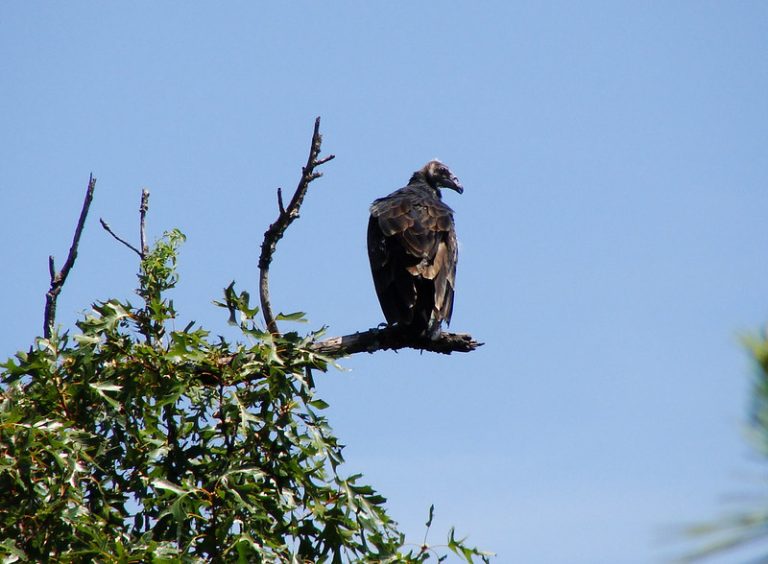
The bills, one in the U.S. House and the other in the Senate, target Coragyps atratus, the black vulture, a bird protected under the Migratory Bird Treaty Act of 1918. The law enacts treaties between the United States and Canada, in 1916; Mexico in 1936, Japan in 1972, and Russia in 1976. The law prohibits the “take” — killing, capturing, selling, trading, and transport — of protected migratory bird species without prior authorization by the Department of Interior U.S. Fish and Wildlife Service.

Black vultures are the subject of two bills filed in Congress.

Vultures are known to be carrion-eaters, cleaning up roadkill or other carcasses. However, black vultures also hunt. Among its targets are newborn cattle, goats and sheep.

The species is found in North and South America and is listed by the International Union for Conservation of Nature as a species of “least concern.” While estimates suggest that black vultures are responsible for the loss of thousands of calves every year, as a protected species, the bird may not be killed without a permit.

Because of the complexities of the treaties, obtaining a permit is not a simple process and permits are limited. Arkansas producers, permits are available through an agreement with the Arkansas Farm Bureau. What once required a minimum of two or three weeks has been reduced to a couple of days.

The aim of the bills, HR1437 and S3358, both named the Black Vulture Relief Act of 2023, is to allow livestock producers to “take” black vultures without a permit so long as the take is necessary to protect livestock, said Brigit Rollins, staff attorney for the National Agricultural Law Center.

In November, Sen. Markwayne Mullin of Oklahoma introduced the Black Vulture Relief Act which would allow livestock producers to take black vultures without a permit so long as the take is necessary to protect livestock. A similar bill was introduced in the House last March by Rep. John Rose of Tennessee.

“It’s an issue that’s been gaining prominence over the last few years, so the fact that a bill has been introduced in Congress specifically addressing it speaks to how quickly this issue has risen in importance,” Rollins said.  

Cattle losses

Dana Martin Stewart of Martin Cattle Company in Judsonia has lost calves to vultures through the years. 

“It is extremely frustrating to see our calves hunted by vultures and to have very little recourse,” she said. “We spend a lot of extra time during calving season checking pastures, making sure they are up and able to nurse before the vultures get to them first.

“Losing a calf because of vultures is not only an economic loss, but also a loss of genetics that have been years in the making,” Stewart said.

In the fall of 2023, representatives from the National Cattlemen’s Beef Association and the United States Cattlemen’s Association testified to Congress about the costs of vulture predation.

“They were reporting that the number of producers affected by black vultures could range anywhere from 15 percent per state to as high as 33 percent of producers in heavily impacted areas such as Florida,” said Maggie Justice, extension beef production specialist for the University of Arkansas System Division of Agriculture.

The U.S. Department of Agriculture’s Wildlife Services reported “that black vulture attacks on cattle increased by almost 25 percent between 2020 to 2022, based on the cases in which they were called to assist,” Justice said.

“Oftentimes the vultures are going after calves as they are being born and the loss of a newborn calf can cost a producer on average, $2,000 or higher,” Justice said. “And that number only increases if the dam is harmed at this time as well.”

Quantifying attacks is difficult. Cows often calve out of sight of humans and humans often don’t catch the birds in the act of killing livestock.

“Some livestock producers might assume the loss was to a coyote. Other times it could be a stillborn calf,” said Becky McPeake, extension wildlife specialist for the University of Arkansas System Division of Agriculture. “By the time the producer arrives, they might see the vultures cleaning up the carcass, not knowing whether the birds caused the death or not.”

Vulture behavior

There are two vulture species in Arkansas. Turkey vultures are characterized by their red heads, and black vultures, with black heads. Both are year-round residents.

“Turkey vultures typically are solitary and seek carcasses by smell and sight. As a single bird, they are not known to take live animals and are relatively unaggressive,” McPeake said. “Black vultures are aggressive, as they work in groups and attack vulnerable animals. Black vultures are also known to follow a turkey vulture and rob them of their carcass.”

McPeake said that “some attribute climate change to their spread from their southern range into the U.S. As they have spread northward, more producers have been impacted.”

USDA, in its publication “Vultures,” also suggests that a ban on the pesticide DDT in 1972 may have also helped vulture populations.

“Also, vultures have benefited from fragmentation of the landscape by humans, which creates mosaics of forested and open areas for roosting, nesting and foraging,” the USDA publication states. “Vultures have clearly adapted and thrived in the presence of human activity.”  

Helping ranchers

Justice said if a producer does not have a permit, there are some ways to help protect their herd:

  • Making sure that cattle calve in areas near human activity. “This will not only help in case of emergencies during calving but can also help to keep an eye out for vultures taking an interest in your group.”
  • Scare off black vultures with loud noises so they won’t return to your pasture.
  • Find and change whatever is attracting the vultures to a pasture before they become established.
  • Consider adding guard animals to the herd such as guardian dogs or donkeys.

“The biggest piece of advice would be that as soon as you see a black vulture near your property reach out to your Wildlife Service and your county extension agent for assistance looking into the correct depredation permits, as well as reimbursement for animal losses through the Livestock Indemnity Program,” Justice said.

The Cooperative Extension Service has additional information on black vultures.

To learn about extension programs in Arkansas, contact your local Cooperative Extension Service agent or visit www.uaex.uada.edu. Follow us on X and Instagram at @AR_Extension. To learn more about Division of Agriculture research, visit the Arkansas Agricultural Experiment Station website: https://aaes.uada.edu. Follow on X at @ArkAgResearch. To learn more about the Division of Agriculture, visit https://uada.edu/. Follow us on X at @AgInArk.

About the Division of Agriculture

The University of Arkansas System Division of Agriculture’s mission is to strengthen agriculture, communities, and families by connecting trusted research to the adoption of best practices. Through the Agricultural Experiment Station and the Cooperative Extension Service, the Division of Agriculture conducts research and extension work within the nation’s historic land grant education system.

The Division of Agriculture is one of 20 entities within the University of Arkansas System. It has offices in all 75 counties in Arkansas and faculty on five system campuses.

The University of Arkansas System Division of Agriculture offers all its Extension and Research programs and services without regard to race, color, sex, gender identity, sexual orientation, national origin, religion, age, disability, marital or veteran status, genetic information, or any other legally protected status, and is an Affirmative Action/Equal Opportunity Employer.

“Just Roll with It” Serving up Recipes and Humor

By Sheri Hopkins, Lifestyle Contributor

Hello everyone! Hopefully everyone has water. Hopefully no more -2 degree temps this year. I have told y’all before, I am not a cold weather fan. No pun intended, ha ha!

I know y’all know about some of my quirks and hangups. I don’t have as many as my sister, Pam. She is a whole series on her own. I hope she doesn’t read this. I’m going to tell you this much, one year, we took a road trip to see my grands when they lived in Ohio. On our way home, we were driving through St. Louis, and it was nighttime, and I couldn’t wait to see the arches. My sister Pam has her head in the floorboard of the car and a blanket over her head. She would not look at it. I told her she was really missing out, but she never did look at it. Don’t ask me why. I have no clue. That’s my sister, Pam. Here is my latest stunt. Ethan calls me last night and says he is broken down at exit 12 in Ft. Smith. I call his uncle Jacob to go to his recuse. No luck getting it started, so I called a wrecker and have it towed. Jacob stays “I will meet you in Greenwood.” He says to meet in that parking lot by Tractor Supply where all the cars park. Ok, gotcha. See ya there. I turn at the new light on Highway 71 and see them in that parking lot and I just drove on by. Yes, I have a hard time making turns, I miss exits and driveways. I just passed them by and pulled in Tractor Supply and turned around to make another stab at it. I drove right by the turn…again! As I expected, the phone rings, and it’s Jacob. “What are you doing?!? We busted out laughing. I said “I can’t turn in.” Him and Ethan set there and watched me drive by them, but not turn in. They laughed and laughed.

It all started when I was 18 and I was going to Vo-Tech in Ozark. We had to go to some kind of convention in Hot Springs. My friends, Lisa, Debbie, Sharon and I loaded up and headed to the Arlington Hotel to spend the weekend for this convention, I can’t remember what it was all about. I was driving and we circled that Arlington Hotel I can’t tell you how many times before I could turn in. It’s crazy I know, but I can’t help it.

Jacob said, “mom that was like Deja Vu.” He said “remember when we used to visit dad in Conway when he worked there, and you kept driving by the hotel and wouldn’t turn in.” Of course, I remember that. Jacob and his dad made fun of me for years over it. Now that y’all know how crazy I am you have a better understanding of why my family thinks I’m crazy. I laughed so hard last night I got choked. I can’t tell you how many exits, streets, roads and driveways I have missed in my life.

This week’s recipe is for spaghetti pizza casserole, I hope you enjoy it. I made the angel food cake mix and can of peaches recipe Tuesday and it is one of my favorites.

PIZZA SPAGHETTI CASSEROLE
1 pound of spaghetti (cooked but not super soft)
2 eggs
1/2 cup milk
1 cup mozzarella cheese
3/4 teaspoon garlic powder
1/2 teaspoon salt
Pizza toppings: 32 oz. of spaghetti sauce, 1 teaspoon oregano, 3 cups mozzarella cheese, 5 oz. of pepperoni you can change that topping to whatever you like, sausage, onion or mushrooms. You decide what you like best. Mix the eggs, milk, 1 cup of mozzarella cheese, garlic powder and salt. Add mixture to the cooked spaghetti and spread into a greased 15x10x1 pan or close to this. Bake at 350 degrees for 15 minutes. Make pizza topping by combining the spaghetti sauce and oregano and spread evenly over the baked spaghetti. Sprinkle on remaining cheese and pepperoni or other toppings. Bake for 30 minutes and let stand for 5 minutes before severing. Enjoy and have a great week!

County Line & Paris Take Opal Pistole Tournament Titles

0

COUNTY LINE- County Line High School hosted the 2024 Opal Pistole junior high tournament last week. As one of the premier junior high basketball tournaments in the state, the tournament has always provided fans with a glimpse into the near futures of their senior high basketball teams.

This year, the tournament finals were dominated by Logan County teams.

In the girls’ bracket, it was the junior high Lady Indians of County Line defeating Danville by the score of 30-23 for the girls tournament title. In boys action, the Paris junior high Eagles defeated Logan County neighbor Scranton by the score of 38-30 to claim the boys tournament title.

Fans from Danville, Scranton, County Line, and Paris can all be excited by the play of their junior high teams as they look forward to their futures in senior high basketball. Congratulations to the players and coaches!

The County Line junior high girls defeated Danville for the Opal Pistole Tournament title (Image Special to RNN Sports / Celia Looney)

Thanks to the coaches and staff at County Line High School for their hospitality and for again hosting a great tournament. The winter weather did not impede the staff in completing this tournament, and all of the many volunteers and staff members who hosted this tournament deserve a great deal of credit for a job well done!

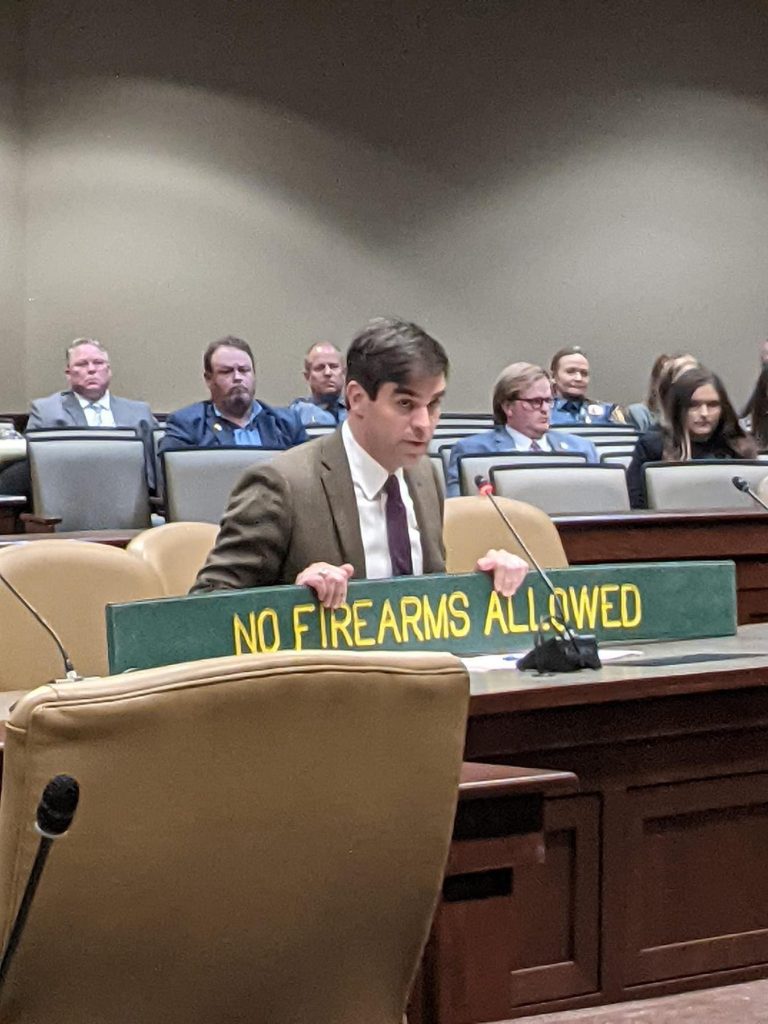
Senator Rice, GO-AR Spearhead Effort in AGFC “No Firearms Allowed” Signage Removal

When it comes to protecting your God-given right to keep and bear arms, the organization GO-AR is consistent in reviewing and crafting legislation to preserve that freedom. One of the state’s legislative 2A champion is local Senator, Terry Rice.

In the summer of 2023, members of the GO-AR action committee presented legislators with an issue concerning signage by the Arkansas Game and Fish Commission. The signs, located at parks, lakes and boat docks across the state read, “NO FIREARMS ALLOWED.”

“They had five rules, which, at face value, appeared to be inconsistent with state law. However, once further research was completed, they did have exemptions the average person wouldn’t find, and we hope that will be addressed.” stated GO-AR President, Gary Epperson.

GO-AR members began contacting legislators, including Senator Rice, who serves on the Game and Fish/State Police Subcommittee of the Arkansas Legislative Council. Noting that the Game & Fish Rules were inconsistent with Arkansas gun laws.

Fast forward to November of 2023, the signs remained but with promise by the AGFC director to come down. Over the course of the next few months, those prohibited signs began to come down.

Senator Rice followed up with Director Austin Booth in a subcommittee meeting. Booth admitted that “miscommunication” was the reason why so many signs remained posted and recognized that new ones had been added. One of those in the Senator’s own backyard, at the Hinkle Lake access area. Booth stated it was “totally unacceptable” and took full responsibility. Booth noted that he was encouraged by the dialogue and effort for his agency to reflect accurately current gun laws. “It’s taken us a very long time to get to this point,” admitted Booth. “If I could snap my fingers overnight and wish all the signs to be fixed, then that’s what I would do without hesitation. It is going to take us some time to evaluate ever single green sign we have in Arkansas…”

AGFC Director Austin Booth

Senator Rice commended Booths’ efforts and noted, “it’s better, and I appreciate what has been done… I hope you and the commission can relay to them that for the game and fish to be successful, have good relationships and to abide by the State of Arkansas laws, they need to listen to the director and commissioner…”

Senator and Co-Chair, Ricky Hill responded to the exchange inquiring how constituents can report a sign. “The short answer is, we have lots of options…they can email me: [email protected], or [email protected] or let any of their legislators know. The sooner we find out where they are, the better.”

Hill commended the working efforts by the AGFC, stating “we can get a lot more accomplished when we work together…Government as a whole listening.” Hill himself has worked with the Arkansas Department of Transportation to ensure those same signs were removed from rest areas.

“The Arkansas Game and Fish meeting held by the ALC Committee today proved to be a highly productive gathering for Gunowners in the state,” shared President Gary Epperson. “My feelings towards Director Booth is that he is far more supportive of 2A than previous directors. Gun Owners of Arkansas would like to extend our appreciation to all the Legislators, Director Booth, and above all, our valued paid members who contribute to the success of our organization. This is just a prelude of all Arkansas gun laws being reviewed and simplified with GO-AR leading the effort.”

To learn more about GO-AR, and their mission, you can visit: Gun Owners of Arkansas (gunownersarkansas.org).

Solar Eclipse Enthusiasts: Choose Magazine!

NOTE TO OUR READERS: The following story was sourced directly and in its entirety from Mr. Jonathan Gipson, social media director, Magazine School District. Mr. Gipson is a RNN Sports contributor, and we thank him for bringing this story to our readers.

MAGAZINE – In about 2 ½  months, it’s estimated that the State of Arkansas will be welcoming upwards of 1.5 million visitors for the solar eclipse.

With the City of Magazine and the River Valley being in the solar eclipse’s projected “path of totality”, many of those visitors are expected to call this area home during the weekend leading up to and the day of the eclipse on Monday, April 8.

Most traditional lodging options – hotels, motels and lodges – throughout the River Valley have been booked for quite some time now, but Magazine Schools is offering visitors a unique opportunity for outdoor lodging on its spacious campus at an affordable price.

Magazine Schools EAST students recently launched a website – Arkansas Eclipse Camping – promoting the many on-campus lodging and solar eclipse view opportunities available for visitors to choose. 

By visiting www.arkansaseclipsecamping.org, visitors can reserve RV sites and primitive tent camping sites for the weekend and day of the solar eclipse or viewing sites for the day of the solar eclipse. Meals also will be available for purchase each day.

Out-of-area visitors wishing to learn more about the Magazine area, like goods and services available, to see an eclipse simulator for a look at what the eclipse will likely look like in Magazine or to see a map of the area can visit the school’s website page – https://www.magazinek12.com/o/magazine-school-district/page/campsites2024 – which also has a link to the Arkansas Eclipse Camping website.

In anticipation of the increase in traffic on our area roadways and the timing of the eclipse — it will start at 12:31 p.m. and end at 3:09 p.m. — on April 8, school will not be in session at Magazine that day.

Rare dual brood emergence of cicadas coming this spring

By Mary Hightower
U of Arkansas System Division of Agriculture

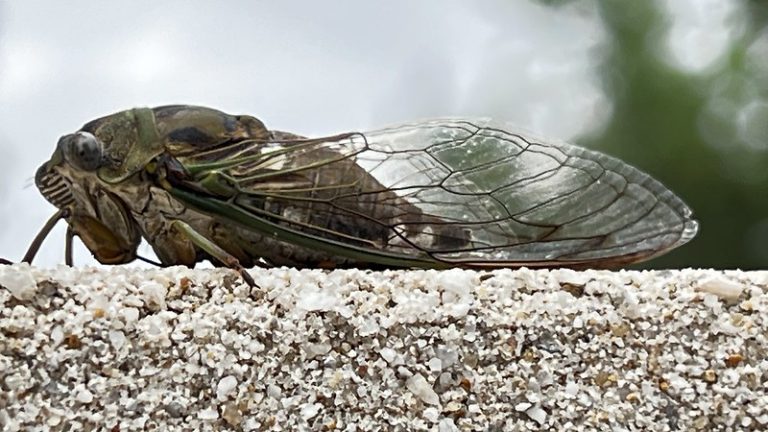
Entomologists say two broods of periodic cicadas will be making a rare simultaneous emergence this spring. The last time this happened in the U.S. was in 1803 and the next one won’t happen for another 221 years.  

Arkansas is home to brood XIX, a group whose adult insects emerge every 13 years. The brood’s last emergence was 2011 and the next will be 2037. Brood XIII, which emerges every 17 years, last emerged in 2007 and will again emerge in 2041. Brood XIX is the largest 13-year brood in the United States, covering 15 states.

Cicadas spend most of their lives underground as nymphs, then “they all emerge at once, in an effort to overwhelm their natural predators by sheer numbers,” said Jon Zawislak, extension assistant professor-apiculture and urban entomology. “Anything that might want to eat a cicada will be able to get a belly full, so the rest can survive to continue the species.”

The insects know how to turn up the volume, often hitting 90-100 decibels, louder than a hair drier.

“I remember camping near the Buffalo River in the early summer of 1998, and it was LOUD,” he said. “Also, you couldn’t catch a fish to save your life. They were all so full of cicadas they couldn’t be tempted by anything else.”

Brood XIII is found in Illinois, Indiana, Iowa, Michigan and Wisconsin. Brood XIX can be found in Alabama, Arkansas, Georgia, Iowa, Illinois, Indiana, Kentucky, Louisiana, Maryland, Missouri, Mississippi, North Carolina, Oklahoma, South Carolina, Tennessee and Virginia.

“We will see and hear a lot of the Brood XIX in Arkansas. Brood XIII will mostly be in northern states,” he said. “If you really want to be at ground zero for all the cicada action, you might trek to Springfield, Illinois, where there will be a lot of overlap.”

Zawislak said the two broods won’t be alone.

“There are a number of annual cicadas that will come out and there are often some stragglers from other broods that don’t quite synchronize with the rest of their group,” he said. “Arkansas is home to 20 different species of cicada.”

The brood that will emerge in Arkansas is of a species called Magicicada tredecassini, which emerges this April-May-June.

“But you will see and hear other cicada species every year, that come out later, ranging from April to November, especially members of the genera Neotibicen and Megatibicen. Factors like temperature and rainfall will affect how soon they emerge and how long they stay around,” Zawislak said.

What is that noise?

The cicadas’ unique sounds are part of their mating process. In their “choruses,” adult males “sing” by vibrating a membrane on the sides of their bodies called a tymbal. Females can make clicking noises to indicate they are ready to mate. 

The song of the African cicada, Brevisana brevis, can hit 107 decibels from 20 inches away. That compares to a chainsaw, which can hit 110 decibels from the same distance, according to the University of Nebraska at Lincoln.

John Lovett, science editor for the Arkansas Agricultural Experiment Station, had to improvise a solution when the din grew too loud during a camping stop near the Cumberland Gap.

“I had to stuff napkins in my ears to sleep and that didn’t even really work well,” he said. “A Dutchman in yellow wooden clogs came by my camp the next morning to talk about the cicadas over coffee. I think he was as impressed by the cicadas as I was his shoes.”

Lifecycle

After mating, the females lay eggs on tree branches and the adults die soon after. 

“They are only around making noise for about four to six weeks,” Zawislak said. “After a few weeks the nymphs emerge from the eggs and drop to the ground, where they dig down and feed on the sap from tree roots for years.”

The nymphs may feed on roots of smaller plants first, then switch to tree roots when they are older. 

“After their allotted time, they crawl out and up onto something vertical like a plant stem, tree trunk, or a house, fence post or mailbox and molt one last time, emerging as winged adults,” Zawislak said. “Most people have probably seen the hollow shed exoskeletons around in late spring or early summer.

“They are neat creatures. And large,” he said. “Most sap-feeding insects don’t get that large, which is why they take so long to grow. But when they appear all at once, they become a feast for small predators. Which gives those animals a population boost.  Which gives larger apex predators a population boost. These big bugs are an important link in the food chain, between trees — feeding on sunlight — and big, majestic wildlife.”

They might also become a feast for pets, but owners shouldn’t worry.

“I do not know of any poisonous or toxic effect that cicadas may have on pets that happen to eat one or more,” said Jeremy Powell professor of animal science and veterinarian for the Division of Agriculture. “However, they do have that very heavy exoskeleton that could be hard for pets to digest and may lead to some minor intestinal upset. That scenario would likely be short-lived.”

Mistaken identity

Zawislak said the cicadas are sometimes called locusts.

“Early European colonists who had never encountered them before likened the sudden appearance of giant insects to a biblical plague, even though they did not eat crops like a hungry hoard of grasshoppers,” he said. “Once the adults emerge, it’s back to singing and making more cicadas. So, it’s one generation every 13 years for this brood.”

The CDC notes that it is not claiming that exposure to cicada sounds is harmful.

To learn about extension programs in Arkansas, contact your local Cooperative Extension Service agent or visit www.uaex.uada.edu. Follow us on X and Instagram at @AR_Extension. To learn more about Division of Agriculture research, visit the Arkansas Agricultural Experiment Station website: https://aaes.uada.edu. Follow on X at @ArkAgResearch. To learn more about the Division of Agriculture, visit https://uada.edu/. Follow us on X at @AgInArk.

About the Division of Agriculture

The University of Arkansas System Division of Agriculture’s mission is to strengthen agriculture, communities, and families by connecting trusted research to the adoption of best practices. Through the Agricultural Experiment Station and the Cooperative Extension Service, the Division of Agriculture conducts research and extension work within the nation’s historic land grant education system.

The Division of Agriculture is one of 20 entities within the University of Arkansas System. It has offices in all 75 counties in Arkansas and faculty on five system campuses.

The University of Arkansas System Division of Agriculture offers all its Extension and Research programs and services without regard to race, color, sex, gender identity, sexual orientation, national origin, religion, age, disability, marital or veteran status, genetic information, or any other legally protected status, and is an Affirmative Action/Equal Opportunity Employer.

Treasury bonds: Still safe for investors

You may have read reports about an impending “debt crisis” in the U.S. Should you be worried about investing in Treasury securities?

Part of the concern over debt has been driven by the cost of government borrowing, which has risen because of higher interest rates. But it’s worth noting that while interest expenses have risen to nearly 2% of gross domestic product (GDP), this measure had exceeded 3% in the early 1990s. So, while the upward trend of federal debt could prove problematic down the road, the claims of a current crisis may be overblown. And Treasury securities are still considered among the safest investments in the world, as they are secured by the full faith and credit — that is, the ability to borrow and tax — of the United States.

In any case, if you haven’t invested in Treasury securities, you’ll want to know the basics. First of all, when you purchase a Treasury security, you’re lending money to the federal government for a specific period of time.

Here are your purchase options:

• Treasury bill – Typically matures in four, 13 or 26 weeks, although some have maturities of up to a year.

• Treasury note – Matures between one and 10 years.

• Treasury bond – Typically matures in 10 to 30 years.

When you buy Treasury notes or bonds, you receive semiannual interest payments, but when you purchase a Treasury bill — a T-bill — you generally buy it a discount, and when the bill matures, you receive its face value. So, for instance, you might pay $4,700 for a 13-week T-bill and get $5,000 back at the end of the three months.

When investing in Treasury securities, you’ll want to keep these features in mind:

• Price fluctuation – While your interest payments will always remain the same, the market value of your Treasury security can change. So, you might not get face value for a Treasury bond if you sell it before it matures, particularly if market interest rates are higher than the rate you’ve been receiving. Because longer-term bonds have more payments left to make than shorter-term ones, they are more sensitive to interest rate changes and market price fluctuations.

• Taxes – Interest income from Treasury securities is subject to federal income tax but exempt from state and local taxes.

In addition to the traditional Treasury bonds, bills and notes, another option is available: Treasury Inflation-Protected Securities (TIPS). Unlike other Treasury securities, in which the

principal is fixed, the principal of a TIPS can move up or down, based on movements in the Consumer Price Index for Urban Consumers (CPI-U). Once your TIPS matures, if the principal is higher than the original amount, you’ll get the increased amount; if the principal is equal to or less than the original amount, you’ll get the original amount. TIPS pay a fixed interest rate semiannually until maturity, but because interest is paid on the adjusted principal, the amount of your interest payments can vary. As with other Treasury securities, you can hold a TIPS until maturity or sell it before it matures.

Don’t let scary or gloomy predictions discourage you from considering Treasuries — they remain a good option as part of the fixed-income portion of your investment portfolio.

This article is provided by Jeffrey O’Neal, Financial Advisor

Edward Jones
20 N Express St, Paris, AR 72855
479-963-1321
jeffrey.o’[email protected]
edwardjones.com/jeffrey-o’neal
Edward Jones, Member SIPC