

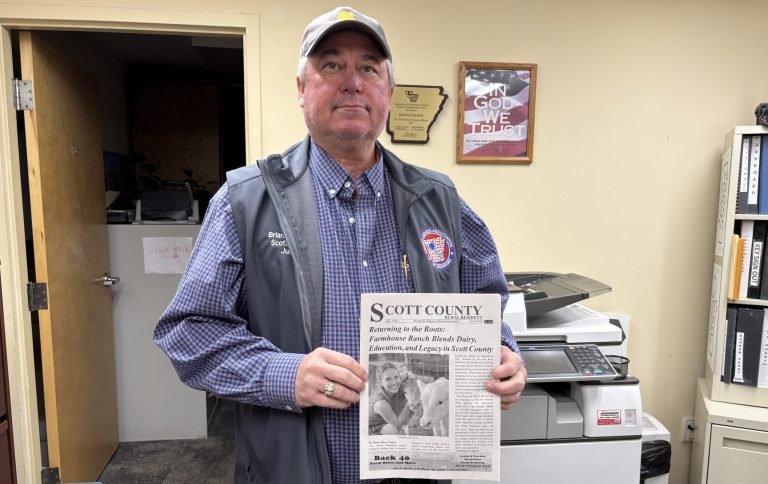
Resident News Network Owner and Publisher Jason Baggett has announced the addition of a new publication to its growing family of newspapers—a monthly edition dedicated to the rural residents of Scott County.
The new publication, titled Scott County Rural Resident, will focus on locally curated content tailored to the interests and lifestyle of the county’s rural communities. While some stories will be shared with Resident News Network’s weekly publication, much of the content will be unique to the monthly edition.
The Rural Resident will be distributed free of charge at locations throughout Scott County. However, due to limited quantities, paid subscriptions will also be available for those who wish to receive a guaranteed copy each month.
Content will include coverage of farming and ranching, community news, and stories authored by local residents, offering a platform for neighbors to share their voices and experiences.
“We are truly honored to meet, and hopefully exceed, the expectations of our readership and following.” Baggett said. “We are the only 100 percent locally owned news source printing in county. We believe firmly in local supporting local. We aren’t driven by political agendas, and we hold tight the promise to report fair, accurate news.”
That promise includes the “do no harm” principle, recognizing that while reporting serves the public interest, care should be taken to minimize unnecessary harm. “We do not file unnecessary FOIA requests, nor do we use them as a weapon,” continued Baggett. “We do not use our position or influence to overpower entities, agencies, or individuals.”
For more information about the Scott County Rural Resident, contact Resident News Network at 479-207-2268.
Resident News Launches Rural Publication
Obituary: Sam McCutcheon (1935-2026)
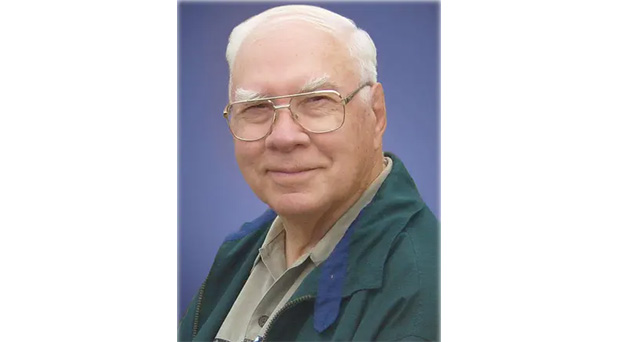
Sam McCutcheon, 94, beloved husband, father, and innovator, passed away Tuesday, April 21, 2026 in Paris, Arkansas leaving a legacy of determination and achievement. Born of humble beginnings in Stidham, Oklahoma, Sam’s early life was marked by resilience as his family moved to California during the Dust Bowl in 1935. His father worked as a hired farm hand, and the family relocated frequently according to the crop seasons, eventually settling in the San Joaquin Valley of California.
He graduated from Ceres High School in 1949, serving as President of his class and participating in track & field as a hurdler, as well as the Marching Band playing the Sousaphone. Upon graduation, his father secured him a job at a parts store, but Sam aspired to pursue higher education and set his sights on college.
Sam joined the Air Force weather service, spending most of his time during the Korean War in Fairbanks, Alaska. He flew weather missions up to the North Pole and enjoyed sharing stories about “flying around the world in 2 minutes!” After his honorable discharge, he used the G.I. Bill to attend California Polytechnic University in San Luis Obispo. There, he earned a bachelor’s degree in electrical engineering and was later recognized as an Honored Alumni by the Engineering school.
After working for various electronic firms, Sam founded his own company, Autek Systems, in Silicon Valley (Sunnyvale). He quickly became one of the top 10 leaders in the U.S. in Testing Systems, acquiring over 30 patents. His innovative systems served the US Government and NASA, marking him as a pioneer in his field.
He met Dr. Lee Lane, who worked in the same industry, and they were married on May 30th, 1987. Together, they raised a blended family of eight children. Sam and Lee made their home in Coronado, working together in San Diego alongside Sam’s oldest son, Dan McCutcheon, until their retirement.
Airplanes were Sam’s lifelong passion. When not working, he was flying—often taking his family on vacations that revolved around airports. He never met an engine that didn’t fascinate him, and he loved sharing his technical knowledge with others. Sam held rankings for many aircraft types, including jets and seaplanes, and from his early 30s into his 60s, always owned and flew his own airplane. He taught two sons and a daughter to fly, and inspired his stepson, David Lane, to become a professional pilot with the Marines and later with UPS. While in San Diego, Sam became president of the Experimental Aircraft Association (E.A.A.).
In retirement, Sam and Lee moved back to Lee’s hometown of Paris, Arkansas. Sam continued to blend his engineering expertise with his love for aviation, continually designing his own airplane. Even as dementia took away some of his brilliance, he remained kind-hearted and generous, cherished by all who knew him. He is greatly missed.
He is survived by his wife of 38 years, Dr. Lillie Lee Lane of (Paris, AR), his children; Jan Stewart (husband Richard) of San Ramon, CA, Marlene Hogge (husband Steve deceased) of Arroyo Grande, CA, Carol Aguilar (husband Luis) of Los Gatos, CA, Daniel McCutcheon (wife Brenda) of San Diego, CA, David McCutcheon (wife Karen) of San Jose, CA, Robert McCutcheon (wife Elsa) of Fremont, CA, David Lane (wife Hannah) of Carlsbad, CA and Alan Lane (wife Terri) of Fayetteville, AR; 14 grandchildren and 2 great-grandchildren.
A Celebration of Life service will be held on what would have been his 95th birthday, June 29, 2026 at the First Christian Church in Paris, AR.
State Capitol Week in Review from Senator Terry Rice

Some highlights from the third week of the Arkansas General Assembly’s Fiscal Session:
Senator Dave Wallace sponsored a bill to declare April 21 as Arkansas Lineworker Appreciation Day. A large group of electrical lineworkers were present in the public galleries. These dedicated workers serve our state at great risk, often under harsh weather conditions.
Senator Greg Leding honored the late Senator Uvalde Rex Lindsey for his contributions to the state and his community. Senator Lindsey served the 4th District in the Arkansas Senate from 2013 to 2019, after previously serving in the House from 2009 to 2013. He passed away in July 2025.
Senator Reginald Murdock honored the Earle High School basketball teams. The Earle Bulldogs and Lady Bulldogs are both 2026 Class 1A State Champions. It’s rare for both the boys’ and girls’ teams from the same school to win the state championships!
The Senate approved the introduction of a bill to increase the Homestead Property Tax Credit, an Industrial Development Authorities Expansion bill, and a Protection from Sharia Law Property Rights bill.
Senator Matt McKee congratulated students from the Arkansas School for Mathematics, Sciences, and the Arts on their science fair competition accomplishments. The students will compete in the Regeneron International Science and Engineering Fair in May. It is the world’s largest STEM competition, featuring nearly $9 million in awards.
The Joint Budget Committee passed the report of the Special Language subcommittee. Among other items, the report included language added to HB1007 to manage separation funding for isolated school districts. Proposed by Senator Missy Irwin, this addition deals with funding and asset division for small, isolated schools that are separating from larger districts with which they were previously consolidated.
The Senate wrapped up the third week of the Fiscal Session by approving appropriation bills, including those related to the University of Arkansas, the Arkansas School for the Deaf and Blind, and departments and state agencies such as the Department of Agriculture, the Division of Career and Technical Education, and more.
Senator Jim Petty honored Justin Tate, a Special Olympian from Arkansas. Justin is one of only eight Special Olympians chosen as Guardians of the Flame in the final leg of the Law Enforcement Torch Run for the 2026 Special Olympics USA Games. Justin will carry the Flame of Hope to the opening ceremonies. He will run across the United States starting May 30, 2026 until the beginning of the opening ceremonies in Minneapolis on June 20, 2026.
The legislature’s sessions are open to the public. You can attend in person at the State Capitol complex in the committee rooms or in the public galleries of the Senate and House chambers. You can also watch meetings live and on demand at https://senate.arkansas.gov.
You can read and download PDFs of the bills that have been filed for the session at https://arkleg.state.ar.us/. Click on “Bills” in the menu, where you can search by keyword or filing date.
New project ‘floats’ idea of solar panels on irrigation reservoirs
By John Lovett
University of Arkansas Division of Agriculture
Electricity and water don’t usually mix, but technological advancements in floating solar arrays open the potential to generate electricity while decreasing impacts on farm irrigation reservoirs and agricultural land.
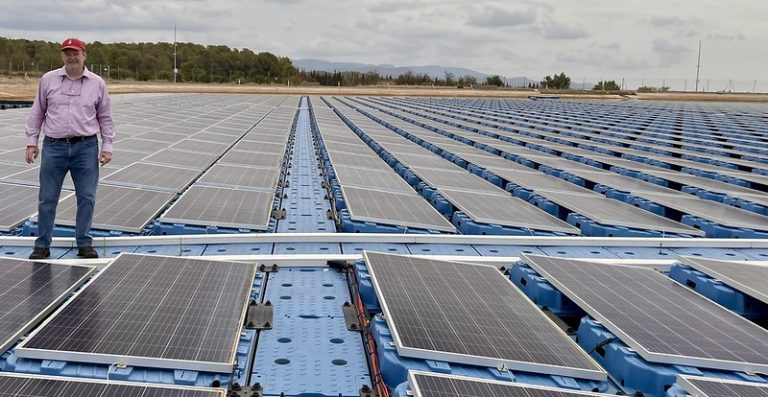
Michael Popp with the Arkansas Agricultural Experiment Station is undertaking a new research project to test solar arrays on the reservoir at the Rice Research and Extension Center in Stuttgart.
“The goals are to not convert agricultural land to solar panel use, save irrigation water and create a synergy between utility companies, solar investors, farmers and policymakers,” said Popp, the Harold F. Ohlendorf Professor of Farm Management in the department of agricultural economics and agribusiness for the experiment station and the Dale Bumpers College of Agricultural, Food and Life Sciences at the University of Arkansas.
The experiment station is the research arm of the University of Arkansas Division of Agriculture.
Floating solar systems are also not visually intrusive when compared to traditional land-based photovoltaic systems, Popp said, because the embankments of the reservoir serve as a barrier to block sight of the systems.
Ryan Loy, an assistant professor and extension agricultural economist with the Division of Agriculture, recently joined Popp to talk about the project in an episode of the “Morning Coffee and Ag Markets” podcast for the Fryar Price Risk Management Center of Excellence.
Public perception survey
Popp and his collaborators are currently surveying Mid-South households and farmers on their perceptions of floating solar arrays and their willingness to pay for not diverting agricultural land to solar. The survey is set to expire on May 15.
The survey is available online.
Collaborators on the project, which is funded by Popp’s endowed chair position and the Division of Agriculture, include Chris Henry, professor and water management engineer, and Yi Liang, associate professor emeritus — both with the department of biological and agricultural engineering — and a cadre of graduate and undergraduate honors students.
Anchors aweigh
At the Rice Research and Extension Center, anchors have been placed for buoys to hold the 70-kilowatt, 96-panel floating solar array on about 0.1 acre of a 40-acre reservoir, along with 24 more panels on the reservoir embankment. The panels are expected to be installed in May, Popp said.
Although used in other parts of the nation and world, the research project will help determine economic feasibility within Arkansas, as well as practical operation and maintenance routines of a floating solar array for the unique characteristics of Arkansas. For example, Arkansas’ Delta is situated in the Mississippi Flyway, and Popp would like to see how migratory birds may react to the floating solar array.
The system will also provide a platform for new areas of research for graduate students in agricultural economics and agricultural engineering.
Potential benefits of floating solar
In addition to not taking up farmland for solar energy, Popp said the benefits of floating solar systems include a reduction of water evaporation by 25 to 50 percent, depending on the amount of coverage over the water body.
It remains to be definitively seen on smaller systems, Popp said, but by blocking light on the water, the floating panels may also reduce algal growth that fouls irrigation equipment.
Because floating solar panels are installed at a lesser angle than land-based systems, a 2020 study in Brazil also suggested less area is needed to produce the same amount of electricity.
“Our calculations suggest that of the available surface areas of water and embankments on irrigation reservoirs, it would require approximately 2.2 to 2.6 acres per megawatt,” Popp said.
That’s about half as much as land-based systems, which require about 5.5 to 9 acres per megawatt because of shading issues and the need to manage vegetation.
“Land installations tend to have a larger surface area footprint,” Popp said. “Not only are we not using agricultural land, but we’re also using less surface area per megawatt.”
Driving forces of solar on farmland
Solar land leases have become a financially attractive proposition to farmers in relation to what they could get from leasing it to a tenant farmer, Popp said. Utility-scale solar installations were projected last year to occupy about 0.2 percent of Arkansas’s 13.7 million acres of agricultural land, rising to an estimated 1.7 percent of cropland in select counties.
With preference for land-based solar arrays given to cleared, level and well-drained land, parcels commonly displace cropland near transmission stations but can also be found on marginally productive farmland, Popp said.
A solar land lease can range from about $450 to as much as $2,500 an acre. Comparatively, cash rent per acre for tenant farmers in Arkansas has averaged about $50 an acre for non-irrigated cropland, $150 for irrigated cropland, and $20 for pasture, according to a 2024 report by the U.S. Department of Agriculture’s National Agricultural Statistics Service.
To learn more about ag and food research in Arkansas, visit aaes.uada.edu. Follow the Arkansas Agricultural Experiment Station on LinkedIn and sign up for our monthly newsletter, the Arkansas Agricultural Research Report. To learn more about the Division of Agriculture, visit uada.edu. To learn about extension programs in Arkansas, contact your local Cooperative Extension Service agent or visit uaex.uada.edu.
About the Division of Agriculture
The University of Arkansas Division of Agriculture’s mission is to strengthen agriculture, communities, and families by connecting trusted research to the adoption of best practices. Through the Agricultural Experiment Station and the Cooperative Extension Service, the Division of Agriculture conducts research and extension work within the nation’s historic land grant education system.
The Division of Agriculture is one of 20 entities within the University of Arkansas System. It has offices in all 75 counties in Arkansas and faculty on three system campuses.
Pursuant to 7 CFR § 15.3, the University of Arkansas Division of Agriculture offers all its Extension and Research programs and services (including employment) without regard to race, color, sex, national origin, religion, age, disability, marital or veteran status, genetic information, sexual preference, pregnancy or any other legally protected status, and is an equal opportunity institution.
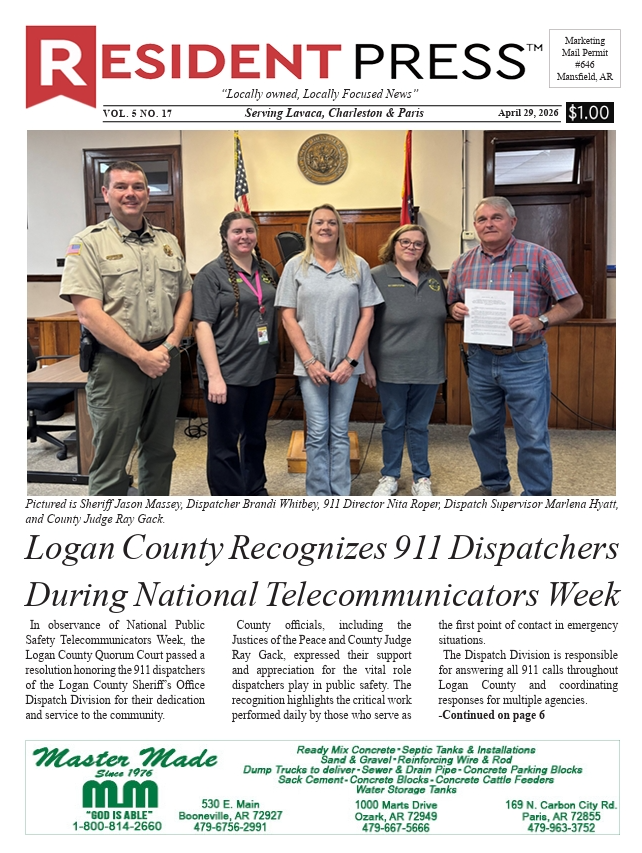
Charleston Archers Shine at State 3D Championship
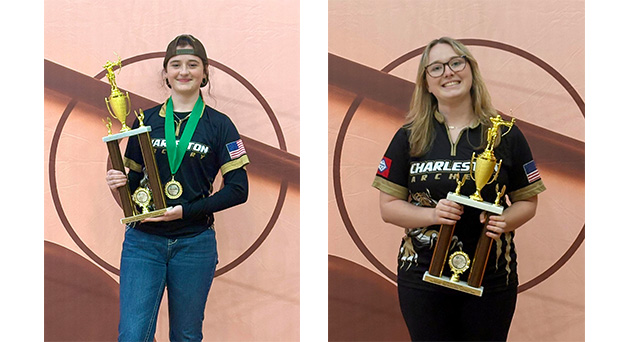
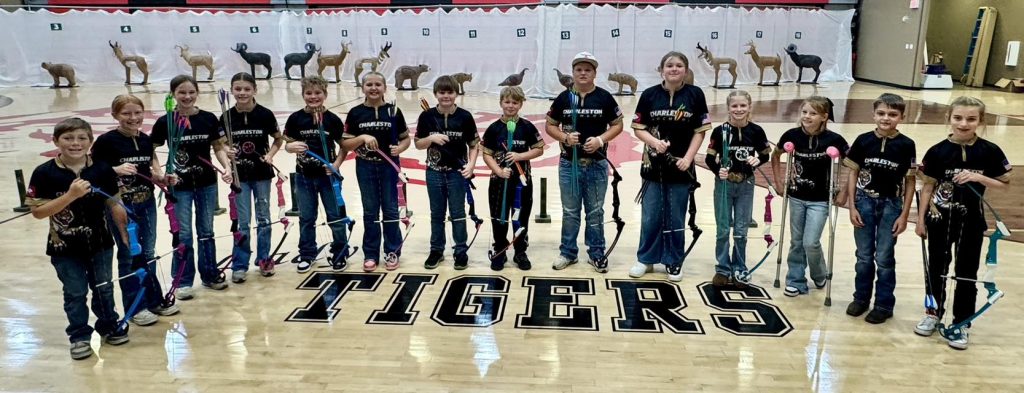
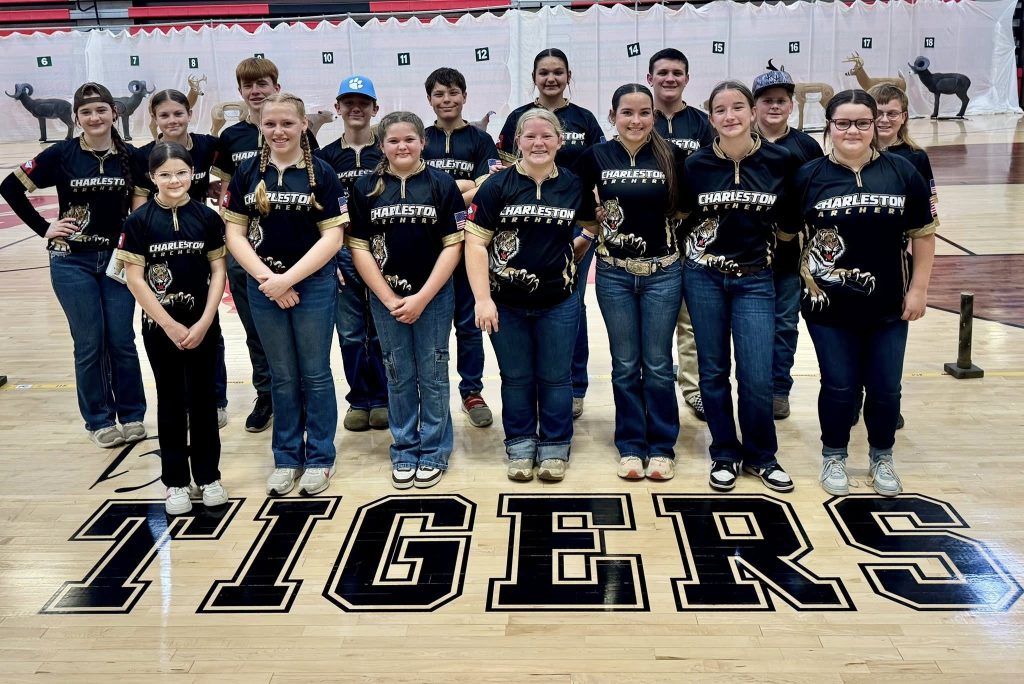
CHARLESTON — Charleston School District archers turned in a strong showing at the Arkansas Game and Fish Commission’s Archery in the Schools 3D State Championship, highlighted by multiple top finishes across high school, middle school, and elementary divisions.
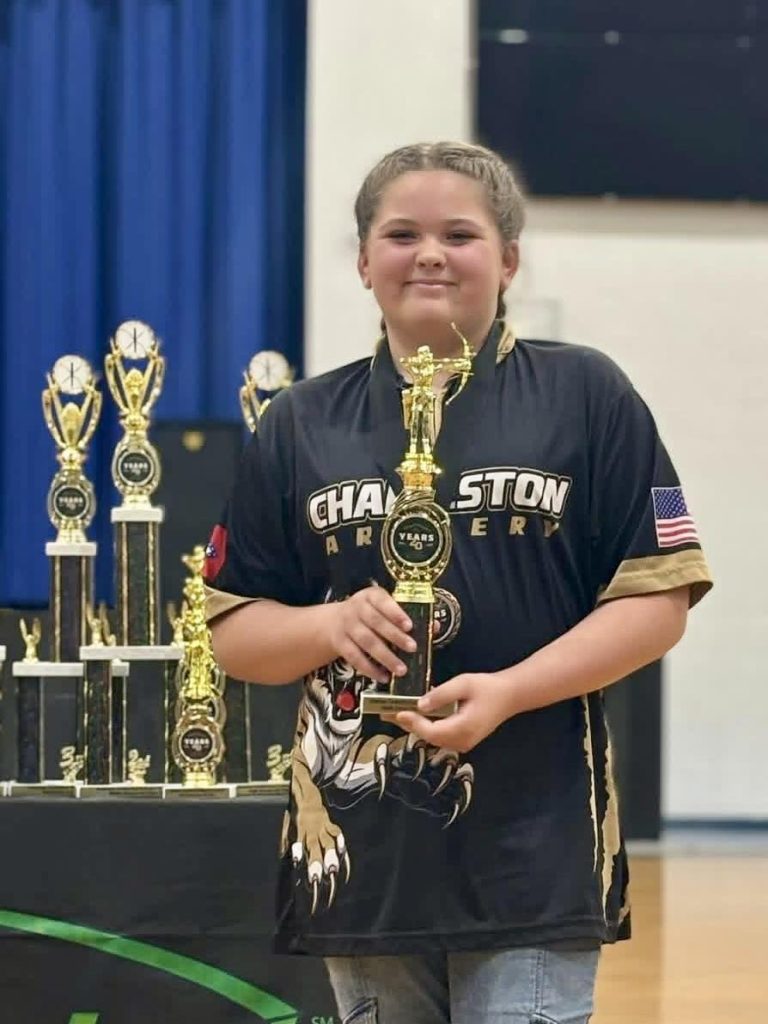
Competing April 10–11 at Pangburn High School, Charleston athletes demonstrated consistency and skill against some of the top programs in the state, with standout performances led by high school archer Maddie Johnson.
Johnson earned a second-place finish in the High School Girls Division, narrowly missing the top spot by just two points in a tightly contested competition. The margin came down to a single slightly off-target shot, underscoring the precision required at the state level.
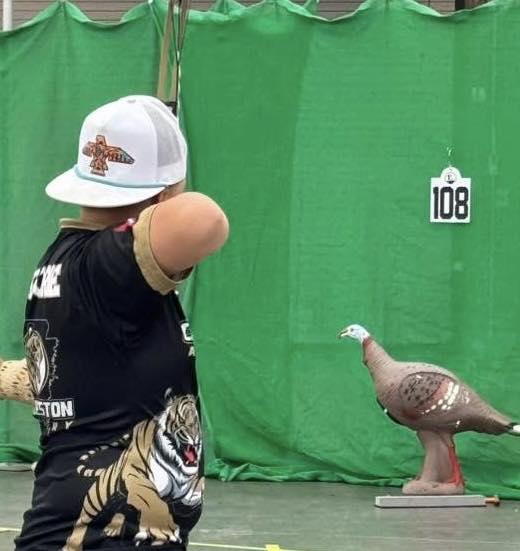
Charleston’s success extended into the middle school ranks, where Charleston Elementary secured a third-place team finish. Individually, Isabelle Turner claimed the state title in the Middle School Girls Division, bringing home first place and leading a strong showing for the program.
At the elementary level, Charleston Elementary again placed third as a team, with Cash Smrecker finishing fifth in the Elementary Boys Division to round out the district’s top individual performances.
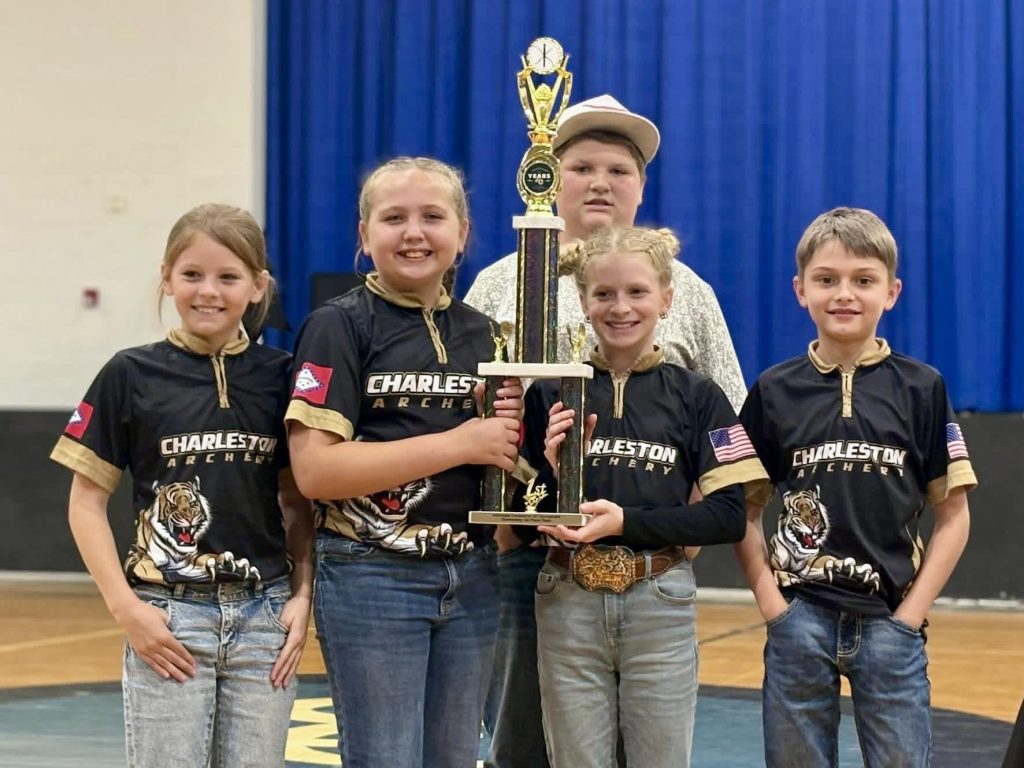
The statewide event drew 694 archers from 43 schools, competing in a 3D format that challenges participants to shoot at life-sized animal targets positioned at varying distances.
Charleston’s results reflect continued growth and competitiveness within its archery program, as student-athletes across all grade levels contributed to the district’s success on the state stage.
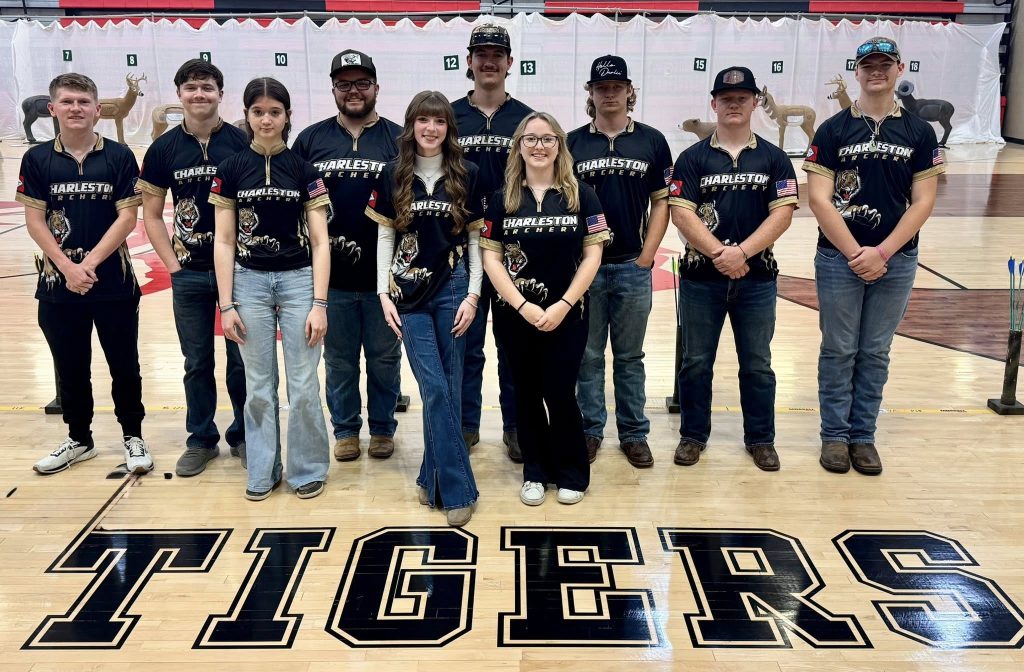
3D State Tournament 2026
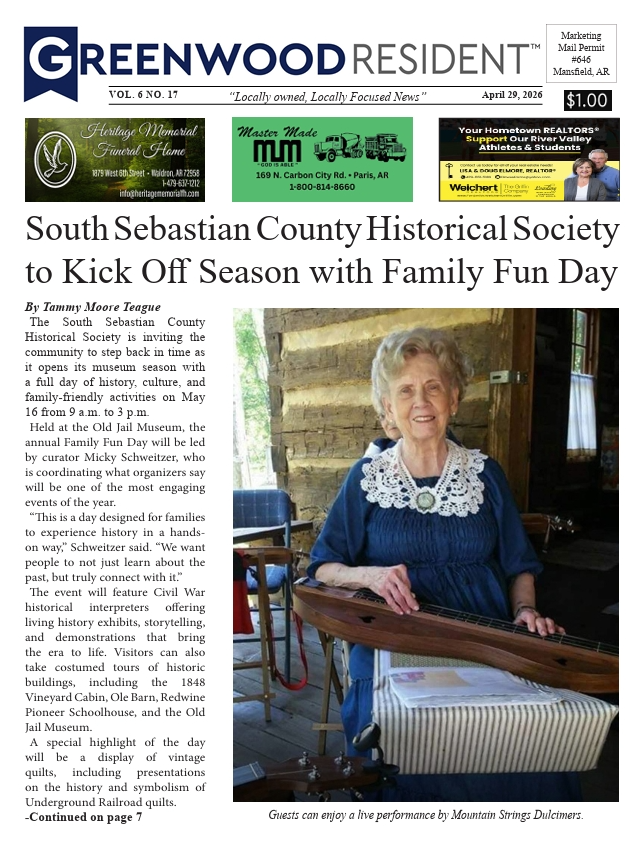
Timepiece: Trolleys and History
by Dr. Curtis Varnell
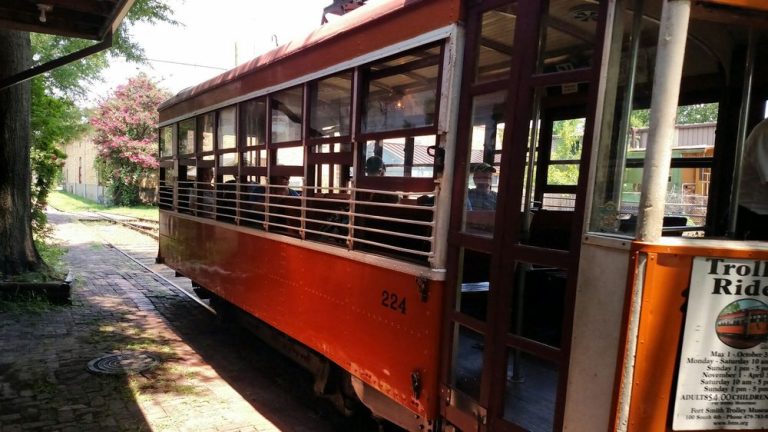
A long line of students snaked around the museum, eagerly awaiting their turn to ride the historic Fort Smith Trolley. On an outing from Paris schools, the group had already toured the grounds of the historic Fort Smith National Park and Judge Parkers courtroom. The trolley ride and then a trip to the Marshalls museum would round out the day for students and provide an historical background for much of the early history of Western Arkansas.
The historical trolley, restored and in operation since 19991, features electric powered streetcars that travel a route through downtown Fort Smith while the conductor provides historical narrative. The trolley looks much like it did in the late 18000’s and passes through the downtown area, stops at the Bass Reeves monument and the then reverses to travel past the Trolley Museum, the National Cemetery, and journeys a short distance into the downtown area. It often stops at the museum, allowing the students to clamber over old trains and streetcars that the association has collected over the years.
The Fort Smith trolley serves to remind of an era long gone, the period of time before the automobile when travel through town and into the suburbs was accomplished by a light rail system that carried passengers to and from outlying areas.
In the early 1800’s, engineers determined that horse-drawn vehicles set on rails would allow animals to carry many more passengers at a much more rapid rate than simple horse-drawn carriages. Rail systems developed throughout America, beginning in New York and spreading to Philadelphia, Detroit, and south to Memphis and New Orleans. After the Civil War, several of the lines switched to steam to power the trolleys and lines extended out greater distances into the countryside. Not only were the steam engines more efficient, they also eliminated the constant street cleaning associated with horse and mule power.
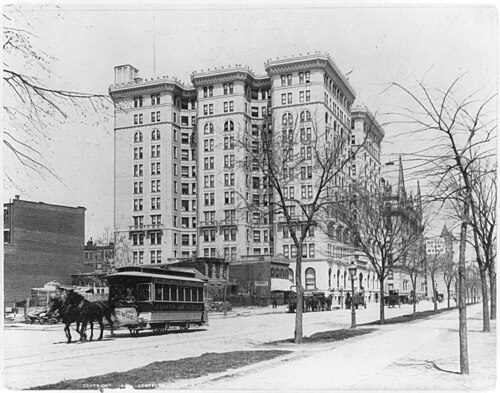
By the late 1800’s, electric power became the chosen source of power and electric lines were strung along the track with extensions running from car to electric wire powering the vehicles. Fort Smith had mule-drawn trolleys as early as 1883 but transitioned to electric in 1899. Other lines operated in Hot Springs. Little Rock, and other towns in the state. Especially in the larger towns, the lines allowed residents to move out of the downtown area and into the suburbs. The trolleys ran regular service to city attractions, amusement parks, and to the ever-popular baseball games.
The introduction of the automobile changed America. By the 1920’s, the road system opened up America to fast and easy transportation from business right back to your own personal driveway. Rail travel declined to a point it was no longer economical and the trolley system died; Fort Smith shutting down by 1933. Only a few trolleys systems survived, those being two of my favorites, New Orleans and San Francisco.
By the late 1900’s, many cities realized the benefit of restoring the history and ambiance of the downtown area and began efforts to attract customers and visitors back to the city. What better way than to provide an historic tour in an historic vehicle that had not been on the streets in over one-hundred years. Little Rock, Memphis, Eureka Springs, Hot Springs, and Fort Smith purchased an restored a part of our historical past and street cars again travel the rails through town.
The students disembark from the trolley, excited about the experience of actually touching history. Heading to the museum, the kids enjoy an ice cream float in the turn of the century drug store and soda shop. Nothing can substitute real-life experience or provide memories that last a life-time like school field-trips.
The Fort Smith Trolley Museum is open daily, and trips can be arranged by phone. They are always happy to see new and happy faces as they share with us our heritage.
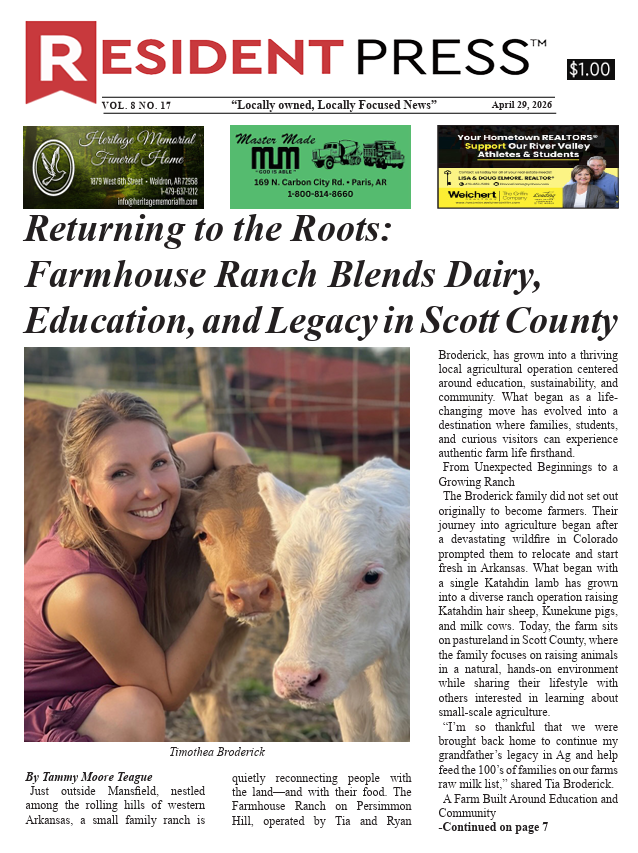
“Just Roll with It” Serving up Recipes and Humor

By Sheri Hopkins, Lifestyle Contributor
Hello everyone! I love this weather we have been having. My A/C hasn’t been on in a couple weeks. As I said, we had our big Wagoner family Easter on Saturday. I knew I would have stories to tell.
First off, let me tell ya that all the kids call our get-togethers Aunt Sheri’s Christmas, Aunt Sheri’s Thanksgiving, Aunt Sheri’s Halloween, and Aunt Sheri’s Easter. My niece Tonya invited her brother and his family. They have two sons and a daughter-in-law. The oldest son is a little shy, and when he arrived, he saw all the vehicles and said, “What’s going on?” Tonya started to tell him that it’s Sheri’s, and he said, “Did she die?!!” He thought they were having a memorial service for me. He saw all the family and cars and just thought they were having a memorial. She said, “Nooo, it’s just Aunt Sheri’s Easter.”
I had a pretty good turnout, but I sure expected more people. We did have a good potluck, though. Nobody said any kind words about me—I guess I better start planning my memorial service and get some speakers lined up.
Jacob will not be able to plan a service, y’all know it and I know it. Let me remind y’all of something—the time we were having my niece Kelly’s dog JoJo’s funeral and my brother’s big white outside dog hiked its leg and wet all over my leg and shoe. I felt something warm and thought, “Did I wet my pants?” I looked down and he had his leg hiked.
At the Easter (my “memorial service”), I was holding my nephew’s dog Lulu. Keep in mind she is getting old—she passed some gas and I didn’t think a thing about it. A few minutes later, I looked down and she had pooped on my lap. Yes!! You read it right. I don’t know why it shocked me—crazy follows me everywhere I go. So now I have been peed on and pooped on by a dog.
I couldn’t stay mad—I love Lulu and I know she couldn’t help it. Everyone laughed and laughed and thought it was hilarious. Note to self: always take a change of clothes and extra shoes, just like packing a baby’s diaper bag. I already carry a spare pair of underwear in the glove box.
Life would be boring if everything was just humdrum. I like to live on the edge and fly by the seat of my pants.
Y’all have a great week. Hug your loved ones and always tell them you love them. This week’s recipe is Dorito Taco Salad—nothing sweet.
Dorito Taco Salad
1 pound ground beef
1 packet taco seasoning
1 bag Doritos, crushed
2 cups shredded cheese
1 cup diced tomatoes
1 head shredded lettuce (or pre-shredded—use your best judgment on amount)
½ cup Catalina dressing
Cook your ground beef, drain excess fat, add taco seasoning and a little water, and simmer for 5 minutes. In a large bowl, combine the lettuce, tomatoes, cheese, and crushed Doritos. Add the warm beef on top, drizzle with dressing, and toss lightly. If you want more dressing, wait until serving to add it. Serve immediately.