

93.8 F
Fort Smith
Saturday, July 11, 2026
Home Blog Page 209

“Just Roll with It” Serving up Recipes and Humor

By Sheri Hopkins, Lifestyle Contributor

Hello everyone! Hopefully everyone has water. Hopefully no more -2 degree temps this year. I have told y’all before, I am not a cold weather fan. No pun intended, ha ha!

I know y’all know about some of my quirks and hangups. I don’t have as many as my sister, Pam. She is a whole series on her own. I hope she doesn’t read this. I’m going to tell you this much, one year, we took a road trip to see my grands when they lived in Ohio. On our way home, we were driving through St. Louis, and it was nighttime, and I couldn’t wait to see the arches. My sister Pam has her head in the floorboard of the car and a blanket over her head. She would not look at it. I told her she was really missing out, but she never did look at it. Don’t ask me why. I have no clue. That’s my sister, Pam. Here is my latest stunt. Ethan calls me last night and says he is broken down at exit 12 in Ft. Smith. I call his uncle Jacob to go to his recuse. No luck getting it started, so I called a wrecker and have it towed. Jacob stays “I will meet you in Greenwood.” He says to meet in that parking lot by Tractor Supply where all the cars park. Ok, gotcha. See ya there. I turn at the new light on Highway 71 and see them in that parking lot and I just drove on by. Yes, I have a hard time making turns, I miss exits and driveways. I just passed them by and pulled in Tractor Supply and turned around to make another stab at it. I drove right by the turn…again! As I expected, the phone rings, and it’s Jacob. “What are you doing?!? We busted out laughing. I said “I can’t turn in.” Him and Ethan set there and watched me drive by them, but not turn in. They laughed and laughed.

It all started when I was 18 and I was going to Vo-Tech in Ozark. We had to go to some kind of convention in Hot Springs. My friends, Lisa, Debbie, Sharon and I loaded up and headed to the Arlington Hotel to spend the weekend for this convention, I can’t remember what it was all about. I was driving and we circled that Arlington Hotel I can’t tell you how many times before I could turn in. It’s crazy I know, but I can’t help it.

Jacob said, “mom that was like Deja Vu.” He said “remember when we used to visit dad in Conway when he worked there, and you kept driving by the hotel and wouldn’t turn in.” Of course, I remember that. Jacob and his dad made fun of me for years over it. Now that y’all know how crazy I am you have a better understanding of why my family thinks I’m crazy. I laughed so hard last night I got choked. I can’t tell you how many exits, streets, roads and driveways I have missed in my life.

This week’s recipe is for spaghetti pizza casserole, I hope you enjoy it. I made the angel food cake mix and can of peaches recipe Tuesday and it is one of my favorites.

PIZZA SPAGHETTI CASSEROLE
1 pound of spaghetti (cooked but not super soft)
2 eggs
1/2 cup milk
1 cup mozzarella cheese
3/4 teaspoon garlic powder
1/2 teaspoon salt
Pizza toppings: 32 oz. of spaghetti sauce, 1 teaspoon oregano, 3 cups mozzarella cheese, 5 oz. of pepperoni you can change that topping to whatever you like, sausage, onion or mushrooms. You decide what you like best. Mix the eggs, milk, 1 cup of mozzarella cheese, garlic powder and salt. Add mixture to the cooked spaghetti and spread into a greased 15x10x1 pan or close to this. Bake at 350 degrees for 15 minutes. Make pizza topping by combining the spaghetti sauce and oregano and spread evenly over the baked spaghetti. Sprinkle on remaining cheese and pepperoni or other toppings. Bake for 30 minutes and let stand for 5 minutes before severing. Enjoy and have a great week!


County Line & Paris Take Opal Pistole Tournament Titles

COUNTY LINE- County Line High School hosted the 2024 Opal Pistole junior high tournament last week. As one of the premier junior high basketball tournaments in the state, the tournament has always provided fans with a glimpse into the near futures of their senior high basketball teams.

This year, the tournament finals were dominated by Logan County teams.

In the girls’ bracket, it was the junior high Lady Indians of County Line defeating Danville by the score of 30-23 for the girls tournament title. In boys action, the Paris junior high Eagles defeated Logan County neighbor Scranton by the score of 38-30 to claim the boys tournament title.

Fans from Danville, Scranton, County Line, and Paris can all be excited by the play of their junior high teams as they look forward to their futures in senior high basketball. Congratulations to the players and coaches!

The County Line junior high girls defeated Danville for the Opal Pistole Tournament title (Image Special to RNN Sports / Celia Looney)

Thanks to the coaches and staff at County Line High School for their hospitality and for again hosting a great tournament. The winter weather did not impede the staff in completing this tournament, and all of the many volunteers and staff members who hosted this tournament deserve a great deal of credit for a job well done!

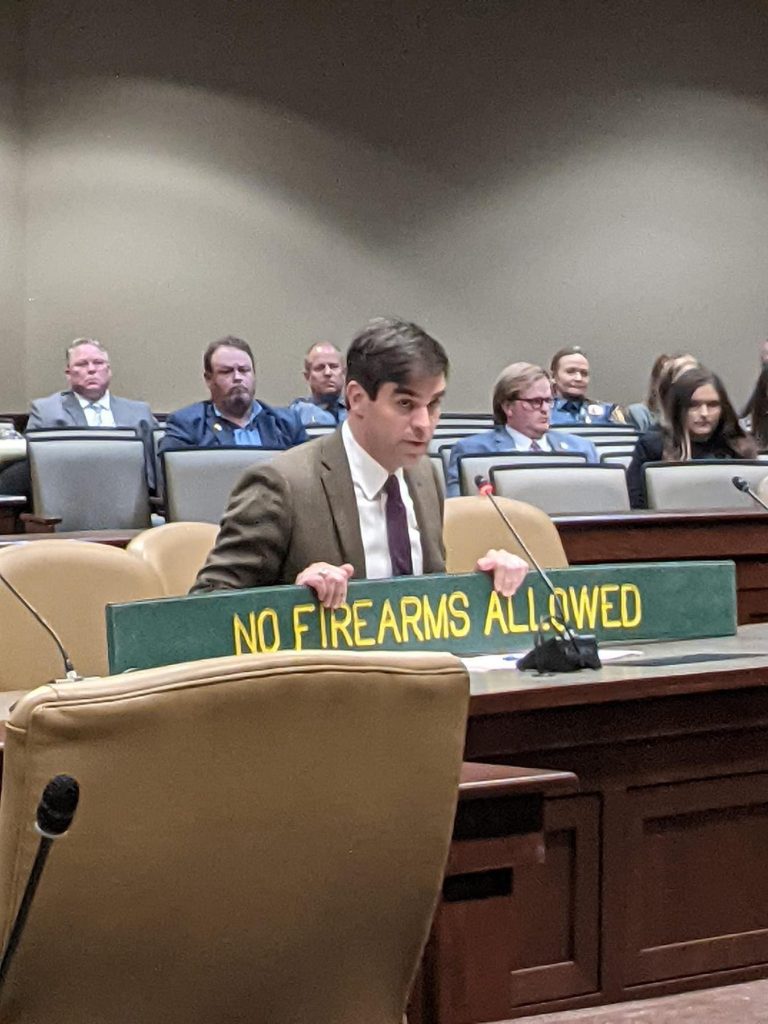
Senator Rice, GO-AR Spearhead Effort in AGFC “No Firearms Allowed” Signage Removal

When it comes to protecting your God-given right to keep and bear arms, the organization GO-AR is consistent in reviewing and crafting legislation to preserve that freedom. One of the state’s legislative 2A champion is local Senator, Terry Rice.

In the summer of 2023, members of the GO-AR action committee presented legislators with an issue concerning signage by the Arkansas Game and Fish Commission. The signs, located at parks, lakes and boat docks across the state read, “NO FIREARMS ALLOWED.”

“They had five rules, which, at face value, appeared to be inconsistent with state law. However, once further research was completed, they did have exemptions the average person wouldn’t find, and we hope that will be addressed.” stated GO-AR President, Gary Epperson.

GO-AR members began contacting legislators, including Senator Rice, who serves on the Game and Fish/State Police Subcommittee of the Arkansas Legislative Council. Noting that the Game & Fish Rules were inconsistent with Arkansas gun laws.

Fast forward to November of 2023, the signs remained but with promise by the AGFC director to come down. Over the course of the next few months, those prohibited signs began to come down.

Senator Rice followed up with Director Austin Booth in a subcommittee meeting. Booth admitted that “miscommunication” was the reason why so many signs remained posted and recognized that new ones had been added. One of those in the Senator’s own backyard, at the Hinkle Lake access area. Booth stated it was “totally unacceptable” and took full responsibility. Booth noted that he was encouraged by the dialogue and effort for his agency to reflect accurately current gun laws. “It’s taken us a very long time to get to this point,” admitted Booth. “If I could snap my fingers overnight and wish all the signs to be fixed, then that’s what I would do without hesitation. It is going to take us some time to evaluate ever single green sign we have in Arkansas…”

AGFC Director Austin Booth

Senator Rice commended Booths’ efforts and noted, “it’s better, and I appreciate what has been done… I hope you and the commission can relay to them that for the game and fish to be successful, have good relationships and to abide by the State of Arkansas laws, they need to listen to the director and commissioner…”

Senator and Co-Chair, Ricky Hill responded to the exchange inquiring how constituents can report a sign. “The short answer is, we have lots of options…they can email me: Austin.Booth@agfc.ar.gov, or AskAGFC@agfc.ar.gov or let any of their legislators know. The sooner we find out where they are, the better.”

Hill commended the working efforts by the AGFC, stating “we can get a lot more accomplished when we work together…Government as a whole listening.” Hill himself has worked with the Arkansas Department of Transportation to ensure those same signs were removed from rest areas.

“The Arkansas Game and Fish meeting held by the ALC Committee today proved to be a highly productive gathering for Gunowners in the state,” shared President Gary Epperson. “My feelings towards Director Booth is that he is far more supportive of 2A than previous directors. Gun Owners of Arkansas would like to extend our appreciation to all the Legislators, Director Booth, and above all, our valued paid members who contribute to the success of our organization. This is just a prelude of all Arkansas gun laws being reviewed and simplified with GO-AR leading the effort.”

To learn more about GO-AR, and their mission, you can visit: Gun Owners of Arkansas (gunownersarkansas.org).

Solar Eclipse Enthusiasts: Choose Magazine!

NOTE TO OUR READERS: The following story was sourced directly and in its entirety from Mr. Jonathan Gipson, social media director, Magazine School District. Mr. Gipson is a RNN Sports contributor, and we thank him for bringing this story to our readers.

MAGAZINE – In about 2 ½  months, it’s estimated that the State of Arkansas will be welcoming upwards of 1.5 million visitors for the solar eclipse.

With the City of Magazine and the River Valley being in the solar eclipse’s projected “path of totality”, many of those visitors are expected to call this area home during the weekend leading up to and the day of the eclipse on Monday, April 8.

Most traditional lodging options – hotels, motels and lodges – throughout the River Valley have been booked for quite some time now, but Magazine Schools is offering visitors a unique opportunity for outdoor lodging on its spacious campus at an affordable price.

Magazine Schools EAST students recently launched a website – Arkansas Eclipse Camping – promoting the many on-campus lodging and solar eclipse view opportunities available for visitors to choose. 

By visiting www.arkansaseclipsecamping.org, visitors can reserve RV sites and primitive tent camping sites for the weekend and day of the solar eclipse or viewing sites for the day of the solar eclipse. Meals also will be available for purchase each day.

Out-of-area visitors wishing to learn more about the Magazine area, like goods and services available, to see an eclipse simulator for a look at what the eclipse will likely look like in Magazine or to see a map of the area can visit the school’s website page – https://www.magazinek12.com/o/magazine-school-district/page/campsites2024 – which also has a link to the Arkansas Eclipse Camping website.

In anticipation of the increase in traffic on our area roadways and the timing of the eclipse — it will start at 12:31 p.m. and end at 3:09 p.m. — on April 8, school will not be in session at Magazine that day.

Rare dual brood emergence of cicadas coming this spring

By Mary Hightower
U of Arkansas System Division of Agriculture

Entomologists say two broods of periodic cicadas will be making a rare simultaneous emergence this spring. The last time this happened in the U.S. was in 1803 and the next one won’t happen for another 221 years.  

Arkansas is home to brood XIX, a group whose adult insects emerge every 13 years. The brood’s last emergence was 2011 and the next will be 2037. Brood XIII, which emerges every 17 years, last emerged in 2007 and will again emerge in 2041. Brood XIX is the largest 13-year brood in the United States, covering 15 states.

Cicadas spend most of their lives underground as nymphs, then “they all emerge at once, in an effort to overwhelm their natural predators by sheer numbers,” said Jon Zawislak, extension assistant professor-apiculture and urban entomology. “Anything that might want to eat a cicada will be able to get a belly full, so the rest can survive to continue the species.”

The insects know how to turn up the volume, often hitting 90-100 decibels, louder than a hair drier.

“I remember camping near the Buffalo River in the early summer of 1998, and it was LOUD,” he said. “Also, you couldn’t catch a fish to save your life. They were all so full of cicadas they couldn’t be tempted by anything else.”

Brood XIII is found in Illinois, Indiana, Iowa, Michigan and Wisconsin. Brood XIX can be found in Alabama, Arkansas, Georgia, Iowa, Illinois, Indiana, Kentucky, Louisiana, Maryland, Missouri, Mississippi, North Carolina, Oklahoma, South Carolina, Tennessee and Virginia.

“We will see and hear a lot of the Brood XIX in Arkansas. Brood XIII will mostly be in northern states,” he said. “If you really want to be at ground zero for all the cicada action, you might trek to Springfield, Illinois, where there will be a lot of overlap.”

Zawislak said the two broods won’t be alone.

“There are a number of annual cicadas that will come out and there are often some stragglers from other broods that don’t quite synchronize with the rest of their group,” he said. “Arkansas is home to 20 different species of cicada.”

The brood that will emerge in Arkansas is of a species called Magicicada tredecassini, which emerges this April-May-June.

“But you will see and hear other cicada species every year, that come out later, ranging from April to November, especially members of the genera Neotibicen and Megatibicen. Factors like temperature and rainfall will affect how soon they emerge and how long they stay around,” Zawislak said.

What is that noise?

The cicadas’ unique sounds are part of their mating process. In their “choruses,” adult males “sing” by vibrating a membrane on the sides of their bodies called a tymbal. Females can make clicking noises to indicate they are ready to mate. 

The song of the African cicada, Brevisana brevis, can hit 107 decibels from 20 inches away. That compares to a chainsaw, which can hit 110 decibels from the same distance, according to the University of Nebraska at Lincoln.

John Lovett, science editor for the Arkansas Agricultural Experiment Station, had to improvise a solution when the din grew too loud during a camping stop near the Cumberland Gap.

“I had to stuff napkins in my ears to sleep and that didn’t even really work well,” he said. “A Dutchman in yellow wooden clogs came by my camp the next morning to talk about the cicadas over coffee. I think he was as impressed by the cicadas as I was his shoes.”

Lifecycle

After mating, the females lay eggs on tree branches and the adults die soon after. 

“They are only around making noise for about four to six weeks,” Zawislak said. “After a few weeks the nymphs emerge from the eggs and drop to the ground, where they dig down and feed on the sap from tree roots for years.”

The nymphs may feed on roots of smaller plants first, then switch to tree roots when they are older. 

“After their allotted time, they crawl out and up onto something vertical like a plant stem, tree trunk, or a house, fence post or mailbox and molt one last time, emerging as winged adults,” Zawislak said. “Most people have probably seen the hollow shed exoskeletons around in late spring or early summer.

“They are neat creatures. And large,” he said. “Most sap-feeding insects don’t get that large, which is why they take so long to grow. But when they appear all at once, they become a feast for small predators. Which gives those animals a population boost.  Which gives larger apex predators a population boost. These big bugs are an important link in the food chain, between trees — feeding on sunlight — and big, majestic wildlife.”

They might also become a feast for pets, but owners shouldn’t worry.

“I do not know of any poisonous or toxic effect that cicadas may have on pets that happen to eat one or more,” said Jeremy Powell professor of animal science and veterinarian for the Division of Agriculture. “However, they do have that very heavy exoskeleton that could be hard for pets to digest and may lead to some minor intestinal upset. That scenario would likely be short-lived.”

Mistaken identity

Zawislak said the cicadas are sometimes called locusts.

“Early European colonists who had never encountered them before likened the sudden appearance of giant insects to a biblical plague, even though they did not eat crops like a hungry hoard of grasshoppers,” he said. “Once the adults emerge, it’s back to singing and making more cicadas. So, it’s one generation every 13 years for this brood.”

The CDC notes that it is not claiming that exposure to cicada sounds is harmful.

To learn about extension programs in Arkansas, contact your local Cooperative Extension Service agent or visit www.uaex.uada.edu. Follow us on X and Instagram at @AR_Extension. To learn more about Division of Agriculture research, visit the Arkansas Agricultural Experiment Station website: https://aaes.uada.edu. Follow on X at @ArkAgResearch. To learn more about the Division of Agriculture, visit https://uada.edu/. Follow us on X at @AgInArk.

About the Division of Agriculture

The University of Arkansas System Division of Agriculture’s mission is to strengthen agriculture, communities, and families by connecting trusted research to the adoption of best practices. Through the Agricultural Experiment Station and the Cooperative Extension Service, the Division of Agriculture conducts research and extension work within the nation’s historic land grant education system.

The Division of Agriculture is one of 20 entities within the University of Arkansas System. It has offices in all 75 counties in Arkansas and faculty on five system campuses.

The University of Arkansas System Division of Agriculture offers all its Extension and Research programs and services without regard to race, color, sex, gender identity, sexual orientation, national origin, religion, age, disability, marital or veteran status, genetic information, or any other legally protected status, and is an Affirmative Action/Equal Opportunity Employer.

Treasury bonds: Still safe for investors

You may have read reports about an impending “debt crisis” in the U.S. Should you be worried about investing in Treasury securities?

Part of the concern over debt has been driven by the cost of government borrowing, which has risen because of higher interest rates. But it’s worth noting that while interest expenses have risen to nearly 2% of gross domestic product (GDP), this measure had exceeded 3% in the early 1990s. So, while the upward trend of federal debt could prove problematic down the road, the claims of a current crisis may be overblown. And Treasury securities are still considered among the safest investments in the world, as they are secured by the full faith and credit — that is, the ability to borrow and tax — of the United States.

In any case, if you haven’t invested in Treasury securities, you’ll want to know the basics. First of all, when you purchase a Treasury security, you’re lending money to the federal government for a specific period of time.

Here are your purchase options:

• Treasury bill – Typically matures in four, 13 or 26 weeks, although some have maturities of up to a year.

• Treasury note – Matures between one and 10 years.

• Treasury bond – Typically matures in 10 to 30 years.

When you buy Treasury notes or bonds, you receive semiannual interest payments, but when you purchase a Treasury bill — a T-bill — you generally buy it a discount, and when the bill matures, you receive its face value. So, for instance, you might pay $4,700 for a 13-week T-bill and get $5,000 back at the end of the three months.

When investing in Treasury securities, you’ll want to keep these features in mind:

• Price fluctuation – While your interest payments will always remain the same, the market value of your Treasury security can change. So, you might not get face value for a Treasury bond if you sell it before it matures, particularly if market interest rates are higher than the rate you’ve been receiving. Because longer-term bonds have more payments left to make than shorter-term ones, they are more sensitive to interest rate changes and market price fluctuations.

• Taxes – Interest income from Treasury securities is subject to federal income tax but exempt from state and local taxes.

In addition to the traditional Treasury bonds, bills and notes, another option is available: Treasury Inflation-Protected Securities (TIPS). Unlike other Treasury securities, in which the

principal is fixed, the principal of a TIPS can move up or down, based on movements in the Consumer Price Index for Urban Consumers (CPI-U). Once your TIPS matures, if the principal is higher than the original amount, you’ll get the increased amount; if the principal is equal to or less than the original amount, you’ll get the original amount. TIPS pay a fixed interest rate semiannually until maturity, but because interest is paid on the adjusted principal, the amount of your interest payments can vary. As with other Treasury securities, you can hold a TIPS until maturity or sell it before it matures.

Don’t let scary or gloomy predictions discourage you from considering Treasuries — they remain a good option as part of the fixed-income portion of your investment portfolio.

This article is provided by Jeffrey O’Neal, Financial Advisor

Edward Jones
20 N Express St, Paris, AR 72855
479-963-1321
jeffrey.o’neal@edwardjones.com
edwardjones.com/jeffrey-o’neal
Edward Jones, Member SIPC

CommUNITY – When One is Down, We Lift Them Up!

UNITY

uni·​ty
the state of being united or joined as a whole

I see it in all of our coverage areas, when one is downtrodden, hurting or in need–we step up. This week, I was again witness to this favor.

Neighbors opening their homes to others who had no water, a mayor in a neighboring town calling to offer his assistance, businesses donating food and water, and residents checking in on one another. It’s truly a beautiful thing, our commUNITY.

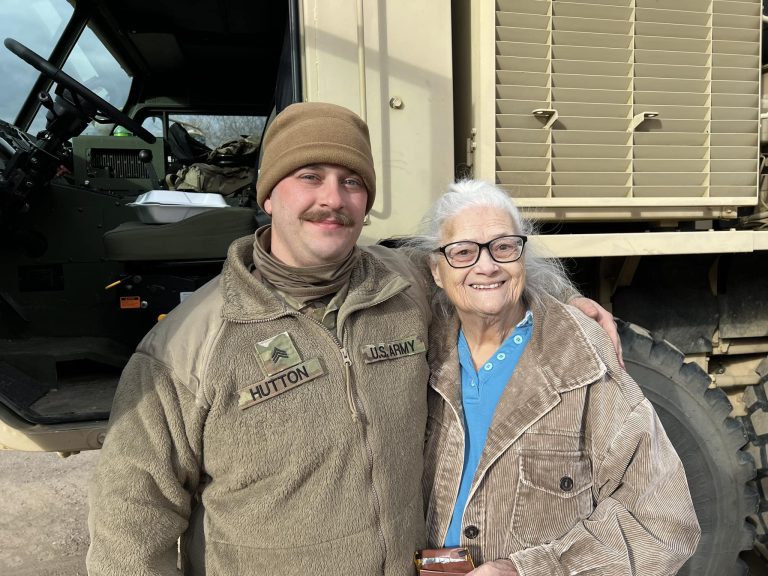
Mansfield Mayor Buddy Black extended his gratitude towards all those who worked to locate and repair the leaks. Additionally, Sebastian County Emergency Management Director Travis Cooper, Scott County Emergency Management Director Keaton Davis, Sebastian County Judge Steve Hotz, Scott County Judge Brian Jones, former Scott County Judge James Forbes, Jim Barkie with ARWA, Jeff Pyles and Stephen Moore at James Fork Regional Water, the National Guard, Fire Chief Michael Smith and members of the VFD, those who assisted in providing water to the Mansfield Juvenile Treatment Facility, Harps, Caseys, Sonic and West Fraser.

“I am thankful for our employees who have worked long hours to try to restore the water to our residents,” stated Black. “I really appreciate the citizens who called in with suggestions and especially for their patience and understanding. Our fire department, Chief Michael Smith, Rick Thomas, and Jason Teague, went above and beyond the call of duty, working tirelessly to distribute water. Also, Jim Barkie with the Arkansas Rural Water Association.

Mayor Black made himself available to those with questions and concerns, consistently engaging workers for updates to pass along to residents, as well as ensuring that water was made available to those who needed it. “I saw so many different faces and talked to so many people, and I am afraid I might miss someone, but I do appreciate everyone working together.”

At the end of the day, well the difficult and trying few days, water was restored. We are left with the reminder, however, that when difficult times come, and they will, we can count on our family, friends and neighbors – our commUNITY!

Habits to Boost Your Mood

In past years around my Birthday I shared things I had learned in however many years of life. In preparation for my Birthday in 2023 I reread my past articles, and decided for turning 28 I had nothing to share.

I feel like I’m always behind, but when I try to think of who I’m behind, I fall short on coming up with who is ahead. Sometimes staying at home feels like ground hog day. 

Rather than wallowing in my mental swamp I seem to be in during these winter months, I started thinking on things I’ve heard to do to help it feel like I am accomplishing things. More often than not I get to the end of the day and wonder what I’ve done all day. Despite being exhausted and knowing I’ve done a lot, the house doesn’t show it.

The first thing I would like to adopt, especially on the days my brain is being really mean, is making a “done list”. To-do lists are so last year! (Or not, if it works for you. Keep making your lists!) But the satisfaction of a to-do list is checking off the list, skip the first list and instead write down the tasks completed. Fed your child/dog/self a snack? Check. Brushed your teeth? Check. Broke up a sibling quarrel? Check. Check check check. Write it down, check it off if the check makes you happy. Write as many or as few tasks as works for you! If you’re like me, you will be shocked to see how much you are accomplishing in a day just on auto pilot.

The second idea was looking for “glimmers” these are small moments in a day that bring you happiness. The perfect cup of coffee. A beautiful sunrise. A hug or someone reaching out to hold your hand. My two year old telling me my hair is pretty even though she usually tells me it needs “ficked”. A bunch of patterns mixed together like a patchwork quilt. Glimmers, sparks, shimmers, happy moments, little pockets of sunshine- rename it. Embrace it. Look for those moments, not the bad ones. Instant mood boosts! If you journal, write some down! 

If you’re going into 2024 and your mental health isn’t where it should be, and it’s not just winter blues, I encourage you to talk more to your doctor about it! If you are feeling suicidal I would like to take this time to share 988 is the phone number to call for the suicide hotline in the states. Please reach out, life is better with you in it. 

New partnership putting more hands to work for deer management in Arkansas 

By Randy Zellers

Deer clubs throughout The Natural State will have more resources to improve their deer herds than ever before thanks to a new agreement struck between the Arkansas Game and Fish Commission and the National Deer Association.

Thanks to the new partnership, five biologists will be hired by the NDA, but will aid the AGFC’s new Private Lands Habitat Division by working one-on-one with deer clubs enrolled in the AGFC’s Deer Management Assistance Program throughout the state.

We’ve been looking at a way to revitalize DMAP for a while,” Jeremy Brown, the AGFC’s  newly appointed statewide DMAP coordinator who has worked for seven years as the assistant deer program coordinator, said. “A few years back, Ralph Meeker, our deer program coordinator, and I, surveyed all of our participating clubs and performed a bit of an audit on ourselves. We wanted to know how we could improve the program and what sorts of things our clubs wanted to make their deer hunting experience even better. The biggest limiting factor in making those things happen was manpower.”

Brown explained that until this partnership, managing the Deer Management Assistance Program was one of many duties placed on the agency’s private lands biologists.

“Our PLBs are great biologists and really knowledgeable, but they were being pulled in so many directions, they never could devote themselves to DMAP to really be able to make meaningful changes,” Brown said. “I’m not slighting anyone, there just aren’t enough hours in a day for them to cover all the bases these folks had been tasked with. So when Director Booth created the new Private Lands Habitat Division and wanted to increase capacity, I knew now was the time to really think about adding capacity, whether through our staff or partnerships with other agencies.”

Although Brown still hopes to bring on additional DMAP biologists within the AGFC’s ranks, he says working with the NDA was a no-brainer.

“The National Deer Alliance and Quality Deer Management Association merged to form the National Deer Association,” Brown said. “We have received a lot of our deer management training from QDMA before that merge. It’s really a perfect fit.”

Brown says the partnership positions will be similar to others the AGFC has fostered with Quail Forever and Ducks Unlimited, but the focus will be putting habitat on the ground for Arkansas’s most popular game species, the white-tailed deer.

“We’re known for ducks, and we work very hard on turkeys, quail and a variety of other animals, but there’s no doubt that deer are the number one species our hunters pursue,” Brown said. “Our deer herd is in good shape, so a lot of the initiatives we see make it seem like we’re not as focused on them, but I can tell you that’s far from the truth. We want our deer clubs to be just as invested in conservation as every other hunting group out there, and this partnership will give us a much needed tool in our toolbox to really hit another gear in deer conservation and habitat management.”

Brown says the five new positions are being advertised, and he encourages any wildlife biologists with a passion for deer management and working with deer clubs to apply.

“We hope to have boots on the ground within a month or so,” Brown said. “So any deer camps who have been interested in joining DMAP also are welcome to give us a call to learn more about how these new positions will be able to help them improve habitat on their properties with a focus on whitetails.”

Visit https://deerassociation.com/about/employment-opportunities for more information about the new DMAP positions. Visit www.agfc.com/DMAP to learn more about Deer Management in Arkansas.

Timepiece: Hell on the Border

By Dr. Curtis Varnell

The old book shelves held dozens of volumes, many I had forgotten about or stuck back for future reference.  With snow and ice on the ground, there was no better time than the present.  Stuck between two huge volumes was a tattered, yellowed volume entitled Hell On the Border, written by author Frank Eaton.  An old volume purchased by my father at some long-forgotten yard sale, the book was a descriptive story of Fort Smith’s historical federal court.  Chocked full of actual court descriptions of cases provided over by Judge Isaac Parker, it was a treasure trove of information about frontier justice in Fort Smith and the Indian Territory.

Judge Parker was the third and longest serving of the three federal judges who served the Western District from the end of the Civil War until the late 1890’s.  The court, held originally in Van Buren, was moved to Fort Smith in the 1870’s.  It serviced Indian Territory, stretching from the Arkansas border across the plains to Colorado and included 74,00 square miles.  The area was sparsely populated with an average of only 60,000 people, but those 60,000 included an unholy mixture of shysters, bandits, and thugs of every description.  The 1828 treaty with the natives had guaranteed protection for the inhabitants but had seldom lived up to the promise.  Parker, a man of integrity was determined to bring law to the region.  His motto, “Permit no innocent man to be punished, but no guilty man escape.”

In twenty-one years as judge, Parker tried 13,490 cases, 344 of which were capital crimes.  Nine thousand four hundred and fifty-four cases were deemed guilty of conviction.  Parker sentenced 160 men to death during those years but only 79 were ever hanged.  The rest died in jail, appealed, or were pardoned. Cherokee Bill, James Childers, and Belle Star are some of the most famous outlaws to appear before the judge and the most famous of his 65 deputy marshals was Bass Reeves.  It was said the when Judge Parker sent Bass Reeves after you, it was time for you to surrender because he always got his man.

Behind the numbers are the real stories, the stories recounted in court by the victims and the perpetrators of the crimes.  Hell on the Border describes many of these, often in more detail than can be recounted.  The final testimony of John Whittington is typical of many of those convicted,  “I was just what my father taught me to be. He taught me to drink whiskey, and set the example of being a drunk.  I took to this practice, and knowing not what I was doing, killed my best friend.”   Other stories describe horrendous tales of cleaving someone’s skull with an ax, killing someone over petty arguments or for a few dollars in cash.  In 1875, several men including one Joseph Martin, ran across a young couple journeying through the Arbuckle mountains on the way to Texas.  Known as “the Bully,” Martin first killed the husband and then took the pretty wife, abused her, and threw her into a six-foot hole filled with rattlesnakes.  Her body was found weeks later, still surrounded by the den of snakes.  This may have served as inspiration for one of the dominant tales from the movie and book, True Grit.

First referred to in the 1920’s as the Hanging Judge, Parker was thought to be impartial and fair.  Although opposed to capital punishment, he yet sentenced more than 70 men to die at the gallows behind the park.  He once stated, “it is not the severity of punishment but the surety of punishment that stops crime.”  It is said that he shed tears as he sentenced his first person to hang and that he refused to observe the hangings.  The hangman in virtually every case was George Maledon.  Maledon first served as a deputy marshal and then volunteered to serve as hangman.  A dour 5 ft 5-inch man, he was said to be a man without a smile and a tough man to mess with.  He shot five men who tried to attack members of the court or attempted to escape.  One man was shot and killed with a pistol from 75 yards away as the tried to escape. 

So many stories and so much to tell.  For a more complete picture, visit the Fort Smith National Park.  Let my friend Cody Farber guide you on a tour through the courtroom, the filthy crowded jail space that held dozens of prisoners in the basement, and tell you the true stories of the American west.  If so inclined, visit the gallows, ride the trolley, visit the beautiful Bass Reeves monument, or go a few blocks north to the U.S. Marshals Museum.  The best part, you learn so much of the good and bad of our history and most is free.