
78.2 F
Fort Smith
Monday, June 22, 2026
Home Blog Page 232

Timepiece: a Grandfather’s Tale

By Dr. Curtis Varnell

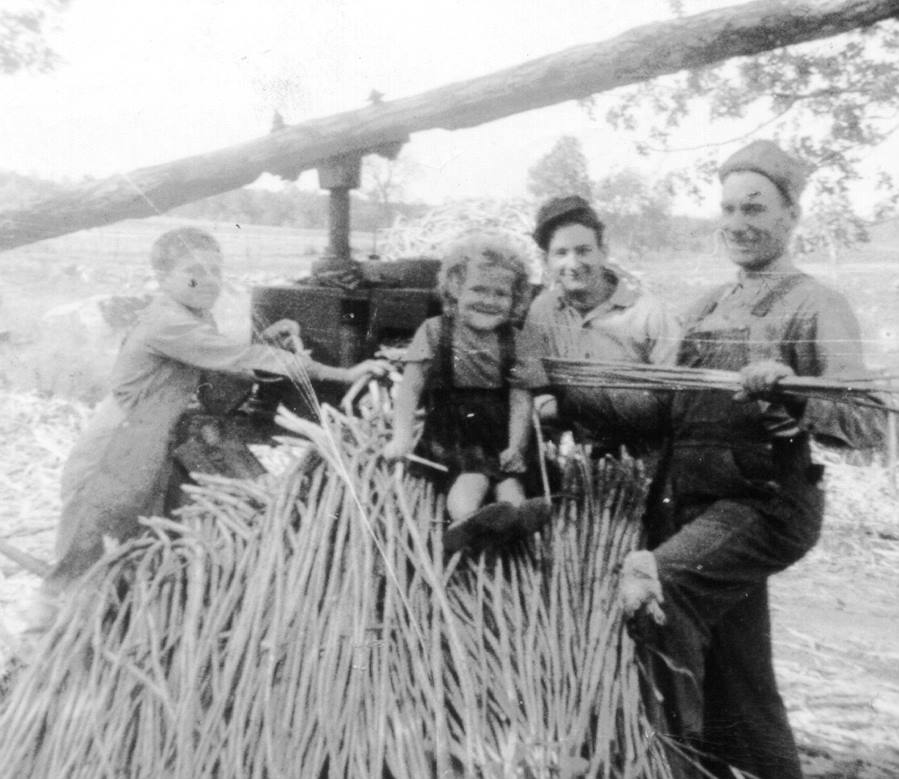
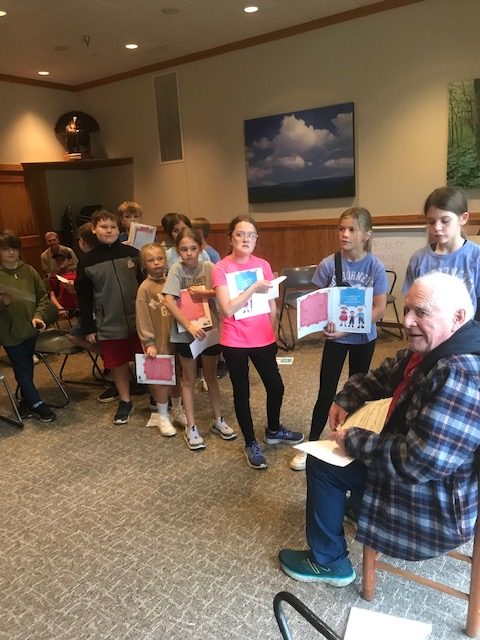
The chair was surrounded by eager students, all pressing forward around Charles Apple, eager to get their book about Mr. Apple’s early life signed.  The book, written by his relative Gayla Edwards, described Charles’s experience in growing up during the 1930 and 40’s on Magazine Mountain. Followed by a question and answer session, the students experienced true history as Charles shared stories from his past, a past shared by many grandparents in rural Arkansas.

The Apple farm, located at the base of Magazine Mountain, had been purchased as excess public land by Charles father, Will, at a cost of about $2.50 per acre.  His father built a nice home on a flat bench along a road leading to the top of the mountain.  Clearing land, he planted twenty acres of peach and apple trees as well as the more typical crops of corn, vegetables, and upland cotton. The fruit trees were very productive and Mr. Apple peddled the fruit to the visitors at the hotels on Magazine Mt.  The road he travelled to the top and around the mountain is now known as Will Apple road and trail.
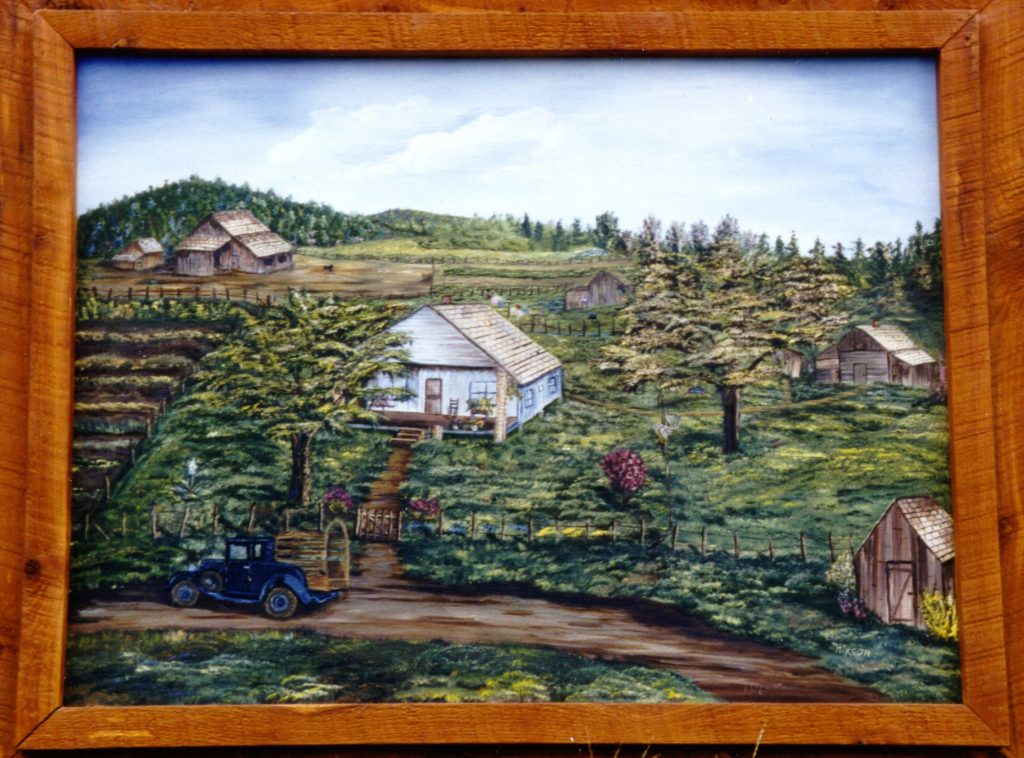
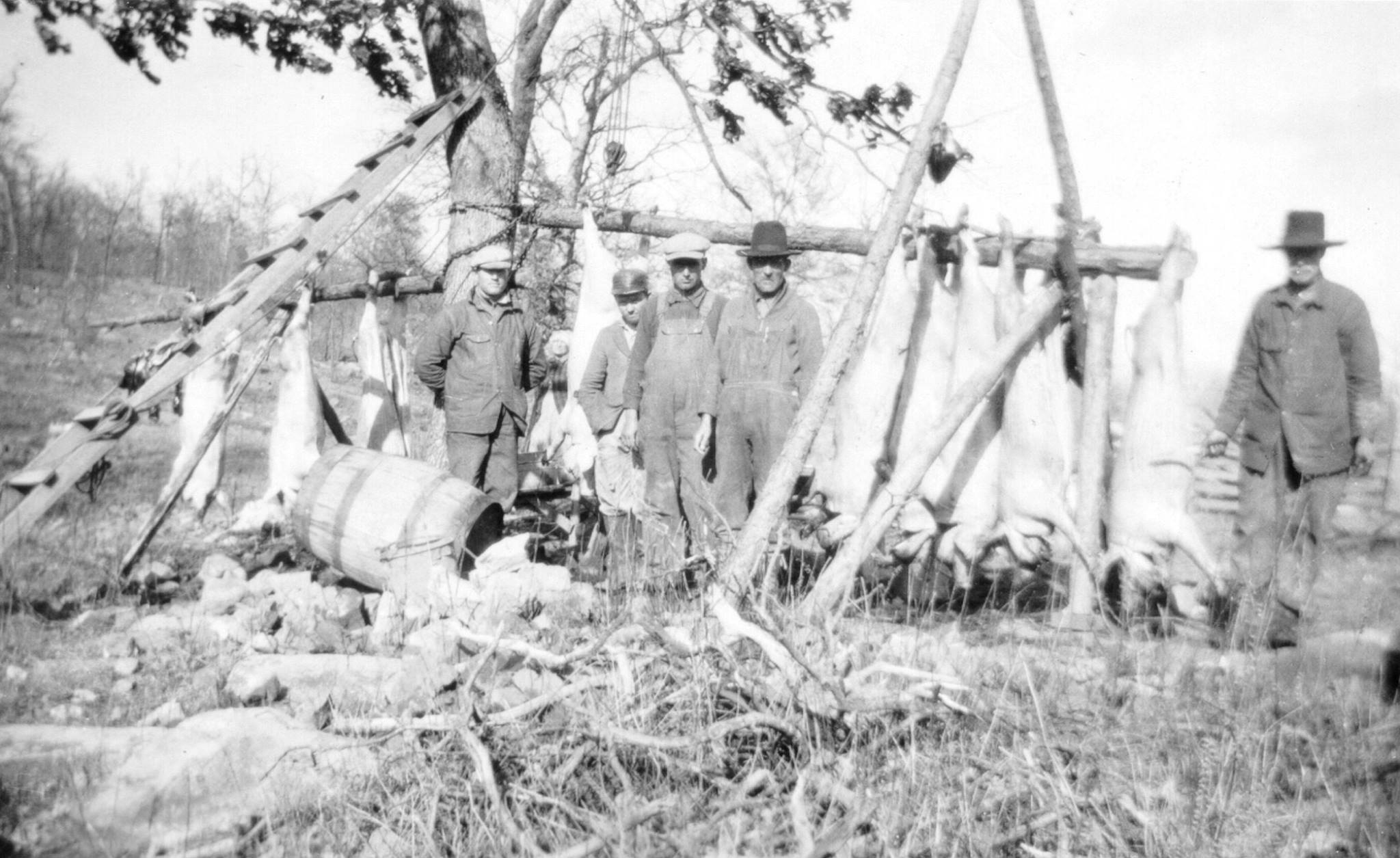
Like most rural families the farm was nearly self-sufficient.  A few staples such as flour, salt, and sugar were purchased at the nearby small town of Millard.  Most meals consisted of garden vegetables, cornmeal, beans, fruit, and, when available, meat.  The most common meat was from pigs, killed in the fall and cured so the meat would last through the winter.  Several families would often meet during “hog” killing season and share the labor of dressing out the hogs.  One of the men stated that every part of the hog was eaten except the squeal.  Kids were astonished when Mr. Apple said there were no dear or bear available to hunt- all of them were killed off by the farmers during the previous generation and had to be reintroduced into Arkansas by the game and fish commission.  The group were not to enthused about the game available and eaten by the Apple family.  This included lots of squirrel, rabbit, coon, and possum, something few of the kids had ever eaten and, seemingly, few had the desire to try.
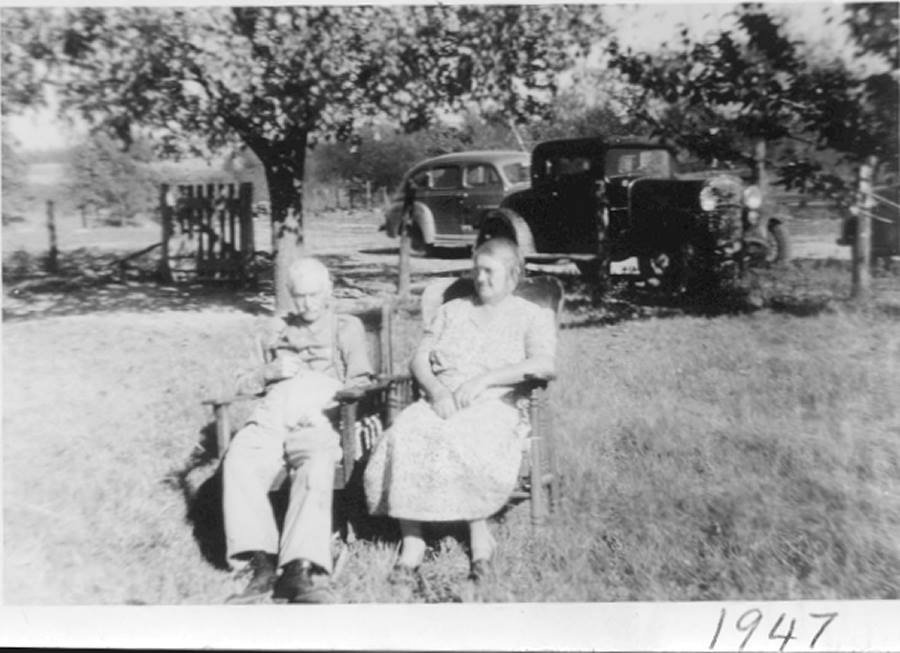
The kids were amazed that Mr. Apple and his family had no electricity which meant no television, lighting, and no refrigeration.  Fresh meat and milk products were placed in a well house, built over a spring, and cooled by the fresh water.  One of the neighbors bought a large box radio and was able to power it by a battery.  Charles, his family, and others would go over the neighbor’s house on Saturday night and listen to the Grand Ole Opera.  Often, so many neighbors showed up for the entertainment that the house could not contain them.  When this occurred, doors and windows were left open and people sat about the yard to hear the latest hits.  Sometimes local musicians showed up and provided live entertainment.

Each township of public land had a section of land that was sold and the money used for public education.  As a result, small one-room schools sprang up across Arkansas.  Charles and his family attended school at nearby Rich Mountain school.  The building consisted of one room, several hard-backed chairs, a chalk board, a wood-burning stove, and the teacher’s desk.  One teacher taught all grades and all subjects up to the 8th grade.  Education past that level required going to an academy where one had to pay an attendance fee.  Even in elementary school, students were required to purchase their own books and supplies.  Charles and his sisters rode to school in a make-shift school bus consisting of a flat-bed truck equipped with a canvas tent cover and with benches that ran down each side of the truck bed.  School terms were short and were held around planting and harvesting season.

Students commented about how difficult and hard that Mr. Apple’s life must have been.  He chuckled as he answered each question and kindly explained the joys of growing up in a community and with a family where people shared the values of hard work, patriotism, and faith.  Several members of his family were present with him at the Magazine Mountain visitor center and he and they expressed and showed the strength of family love and support that has sustained them through a long life-time.  It was evident that he may not have had every modern convenience that kids do today but that he had those things that were most important to a happy life.


Eagles Take to the Road for Final Time in 2023 Regular Season

MALVERN- The Paris Eagles will make the long trip to Malvern on Friday to play their final road conference game of the regular season against the Magnet Cove Panthers. Kickoff in Malvern is scheduled for 7 p.m.

At press time, Paris was preparing for an extremely important home conference game with Centerpoint that would go a long way in determining the playoff fate of the Eagles. A win over the Knights makes this Friday’s game another big game in boosting the Eagles into the playoffs. A loss last week over Centerpoint would all but eliminate any hopes of Paris making the playoffs.

In addition to the playoff implications of this game, it is still possible that it could be the last football game of the year for Paris. The Eagles are scheduled to play Danville at home on November 3, but depending on who you talk to, it is still not out the realm of possibility that the final game with the Little Johns will not be played. In fact, Senior Night for Paris was moved up to last week’s game with Centerpoint to ensure that seniors would have a game to be recognized. Danville cancelled their season last year just before the start of conference play, citing safety concerns for their players due to low participation numbers. That seems to be a concern again this year, but since Danville has played conference games, a possible cancellation by Danville at this point in the season would result in a forfeit win for Paris.

Magnet Cove defeated the Eagles in Paris a season ago by the score of 47-13. Paris was banged up late in the season and had only tallied one win earlier in the season at home against Two Rivers. The Eagles were reduced to running out of the wildcat formation for much of the game and were predictable to their opponents. But this year’s team has now won three games on the year, and, depending on the outcome of last week’s game against Centerpoint, could still be in the running for a five seed in the state playoffs.

Magnet Cove had a coaching change this year with Dean Adams taking over for Caleb Carmikle who left Magnet Cove to take the head coaching position at Rison. The Panthers spent a large portion of the season ranked in the Top Ten in Class 3A until they were upset by Centerpoint, 41-40. As of October 13, the Panthers are 5-2 overall and 2-2 in conference play. The Panthers have wins over Poyen (42-8), Fordyce (40-36), Baptist Prep (76-7), Danville (44-0), and Two Rivers (47-8). Magnet Cove has losses to Centerpoint (41-40), and Bismarck (50-15). At press time for this story, the Panthers were preparing to play Jessieville on October 20.

Magnet Cove has games remaining at home vs Paris this Friday and will finish their regular season at Glen Rose on November 3. If the Eagles are to remain in playoff contention, they will have needed to defeat Centerpoint last week and would also need to give Magnet Cove their third loss, and a head-to-head victory over the Panthers in case of a tiebreaker. A third loss by Magnet Cove makes the possibility of the Panthers finishing with four losses a likely event with the Panthers playing Glen Rose in week ten.

The Magnet Cove Panthers are a team composed of a large senior class, but, according to Hootens Arkansas Football publication, lack depth on their roster. One such returning senior is Luke Harper who plays on defense as a tackling machine against both the run and pass. Harper also plays on offense as a running back.

Paris, as of October 6, has played two consecutive conference games on the road with their sophomore backup quarterback, Brady Owens. Owens has performed well while being thrust into the starting lineup. Starter Maddox Watts’s status was unknown as of the deadline date of this story. In addition to keeping the Eagles in playoff contention this season, Owens and other underclassmen on the team have gained valuable experience that will payoff next season for the Eagles.

Watch for RNN Sports’ post-game story on this game on Saturday afternoon on our website at residentnewsnetwork.com. Photos from the game will be posted on Facebook at Paris Eagles Sports next week.

So travel safely on Friday, and we’ll see you at the stadium!

Charleston Travels to West Fork This Friday in Conference Play

WEST FORK- After all of the buildup leading up to last week’s battle with Booneville, the Charleston Tigers must refocus on this week’s opponent, the West Fork Tigers. Charleston will make the trip to northwest Arkansas on Friday to play at West Fork in a 3A-1 conference game. Kickoff is set for 7 p.m.

At deadline time for this story, Charleston was just hours away from kicking off against Booneville for what should have determined the eventual conference champion. Regardless of the outcome of that game, it will be critical for Charleston to avoid a letdown at West Fork this week. Charleston will be playing to either wrap up the conference championship this week and next, or, to wrap up the conference runners-up position and a number two seed from the conference in the state playoffs. Either way, it is imperative for a young Charleston team not to overlook the West Fork Tigers.

West Fork was 5-5 a season ago, missing the playoffs in 2022. This year, West Fork is 2-5 overall and 1-3 in conference play as of October 13. At deadline time, West Fork was preparing to travel to Hackett for an important game for both schools with respect to their chances of making the playoffs as the conference’s five seed. West Fork has games remaining with Charleston and with rival Greenland on November 3. Charleston defeated West Fork at Alumni Field a year ago by the score of 49-7.

West Fork is led on offense by sophomore quarterback Cooper Ridenoure and junior tailback Bryson Whitmill. Although the Tigers are a spread team on offense, they still prefer to run the ball as they did in their flex bone seasons of recent years. West Fork will want to dominate possession in the game and shorten the game to remain in contention late.

Charleston will be coming off of a very physical and emotional football game with Booneville, and regardless of the outcome of that game, the Tigers must focus on West Fork to avoid being listless and keeping West Fork in the game. Charleston has to win at West Fork and then focus on an explosive offense with Lavaca in week ten. Injuries have been a key factor with Charleston, and the Tigers need to wrap up the season before hopefully getting some of their key players back for the playoffs.

RNN Sports photographer Ronni Tate Young will be in West Fork to bring you the action in pictures. Watch for her pictures on RNN Sports’ “Team Press Pass” page next week.

Avian influenza confirmed in Oklahoma; extension recommends biosecurity measures for poultry producers

By Ryan McGeeney U of A System Division of Agriculture

Highly pathogenic avian influenza H5N1 has been detected in poultry flocks in eight states over the past few months, most recently in Carter County, Oklahoma, about 300 miles from the Arkansas border.

In 2022-2023, the virus was confirmed in 47 states, the largest recorded outbreak of HPAI. Currently, it has been confirmed in North Dakota, South Dakota, Idaho, Minnesota, Montana, Colorado and Oklahoma.

Dustan Clark, extension poultry health veterinarian for the University of Arkansas System Division of Agriculture, said Tuesday the disease is present in wild waterfowl, and that the current fall migration poses risks to both commercial and small hobby flocks.

“It’s very important that commercial growers follow their integrators’ biosecurity protocols and report any problems to their service tech or company veterinarian,” Clark said.

Clark recommended five simple biosecurity measures to help keep small flocks in Arkansas safe:

1. Keep birds in pens covered with roofs or tarps to prevent exposure to wild bird feces/droppings and to keep poultry away from any pond or other water source that wild waterfowl may visit.

2. Keep facilities and equipment clean and in good repair. Change feed and water frequently.

3. Quarantine and isolate any new or sick birds from otherwise healthy poultry (minimum of three weeks).

4. Keep unnecessary visitors away and keep a record of all necessary visitors. Don’t let visitors come in contact with flocks. If you visit an area where there are waterfowl or poultry, do not visit your own poultry until you change clothes, shoes and wash your hands.

5. Recognize signs of illness in poultry and report unusual signs to your local veterinarian, local county extension agent, extension poultry veterinarian, state veterinarian, U.S.

Department of Agriculture hotline (1-866-536-7593) or Arkansas AI hotline (501-823-1746).

“It is very important that we do all we can to assist in protecting our own flocks and our neighbors’ flocks,” Clark said.

To learn about extension programs in Arkansas, contact your local Cooperative Extension Service agent or visit www.uaex.uada.edu. Follow us on Twitter and Instagram at @AR_Extension. To learn more about Division of Agriculture research, visit the Arkansas Agricultural Experiment Station website: https://aaes.uada.edu/. Follow on Twitter at @ArkAgResearch. To learn more about the Division of Agriculture, visit https://uada.edu/. Follow us on Twitter at @AgInArk.

About the Division of Agriculture

The University of Arkansas System Division of Agriculture’s mission is to strengthen agriculture, communities, and families by connecting trusted research to the adoption of best practices. Through the Agricultural Experiment Station and the Cooperative Extension Service, the Division of Agriculture conducts research and extension work within the nation’s historic land grant education system.

The Division of Agriculture is one of 20 entities within the University of Arkansas System. It has offices in all 75 counties in Arkansas and faculty on five system campuses.

The University of Arkansas System Division of Agriculture offers all its Extension and Research programs to all eligible persons without regard to race, color, sex, gender identity, sexual orientation, national origin, religion, age, disability, marital or veteran status, genetic information, or any other legally protected status, and is an Affirmative Action/Equal Opportunity Employer.

Drier conditions make for fantastic fishing in mountain tributaries

Jim Harris Managing Editor Arkansas Wildlife Magazine

MT. IDA — I knew this would be a fishing excursion like no other I’d experienced when my guide, Shane Goodner of Catch’em All Guide Service in Hot Springs, told me I’d need snake boots.

Snake boots? I thought this was to be a wade trip in search of bass. In my mind, I thought something like waders for trout fishing would be in order. “We are going fishing in the water, right?” I asked.

“Yeah, but we’re going to be walking in a lot of places where you’re going to want to be wearing those boots,” Goodner advised.

Knowing that I’d need them for the future plans I have for a turkey hunt next spring anyway, I invested in the best snake boots that the major Springfield, Missouri-based outdoors store sold here, plus a large brim straw hat to shield my fair-skinned neck and face, and wondered just what kind if reptiles I was sure to see.

First, the good news. In all our traipsing around to reach a tributary of the Ouachita River and then negotiate shoals and sometimes chest-deep pools and dry crossings and the 8-foot cliff to climb out of the river bed, we only saw one cottonmouth. He was crossing a deeper spot in the stream just ahead of us, minding his own business and moving on.

Now for the really good news: Though exhausting by the conclusion, it was among the better outdoors experiences of my 60-something years. Just the views of nature alone, from a couple of deer to the butterflies, were priceless.

Goodner reports weekly in the Arkansas Game and Fish Commission’s Fishing Report, but his expertise there is focused on a stretch of Lake Catherine (Ouachita River) below Carpenter Dam at Hot Springs. He was born in California, grew up in Mt. Ida, and has spent 55 years fishing Ouachita River tributaries. He knows this particular stretch of river like I’d know my own house and its every corner.

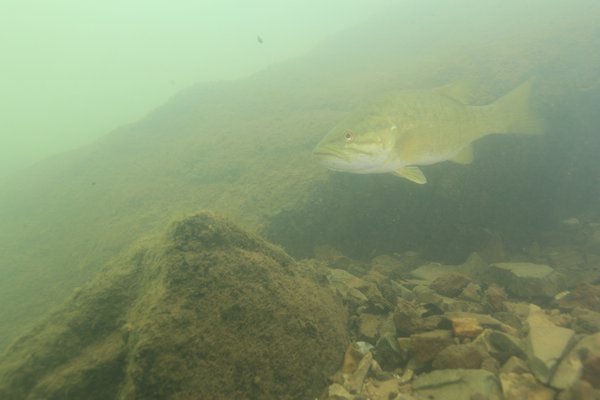
We caught all three black bass species: largemouth, smallmouth and striper. Goodner had an approach that he said is foolproof for two anglers during this time of year fishing mountain streams like the Ouachita River tributaries, and there are many that extend out of Lake Ouachita, which is the largest lake completely within the state’s borders.

For the day of spin fishing, Goodner was throwing a yellow buzzbait, while he had me casting a 4-inch Zoom Dead Ringer in watermelon seed with red flake. Once Goodner coached me into the correct technique, we were off and running. Of course, showing me how I should deliver the bait into one inviting spot before we started our trek upstream, he landed a nice spotted bass.

We had a long stretch of river to cover, and quickly, so Goodner was often barking like Nick Saban, “We gotta go, Jim,” when I wanted to stay an extra moment in a shaded spot, improving my cast. Moving and casting together, though, was something new, especially when you add in the balancing act required for the unpredictable rocks under my feet.

We caught and released 36 bass that ranged from what appeared to be first-year but fat largemouths to healthy 2-pound smallmouths. We threw back untold numbers of longear sunfish that also wanted to play. We found small pools in which 10 to 15 fish at least bit the baits if not stayed hooked and provided constant thrills. My highlight catch was a nice smallmouth suitable for a photograph. Goodner had hoped we’d entice what looked like a 6-pound bass to bite either of our baits as we watched him swim past us, but it was not to be.

Back in the office, I related my fish story to Sean Lusk, an AGFC Fisheries Division biologist in Little Rock who spent most of his seven years with the agency stationed in Hot Springs. From there, he and Jeff Buckingham, a former AGFC biologist, would often fish throughout the Ouachita Mountain area.

“Oh yeah. One of my favorite things to do around this time of year when the water gets lower is to go out and fish smaller tributaries like that,” Lusk said. “Especially when the water is a little warmer, those stream fish will be extremely active, and it’s fun because they’ll hit a bunch of different (baits). It’s not like you really have to dial them in and match the hatch. You can be slinging Rooster Tails and any number of baits out there and you’re going to catch fish.”

While all of the Ouachita River tributaries “are not created equal,” Lusk said, and may not offer quite the experience I enjoyed, he says there is potential in the main stem of the river and the major forks, like the South Fork and North Fork, to catch all three of Arkansas’s black bass species.

Goodner pointed out to me that the fish we were catching, though genetically identical to black bass in Lake Ouachita, were different from “lake fish.”

Lusk explained it further: “A lot of those stream fish, they’ll remain in the stream. More than likely the fish you guys were catching are steam-residents, it’s not like they live their life by the spillway and then migrate up in there.” Where there is little pressure on some of these tributaries, the fish immediately strike a bait.

Snake boots and a slight fear of hiding reptiles aside, access may be the only obstacle to anglers finding the perfect, active tributary to fish. Some streams have private land on both sides; you will need permission, or a guide with that permission, to find some of these gorgeous spots full of plentiful bass. But public access points also are available, especially on the Ouachita’s main stem and on any part of the water that abuts U.S. Forest Service land, which can be accessed by the public. The AGFC and the Army Corps of Engineers have access points on the main stem tributaries, Lusk noted, including one at the Twin Creek boat launch on the southwestern corner of Lake Ouachita.

“You could launch a boat there and you could run up the South Forth. Depending on how low the water was, you could run up that sucker pretty far,” Lusk says. “Or, if it’s not deep enough at that time of the year you could get out of your boat and start wading your way up. You have to stay below the ordinary high water mark in areas where private land is on either side.”

The main stem of the Ouachita is deep for several miles and more suited to floating fish trips; you have to travel several miles toward Mena to get into more shoal-type areas for wade fishing this time of year, he said.

For the average sportsman who would prefer something else to do in the outdoors when his or her friends are in the deer woods, Lusk says, a fall fishing trip in the mountain river tributaries can’t be beat.

“Find one of these trips. Look where we have a Game and Fish access. This isn’t restricted to just the Ouachita, look at any of our mountain tributaries. Right now river fishing can be really good. The fish now are less finicky than they will be in other times of the year in terms of that one bait that they’re looking for. The fish are hungry and they’ve got a wide variety of diet items that they’re interested in, so you can get away with throwing a number of different things and be successful.”

45-0 State Champion County Line Indians Receive Rings in Special Ceremony

BRANCH- It was a Cinderella season last year for the County Line Indians and their fans. In improbable fashion, the Indians did not lose a game all season, finishing 45-0 and state champions in Class 1A.

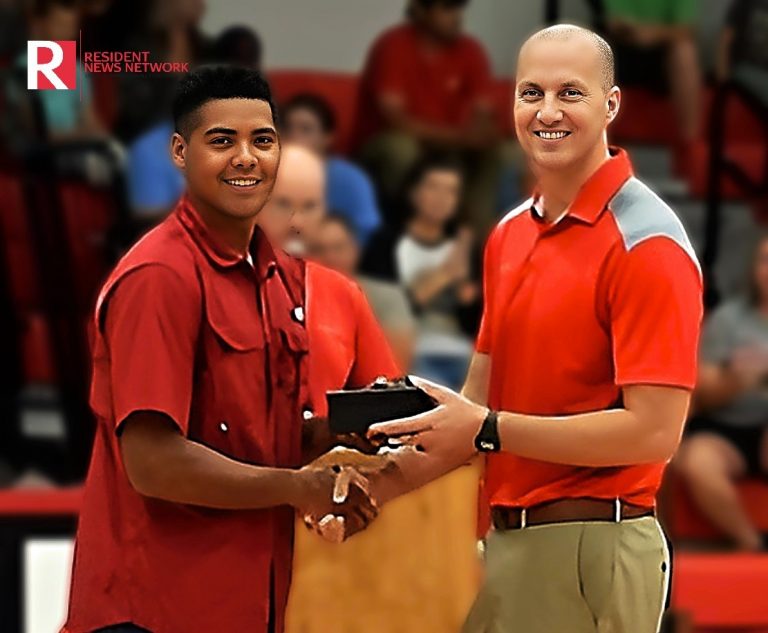
In the picture above, Aundrae Milum receives his state championship ring from Coach Joe Brunson. To top off his successful season, Aundrae was selected to play in the All-Star game. Coach Brunson was selected to head up the West All Star Team and led them to victory over the East team for the first time in many years.

County Line’s state championship game concluded with a thrilling last-second shot victory over Marked Tree in the Class 1A state final in Hot Springs. And last week, members of the team were presented state championship rings for their outstanding season that will be remembered forever in the minds of Indians fans.

Finishing a perfect 45-0 in 2022-23, the Indians boys basketball program’s last loss was on March 11, 2022, in a 44-41 loss in the state playoffs to Bradley.

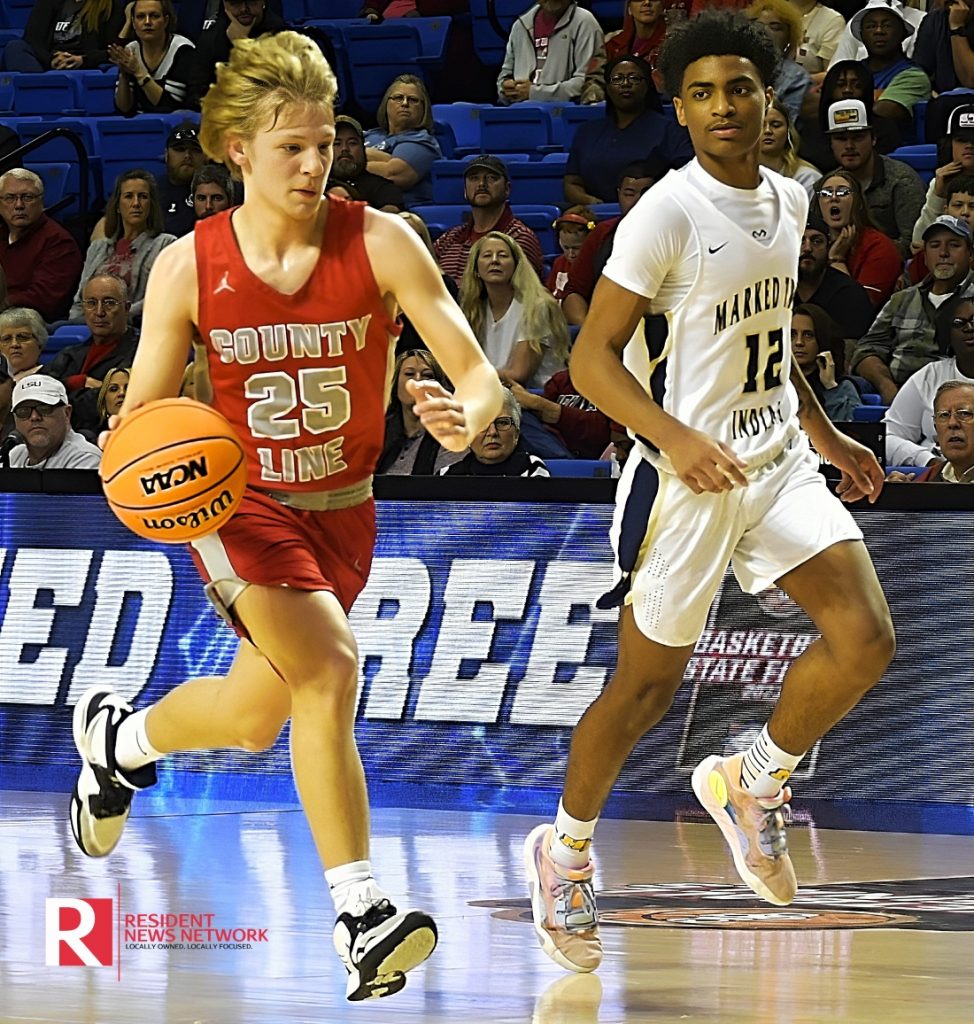
The Indians’ Trent Johnston (25) brings the ball down the court in the state championship game against Marked Tree (RNN Sports File Photo / Jim Best)

On behalf of everyone at RNN Sports, we would like to congratulate everyone at County Line on the Indians’ 2022-23 state championship season!

Note to Our Readers: Portions of this story were sourced from the County Line School District, Celia Looney.

How To Keep Farm Animals Safe During Winter

Winter is a challenging time for livestock farmers because it brings weather conditions that threaten the safety of the animals. Freezing temperatures, snow, and icy conditions can make it difficult to ensure the well-being of farm animals. These key strategies to keep farm animals safe during winter will help you take care of your livestock.

Providing Adequate Shelter

Adequate shelter is crucial for keeping your livestock warm and protected from harsh winter weather. Whether it’s a barn, shed, or windbreak, it should be in good condition to keep your animals out of direct exposure to the wind and snow. Exposure to these conditions could cause severe health problems for your livestock, such as hypothermia, and reduce their quality of life.

Ensuring Proper Nutrition

The dietary needs of your livestock change during the winter so they can adjust to colder conditions. They require more calories to maintain their body temperatures, so feed them high-energy foods and ensure they have constant access to clean, unfrozen water.

Performing Health Checks

Frequent health checks on your livestock can help you identify and prevent problems that could affect your herd. For example, the advantages of portable livestock scales include the ability to monitor weight and make sure your animals are not losing weight during the harsh winter.

Offering Clean Bedding

Bedding provides insulation for your animals during the cold months. Adding extra layers of straw or shavings to barn floors or paddocks can keep your livestock warm and reduce the risk of frostbite. Animals deserve an enjoyable quality of life no matter the season, and offering warm bedding will make them feel safe in their shelters.

Using Stress Management Tactics

Winter can be stressful for farm animals due to the cold and changes in routine. Minimize changes when possible to keep your farm animals safe during winter. Additionally, avoid transporting animals in extreme weather that may cause cold-related illnesses.

Preparing your livestock for winter requires careful planning and proactive measures. With these tips, you can ensure your farm animals remain healthy and safe during the winter season!

Brucellosis Vaccinations Scheduled

Brucellosis is a reproductive disease in cattle that is caused by a bacterial infection in the reproductive tract of cattle. Brucellosis can lead to abortion of fetus in infected cattle. After abortion, the bacterium is very prevalent in the aborted fetus, placental fluid and placental membrane. This can lead to spread of the disease to other cattle or susceptible cattle can become infected through direct contact with an infected animal. Once infected, a cow will likely carry the disease for life. Most cows only abort once but may have small or weak calves for the rest of their lives. This disease is particularly dangerous because it is transmissible to humans. It is referred to as undulant fever and can cause flu-like symptoms in people.  Arkansas is considered to be free of Brucellosis, but Arkansas law still requires that all replacement heifers receive the free vaccine when they are between four and twelve months of age.

If you have heifers between 4-12 months of age and you’re planning to keep them, you should have them vaccinated against Brucellosis (also called Bangs). The Logan County Extension offices, along with the Arkansas Livestock and Poultry Commission, will be offering free Bangs vaccinations on Tuesday, October 31.

Heifers 4-12 months of age may be vaccinated. Producers wishing to participate in this free clinic should contact the Logan County Extension office at 479-963-2360 or 479-675-2787.  You can also email your information to logan-paris@uada.edu.  The deadline to register your heifers for vaccination is no later than 4:30 p.m. on Monday, October 30.

This service is provided by the Logan County Cooperative Extension Service in cooperation with the Arkansas Poultry and Livestock Commission.  The University of Arkansas System Division of Agriculture offers all its Extension and Research programs and services without regard to race, color, sex, gender identity, sexual orientation, national origin, religion, age, disability, marital or veteran status, genetic information, or any other legally protected status, and is an Affirmative Action/Equal Opportunity Employer.   

The Arkansas Cooperative Extension Service is an equal opportunity/equal access/affirmative action institution.  If you require a reasonable accommodation to participate or need materials in another format, please contact your County Extension Office as soon as possible. Dial 711 for Arkansas Relay.

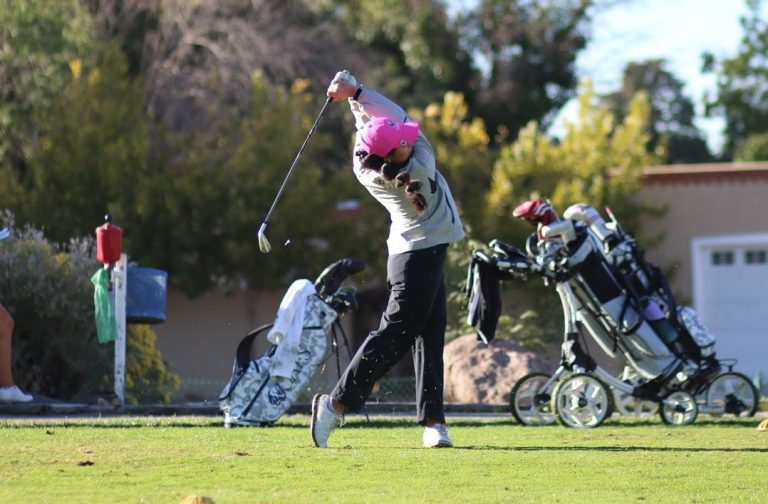
Women’s Golf ties for sixth at Nick Turner Invitational

ALBUQUERQUE, N.M. – University of Arkansas – Fort Smith Women’s Golf finished in a tie for sixth Tuesday at the Nick Turner Invitational at Arroyo del Oso Golf Club.

The Lions shot 306 in round one and 305 in round two to finish with a two-round total of 611 (+35) to tie with Regis.

Sidney Stramel once again led the Lions by placing in a tie for 13th with a 149 (+5). She shot a 75 (+3) in round one and started her back nine with three birdies on day two before closing with a second round 74 (+2). Stramel carded a team-high 24 pars.

Marvelyn Kartika tied for 20th after tallying six birdies and shooting a 152 (+8). She played even par on par-5s as she shot identical rounds of 76 (+4). She had four birdies in round two.

Rachel Hicks tied for 30th with a 156 (+12) after rounds of 77 (+5) and 79 (+7). All three of her birdies were in round one.

Kenley McElyea tied for 36th with a 158 (+14) while Maisie Liddell was one stroke back in a tie for 41st with a 159 (+15). McElyea had rounds of 82-76 with Liddell carding 78-81.

UAFS will next return to action in the spring.

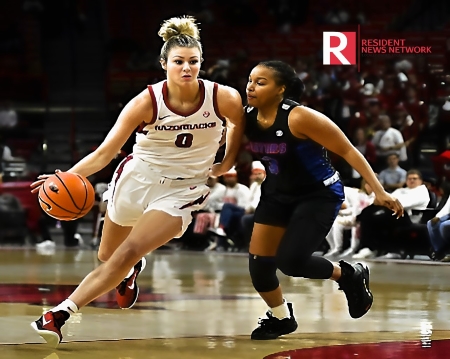
Lady Razorbacks Picked Sixth in SEC by Media

FAYETTEVILLE – The Arkansas women’s basketball team was projected by the media to finish within the top half of the Southeastern Conference, as announced by the league Monday. Picked to finish sixth, this year marks the fifth straight time, all in the Mike Neighbors era, the Hogs were chosen to finish in the top half of the SEC by the media, and ninth time overall in the program’s 33-year history in the league.

A panel of media members from the SEC and national media selected the preseason poll and preseason all-conference teams. The panel chose the reigning NCAA Champion LSU to win the conference and Angel Reese to collect SEC Player of the Year honors. The SEC Preseason Coaches’ Poll and Preseason Team will be unveiled next week.

The Hogs are coming off their fifth straight postseason qualification and fourth year being ranked inside the top 50 in the RPI/NET, one of two SEC schools to do so. With a 24-13 season, the Hogs ended in the Postseason WNIT Great 8, returning eight players from last season’s team, including three starters, as well as bringing in a No. 17 recruiting class in the country as ranked by ESPN.

SEC Tip Off ’24 is set for Thursday, Oct. 19 in Mountain Brook, Alabama. Head coach Mike Neighbors will be in attendance with student-athletes Makayla Daniels and Samara Spencer. The three will be live on the SEC Network set from 2:15 to 2:30 p.m. CT.

2023-24 SEC Preseason Media Poll

1. LSU

2. South Carolina

3. Tennessee

4. Ole Miss

5. Mississippi State

6. Arkansas

7. Georgia

8. Texas A&M

9. Alabama

10. Florida

11. Missouri

12. Auburn

13. Kentucky

14. Vanderbilt

Preseason Player of the Year

Angel Reese, LSU

Preseason All-SEC First Team

Flau’jae Johnson, LSU

Angel Reese, LSU

Hailey Van Lith, LSU

Kamilla Cardoso, South Carolina

Rickea Jackson, Tennessee

Preseason All-SEC Second Team

Aneesah Morrow, LSU

Madison Scott, Ole Miss

Jessika Carter, Mississippi State

Jewel Spear, Tennessee

Jordyn Cambridge, Vanderbilt

Note to Our Readers: The previous story was sourced directly and in its entirety from the University of Arkansas Office of Communications, Kylie Magar.