
75.2 F
Fort Smith
Wednesday, June 24, 2026
Home Blog Page 238

Questions To Ask Before You Buy Farm Equipment

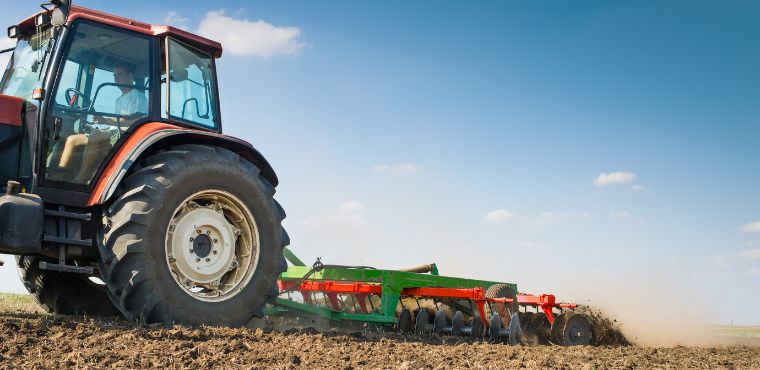
When it comes to farming, having the right equipment is crucial for success. Whether you’re a seasoned farmer or just starting out, investing in farm equipment can be a significant decision. It’s important to do your research and ask the right questions before making a decision on a purchase. This will ensure you get the most suitable equipment for your specific needs and the best value for your investment. In this blog, we’ll discuss some important questions to ask before buying farm equipment.

What Are My Farming Needs?

The first and most crucial question to ask yourself is what your farming needs are. Understanding your specific requirements and operations will help you determine the type of equipment appropriate for your land.

For instance, if you have a smaller farm, you may not require heavy-duty machinery, and buying a new compact tractor might suffice. Or, if you specialize in certain crops, you may need specific equipment for those crops. By identifying your farming needs, you can narrow down your options and make a more informed decision.

What Is My Budget?

Another essential question to consider is your budget if you need or have one. Farm equipment can be expensive, and it’s crucial to have a realistic dollar figure in mind before you start looking. Consider the cost of the equipment, maintenance, repairs, and any additional expenses, such as fuel or attachments.

It’s also important to remember that cheaper equipment may end up costing more in the long run due to frequent breakdowns or inefficiencies. It’s best to invest in high-quality equipment that may cost more upfront but will save you money in the long run. Reputable vendors will offer financing or financial flexibility depending on credit, vendor reputation, and inventory type.

What Is the Equipment’s Quality?

The quality of farm equipment is crucial for its performance and longevity. Before making a purchase, be sure to research the manufacturer and read reviews from other farmers who have used their equipment. Asking this question before you buy new farm equipment can save you time and money and prevent farming issues.

Is the Equipment Compatible With My Farm?

Different types of equipment exist for different types of farms and operations. Make sure to ask the vendor if the equipment you’re interested in is compatible with your farm’s terrain, size, and other specific conditions.

For example, if you have a hilly terrain, you may need equipment with better traction or stability. It’s also essential to consider the size of your farm and ensure the equipment can effectively cover it. Compact tractors are excellent for small jobs, but large farming operations might require a full-size tractor.

What Are the Maintenance Requirements?

Farm equipment requires regular maintenance to ensure its proper functioning and longevity. Ask about the maintenance requirements for the specific equipment you’re interested in, such as how often it needs servicing and what type of maintenance it requires. This will help you plan for any additional costs or time needed for upkeep.

Investing in farm equipment comes with lots of decisions and questions. Hopefully, these questions help you understand where to start so that you can be an informed buyer, not a desperate one.

Paris Continues to Roll: Defeats Elkins 3-0 in Conference Match

PARIS- For the second match in just 24 hours, the Paris Lady Eagles have swept their opponents in three straight sets. On Tuesday night, it was the Lady Eagles defeating Elkins in conference play to solidify Paris’s hold on second place in the 3A West. As was the case with their Monday non-conference match with Little Rock Episcopal, the Lady Eagles came out fast and ran away from Elkins in three dominant sets for the critical conference win.

With the win, Paris’s conference record improves to 9-2, and remains two games behind the conference leading Hackett Lady Hornets. Elkins, who entered the game in third place and one match behind Paris, sees their conference record drop to 7-4, two games behind Paris. With nine days left in the regular season, Paris has a road game left on Thursday at West Fork, and home games remaining with Lincoln and Green Forest. The conference regular season ends October 12.

The Lady Eagles appear to be playing some of their best volleyball of the season, peaking at the right time just before the post season. The Lady Eagles will host the Paris Invitational Tournament on Saturday before moving on the next week to play their final conference regular season games.

As a note for Paris volleyball fans, Senior Night is scheduled for October 12 prior to the Lady Eagles’ match with Green Forest.

RNN Sports will be in Paris on Thursday night to bring you junior high football coverage when the junior high Eagles host Jessieville at Eagles Stadium. Our next volleyball coverage will be this Saturday at the Paris Invitational Tournament.

Timepiece: Friendship Quilts

By Dr. Curtis Varnell

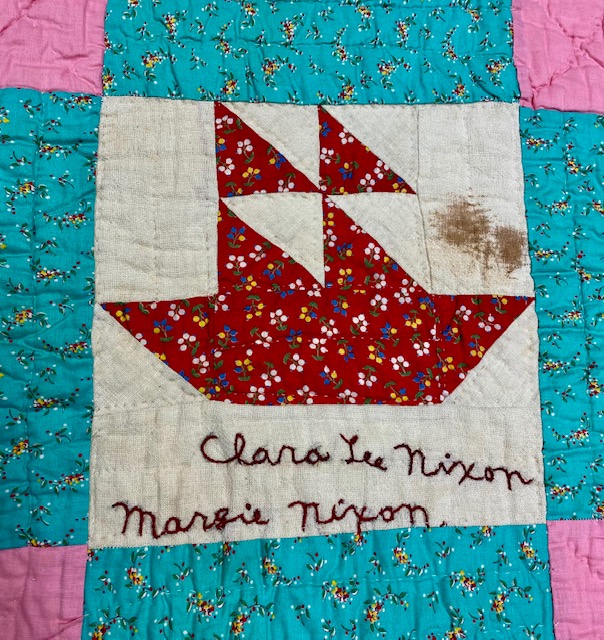
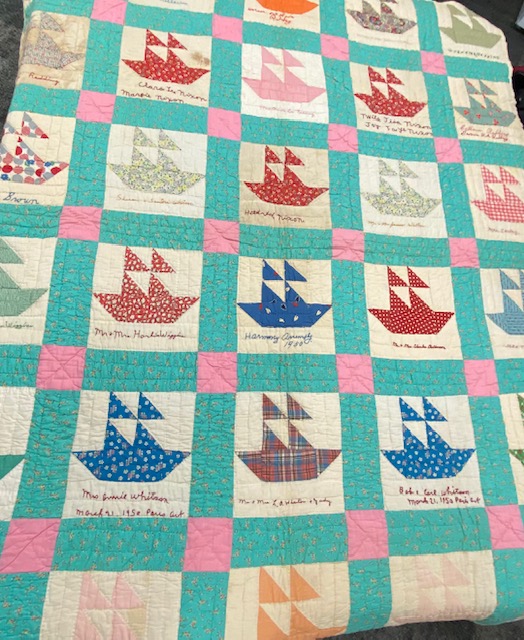
On a recent Sunday morning a former pastor’s daughter, home on a visit from California, brought an old friendship quilt to our church in Greasy Valley (I know, strange name but that is a story within itself).  Members gathered in awe around the quilt, made by church members in the 1950’s.  My wife quickly picked out the square containing the name of her grandmother, uncle, and aunts and I did the same for two of my aunts.  We were touching our past and remembering our ancestors. 

Making friendship quilts was a common occurrence in the 1900’s.  The quilts were composed of signed blocks having the same pattern and often accompanied by the signature of the family member who made the square.  There are many different patterns that were and are used to create friendship quilts but the most popular is the Log Cabin block which symbolizes home, warmth, love and security.  During the 1800’s, it was common to merely sign family names with indelible ink but, as time went on, it became tradition to embroidery the information onto the square and to even add the date when made.

During hard times, the blocks were composed of scrap pieces of worn out clothing so that any one square might contain afragment of grandma’s dress, a piece of a gingham skirt, Aunt Clara’s sun bonnet, and even grandpa’s worn out overalls.  When attached with dozens of other squares, the finished product was an attractive cover for a quilt.  That’s when the real work began.  Attached to the ceiling by hooks and rope, a quilting frame of wood was lowered to a working height.  A solid sheet of cloth served as backing for the quilt and was placed on first.  Batting, usually strands of cotton were placed on the cloth and served as the insulation, with the friendship cover placed over the top, stretched, and attached to the frame.  If available, large amounts of batting would be inserted so that the end product might be several inches thick to withstand the winter cold.  The best seamstress would then intricately sew the layers together with beautiful small, even stitches demonstrating their individual abilities. 

Sewing skills were an integral part of many women’s lives, taught them at an early age as they made and repaired clothing at home.  In rural areas, quilting bees were a popular and appealing way for women in rural communities to gather socially with other women and families.  In the Midway community where I grew up, the ladies would meet at the church weekly to sew, share news and gossip, exchange recipes, and share lunch.  As the women worked, the room resounded with laughter, squeals of small children playing underfoot, and sometimes the sounds of hymns as the church musicians played instruments and entertained.  The end product was beautiful hand-stitched quiltsthat would last a lifetime.   

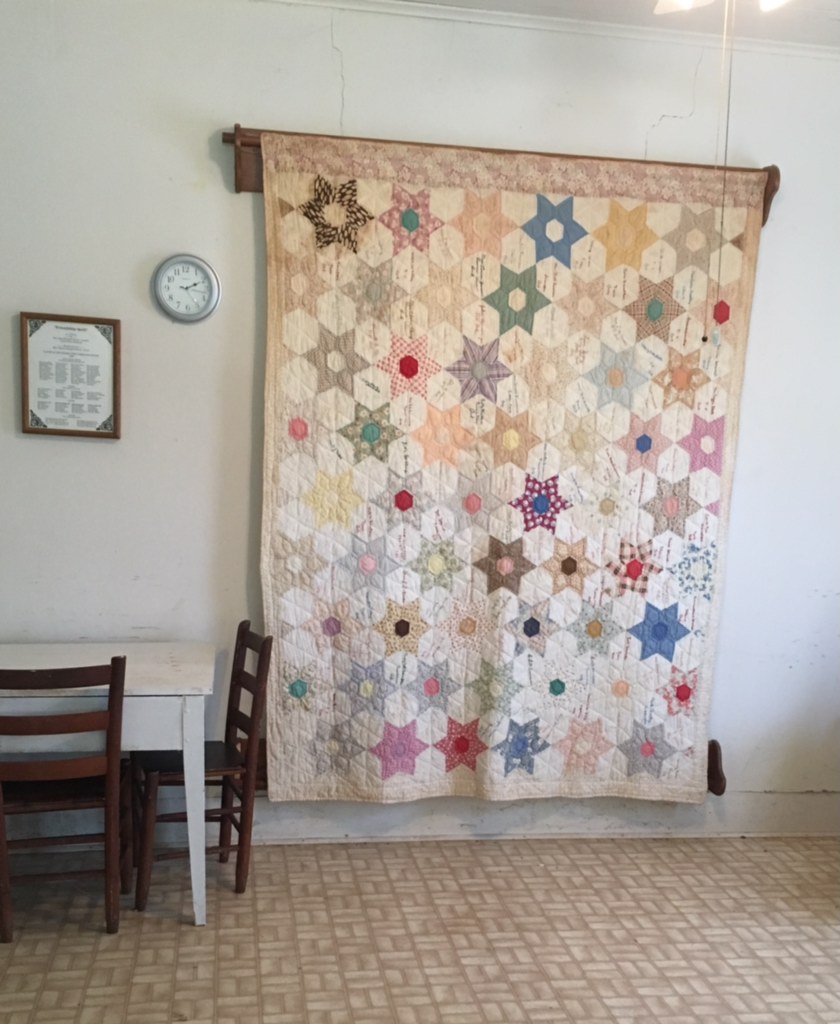
The signed quilt was and still are a very popular item and have a range of purposes.  They are often given a bridal gift, presentedas an honor to a prominent member of the community, given as a going away gift, or sold to raise money for a church or charity.  The small community of Prairie View made and sold a friendship quilt in the 1940’s, it now hangs on the wall of the community building that was bought with some of the proceeds from its original sale.  Another friend has a quilt made in 1902, testament to the skill of the ladies who put it together.  

Standing around the quilt, you could hear the excitement as people recognized names of departed loved ones or recognized a name from their past.  Some wanted to touch the fabric, running fingers along intricate stitches as they recalled stories of people from their past and remembrances of community and long ago friendships.

Arkansas 4-H clubs celebrate National 4-H Week

By Rebekah Hall 
U of A System Division of Agriculture 

On Oct. 1, the green and white 4-H flag was raised at the U.S. Department of Agriculture headquarters in Washington, D.C., where it will fly through Oct. 7 to celebrate National 4-H Week. In Arkansas, 4-H members, volunteers, leaders and staff are highlighting the program’s impact on youth in all 75 of the state’s counties.  

U.S. Agriculture Secretary Tom Vilsack proclaimed Oct. 1-7 as National 4-H Week on Sept. 28. As the nation’s largest youth development organization, 4-H has more than 6 million members. It’s also the largest youth organization in Arkansas, with more than 11,000 members and 600 4-H clubs. The 2023 theme of National 4-H Week is “I Heart 4-H,” which “reminds us that every child has valuable strengths and real influence to improve the world around us,” according to Vilsack’s proclamation.  

Debbie Nistler, assistant vice president-extension for 4-H and youth for the University of Arkansas System Division of Agriculture, said 4-H Week aims to encourage families to participate in the organization.  

“National 4-H Week is a great opportunity to promote 4-H during a time when youth and their families are deciding what activities they would like to engage in during the year,” Nistler said. “We want 4-H to be an attractive option.”  

Nationally, 4-H’s mandates are STEM — science, technology, engineering and mathematics — healthy living, civic engagement and leadership, Nistler said.  

“These mandates lead our work in areas that help grow the individual and connect them to their futures and their communities,” Nistler said. “The essential elements of 4-H are belonging, mastery, independence and generosity. These elements help guide how youth engage and provide an intentional path to grow skills and competencies as they engage in 4-H.”  

To celebrate the week, Arkansas 4-H’s Facebook,Instagram and Twitter pages will be highlighting different 4-H programs, including 4-H Yoga and Tech Changemakers, and encouraging followers to wear 4-H’s signature green color and share how they love 4-H. Ashley Dingman, extension program associate for 4-H youth development, said she encourages 4-H supporters to tag Arkansas 4-H in their social media posts using #AR4H and #IHeart4H.  

Nistler said 4-H is an important program for Arkansas youth because it helps cultivate skills and passions in many different fields, all of which create brighter futures.  

“4-H provides a unique opportunity for youth to find their spark,” she said. “A certain project or passion may lead to a future career. That may be an animal science project, but more youth now engage in projects related to STEM, healthy living, leadership, natural resources, and even space through NASA programs.”  

To learn more about Arkansas 4-H, its programs and scholarship opportunities, visit the organization’s website at 4h.uada.edu or follow on social media.  

4-H is a youth development program operated by the Cooperative Extension Service, part of the Division of Agriculture. The program teaches participants life skills through the “learn by doing” model. Program participants gain knowledge through non-formal, science-based, experiential education activities. 

To learn about extension programs in Arkansas, contact your local Cooperative Extension Service agent or visit www.uaex.uada.edu. Follow us on Twitter and Instagram at @AR_Extension. To learn more about Division of Agriculture research, visit the Arkansas Agricultural Experiment Station website: https://aaes.uada.edu. Follow on Twitter at @ArkAgResearch. To learn more about the Division of Agriculture, visit https://uada.edu/. Follow us on Twitter at @AgInArk. 

About the Division of Agriculture 

The University of Arkansas System Division of Agriculture’s mission is to strengthen agriculture, communities, and families by connecting trusted research to the adoption of best practices. Through the Agricultural Experiment Station and the Cooperative Extension Service, the Division of Agriculture conducts research and extension work within the nation’s historic land grant education system.  

The Division of Agriculture is one of 20 entities within the University of Arkansas System. It has offices in all 75 counties in Arkansas and faculty on five system campuses.   

The University of Arkansas System Division of Agriculture offers all its Extension and Research programs to all eligible persons without regard to race, color, sex, gender identity, sexual orientation, national origin, religion, age, disability, marital or veteran status, genetic information, or any other legally protected status, and is an Affirmative Action/Equal Opportunity Employer. 

Stramel, Hicks pace Lions at WT Fall Invitational

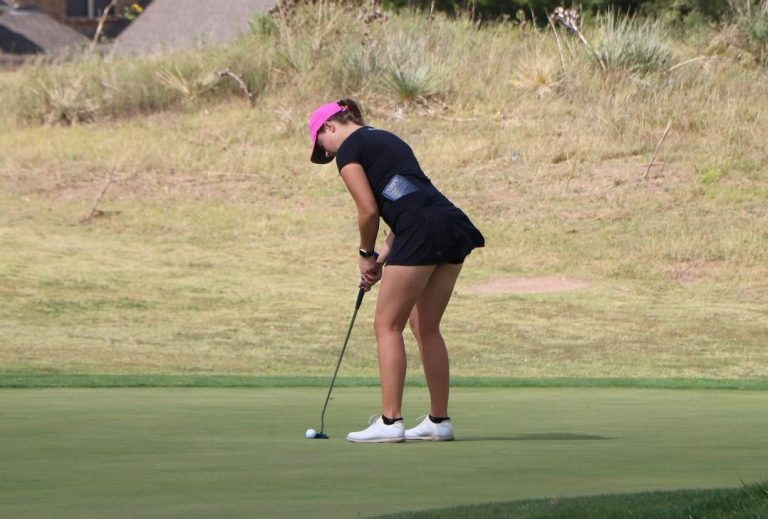
AMARILLO, Texas – Sidney Stramel earned her third straight top-10 finish to open the season as she tied for eighth at the West Texas A&M Fall Invitational Tuesday.

Stramel carded a three-round total of 220 (+7). She closed her first round with three birdies to finish with a 72 (+1) then tallied four birdies in round two to shoot an even par round of 71. She finished with a final round 77 and led the Lions with 34 pars.

Rachel Hicks earned her first top-15 of the year after leading the Lions with 10 birdies to shoot a 225 (+12) to finish in a tie for 13th. Hicks had four birdies in her first nine holes of the tournament to lead to a first-round 74 (+3). She then finished with rounds of 73-78.

Kenly McElyea carded a second-round 73 (+2) as she tied for 41st with a 233 (+20). Marvelyn Kartika finished 53rd with a 236 (+23) while Simone Campise tied for 71st with a 248 (+35).

Kartika, Stramel and Hicks all shot two-under on par-5s.

Maisie LiddellMaddie Sanders and Livia Blevins all competed as individuals with Lidell tying for 55th with a 239 (+26) with a pair of 77s. Sanders finished 70th with a 247 (+34) while Blevins tied for 76th with a 250 (+37).

The Lions were in second after the first two rounds Monday but battled tough conditions Tuesday to finish sixth with a 909 (+57).

UAFS concludes the fall portion of its schedule October 16-17 at the Nick Turner Invitational at Arroyo del Oso Golf Course in Albuquerque, New Mexico.

Sewell leads Lions at Ryan Palmer Invitational

AMARILLO, Texas – University of Arkansas – Fort Smith Men’s Golf placed 14th at the Ryan Palmer Invitational after wrapping up round three Tuesday at Amarillo Country Club.

The Lions finished with a three-round total of 893 (+41). UAFS tallied the second most pars with 165 and was one of three schools with three eagles.

Sam Sewell led UAFS as he tied for 27th with a 218 (+5). He improved each round as he carded scores of 74-73-71. Four of his team-high seven birdies came in round two. Sewell and Preston Green each had a team-high 36 pars. Green tied for 64th with a 228 (+15) after he sandwiched rounds of 73 (+2) and 72 (+1) around a second round 83.  

Both Andrew Fakult and Jaden Chavez tied for 67th with 229s (+16). Chavez faced a similar situation as Green with a first round 73 and a final round 71 but had an 85 in round two. Fakult fired off rounds of 79-74-76.

Chandler Cooke tied for 83rd with a 234 (+21) while Lucky Boonsrirat tied for 78th with a 232 (+19) playing as an individual.

UAFS wraps up its fall schedule at the DBU Classic October 23-24 at the Golf Club of Dallas in Dallas, Texas.

Bringing Light to the Community: Tegan Stimac, 15, Receives Prestigious Gold Medal President’s Volunteer Service Award

Greenwood, October 2023— In a heartfelt recognition of her unwavering commitment to community service, Tegan Stimac, a 15-year-old Junior at Greenwood High School, has been awarded the prestigious Gold Medal President’s Volunteer Service Award for accumulating over 100 hours of volunteer work. Tegan’s dedication to making a difference in the lives of others has left an indelible mark on the Greenwood community, as she selflessly lent her time and energy to various local organizations, including the White Bluff Rye Hill Fire Department, Miracle League Baseball, and Harvest Time, among others.

One of Tegan’s significant volunteer contributions was with the White Bluff Rye Hill Fire Department. She has been an active member, dedicating numerous hours to support the firefighters and first responders in their mission to keep the community safe. Her role involved a variety of tasks, from assisting in equipment maintenance to participating in the annual “Santa Visits” throughout the White Bluff community. Tegan’s dedication to the fire department reflects her deep respect for the brave individuals who risk their lives to protect others.

Tegan’s involvement with the Miracle League Baseball program exemplifies her commitment to inclusivity and compassion. She spent Saturdays assisting young athletes with disabilities, ensuring they had the opportunity to participate in the joy of playing baseball. Her positive attitude and unwavering support have made a lasting impact on the players and their families.

The President’s Volunteer Service Award is a testament to her outstanding commitment and dedication to serving others. Along with a gold medal, she was presented with a certificate and congratulatory letter signed by the President of the United States. Her achievement serves as a reminder of the power of youth to effect meaningful change in their communities.

Tegan’s parents, Tony and Taylor Stimac, expressed their pride and gratitude for their daughter’s efforts. “Tegan has always been compassionate and caring, and we couldn’t be prouder of the young woman she has become,” said Taylor Stimac. “We hope her journey will inspire others to become active participants in their communities.”

Tegan Stimac’s story is a reminder that acts of kindness and selflessness can create a ripple effect of positive change, and her dedication to volunteering is sure to continue making a difference in the lives of those she serves for years to come.

Common Debris Found in Your Gutters and How To Remove It

Clogged gutters can lead to water damage and mold growth, among other issues. Debris in the gutters can threaten your home’s structural integrity, so knowing how to clean them decreases the stressors of home care. Use this guide to learn about common gutter debris and handy tips for removing it.

Leaves and Twigs

Leaves and twigs can fall on your roof at any time of year, though they tend to accumulate during the fall season when trees shed their foliage. You can remove leaves and twigs with a gutter scoop or by hand while wearing gloves. Collect the debris in a bucket or bag to dispose of it easily. Consider installing gutter guards or using a leaf blower to clear debris from the gutters periodically.

Snow and Ice

Surprisingly, snow and ice are gutter debris. Cold conditions can cause significant issues for your roof and gutters. Snow can accumulate, melt, and freeze in the gutters, leading to ice dams. These dams prevent water from flowing freely through the gutters, causing leaks and water damage to your home.

Remove snow and ice with a roof rake or a heated cable designed for gutters. Prevent snow from accumulating by installing heated gutter guards to melt the flurries and prevent the formation of ice dams.

Moss and Algae

Moss and algae growth is common in damp and shaded areas around your home. They cause gutters to rust and decay over time due to moisture retention. They also encourage mold growth and facilitate water damage. You can remove this debris from your gutters with a specialized cleaning brush or a scraper. Consider using commercial moss and algae removal products to expedite the cleaning process.

Taking steps to prevent the regrowth of moss and algae ensures your roof stays in good condition. Ventilate the roof to mitigate water buildup and prevent water damage in your attic that could ruin your roof, especially the gutters.

Roofing Material Granules

Asphalt shingles lose their protective granules over time. These granules can accumulate in the gutters and prevent them from draining. Damaged shingles are a common roof issue you shouldn’t ignore, and improper draining can affect other parts of the roof.

You can remove asphalt granules with a gutter scoop or a wet/dry vacuum with a gutter cleaning attachment. Regularly inspecting your roof and gutters can help you identify and address granule buildup before it worsens.

Numerous types of debris accumulate in gutters, and it’s essential to remove them before they can cause problems. Regularly inspecting and cleaning your gutters prevents blockages and potentially expensive damage to your home. Maintain your gutters to safeguard your home and family!

Obituary – Homer Stinson (1944-2023) 

Homer Stinson of Waldron, Arkansas passed from this life, Friday, September 29, 2023 in Waldron Nursing Home surrounded by loved ones. Homer was born July 10, 1944 to Luke and Meddie Sue (Owens) Stinson in Forrester, Arkansas.

Homer was married for 59 years to the love of his life, Vickie Sue Gibson. Homer retired from Tyson as a chicken catcher after many years of service. Homer loved his family and really enjoyed spoiling his grandchildren and great grandchildren.

Homer leaves behind to cherish his memory, his loving wife Vickie of the home, his children: Shawn Stinson and girlfriend Steaphanie Hudson of Waldron, Arkansas, Toshia Mullinax and husband Harley of Waldron, Arkansas, Chad Stinson and wife Amber of Waldron, Arkansas, Keria Stinson of the home, and Christie Baldridge and husband Tim of Kentucky. Papa will forever remain in the hearts of his grandchildren: Tyler Aydelott and wife Jasmine of Mulberry, Arkansas, Jesse Stinson and wife Shelbie of Waldron, Arkansas and Kyla Stinson of Russellville, Arkansas as well as sever great grandchildre: Lukus, Alsie, Daxon, Vicky, Libby and Kaurmice.

Homer was preceded in death by his parents, Luke and Meddie, and two brothers: Harold Stinson and J.W. Stinson.

A celebration of life will be 1:00 p.m., Friday, October 6, 2023 at the Cedar Creek Cemetery with Rev. Konnor McKay officiating. Arrangements and cremation are being entrusted to the Heritage Memorial Funeral Home & Crematory in Waldron, Arkansas.

Fusarium Wilt Confirmed in Commercial Arkansas Blackberries, Growers Should be on the Lookout

By Sarah Cato
U of A System Division of Agriculture 

Fusarium wilt, a soil-dwelling fungal disease known to wipe out susceptible crops in affected areas, has been confirmed for the first time on a commercial blackberry operation in Arkansas.  

Blackberries are a multi-million-dollar market in the United States. According to the Agricultural Marketing Resource Center, U.S. blackberry production was valued at $31.1 million in 2017. 

Most Arkansas producers are familiar with Fusarium wilt in watermelons, tomatoes and other fruit and vegetable crops. Until recently, Fusarium wilt had only been confirmed in commercial blackberry varieties in California, North Carolina and Mexico. But where these new cases of Fusarium wilt in Arkansas originated isn’t known.  

“It’s unclear whether these new cases are due to new, more susceptible cultivars being infected by a pathogen that was already present, or introduction of the pathogen somewhere in the plant supply chain,” said Aaron Cato, extension horticulture integrated pest management specialist for the University of Arkansas System Division of Agriculture. “What we do know is that there is likely a large amount of variation in susceptibility to this disease by cultivar.”  

Cato said the cultivar ‘Twilight’ is known to be very susceptible and is where the disease was first observed in many areas including Arkansas. Fusarium wilt has also been observed on other commonly grown varieties such as ‘Ouachita’ while cultivars such as ‘Navaho’ appear to be resistant to some degree.

Should Arkansas growers be worried? 

Cato recommends that all Arkansas blackberry growers should scout their plants to catch a possible infection early to prevent spread.  

“It’s hard to know exactly what we’re dealing with right now, but the short answer is that all growers should be on the lookout,” Cato said. “When plants get this disease they will die. There is an inherent risk to not finding this disease early, as farmers in North Carolina have documented the capacity of the disease to spread across a farm. What we know for sure is that we found it in the state and all growers need to be looking for it.”  

What to look for  

Although Fusarium wilt in blackberry is not very well understood yet, there are some key diagnostics that make it relatively easy to identify.  

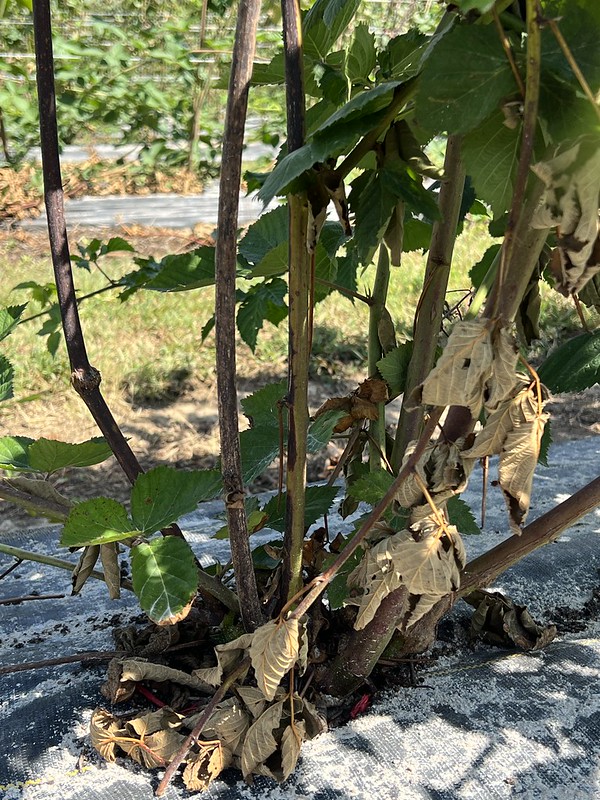
“Blackberry plants that have this disease will exhibit wilting accompanied by the appearance of longitudinal black streaks on canes, that will begin only on one side of the cane,” Cato said. “Black streaks will generally originate from the base of canes or near the ground and grow upward. These canes will wilt rapidly and leaves will die and often remain attached to the plant.”  

Cato also said to watch for the presence of spores as masses present on the surface of the cane in whitish-pink or tan-colored streaks on necrotic areas.  

What to do after finding Fusarium wilt 

Because there is no remediation for soil near infected plants, it is important that growers avoid re-planting blackberries in affected areas. Additionally, Cato recommends removing plants and avoiding cross-contamination with other, nearby plantings. 

“In fields where Fusarium shows up, it’s likely that you need to do more than just remove the infected plants,” Cato said. “The current assumption is that plants of a similar cultivar nearby are likely to be infected, but not all growers are going to be willing to get rid of these plants. For small-scale growers, it is likely worth the time to remove infected plants as soon as possible and try to be as sterile as possible when working from plant to plant.” 

For larger growers, Cato said it may be best for growers to cut their losses and remove the entire field. 

“We’re still waiting to see what the spread is like here in Arkansas, but growers in North Carolina have really preached isolation and cutting your losses on infected fields,” Cato said. “Ultimately, if you think you have found Fusarium wilt on your farm you need to contact your county agent and send in a sample to the Plant Health Clinic.” 

Preventative measures 

Although this disease is not well understood in blackberry yet, there are some best management practices to help avoid infection.  

“First, growers should be sure to avoid introduction of the pathogen by only buying disease-free, tissue-cultured plants from reputable sources,” Cato said. “It’s a good idea to always rely on these reputable sources of plants to avoid the many diseases that could possibly be moved with blackberry plant material.” 

Cato also recommends practicing good sanitation by removing nearby wild blackberries, avoiding handling plants when wet, clean any equipment used to work the soil or make beds prior to moving to new fields, and be sure to handle, prune or harvest fields that are not known to have issues before going into any infected or suspected Fusarium infected plantings.  

Read more about Fusarium wilt in Arkansas blackberries, and what to do with suspected infected plants in Cato’s blog post.  

To learn about extension programs in Arkansas, contact your local Cooperative Extension Service agent or visit www.uaex.uada.edu. Follow us on Twitter and Instagram at @AR_Extension. To learn more about Division of Agriculture research, visit the Arkansas Agricultural Experiment Station website: https://aaes.uada.edu/. Follow on Twitter at @ArkAgResearch. To learn more about the Division of Agriculture, visit https://uada.edu/. Follow us on Twitter at @AgInArk. 

About the Division of Agriculture 

The University of Arkansas System Division of Agriculture’s mission is to strengthen agriculture, communities, and families by connecting trusted research to the adoption of best practices. Through the Agricultural Experiment Station and the Cooperative Extension Service, the Division of Agriculture conducts research and extension work within the nation’s historic land grant education system.  

The Division of Agriculture is one of 20 entities within the University of Arkansas System. It has offices in all 75 counties in Arkansas and faculty on five system campuses.   

The University of Arkansas System Division of Agriculture offers all its Extension and Research programs to all eligible persons without regard to race, color, sex, gender identity, sexual orientation, national origin, religion, age, disability, marital or veteran status, genetic information, or any other legally protected status, and is an Affirmative Action/Equal Opportunity Employer.