79.6 F
Fort Smith
Monday, June 22, 2026
Home Blog Page 26

Sebastian County Sheriff Hobe Runion Announces Retirement After 26 Years of Service

After more than three and a half decades of service, Sebastian County Sheriff Hobe Runion has announced his retirement, effective March 31.

Runion concludes an impressive 26-year career with the Sebastian County Sheriff’s Office, a tenure marked by steadfast leadership, compassion, and an unwavering commitment to the citizens of Sebastian County and the law enforcement officers who serve the community.

Throughout his career, Runion earned the respect of colleagues and residents alike. Known for his kindness, humility, and approachable leadership style, he earned the nickname “the people’s sheriff.”

During his 36 total years of service in law enforcement, Runion stood alongside fellow officers through both difficult and rewarding moments — from the heartbreak of losing members of the law enforcement family to the many victories and milestones that strengthened the bonds of brotherhood among those who wear the badge.

Community members and colleagues alike have expressed gratitude for Runion’s dedication and the integrity he brought to the office throughout his career.

As he steps away from law enforcement, Runion plans to devote more time to his family and to volunteering with his church.

The citizens of Sebastian County extend their sincere appreciation for Sheriff Runion’s service and wish him the very best in his retirement.

Congratulations, Sheriff Runion — your leadership and service will be greatly missed.

Arvest Bank Warns Consumers, Businesses About Tax Identity Theft

With tax filing season underway, Arvest Bank is urging consumers and businesses to stay alert and take proactive steps to protect themselves from tax-related identity theft, a growing form of fraud that can delay refunds, create long-term financial headaches and take months to resolve.

According to the IRS, tax identity theft occurs when criminals use a stolen Social Security number to file a fraudulent tax return and claim a refund before the legitimate taxpayer files. Criminals frequently use advanced methods, such as AI-generated phishing emails and fake text messages, to impersonate the IRS or financial institutions and trick victims into providing sensitive information.

Taxpayers are encouraged to watch for common warning signs of tax identity theft, including an electronically filed return being rejected because a duplicate return was already submitted, receiving an IRS notice about a tax return you did not file, or receiving an unexpected 1099-G form for unemployment benefits you never applied for.

“As scammers use more sophisticated tricks, we urge everyone to be cautious when sharing personal information,” said Erin Gray, director of Integrated Account Protection at Arvest Bank. “By staying alert and following a few simple habits, you can help protect yourself and keep your finances safe.”

To reduce the risk of becoming a victim of tax identity theft, Arvest recommends following these tips provided by the IRS:

● Get an IRS Identity Protection PIN: An IP PIN is a six-digit number assigned by the IRS that prevents anyone else from filing a tax return using your Social Security number.

● File Early: Submitting your return early in the season reduces the window for thieves to file a fraudulent one before you do.

● Know How the IRS Will Contact You: The IRS does not initiate contact via email, text or social media to request personal or financial information. Don’t give your personal information to someone who calls, emails or texts and says they’re with the IRS. It could be a scammer impersonating the IRS to steal your information or money. If you need to contact the IRS, call them at 1-800-829-1040

● Protect Personal Records: Secure your Social Security card, shred tax documents before throwing them away, and secure your computer with firewalls and antivirus software. Tax-related documents you should keep for a year include bank statements and

deposited checks. Documents you should keep for at least three years include canceled checks and records related to selling a home. Check the IRS website for a complete list.

● Use Trusted Tax Preparers: Ensure you trust your tax preparer and review your return before signing. If you use online software, secure your account with two-factor authentication, which adds an extra layer of security by requiring two or more credentials to log in.

● Check Credit Reports: Regularly check your credit report to monitor for unauthorized activity.

Anyone who believes they may be a victim of tax identity theft should immediately file a report at IdentityTheft.gov, the federal government’s centralized identity theft recovery site. Customers should also contact Arvest’s fraud department right away if they suspect their banking credentials or accounts have been compromised.

Timepiece: National Springs

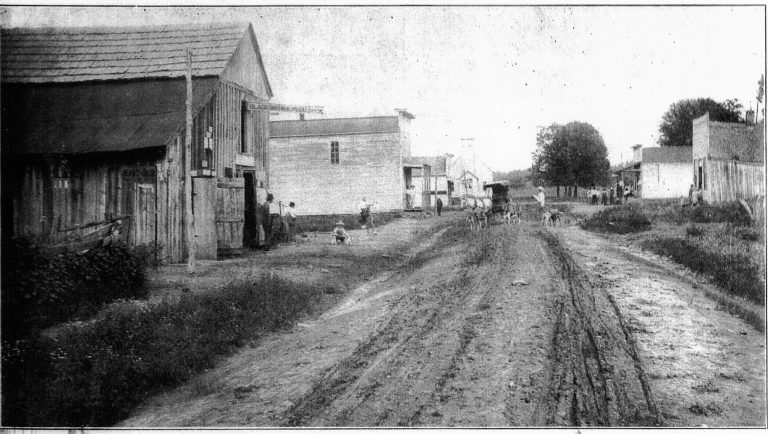
A calf wonders across a broken pasture, the only sound it’s soft bellowing as it searches for its parent who is grazing nearby.  A few moss-covered stone jut upward from the otherwise flat pasture, the only remainders of the thriving town that has now vanished from memory. 

National Springs was a bustling tourist town in the late 1800’s.  Five natural springs of healing mineral waters were the centerpiece of a resort city that contained a large hotel, a blacksmith shop, several stores, a school, and even published its own newspaper. 

Barnetts store, Caulksville

People from across the country congregated and bathed in the mineral infused springs which were thought to cure everything from gout to skin disease.  The site, located about two miles southwest of the small town of Ratcliff once boasted close to a thousand residents and billed its springs as the “Fountains of Health.”  At least three of the springs were covered by pagoda style houses of stone where people could relax and enjoy the healing waters.  Much like Hot Springs, people would come to the springs and get containers of the liquid to drink or use for medicinal purposes.  In its time, it competed with the better-known resorts of Hot Springs and Eureka Springs. 

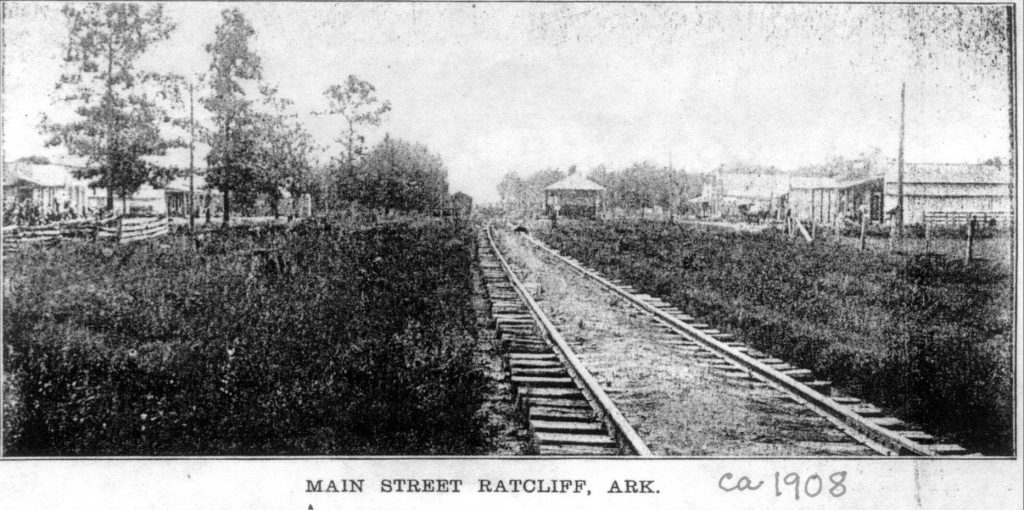
The resort town became a bustling small city containing a masonic lodge, a newspaper, a water bottling facility, and National Elementary school for students grades one through six.  Then just as quickly as it grew, the town faded to oblivion.  In the late 1800’s, government inspectors ruled that, although the waters were rich in natural soda, they contained no healing properties.  At about the same time, the rail system extended the railroad from Fort Smith into Paris and passed north of the town.  As an interesting side note, the citizens of Caulksville did not want a noisy train whistling through their town at all hours and declined to have a depot built in city limits.  The owner of the Central Railroad simply moved one mile west and built a depot and town named after himself, Ratcliff. The businesses located in National Springs began moving closer to the new train depot at Ratcliff and the residents soon followed suit.  In some cases, entire buildings were literally picked up and moved.  Parts of the old masonic and some of the other buildings can still be found in Ratcliff today.  Within years, the town completely disappeared.

Traveling through our region today, I see many small communities that are simply disappearing.  Prairie View, Midway, Brooklynn, Washburn, Natural Dam, Denning all were once small towns.  Today, the businesses are gone or boarded up, the younger kids are moving away, and the homes stand deserted.  All that now remain are the memories of what once was and the thoughts of what might have been.

Mansfield Early Childhood ABC Earns Level 5 Better Beginnings Rating in First Year


The Mansfield School District is celebrating a major milestone as its new preschool facility, Mansfield Early Childhood ABC, has achieved a Level 5 rating through Better Beginnings in its very first year of operation.

Better Beginnings is a statewide quality rating and improvement system for early childhood programs in Arkansas, with Level 6 representing the highest achievable designation. Earning a Level 5 rating in the program’s inaugural year is a significant accomplishment and reflects a strong commitment to excellence in early childhood education.

District leaders credit the achievement to the dedication, teamwork, and perseverance of the Mansfield Early Childhood ABC staff.

Director Jennifer Chick shared her pride in the team’s accomplishment.

“This year has been a huge learning experience starting as a new facility with a lot of new staff. But the staff all pulled together and put the time and effort in to learn the standards and ensure that we are providing the highest quality care we possibly can. I am extremely proud of them all and look forward to all we will continue to accomplish.”

The Level 5 designation signals that Mansfield’s youngest learners are receiving high-quality instruction, care, and developmental support in a nurturing environment designed to set them up for long-term academic success.

For a new facility to reach this level so quickly speaks volumes about the district’s investment in early childhood education and the commitment of its educators to meeting — and exceeding — state standards.

Mansfield families can take pride in knowing their preschool program is already performing at one of the highest levels in Arkansas.

Arrests 2/22

This content is reserved for RESIDENT INSIDER members.

Please or subscribe to view.

Resident Press (Lavaca, Charleston, Paris edition) 03/04/26 Vol. 5 No. 9

This content is reserved for RESIDENT INSIDER members.

Please or subscribe to view.

Resident Press (Scott & So. Sebastian County edition) 03/04/26 Vol. 8 No. 098

This content is reserved for RESIDENT INSIDER members.

Please or subscribe to view.

Greenwood Resident 03/4/26 Vol. 6 No. 09

This content is reserved for RESIDENT INSIDER members.

Please or subscribe to view.

Donor Champions Take the Court: Score a Basketball T-shirt When You Donate Blood

February 25, 2026 ─ It is officially game time. Our Blood Institute is tipping off its February and March donor campaign, inviting the community to step onto the court and make a winning play for patients in local hospitals.

All donors who donate at the Hackett High School Blood Drive on Wednesday, March 18, will receive a limited-edition Donor Champions basketball themed T-shirt as a thank you for showing up when it matters most. The blood drive will take place on the Bloodmobile from 8:30 a.m. to 1:30 p.m.

In Arkansas, donors will score even more for stepping up. All successful donors in Arkansas will also receive one free ticket to the Museum of Discovery and one free Bundtlet from Nothing Bundt Cakes, adding a little extra celebration to a lifesaving act.

Whether you are a die-hard basketball fan or just love being part of a team, every donation is a clutch play for patients who depend on blood for trauma care, cancer treatments, surgeries and emergencies. There is no offseason when it comes to the need for blood.

Donors are truly our champions,” said Dr. John Armitage, president and CEO of Our Blood Institute. “They show up day after day to help patients win their toughest battles. This campaign is our way of celebrating the teamwork, commitment and heart it takes to keep hospitals supplied with lifesaving blood.”

Blood is needed every day, but donations often slow down during late winter and early spring. By rolling up a sleeve, donors help keep hospitals from falling behind when patient needs are at their highest.

Anyone who is healthy and 16 years old* or older can give blood. Donation typically takes only about an hour, and one donation saves up to three lives. Appointments to donate can be made online at obi.org or by calling 877-340-8777. Walk-ins are also welcome. 

*16-year-olds must weigh at least 125 pounds and provide signed parental permission; 17-year-olds must weigh at least 125 pounds; 18+ year olds must weigh at least 110 pounds. Photo ID required. 

AGFC proposes simplified deer season structure and reduced regulations for 2026 

By Randy Zellers

Commissioners at today’s meeting heard the first reading of proposed regulations changes for 2026; the common theme: reduction in both the number and complexity of the rules hunters and anglers must follow as they enjoy the woods and waters of The Natural State.

AGFC Deputy Director Brad Carner led a team of biologists during Wednesday’s briefings to go in depth on the many regulations under consideration for consolidation or removal.

Many regulations proposed for elimination had simply outgrown their use, having received very few, if any, warnings or citations issued within the last five years.

“We’ve been very intentional about ways to reduce, combine and eliminate regulations,” Carner said. “More than 65 regulations were eliminated that were either out of date, redundant or deemed unnecessary during our internal review process,” Carner said. “You’ll also see some major consolidation in many of our season structures and limits on deer on public land as well as daily fishing bag limits for many lakes and streams.”

AGFC Deer Program Coordinator Ralph Meeker presented the proposals for deer season, the product of months of work with wildlife biologists and land managers throughout the state.

The focus on clarity and consistency for hunters touched nearly every aspect of deer hunting. If passed, deer will be categorized as either “antlered bucks” or “antlerless deer,” regardless of the status of chronic wasting disease in the zone.

“You will still check a button buck as a button buck when you harvest one, but it will go toward the hunter’s antlerless bag limit,” Meeker said. “You’ll be allowed two antlered bucks per year.”

The statewide seasonal limit of six deer with no more than two being bucks will remain in place, but private and public land zone limits will see a major standardization. Each private land zone will have a limit of four deer (no more than two bucks), and each WMA will have a limit of three deer (no more than two bucks). Hunters who have reached a zone limit and still wish to hunt can still go to another zone, public or private, to fill out their statewide limit of six.

It was also recommended that the three-day early antlered buck archery hunt be moved to begin the last Saturday in August, a little earlier than last year. This will allow hunters more opportunities to get a buck before it sheds its velvet, and it will reduce conflicts with the opening of dove season.

“After speaking with all of our conservation partners who own land in the WMA system, the early antlered buck archery season will be opened on all but four WMAs that allow deer hunting,” Meeker said.

A few major revisions to waterfowl hunting on wildlife management areas are also being considered. The agency is considering the creation of nonmotorized boat access only in Galla Creek WMA and on portions of George H. Dunklin Jr. Bayou Meto, Dave Donaldson Black River and Shirey Bay Rainey Brake WMAs. Limited permit hunts also are being considered on the Buckingham Flats Greentree Reservoir on Bayou Meto, the Wyville Tract at Rex Hancock Black Swamp WMA, Prairie Bayou WMA and portions of Ed Gordon Point Remove WMA. Both regulations are in response to continued complaints of crowding and pressure on Arkansas’s public duck-hunting areas and reduced hunt quality.

“These restrictions are only in parts of these WMAs, not the entire area,” AGFC Wildlife Management Chief Luke Naylor said. “I encourage everyone commenting to see the proposed maps in the survey to get an idea of what areas will be affected.”

Fishing regulations, too, saw a drastic reduction in complexity. AGFC Fisheries Chief Tommy Laird said that in addition to removing more than 30 outdated regulations, his team was able to greatly reduce the number of products in the AGFC’s licensing system.

“There were a lot of permits and licenses that applied to a small number of individuals, and we were able to eliminate or combine many of these so people could find what they needed without sorting through too many options,” Laird said.

For recreational anglers, the largest change will be the consolidation of smallmouth bass fisheries throughout the state to a standard set of harvest limits.

“We will have ‘blue-ribbon streams,’ like the Buffalo River, Caddo River, Current River and Crooked Creek,” Laird said. “These will have a daily harvest limit of one fish, and that must be 15 inches or longer. This was at the request of many stream anglers working with the AGFC Black Bass Program. In other flowing waters, we’ll see a standard 12-inch minimum length for smallmouth, eliminating the need for the current smallmouth zone map.”

All regulation changes will be available for public comment through a survey at www.agfc.com/regssurvey. Participants have until March 6 to complete the survey. Commissioners will review public comments and vote on any changes during their regularly scheduled April meeting. All changes will become effective July 1.

“Both fishing and hunting regulations changes will become effective at that time, which is different than in years past,” Carner said. “This will enable us to better communicate with the public about regulations at the same time. It will also align regulations changes for commercial anglers with recreational anglers.”

Commissioner Chris Caldwell of Little Rock commended staff for their diligence in the elimination and consolidation of so many regulations, an agency-wide effort he said he knew it required to prepare for the public.

“When government creates something, it’s very rare that they go back and undo it,” Caldwell said. “The public servants and staff here at Game and Fish have done something that is not very common, very challenging and very time-consuming to make this process easier, simpler and more user-friendly for the public.”

Commissioner Bill Jones of Pine Bluff echoed Caldwell’s statements.

“Eliminations of regulations are rarely to be found in government, and that’s what we have more of than anything in these proposals,” Jones said. “I can’t even imagine the countless hours it took to go through these, and I thank you for that.”

In other business, the Commission:

  • Recognized 34 employees with a combined 415 years of service to the natural resources of The Natural State. [LINK TO PRESENTATION]
  • Heard a presentation from AGFC Fisheries Supervisor Jon Stein on many projects completed along Beaver Lake and its tributaries to increase habitat in the lake, remove invasive species and increase wildlife habitat along its shoreline and drastically reduce sediment and siltation in Northwest Arkansas streams and reservoirs. He also shared a new partnership with local high schools to increase conservation education while creating fish habitat in area lakes. [LINK TO PRESENTATION]

A complete video of today’s meeting is available on the AGFC’s YouTube Channel.