ST. LOUIS – The St. Louis Cardinals, in conjunction with Major League Baseball’s league-wide release, today announced their 2024 Spring Training schedule. The team’s 32-game spring training slate is set to begin on Saturday, February 24 when the Cardinals host their stadium co-tenants the Miami Marlins at Roger Dean Chevrolet Stadium.
The Cardinals 2024 Spring schedule features 15 home games and 17 road games, including three games as the visiting team against Miami (Feb. 26, March 10 & 22), giving them 18 total games at Roger Dean Chevrolet Stadium. The Cardinals and Marlins will play a total of seven games next spring.
The Cardinals will host six different Grapefruit League opponents in 2024, including home games against the Boston Red Sox (February 27) and Minnesota Twins (March 5). The club will also host four games with the Marlins, and three with the Washington Nationals, Houston Astros, and New York Mets.
The Redbirds will travel to Fort Myers to face the Red Sox and Twins on back-to-back days March 12 & 13.
The Cardinals will play at Roger Dean Chevrolet Stadium on nine weekend dates (Feb. 24, March 1, 3, 9, 10, 15, 17, 22 & 23). Additionally, the team’s spring schedule features a pair of split-squad dates featuring home and away games on both Saturday, Feb. 24 and Tuesday, March 19 when the team will host the Marlins and also play at the New York Mets.
The Cardinals will break camp on Sunday, March 24, following their game against Houston, and will then play the Chicago Cubs in a pair of Spring Training games (Monday, March 25 & Tuesday, March 26) at Sloan Park in Mesa, Ari., before opening their 2024 regular season schedule on Thursday, March 28 at the Los Angeles Dodgers.
The spring slate will mark the 27th year that the Cardinals will train at Roger Dean Chevrolet Stadium in Jupiter, Florida. The stadium and team’s complex are currently undergoing a number of upgrades and fan-friendly improvements that are planned to be fully completed in 2025. The Cardinals will make future announcements regarding 2024 Spring Training game times, ticket availability, broadcast schedule and player report dates at a later time. The complete 2024 Cardinals Spring Training scheduled can be viewed at cardinals.com.
Note to Our Readers: The previous story was sourced directly and in its entirety from the St. Louis Cardinals Baseball Organization.
Arresting agency – Huntington Police Department: Benjamin Levi Black of Huntington was booked into the Sebastian County Detention Center on July 19 at 4:44 p.m. and remains at the SCADC without bond. Black was charged with ADC Commitment Hold, Parole Violation, Assault in the 1st Degree, and Battery in the Third Degree – Purpose.
Johnnie Lee Witt of Huntington was booked into the Sebastian County Detention Center on July 16 at 1:53 p.m. and remains at the SCADC. Witt was charged with Burglary – Residential Felony.
Arresting agency – Sebastian County Sheriff’s Office: Don William Core Junior of Ratcliff was booked into the Sebastian County Detention Center on July 21 at 2:41 a.m. and released to an outside agency on July 21 at 4:09 p.m. Core was charged with Assist Outside Agency-Felony, Contempt-willful disobedience (Failure to Pay Fine), and Assist Outside Agency-Misd.
Timothy James Cox of Booneville was booked into the Sebastian County Detention Center on July 17 at 2:34 a.m. and remains at the SCADC. Cox was charged with Failure to Appear – Class B Misdemeanor, and Petition to Revoke – Felony.
Tyler Grey Elmore of Booneville was booked into the Sebastian County Detention Center on July 19 at 11:53 a.m. and released on signature bond July 19 at 2:30 p.m. Elmore was charged with Petition to Revoke – Felony.
Kaelin Austin Harger of Midland was booked into the Sebastian County Detention Center on July 22 at 3:03 p.m. and remains at the SCADC. Harger was charged with two counts of Contempt-willful disobedience (Failure to Pay Fine), Failure to Appear – Class C Felony, and Failure to Appear – Class B Misdemeanor.
Matthew Edward Murry of Lavaca was booked into the Sebastian County Detention Center on July 18 at 10:48 p.m. and released on legally sufficient bond July 20 at 2:44 p.m. Murry was charged with petition to revoke – misd.
Chad Everett Reno of Booneville was booked into the Sebastian County Detention Center on July 16 at 12:26 a.m. and released on signature bond July 17 at 4:56 p.m. Reno was charged with Contempt-willful disobedience (Failure to Pay Fine), and Failure to Appear – Class B Misdemeanor.
Bobby Allen Rowe of Bonanza was booked into the Sebastian County Detention Center on July 19 at 2:59 p.m. and remains at the SCADC without bond. Rowe was charged with Contempt of Court–Disorderly, contemptuous or insolent behavior committed during court.
Arresting agency – Greenwood Police Department: Robert W Kleinschmidt of Greenwood was booked into the Sebastian County Detention Center on July 22 at 3:39 p.m. and released on legally sufficient bond July 22 at 5:18 p.m. Kleinschmidt was charged with two counts of Terroristic Threatening in the First Degree, and two counts of Aggravated Assault on a Family or Household Member.
Jose Angel Lopez of Van Buren was booked into the Sebastian County Detention Center on July 18 at 2:57 p.m. and released on legally sufficient bond July 19 at 12:45 a.m. Lopez was charged with Possession of Controlled Substance – Schedule I/II 2-28g Felony.
Michael Lee Suttles of Greenwood was booked into the Sebastian County Detention Center on July 21 at 6:45 p.m. and transferred to an outside agency on July 22 at 6:50 p.m. Suttles was charged with Possession of Misbranded Drugs, Assist Outside Agency-Misd, and Contempt-willful disobedience (Failure to Pay Fine).
Arresting agency – Mansfield Police Department: Amber Danielle Price of Conway, AR was booked into the Sebastian County Detention Center on July 17 at 8:54 p.m. and remains at the SCADC without bond. Price was charged with Assist Outside Agency-Felony, Failure to Appear – Class A Misdemeanor, Forgery in the Second Degree-deed, will, contract, check, Petition to Revoke – Felony.
Arresting agency – Fort Smith Police Department: Dustin Daniel Stark of Paris was booked into the Sebastian County Detention Center on July 21 at 3:18 a.m. and remains at the SCADC without bond. Stark was charged with Possession of Controlled Substance – Schedule VI 4-10oz Felony, Simultaneous Possession of Drugs and Firearms-Firearm, and three counts of Aggravated Assault – Firearm.
Bryston Thomas of Paris was booked into the Sebastian County Detention Center on July 21 at 3:19 a.m. and remains at the SCADC without bond. Thomas was charged with Possession of Controlled Substance – Schedule VI 4-10oz Felony, Simultaneous Possession of Drugs and Firearms-Firearm, and three counts of Aggravated Assault – Firearm.
Johnathan Paul Varnell of Paris was booked into the Sebastian County Detention Center on July 21 at 3:22 a.m. and remains at the SCADC without bond. Varnell was charged with Possession of Controlled Substance – Schedule VI 4-10oz Felony, Simultaneous Possession of Drugs and Firearms-Firearm, and three counts of Aggravated Assault – Firearm.
Arresting agency – Franklin County Sheriff’s Office: Kevin Michael Johnson, 34 of Mountainburg, was booked into the Franklin County Detention Center on July 18 at 10:33 a.m. Johnson was charged with failure to appear on unclassified misdemeanor (FTA), possession of meth or cocaine LT 2GM, and possession of drug paraphernalia.
Mikeal Eugene Mansell, 34 of Altus, was booked into the Franklin County Detention Center on July 19 at 12:51 p.m. Mansell was charged with forgery, theft $1,000 or less – all others, and fail to appear on unclassified misdemeanor (FTA).
Clayton Kyle Eaton, 40, was booked into the Franklin County Detention Center on July 22 at 8:52 p.m. Eaton was charged with hold for another agency.
Rickie James Laughlin, 56 of Bella Vista, was booked into the Franklin County Detention Center on July 22 at 8:51 p.m. Laughlin was charged with hold for another agency.
Jennifer Michelle Phillips, 36 of Ozark, was booked into the Franklin County Detention Center on July 22 at 2:45 p.m. Phillips was charged with failure to appear on unclassified misdemeanor (FTA).
Donnie W Core, 46 of Ratcliff, was booked into the Franklin County Detention Center on July 21 at 5:14 p.m. Core was charged with failure to appear on unclassified misdemeanor (FTA).
Joseph Wesley Mealler, 34 of Ozark, was booked into the Franklin County Detention Center on July 20 at 9:19 p.m. Mealler was charged with charged with failure to appear on unclassified misdemeanor (FTA).
Benito Gonzales, 49 of Fort Smith, was booked into the Franklin County Detention Center on July 20 at 2:36 p.m. Gonzales was charged with failure to appear on unclassified misdemeanor (FTA).
Arresting agency – Logan County Sheriff’s Office: Nhan Nguyen, 56 of Fort Smith, was booked into the Logan County Detention Center on July 19 at 3:57 p.m. Nguyen was charged with hold for U.S. Marshals.
Tyler Kintsel, 31 of Magazine, was booked into the Logan County Detention Center on July 20 at 9:27 p.m. Kintsel was charged with parole hold.
Todd Jeffrey, 31 of Paris, was booked into the Logan County Detention Center on July 22 at 5:04 p.m. Jeffrey was charged with parole hold.
**The charges against those arrested are allegations and the cases are still pending in the courts.**
FAYETTEVILLE – For the second straight year, the Arkansas men’s basketball program will play in a preseason charity exhibition game that features two top 25 teams. The Razorbacks, a top 20 selection in the early polls, will host Purdue, generally tabbed among the nation’s top three teams this summer, on Oct. 28 (Saturday) at Bud Walton Arena. Tipoff is set for 3 pm.
The game will not be part of the 2023-24 men’s basketball season ticket package and proceeds from the game will go to the United Way to assist with relief efforts from the tornados that affected Arkansas this past spring. Reserved seating in the upper and lower bowl will go on sale to the general public at a later date. Current Courtside members and Suite holders will receive information in the near future on purchasing their seats for this game.
Broadcast information and complete ticket information, including when tickets will go on sale, will be announced at a later time.
“We are really excited to be hosting one of the premier programs in the country for an exhibition game,” said Razorback head coach Eric Musselman. ”They will come to Bud Walton Arena with a preseason ranking among the top 5. Both programs will be playing in high-level, Thanksgiving tournaments (Arkansas at the Battle 4 Atlantis and Purdue in the Maui Invitation) so this game will have an incredible level of competition to help prepare us both early on and through March, much like the Texas game did for us last year.
“(Purdue head coach) Matt Painter’s teams are known for having great toughness, execution and consistency while winning at a high level. I can’t thank Coach Painter enough for bringing his Boilermaker team to Fayetteville. What a great experience it will be for our fans to see a game of this caliber so early in the year.”
Purdue was the #1 seed in the NCAA East Regional this past season after posting a 29-5 record and winning both the Big Ten regular-season and tournament championships. The Boilermakers feature 7-4 center Zach Edey, who was the consensus 2022-23 National Player of the Year.
Arkansas and Purdue have only met on two previous occasions with each team winning once and both coming on neutral courts. The first meeting was on Dec. 28, 1938, and the Boilermakers won, 57-51, in the Sugar Bowl Classic (New Orleans, La.). The last meeting was in 1983 when the Razorbacks defeated Purdue, 78-68, in the second round of the NCAA Tournament (Tampa, Fla.).
For more information on Arkansas Men’s Basketball, follow @RazorbackMBB on Twitter.
Note to Our Readers: The previous story was sourced directly and in its entirety from the University of Arkansas Office of Communications, Mike Cawood.
By Brittaney Mann U of A System Division of Agriculture
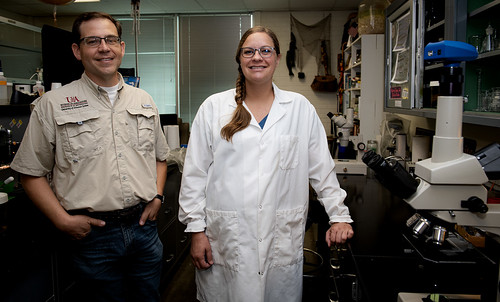
The effectiveness of antiparasitic products for cattle varies from pasture to pasture in treating parasite populations. Parasitologist Eva Wray helps Arkansas cattle producers pick the product and regimen to treat these tiny pests.
PARASITE CONTROL — Jeremy Powell, professor of animal science, and post-doctoral fellow Eva Marie Wray are investigating effective parasite control in Arkansas cattle. (U of A System Division of Agriculture photo by Fred Miller)
“It’s a different world,” Wray said. “I tell my students it’s like ‘Horton Hears a Who!’ — there’s this whole world going on that we have no clue about.”
For an ongoing research project, Wray, a post-doctoral research associate for the Arkansas Agricultural Experiment Station, the research arm of the University of Arkansas System Division of Agriculture, is testing the effectiveness of different classes for treatments of intestinal nematodes, more commonly known as worms.
“You want to know what your operation is susceptible to, what it’s resistant to; that way, when you use a drug, you have more confidence that it’s going to work,” Wray said.
In addition to her research efforts, Wray teaches classes in the animal science department of the Dale Bumpers College of Agricultural, Food and Life Sciences at the University of Arkansas and works with the Cooperative Extension Services agents to relay important information to Arkansas producers.
Physical and financial health
When parasites infect cattle, the animals typically do not show obvious signs of distress, but the worms hinder an animal’s performance, said Jeremy Powell, veterinarian and professor of animal science. Powell assisted Wray by administering dewormer treatments to the cattle and helped with sample collections.
Worms decrease feed intake and cause intestinal tissue damage and blood loss, Powell said. Those main effects can lead to decreased weight gain, reduced body condition, lower reproduction performance, decreased milk production — which can cause lower weaning weights — poor nutrient absorption and a compromised immune system.
“All of these negative effects lead to increased costs to the producer and cause poor productivity,” Powell said.
Finding an effective deworming treatment can have a big impact on a producer’s bottom line, Wray said. A successful deworming operation can help farmers earn as much as $130 more per animal.
Deworming treatments can be expensive, but allowing parasites to persist can be more costly.
“Internal parasites touch just about every level of production and reduce its efficiency,” Wray said. Whether producers are running milking operations or producing cattle for the feedlot, efficiently handling parasites streamlines the production process and ultimately leads to additional profit.
That’s why choosing the right dewormer is so important, she said.
An ineffective worm treatment also leads to the parasites reproducing faster in a process called “compensatory responsiveness,” Wray said. This process negatively impacts the affected animal and contaminates more of the pasture with parasitic larvae.
“In Arkansas, not everyone has the space to spread all of their animals out,” Wray said, referring to the common practice of moving herds around different sections of pasture to break the infective cycle of the parasites. The larvae contaminating a section of pasture will eventually die off if no animals are present to carry the worms.
“Figuring out this puzzle is really vital to streamlining a producer’s operation,” Wray said, “and I like to tell my producers it’s more important to figure out what’s not working than what is working.”
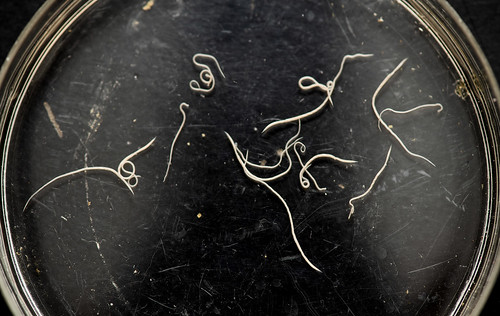
HIDDEN WORLD — Barber pole worms (Haemonchus placei) on a petri dish for observation at the Division of Agriculture’s parasitology laboratory. (U of A System Division of Agriculture photo by Fred Miller)
Slowing the growing resistance
Another aspect of Wray’s research focuses on antiparasitic drug resistance. She hopes to help extend the effectiveness of common treatments in cattle operations.
The parasites affecting cattle, however, are not as deadly, Wray said. Cattle can also outgrow the effects of the parasites in a way that sheep and goats cannot.
“With cattle, it’s more about money loss through decreased performance rather than animal death,” Wray said.
Wray said limiting treatments to younger animals because of their increased susceptibility to parasites and using fecal egg counts to identify animals that need treatment extends the usability of a drug in cattle operations.
“Every time you use a dewormer, you’re compounding resistance because you’re not going to get 100 percent of any bug, especially worms,” Wray said. “That surviving population is now resistant, they’re putting out resistant eggs on the pasture, and each time you use a drug, that just compounds and multiplies.”
Drug resistance in Arkansas cattle
The results of Wray’s research indicate that Arkansas parasites may be resistant to the macrocyclic lactone drug class, which includes ivermectin, cydectin and moxidectin, Wray said. The benzimidazoles, commonly referred to as “white wormers” due to their color, are still effective in Arkansas.
HIDDEN WORLD — Barber pole worms (Haemonchus placei) on a petri dish for observation at the Division of Agriculture’s parasitology laboratory. (U of A System Division of Agriculture photo by Fred Miller)
“We have found that drug class is still working pretty well,” Wray said.
Notably, Wray said, the resistance to ivermectin in Arkansas is high, considering it was once considered a wonder drug.
When the patent for ivermectin ended and generic brands appeared on the market, Wray said the continued use of the product led to higher resistance to it in parasites.
“The overuse and misuse and lack of new products have just put us in a situation where we have extensive drug resistance, in cattle, especially in sheep and goats,” Wray said. “In sheep and goats, we’re approaching, in the United States, pretty much total drug failure, and we’re not quite there with cattle.”
A solution
Wray recommends that operators consider doing a fecal egg count to determine the treatment threshold. The treatment threshold helps producers determine when it is economically advisable to treat an animal. The test also reveals if an operation’s parasites are resistant to any drug classes.
Fecal egg counts can provide more information about animals than just what parasites and parasite loads are present, Wray said. The egg counts can help with culling and breeding decisions because parasite tolerance and intolerance are genetically correlated.
“Parasites really wreak havoc on all of these physiological situations, so taking care of them really does help the entire health of your operation,” Wray said.
The University of Arkansas System Division of Agriculture Parasitology Laboratory offers a free fecal egg count program for livestock producers in Arkansas.
To learn more about Division of Agriculture research, visit the Arkansas Agricultural Experiment Station website: https://aaes.uada.edu/. Follow us on Twitter at @ArkAgResearch. To learn about extension programs in Arkansas, contact your local Cooperative Extension Service agent or visit www.uaex.uada.edu. Follow us on Twitter and Instagram at @AR_Extension. To learn more about the Division of Agriculture, visit https://uada.edu/. Follow us on Twitter at @AgInArk.
About the Division of Agriculture
The University of Arkansas System Division of Agriculture’s mission is to strengthen agriculture, communities, and families by connecting trusted research to the adoption of best practices.
Through the Agricultural Experiment Station and the Cooperative Extension Service, the Division of Agriculture conducts research and extension work within the nation’s historic land grant education system.
The Division of Agriculture is one of 20 entities within the University of Arkansas System. It has offices in all 75 counties in Arkansas and faculty on five system campuses.
The University of Arkansas System Division of Agriculture offers all its Extension and Research programs and services without regard to race, color, sex, gender identity, sexual orientation, national origin, religion, age, disability, marital or veteran status, genetic information, or any other legally protected status, and is an Affirmative Action/Equal Opportunity Employer.
By Rebekah Hall U of A System Division of Agriculture
During the summer months, parents are especially familiar with hearing the refrain, “I’m bored!” While many parents feel the need to pack children’s schedules full of activities, a bit of boredom can be a good thing — without it, children’s ability to think creatively and develop autonomy can be hindered. Brittney Schrick, extension family life specialist for the University of Arkansas System Division of Agriculture, said today’s parents are burdened by extra pressure to keep children constantly entertained or busy during the summer. It’s a pressure that in part stems from content presented by other parents on social media, she said. “Culturally, we’ve raised the stakes and raised the expectation for what parents are responsible for,” Schrick said. “Back in the day, I wouldn’t have known that my friends went to Disney World until school started back. My parents didn’t know what my friends’ parents were doing, and we certainly didn’t know what a random influencer online was doing.” Schrick said boredom, for both kids and adults, can be positive because it allows for creativity. “If you’re never bored, and someone else or a screen is always entertaining you, your brain never has the opportunity to shut down and just be, or creatively solve a problem,” she said. “Parents who take it upon themselves when their kids are bored to immediately provide a solution are kind of robbing their kid of being able to come up with their own things to do.” Schrick said giving children age-appropriate freedom to choose how they fill their time helps them develop important skills as teenagers and young adults. “When kids are not allowed to do anything unattended, including playing, it stunts their growth and autonomy,” she said. “For a kid who grows up with a parent who’s constantly over their shoulder, when they don’t have that, they don’t know what to do, because adults have always told them what to do.” Why summer can be challenging for parents Ultimately, boredom is simply an inevitable part of the summer months for school-age children. Schrick said this season can be a difficult time for families, as it usually involves a disruption from day-to-day routines. “Summer is so challenging because everyone is out of their routine,” Schrick said. “There are trips and travel, and parents are likely still working a regular schedule. But kids are not in their routine, so you have to come up with childcare and ways to keep them engaged so they’re not on screens all the time.” Hot temperatures also involve more inside time, creating hours that can be difficult to fill. In the wake of the COVID-19 pandemic, many day camps and sleepaway camps raised their fees to recoup financial losses, making them too expensive for many families, Schrick said. “This generation of parents is expected to be so much more hands-on and present,” Schrick said. “And it’s almost viewed as bad parenting if you don’t put your kids in all these activities. I would argue that it’s cost prohibitive for most families, especially to have a child enrolled in something all the time.” For families with preschool aged children or younger, they can continue to attend their regular childcare during the summer. But for school age children, there is an added cost of childcare that isn’t required during the school year. “There are great free or low-cost programs available, but those fill up quickly, and then what do you do?” Schrick said. “You have to find babysitters, or ask grandma, or find someone to keep up with your kids so you’re not constantly worried they’re making poor choices.” To help parents and caregivers find creative solutions to long summer days, Schrick developed an “At Home Summer Camp” resource with five days of free and low-cost activities. Each day has a theme — such as Camp Out, Growing Things, and Let’s Cook — and corresponding suggestions for activities, crafts, snacks and media to watch or read. “With At Home Summer Camp, I want to make it very clear that you can do as many or as few of these things as you want,” Schrick said. “My thought process was to give people ideas that are not expensive. “It’s such a fraught subject,” she said. “You want to give your kids memories, but the thing is, they’re going to have memories either way. It doesn’t have to be stressful.” For more resources on Family Life, visit the Cooperative Extension Service’s Personal & Family Well-Being page, or check out Schrick’s Family Life Fridays Blog. To learn about extension programs in Arkansas, contact your local Cooperative Extension Service agent or visit www.uaex.uada.edu. Follow us on Twitter and Instagram at @AR_Extension. To learn more about Division of Agriculture research, visit the Arkansas Agricultural Experiment Station website: https://aaes.uada.edu. Follow on Twitter at @ArkAgResearch. To learn more about the Division of Agriculture, visit https://uada.edu/. Follow us on Twitter at @AgInArk. About the Division of Agriculture The University of Arkansas System Division of Agriculture’s mission is to strengthen agriculture, communities, and families by connecting trusted research to the adoption of best practices. Through the Agricultural Experiment Station and the Cooperative Extension Service, the Division of Agriculture conducts research and extension work within the nation’s historic land grant education system. The Division of Agriculture is one of 20 entities within the University of Arkansas System. It has offices in all 75 counties in Arkansas and faculty on five system campuses. The University of Arkansas System Division of Agriculture offers all its Extension and Research programs to all eligible persons without regard to race, color, sex, gender identity, sexual orientation, national origin, religion, age, disability, marital or veteran status, genetic information, or any other legally protected status, and is an Affirmative Action/Equal Opportunity Employer.
Greenwood is known for having the best schools in Arkansas. One of the biggest reasons is the professionalism, skill and dedication of the teachers in the system. They are an indispensable part of the community.
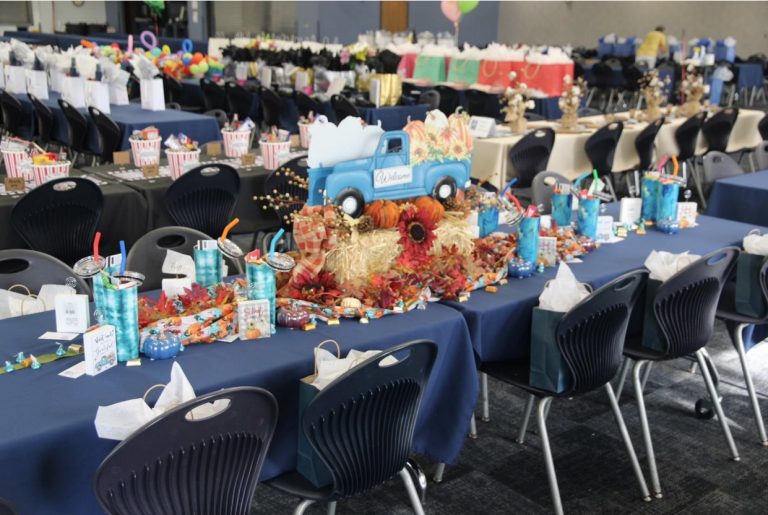
Each year businesses, organizations and individuals come together to host a “Teacher Appreciation Luncheon” where the teachers are feted and shown in material ways how much they mean to Greenwood. Dozens of hosts decorate tables at the luncheon with tokens of appreciation that range from gift cards for area restaurants to items the teachers can use in classrooms to fun gifts the teachers can enjoy at home. The event has almost turned into a competition among participants to see who can present the most original and impressive table.
The luncheon is Thursday, August 10th at 11:30 am in the Greenwood High School Student Union. Setup/decorate is from 1:00 to 7:00 on the 9th and from 9:00 am to 11:00 am on the 10th.
Cost for the event is $50 registration per table plus the items used for decorating the table and as gifts for the teachers. Each table will seat 10 teachers with room for 2 representatives of the host. Hosts are welcome to sponsor multiple tables. To register contact the Greenwood Chamber of Commerce at www.greenwoodarkansas.com or 479-996-6357
It is with deep sorrow and much love that we mourn the passing of Robert W. Tinsley, better known as Bob. Bob was born June 19, 1937 to Dale Leroy and Helen Gladys (Wyckoff) Tinsley in Ada, Oklahoma. He will be lovingly remembered by his wife of 66 years, Joyce. Together they raised three amazing children and played a huge role in the lives in their grandchildren and great grandchildren.
Bob was known by his family especially for his intelligence and readiness to share his experience and knowledge. As the family gathers to celebrate his life, we ponder the unique and fulfilling life that he led; employment from owning an auto repair business, working for NASA to his retirement from the Mena Hospital. He was the very definition of a mathematician, encouraging the grandchildren when it came to their school work he often said “it’s fun! It’s nothing in the world but a game.” He was a jack of all trades from carpentry to metal work, many years of experience with engineering. Anytime he was met with a challenge he took initiative to do his own research and learn all aspects of any subject at hand. In recent years he was most cherished spending time with family and friends. He was widely loved by many friends. He will forever be saluted for his life’s work and will be lovingly carried in each of our hearts.
Bob leaves behind to cherish his memory his wife Melva Joyce (Phillips) Tinsley and three children: Bob and wife Laura, Bruce and wife Peggy and daughter Sheryl and husband Jim Edwards. Grandpa will forever remain in the hearts of his seven grandchildren: Demisha, Darcy, Brandy, Bruce, Lacey, Kelley and Sandy and ten great grandchildren.
He was preceded in death by his mother, father, brother and granddaughter.
As per Bob’s wishes there will be no services.
Cremation arrangements are being entrusted to the Heritage Memorial Funeral Home in Waldron, Arkansas.
A shared laundry room is the greatest convenience a tenant could have in an apartment complex. However, property managers often face problems in these common areas. While shared laundry areas are handy, they can create frustration and dissatisfaction for residents. Learn more about how to address the common problems found in apartment laundry rooms.
Malfunctioning Machines
Nothing is more frustrating than hauling laundry down the stairs or hall only to find that neither the washer nor dryer works. These problems frustrate residents, especially if there is no communication between the property manager and the tenants. The mix of poor communication and broken machines can result in additional repair costs and unhappy tenants.
Solution
Property managers should schedule regular preventative maintenance and inspections by a professional technician. Additionally, managers can update tenants on necessary repairs by sending emails, texting their residents, and posting flyers around the complex. These best practices create happier residents.
Inadequate Ventilation
Poor ventilation in laundry rooms can result in damp, musty odors and create an unpleasant environment. Not improving the ventilation in laundry rooms creates mildew problems, which can lead to health problems for tenants.
Solution
Ensuring proper ventilation in the laundry room can be as simple as installing exhaust fans and ensuring tenants can open windows to improve air circulation. Regularly cleaning walls and surfaces can also prevent mildew buildup and keep the room smelling fresh.
Theft or Misplacement of Laundry Items
A common concern in shared laundry spaces is theft and accidental misplacement of laundry items. Thievery and misplaced laundry items could spell trouble for tenants later, creating a distrusting atmosphere within the community.
Solution
The best solution for preventing theft and helping residents track down misplaced laundry items is to place better security measures, such as cameras. You could also place lockers or storage areas in the laundry rooms so that tenants can feel comfortable storing their personal belongings and laundry supplies in the laundry room.
Overcrowding and Long Wait Times
One of the most common issues in apartment laundry rooms is overcrowding and long machine wait times. This problem is especially apparent during peak hours, leading to conflicts between tenants who must wait to use the limited machines available.
Solution
Property managers can address this by installing a booking system that allows tenants to reserve machines for specific time slots. A booking system helps decrease the likelihood of overcrowding and ensures a smooth laundry experience for all residents. You must also take into account how many washing machines you currently have. It’s essential to install additional washing machines when necessary to decrease tenants’ long wait times. Before installing additional machines, make sure there is enough room. If not, consider opening another laundry room area for additional tenants.
Apartment laundry rooms can be a valuable amenity for tenants if property managers address these issues effectively. Solutions such as booking systems, regular maintenance, proper ventilation, and security measures will significantly improve the laundry room experience for residents, leading to a happier and more harmonious living environment.
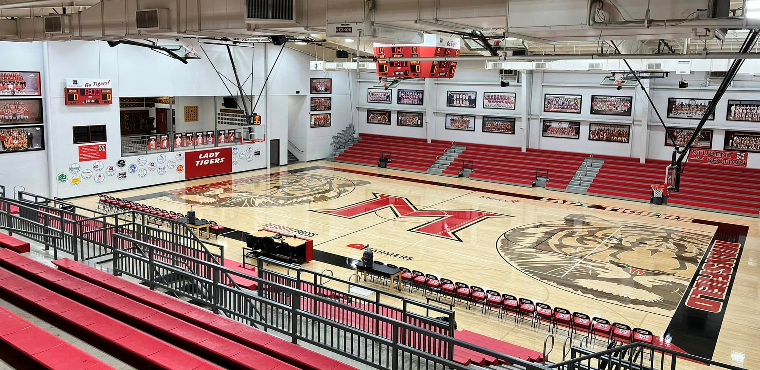
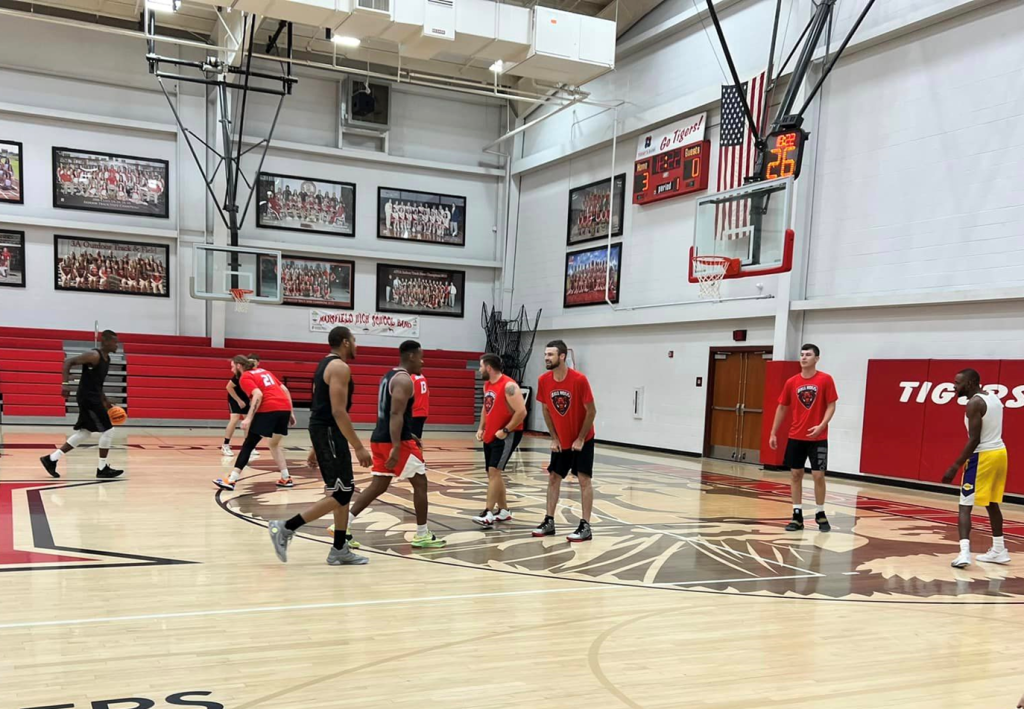
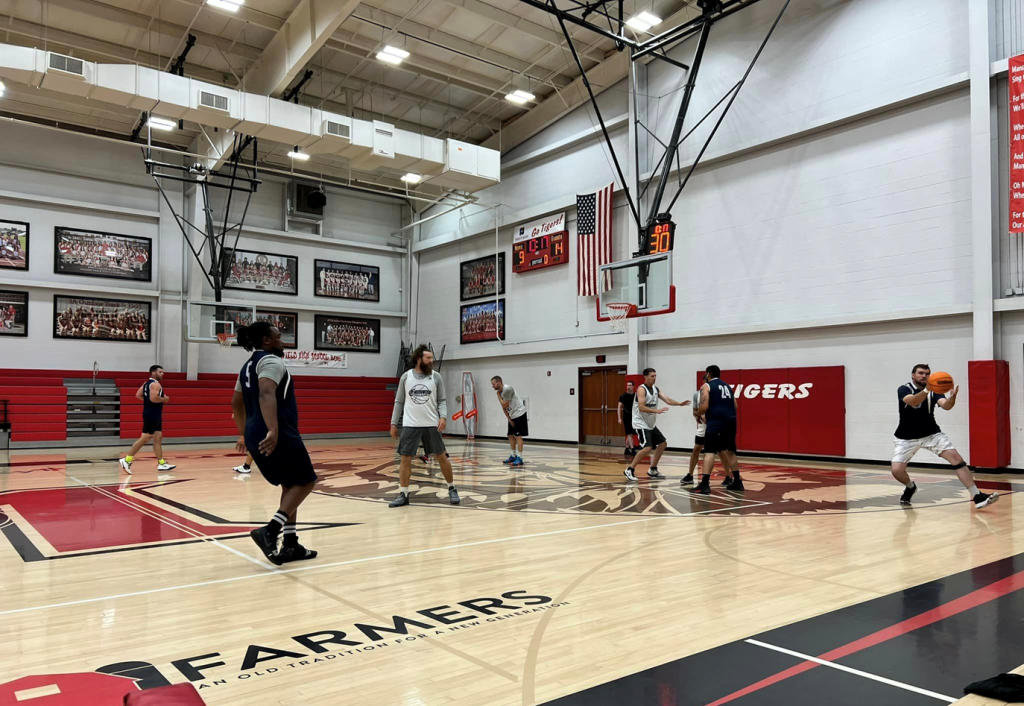
Folks in small towns everywhere are gearing up for fall sports. The excitement and anticipation for football, volleyball, and cross country is evident as the word spreads about statewide polls and what games to plan on attending. Off in the distant shadows though, basketball sits and watches waiting for their time to come. Of course, if you know Mansfield’s boys basketball coach, Joshua Brown, you know there’s no sitting around during any time of the year. Brown hasn’t put his marker board down since the end of their 2022-23 season. There is no dust gathering on the court as Brown and the Tigers have run offseason practices, camps, and most recently, the program has started a Mens League in Mansfield as an offseason fundraiser for the program.
Coach Brown had pondered on the idea of starting a Men’s League for a while trying to figure out the pros and cons or if it’d even be a halfway successful ordeal. “I have talked about doing this for about two years and finally, Bryce Gentry asked if I was going to get it going” said Brown. “So I told him we would make up some flyers and see what happened. We opened up eight spots, put out flyers, and waited”. Although Coach Brown opened up eight spots for teams, he knew it might take time to get the ball rolling on something so new. Brown was hoping for at least a few teams to sign up, maybe even fill up to five of the eight spots. Instead, Coach Brown’s hope for a few turned into a downright blessing as the Mansfield Mens League had a full eight-team league listed on the schedule in no time flat. Players from the Mansfield, Waldron, Greenwood, and Fort Smith areas created teams with some sweet old-school NBA Jam names like Ball Hogs, OG Dubs, JDeez, ThunderKatz, River Valley Snipers, Mt. Zion, Long Ball, and Time Travelers.
The rules of the Mens League games are pretty cut and dry. Each team is supposed to have five players as a minimum roster and no more than 10 guys total. The games consist of two 20-minute running clock halves. They are played by regular basketball rules except during the running clock where the teams shoot one free throw for two points on shooting fouls and when a team is in the bonus. Last two minutes the shots are regular. These games aren’t just for fun and games either. The players are quite competitive and play just as hard as they would in their younger high school days which makes for a great show for the fans. There are two divisions that consist of four teams each. As it stands right now, in one of the divisions every team is 1-1 in league play and in the other, The River Valley Snipers lead the league 2-0.
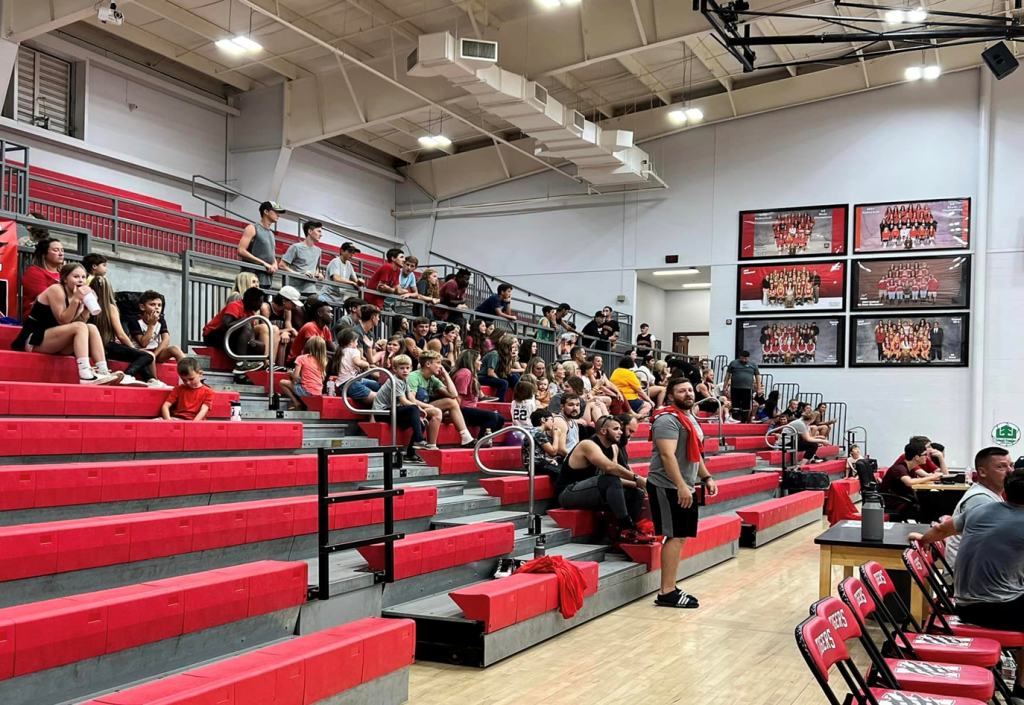
“There have been a lot more people come out than I had imagined”, said Coach Brown. “The support for teams has been great and makes the atmosphere fun. We are doing this as a fundraiser for our basketball program so getting eight teams has been a blessing. The money we are raising is going toward us playing at Paycom Center in Oklahoma City next season where the Oklahoma City Thunder plays. We will play at the arena and then go watch the Thunder play that evening. That experience for the boys wouldn’t be possible without this league and the teams playing so I am very thankful for each player and team that has signed up for this.”
The fast success of the Mens League is spreading and some big-time names have come to the small town of Mansfield for games. On Sunday, July 23rd The Jungle was graced by former Razorback and current Oklahoma City Thunders point guard, Isaiah Joe, as well as the Pittsburg Steelers defensive free safety, Trey Norwood, in the crowd. If you haven’t made it out to see a league game yet, you’d better chop-chop. There is only one more week of play in the regular season as the league convenes again on Sunday, July 30th. The fun doesn’t end there though. The Mens League will also usher in a postseason tournament on Sunday, August 6th.
NOTE TO OUR READERS: With this story, RNN Sports proudly announces the addition of University of Arkansas at Fort Smith sports coverage! Special thanks to UAFS Sports Information Director Jostun Pomplin for providing RNN Sports with the latest updates so that we can share them with our readers! GO LIONS!
FORT SMITH, AR – University of Arkansas – Fort Smith Women’s Basketball has released its 28-game schedule for the 2023-24 season.
The Lions will play six nonconference games and 22 Lone Star Conference games in their last season in the LSC before moving to the MIAA. Six opponents qualified for the NCAA Tournament last season.
UAFS tips off the slate for the second year in a row against Westminster College, this time with the Griffins making the trip to Fort Smith for a pair of games November 10-11 at Gayle Kaundart Arena at the Stubblefield Center.
Four of the six nonconference matchups will be at home for the Lions, as they also host Southern Nazarene Nov. 15 and Arkansas Tech Nov. 21. UAFS will make return trips to Northeastern State Nov. 18 and UA Monticello Nov. 25 to conclude non-league play.
The conference opener is Nov. 30 against West Texas A&M at the Stubblefield Center, followed by Lubbock Christian on December 2. Other league home opponents include Texas A&M-Kingsville, Texas A&M International, Midwestern State, Cameron, UT Tyler, St. Edward’s, St. Mary’s and Oklahoma Christian for the home finale March 1.
Following the first weekend of conference play at home, the Lions will play five straight games on the road, starting Dec. 7 at Angelo State. The Lions will then play at UT Permian Basin and Oklahoma Christian before the winter break.
UAFS will visit Texas Woman’s January 4 for its first game of 2024 and will also visit UT Tyler, St. Mary’s, St. Edward’s, Texas A&M International, Texas A&M-Kingsville, Western New Mexico and Eastern New Mexico.
Postseason play begins March 7-10 with the LSC Tournament with the NCAA South Central Regional scheduled for March 15-18.
Note to Our Readers: The previous story was sourced directly and in its entirety from the University of Arkansas at Fort Smith Sports Information Department, Jostun Pomplun.