

Most investors are aware of the different types of stocks: big-company, small-company, technology, international and so on. And it may be a good idea to own a mix of these stocks as part of your overall investment portfolio. But the importance of diversification applies to bonds, too — so, how should you go about achieving it?
To begin with, individual bonds fall into three main types: municipal, corporate and government. Within these categories, you’ll find differences in the bonds being issued. For example, government bonds include conventional, fixed-rate Treasury bonds as well as inflation-protected ones, along with bonds issued by government agencies, such as the Federal National Mortgage Association (or Fannie Mae). Corporate bonds are differentiated from each other by several factors, but one important one is the interest rate they pay, which is largely determined by the credit quality of the issuer. (The higher the rating grade — AAA, AA and so on — the lower the interest rate; higher-rated bonds pose less risk to investors and therefore pay less interest.)
Municipal bonds, too, are far from uniform. These bonds are issued by state and local governments to build or improve infrastructure, such as airports, highways, hospitals and schools. Generally, municipal bonds are exempt from federal tax and often state and local taxes, too. However, because of this tax benefit, municipal bonds typically pay lower interest rates than many corporate bonds.
How can you use various types of bonds to build a diversified bond portfolio? One method is to invest in mutual funds that invest primarily in bonds. By owning a mix of corporate, government and municipal bond funds, you can gain exposure to much of the bond world. Be aware, though, that bond funds, like bonds themselves, vary widely in some respects. To illustrate: Some investors may choose a low-risk, low return approach by investing in a bond fund that only owns Treasury securities, while other investors might strive for higher returns — and accept greater risk — by investing in a higher-yield, but riskier bond fund.
But you can also diversify your bond holdings by owning a group of individual bonds with different maturities: short-, intermediate- and long-term. This type of diversification can help protect you against the effects of interest-rate movements, which are a driving force behind the value of your bonds — that is, the amount you could sell them for if you chose to sell them before they matured. When market interest rates rise, the price of your existing, lower-paying bonds will fall, and when rates drop, your bonds will be worth more.
But by building a “ladder” of bonds with varying maturities, you can take advantage of different interest-rate environments. When market rates are rising, you can reinvest your maturing, shorter-term bonds at the new, higher rates. And when market rates are low, you’ll still have your longer-term bonds working for you. (Generally, though not always, longer-term bonds pay higher rates than shorter-term ones.)
A bond ladder should be consistent with your investment objectives, risk tolerance and financial circumstances. But if it’s appropriate for your needs, it could be a valuable tool in diversifying your bond holdings. And while diversification — in either stocks or bonds — can’t always guarantee success or avoid losses, it remains a core principle of successful investing.
This article is provided by
Jeffrey O’Neal, Financial Advisor
Edward Jones
20 N Express St, Paris, AR 72855
479-963-1321
jeffrey.o’neal@edwardjones.com
edwardjones.com/jeffrey-o’neal
Edward Jones, Member SIPC
Smart Ways to Invest in Bonds

Paris High School Ag Teacher Named as IMPACT Arkansas Principal Fellow

FAYETTEVILLE- Jessica Gray, an Agriculture Education teacher at Paris High School, was recently selected as an IMPACT Arkansas Principal Fellow. IMPACT is a University of Arkansas-based program that has been building leadership capacity in high-needs, rural schools across the state for nearly a decade.
“I am excited to participate in the IMPACT Arkansas Fellowship program to help me reflect on myself and as a teacher leader,” said Gray, who has worked in education for 17 years. “I hope to gain more leadership abilities and how to think outside of the box when it comes to education and leadership.”
The selection process for the eighth cohort of fellows was highly competitive. The 19 new members met for the first time this summer to begin an intensive leadership institute. They spent time bonding as a cohort and taking the first steps of the 18-month program. IMPACT fellows, who earn a master’s degree in educational leadership from the U of A, have gone on to become instructional facilitators, assistant principals or principals. The program has proven successful as a teacher-leader pipeline for the highest needs schools in the state.

The educators chosen for the latest IMPACT cohort hail from 10 Arkansas school districts and 16 schools that are new to the program. “Our footprint now includes more than half the high-poverty districts in the state,” said IMPACT Executive Director John Bacon. “We are excited to welcome this impressive group of future leaders for Arkansas schools serving high percentages of economically disadvantaged students.”
IMPACT graduates commit to staying in their current school for two years. Nearly 100% remain in Arkansas schools, and 81% remain in high-poverty schools.
“Hiring and supporting a highly qualified school leader is the single most important thing a school district can do to move the needle forward for school culture, student achievement, the desirability of the workplace and building more positive relationships with the community,” said John Pijanowski, the original creator of the program and principal investigator at the U of A.
Note to Our Readers: The previous story was sourced directly and in its entirety from the University of Arkansas, College of Education, Shannon Magsam, Director of Communications.
Timepiece: the Hermit Poet of Magazine Mt.
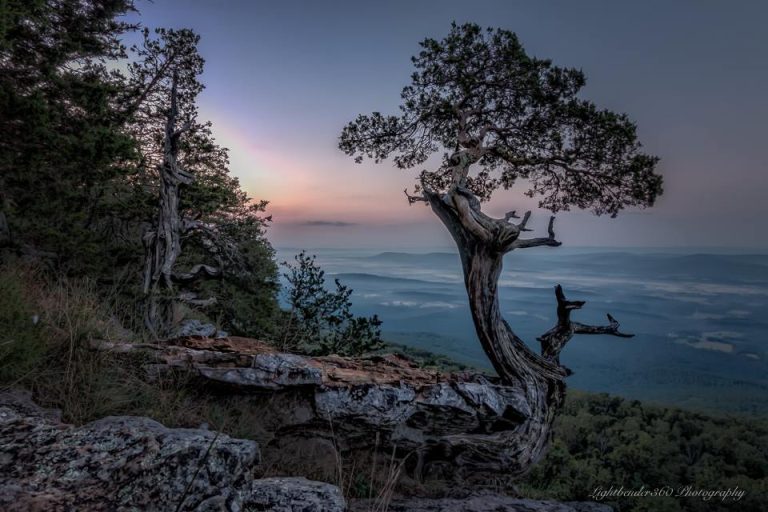
By Dr. Curtis Varnell
The Ouachita Mountains has produced its share of distinctive and eccentric individuals, but none more unique than Chalmers Ferguson, the hermit poet of Magazine. With a story much like The Scarlet Letter, Chalmers and his sister were born out of wedlock and suffered the pangs of growing up in a puritanical community. Scorned and ignored by the local population, his mother decided to end the life of both she and the children. Taking the two under her arms, she waded into a swift flowing stream attempting suicide by drowning. A rider rode up as the current carried the three into deep water and was able to rescue Chalmers but his mother and sister perished. The event was to have traumatic and life-long effects on the young man.
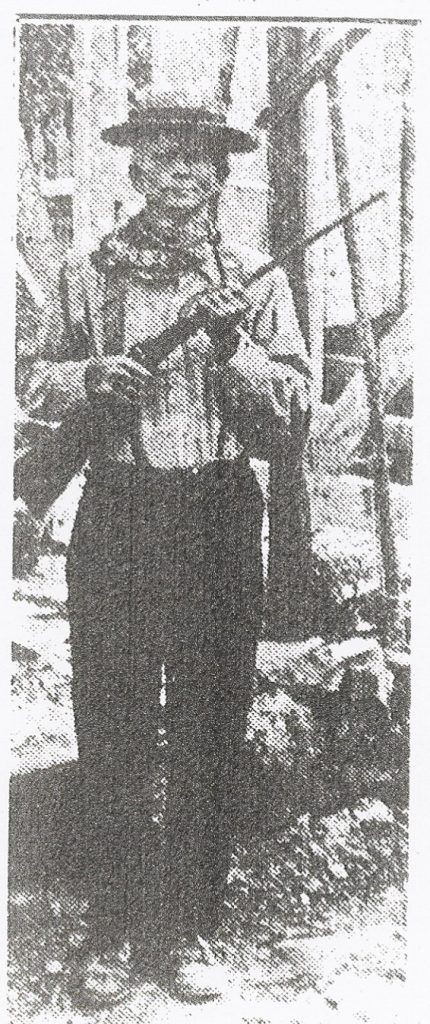
Raised to young adulthood, he joined Teddy Roosevelt and the rough-riders and was eventually shipped to Cuba and was said to have been present at San Juan hill. One of the first battles to employ modern weaponry such as the machine gun, the carnage and bloodshed during the battles further alienated young Chalmers who was serving as a band member and medic.
Seeking escape from a society he rejected, the arrived at the Blue Mountain train station. Dressed with his always present bandana around his neck, decked out in a green vest, and with a gold-braided bandsman hat tilted on his head, he looked more a product of the 60’s hippie generation than a turn-of-the century farmer.
Seeking solitude, Ferguson settled in a small cover under the rim of the western cliffs of Magazine mountain. Building a small three room house, he settled into the life of a hermit. He made friends of many varieties of wildlife found on the mountain, the most unusual being his friendship with snakes. Kept in his house, he described how he handled the serpents, “In making friends with snakes, I pick it up with a stick. I never touch it unless looking it in the eye.” Snakes strike at man only when they fear him. Its fear of each other that makes us enemies.” Fearing he would roll over on his snake friends at night and provoke attack, Chalmers built a coffin-like container in which he slept at night.
Left alone in the solitude, he would compose long poems, often about the beauty and solitude of the place he called home. Haunting and beautiful, the poems often mentioned thoughts of his mother and evoke feelings akin to reading the poetry of Edger Allen Poe.
The poem, To My Mother, begins: “Betrayed and outcast and forsaken, You were laid in an untimely grave. No eye nor no voice to take pity, No arm stretched to succor or save. But you rose in your chrysalis beauty, Bejeweled as heaven’s own bride; And I welcome the whispering message, That will summon my soul to your side.”
Hearing of his poems, John P. Cravens of the Arkansas Democrat traveled by train to Blue Mountain, hiked four miles up the mountain, and visited with Ferguson. He described Chalmers as a man of great intellect- one who spoke at least three languages, wrote poetry, created professional artistic work, and could discuss history and politics in detail. The man could play several instruments, wan an expert on dynamite, land surveying, carpentry, and photography.
During subsequent years, Cravens and the Arkansas Democrat published many of Chalmers poems. Often these were picked up by other news sources and Chalmers became widely known as the Hermit Poet of Magazine Mountain.
As the years went by, Ferguson gradually turned to human companionship. Building a small home in Blue Mountain, he started staying in town for longer and longer periods of time. Many of his poems speak of his primary love; birds, flowers, and most of all little children. Eventually, this intellectual, talented man began assisting and teaching in the local schools.
Ferguson died in 1934 and is buried in Danville, Illinois. His true legacy was and remains his years served as the hermit poet of Magazine Mountain.
Logan County’s Tanner Reed Named Iowa Reserve Grand Champion

DES MOINES, IA- Tanner Reed of Logan County was recently named as the Reserve Grand Champion at the AJSA Jr. National Show in Des Moines, Iowa. In doing so, his award ranked him second nationally. Reed’s award was in the fullblood Fleckvieh Heifer category.
The show consisted of Simmental cattle from 37 states represented and over 1200 head of cattle. Tanner competed in competitions related to the cattle industry. The competition lasted five days before Tanner was awarded the Reserve Grand Champion Fullblood Simmental Heifer.
Tanner began the project back in December and decided that he wanted to show on a national level. He has done very well. The Heifer’s name is Augusta, and she is a 16-month-old Fullblood Simmental. She was born on TCBO Farms owned by Terry and Cindy Bowman.
Augusta also placed third overall Fullblood at the south central regional in Springfield, Missouri back in June. The Reeds are looking to finish up the season with both county fairs along with stops in Fort Smith, Little Rock and Fayetteville.
Tanner is a member of the American Junior Simmental Association and the American Simmental Association. Reed is also a member of the County Line FFA show team and a member of the Arkansas Junior Cattleman’s association.
RNN Sports congratulates Tanner Reed and the entire Reed family on this great honor!

Note to Our Readers: RNN Sports would like to thank Mr. Michael Reed for his contributions to this story.
Nonresident hunters should check twice for new permits when renewing licenses
Randy Zellers Assistant Chief of Communications
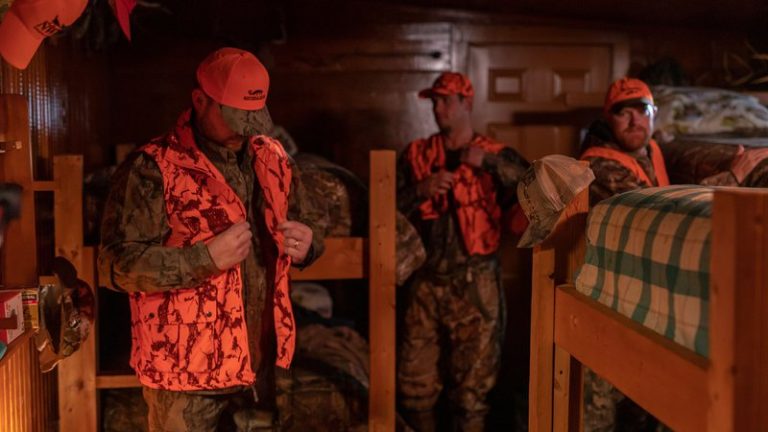
Every July, many Arkansas hunters make it a point to renew their hunting licenses to ensure they’re legal and ready for the next year of enjoying all The Natural State has to offer. This year, nonresidents also may have to purchase a few additional permits if they plan to engage in a few of the state’s calling card hunts.
Nonresident hunters will still be able to take a full limit of six white-tailed deer and enjoy small game hunting with the Nonresident Annual Hunting License as before, but additional permits, much like the Nonresident Arkansas Waterfowl Stamp, will be required for bear, turkey, elk and alligator beginning this year. Nonresident temporary licenses now only apply to either deer or small game, depending upon the license type. A nonresident wishing to pursue deer with dogs in Arkansas also will have to purchase a special permit. In addition to this, most existing nonresident licenses saw slight price increases.
The nonresident license restructure is part of a change to bring Arkansas’s hunting licenses up to par with recent increases in inflation and license formats of neighboring states. According to market research, Arkansas’s nonresident license prices were near the bottom of the nation’s, especially for hunters pursuing some highly sought species like turkey, bear, elk and alligator.
The new license and permit structure is as follows:
Fishing Licenses:
- Nonresident Annual Fishing License – $60
- Nonresident 3-Day Trip Fishing License – $30
- Nonresident Guide License/Fishing – $500
- Nonresident Trout Permit (must accompany valid fishing license) — $20 (no change)
Hunting Licenses:
- Nonresident Annual Hunting License (includes up to six deer and small game) – $410
- Nonresident 5-Day Hunting License (includes up to two deer) – $225
- Nonresident 3-Day Deer Hunting License (includes one deer) – $175
- Nonresident 1-Day Deer Hunting License (includes one deer) – $100
- Nonresident Hunting Dog Permit (required to use dogs to hunt, chase or retrieve deer or to train a dog for such purposes)- $20
- Nonresident Annual Small Game Hunting License – $110 (no change)
- Nonresident 5-Day Small Game Hunting License – $80
- Nonresident Trappers Permit – $125 (no change)
- Nonresident Bear Permit (must accompany valid Nonresident Annual Hunting License) – $300
- Nonresident Turkey Permit (must accompany valid Nonresident Annual Hunting License) – $100 each, limit two permits per year
- Nonresident Elk Permit (must accompany valid Nonresident Annual Hunting License) – $300
- Nonresident Alligator Permit (must accompany valid Nonresident Annual Hunting License) – $300
- Arkansas Nonresident Waterfowl Stamp (must accompany any valid nonresident hunting license) – $50
- Nonresident 5-Day WMA Waterfowl Hunting Permit (Must accompany any valid nonresident hunting license and Arkansas Nonresident Waterfowl Stamp) – $40
Paris Football’s “Moms 101” Proves Again to be a Big Hit

PARIS- Paris head football coach Jeff Weaver has had a big influence on the Eagles’ football program. His approach of not only being a good football coach but also one of teaching good personal values to his players will always make him a success in the eyes of many of the Eagles football fans.
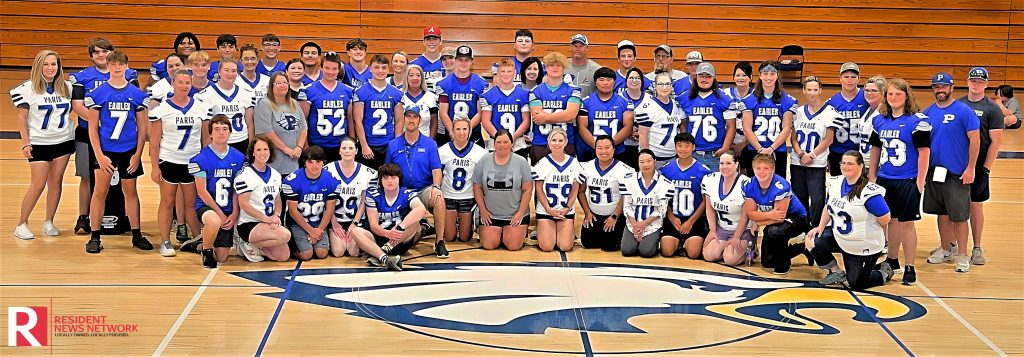
But perhaps one of the most popular elements of his program that he has brought to Paris has been the “Moms 101” program. Coach Weaver uses this fun event that is enjoyed by his players and their moms every summer to help his players continue to appreciate their mothers’ influence in their lives, as well as to teach them how to respect women and others around them.
Weaver and the Paris football staff take the moms through various drills, individual skills, and even running plays and having fun competitions. But the most poignant moment of each year’s event is when he has the players sit around the Paris coach with their moms to listen to his thoughts on how the players should love and appreciate their families. And most of all, Coach Weaver defines success for his players by telling them in the presence of their moms that not only do they want to win on the field, but he wants them to grow into good men, husbands, and fathers.
“Moms 101” made its debut at Paris in Weaver’s first season in 2021. That year, the event was held outdoors at Eagles Stadium. For the second consecutive season, the event was moved indoors due to excessive heat. Temperatures on the day of the event eclipsed 103 degrees, and at the time of the event, the muggy Paris air was still as high as 96 degrees.
“Moms 101” features mothers and players of Paris football players that will be entering the 9th through 12th grades each season.
Presence of blight pathogen confirmed in Arkansas pine trees
By Nick Kordsmeier
U of A System Division of Agriculture
For months, foresters and researchers have been investigating reports of ailing pine trees in Arkansas. New diagnostic lab results help tell part of the story, but researchers are continuing to investigate the cases of loblolly pine decline.
Michael Blazier, director of the Arkansas Forest Resources Center, said that diagnostic results from pine tree samples sent to Auburn University this spring tested positive for the fungal disease brown spot needle blight. Blazier is also dean of the College of Forestry, Agriculture and Natural Resources at the University of Arkansas at Monticello.
While brown spot hasn’t typically been a disease of concern for Arkansas’ predominant pine tree species, the loblolly pine, Blazier said that several years of higher-than-usual levels of rain created perfect climatic conditions for spreading the disease.
Loblolly pine is the most economically significant tree species in the state’s approximately $6 billion forest economy, Blazier said.
“It’s been present more along the Gulf Coast in a different species of pine,” he said, referring to longleaf pine trees. But parts of Arkansas have gotten 200 to 250 percent of average precipitation during the winter-spring period in recent years — perfect conditions for growing fungal inoculum that could spread to loblolly pine trees.
“The prevailing suspicion here is that climatic conditions have been ripe enough for growing enough of it that it would jump over and affect another species,” he said. “Once it had a toehold there, it just kind of feeds itself, and it seems to be spreading across the Southeast.”
The lab results indicating brown spot needle blight are helpful but don’t tell the whole story, said Vic Ford, associate vice president of agriculture and natural resources for the Arkansas Cooperative Extension Service, the outreach arm of the University of Arkansas System Division of Agriculture.
“It tells us that it may be a factor in some locations,” he said. “There are locations with dying trees that don’t have it, and locations with dying trees that have it.”
Ford said that the effects of tree stressors tend to compound each other. For example, he said, trees that grow in wet conditions, like those experienced in recent Arkansas winters and springs, put fewer roots down. When dry conditions follow, fewer roots mean less water intake. The reduced water triggers the tree’s stress mechanism, which includes the production of an aromatic compound called terpenes, which attract insects that further stress the tree.
“Mortality is a function of a lot of things,” Ford said. “There are compounding factors.”
Blazier noted that the diagnostic chemical analyses turned up one other disease — needle cast — and were inconclusive concerning the presence of herbicides.
How did we get here?
Blazier said that forestry consultants first began contacting him this spring, reporting an uptick in dying pine trees in their stands.
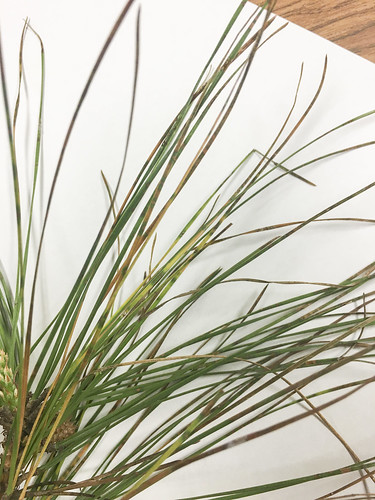
“They first brought to me some samples that looked like they had some sort of ailment to it. You could see brown striping on a lot of the needles,” he said.
Blazier explained that pine trees have two sets of needles — older needles from the previous year’s growth and new needles from the current year. Initially, the disease was only affecting the older needles.
“It was the prior year’s needles that were infected at first, and they would brown out and then fall off, so the tree’s kind of left with this ‘Charlie Brown Christmas tree look,’ to borrow an expression from a forester who’s been investigating the forest health problems of eastern Arkansas.”
Soon, when it came time to harvest timber, the forestry consultants noticed that the disease had jumped to the newer needles as well.
“That coincided with an uptick in pine cone production,” Blazier said. “That’s a tell-tale sign that the tree has been triggered to understand that it’s about to die, so it needs to propagate its genetics before it shuffles off the mortal coil.”
Blazier shared photos of the disease with a colleague at Auburn University, Lori Eckhardt, professor and director of the Auburn Forest Health Cooperative. Eckhardt told Blazier the symptoms looked similar to those attributed to brown spot needle blight in Alabama since 2018.
A team of researchers and forestry experts is working to tackle the problem, Blazier said. The team includes members of the Forestry Division of the Arkansas Department of Agriculture, the Arkansas Forestry Association, and the Arkansas Forest Resources Center, which is headquartered at the University of Arkansas at Monticello and conducts research and extension activities through the Arkansas Agricultural Experiment Station and the Cooperative Extension Service, the Division of Agriculture’s research and outreach arms.
Searching for more answers
Blazier said that moving forward, the team is casting a wider net to determine the extent of tree health decline.
“We’re trying to accelerate that pace by using the better technologies of aerial photography and machine learning that help target us a bit better on where we’re sampling and trying to make inferences about where it can be,” Blazier said.
Continued sampling is also part of the plan, he said.
“We plan to continue that through this fall and resume it, starting in February next year, and doing it on a monthly schedule through the summer period,” he said. “By then, we will have had a full year’s worth of seasonal sampling.
“We’re also monitoring the areas that we know have been infested with it to see how those forests will continue to progress,” Blazier said. “There’s some evidence that forests will outgrow it.”
While the trees may display symptoms of pine decline for a time, they may be able to fight it off, he said. “That’s room for hope.”
Sound management is the best policy
Blazier said the evidence so far suggests no need to panic. Instead, he recommends a proactive approach to managing loblolly pine stands.
“Sound management is always the best policy for resiliency against any kind of stressor,” Blazier said. “We don’t want to give up on continuing to manage.”
“It’s not like a wildfire that’s coming across the state fast,” Ford said. “It’s not killing large swaths.
“Hold tight, manage for a healthy stand. In other words, don’t let it get too thick, plant at the right density and those kinds of things,” he said. “You should be able to have a very hard, strong, vigorous stand,” he said.
“If it is going to be a problem, we’re trying to get ahead of it,” Ford said.
In the meantime, experts in Arkansas and across the southeastern U.S. are working to better understand management practices that specifically help mitigate the current instances of pine decline.
“The other thing we’re trying to do is working with industry and these other universities to look for patterns, and where it has been more prevalent, and where it hasn’t been, and trying to understand if there are management strategies that were conducted in some stands that made them less susceptible to it,” Blazier said.
Blazier said that representatives from across the U.S. are gathering at a multi-state meeting in Alabama next month to discuss research efforts on brown spot needle blight in loblolly pine trees.
Homeowners beware
Ford said that if owners of pine trees near homes or other structures observe pine decline symptoms, they should consider taking the tree down.
“A dead tree overhanging your house or access is dangerous,” he said. Ford recommended that tree owners contact their local county extension agent to help them determine the best path forward.
To learn more about Division of Agriculture research, visit the Arkansas Agricultural Experiment Station website: https://aaes.uada.edu/. Follow us on Twitter at @ArkAgResearch. To learn about extension programs in Arkansas, contact your local Cooperative Extension Service agent or visit www.uaex.uada.edu. Follow us on Twitter and Instagram at @AR_Extension. To learn more about the Division of Agriculture, visit https://uada.edu/. Follow us on Twitter at @AgInArk.
Lady Eagles Volleyball Senior Abbi Walker Ready to Lead Paris to the State Playoffs

PARIS- The Lady Eagles volleyball tradition is a championship legacy. One that was built by several years of volleyball seniors who led their teams to state playoffs and championship game appearances. For everyone involved, it is fun to win and to be in playoff contention every season. But for this year’s seniors, like setter Abbi Walker, there is a pressure of high expectations to perform at their best individually, as well as a team.
The Lady Eagles made another state tournament appearance in 2022, losing in the quarterfinals to the eventual Class 3A champion, Little Rock Baptist Prep. Gone from the 2022 team are both seniors and a junior transfer, leaving this year’s team with just a few seniors, but with a group of talented juniors who received significant playing time last year.
One of those seniors is Abbi Walker, a setter and defensive specialist for the Lady Eagles. Last week, RNN Sports had the opportunity to visit with Abbi to get her thoughts on the upcoming season and the challenges and opportunities that await the Paris Lady Eagles. It will no doubt be a challenging season for Paris. The Hackett Lady Hornets will once again be the pick to win the 3A West, and in this year’s schedule, Paris will travel to Hackett very early in the season to face the 3A state finalists from 2022.
But with challenges come opportunities for success, and there is no doubt that this year’s Lady Eagles team will work hard and do everything they can do to uphold the championship legacy of Paris volleyball.
So, when Abbi and I began her interview, I asked her about the feeling of pressure in leading the team back to the playoffs. Abbi began by saying, “Definitely; there is always pressure but it is how you deal with the pressure. Our team does really well with not putting the pressure on just one person…we all take time with the pressure. Like if I am down, someone else steps up, and we go back and forth with that. We have been really good with communication and all of that. The pressure isn’t just on me, but we all have an equal amount of pressure going into the season. In the past we have put that pressure on just one person, and it has taken a toll. But this year, we have all shared the pressure.”

The 2023 summer offseason has been productive for the Lady Eagles. In fact, Abbi believes they have “turned the corner” in the last month. She said, “It has definitely been a broken approach over the summer. You come into the summer, and everyone is everywhere; there’s cheer, basketball, softball, and all kinds of camps everywhere. But this last camp that we had at 501 really showed us what we could do. It was in the silver bracket, and it all came together in the last game, and it was amazing just to see what everyone can do under just that little bit of pressure. In the last match, we won the first set, lost the second, and came back to win the third by two points. It really showed what our serving can do under pressure, and it was amazing.”
With the summer team camps opportunities, the young talent of the Lady Eagles has begun to rise up to the level that they are capable of playing at in the 2023 season. I asked Abbi if this is the case or is it a matter of the team starting to bond and play together. She answered by saying, “Yes, that was the highest our team has finished this summer. And it all started with the Branson (MO) camp this summer. We really got to know each other and see the different personalities, and you have to see what the differences are and who can take the pressure. There are some younger players now that aren’t able to take the pressure right now, and you have to find out a way to talk to them under this type of pressure. You have to find out the different ways they need to be talked to for sure.”
As a senior, I asked Abbi about her perceived leadership style. She described it as, “I definitely like to be encouraging, because if you, and we learned at camp this summer, you definitely can’t get “into peoples’ faces.” It really went downhill, really fast. We ended up losing a game pretty badly, because we were just into each other’s faces, and it did not go well. So, we have learned that we have to be encouraging toward each other to win games. It’s very important that we encourage each other instead of bringing each other down. And there are sometimes where some older players that have to say, “Come on, let’s get it together.” But there are some different personalities on this team, and you can’t do that very often. So, being encouraging is the most important part.”
Listening to Abbi, it appears that the Branson team camp experience gave the team a chance to filter out the team chemistry and how the seniors would lead the team.
Part of the many changes for this year’s team will be the addition of a new head coach. Coach Jordan Devine has retired from the coaching part of her position with the Paris Schools. Taking the reins for the program is Josh Hart, who was promoted after serving as the program’s junior high coach. I asked Abbi about Coach Hart’s influence on the team so far, and she responded by saying, “I think he (Coach Hart) is kind of letting us figure our problems out. He doesn’t step in and show us how to do things. If we are down, he is encouraging, and he is an energy source for the team, for sure. If there is any kind of swing, kill, or play, he is all there. He is louder than the entire team when it comes down. He is really into it. He is very encouraging, and it is just fun to play and to let us figure things out. He doesn’t want to make us figure things out; he wants to help us figure things out.”
Abbi perceives her role as a senior on this year’s team as “being an encouraging person; I want to make sure that everyone is comfortable with what they are doing. Because some of the younger players need to accept the role they are in, and you (Abbi as a senior) you have to do your best to make sure that they are prepared. And I think that is where we are at right now. Making sure that everyone is ready, and everyone knows what their role is on this team.”
The team is making good progress toward being ready to start the season on August 22. I asked Abbi how she thought the team’s progress this summer at this point compared to where they were a year ago. Abbi shared, “I think our front row this year is going to be a big thing for us. Last year, we depended on our outsides and our middle (hitters), and this year, we have a lot more coming from the right side. We are able to use both ends and middle, which is really nice as a setter because we can spread things out, and they are not just going to cheat to our outside. It’s really good as a setter to be able to go to that right side.”
The development of this year’s front line has made a lot of progress as they look forward to the August 22 opener at Russellville. Abbi said, “For sure. Tons and tons of progress has been made on the front row. And that all also comes from our passing; I think our passing has improved tremendously. Since the last camp, things have improved and are seeming to all come together.”
Abbi will once again be a setter and a defensive specialist on the 2023 team. As a setter, she is the “quarterback” of the offense, making split-second decisions on where to set the ball based upon the defense and the position of her team’s front row hitters. Abbi explained, “Yes, the setter runs the offense, and our libero runs the defense. I definitely have to see the other side of the net to see where the opposing team is moving at the time, and then I have to see who is ready on my side of the court (front line hitters) to receive the ball.” All of this is taking place in a split-second, and to the casual fan, it can be easily lost how difficult the setter position is, and how important the position is to the overall success of the offense. In my observation over the years, and in listening to Abbi analyze the position, Paris will be in very good hands this season with this crucial position and its effect on the Lady Eagles’ success.
As a senior, Abbi will be carrying this very important responsibility for the Lady Eagles. In her words, “If there is anything going wrong (volleys in a game), it is the setter’s responsibility to fix it.” She shared openly that as a younger player, the responsibility and pressure got to her. But throughout her own personal development going into her senior year, she feels prepared and ready to meet this important responsibility head on.
Looking ahead to the start of the 2023 season, Paris will once again play a very tough non-conference schedule that will include an early start to the 3A West conference schedule. And part of that early conference schedule will include a trip to Hackett to play a very tough Lady Hornets team on their home floor on August 31, just nine days into the season. I asked Abbi for her thoughts on the schedule, in particular the early days of the schedule leading into Labor Day weekend. She shared, “Our schedule is very much compressed, that is for sure. We have two to three games per week, and we are used to two games per week. But I think it is going to show us how much we can do and how much we can mentally put ourselves through. And I think having Hackett right out of the summer will be really good. We will have our team chemistry and team strong after the so many weeks we have had preparing ourselves for those games.”
The Lady Eagles open at Russellville on August 22 and will then travel to Little Rock Pulaski Academy on August 24. Paris will open 3A West conference play on August 29 vs. Charleston and will then go back on the road to play the defending 2022 3A state finalists, Hackett Lady Hornets, on August 31. Quite a daunting schedule for the young Lady Eagles, but an opportunity to play some important games early and perhaps see the schedule flip in their favor in the finals weeks of the season heading toward the district tournament and the state playoff.
We would like to thank Abbi for taking time to contribute her interview for this story. As the season unfolds, RNN Sports will follow-up with her and other members of the team. Abbi is talking with college recruiters, and we will bring you updates on future opportunities that may be coming her way, as well.
RNN Sports will be in Russellville on August 22 to bring you the action in pictures, both online and in social media, but in RNN’s Logan / Franklin Counties weekly newspaper. And we will be there all season long to bring you the best coverage of River Valley volleyball action.
So, if you have not yet subscribed to Logan and Franklin Counties’ only weekly newspaper covering LOCAL news and sports, go to our link now so you can catch all of the action this season! Just go to residentnewsnetwork.com/subscribe to get the counties’ only weekly print newspaper, as well as our online digital media!
RNN Sports…the BEST high school sports coverage in the River Valley!
Grand Lodge Awards Prestigious College Scholarships
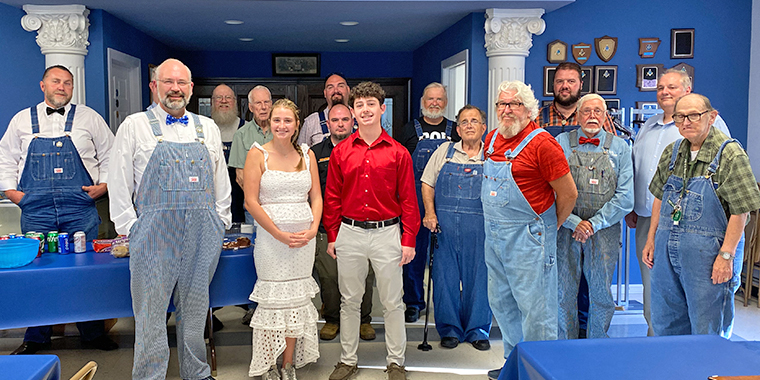
The Masonic Grand Lodge in Little Rock, Arkansas has awarded their annual Arkansas Grand Lodge Scholarship to Anna Claire Roberts, and Greyson Baggett.
On Tuesday, July 19, Neil Roberts introduced both recipients to members of Belle Point Lodge No. 20 in Fort Smith where they were recognized through an appreciation speech, and given time to extend their personal intent of the scholarship in their respective collegiate careers.
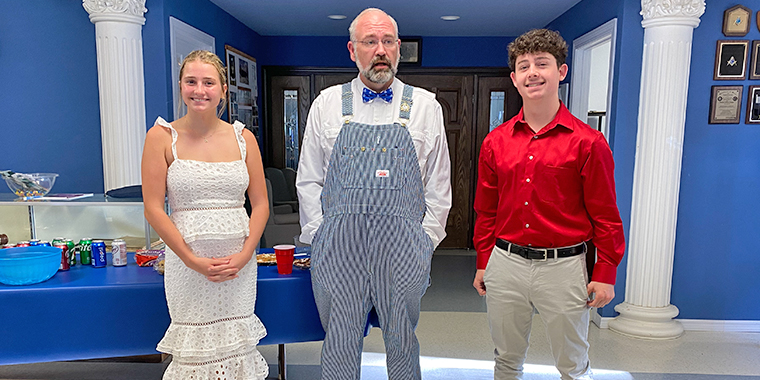
Anna Claire Roberts is a 2023 Southside High School graduate, attending University of Arkansas majoring in Marketing, with future plans of Law School.
Greyson Baggett is a 2023 Mansfield High School graduate, attending University of Arkansas – Fort Smith majoring in Business & Marketing, with a focus on Sports Marketing.
Both recipients were two of nine finalists chosen for final interviews in May following the procedural guidelines, then ultimately granted the scholarships based on elements from the personal interview process and written essays.
The Arkansas Grand Lodge scholarship awards high school students pursuing their collegiate aspirations through undergraduate work, renewable each semester for up to eight semesters, where recipients must maintain a 2.5 GPA, and enrolled in at least 12 hours each semester.
The tradition of the masonic lodge, and the scholarship itself are both representative in not only the hopes of lodge members representing their community outreach through a lasting impact of youth and education, but to also pay it forward within future generations.
Man First Set Foot on the Moon: July 20, 1969

HOUSTON- July 1969. It’s a little over eight years since the flights of Gagarin and Shepard, followed quickly by President Kennedy’s challenge to put a man on the moon before the decade is out.

Buzz Aldrin climbs down the Eagle’s ladder to the surface.
Credits: NASA
Now, on the morning of July 16, Apollo 11 astronauts Neil Armstrong, Buzz Aldrin and Michael Collins sit atop another Saturn V at Launch Complex 39A at the Kennedy Space Center. The three-stage 363-foot rocket will use its 7.5 million pounds of thrust to propel them into space and into history.
At 9:32 a.m. EDT, the engines fire and Apollo 11 clears the tower. About 12 minutes later, the crew is in Earth orbit. (› Play Audio)
After one and a half orbits, Apollo 11 gets a “go” for what mission controllers call “Translunar Injection” – in other words, it’s time to head for the moon. Three days later the crew is in lunar orbit. A day after that, Armstrong and Aldrin climb into the lunar module Eagle and begin the descent, while Collins orbits in the command module Columbia.
Collins later writes that Eagle is “the weirdest looking contraption I have ever seen in the sky,” but it will prove its worth.
When it comes time to set Eagle down in the Sea of Tranquility, Armstrong improvises, manually piloting the ship past an area littered with boulders. During the final seconds of descent, Eagle’s computer is sounding alarms.
It turns out to be a simple case of the computer trying to do too many things at once, but as Aldrin will later point out, “unfortunately it came up when we did not want to be trying to solve these particular problems.”
When the lunar module lands at 4:17 p.m EDT, only 30 seconds of fuel remain. Armstrong radios “Houston, Tranquility Base here. The Eagle has landed.” Mission control erupts in celebration as the tension breaks, and a controller tells the crew “You got a bunch of guys about to turn blue, we’re breathing again.” (› Play Audio)
Armstrong will later confirm that landing was his biggest concern, saying “the unknowns were rampant,” and “there were just a thousand things to worry about.”
At 10:56 p.m. EDT Armstrong is ready to plant the first human foot on another world. With more than half a billion people watching on television, he climbs down the ladder and proclaims: “That’s one small step for a man, one giant leap for mankind.” (› Play Audio)
Aldrin joins him shortly, and offers a simple but powerful description of the lunar surface: “magnificent desolation.” They explore the surface for two and a half hours, collecting samples and taking photographs.
They leave behind an American flag, a patch honoring the fallen Apollo 1 crew, and a plaque on one of Eagle’s legs. It reads, “Here men from the planet Earth first set foot upon the moon. July 1969 A.D. We came in peace for all mankind.”
Armstrong and Aldrin blast off and dock with Collins in Columbia. Collins later says that “for the first time,” he “really felt that we were going to carry this thing off.”
The crew splashes down off Hawaii on July 24. Kennedy’s challenge has been met. Men from Earth have walked on the moon and returned safely home.
In an interview years later, Armstrong praises the “hundreds of thousands” of people behind the project. “Every guy that’s setting up the tests, cranking the torque wrench, and so on, is saying, man or woman, ‘If anything goes wrong here, it’s not going to be my fault.'” (› Read 2001 Interview, 172 Kb PDF)
In a post-flight press conference, Armstrong calls the flight “a beginning of a new age,” while Collins talks about future journeys to Mars.
Over the next three and a half years, 10 astronauts will follow in their footsteps. Gene Cernan, commander of the last Apollo mission leaves the lunar surface with these words: “We leave as we came and, God willing, as we shall return, with peace, and hope for all mankind.”


Note to Our Readers: The previous story was sourced directly and in its entirety from Nasa.gov