70.6 F
Fort Smith
Monday, June 22, 2026
Home Blog Page 28

February 1776 – 250 Years Ago Here in What Is Now Scott County

In February 1776, what we now call Scott County was not yet Arkansas — and certainly not the rural county we recognize today.

 This land was home primarily to the Caddo peoples, whose villages and seasonal movements shaped the region long before American independence was declared.

The Caddo were known for:

Sophisticated ag

Agriculture, including corn, beans, and squash

Complex trade networks

Highly detailed pottery and craftsmanship

Structured community leadership

Winter months like February would have been quieter agriculturally, focused more on hunting, repairing tools, storytelling, and community life.

European settlement had not yet permanently reshaped this specific area. While Spanish and French influence touched parts of the broader region, the interior hills and valleys of western Arkansas remained largely Indigenous land.

 Meanwhile in the American Colonies

February 1776 was a turning point.

Common Sense, written by Thomas Paine, was spreading rapidly across the colonies, convincing many that independence from Britain was not just possible — but necessary.

Colonial militias were organizing more formally.

 The question was no longer, “Should we protest?” but “Should we separate?”

The Declaration of Independence was still five months away — but momentum was building.

The Bigger Picture

The American Revolution was already underway after the battles of Lexington and Concord in April 1775.

By February 1776:

King George III had declared the colonies in rebellion.

George Washington was commanding the Continental Army.

Alliances and loyalties were shifting.

Yet here in the Arkansas River Valley, life followed a very different rhythm — one rooted in Indigenous tradition rather than European revolution.

If you are interested in seeing traditional Caddo artifacts, the Scott County Museum of History has a collection donated by Gary Blythe prior to his passing.

Arrest Reports 2/15

This content is reserved for RESIDENT INSIDER members.

Please or subscribe to view.

Obituary: Rosemary James (1940-2026)

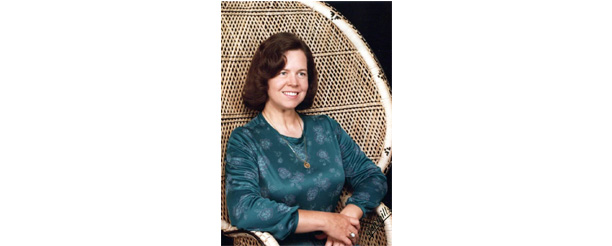
Rosemary Jan (Richmond) James, 85, peacefully entered the presence of her Heavenly Father on Thursday, February 19, 2026.

She was born on March 14, 1940, in Waldron, AR, the oldest child and only daughter of the late Burl Richmond and Freddie Mae (House) Richmond. Rosemary often shared fond and engaging stories of caring for her three younger brothers, Leon, Eugene, and Lanny.

After graduating from Waldron High School, Rosemary moved to Wichita, KS, where she worked in the personnel department at Boeing. There she met Samuel Edwin James of Newlin, TX, and the two were married in 1962. In 1963, Sam began working for IBM’s NASA space program and the young couple relocated to Houston, TX. Over the next 25 years, Sam’s career spanned the Apollo missions, Mission Control, the Shuttle, and International Space Station. Behind the scenes of America’s space history, Rosemary carried the daily responsibilities of quietly raising three children during Sam’s long hours and high-stakes missions. Sam often described Rosemary as “the wind beneath his wings” during this historic and often challenging time.

In 1987, following Sam’s retirement from IBM, the James family moved to their farm in Waldron, AR. They were selected as the Scott County and Western District Farm Family of the Year. After Sam passed away in 2007, Rosemary managed the ranch for nine more years, continuing the work they had built together.

Rosemary is survived by her son, Jonathan Edwin JamesOu and wife Meimei of Sugar Land, TX; daughter Karen Vanette James of Austin, TX; daughter Natalie Joelle Ehler-James and husband Jason Ehler of Waldron, AR; and Brunetta Richmond-Slaten (formally married to late brother Leon Richmond) of Waldron, AR. Rosemary had eleven grandchildren who she adored—Jazmine, Brianna, Lulu, Liangston, Jaden, Jordan, Julian, Sam Colt, Jett, Avery, and River—and two great-grandchildren, Ender and Wyatt. She also had many beloved nieces and nephews.

Rosemary is preceded in death by her parents Burl Richmond and Freddie Mae (House) Richmond and brothers Clyde Leon Richmond, Eugene Richmond, and Lanny Richmond; nephew Toby James; and nieces Lita Estelle Kelley, Brauna Rose Richmond-King, and Chandra Richmond.

First and foremost, Rosemary’s greatest passion was studying Scripture and serving God. She was a devoted member of the Church of Christ throughout her life. She taught Ladies’ Bible Class, did outreach for World Bible School, served as an Elder’s wife across three congregations, and quietly gave service to those in need. She was a published poet, excellent cook, and a skilled gardener who cultivated both lush flowers and abundant vegetables. She painted in oils, created macramé, and often created handmade gifts for children. She will be lovingly remembered for her steadfast faith and devotion to her family.

Public visitation will be held in Waldron, AR at Heritage Memorial Funeral Home on Tuesday, February 24, 2026 at 9AM, followed by funeral services at 10AM. Graveside services will then follow at Mt. Pleasant Cemetery at the Greenridge Community.

Pallbearers: Jason Ehler, Sam Ehler, Jett Ehler, Scott (Rowdy) Richmond, Landon Richmond II, Danny Richmond

Honorary Pallbearers: Liangston JamesOu, Lulu JamesOu, Dakota Jaden Clark-James, Jordan Clark-James, Julian Clark-James, Sammie King, Joe Richmond, Victor Richmond, Jackie Richmond, and Danny Richmond II.  Minister—James King, nephew; Music—Michelle King.

One Step at a Time: How a Father’s Walk Became a Lifeline for Others

This content is reserved for RESIDENT INSIDER members.

Please or subscribe to view.

I Changed My Name — A Powerful Memoir of Identity, Dignity, and Resilience

This content is reserved for RESIDENT INSIDER members.

Please or subscribe to view.

Egg prices fall to 2023 levels, but won’t last for long 

By Mary Hightower 
University of Arkansas System Division of Agriculture

Egg prices have fallen to levels not seen since 2023, but don’t expect that dip to last long, said Jada Thompson, associate professor and economist for the University of Arkansas System Division of Agriculture.  

In a system where supply and demand dictate prices, “the lower prices are the result of an oversupply,” she said. 

At a time when the poultry industry is facing unprecedented pressures from highly pathogenic avian influenza, or HPAI, the nation’s egg farms took something of a gamble.

Extension Economist Jada Thompson says wholesale egg prices are down, but not for long. (UADA image)

“Growers, anticipating negative effects from avian influenza during the winter, increased the number of eggs they produced,” Thompson said. However, the highly pathogenic avian influenza that has hit other commercial and backyard flocks passed over the egg layers. 

“That left growers with plenty of eggs, and consumers are the ones who get to benefit,” she said.  

Egg prices made a slight recovery in May 2023, when HPAI cases were low and bird supplies ramped up. As cases increased, the prices rose again. 

The current low price consumer windfall isn’t necessarily good for farmers. 

“Growing eggs isn’t an industry with a large profit margin and lower prices make those margins even tighter,” Thompson said. “Farmers are reaching deeper into their pockets more at the moment.” 

However, Thompson said the egg supply will likely drop from its current overabundant state. 

“We are likely to see producers reduce egg sets, slowing the replenishment pipeline,” she said. “While the egg supply chain is highly dynamic and can change day to day, it is still constrained by biological timelines.  

“Absent large-scale disruptions, overall supply could remain elevated for the next five to six months,” she said. “However, given ongoing HPAI risk, we may see new cases emerge sooner, which could tighten supplies earlier than expected.” 

HPAI cycle 

The current cycle of HPAI began when it was detected in a commercial flock in February 2022. According to the U.S. Department of Agriculture’s Animal and Plant Health Inspection Service, HPAI affected more than 4 million birds in the United States in January alone, affecting 44 backyard flocks and 18 commercial flocks. Backyard flocks have been hard hit, with 54 flocks in November and 56 flocks affected in December and 15 so far in February. 

A look at the wholesale egg price rollercoaster since 2022. (UADA Image)

The number of commercial flocks affected by the disease has declined over the last four months. Forty-two flocks were affected in November 2025, 26 in December 2025, 18 in January and 17 so far in February.  

To learn about extension programs in Arkansas, contact your local Cooperative Extension Service agent or visit uaex.uada.edu. Follow us on Facebook and Instagram. To learn more about the Division of Agriculture, visit uada.edu. To learn more about ag and food research in Arkansas, visit the Arkansas Agricultural Experiment Station at aaes.uada.edu

About the Division of Agriculture 

The University of Arkansas System Division of Agriculture’s mission is to strengthen agriculture, communities, and families by connecting trusted research to the adoption of best practices. Through the Agricultural Experiment Station and the Cooperative Extension Service, the Division of Agriculture conducts research and extension work within the nation’s historic land-grant education system. 

The Division of Agriculture is one of 20 entities within the University of Arkansas System. It has offices in all 75 counties in Arkansas and faculty on three campuses. 

Pursuant to 7 CFR § 15.3, the University of Arkansas System Division of Agriculture offers all its Extension and Research programs and services (including employment) without regard to race, color, sex, national origin, religion, age, disability, marital or veteran status, genetic information, sexual preference, pregnancy or any other legally protected status, and is an equal opportunity institution. 

Taking protein into account with the new food pyramid

By John Lovett
University of Arkansas System Division of Agriculture

Now that protein is taking a more prominent position in federal nutrition guidelines, you may have some questions about how to adjust your diet.

While the dietary guidelines are updated every five years by the U.S. Department of Agriculture and U.S. Department of Health and Human Services, the latest edition released in January is “the most significant reset of federal nutrition policy in decades,” according to the HHS.

Highly processed foods and beverages currently account for about two-thirds of the energy consumed in the United States, according to “The Scientific Foundation for the Dietary Guidelines for Americans,” the full report released by HHS and the USDA. The new guidelines emphasize “real food” and prioritize high-quality, nutrient-dense protein, fruits, vegetables, healthy fats and whole grains, while avoiding highly processed foods, added sugars and refined carbohydrates.

The Center for Human Nutrition, a part of the University of Arkansas System Division of Agriculture’s research arm, the Arkansas Agricultural Experiment Station, has developed a series of visual guidelines to help people better understand daily protein recommendations and other changes in the new Dietary Guidelines for Americans.

The Center for Human Nutrition’s Facebook page and the experiment station’s Instagram page have the graphics posted for public use.

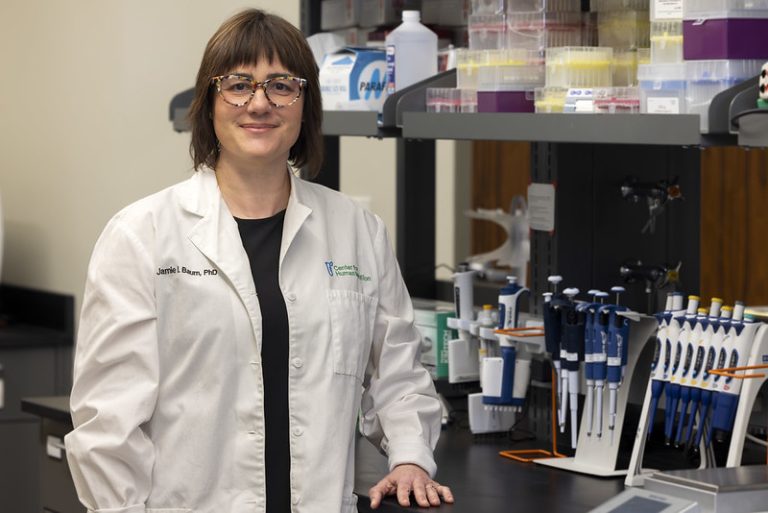
Jamie Baum, associate professor of nutrition and director of the Center for Human Nutrition, said that while most Americans already eat enough protein, the new guidelines support further increasing protein intake for additional health benefits, such as greater muscle mass and less fat, decreased hunger, improved bone health and decreased risk of chronic diseases such as type 2 diabetes and cardiovascular disease.

The emphasis on protein called for doubling the amount of daily intake from 0.8 grams per kilogram of body weight — the amount needed to prevent the body from breaking down its own proteins and to prevent protein deficiency — to 1.2-1.6 grams per kilogram of body weight.

That translates to 82-109 grams per day for a 150-pound person. Another way to understand it is one palm-sized portion of high-protein food at every meal, plus one or two high-protein snacks like Greek yogurt or a hard-boiled egg, if desired.

Grams to ounces

Converting these recommendations to ounces can get a little tricky, since 1 ounce of a protein source isn’t purely protein, says Sydney Boudrey, a registered dietitian and program associate with the Center for Human Nutrition. In general, she says, 1 ounce of a protein food has about 7 grams of protein, along with other nutrients like vitamins and minerals.

The new daily recommendations equate to the following:

  • 150-pound person: 11.5 to 15.5 ounces throughout the day, or 4 to 5 ounces per meal.
  • 200-pound person: 15.5 to 21 ounces throughout the day, or 5 to 7 ounces per meal.
  • 250-pound person: 19.5 to 26 ounces throughout the day, or 6.5 to 8.5 ounces per meal.

More-protein tradeoff

While increasing protein intake can improve health benefits, Baum cautions that it comes with a tradeoff.

“You can’t just take in all this protein on top of what you’re already eating. You’ll have to reduce caloric intake and/or increase your activity levels,” Baum said.

A balanced, 2,000-calorie diet is still the daily benchmark, but calorie intake varies with age and activity levels, Baum noted. For those who are physically active, Baum recommended aiming for an upper limit of 1.4–1.6 grams of protein per kilogram of body weight.

The 2025-2030 Dietary Guidelines for Americans reaffirms that protein should make up 10 to 35 percent of a person’s total energy. Historically, the guidelines emphasized protein intake on the lower end of this range. On average, Americans consume 15 percent of their calories from dietary protein, Baum said.

Protein studies

In addition to a nutrition-focused program on KUAF radio called “Balance,” with Erin Howie, associate professor of exercise science in the University of Arkansas department of human health, performance and recreation, Baum and her team at the Center for Human Nutrition have conducted many studies that focus on higher protein intake across ages, genders and activity levels, as well as the affordability of nutrition and health.

“Protein scientists, and I think most healthcare professionals, recognize that as we age, we need more protein because our bodies slowly lose muscle,” Baum said of the overarching findings in their studies.

“The Benefits of 30 Grams of Protein at Breakfast,” a fact sheet developed by Baum for the Division of Agriculture, noted that it takes 30 grams of protein to refuel the body at breakfast. After not eating for eight to 10 hours, the body is in a breakdown mode, or catabolic state. Unfortunately, the fact sheet adds, most Americans eat too little protein at breakfast and a lot of protein at dinner. The protein at dinner, however, isn’t stored for muscle use like it would be when consumed at breakfast.

Research by protein specialists like Baum shows the ideal protein intake is 30 grams per meal compared with the typical American diet of about 10 grams at breakfast, 20 grams at lunch and 60 grams at dinner.

The Center for Human Nutrition has developed several other fact sheets with recipes and research-based information on protein intake, including:

Protein economics

Both animal- and plant-source protein foods provide essential nutrients when consumed in minimally processed forms as part of a healthy diet. Although animal protein is favored in the new food pyramid because it provides all the essential amino acids our body needs, it also costs more money than plant-based protein.

“Especially in the state of Arkansas, we have a lot of food insecurity, and for a lot of people who receive SNAP benefits, meat is not necessarily the most affordable option of protein,” Baum said, referencing the USDA’s Supplemental Nutrition Assistance Program.

Baum currently has a study funded by the USDA Pulse Crop Health Initiative to examine the nutritional properties of dried beans and lentils as sources of protein in a higher-protein diet.

The idea, Baum said, is to “mix lentils or beans with less meat to deliver protein amounts aligned with the new dietary guidelines.”

While most plant sources are not complete proteins, combining plant sources like beans and rice in one meal can provide all the essential amino acids the body needs and enhance the meal’s nutrient profile, Boudrey said.

To learn more about ag and food research in Arkansas, visit aaes.uada.edu. Follow the Arkansas Agricultural Experiment Station on LinkedIn and sign up for our monthly newsletter, the Arkansas Agricultural Research Report. To learn more about the Division of Agriculture, visit uada.edu. To learn about extension programs in Arkansas, contact your local Cooperative Extension Service agent or visit uaex.uada.edu.

About the Division of Agriculture

The University of Arkansas System Division of Agriculture’s mission is to strengthen agriculture, communities, and families by connecting trusted research to the adoption of best practices. Through the Agricultural Experiment Station and the Cooperative Extension Service, the Division of Agriculture conducts research and extension work within the nation’s historic land grant education system. 

The Division of Agriculture is one of 20 entities within the University of Arkansas System. It has offices in all 75 counties in Arkansas and faculty on three system campuses.  

Pursuant to 7 CFR § 15.3, the University of Arkansas System Division of Agriculture offers all its Extension and Research programs and services (including employment) without regard to race, color, sex, national origin, religion, age, disability, marital or veteran status, genetic information, sexual preference, pregnancy or any other legally protected status, and is an equal opportunity institution.


“Just Roll with It” Serving up Recipes and Humor

Hello everyone!! It has been a beautiful week. Since I have been talking about funny things the family says, my grandson Ethan—the one that is super smart but has no common sense—said to me one day, “Nana, I have been having those jolly horses like you have.”

Hmmmm, I say… “Jolly horses?” I’m thinking, what is he talking about? Then it hit me—he meant Charlie horses. I used to get them a lot, and they are definitely not jolly.

I saw this video on Facebook of a UPS man being chased by turkeys. I mean, the man was running for his life. He was trying to deliver a package, and that turkey was chasing him like a rabid dog. I have been almost attacked by a turkey myself, so I felt so sorry for him. When something with feathers comes after you, it is a different kind of scary. Symber McConnell is scared to death of chickens. I’m telling you, if you ever get chased, you are scarred for life.

Do y’all remember the Southwest Times Record newspaper? I used to love to read that paper—work the crossword and read the police reports. One time there was a police report that said a 39-year-old Fort Smith woman reported a man threw a jar of salsa at her head when she told him to be quiet because he was being loud while eating and she was trying to sleep. That just cracked me up. I guess she won’t do that again.

I do crazy things. I shaved my legs one time, and when I finished I noticed I had left the cover on the razor, so I had to do my first work over. That’s what my mom would say if we weren’t doing a good job on our chores—she’d tell us, “You’re going to do your first work over if you don’t do it right.”

I know I am rambling, but I have had a busy week. I promise to do better next time. Y’all have a great week!!


Sno-Ball Brownies

Ingredients

  • 1 family-size brownie mix (I always use fudge brownie)
  • 1 can vanilla frosting
  • 1 jar marshmallow cream
  • 3 cups sweetened coconut
  • Pink food coloring

Directions

  1. Make the brownies according to package directions and cool completely.
  2. Mix the vanilla frosting with the marshmallow cream and spread over the brownies.
  3. Tint the coconut bright pink, or leave it white. I was thinking pastel blue or light green for Easter.
  4. Spread the coconut on top.
  5. Chill 30 minutes and enjoy.

AGFC and Electric Cooperatives of Arkansas to boost safe outdoor recreation 

By Randy Zellers

The Arkansas Game and Fish Commission and the Electric Cooperatives of Arkansas have announced a three-year partnership to elevate outdoor recreation safety across the Natural State.

The Electric Cooperatives of Arkansas will serve as the “Official Outdoor Safety Education Partner of the Arkansas Game and Fish Commission,” and work with the Arkansas Game and Fish Foundation to support the AGFC’s safety initiatives. The program will launch during the 2026-27 school year and include the AGFC’s Hunter Education and Boater Education programs as well as an ATV Safety Education program being implemented later this year.

“We’re extremely grateful for the partnership with the Electric Cooperatives of Arkansas for its continued support of the Arkansas Game and Fish Commission,” AGFC Director Doug Schoenrock said. “Safety is a cornerstone of Arkansas conservation and education, not just for our youth, but for newcomers as well. This partnership emphasizes the importance of safety in the field so everyone can return from their trips outdoors full of fond memories.”

A highlight of the partnership is the introduction of the Arkansas Outdoor Safety Graduation Cord. High school seniors who demonstrate a superior commitment to responsible recreation by completing certifications in Hunter Education, Boater Education and the upcoming ATV Safety Education program will earn a cord to be displayed at their graduation ceremony.

The Electric Cooperatives of Arkansas also will be featured as a Founding Partner of the Annual Generation Conservation Summit and the presenting sponsor of the “Safety Zone,” a hands-on display area focusing on boating and hunting safety.

“The Electric Cooperatives of Arkansas are built on a foundation of safety and community service, making this partnership a natural fit,” Vernon “Buddy” Hasten, president/CEO of Arkansas Electric Cooperative Corporation and Arkansas Electric Cooperatives, Inc., said. “The electric cooperatives in Arkansas work to improve the quality of life for members. Safety is always an area of focus in all aspects of our operations. This partnership extends our emphasis on safety to ensure that every Arkansan who enjoys the woods and waters returns home safely. We are honored to support the AGFC in educating the next generation of outdoorsmen and women.”

The Electric Cooperatives of Arkansas comprise electric distribution cooperatives; Arkansas Electric Cooperatives, Inc., a Little Rock-based cooperative that provides services to the distribution cooperatives; and Arkansas Electric Cooperative Corp., a generation and transmission cooperative. The distribution cooperatives provide electricity to members in Arkansas and surrounding states.

For additional information, contact:

Rob Roedel, Electric Cooperatives of Arkansas, 501-570-2296 or rroedel@aecc.com.