

78.2 F
Fort Smith
Monday, June 22, 2026
Home Blog Page 308

“Just Roll with It” Serving up Recipes and Humor

By Sheri Hopkins
Lifestyle Contributor

Hello everyone! Loving this weather in God’s country here in the River Valley. Thank you to everyone who came out to the circus, it was a big success and the Chamber of Commerce thanks you.

I almost loaded up my car and followed the circus to Hugo, OK. I could have done one of three acts, the fat lady, bearded lady or a clown. They sure acted like they enjoyed doing the circus.

If ya’ll haven’t drove by my house and seen the biker rabbit you sure need to. I ordered the mask from Amazon and thought he was cute. Obviously, I was wrong because I got several comments on Facebook, also known as funny book by Phil Lowe. Here are a few of the adjectives used to describe my rabbit: creepy, spooky, scary, terrifying, a few said cute, and some loved it. So that all being said, drive by my house and feel free to take your kid’s pictures with my Easter bunny.

I have to think of what I can do next. Jacob flat out told me my rabbit was creepy. Could he not just tell a small white lie to make me feel better?!! No, he can’t. Once, before he got his driver’s license, I tried to get him to run to CV’s for me and pick up something and he flat refused and said, “that’s illegal, mom.” Honey, back in 1981, I drove every road in this town without a license. My mom could have cared less, she just let me drive everywhere. I hope no police see this. Oh, I am sure the statute of limitations is in my favor.

One day my sister was coming from Waldron headed to Fort Smith and she was on 71 Highway, between Mansfield and Greenwood. She said traffic was backed up for miles. She said someone in front was going so slow. When they finally got on the four lane everyone was passing the car that was going so slow. When she looked over at them, it was Jacob leading the pack. She said she laughed so hard she about croaked. Let me tell ya he wasn’t going to go one mile over the speed limit. One time while he was still living at home, I had forgot to get his car tags renewed. I knew if I told him he wouldn’t drive the car. After he went to work up at the Heartland Pharmacy, I ran and got the new tags and I had to sneak up there and put the sticker on the car.

I guess what I’m trying to tell ya’ll is I have raised a law-abiding citizen. He wouldn’t break the law or tell a white lie to his momma. One more thing about my son. Don’t ever let him cut your hair. One day I came home from work and Jacob and his daddy were outside under the carport and Jacob had the clippers and Chuck was having him cut his hair. Why on Earth would Chuck Hopkins have Jacob cut his hair?! Needless to say, there was a big bald spot on the back and they ended up having to shave it.

Can I just tell ya’ll that Jacob did not take after his momma. Not that I break all the laws, but I do speed and I have went seven months without renewing my car tags. I guess I thought I had done it so I called over to the revenue office because I thought someone stole my sticker and she said, “no ma’am, you didn’t renew them.” Yes, penalty and all, I went and got my tags renewed. As I tell my kids, do as say, not as I do.

This week’s recipe used to be one of my favorites at Taco Bell back years ago, but this copycat is pretty close.

MEXICAN PIZZA
1 pound ground beef
1 packet taco seasoning mix
3/4 cup water
1 cup vegetable oil
8 flour tortillas (taco size)
15 oz. can refried beans
10 oz. can of red enchilada sauce
2 cups of Mexican shredded cheese
Toppings: dices tomatoes, sliced green onions, sliced black olives
Preheat oven to 400 degrees. In a large skillet, brown and crumble the ground beef. Drain excess grease. Add taco mix and water and stir. Bring to a boil, then reduce the heat and simmer until thick. In a large skillet, heat up the oil over medium heat and add the tortillas one at a time and cook for 3-4 minutes, flipping frequently until crisp. Continue with the rest of the tortillas. Set aside. Heat up the refried beans. This makes them easier to spread (I use the microwave). On each tortilla, slather a generous layer of beans, then top with seasoned ground beef. Place another tortilla on top and slather with about two tablespoons of enchilada sauce. Then place some shredded cheese on top of the sauce. Continue to assembly the rest of the tortillas the same way. Place the pizzas on a nonstick baking sheet (I used parchment paper) and bake for 8-10 minutes until the cheese is melted. Serve with your favorite toppings. I like sour cream, also. Enjoy this Mexican pizza! I hope everyone has a Happy Easter!


Paris Comes Back From Big Deficit to Defeat Two Rivers, 17-14

On a cloudy spring afternoon in Paris that threatened rain for most of the day, the Paris Lady Eagles and Two Rivers moved the start time of their game from the original schedule of 5 p.m. to 4 p.m. in anticipation of a rainy forecast. Depending on what source you used today for your weather information, rain was predicted to arrive in Paris around 6 p.m. on Thursday…and that is just what happened.

But the rescheduled start time of 4 p.m. turned out to be almost 4:20 p.m. as both teams waited for the officiating crew to arrive. Valuable time was lost with the delay, and as a result, the game was called in the Paris half of the sixth inning with one out. Two Rivers would not have a chance to take their last at-bat in the seventh inning due to lightning in the area.

The Two Rivers Lady Gators entered the game 0-2 in conference play having lost to Charleston and Cossatot River. Paris, fresh off of a devasting road loss at Hackett on Wednesday, entered the game on Thursday with a 1-4 record in the 3A-4. Paris’s only conference win was at Danville. Two Rivers, Danville and Cedarville were winless in the conference going into Thursday’s games.

Paris having played division leaders Hackett and Booneville this week, were now at a point in the schedule where most observers felt they could compete and improve their conference record. But Thursday’s game did not start out that way.

Paris took a 2-0 lead in the bottom of the first inning and seemed to be off to a very good start. But the Lady Gators would answer…and answer big. Two Rivers amassed a 10-run lead in the third inning, and Paris was again in jeopardy of being in a run-ruled, shortened game.

But the young Lady Eagles, who have continued to fight through adversity against very good competition, fought back and eventually tied the game in the fifth inning at 14-14. By this time, the weather was threatening with dark clouds, thunder, and lightening that seemed to be moving toward the ballpark.

Paris would eventually score three more runs and take the lead 17-14. Two Rivers was visibly shaken after seeing their big lead evaporate in the misty rain that was beginning to fall.

With Paris batting in the bottom half of the sixth, and with one out, the umpire crew called the game. After discussions with both coaches, the game went final, and the Paris Lady Eagles had clawed their way back from a huge deficit to win their second conference game.

With the win, Paris improved their conference record to 2-4, three and a half games behind conference leader Hackett. Two Rivers dropped their conference record to 0-3 along with Cedarville and Danville. The Lady Eagles are currently fifth in the conference behind leaders Hackett, Charleston, Booneville, and Cossatot River.

The Lady Eagles showed great character and competitive sprit on Thursday. After many hardships on the road this week, it felt great to see the team have some success and fun on the field. Paris fans hope to see the fun continue next Tuesday, April 4, when the Lady Eagles host Cedarville at 5 p.m. RNN Sports will be in Paris next Tuesday to bring you coverage of the Lady Eagles’ conference softball game with Cedarville.

Stamping Out Hunger

Every second Saturday in May, letter carriers in more than 10,000 cities and towns across America collect the goodness and compassion of their postal customers, who participate in the NALC Stamp Out Hunger National Food Drive — the largest one-day food drive in the nation.

Carriers collect non-perishable food donations left by mailboxes and in post offices and deliver them to local community food banks, pantries and shelters. 

To donate, just place a bag of non-perishable food next to your mailbox before your letter carrier delivers mail on the second Saturday in May. The carrier will do the rest. The food is sorted, and delivered to an area food bank or pantry, where it is available for needy families.

One in eight Americans face hunger every day in America. This drive is one way you can help those in your own city or town who need help.

Nearly 400 single parents receive Spring 2023 scholarships from ASPSF

Arkansas Single Parent Scholarship Fund (ASPSF) awarded 383 scholarships to single parents for the Spring 2023 semester.

Totaling just under $400,000, the scholarships are combined with services, such as mentoring and financial planning. ASPSF’s model creates a support system designed to help low-income single parents stay in school, graduate with a degree or certificate, and start a professional career with higher wages.

“This scholarship has helped greatly with the financial burden that comes with being a single parent. The money from the scholarship has helped making ends meet in time of hardships,” said Spring 2023 recipient Latisha French, a social work major at University of Arkansas–Fort Smith.

Supporters who funded the Spring 2023 single parent scholarships include individuals, churches, small businesses, and various banks and United Way organizations across the state.

In addition, funding is provided in part by Arkansas Community Foundation, Arkansas Division of Higher Education, Carl B. & Florence E. King Foundation, Charles A. Frueauff Foundation, Conway Corp, Entergy, First Electric Cooperative, Union Pacific, and the Willard & Pat Walker Charitable Foundation to name a few.

Arkansas Single Parent Scholarship Fund recipient Devin Bray (left) celebrates his Spring 2023 scholarship with his family and ASPSF Program Manager Sandy Nelson. Devin is working on a nursing degree at Arkansas Tech University. (Photo Courtesy ASPSF)

Single parents are eligible for ASPSF scholarships if their household income is typically not more than 250% of Federal Poverty Guidelines, maintain at least a 2.0 GPA, and have not previously earned a bachelor’s degree, among other requirements. The scholarship aid is flexible for recipients to use to pay for the biggest barriers between them and their education.

ASPSF’s next scholarship application period is April 15-June 15 for the Fall 2023 semester. Scholarship amounts will increase for all eligible full-time and part-time single parents to a maximum of $1,600 (up from $1,200).

For more information about the nonprofit — which has awarded more than $35 million in scholarships across the state to single parents since 1990 — contact ASPSF Communications Director Jen Para at jpara@aspsf.org or 479.318.2885.

About Arkansas Single Parent Scholarship Fund:  For more than 30 years, Arkansas Single Parent Scholarship Fund has worked to create stronger, more educated, and more self-sufficient families. Through scholarships and services, ASPSF opens doors for low-income single parents, helping them pursue education, secure employment, and transform the future for their families. With the help of volunteers and community support, ASPSF creates multigenerational change, transforming lives for both single parents and their children. For information about scholarships, volunteer opportunities, and ways to give, visit www.aspsf.org.

Timepiece: Hippie Generation

By Dr. Curtis Varnell

The young man lay on the shoulder of the road, his thumb projected up into the air.  Nearby, a sign was propped against the street sign with the message, San Francisco or bust.  My dad was not impressed, “One more hippy that will go bust.  No-one in Arkansas is going to pick up a hitchhiker too lazy to at least stand up and ask for a ride.”  I am not sure if my dad was right or wrong but the young man on the side of the road was representative of a generation of youth that wanted to tune in, turn on, and drop out of a society they disagreed with.

The 1960’s was a period of social unrest with civil rights and opposition to the Vietnam War as the rallying points of protest.  Centered in San Francisco and the urban East Coast, many young people were attracted to the music, life-style, and ideals of the hippie community.

Arkansans, more conservative and rural, were probably less sympathetic and less politically affected by the generation but yet were influenced by what has become known as the “hippie generation.”  Groups of hippies saw rural Arkansas as an ideal place to form rural self-supporting communes.  Often distrusted by the locals, it was difficult for them to fit into the clannish communities of the Ozarks and Ouachita’s.  One such group, the Dan Blocker Singers made it big as performers in Hollywood, eventually moved to Greer’s Ferry and started a commune.  Not the typical long-haired, pot growing or free-love group, the word “commune” still invoked visions of what Arkansans viewed as the far-left.  The group performed around the state, including at the lodge at Mt. Magazine, but were blamed for everything from vandalism to murder.  Eventually, community antagonism resulted in the dissolution of the commune.  Dixon Bowles, one of the group leaders, remained in Little Rock and founded the well-known Aristotle internet service.

One communal group moved into our community and started a small rural farm enterprise.  Using an old chicken house, they began raising animals, tilling the land in pioneer fashion, and rebuilding the old run-down farmhouse.  Knowing little about rural life, communal farming was not the ideal lifestyle and it ended rather quickly when winter approached.  Deciding to use a wood stove for heat, they ran the stove pipe into the ceiling like they had seen locally.  Never dawning on them that an exit chimney or flue was required, the attic soon caught on fire and ended their communal experience.  I always felt sorry for them.  They were a friendly group and always yelled and waved at we kids’ as they drove past in their psychedelic painted van.

A little later than main-stream America, the hippie influence filtered into our schools.  Guys began wearing pants with large flared bell bottoms, letting their hair grow long, and dressing in brighter colors.  I vividly remember my purple and white striped bell-bottom pants, my dark purple shirt, and my natural fro.  Even more vivid in my remembrance of those mini-skirts, getting increasing shorter as the girls mimicked some model called Twiggy.  Eventually, to counter the effects of the scarcity of skirt length, our local schools allowed girls to start wearing, of all things, pants.  Of course, the top still had to be of such lengths that the girls could grasp the bottom of the tunic when their arms were full extended. 

Lucy in the Sky and Looking out my Back Door were just great songs to me, not a part of a psychedelic drug music industry.  I still list Credence Clearwater Revival as one of my favorite singing groups. As the Arkansas 70’s kids reached draft age and began entering college, the words pot, LSD, and draft cards became a more familiar part of the vocabulary. 

The hippie movement of the 60’s resulted in improvements in Civil Rights, perhaps hastened the end of the Vietnam War, and then gradually faded into our collective memory.  Replaced by the more starched-collar, get-ahead Yuppie generation, it remains as a unique period in American and Arkansas history.

Wash Their Feet

Early in my time as a momma I read some wonderful advice on calming a cranky child or influencing a mood shift in general towards a happier one- add water. It’s worked countless times, and I’ve shared that before in this space.

At some point later came a different advice, still with water but deeper- wash their feet. 

I can’t say I’ve used that advice as much as I have the add water one. My “big kid” has had a lot of baths and showers in his life to influence a shift in attitude. It’s not always I will take the time to wash their feet, probably because it shifts my mood. Sometimes I am stuck in my own mood and projecting, or influencing, my children to turn sour themselves. It’s much easier to “fix” the kids attitudes by putting them in water and keep my own bad one.

Washing someone’s feet is humbling. Jesus washed the disciples feet. He showed us his own humility that he would take the place of a servant by washing their feet before he would take the place of our sins on the cross.

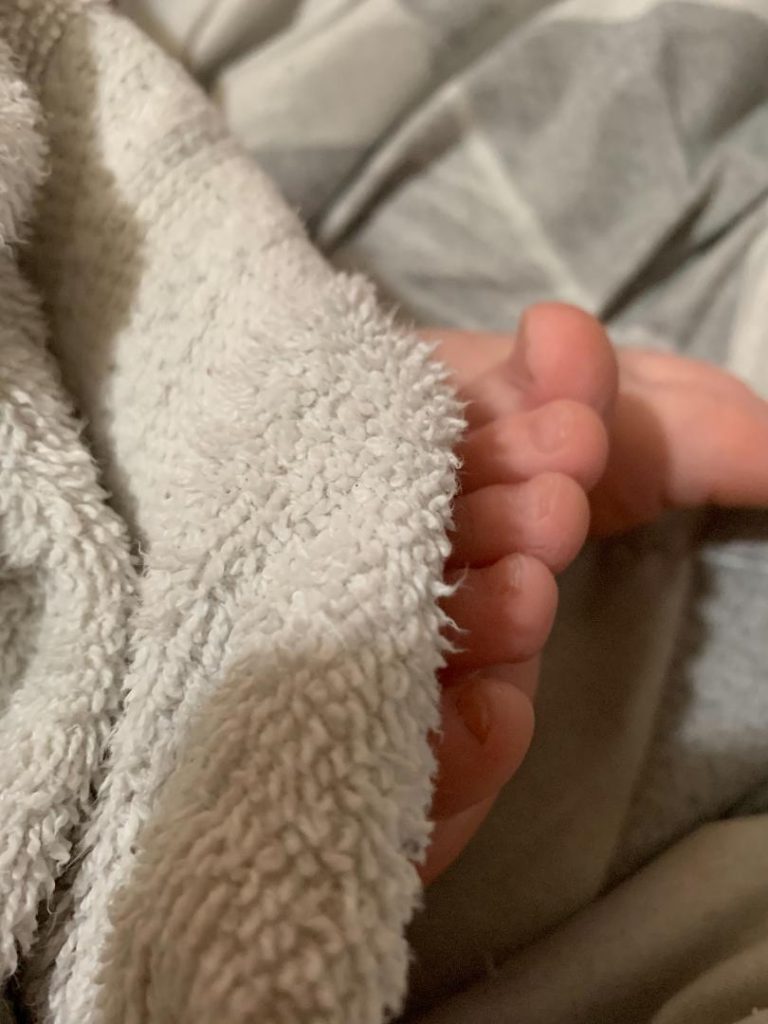
My youngest is loud. She’s the only girl, and she screams. She usually doesn’t cry, it is very much a scream. Recently she had been screeching all day and I was exasperated. She’s a baby, 16 months. There’s only so much I can do. I plopped her up on the bathroom cabinet and dangled her feet into the sink. She giggled as I washed her little feet in the sink. Both our moods shifted, she screamed less, and I no longer felt like screaming. 

Thank you Jesus for the demonstration not only on the cross but also before.

Thank you for foot washing, water, and the ability to shift our moods.

Bear den surveys reflect influence of summer drought 

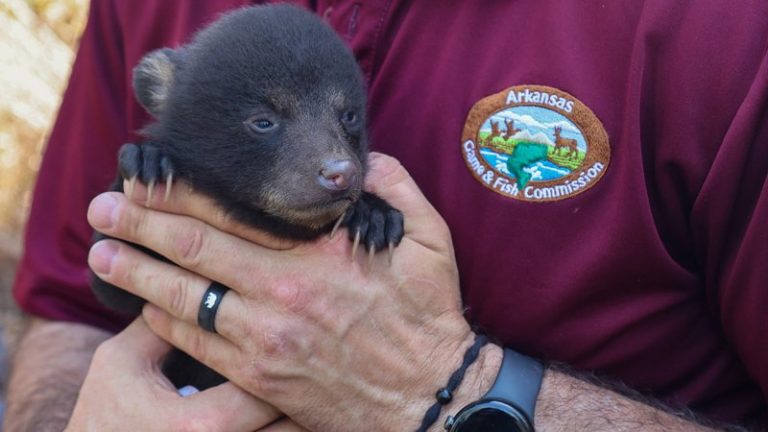
Bear cub – The AGFC visits dozens of female bears during late winter to measure cub production and survival.

Randy Zellers Assistant Chief of Communications

WALDRON — Last summer’s drought may have some lingering impact on Arkansas’s black bear reproduction, but there’s no immediate cause for alarm, according to Myron Means, the Arkansas Game and Fish Commission’s large carnivore program coordinator.

Each year Means works with biologists and technicians from the AGFC’s Wildlife Management and Research divisions during February and March to visit female bears at their dens and evaluate their condition and the condition of their cubs to identify trends that may impact the entire population. 

“We try to maintain about 60 female bears with radio collars throughout the state to help us with our monitoring work,” Means said. “Of those, about half will be with yearlings and the other half will have cubs with them in their dens.”

Means explains that female bears typically take two years to have and raise their young. During the first winter, the sows will have their cubs with them and allow them to nurse. Those cubs will stay with the mother throughout the year and through the next winter “learning to be bears.” Upon emerging from their second denning cycle, the yearlings will be pushed from the mother’s home.

“She’ll actually let her female yearlings stay in a part of her home range, but she’ll push the males out,” Means said. “That does two things:it ensures that her female cubs have a good place that provides adequate food and resources, and it prevents issues that can arise from inbreeding. It’s one of those ways Mother Nature works that’s just really interesting.”

Typically, a female black bear is sexually mature at 3-5 years old. Arkansas bears tend to begin reproducing at age 3 or 4. They can have cubs until they are around 20 years old. That gives them 16 years of opportunity to reproduce.

“But with an every-other-year cycle, we’re really only looking at raising young eight times at most,” Means said. “With the average litter size being two cubs, a female bear will produce about 16 cubs if she survives throughout a bear’s typical natural lifespan.” 

This fascinating two-year reproductive cycle also means biologists must keep constant tabs on the population, as it is much slower than other game species in Arkansas.

“We have much fewer bears than deer and other game, and they reproduce much more slowly, so we really want to identify trends as soon as possible,” Means said. “That means we really need to keep a close eye on reproduction each year. If you overharvest bears, it can take a long time to recover. We have different regulations and season frameworks that can help prevent that if we have this annual data.”

The process of bear den monitoring actually begins in summer when biologists and technicians across Arkansas’s bear range set and monitor snare traps to catch bears they are seeing on game cameras and during their work on wildlife management areas. They sedate the bears, take their measurements and outfit them with radio collars. Each collar has a signal emitter that biologists can later use to locate the bear using special equipment. It can take days of driving and hiking to discover exactly where a female bear has decided to make her den for the winter. 

“Our south Arkansas bears were given GPS collars, which give locations a bit easier,” Means said. “Those are much more expensive, so the majority of our collared bears still use the radio-signal version for now.”

Biologists look for the dens in late winter and have a list of bears that should be with cubs to visit. They will quietly approach the mother bear and again sedate her using a special mix of chemicals.

“We’re actually working with researchers from Texas testing a new drug for the trips,” Means said. “The previous drugs we used were highly monitored by regulatory agencies, and this one should be safer for the bears. It has the ability to be reversed. This lets the mother bear get back to the business of raising her cub as soon as we’re gone.” 

Despite popular belief, Means says bears aren’t true hibernators. Many animals like groundhogs can lower their body processes – for example,  pulse rates and breathing rates – to the point they are catatonic. It can take several hours for a hibernating animal to rouse from this state. This is not the case with a mother bear.

“She’ll lower her heart rate and breathing rate as well as other bodily functions during the winter denning cycle, but not to that catatonic state,” Means said. “If she sees, hears or smells an intruder, she can instantly respond. Just about every bear we approach in our research will be awake when we arrive to sedate her. 

So far this year the bears in the Ozarks and Ouachitas have shown reproductive rates at roughly 45 percent of what they typically record. While this might be cause for concern, Means says the bear population is still very healthy and should be able to withstand one poor year of reproduction. 

“We’re seeing sows without cubs and sows with only one cub,” Means said. “The female bears and the cubs produced are in good condition, there are just less cubs this year. “That’s normally an indication of poor habitat quality during the first few months of the bear’s reproductive cycle.”

Means says that although breeding takes place in spring, the bear’s body can reject the pregnancy if conditions are not good. 

“Last year’s drought hit the berry crop hard in the northern half of the state, reducing the amount of wild blackberries and wild cherries these female bears would normally have been eating. But the acorn crop was good, so those bears who did have cubs recovered quickly and are showing very good health. The drought conditions weren’t as bad in the southern half of the state, and we had a really good berry crop in the Gulf Coastal Plain. Those bears continue to show good reproduction.”

Check out a recent segment of Arkansas Wildlife Television covering the AGFC’s bear den research and the greatest comeback of a large carnivore in history.

Paris Bounces Back to Win Road Conference Game at Hackett, 5-0

In less than 24 hours, the Paris Eagles played a 3A-4 conference game after having played Charleston at home on Tuesday. Due to a forecast of rain on Friday, the Eagles’ game with Hackett was moved to today. So Paris was playing their second consecutive conference game after a tough loss at home on Tuesday to the Tigers. And for the second consecutive time in the last 24 hours, a Paris baseball player suffered an injury in the fifth inning.

After yesterday’s injury of second baseman Konnor Edwards, Paris starting pitcher Mason Bradley left the game abruptly in the fifth inning with an apparent injury. Just as Edwards’s injury occurred in the fifth inning of yesterday’s game with Charleston, Bradley’s injury occurred in the fifth, as well.

Bradley was seemingly cruising to the win when he left in the fifth. Sophomore Daxson Baumgartner then took the mound in emergency relief of Bradley and finished the game and did not give up a run. Paris scored two runs late in the sixth inning, and Baumgartner closed out the Hornets by striking out the side in the Hackett half of the seventh. Paris defeated Hackett, 5-0.

As I mentioned in yesterday’s story, it is my policy to not discuss or publish player injury information or status. I will say, however, that Konnor Edwards was dressed in street clothes and attended today’s game in the Paris dugout. Undoubtedly, his presence was uplifting for a team that needed to bounce back from the loss to Charleston. All of us are glad to see Konnor back with the team, and we hope to see him back in action soon.

But the loss of Edwards and Bradley, depending on how long they will be out, is huge for the Eagles moving forward. Their loss to the team will be felt both offensively and defensively. Pitching depth for the team has now taken a hit, as both Edwards and Bradley are key members of the available pitchers that will be needed going down the stretch for Paris. For the Eagles, hopefully both players will be able to return fairly soon.

With the win, Paris improved their record to 4-2 in conference. Hackett drops to 1-4 in conference play. Today’s Eagles victory was a “must have” win to keep pace in the top half of the 3A-4 conference standings.

RNN Sports will be in Paris on Thursday to bring you a 3A-4 conference softball game between the Lady Eagles and Two Rivers. First pitch for that game is scheduled for 5 p.m.

Turkey trending up in recent survey results 

Randy Zellers Assistant Chief of Communications

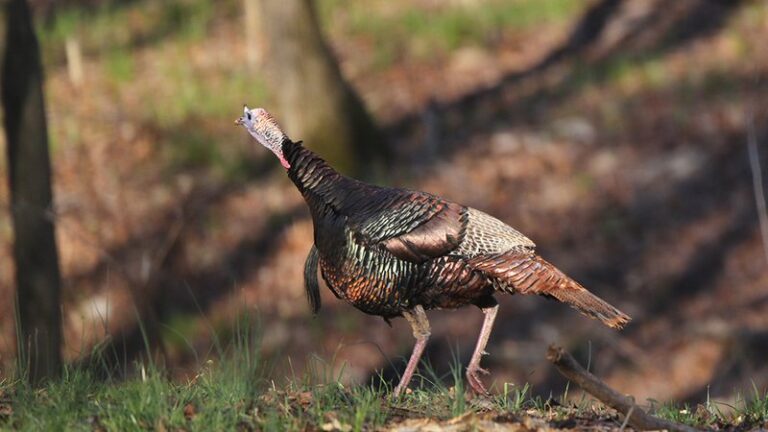
Turkey hunters have some good news to look forward to this season. According to recent interviews featured in the Arkansas Game and Fish Commission’s Arkansas Wildlife magazine and podcast, reproductive rates have seen slow improvements over the last three years.

Last year’s estimates gathered through the Annual Wild Turkey and Quail Population Survey indicate the highest reproductive success since 2012 and 2013.

The number of poults seen per hen during the survey averaged 1.79 statewide, which is only one-one-hundredth of a poult away from the suggested target (1.8-2.0 poults per hen) to produce a stable to slightly increasing population.

“If a hen is only successfully rearing one poult, she’s only replacing herself in the population,” Jeremy Wood, the AGFC’s turkey program coordinator, said. “We want that number to be closer to two poults per hen each year, and we saw that in some regions of the state last year.”

The Delta and Gulf Coastal Plain saw the best poult-per-hen ratios last year, with 2.21 and 2.19 poults per hen, respectively. The Ozarks saw 1.64 poults per hen, while brood surveys in the Ouachitas recorded 1.46 poults per hen. Dry conditions coinciding with peak hatching times likely were responsible for the increase.

“Turkey poults can’t thermoregulate (maintain their body temperature) during the first few weeks after hatching, so good weather conditions are essential to brood survival,” Wood said.

Wood said last year’s reproduction should improve the number of birds seen by hunters this year, but it will be next year before much of the male component is legal to harvest.

“Participating in the Spring Turkey Hunting Survey and recording all the turkeys you see while scouting and hunting will really help us track this increase and monitor the population to make adjustments and guide habitat efforts to hopefully continue building on what last year’s good hatching conditions provided.”

Arkansas Law Enforcement Ramping Up Efforts in April to Combat Distracted Driving

Distracted driving continues to be one of the leading causes of motor vehicle crashes on our nation’s roadways. The Arkansas State Police Highway Safety Office (HSO) is working with state and local law enforcement agencies to encourage drivers to put down their phones while driving as part of the statewide “U Drive. U Text. U Pay.” high-visibility enforcement effort April 3rd-10th.

The effort will involve Arkansas State Troopers, local sheriff’s deputies, and local police officers. The operation will target drivers who are texting and driving as well as violating other distracted driving laws.

According to the National Highway Traffic Safety Administration [NHTSA], between 2011 and 2020, more than 32,400 people died in crashes involving a distracted driver. In 2020, there were 3,142 deaths linked to driver distraction, or 8% of all motor vehicle crash fatalities. This is an increase of 23 fatalities compared to 2019.

Research shows that Millennials and Generation Z are the most distracted drivers, often using their cell phones to talk, text, and scroll through social media while behind the wheel. According to NHTSA research from 2017, young drivers 16 to 24 years old have been observed using handheld electronic devices while driving at higher rates than older drivers since 2007. In 2020, 7% of drivers 15 to 20 years old involved in fatal crashes were reported as distracted. 

“Distracted driving is a leading cause of motor vehicle crashes on our nation’s roads, and most of this distraction is attributed to texting while driving,” said Colonel Mike Hagar, Director of the Arkansas State Police and the Governor’s Highway Safety Representative. “People know texting and driving is dangerous and often illegal, but they do it anyway, and it puts others at risk. Beginning April 3rd, drivers will see increased law enforcement efforts, as officers will be stopping and ticketing anyone who is caught texting while driving. If you text and drive, you will pay.” In addition to being unsafe, violating Arkansas’ distracted-driving laws can also be costly.

Arkansas law prohibits the use of a hand-held cell phone for texting, typing, emailing or accessing the internet while driving, regardless of the driver’s age. It is also a “primary offense” law, which means a state trooper, police officer or sheriff’s deputy can initiate a traffic stop without observing any other violation. Fines can range from up to $250 for a first offense and up to $500 for any subsequent offense.

Many drivers are guilty of a “double standard” when it comes to distracted driving. In its 2018 Traffic Safety Culture Index, the American Automobile Association (AAA) Foundation reported that while nearly 96% of drivers believed it was very or extremely dangerous to read a text or email while driving, four out of ten drivers admitted to doing so within the previous 30 days.  

“These drivers give themselves a personal exemption to ignore the law while unfairly putting others at risk,” said Colonel Hagar. “State troopers and other law enforcement officers will increase enforcement of distracted driving laws as part of the ‘U Drive. U Text. U Pay.’ enforcement operation.”

The Arkansas Highway Safety Office and NHTSA urge drivers to put their phones away when behind the wheel. Drivers are encouraged to follow these suggestions to ensure a safe driving experience:

  • If you are expecting a text message or need to send one, pull over and park your car in a safe location. Only after you are off the roadway and stopped is it safe to text.
  • Ask your passenger to be a “designated texter.” Allow the passenger access to your phone for responding to calls or messages. 
  • Do not engage in social media scrolling or messaging while driving.
  • Cell phone use is habit-forming. Struggling to not text and drive? Activate your phone’s “Do Not Disturb” feature, or put your phone in the trunk, glove box, or back seat of your vehicle until you arrive at your destination.

Texting while driving is dangerous and illegal. Help break the dangerous habit of distracted driving. Remember: U Drive. U Text. U Pay.

For more information, visit https://www.nhtsa.gov/campaign/distracted-driving or call the Arkansas Highway Safety Office at (501) 618-8136. Also learn more about Arkansas’ ongoing Toward Zero Deaths campaign to eliminate preventable traffic fatalities, visit www.TZDArkansas.org