
78 F
Fort Smith
Tuesday, June 23, 2026
Home Blog Page 328

Consumers can expect egg prices to decline, but not to 2021 levels

By Mary Hightower
U of A System Division of Agriculture

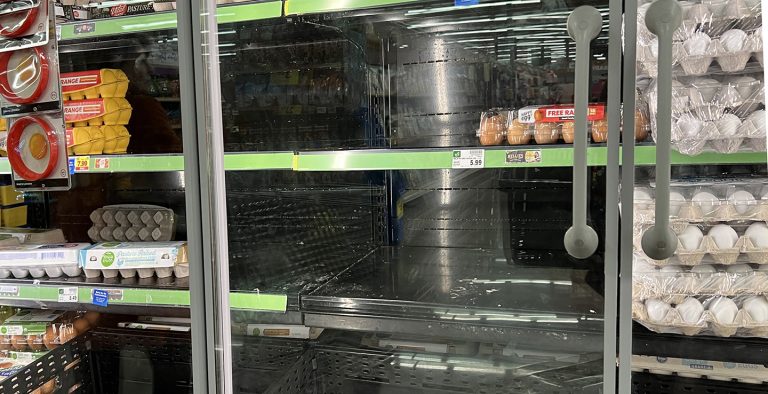
Egg prices won’t stay high forever, but with no clear end in sight for the current round of highly pathogenic avian flu, prices won’t descend to bargain basement levels, said Jada Thompson, a poultry economist for the University of Arkansas System Division of Agriculture.

In 2022, average U.S. retail prices for eggs rose from just under $2 per dozen to more than $4 a dozen. That compares with 2021, in which egg prices in January were below $1.50. The average retail price rose lazily through the year, but never reached $2 a dozen.

“Highly pathogenic avian flu, or HPAI, has devastated the poultry industry in the U.S.,” Thompson said. “We are about 5 to 6 percent down in our layer flock, leading us to be down in our egg supply 5-6 percent year over year.”

However, HPAI is just one of the factors driving up the price of eggs since last fall.

“Add other factors like inflation,  and there’s fuel, which is impacting our transportation. Plus, you have driver shortages and that increases the cost of production and getting eggs to the market.

You have things like high demand in November and December — everybody wants those deviled eggs,” she said. “Then you add the war in Ukraine, which you don’t think about affecting eggs directly, but that affects global feed supply and trade around the world.”

Corn and soybeans play a big role in chicken feed, she said. Raising those crops has become more expensive thanks to fertilizer and diesel prices pushed higher by the Ukraine conflict.

“The cost of feed for eggs has gone up something like 29.5 percent,” she said. “That’s a substantial portion of the cost that goes into producing an egg.”

Outlook

Consumer price index, or “CPI, numbers are coming out and we are seeing some reduction in inflation, so that’s the easing of food prices in general,” Thompson said. “We’re seeing some of the wholesale, even retail prices coming down.”

Thompson said she and other economists will be looking at how bird flu affects the markets and the supply chain. However, there is no instant fix, since replenishing the supply of hens takes time.

“We don’t have a million birds laying around,” she said. “It’s six months before we have a bird ready to lay an egg. It takes 21 days to hatch an egg; five months or 20 weeks to get that chick to maturity.”

Thompson said that in November and December of ’22, the supply of birds was down.

However, “pullets — birds that are between chicks and adults — are up 5 percent,” she said. “The replenishment chain has been trying to reduce the short supply. We’re still hatching.”

While all those activities are easing the supply and prices, Thompson said “egg prices won’t be declining to 2021 levels.”

Worse than 2015

The current avian influenza outbreak is worse than 2015, which was considered the largest animal health event ever. Laying hens are turkeys are more susceptible than other poultry, Thompson said.

Some 50.4 million birds in 15 states were affected by the 2015 outbreak, but the current outbreak has affected 57.9 million birds in 47 states. In 2022, layers comprised 75 percent of the poultry affected by HPAI. Turkeys were next at 16 percent, followed by broilers at 4 percent and breeders at 3 percent. In 2022, Arkansas had HPAI in three flocks affecting 56,470 birds.  

What’s difference?

The virus has adapted to not kill its host. “The wild birds are not as susceptible to it. Ducks and geese are not getting it as bad as turkeys and chickens” enabling a wider spread and giving the outbreak a longer life, Thompson said.

In 2015, “hot summers stopped the spread and we saw it die out,” Thompson said.

The only reason the current outbreak isn’t even worse is because industry and backyard flock owners are practicing biosecurity protocols learned from the 2015 outbreak.

“We have doubled down on biosecurity with truck washes, more personal protective equipment, which are used even during non-HPAI times,” she said.

Plus, Thompson said, there is increased surveillance and better reporting “and more communicating and social media reporting of that, and they are helping us know where the wild birds are migrating.”

“I have to give props to producers who have been increasing biosecurity, as well as local, state and federal agencies in communicating a lot more about biosecurity,” Thompson said. “As bad as this current outbreak is, this is us trying to slow this down.”

Fighting fatigue

“Outside this hemisphere, they’ve been fighting it for several years,” said Dustan Clark, extension poultry veterinarian for the Division of Agriculture. “We’re at a lull right now since migration is ceased, but we will fight it through this spring and probably again this fall.”

Clark says he’s seen the effects locally.

“I go to the grocery store and see people look at the eggs and move on,” he said. “Or sometimes, they just don’t find eggs.”

Over the last year, Clark has spoken dozens of times to producers and backyard flock owners and others through meetings and webinars, hammering home the need for biosecurity protocols. He said he would schedule more webinars this spring, when wildfowl start their northward migration.

“Since this virus has been detected in wild waterfowl in every state but Hawaii,” Clark said. “It’s an ongoing concern.”

“We are trying to keep everyone vigilant and hope they don’t get fatigued,” he said. “Once the virus slips in on you, it’s going to be problematic.”

In Arkansas, chicken eggs ranked No. 4 in terms of cash farm receipts at $568 million. Broilers topped the list with at nearly $2.7 billion, according to the latest Arkansas Agriculture Profile.

The Animal and Plant Health Inspection Service, or APHIS, which is part of the U.S. Department of Agriculture, has a site detailing confirmations of HPAI in flocks and a dashboard for tracking wild bird infections.

To learn about extension programs in Arkansas, contact your local Cooperative Extension Service agent or visit www.uaex.uada.edu. Follow us on Twitter and Instagram at @AR_Extension. To learn more about Division of Agriculture research, visit the Arkansas Agricultural Experiment Station website: https://aaes.uada.edu. Follow on Twitter at @ArkAgResearch. To learn more about the Division of Agriculture, visit https://uada.edu/. Follow us on Twitter at @AgInArk.

About the Division of Agriculture
The University of Arkansas System Division of Agriculture’s mission is to strengthen agriculture, communities, and families by connecting trusted research to the adoption of best practices. Through the Agricultural Experiment Station and the Cooperative Extension Service, the Division of Agriculture conducts research and extension work within the nation’s historic land grant education system.

The Division of Agriculture is one of 20 entities within the University of Arkansas System. It has offices in all 75 counties in Arkansas and faculty on five system campuses.

The University of Arkansas System Division of Agriculture offers all its Extension and Research programs and services without regard to race, color, sex, gender identity, sexual orientation, national origin, religion, age, disability, marital or veteran status, genetic information, or any other legally protected status, and is an Affirmative Action/Equal Opportunity Employer.

KK Smoke Shop is Yet Another New Business to Open in Paris

One of the many new businesses to open in Paris; KK Smoke Shop on 3rd Street in Paris is now open. Last week, the Paris Area Chamber of Commerce and its executive director, Tonya Fletcher, along with mayor Daniel Rogers and several business owners in Paris attended a ribbon cutting ceremony to welcome another new business to Paris!

The new Paris owners purchased the building at 3rd and Walnut St in Paris and plan to be in business for a long time. The new business venture is just one of many new businesses to open in Paris within the past 12-18 months. The Paris Chamber has led an extraordinary effort to bring new businesses into the Paris economy.

KK’s Smoke Shop has several locations throughout the River Valley with plans to open still more locations in the future.

Watch Out For Tax Season Scams

By Jeffery O’Neal
Financial Advisor

It’s that time of year when we do our taxes — but it’s also the same time that tax scammers go to work. What scams should you watch for — and how can you avoid being victimized?
Sadly, the list of scams is pretty long, including demands for payment or requests for “additional information” pertaining to your tax refund, in which the sender asks for your Social Security number and other personal information. These scam emails can look quite official, often incorporating the IRS logo. You might also receive scam text messages containing bogus links claiming to be the IRS website or an online “tool” that can help process your refund faster.
But keep these points in mind:
• The IRS generally won’t contact you by phone and won’t contact you by email, text messages or social media channels to ask for personal or financial information. The IRS begins most correspondence to taxpayers through regular mail delivered by the U.S. Postal Service.
• The IRS won’t call to demand you make an immediate payment through a prepaid debit card or wire transfer. If you owe taxes, the IRS generally will mail you a bill. And the IRS won’t threaten to bring in the police or another law enforcement group to arrest you for not paying your taxes.
In general, be extremely skeptical about any type of communication purporting to be from the IRS that sounds bullying or over-inquisitive — and certainly don’t give out any personal or financial information. But these fake messages aren’t the only tax-season scams out there. You might even receive a direct deposit from what appears to be the U.S. Treasury Department — but if you weren’t expecting it, something’s likely not right. This payment could be a sign that a fraudulent tax return was filed in your name, and it might be followed by a communication from a supposed IRS agent requesting this overpayment be sent to them. If this happens to you, you’ll want to contact the IRS right away, and you could also ask your bank to return the deposit to the government.
Other scams don’t claim to originate directly from the IRS, as scammers pretend to be from real or imaginary tax organizations. For example, you could get a message from the Taxpayer Advocate Service, an independent organization within the IRS, but this agency won’t contact you without a legitimate reason. Or you could receive a message from the nonexistent “Bureau of Tax Enforcement.” Your best bet is to delete these messages immediately or send them to your spam folder.
Not all tax season scams originate from fraudulent IRS representatives or fake agencies. You also need to be careful about whom you hire to prepare your taxes. If possible, get a recommendation from a trusted friend or family member. And keep in mind that a legitimate tax preparer must have a valid Preparer Tax Identification Number and must sign your tax return. If someone doesn’t have this number or is reluctant to sign your return, it may well be a sign that this individual is a “ghost preparer” who only wants to pocket your fee.
Tax scammers are, unfortunately, here to stay — but remaining vigilant can help you keep them from causing problems for you in this tax season and all the ones in the future.
This article is provided by Jeffrey O’Neal, Financial Advisor
Edward Jones
20 N Express St, Paris, AR 72855
479-963-1321
jeffrey.o’neal@edwardjones.com
edwardjones.com/jeffrey-o’neal
Edward Jones, Member SIPC

4 Tips You Can Use To Make a Space Look Bigger

There’s nothing worse than a cramped space that doesn’t function well. While having a large home for all your needs is nice, not everyone has that luxury. Luckily, other options are available if you want to improve your home’s livability.

Rather than spending money to upgrade to a bigger space, consider these four tips you can use to make a space look bigger.

Paint

One common trick for making a room feel larger is to use light-colored paints. Bright walls reflect the light, giving the room a more open feel.

You might want to use darker paint on one wall to distribute its visual elements for narrow rooms. Using contrasting colors, borders, and shades will add a sense of depth that can have a pleasant effect on the viewer.

Furniture

The furniture in a room can play a significant role in how big the space feels. The wrong layout can block major pathways and views, making it feel cramped and uncomfortable.

If you want a good home layout, think carefully about the furniture you’re using to fill it. Consider the scale of each room and choose items that will work best. By putting things up against the walls, leaving space between objects, and staying away from large pieces, you’ll be able to maximize your space.

Lighting

Another thing to consider when setting up a space is the available lighting. Whether natural or artificial, lighting can significantly impact how someone feels when entering a room.

Many types of lighting are available for homeowners who want to make a space feel bigger. When using recessed or low-profile lighting, you can have modern LEDs that don’t make the room feel crowded. Homeowners looking for unique ways to make their living room more comfortable can use lighting to create that effect.

Decor

You don’t always have to commit to a big project to increase the perceived size of a space. Focusing on a room’s decorations and design elements is a simple way to maximize available space.

Everything from mirrors to drapes can make a room look bigger. Keep in mind that emphasizing vertical lines will make it feel taller and horizontal lines will generally make it feel wider.

It’s Easy To Improve Your Home’s Livability Without Spending a Lot

You don’t have to spend a fortune to make your home feel more comfortable. If a room feels too crowded, you can use some simple tips to make the space look bigger.

Whether it’s a fresh coat of paint, a new layout, or improved lighting, there are many things that you can try and see what fits best.

Lady Razorbacks Fall Short in Critical Home Loss to Alabama

FAYETTEVILLE – The Arkansas women’s basketball team (17-6, 4-4 SEC), fell short to Alabama (16-5, 6-3 SEC) on Thursday night, 69-66, as the Razorbacks dropped its third straight game. Makayla Daniels tied the game with a 3-pointer with 33 seconds left in the game, but Alabama’s Hannah Barber hit a go-ahead 3-pointer to pull ahead by three and win the game. Arkansas committed 20 turnovers in the game, which looked to be the deciding factor in the game. Erynn Barnum led the Razorbacks with 20 points and nine rebounds.

Alabama got things started with a 3-pointer, but Saylor Poffenbarger responded with one of her own, which started an 8-0 run for the Razorbacks in less than a minute. Alabama was in a scoring drought for over two minutes but dug out with a layup. That basket initiated a 10-3 run for the Crimson Tide, which elevated Alabama ahead, 13-11, at the media timeout. Arkansas was held in a scoring drought for the remaining 6:50 of the quarter, while the Razorbacks shot 0-for-10 from the field and committed five turnovers that span. Alabama added five unanswered points, as Arkansas’ struggles from the field continued, and Alabama led 18-11.

The Tide continued to score, getting a layup off a Razorback turnover. Barnum broke the Razorbacks’ nearly eight-minute scoring drought with a layup. After another Barnum layup, Alabama extended their lead with a triple to lead Arkansas 27-15 with 5:16 left in the first half. Daniels got fouled on the basket and knocked down two free throws to put it back to a 10-point game. At the media timeout, Alabama led 27-17. Barnum broke another long-extended field goal drought for the Razorbacks, three minutes and some change, with a layup. That layup sparked a 6-0 run for the Razorbacks to inch within six of the Tide with 3:15 remaining in the second quarter. Samara Spencer nailed a 3-pointer for her first field goal of the game to break another drought for Arkansas from the field, but Alabama responded with another triple to lead 36-26 with less than a minute left in the half. Arkansas scored four unanswered points in the final minute to trail 36-30 at the half.

Barnum made her way to double digits in scoring for the seventh straight game with a jumper and after a Chrissy Carr 3-pointer and a Spencer layup off a steal, Arkansas took the lead for the first time since over six minutes left in the first quarter. That run sparked Alabama to take a timeout, as the Razorbacks now led 37-36 with 8:24 left in the third quarter. Alabama sparked a 5-3 run to steal the lead from the Razorbacks, 41-39, at the media timeout. The Tide made three of their next basket attempts, but after a Maryam Dauda 3-point play, the Razorbacks trailed by two. The Razorbacks cruised on a 7-0 run, which was capped off by a Spencer 3-pointer to retake the lead, 50-49, temporarily until the Tide made two free throws, and it was a 51-50 game in favor of Alabama heading into the final quarter.

Poffenbarger scored the Razorbacks’ first basket of the fourth quarter with a 3-pointer. The Razorbacks took a timeout before the media, and with 7:21 left in the game, Arkansas was behind 55-53. Arkansas tried to close in on the lead, but turnovers on back-to-back possessions made that tough. Barnum came up with a big 3-point play to bring the Razorbacks within one point, but Alabama went to the line to make one of two freebies. After two Daniels free throws, the Razorbacks tied the game at 58 with less than five minutes left in the game. The Razorbacks did not make a field goal for three minutes, as Alabama went on a 6-0 run. Barnum came up with a big layup, and with 1:16 left in the game, Alabama led 66-63. With 33 seconds left in the game, Daniels came up clutch once again to tie the game at 66 with a triple. That shot would be overshadowed, as Alabama was able to come up with the go-ahead 3-pointer with eight seconds left in the game. Arkansas had a shot to tie the game with eight seconds on the clock with two chances to do but could not get it done.

Hogs’ Erynn Barnum (4) had 20 points on the night vs Alabama (RNN Sports Photo / Ronni Tate Young)

HOG HIGHLIGHTS

  • Barnum logged 20 points, nine rebounds and two steals. That 20-point game was Barnum’s seventh of the year and in her career, and she is now three rebounds away from 500 in her career
  • Daniels followed with 13 points, while shooting 8-of-10 from the free throw line. She added five assists and two steals to her statline
  • Poffenbarger registered 12 points, five rebounds, three assists and two blocks
  • Spencer recorded 12 points and her two assists elevated her to 100 dimes on the season and she is now one of 19 Razorbacks in history to log 100 assists in a season

UP NEXT

Arkansas will stay home to host Ole Miss on Sunday, Jan. 29 for a 4 p.m. tipoff. The game will be broadcast on SEC Network. Ole Miss defeated Mississippi State on Thursday night by the score of 78-63.

Arkansas will be looking to break a three game losing streak against Ole Miss as the Lady Razorbacks drive to finish in the top four of the regular season conference standings. Teams finishing in the top four will enjoy a double-bye in the SEC Tournament seedings.

Note to Our Readers: Portions of this story were sourced directly from the University of Arkansas Office of Communications, Kylie Magar.

Timepiece: One Room Schoolhouse

By Dr. Curtis Varnell

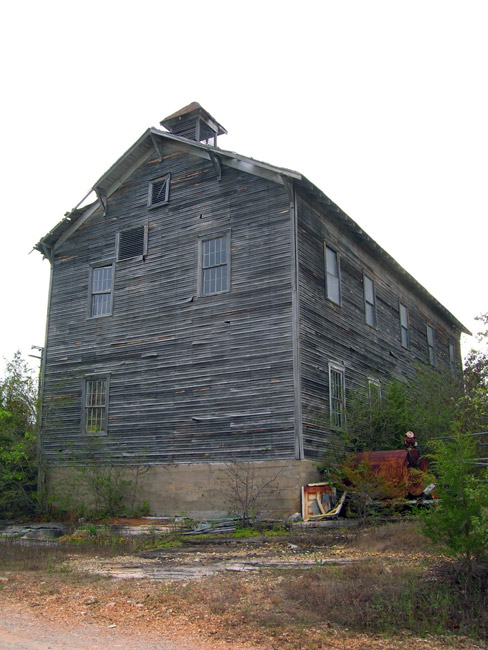
Trees shaded the small lane, casting shadows on the dust and gravel I was traversing.  Miles from anywhere and traveling on a four-wheeler, I came to a fork in the road bisected in the middle by a solitary building; the old deserted Mt. Salem school house.  Built in 1909 to replace an older school, the building is representative of the many older educational facilities that now stand abandoned across the state. Once surrounded by a vibrant community of farmers, the one-room school house served as a church, a community meeting place, and the local school.  For most of its existence as a school, it had one teacher for all grades and was primarily supported by the people of the community.

In 1900, education was on the back-burner for a rustic, backward state with an economy centered on agriculture.  The state of Arkansas saw little reason to invest in education, primarily leaving that up to the churches and to the families.  Wealthy families would place their children in academies and then send their children out of state if they desired extensive education or finishing.  Poorer and middle class families scrambled to provide the basic 3 r’s of an education that often terminated at the middle school level.

According to the Encyclopedia of Arkansas, in 1920 only two-thirds of the state’s students were enrolled in school and less than 25% attended regularly.  In rural areas, students attended a split term, coming during the winter months and during July and August when the crops were “laid by.” Seventeen counties did not have a high school and in no county were high schools available to all students. 

Small rural schools, like that of Mt. Salem dotted the landscape and provided what little educational opportunities were available for students of the area.  In 1920, the state only supplied $2.60 per student for education and the state average expenditure for student, including local taxes, was $23.63.  This left parents and church responsible to supply any additional funding needed for schools.

In 1947, there were 1,589 of these school districts.  The next year, forced consolidation reduced that number to 424 districts and schools like Mt. Salem consolidated with larger schools and left buildings deserted and decaying. 

My father bought and moved the old school building from Rich Mountain and used it for years for antique storage.  A few years ago, it had deteriorated to a point, we decided to tear it apart.  As the news got out that we were taking it apart, people began to call, some wanting to take one last photograph, others wanting pieces of the building where they or their parents had spent many pleasant days. One gentleman from California came by to get lumber from an interior wall to make a memento.   Later, we were taking apart the interior wall and my brother-in-law held up a paper he had found between the boards.  Yellowed and crumbling with age, the simple wording said; I love you, do you love me?  It had two boxes to check below, one for yes and one for no.  

As I looked at that fork in the road, the memory of that paper returned.  Kids at this school were like those I grew up with.  I could see images of kids running and playing beside the building.  In my mind I heard the happy sounds of them playing hop-scotch in the dirt, the voice of the teacher leading instruction, and saw a little freckle-faced girl shyly handing a note to a young boy in overalls.  I turned to the left, the sounds of the school bell diminishing as I drove down the road. 

The Mt. Salem school is a state registered historical site and is located in rural Logan County off 109 Highway and Spring Lake Road.

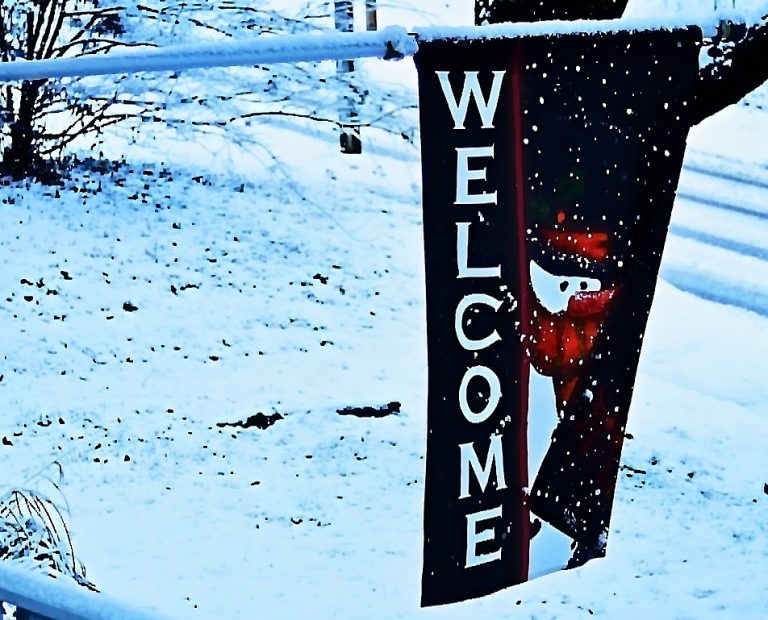
River Valley Snowfall Closes Area Schools

It has seemed to many residents of the River Valley that for the past few years, winter snowfall has occurred in the time period of late January to mid-February. This year has proven to be no exception.

After a period of bitterly cold temperatures in late November to early December, residents were treated to unseasonably mild temperatures to start 2023. But that all changed last week when both cold and moisture hit the area to produce the first measurable snowfall of the winter season.

Although the snowfall that hit most of western Arkansas and the River Valley was a beautiful, large, flaky snowfall, the winter precipitation did not come without causing problems. Power outages were reported for thousands of customers ranging from just a few hours to days until power was able to be restored. Area schools closed, utilizing AMI (alternative methods of instruction) days on Wednesday and Thursday of last week. Area basketball games were also postponed.

At press time for this story, the Weather Bug forecast for this week was predicting high temperatures ranging from 36-46 degrees to low temperatures ranging from 28-33 degrees. A chance of freezing rain was forecasted on Wednesday, February 1.

If history holds true again this year, we may be in store for one more round of wintry mix weather before schools are out for spring break. But, who knows?

We shall see.

AGFC cleans up trash at Lake Wilhelmina

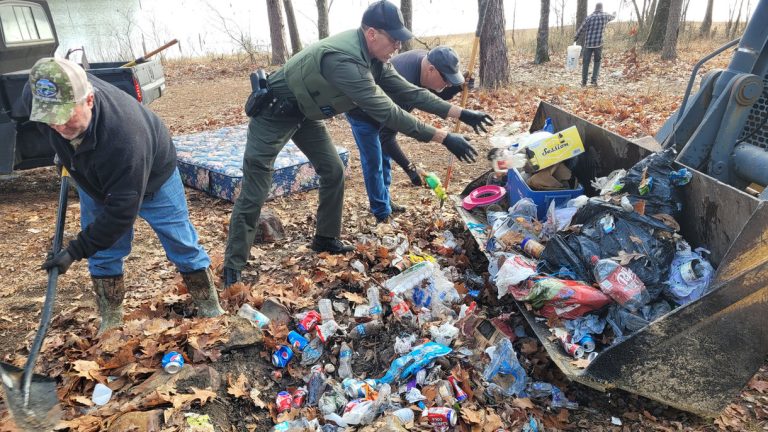
AGFC staff and Polk County recently gave Lake Wilhelmina in Polk County a thorough cleaning after wildlife officers were informed of a growing trash problem accumulating around the 200-acre AGFC-owned lake. 

Chris Crawford, a wildlife officer in Polk County, received complaints from a homeowner who lived near the picturesque Ouachita Mountain lake about a large quantity of trash left behind by campers. Upon further inspection, five locations around the lake had accumulated not only garbage left behind by campers but also materials that were illegally dumped on the property. Crawford contacted fisheries staff in the AGFC’s Hot Springs Regional Office as well as Polk County Judge Brandon Ellison about the situation. Ellison offered the use of a front-end loader, dump truck and two county personnel to help with a cleanup effort. 

After several hours, AGFC staff Brett Hobbs, Andy Yung, James Rogers and the two Polk County workers worked with officer Crawford to remove nearly ¾ of a large dump truck from the land surrounding Wilhelmina.

Obituary – Katherine (Ledbetter) Crutchfield (1924-2023)

Minnie Katherine Ledbetter Crutchfield, 98, passed away on January 23, 2023. She was born June 27, 1924 in Hartshorne, Oklahoma to Charles Fredrick and Katherine (Silva) Ledbetter and graduated in 1942 from Heavener High School. After attending Hill’s Business College of Oklahoma City she was employed by The Kansas City Southern Railroad.

On December 11, 1953, Katherine and A. C. Crutchfield were married and spent their honeymoon in Florida, later moving to Alaska and then to San Jose, California. In 1958 they came home to Waldron, Arkansas and began a cattle business before purchasing the OTASCO store. Later they purchased The Exxon distributorship before retiring.

Katherine enjoyed all sports to the fullest including tennis, basketball, football, baseball and the Olympics. She was a fan of such notables as John Daly, Wes Welker, Rafel Nadal and could talk sports with the best of them.

Of special interest to her is the annual July 4th Crutchfield reunion.
At the age of 65, Katherine took up golf, joining the Waldron Country Club and eventually becoming a board member. She played golf at many of the courses in Arkansas and Oklahoma as an avid lover of the game. She enjoyed the many friends she made because of golf.

Katherine relished traveling, touring Europe several times.

Later in life, she encountered congestive heart failure, a broken hip and colon cancer. She survived each one living a full and meaningful life with the help of Mercy doctors, nurses and staff along with Concordia Senior Living staff and friends and family. Good Shepherd Hospice comforted her in her last days.

She is survived by sister Sylvia Ann Ledbetter and husband James L. Monk of Oklahoma City, Oklahoma several nieces, nephews, friends such as Marta McGaugh and Linda Goodner.

She was preceded in death by her husband A.C. Crutchfield, her parents Charles Fredrick and Katherine (Silva) Ledbetter, sister Sara Jane Ledbetter & Bernard (Tut) Bartzen, Alberta & Floyd Ward, L.R. & Ruth Crutchfield, Doris & Kenneth Deatherage, Quida & R.M. Blackwood and Leah Fern & Buddy Campbell.

Katherine’s life celebration will be at 11:00 a.m. Saturday, January 28th, 2023 at Heritage Memorial Funeral Home Chapel in Waldron, Arkansas and will be laid to rest at the Sehorn Cemetery.

You may leave words of comfort and remembrance for Katherine’s family by visiting: www.heritagememoriafh.com.

Obituary – Nicole Michele (Gonzales) Benward (1975-2023)

Nicole Michele (Gonzales) Benward, 47, of Waldron, Arkansas passed from this life on Thursday, January 19, 2023. Nicole was born on March 27, 1975 to Jeffrey and Christina (Marling) Gonzales in Oceanside, California. 

Nicole was married to Robert Benward on January 7, 2018. Nicole was loving, she had a big heart and loved her children, James, Julie and Brittany. Nicole was funny and was always trying to prank people and make them laugh. There was a joyful spirit about her, she loved animals and always helping others.
 
Nicole leaves behind to cherish her memory, her husband Robert Benward. Three children; James Bolton, Julie Lour and Brittany Bolton. She will forever remain in the hearts of her seven grandchildren: Justin Lour, Brianna Crow, Jason Crow, Hunter Lour, Elizabeth Crow, Kyle Lour and Emily Lour. Nicole will be missed by all that knew her.

Nicole was preceded in death by her parents, Jeffrey and Christina Gonzales. 

A private family memorial will be held at a later date.
Cremation arrangements are in the care of Heritage Memorial Funeral Home & Crematory.

You can leave words of remembrance for Nicole’s family by visiting www.heritagememorialfh.com