
72.3 F
Fort Smith
Tuesday, June 23, 2026
Home Blog Page 40

Timekeeper: Migrant Life

The ’56 Ford pickup was our rolling home. Light blue and shiny, my father had constructed a frame covered by tarpaulin over the bed of the truck and my younger sister, brother, and I traveled in comfort on the mattress on the floor.

In the early spring, we departed from our home near Scranton, Arkansas. My dad had picked up odd jobs working at the saw mill owned by his uncle or working at the rock quarry pulling and cutting sandstone rock. Both were similar in that they were sporadic, hard labor, and offered poor pay of less than fifty dollars per week. Better salary awaited in Lonoke County working in the cotton fields but it meant finding a new home, going to a new school, and long hours plowing and preparing the fields for the cotton crop.

Dad had experience. From an early age, my grandfather had made the same circuit; traveling to the delta to work the cotton fields and uprooting his large family of boys to accompany him. The first few years, a flat-bed truck owned by the farm manager came to New Blaine and picked up willing workers and drove them to England AR. to work as field hands. One year, my grandfather took, not only his family, but his jersey cow who had just had a calf. Not wanting to leave the source of milk and butter, the cow was pulled upon the bed of the truck, tied down, and journeyed several hours east. They must have presented quite the spectacle as they passed through Little Rock with ten boys, my grandparents, their earthly belongings and a lone Jersey cow. A row house on the large farm awaited them when they arrived. My father was a good driver and could lay out a straight row with the tractor so he was given the job of plowing. Rows of cotton, some stretching out a distance of a half mile or more, were planted in the spring, hoed and weeded during the summer, and picked during the fall.
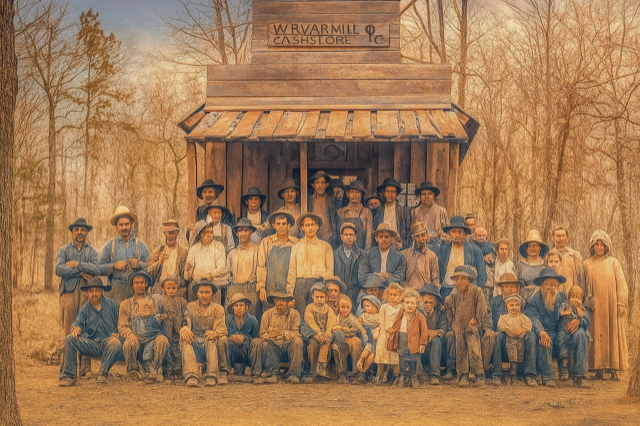
All was not work and toil. On the weekends, my dad was given the responsibility of taking the cotton wagon loaded with workers into town to spend the day visiting, buying groceries, or perhaps watching a movie. One year, my grandfather bought a section of sheet iron each week. When the harvest was over, the sheet metal was loaded back on the truck for the reverse trip home and the sheet metal used to roof the house and cover the old shingles that no longer prevented leaks.

This year was different. My dad plowed the fields, I started school in England, AR., but as summer arrived, posters started appearing around town. Good paying jobs were available at Del Monte’s canneries in Rochelle, Illinois. The pay was good and one could work lots of overtime when the harvest came in. My dad and several of his brothers were ready for something new so off we traveled, each brother with their family and vehicle following each other like the wagon trains of the past. With limited funds, there were no restaurants or hotels. In fact, the first hotel I ever spent the night in occurred years later when employed as a teacher and sent to a conference. Meals were sandwiches and soft drinks at road-side parks with the rest stops also serving as places to rest and sleep.

Arriving in Rochelle, all three of the men and two of the wives were immediately hired. My youngest aunt was the baby-sitter for the entire group. Getting a job before finding a home, we spent a couple nights in the park until one home was rented. All three families stayed in it until

two more homes opened up at the cannery row houses. Called Peter’s camp, camp was a pretty good description of the homes available. Clumped close together, poor migrants learned to function as a community and to work together.

For the next several years that was the cycle of life. Start to school in Paris, Arkansas, journey to England, Arkansas and a new school in the spring, and then spend part of the school year in Illinois. By the second year, we found a home in a nearby rural area of Flag Center, Illinois and Glenda and I went to a two-room, two teacher school that taught first through eighth grade. Later, the brothers found work in Garden City, Kansas which added another stop, another school, and new experience to our life.
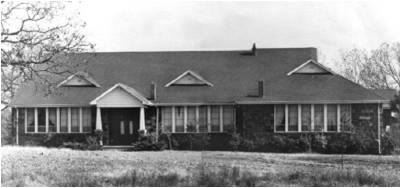
Eventually, my father found his calling and was a very successful car salesman as were several of his brothers. My siblings and I became a part of the Midway community and the Paris schools where I found teachers that, not only taught me subject matter, but also cared enough about us to assist in developing each of us into the person we became. Two doctorate degrees, a registered nurse, a successful businessman, and a beautician came from that family of migrant kids. Ask me why I can identify and teach kids from migrant and poor background- I was one of them! Ask me why I teach, look at the teachers and friends that shaped my life and tell me what better calling a person could have!

Rain Needed on the Landscape

The weather forecast calls for some rainfall, but it won’t come close to what is probably needed to give waterfowl the best conditions on the Arkansas Delta. That big, 6- to 8-inch deluge that typically arrives in late winter in recent years to finally drench the landscape and give the waterfowl a lot more options has yet to show up in 2025-26.
Trey Reid, the Arkansas Game and Fish Commission’s host of “Arkansas Wildlife TV” and the voice on a variety of weekly radio and TV appearances for the agency, said Wednesday morning on an appearance on KABZ-FM, 103.7 “The Buzz” that there are ducks being harvested, but there just isn’t enough water around to spread the ducks out and make it a good harvest all over. Ducks have been concentrated in pockets in the Delta, as was evident to the AGFC’s aerial survey crew of biologists for the December estimate of the state, which wasn’t completed until Dec. 23 due to weather and equipment issues.
Central Arkansas may see less than a half-inch of rainfall over the two days, according to the National Weather Service. Of course, amounts could vary from the north end of the Delta to the south.
There are anecdotal signs of hunting success, just by checking out social media. And one telltale sign that hunters are enjoying some success, at least on a scale better than last year, is the lack of complaining we’re seeing on social media these days about the hunting. Actually, there seems to be a lot of quiet on the prairie these days.
Migration maps that indicate waterfowl observations based on biologist reports and other data showed a strong amount of ducks counted and/or estimated in eastern Arkansas near the Mississippi River, which falls in line with the aerial survey results that were released last week by Brett Leach, the AGFC’s waterfowl program coordinator.
Speaking of surveys, Leach and other agency waterfowl biologists were scheduled to fly this week for the annual mid-winter waterfowl survey. Those results could be available later next week, though any flying still needed this week might have to wait if the weather turns bad on Thursday and Friday.
The late December estimate of mallards in the Delta by the aerial count was nearly 500,000 birds, a big jump over the December 2024 estimate. January’s midwinter survey is when the mallard numbers typically peak in Arkansas. Leach noted in his report, published last week, that birds were clumped in areas around limited water sources, and that this introduced greater uncertainty into the estimate.
Four areas contained the most significant number of mallards seen: the Bayou Meto-Lower Arkansas River, Big Creek in eastern Arkansas, the Cache River and the L’Anguille River areas. These survey zones accounted for 79 percent of the Arkansas Delta mallard estimate and 76 percent of the total duck estimate. Also, the Black River-Upper White River survey area had a relatively high total duck estimate of 106,953 birds. And, most notably, the Big Creek zone in eastern Arkansas had 429,157 total ducks, which made up 29 percent of the total duck estimate.
​​​​​Total ducks in the Delta were 1.4 million. Arctic geese were estimated at more than 2 million.
This is all within a region classified as in moderate to severe drought. Observed rainfall totals in November and December were about 62 percent below normal in central Arkansas, and it’s still dry a week into January.
To see the latest survey and the maps of duck distribution around the state, click HERE.

Obituary: Julia Moore (1946-2026)

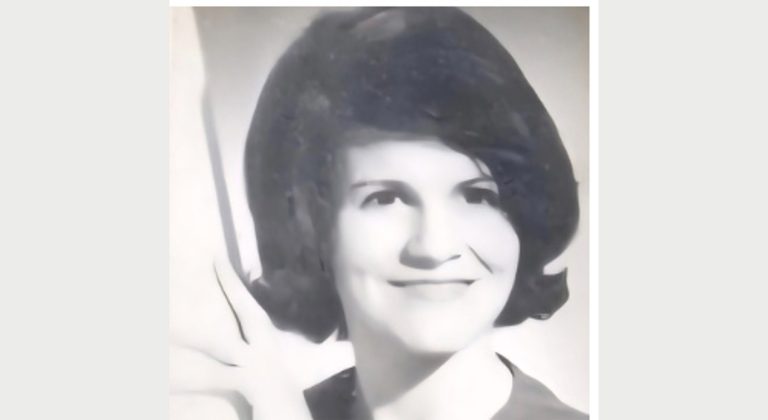
Julia Ann Moore of Crossville, TN formerly of Waldron AR, went to be with her Lord and Savior on Sunday January 4, 2026 with her children by her side. She was born on February 13, 1946 to Loyd and Ruby (Brown) Moore in Waldron Arkansas. Julia was 79 years old.

Julia was a loving mother, grandmother, daughter, sister, and aunt. Julia surrendered her life to the Lord as a young girl acknowledging Jesus Christ as her Lord and Savior following in water baptism as a symbol of her commitment. She was a Christian woman who gave praise to the Lord in all things in her life.

Julia was a very strong woman. At the age of 48 she was diagnosed with cancer. Julia wanted to see her four children, grow into adulthood, in addition she wanted to see her future grandchildren and great grandchildren. Julia met the cancer treatments by keeping in touch with her own mortality, keeping her deep faith in Jesus Christ allowed her to overcome cancer for 31 years.

Julia was deaf from birth. Her school years were spent in Little Rock Arkansas School for the Deaf. Julia loved to sing in sign language to the Lord. Julia loved each of her four children immensely. She taught her four children as small babies how to use sign language so that she could communicate with them and they continued to communicate with her with sign language into adulthood. Julia later taught the deaf sign language to her grandchildren and to her baby great grandchildren.

Julia loved and enjoyed her flower gardening. She rescued so many plants, helping them come to life as God intended for them to be. She could take a clipping from a plant and put it in water until it started producing roots. Then she would plant it in a flowerpot or in her flower bed where it would grow into a beautiful plant or flower.

Julia leaves behind to cherish her memory her four children, daughter Rosetta Groenewold (Steve) of Bourbonnais, IL, three sons Keith Gardner (Whitney) of Crossville TN, Kevin O’Connor (Kristie) of Spring City TN, and Jeffery O’Conner of Crossville TN.


Julia will forever remain in the hearts of her grandchildren Cody Wood, Cory Wood, Corbin Wood (Mikayla), Caleb Wood; Rachel Brown (Branson), Brandon Gardner, Ashley Gardner; Grace O’Connor, and Jack O’Connor; and great grandchildren Kaiden Wood; Ava Brown, Karter Brown, Lilly Brown, and Sophia Ann Brown.

Julia will be loved and remembered by her two sisters Darlene Jacobs (Ken) of Kansas City, Kansas and Charlene Alewel (Greg) of Parkville, Missouri.

Julia loved her sisters-in-law: Kay Moore of Charleston, Arkansas, Sue Moore of Mansfield Arkansas, Diana Moore of Seligman, Missouri, and Janet Moore of Waldron Arkansas; One 98-year-old aunt Robbie Ann Brown. Many nieces and nephews and cousins.


Julia was preceded in death by her parents Loyd L Moore and Ruby Jane Moore; sister Jane (Moore) Yancey; brothers Leonard Moore, Leon Moore, Howard Moore, and Terrell Moore.

Serving as pallbearers will be sons and grandsons: Keith Gardner, Kevin O’Connor, Jeff O’Connor, Cody Wood, Corbin Wood, and Brandon Gardner.

Honorary pallbearers will be her son-in-law Steve Groenewold, grandsons Caleb Wood, Cory Wood, Branson Brown, and Jack O’Connor. Julia is being honored by her 4 brother’s son and grandsons. Levi Moore, Matt Nichols, Zachary Brown, Garrett Consedine, Bryce Consedine, Brett Ward, Eli Harris, Josh Moore, and Jeff Moore.

A Celebration of Life will be held at 1:00 pm until 2:30 pm, Saturday January 17, 2026, at Heritage Memorial Funeral Home Chapel, in Waldron Arkansas with Julia’s nephews Rev Charles Yancey of Florida and Bill Anderson of Independence, Missouri who will be officiating. Mrs Jo Ann Yancey will be deaf interpreting with sign language throughout the service.

Visitation will be held from 11:00 am until 1:00 pm Saturday, January 17, 2026, at Heritage Memorial Funeral Home.

Interment will follow at Pearson Cemetery, in Waldron Arkansas.

The funeral arrangements are being entrusted to Heritage Memorial Funeral Home in Waldron, Arkansas.

Arkansas Single Parent Scholarship Fund Accepting Applications for Spring Semester

LITTLE ROCK, Ark. (Jan. 5, 2025) — Arkansas Single Parent Scholarship Fund (ASPSF) is now accepting scholarship applications for the Spring 2026 semester.

Single mothers and fathers who are seeking financial support for higher education can apply at aspsf.org/scholarships. The deadline is Feb. 1. Recipients must be pursuing an associate degree, bachelor’s degree, or professional certificate.

Scholarship awards range from $400 to $1,600, depending on enrolled credit hours. Funds are sent directly to recipients so they can pay for essential needs such as rent, child care, gas, utilities, and school-related expenses.

ASPSF recipient Jordan Ross (Photo Credit: Photos With Lyric)

ASPSF is committed to providing college scholarships for single parents and supporting educational pathways that lead to stable, family-supporting careers. In 2025, ASPSF awarded 56 scholarships totaling $75,200 to single parents in Scott County, including Jordan Ross who is studying Applied Science Health Information Management at Arkansas Tech University – Ozark.

“I am trying to earn my degree without having to take out student loans and taking money away from my family,” she said. “I plan to find a job before graduation to jump start my career in Medical Billing/Coding. This will help ensure my success in this job field and to provide for my family.”

In Scott County, ASPSF awarded six scholarships totaling $8,000 to single parent students like Julissa Mejia. She is attending the University of Arkansas – Fort Smith.

“When I complete my degree in criminal justice, I plan to pursue a career as a crime scene investigator or in a related field within law enforcement,” she said. “I want to build a successful career and show my daughter that with effort and dedication, anything is possible.”

Statewide, ASPSF awarded over 1,300 scholarships totaling $1.9 million across 69 Arkansas counties and Bowie County, Texas — an increase from the 832 scholarships totaling $1.2 million awarded in 2024. These single parent scholarship awards are possible thanks to generous donors, organizations, schools, businesses, and foundations that believe in the transformative power of education.

In addition to financial awards, ASPSF provides a support network designed to help student parents stay on track. Staff and volunteers offer mentoring, career guidance, and workshops that build academic confidence and promote long-term success.

To qualify, applicants must hold a high school diploma or GED but have not yet earned a bachelor’s degree. Students must be enrolled in at least one three-credit course — online or in person — maintain a 2.0 GPA, meet income guidelines, and actively engage with the program through regular communication and workshop participation.

A complete list of eligibility requirements and details about scholarship cycles is available at aspsf.org/scholarships. ASPSF accepts applications three times a year: spring, summer, and fall. For more information, contact Jen Lawrence at jlawrence@aspsf.org or 501.550.6304.

About Arkansas Single Parent Scholarship Fund: Statewide nonprofit Arkansas Single Parent Scholarship Fund (ASPSF) is dedicated to ending single parent poverty through higher education. Since 1990, ASPSF has awarded more than $50 million in scholarships and provided services that empower single parents to complete their education and pursue higher-paying careers. With the help of volunteers and community support, ASPSF creates multigenerational change, transforming lives for both single parents and their children. Learn more at aspsf.org.

Arrest Reports 12/28/25

This content is reserved for RESIDENT INSIDER members.

Please or subscribe to view.

Leading with Integrity- and an Open Door: Byford Declares Clerk Candidacy

Jeanetta Elmore Byford today announced her candidacy for the Clerk’s Office, emphasizing her belief that this vital position should be elected by the people—not appointed.

“The Clerk’s Office directly impacts the lives of our residents,” Byford said. “It should be entrusted to someone chosen by the people it serves. The Clerk is the bridge between government and the community, and that bridge must be built on accountability, transparency, and public trust.”

Byford brings years of experience as a business owner, where she developed a strong foundation in customer service, efficient operations, and honest leadership. “Running a business teaches you how to manage time, budgets, and people effectively,” she said. “Those are the same skills needed to run the Clerk’s Office with professionalism and integrity.”

If elected, Byford says her priorities will include improving access to records and services, increasing efficiency, and ensuring every resident is treated with respect. She also plans to offer notary services to help meet everyday needs—without unnecessary cost or hassle.

“My commitment is simple: do what’s right, be transparent, and serve the public with dedication,” Byford said. “I want to reinforce trust in the Clerk’s Office and make sure it’s a place where your voice is heard and your needs are met.”

Byford emphasized her belief in unity and teamwork within the Clerk’s Office to better serve the community. “I’m not a politician,” she added. “I’m a member of this community who believes in service, fairness, and doing the right thing. My door will always be open—let’s talk.”

Greenwood Resident 01/07/26 Vol. 6 No. 01

This content is reserved for RESIDENT INSIDER members.

Please or subscribe to view.

Resident Press (Scott & So. Sebastian County edition) 01/07/26 Vol. 8 No. 01

This content is reserved for RESIDENT INSIDER members.

Please or subscribe to view.

Resident Press (Lavaca, Charleston, Paris edition) 01/07/26 Vol. 5 No. 1

This content is reserved for RESIDENT INSIDER members.

Please or subscribe to view.