84.8 F
Fort Smith
Friday, July 3, 2026
Home Blog Page 429

Charleston Defeats Paris to Move Into Third Place in 3A-4 Softball Standings

The Charleston Lady Tigers defeated Paris on Wednesday to sweep the regular season series with the Lady Eagles and to move into third place in the 3A-4 conference race behind first place Hackett and second place Booneville. The 10-5 defeat left Paris in unfamiliar territory as of recent seasons with a 3-5 conference record in sixth place, just ahead of Cedarville and Cossatot River.

Charleston has been a bit of a surprise this season, but the Lady Tigers have shown grit and determination all season and are now set to make a run for a top-tiered finish in the conference along with a high seed in the district tournament. Charleston head softball coach, Ryan Meyers, has done a tremendous job with the Lady Tigers, making them competitive in the face of injuries and other issues. Meyers has his team positioned for a big run in the remaining weeks of the regular season.

For Paris, it has been a tough stretch of losses against the top teams in the 3A-4. Losses to front runner Hackett and second place Booneville, along with two losses to Charleston have left the Lady Eagles in a position they have not been used to being in over the past few seasons. Paris must quickly re-group and put the losses to Charleston behind them to focus on salvaging as many wins as possible to have a chance in this year’s post-season tournaments. The Lady Eagles have a lot of experience and talent on their roster, giving Paris the ability to get hot and make a run into post-season play. But to do so, the Lady Eagles will have to increase their run production and improve their defense to make it happen.

Paris will return home on Monday to play a non-conference game with the 4A Dardanelle Lady Sand Lizards. On Tuesday, Paris will be back on the road for a big match with the conference-leading Hackett Lady Hornets who soundly defeated Paris at home by the score of 11-0. Paris desperately needs to defeat Hackett and follow that win with another at Cedarville on April 15.

For Charleston, the Lady Tigers will be at home next Tuesday on April 12 to play the Cedarville Lady Pirates. And on April 15, Charleston will be at Hackett for a very important game with the Lady Hornets that could significantly impact conference seeding in the district tournament. In this writer’s observation of play to this point, Hackett is the best team in 3A-4, but Charleston is playing well and could challenge both Booneville and Hackett in the coming weeks.

So softball fans, the weather will gradually warm up, and so will the action on the softball fields as teams begin to play for titles and conference seedings! Stay with Resident News Network Sports for all of the excitement of high school softball!

Grocery Budget Savers

The price of everything is increasing, and most of us are looking for ways to cut back. Even though food is essential there are still places to cut back and save on the grocery bill. There are a lot of helpful, and redundant tips out there. I tried to find helpful hacks/advice/tips whatever you want to call it!

We have all probably heard go meatless, but when you just really enjoy meat it’s hard. So instead of cutting out meat, try changing your cut or the variety of meat. Sub ground turkey for ground beef, add Worcestershire or beef bouillon to influence the flavor to resemble beef more closely. Rather than using chicken breasts, cook up chicken leg quarters or thighs. Use in recipes with sauce or seasoning if you don’t like dark meat. Pork shoulder or pork butt is usually less per pound than beef, tastes great and stretches far!

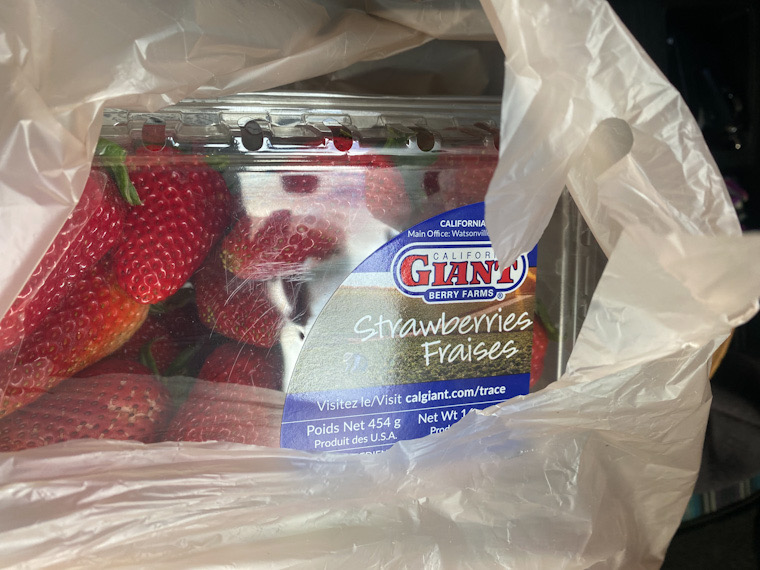
Shop for produce that is in season. As we hit the warmer months be on the lookout for berries and melons, peppers, corn and tomatoes. For cooler weather shop squash, broccoli, and apples. In general bananas, pineapples, and root crops are fair priced year round.

If you would like veggies that aren’t in season, or just looking. For a way to save, head to the freezer section. It’s a very common misconception that frozen produce has added sodium, and for the most part that isn’t true. Double check the ingredients to ensure nothing is in the package but vegetables. Frozen fruit is hit or miss on being a good deal, sometimes berries and mangoes are, though. 

I almost left this one out because it didn’t appeal to me personally, but the more I thought about it, the more I thought it could apply to someone. Use boxed or canned milk in recipes where the composition of the milk is what matters, not the flavor. Think hamburger helper, there is no milk flavor in that. Dollar tree has boxed milk often if this tip interests you. 

Breakfast foods that have always been “cheap” like eggs have felt a high rise due to inflation. Cereal boxes have gotten smaller and the price has gone up. Oatmeal, however, hasn’t felt as extreme strains from inflation as many other. Oatmeal is hardy, fiber filled, and versatile- the perfect affordable breakfast option. Also good in cookies or meatloaf! Put it on your grocery list and in your pantry, it really is a staple.

Anyone who has followed Dave Ramsey, the debt free guru, has heard beans and rice, rice and beans. This isn’t an article about Dave Ramsey, but I do understand his thinking about beans and rice being full of fiber and filling your belly! But did you know it’s an even better deal to cook your own beans? Canned beans are fine, but the real savings comes when you grab a pound of dried beans and cook them; it equates out to 3-4 cans when cooked. Cooked beans can be canned or put in the freezer until ready to use.

Buy generic. Okay, we all have our things we can’t give up. Oreos are only Oreos when they are Nabisco Oreo brand, I hear you. But frozen peas are frozen peas. Canned corn is canned corn. The things with a lower amount of ingredients really have very little variation in flavor because it’s just not possible when the ingredients are so basic.

Swap store bought cookies for graham crackers as a snack. If I make homemade cookies we don’t save money because we eat them faster. With graham crackers the flavor from generic will taste just as good, and provide a sweet treat at a lower cost. Bonus graham crackers often have less sugar!

Now let’s talk coffee- from my research it doesn’t appear to save any money to grind your own coffee beans. It does save money to use ground coffee instead of K-cups. Find reusable K-Cups that you can use your own coffee grounds in. Make your own coffee syrup! And cold brew is ridiculously easy to make at home. There is no need to spend $4+ on a couple glasses worth at the store. 

It’s hard to adjust your budget when you have to have electricity, gas, food, water, all.the.things. But any cutback that can be made helps out in the long run! Try out a few, or all perhaps, of these tips and see how it helps your grocery budget. 

Timepiece: Tornado Season

By Dr. Curtis Varnell

Over the years, the Arkansas River Valley has had its share of natural and human accidents but the worst of the worst always revolves around the tornado season.  Primetime for their occurrences is during the early evening hours of April and May. Dark clouds roll in from the west, lightning flashes across the sky and thunder rolls off the hillsides.  Soon the wind begins to pick up and the sirens began to go off. 

Nearly every family can recount near-fatal accidents and horrifying stories about the damage inflicted when nature goes on a rampage through their community.  Seemingly, anywhere in tornado alley, of which Arkansas is a part, can and has been hit.

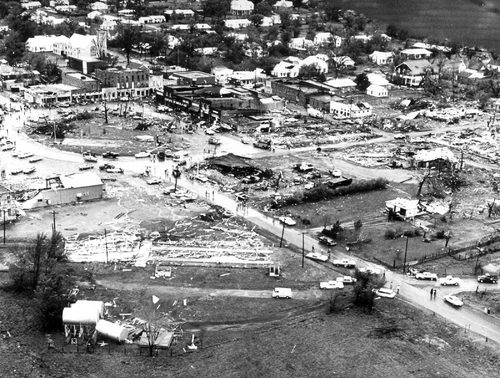
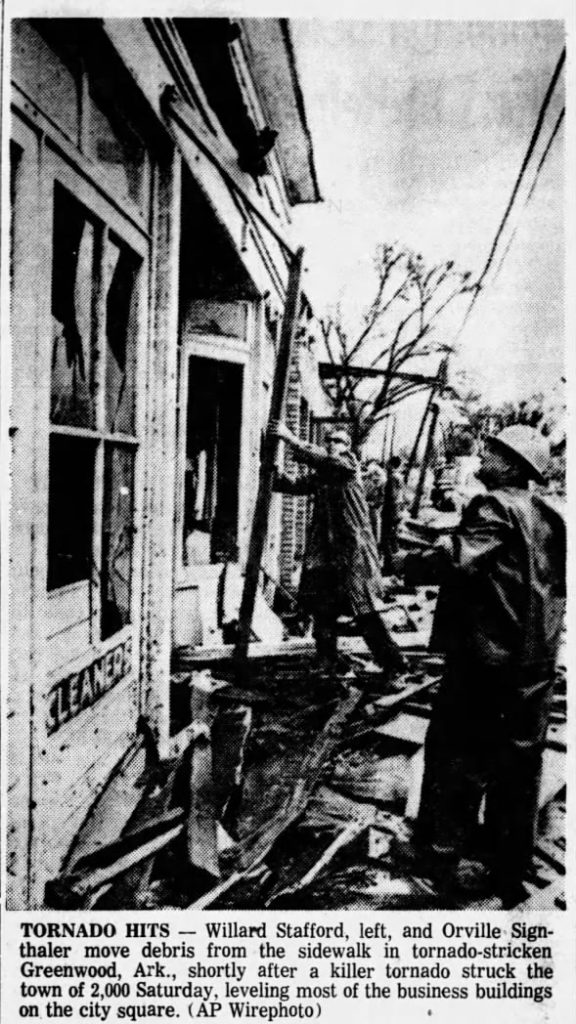
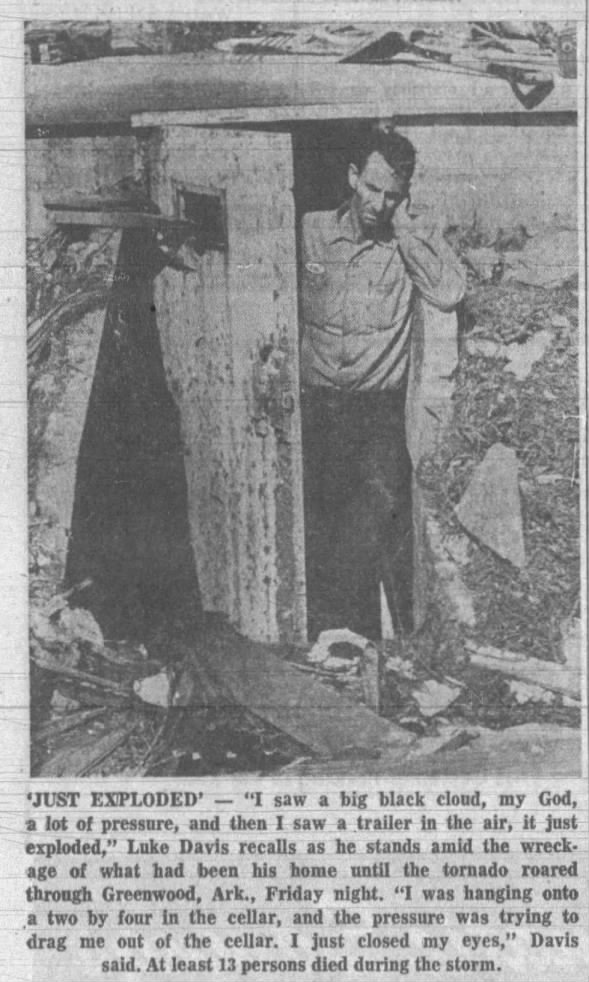
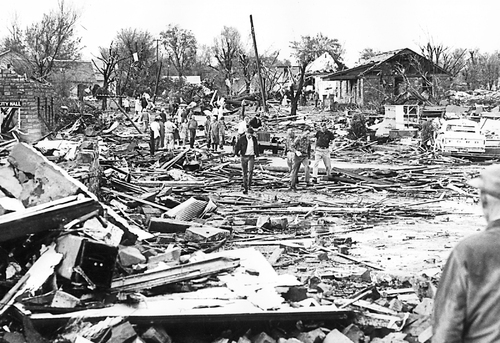
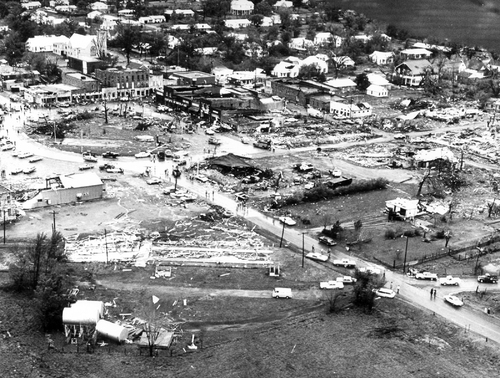
The worst tornado that I recall occurred in Greenwood on April 19, 1968.  The tornado hit in the blink of an eye and lasted only a total of four minutes.  During that time, it cut a path 300 yards wide and 2 miles long. Most of the center of Greenwood was reduced to matchsticks and kindling and the tornado left a sea of rubble in its path. A total of 14 people were killed and over 270 were injured.  Most of the city experienced some damage with 400 homes and 60 businesses suffering extensive damage.  Bulldozers swept the damage into abandoned mine pits and the city slowly rebuilt.

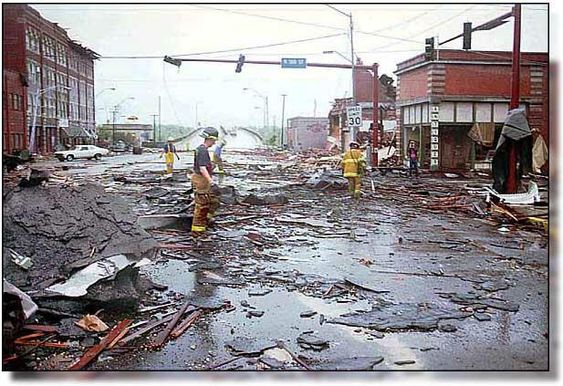
My son was in Fort Smith in April of 1996 when the tornado hit the downtown area and swept through an area running from the riverfront into residential Van Buren, killing two people and injuring dozens.  Terrified, he called me in the middle of a storm that was over before he could explain what was happening but the clean-up took months.

As a child, I hated going to the cellar but the community in which I lived was very aware of the danger the tornado could bring.  John Chandler would see ground clutter on the TV and begin warning us of what would happen and dad would pack us in the car and head to my Uncle Robert’s cellar.  Denva and Sonya would be wrapped in blankets, crying from being awakened in the middle of the night.  Into the cellar we would go, scrunched into wooden benches along the muddy, red-clay wall.  Fumes from the flickering kerosene lamp joined with the smell of rotting potatoes, vegetables, and stale water.  The cellar floor was earthen and covered by six inches of dirty, stinking water and my bare feet would sink into the red mud, crowding mushy mud between my toes.

The men stood just outside the door, watching the approaching storm and discussing past disasters.  I always thought they enjoyed taking a break from their normal hard labor, visiting with friends and family, and waiting for the minor rainstorm to hit before taking us back home for the night.  That is, until the real thing hit us and, unfortunately, we did not get enough warning to get to the cellar.

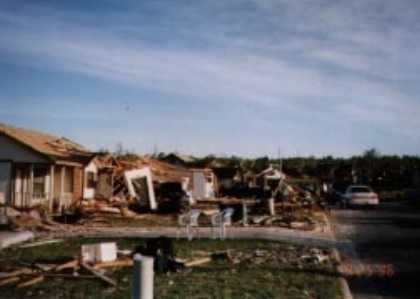
My brother Roger and I slept in the back room of the house; a part that had originally been a back porch.  I heard my dad as he yelled for us to get up and get to the front of the house.  By then, it was too late.  Wind shook the house and, glancing up I saw our ceiling disappear into a sky already crowded with our well house, several chickens, and other debris.  Running to the front of our house, I was able to see the wind deposit the well house back into the front yard but the chickens disappeared into the circling mall of the funnel.  Over before we realized, the tornado had lifted as it got to our home and just removed the ceiling from our bedroom but it left a wake of destruction across the pasture behind us.  It later touched down in Scranton, destroying several homes and chicken houses before disappearing to wherever it came from.

Little injured but badly shaken, ever afterward my parents heard little protest from me as I sat in the dark, stinking cellar washing my feet in the residual soup left from last year’s vegetable harvest.

Avoid these mistakes in the turkey woods

Randy Zellers Assistant Chief of Communications

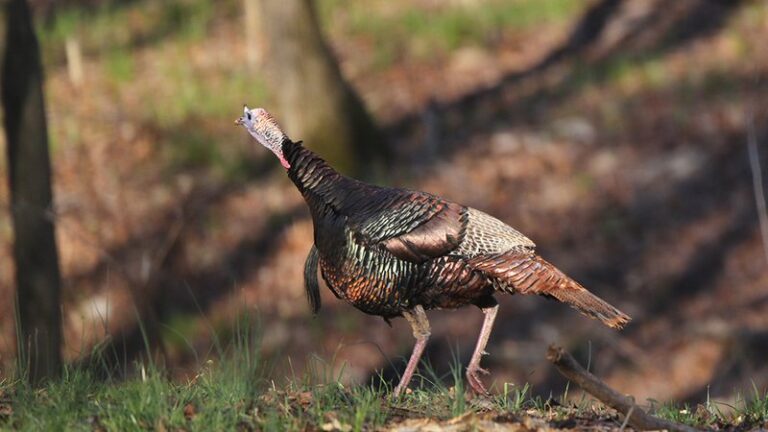
LITTLE ROCK — Col. Brad Young isn’t just chief of law enforcement for the Arkansas Game and Fish Commission, he’s a dyed-in-the-wool hunter who was introduced to the turkey woods by his grandfather when he was 7 years old. During more than 30 years in the turkey woods, he’s learned quite a few tricks through trial-and-error, and has seen many face frustration when they wear a turkey vest for the first time. While he’s not about to give up the goods on his favorite turkey hunting locations, Young does have some great advice for everyone as we begin to see people heading to the woods in search of their first Arkansas gobbler. 

Safety first

Before giving some solid advice for beginners, the first thing Young speaks about is the importance of safety in the turkey woods. 

“Turkey hunting, in particular, requires people to really pay attention to their target and follow all the safety rules taught in Hunter Education,” Young said. “Hunters are camouflaged and sitting on the ground at the same level as the game you’re pursuing. Some are putting out decoys that can look pretty realistic. At the end of the day, we all want to go home with good hunting stories and hopefully a bird, so I always have to start with safety.”

Young says the practice of “fanning” has become more common, which makes it even more imperative to see every bit of that gobbler before you pull the trigger. Hunters will take a fan of a bird and hold it directly in front of them while lying on the ground, inching up to a bird. “It works well, but puts the hunter directly behind the fan.” 

Get to know your gear

Preparing for the season isn’t just about practicing on your calls. Take some time to really get to know the equipment you’ll be using, so it’s ready to go at a moment’s notice. When that bird fires off back at your soft yelps isn’t the time to figure out how to flip down the seat on your new turkey vest or discover your facemask never got put in your pocket. 

“You also want to know exactly how your shotgun is going to pattern and what your effective range with it really is,” Young said. “With all the work you put into getting into range of a bird, you don’t want to shoot and end up with a cripple. You owe it to yourself and the bird to make a quick, efficient shot that anchors him on the spot.” 

Know the score

Google Earth, OnX and a host of other online scouting tools are available to really get to know the area where you plan to hunt; use them. The Arkansas Game and Fish Commission’s website even has interactive maps that show WMA boundaries as well as wildlife openings that may be worth looking into as possible strutting areas. 

“When you go out to an area to listen for birds, you want to know where things are around you,” Young said. “If you hear a bird, but know there’s a creek, road or some other obstacle that will cause him to hang up, you want to know where it is and how you could get around it and set up without spooking the bird on the day of the hunt.” 

Don’t just rely on the aerial images and topo maps to tell you the lay of the land, either. Take a few mornings to quietly walk the woods and learn a little about where the birds want to be. You can’t do all the scouting from the couch if you want to see success.

Silent scouting

One of the worst things hunters can do when preparing for turkey season is to let the cat out of the bag before the season even starts. Ideally, you should have already been looking for promising spots before the season is only a week or two away, but if you are still in scouting mode, it’s time to keep it quiet. The sooner turkeys figure out that people are in the woods, the sooner they shut up and get hard to hunt. 

“Sometimes it can sound like a hootfest out there with all the owl calls people are blowing to try to locate a gobbler,” Young said. “But if you’ll just go out before sunrise, find a good place to sit and listen, and let the woods wake up on their own, you’ll learn where the birds are and where they want to be without ever letting them know you’re around. I don’t even bring a locator call with me. There are plenty of things that will make a gobbler sound off without me adding to it and maybe tipping him off that something isn’t right in the woods.” 

Play a little hard to get

While the subject of calling is being discussed, Just because you bought a new call or practiced for hours on end to get just the right volume with that new split reed diaphragm doesn’t mean that turkey is going to be impressed with more noise. Young stresses the importance of taking it easy with the amount of calling you do once the season is open. Just as in life, sounding a little too eager is a dead giveaway that there’s a red flag hiding just out of sight. 

“You really have to start slow and take that bird’s temperature with a few soft yelps or clucks. Let the gobbler’s response dictate how you handle the hunt,” Young said. “If he responds quickly, he might come in on a string with some aggressive calling, but if he has some hens roosted with him or has been pressured by hunters, he may spook if you call too much.

Give him room to work

If you locate a bird and know where he’s roosting, it can be tempting to get close with the notion that you’ll be able to get him even if other hunters hear him gobble. Young advises to keep a little distance between the roost tree and where you set up in the morning. 

“It’s rare that I’m ever setting up closer than 80 yards from where I think that bird is roosting,” Young said. “That gobbler may be roosting with hens nearby, who can spot you sneaking in and ruin the day. You also have to give the birds the opportunity to fly down and walk to you. Even if you don’t bump the birds off the roost, they may glide right on top of you, not letting you make adjustments until they’ve passed. It’s always easier to work the bird where he wants to go then try to get him to turn around to where he’s been.” 

Patience is a virtue

Another area where many hunters fail is giving up on a bird as soon as they stop gobbling. Young says that just because a bird isn’t hammering back at every call you make doesn’t mean it’s gone. 

“He may be heading your way, or he may be distracted at the moment, but he knows where those sounds came from and if it’s going to happen you don’t want to give up too early,” Young said.”

Patience doesn’t just mean waiting an extra 10 minutes before giving up on a bird that got quiet early in the morning, it means coming back after a bird that you know is there another time and giving it another shot. That turkey may be with a bunch of hens one morning and not willing to come to you, but they may go off to nest the next day or even that afternoon, leaving him lonely and looking. 

“Patience has probably killed more turkeys than anything else,” Young said. “When everything goes right, that bird will come running, but more often than not, you’re going to have to wait and know when to stay put. On a recent hunt, I set up at 6 a.m. and didn’t seal the deal until 2:30 that afternoon. That was an extreme case, but I knew there were birds in the area and it was a matter of timing”

Make memories

Turkey hunting can be a solitary pursuit, and Young still enjoys solo hunts when he’s pursuing a trophy bird, but he also takes time to share experiences with his family. 

“Everyone in my family loves to get out and turkey hunt; it’s a true family tradition,” Young said. “My wife and daughter really enjoy it and have taken good turkeys, and my son can’t wait until he’s old enough to join us.” 

In addition to the added benefit of company on those sometimes long drives, having some family and friends along can really create those moments you’ll look back on fondly in later years. Hunting stories are always better when there’s someone to share the tale.


Forage, hay producers faced with fertilizer decisions

By Mary Hightower
U of A System Division of Agriculture

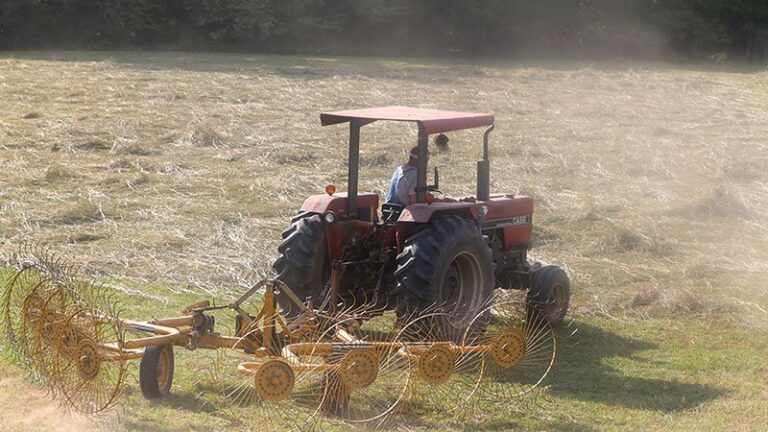
The record high costs of fertilizer are prompting hay and forage growers to look at all their options, including whether to use urea or ammonium nitrate and whether a urea additive will help.

“Urea is becoming the dominant nitrogen fertilizer because of increased regulations and higher costs associated with ammonium nitrate,” said John Jennings, professor and extension forage specialist, for the University of Arkansas System Division of Agriculture. “However, the decision of whether urea is the best nitrogen choice is not without question.”

Jennings said that in spring when soil temperatures are cool, urea fertilizer will give the same forage yield response as ammonium nitrate when applied at the same rate of nitrogen per acre.

“The myth persists that nitrogen from urea will be lost from volatilization when applied during summer,” he said. “Past and recent forage fertility research has shown that urea can be as effective as ammonium nitrate as a nitrogen source for bermudagrass when applied at the same nitrogen rates.”

Jennings said if urea is incorporated into the soil by rainfall within several days after application, nitrogen losses are minimal.

In recent years, additives such as NBPT — the active ingredient in nitrogen stabilizer Agrotain — has been added to urea fertilizer to reduce nitrogen losses by inhibiting the action of the enzyme urease in soil. Urease causes volatilization of ammonia from urea fertilizer. NBPT has been shown to effectively reduce nitrogen losses from urea in row crop fields.

“However, several research studies in Arkansas have shown that NBPT added to urea fertilizer did not increase forage dry matter of bermudagrass compared to urea alone,” Jennings said. “Thus, the added cost of NBPT may not be necessary when using urea for forages. Producers should consider all information when making forage fertilization decisions.”

Find additional resources for livestock and forages at the Cooperative Extension Service website.

Mention of product names does not imply endorsement by the University of Arkansas System Division of Agriculture.

To learn more about Division of Agriculture research, visit the Arkansas Agricultural Experiment Station website: https://aaes.uark.edu. Follow on Twitter at @ArkAgResearch. To learn more about the Division of Agriculture, visit https://uada.edu/. Follow us on Twitter at @AgInArk. To learn about extension programs in Arkansas, contact your local Cooperative Extension Service agent or visit www.uaex.uada.edu.

About the Division of Agriculture

The University of Arkansas System Division of Agriculture’s mission is to strengthen agriculture, communities, and families by connecting trusted research to the adoption of best practices. Through the Agricultural Experiment Station and the Cooperative Extension Service, the Division of Agriculture conducts research and extension work within the nation’s historic land grant education system. 

The Division of Agriculture is one of 20 entities within the University of Arkansas System. It has offices in all 75 counties in Arkansas and faculty on five system campuses.  

The University of Arkansas System Division of Agriculture offers all its Extension and Research programs to all eligible persons without regard to race, color, sex, gender identity, sexual orientation, national origin, religion, age, disability, marital or veteran status, genetic information, or any other legally protected status, and is an Affirmative Action/Equal Opportunity Employer.

Crappie on the half shell

Wil Hafner East Central Regional Educator

CASSCOE — As the old adage states, the dogwoods are blooming, so the crappie are biting. With that, spring is a great time to fill a cooler full of slabs. With a statewide limit of 30 crappie, a few good days of spring fishing can yield many meals for friends and family. While crappie is most often fried, there is no law that says it has to be. The mild flavor of crappie makes it a great choice for a variety of dishes. My favorite non-fried crappie dish is Cajun crappie on the half shell. 

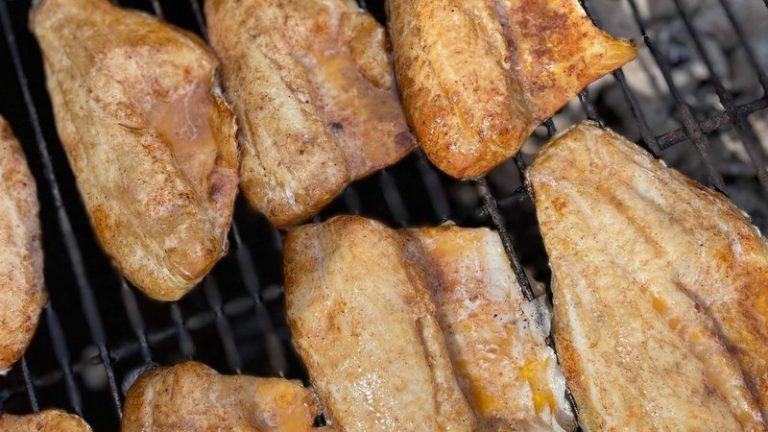
This dish was inspired from a redfish trip out of Venice, Louisiana. Redfish, a saltwater cousin of the freshwater drum, is highly sought as a sportfish as well as a delicious option for the table. Redfish on the half shell is a staple in Cajun cooking. “Half shell” refers to a filet where the ribs have been removed, but the meat is still attached to the skin and scales. Substituting crappie for the redfish not only adds a Natural State twist to a classic dish, but it also offers a way to enjoy a lighter-flavored approach to your fishing success. 

  • 4 large crappie filets (skin and scales attached) 
  • 1 stick of melted butter 
  • ¼ cup Worcestershire sauce 
  • 1 tablespoon Louisiana style hot sauce 
  • 2 tablespoon cajun seasoning 

Preheat grill or smoker to 225 degrees. Place coals to one side to use indirect cooking method. Pat filets dry and place skin down on a non-metallic tray. Sprinkle ¼ tablespoon of Cajun seasoning on each filet. Place filets on grill or smoker, skin side down, away from coals and cover grill for 10 minutes. While the filets are cooking, combine melted butter, Worcestershire sauce, hot sauce and remaining Cajun seasoning. 

After 10 minutes, baste each filet with the butter sauce, let cook 5 more minutes. Baste and cover again. When fish is white and flaky (about 20 to 30 minutes) pull off the grill and baste with the butter sauce one more time. Serve with rice and grilled vegetables.

Pasture-weaned calves put weight back on faster, study shows

By John Lovett 
U of A System Division of Agriculture 

Recent Arkansas Agricultural Experiment Station research shows that ranchers may be able to mitigate stress in weaned calves and improve the bottom line. 

Results from the first year of this three-year study showed calves regained more weight the first 21 days of weaning in a pasture, either with or without physical contact of their mothers, compared to a “drylot” used for beefing up livestock with feed troughs. 

Weaning, which is the act of removing a calf from its mother’s milk, reduces the likelihood of respiratory diseases that can result in decreased performance and revenue compared to unweaned calves, said Daniel Rivera, director of the Southwest Research and Extension Center and principal investigator in the study. 

“It’s probably one of the biggest revenue losses in cattle production,” Rivera said of unweaned calves. 

He said U.S. Department of Agriculture data indicates cattle ranchers with more extensive operations tend to wean their calves more often than ranchers with smaller operations. 

“In terms of helping them make it to that next transition, looking at it from a pasture-based system, it’s probably a little easier on the animal than what we traditionally do with a ‘drylot,’” Rivera said. 

“Dr. Rivera’s research highlights the substantial impact that social and housing environments can have on agricultural animals during stressful and necessary husbandry practices,” Shawna Weimer, director of the Center for Food Animal Well-Being, said. “Weaning is one of the most stressful times for beef calves and it is outstanding to see Dr. Rivera’s team working on practical, resource-efficient weaning methods to mitigate stress and facilitate good animal welfare.” 

The Center for Food Animal Well-Being is a unit of the University of Arkansas System Division of Agriculture. The experiment station is the research arm of the division. 

Rivera also noted the potential cost-savings for ranchers. In the study, it cost about $2.50 per head daily in the “drylot” group for 56 days. Feed for the two pastured groups cost around $1.10 per head daily for that time span. In situations where a preconditioning program requires 28 days, Rivera said it could be more economical to wean in pasture the first 28 days. A “preconditioned” calf has been properly vaccinated and can eat and drink from water troughs and feed bunks.  

The Study 

About 115 Angus-based calves were weaned at about 200 days old from September through the end of November in the 2021 study. Rivera said the pastured calves grazed on Bermuda grass and were fed a supplement in a feed trough at a limited rate to match the energy content calves received in the drylot. One group of pastured calves — dubbed “Fenceline” for the study — had physical nose-to-nose contact with their mothers. The other pastured group — dubbed “Pastured” for the study — did not have contact with their mothers. 

Weaned calves were weighed every seven days up to day 28. A final weigh-in for all the calves was on day 56. 

While all calves lost weight the first week away from their mothers, the “Drylot” group dropped the most weight and then gained back less weight during the first three weeks of the weaning process. 

The “Fenceline” group dropped the least weight right after being weaned. At 14 days, the calves weaned in a pasture away from their mothers slightly exceeded the body weight of the “Fenceline” weaned calves. 

Rivera said he and co-researchers believe the steady weight gain during the first 21 days for the two pasture-weaned calf groups was due to the familiar environment and feed. 

At 28 days, all three groups were about 20 pounds heavier than when they were first weaned. On day 56, the “Drylot” group exceeded the two pastured groups in body weight change.  

The first year of this study showed that calves didn’t put on more weight just because they had nose-to-nose contact with their mothers in an adjacent pasture.  

The study’s preliminary results agree with data from the Mississippi State University Agricultural and Forestry Experiment Station that showed in Brahman-influenced heifers it took up to 14 days after weaning before they were consuming enough feed to meet maintenance requirements, Rivera said. The Mississippi study was conducted with support from Texas A&M University, Rivera noted. 

Rivera said part of the Arkansas study’s benefit was to show that producers do not need a lot of extra facilities to wean their calves. Pasture space and a dedicated feed trough are the two main requirements. While calves in a non-adjacent pasture, or paddock, can be weaned using an electric “hot wire” fence, Rivera said “fenceline” weaning that allows for nose-to-nose contact between a calf and its mother calls for a more robust “net wire” fence. 

“Just a hot wire fence would be torn through by the cows trying to reconnect, so in those cases, we use a stouter net wire fence,” Rivera said of “fenceline” weaning. 

Rivera’s co-researcher is program technician Whitney Rook. Research field technicians Cody Shelton and Richard Cyle Jones also are involved in the study. 

To learn more about Division of Agriculture research, visit the Arkansas Agricultural Experiment Station website: https://aaes.uada.edu/. Follow us on Twitter at @ArkAgResearch

The University of Arkansas System Division of Agriculture’s GoGreen program (https://bit.ly/36XtpqM) continues to offer verification of “preconditioned” calves through the Cooperative Extension Service. 

To learn about Extension Programs in Arkansas, contact your local Cooperative Extension Service agent or visit https://uaex.uada.edu/. Follow us on Twitter at @AR_Extension

About the Division of Agriculture 

The University of Arkansas System Division of Agriculture’s mission is to strengthen agriculture, communities, and families by connecting trusted research to the adoption of best practices. Through the Agricultural Experiment Station and the Cooperative Extension Service, the Division of Agriculture conducts research and extension work within the nation’s historic land grant education system. 

The Division of Agriculture is one of 20 entities within the University of Arkansas System. It has offices in all 75 counties in Arkansas and faculty on five system campuses. 

The University of Arkansas System Division of Agriculture offers all its Extension and Research programs and services without regard to race, color, sex, gender identity, sexual orientation, national origin, religion, age, disability, marital or veteran status, genetic information, or any other legally protected status, and is an Affirmative Action/Equal Opportunity Employer.


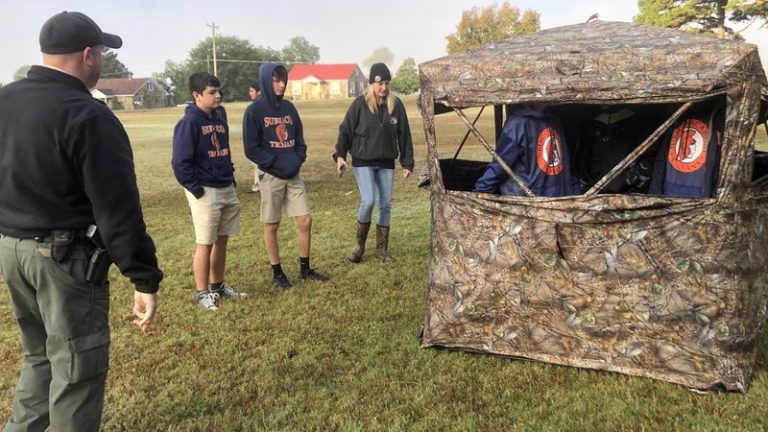
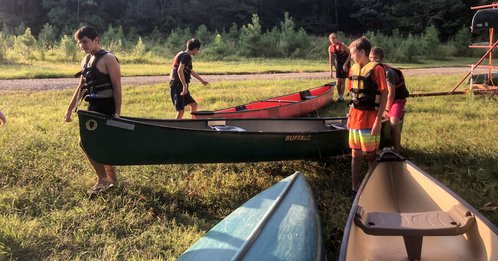
Students at Subiaco Academy take first steps into the outdoors

Randy Zellers Assistant Chief of Communications

SUBIACO — With 500 acres of wooded terrain beside Mount Magazine Wildlife Management Area, Subiaco Academy has enjoyed a rich history of introducing young men to the outdoors as well as preparing them for productive lives. However, during the last few decades, as pursuits sports and other extracurricular activities have become increasingly organized and some of the more outdoors-oriented faculty have left, there has been a need to revitalize outdoor experiences at the school. Nick McDaniel, a new science teacher on the hill, was hired with the goal of reinvigorating the school’s outdoor program.

Having grown up on an Iowa farm and having a parent who was part of the Iowa Department of Natural Resources, McDaniel was well-versed in the outdoors, but living an outdoor lifestyle and teaching it are two different things. He turned to the Outdoors Adventure Program to help bridge that gap. The program was developed by the Outdoors Tomorrow Foundation and is offered in partnership with the Arkansas Game and Fish Commission. It fosters outdoor education by offering lesson plans and curriculum to support a full year of outdoor education while meeting all teaching standards. While the students taught at Subiaco Academy are all male, the program is developed on a co-ed basis. Writing, math, science and other core subjects are highlighted in the curriculum, so students learn more than the outdoors, they learn about life.

Not only does the program offer curriculum, but it provides contacts and help from AGFC education professionals who can help with subjects such as Hunter EducationBoating Education and Fishing in The Natural State, an education program focused on biology, conservation and angling for some of Arkansas’s favorite sportfish.

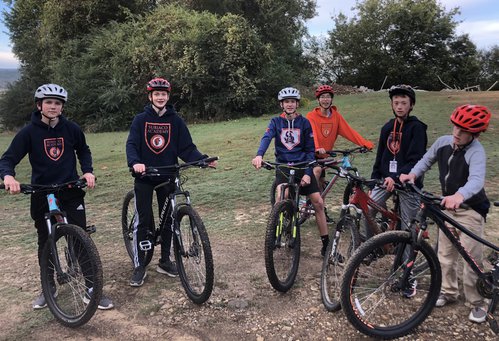
Camping, rock-climbing, mountain biking and many other activities are featured throughout the semester-long course, so students always have a new experience waiting when they get to class. 

In his first full year with the Outdoors Adventures program, McDaniel has been able to introduce 14 young men in his Physical Education class to the outdoors, as well as 20 to 30 participants through the afterschool program offered through the Academy. 

“All of my PE students have completed Hunter Education and Boating Education,” McDaniel said. “We’ve been able to keep students’ attentions and all of them are more willing and excited to get outside, even when conditions are not ideal. And the people at the AGFC have been great in helping teach me how to teach the students. Some have even helped with class trips and lessons.” 

Some things that might seem like second nature to many people who have grown up outdoors are foreign to today’s students. It’s not that they are lazy or unable to learn these skills, they’ve just never been in a setting where such skills are prevalent. 

“Two students in the program learned to ride a mountain bike for the first time, and a student who really had no interest in mountain biking before the program went out and purchased his own bike to continue enjoying the outdoors,” McDaniel said. “I have one student who just learned to fish who caught his first bream and went through the whole process of cleaning and cooking his catch using one of the program’s camp stoves. It’s just amazing watching some of these young men take an interest in something that was such a formative part of my life and knowing the outdoors experiences available to them throughout their lives because they learned these skills.”

Teachers interested in the Outdoors Adventures Program can learn more from Sheila Connerly, who helps coordinate this and other programs aimed at teaching educators how to incorporate more outdoors education in their daily curriculums. The curriculum and lesson plans must be purchased, but it comes with a matching grant to help purchase equipment needed to conduct the lessons. 

“The upfront cost is more to ensure school’s have a vested interest in the program’s success,” Connerly said. “But we can even find programs like the AGFC’s fine money conservation education grants, to reduce that cost even more. Fine money collected in each county is allocated to education grants administered by the Arkansas Department of Rural Services.” 

According to McDaniel, OTF also has a monthly newsletter for teachers to really learn how to adapt the program to different settings. 

“I’m really fortunate to have such a wonderful setting to teach the outdoors, but there are resources in the newsletter for teachers to teach the basics of paddling or other outdoors recreation in a gym or other indoor setting before taking their students out for a trial run,” McDaniel said. “It’s great for a person who has the desire to take kids outside, but might not have the outdoor knowledge and wants to learn as they go.” 

McDaniel hopes to expand the lessons even further in Subiaco Academy’s outdoor education program, adding larger components of outdoor cooking and the AGFC’s Fishing in the Natural State Program to get the students even more comfortable with fishing and cooking their catch.

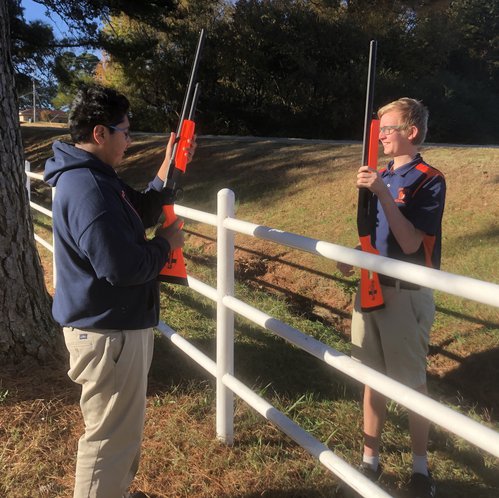
“People are separated so much from their food, it’s important to me that we help reconnect them with understanding how that whole process works,” McDaniel said. “The curriculum is a great baseline to guide future purchases and develop the process to solicit future grants and donations to enrich the students’ learning experiences even more. We have many more mountain biking, hiking and camping trips planned as well as participation in archery through the [Arkansas National Archery in the Schools] program. 

“Each of these experiences may hold a golden nugget to something valuable about life and what is available in the world,’ McDaniel said. “I’ve been given the honor of taking 50 to 60 young men to learn about the outdoors here so far, and every student has found at least one thing they’ve connected to through these experiences.”

Lady Eagles Pick-up Needed Conference Softball Victory Over Cedarville

The spring rains continued in Logan County on Monday, forcing the postponement of the Paris vesus Cedarville baseball game to be played today. But Tuesday’s scheduled conference softball match-up between Paris and Cedarville was played in Paris as scheduled. Both teams were looking for much-needed conference wins after a tough pair of conference losses last week. And under the clear blue sky that matched the Lady Eagles’ uniform trim, Paris defeated Cedarville 13-0. Paris senior Karsyn Tencleve got the shutout win in leading the Lady Eagles to a much-needed conference victory.

It only took Paris one hitter to take the lead and never look back in the lopsided win. Paris junior Jayden Wells, moved to the lead-off hitter position in the Lady Eagles’ lineup, hit a solo home run in her first at-bat. From that point, it was a non-stop series of Paris hitters that reached base and eventually scored, early and often for the Lady Eagles.

The game also provided a glimpse into the Paris softball future when Tencleve was lifted in the top of the fifth inning and relieved by freshman pitcher Kaydence Freeman. The move gave Tencleve rest for her upcoming conference starts and provided game experience for Freeman who may be counted upon to take the circle for conference starts next season. Freeman pitched well in her conference debut. She allowed two base runners in the only inning of her appearance, but was able to show poise and eventually settled down to get out of the inning without giving up a run.

Paris now turns their attention to a critical game and rematch with the Charleston Lady Tigers that will be played today at 4:30 p.m. in Charleston. Paris dropped their first meeting in a game that saw the Lady Eagles commit several defensive errors while at the same time being shut down at the plate by Charleston pitcher Rylee Ross. The game is a must-win for Paris to get back into the conference race. A loss at Charleston will drop Paris to two games behind the Lady Tigers in the conference standings.

Stay with Resident News Network for the latest in River Valley high school softball action!

Greenwood Woman Killed in Fatal Crash

A multi car accident left one Greenwood woman dead on Tuesday, April 5. That accident took place at approximately 9:18 a.m. on U.S. Highway 71 and Old Jenny Lind Loop.

The Arkansas Department of Public Safety Report identified that woman as Jennifer Eryn Barger, 27.  The vehicle Barger was driving was traveling north on U.S. Highway 71 and rear ended another vehicle that had slowed to make a turn.

The reported stated that there was one additional injury in the accident, and that they were transported to Mercy Hospital.

The deceased’s next of kin had been notified, according to the Arkansas State Police.