
80.3 F
Fort Smith
Tuesday, July 7, 2026
Home Blog Page 450

From Essential to Collectors’ Items, the Basketball Shoe Has Come a Long Way in Last 100 Years

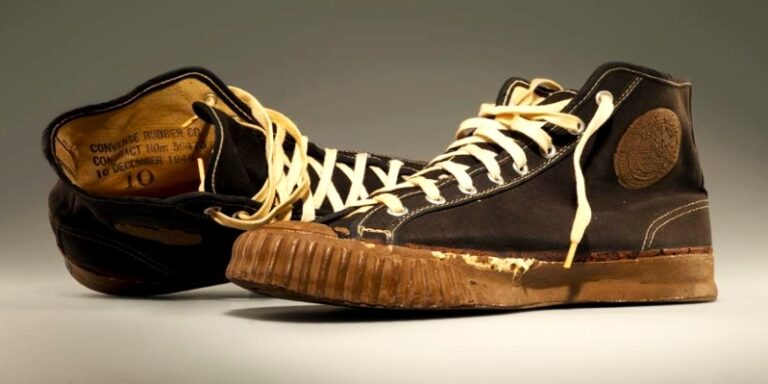
It is certainly no secret that basketball shoes are a hot commodity in the world-wide market, and that the highly-coveted items command increasingly higher prices every year. But for those of us who can remember, it wasn’t always this way. Not only in the prices that are commanded today, but in the comfort and protection that the high-tech shoes of today offer. In fact, people in my age range can remember wearing the famous “Chuck Taylor All Stars” that were little more than a small width of rubber foam soles covered in cotton canvas. The shoes felt a lot like wearing rubber sandals compared to today’s shoes.

Back in the day, players wore the shoes to play basketball almost exclusively. Scenes of players wearing the shoes, and then tying the laces together and slinging them over their shoulders when they left the gym are a picture of the past. In more iconic photos, the famous Olympian, Jesse Owens, is seen wearing the famous shoes that at his time were dubbed as the official shoe of the United States Olympic Team. The famous Chuck Taylors made their debut in 1917 and were later redesigned 100 years ago in 1922. Since that time, the shoe enjoyed immense popularity over the years, peaking in the 1960s and then declining in the 1970s when other brands, such as Adidas entered the market for basketball and athletic shoes of other sports. The Converse Chuck Taylors are still today a popular casual shoe in its low-cut style.

The shoes’ namesake, Chuck Taylor, was a semiprofessional basketball player who later turned salesman at Converse Shoes. Converse is now a subsidiary of Nike; change that took place in 2003 when Nike paid $309 million to acquire the historic brand. For those who played on the hardwood back in the day with the Converse legends, I am amazed that more players did not suffer more from shin splints and lower back paid due to the lack of shock absorbancy in the shoes. But for all of us who wore the shoes, we didn’t know any better…it was the best thing on the market at the time.

But with the growth of popularity of basketball, its players, and the star power that those players have brought to advertising, the prices of basketball shoes have shot up at meteoric heights over the years. In fact, in a top ten list of the most desirable shoes to be owned by collectors, the least expensive pair of shoes, according to the website, luxactic.com, is $2500.

The top ten list of most desired shoes, according to luxactic.com is:

10. Nike Air Force One: $2500

Image Credit: luxactic.com

9. Air Jordan XI: $2700

Image Credit: luxactic.com

8. Addidas Golden KBB: $3000

Image Credit: luxactic.com

7. Air Jordan V: $10,000

Image Credit: luxactic.com

6. Nike Air Mag: $12,000

Image Credit: luxactic.com

5. Air Jordan I: $25,000

Image Credit: luxactic.com

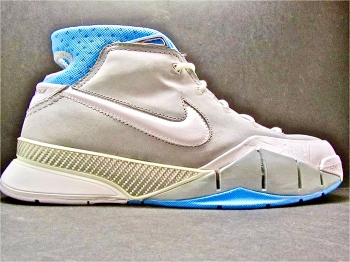
4. Nike Air Zoom Kobe 1: $30,000

Image Credit: luxactic.com

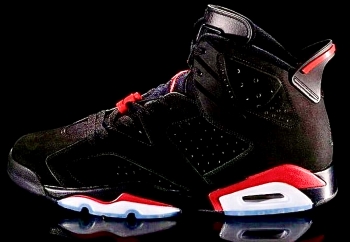
3. Air Jordan VI: $35,000

Image Credit: luxactic.com

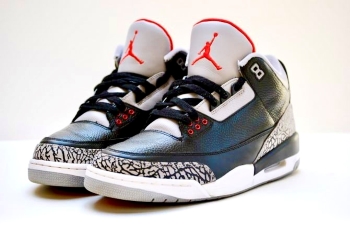
2. Air Jordan III: $50,000

Image Credit: luxactic.com
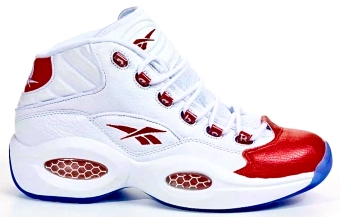
  1. Reebok Question: $65,000
At a value of $65,000, the Reebok Question is the most expensive basketball shoe on the market (Image Credit: luxactic.com)

The old supply / demand principle elevates these iconic shoes and brands to the prices they command by collectors. Fans of the game are more than willing to pay exorbitant prices for the celebrity endorsed shoes, and, perhaps, that is a topic for another story. I remember taking my son to St. Louis to watch the Cardinals play a regular season baseball game. We had pretty good tickets, and I took him into the stadium as soon as the gates opened. I couldn’t wait to point out some of the players on both teams that I followed and who someday might enter the baseball hall of fame. As I pointed out who the players were, I will never forget; he was more impressed with the shoes they were wearing than the players themselves!

But one thing is clear, we all have a price we are willing to pay for both name brand and popular shoes, especially those who are big fans of the game. And our player heroes that endorse the shoes make them even more attractive to buyers. And the market charges whatever it thinks we are willing to pay; and we have given the market the impression that we will pay a lot of money for these shoes.

For me, it will be a long time, if ever, that I will pay anywhere close to the price of even the least expensive model in this story. But, that is me…the last of the big spenders!
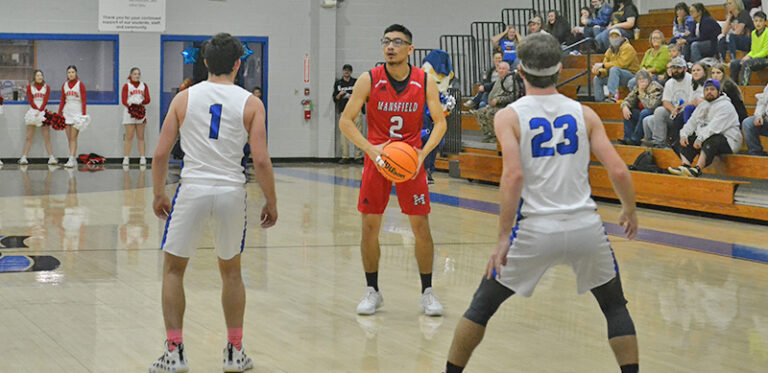

Tigers “Escape” Johnson County with Win over Westside

The Mansfield Tigers travelled to Johnson County Westside to take on the Rebels for their Homecoming.  The Tigers had not had a road game in 36 days, as they stayed at home for the Bill Frye Invitational, during Christmas Break, and their game against Mountainburg had been postponed to a later date.  The Tigers came home with a conference road win! 

Peyton Martin got the night started off with a 15-foot jumper for the Tigers but Ashton Yarbrough would answer on the following possession for the Rebels.  Miles Lingar would hit a free-throw for Westside with 5:28 to go in the first quarter.  Braxton Byers would score a lay-up to give the Tigers the lead, 4-3, at the 4:30 mark.  The Tigers would never lose the lead from this point.  Ethan Pettus would score the next basket for the Tigers but a turnover and score from Yarbrough would get the Rebels back within a point.  Zayne Dugan would score back to back buckets for Mansfield and extend the lead to 5, with 1:30 left in the quarter.  Hunter Holman would create a turnover and race to the other end for a lay-up, to cut the lead back to 3.  Dugan would add another basket to push the lead back to five.  After a quarter of play, the Tigers would lead 12-7. 

Westside’s David Gregory would score the first basket of the second quarter and cut the Tiger lead to three.  But on the ensuing possession, Tyler Escalante would knock down a three-pointer extending the lead to six.  The Rebels would use a 5-0 run, with baskets from Holman and Gabe Hickey and a free-throw from Dakota Beavers.  Peyton Martin would stop the Rebel run with a three pointer off an E. Pettus assist.  Pettus would extend the lead back to six after a steal and score but Holman would get an and one opportunity for the Rebels on a transition basket.  The last 1:45 of the quarter was a defensive battle with the halftime score being 20-17, in favor of the Tigers. 

The Rebels would start the second half off with a D. Beavers basket to cut the lead back to one.  The Tigers would use a 4-0 run to extend the lead back to five, with baskets from Dugan and Clint Stovall.  With 4:23, Yarbrough would add a basket for the Rebels and a free-throw from Lingar would make the score 24-22, half way through the 3rd quarter.  This would spark a 7-0 run for the Tigers, with a free-throw make from Drew Elmore and Stovall.  Stovall would add a three point basket, and a putback from Zach Hayslip, would give the Tigers their biggest lead of the night, 31-22.  Carson Hurst would score his first basket of the game for the Rebels but Stovall would add two free-throws to net the 33-24 lead to end the 3rd quarter. 

The Rebels would start the 4th quarter with a basket from Beavers and a free throw from Holman.  Pettus would make two free throws to get the lead back to eight.  But four free-throws over the next few minutes would get the Rebels within four points, 35-31.  With 3:25 to go in the game, Beavers would cut the lead to two.  Zayne Dugan would score the Tigers only field goal of the fourth quarter on a putback shot.  With 2:24 to go in the game, the Tigers clung to a four point lead, 37-33.  Gregory would get a turnover for the Rebels and cut the Tiger lead to two with 1:09 remaining.  The Tigers would score the rest of their points from the free-throw line.  With the score 40-37, Yarbrough would score a reverse lay-up for Westside.  Ethan Pettus would add a free-throw for the Tigers and net the final score of 41-39.  Westside had a chance at the buzzer but Beavers attempt missed off the front of the rim. 

“I thought our guys played extremely hard tonight.  They made the last run but we made just enough free-throws down the stretch to escape with a win.  We overcame an off-shooting night and turnovers with a solid defensive effort.   We have to come back and get ready for Acorn on Tuesday.”  said Coach Brown.

Mansfield: Z. Dugan (10), E. Pettus (9), C. Stovall (8), P. Martin (5), T. Escalante (4), Z. Hayslip (2), B. Byers (2), D. Elmore (1)

Westside: A. Yarbrough (8), H. Holman (8), D. Beavers (7), C. Hurst (5), M. Lingar (5), D. Gregory (4), G. Hickey (2)


The Tigers will take on the Acorn Tigers on Tuesday at home.  The Jr Girls, Sr. Girls and Sr. Boys will play with a 5:00 p.m. tip.

Arrest Reports 1/9

Arresting agency – Bonanza Police Department:
Dakota Levi Ferden of Pocola, OK was booked into the Sebastian County Detention Center on January 10 at 11:56 p.m. and released on signature bond January 11 at 1:35 a.m. Ferden was charged with contempt-willful disobedience (failure to pay fine).

Arresting agency – Sebastian County Sheriff’s Office:
Charlsey Jean Kellar of Hackett was booked into the Sebastian County Detention Center on January 14 at 2:15 p.m. and released on signature bond January 14 at 6:01 p.m. Keller was charged with contempt – willful disobedience (failure to pay fine).

Heath D. Lunsford of Boles was booked into the Sebastian County Detention Center on January 13 at 3:45 a.m. and remains at the SCADC without bond. Lunsford was charged with parole violation and absconding.

John Glenn Widmer of Hackett was booked into the Sebastian County Detention Center on January 12 at 11:45 a.m. and remains at the SCADC. Widmer is on hold for commitment at the Arkansas Department of Corrections.

Arresting agency – Arkansas Parole:
Kelsi Lynn Stephens of Huntington was booked into the Sebastian County Detention Center on January 14 at 12:41 p.m. and remains at the SCADC. Stephens was charged with drug court sanctions.

**The charges against those arrested are allegations and the cases are still pending in the courts.**

Obituary – Ronald Lee Goddard (1952-2022)

Ronald Lee Goddard of Waldron, Arkansas went to be with his Lord and Savior, Friday, January 14, 2022 in Little Rock, Arkansas. Ron was born February 15, 1952 in Mena, Arkansas to Volton Goddard and Bernice (Flynn) Goddard. He was 69 years old.

Ron leaves behind to cherish his memory, his loving wife of 48 years, Libby Goddard of the home, three children: Tracy Williams (Jack) of Waldron, Arkansas, Nathan Goddard (Lindsey) of Florida and Matthew Goddard (Colleen) of Russellville, Arkansas. Granddad will forever remain in the hearts of his grandchildren: Trey Williams (Shelby), Braden Williams (Rheagan), Kaley Goddard, Chase Goddard, Wheeler Goddard, Wyatt Goddard and two great-grandchildren Quade Williams and Paisley Williams. Ron is also survived by his siblings: Danny Goddard (Sherry) of Booneville, Arkansas, Johnny Goddard of Waldron, Arkansas, Larry Goddard (Krystle) of Tennessee and Patricia Hall of Waldron, Arkansas. Ron will be missed by all that knew him and the many whose lives he impacted including a host of extended family, friends and neighbors he loved dearly.

Ron was preceded in death by his parents, Volton and Bernice Goddard.

Ron’s celebration of life will be 11:00 a.m., Monday, January 17, 2022 at the Heritage Memorial Funeral Home in Waldron, Arkansas with Cindy Franklin officiating. Arrangements and cremation are being entrusted to the Heritage Memorial Funeral Home & Crematory in Waldron, Arkansas. 

Ron’s family will receive friends and family at 10:00 a.m., Monday, January 17, 2022 the Heritage Memorial Funeral Home Chapel. 

ADH Issues Guidance for at Home Testing

The State of Arkansas has purchased 1.5 million iHealth at-home tests for distribution across the state. These tests will be available at no cost to Arkansans.

FREQUENTLY ASKED QUESTIONS

Q: Who is eligible to get an at-home test at no cost?
A: All Arkansans.

Q: How many tests can each individual/family get?
A: Two tests (one kit) per individual per day or six tests (three kits) per family per day. There are two tests in each kit.

Q: When will tests be available?
A: Tests will be available starting January 11, 2022, from the first shipment received by ADH. Additional shipments will be arriving in the future.

If you have a fever, cough, or shortness of breath OR if you think you have been exposed to COVID-19 call your health care provider. Testing is available by appointment at Local Health Units and can be scheduled by calling any location.

For a full list of test kit availability visit the ADH website.

CARDS Recycling & Disposal Announces Acquisition of Altes Sanitation

CARDS River Valley, Inc (CARDS) announced the purchase of Altes Sanitation Service, LLC.  Based in Fort Smith, AR, Altes Sanitation is a local waste and recycling company that hauls residential, commercial, and industrial waste streams for customers in the greater Fort Smith, Sebastian County area.

The company’s operating footprint includes the eastern Arkansas areas of Sebastian County, Central City, and Muldrow and Pocola, OK. “We are excited for the opportunity to serve these wonderful communities,” said Dan Christensen, founder, and president of CARDS. “The waste disposal and recycling services provided by Altes Sanitation fits our model perfectly and we are proud to bring the Altes customers and employees into the CARDS family.” CARDS will acquire all Altes Sanitation assets, employees, and contracts, which will operate under the CARDS brand.

This acquisition adds over 6,400 customers to CARDS’ expanding footprint, according to Christensen. This is the tenth acquisition for CARDS in the past 4 years. Other acquisitions have included 4D, Best Trash, R&S, The Trashman, and Bernice Sanitation. The acquisition closed on December 31st, 2021.

CARDS, LLC provides curbside collection for all residents of Sebastian County (excluding City of Fort Smith).   The new service from CARDS includes residential waste pickup, commercial waste, roll-off dumpsters and portables & pumping.  Please visit CardsRecycling.com for more details including bill pay portal.

Best Care provides professional development for thousands of Arkansas childcare professionals

The Best Care training, a professional development course that reaches thousands of Arkansas childcare professionals annually, will be offered virtually and in-person in 2022. Family and consumer science agents with the University of Arkansas System Division of Agriculture plan to conduct 35 Best Care trainings from January to May this year.

“Best Care is an important resource for childcare providers and families because it connects trusted research to the adoption of best practices in early childhood and personal development,” said Rebecca Simon, program associate for Early Childhood and Family Life with the University of Arkansas System Division of Agriculture.

Best Care is offered free statewide through the division’s Cooperative Extension Service in partnership with the Arkansas Division of Child Care and Early Childhood Education. The program began in 1997 as a pilot program and has been funded by the Arkansas DCCECE since 1999. The program also receives funding from the Arkansas Department of Education’s Arkansas Better Chance program.

The training provides professional development to about 2,000 childcare professionals annually, Simon said.

“Best Care is designed to bring early childhood professionals training opportunities that keep them up-to-date on subject matter and methods to help them become more effective educators,” Simon said. “Best Care offers ten hours of high quality, research-based training that addresses the four program areas of Family and Consumer Science: child development, consumer economics, health and nutrition.”

Simon explained that Best Care is taught in a multi-county setting, referred to as “clusters,” with 26 clusters throughout the state.

“What is unique about Best Care is that it is offered statewide using the network of county family and consumer science agents, who serve as contacts for their county or cluster’s early childhood training needs,” Simon said. “Childcare providers begin calling their counties in November and December to ask about Best Care training available in their communities because of the long-term success of the program. The curriculum is developed at the state level, but the success of the program is really due to the FCS agents across the state and their reputation at the county level as the ‘go-to’ person for annual training.”

“Best Care can also be a way to network and promote other county programs that would be beneficial to the childcare providers,” she said.

In 2021, Best Care provided professional development to 1,300 early childhood professionals. The course was available in an online format via courses.uada.edu, and it was also provided virtually in three or four multi-county “clusters,” with some classes provided in-person in the late spring and early summer.

This year, four virtual trainings are scheduled, and the rest are slated to be in-person. Moving in-person classes to virtual is decided on as-needed as COVID numbers progress, Simon said.

Best Care training topics for this year include Growing Young Gardeners, Healthy Habits: Nutrition and Fitness Practices, STEAM in Outdoor Learning, Infant Care and Self-Regulation, When Accidents Happen: Basic First Aid, Child Care Prepared: Disaster Preparedness, Music in Early Learning, Making a Clean Sweep, Effective Communication, and Playground Safety.

Anyone interested in Best Care training should contact their local Family and Consumer Science agent at uaex.uada.edu/counties/ for information about upcoming trainings offered in their area. More information about Early Childhood Professional Development opportunities in Arkansas can also be found at uaex.uada.edu/life-skills-wellness/child-care-providers/.

To learn about extension programs in Arkansas, contact your local Cooperative Extension Service agent or visit www.uaex.uada.edu. Follow us on Twitter and Instagram at @AR_Extension. To learn more about Division of Agriculture research, visit the Arkansas Agricultural Experiment Station website: https://aaes.uark.edu. Follow on Twitter at @ArkAgResearch. To learn more about the Division of Agriculture, visit https://uada.edu/. Follow us on Twitter at @AgInArk.

State Capitol Week in Review from Senator Terry Rice

LITTLE ROCK – The legislature has begun budget hearings in preparation for the 2022 fiscal session, which begins on February 14.

Legislators will consider the governor’s proposed balanced budget of about $6 billion for Fiscal Year 2023, which officially begins on July 1.

The governor’s proposal would increase state general revenue spending by 3.3 percent over this year’s budget. This year’s budget is about $5.85 billion and the governor proposes to increase it to $6.04 billion.

The governor’s proposed budget is a starting point, and the legislature will finalize all financial decisions, because under the Arkansas Constitution the legislature has the power to authorize state government spending.

No matter how the legislature changes the governor’s spending plans, the final version of next year’s budget will be balanced. Arkansas does not deficit spend. If tax revenue declines due to an unforeseen economic downturn, state spending will be reduced proportionately.

The governor proposes to increase the Public School Fund by $69.6 million, 3.08 percent. That would bring the fund to $2.33 billion.

The governor proposes an increase of $66.3 million in the Department of Human Services budget. That is a 3.72 percent increase, and would bring the state’s share of the DHS budget to $1.85 billion. The federal government provides matching funds for services offered by DHS. Medicaid is the main one.

The Children and Family Services Division within DHS administers foster care, child welfare and adoption services. The governor’s proposal would increase funding for child protective services.

The budget proposal would reduce the waiting list of families who need home care or community care for loved ones with developmental disabilities. Now, there are a little more than 3,000 people on the waiting list. The governor and legislative leaders are trying to eliminate the need for a waiting list by 2025.

Four-year universities would receive an additional $12.2 million in state aid under the budget proposal. That is a 2 percent increase over the $612 million that universities get this year.

Two-year colleges now receive about $118 million in state aid. The proposed budget would increase that to $119 million. The increase would be 0.69 percent.

The State Police would get a 10.6 percent increase, from $70.6 million to $78 million. The governor said that raising pay for State Troopers would be an incentive for local law enforcement agencies to make their salaries more competitive.

The Division of Correction, which operates state prison units, would get an increase of $3.9 million, or 1 percent, bringing its annual spending level to $379 million.

The Division of Community Correction has residential treatment centers, and is in charge of probation and parole. Its annual budget would increase by 0.78 percent, or $753,000, to $97.7 million for Fiscal Year 2023.

About 55 percent of the state’s general revenue fund goes for education. That includes institutions of higher education, which get 13 percent, and K-12, which gets 40 percent. The state Education Division gets 2 percent. About 32 percent of state general revenue is spent on health and human services, and about 8 percent on prisons and correctional institutions. Various smaller agencies receive the rest.

Applications to hunt turkeys on Arkansas WMAs available Jan. 15-Feb. 15

Randy Zellers Assistant Chief of Communications

The Arkansas Game and Fish Commission will accept applications Jan. 15-Feb. 15 from hunters who want to hunt on many wildlife management areas during the 2022 Arkansas turkey season.

Many good public turkey hunting opportunities exist, particularly on the large cooperative WMAs owned by the U.S. Forest Service. However, turkeys and turkey hunters need room to spread out, which can lead to conflicts between hunters on some smaller WMAs. To increase the quality of the hunt in some of the most popular public areas, the AGFC restricts the number of hunters allowed during turkey season through random drawings.

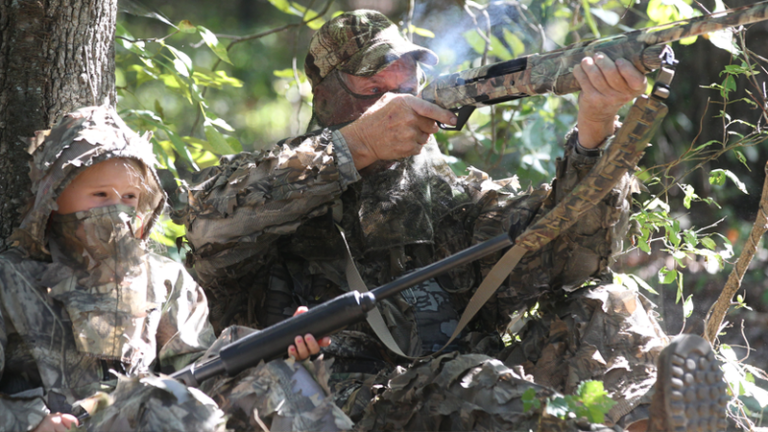
Only permit holders may hunt on the WMA during the permit hunt. However, a permit holder can have a friend alongside them to call for them. Friends and family may camp with permit holders at designated campsites on the WMA as well.

Applications are taken electronically through www.agfc.com, and winning applicants will be notified via email. Applications require a $5 nonrefundable processing fee. Winning applicants are not required to pay any additional fees beyond the purchase of their hunting license.

Visit www.agfc.com/en/hunting/turkey/turkeypermitsto view a list of available permits.

Timepiece: Coon Hunting in the South

The small wood campfire penetrated the surrounding darkness but offered little respite from the winter weather.  The cold bit noses and ears while frost shrouded the trees of the surrounding forest.  My father, Loyal Turner and three other men huddled on rocks talking and drinking coffee from the thermos.  Off in the distance, we would hear the occasional bark from one of the animals.  “That’s old Betsy, she’s searching for a scent,” explained Loyal.  A few minutes later, the bark turned to a deep mellow baying which was joined by the excited barking of the other dogs in the pack.  “Boys, she’s onto one, let’s get out there and see what she’s found. She’s hot on the trail and that coon is on the run.  They will have her treed any minute now.”  Loyal had that ability to identify every one of the dogs and what it was chasing by the sound of the baying.  

The men quickly threw out their coffee, gathered their gear, and turned on their lights.  We were equipped with a large flashlight but the older men were still using the old carbide lights bought years previously.  Off into the darkness, we trudged, picking our way between trees, dodging vines and saw briars as we went.  Our speed increased proportionally to the volume and intensity of the baying.  When the animals got close to the raccoon, it would attempt escape by climbing into the high branches of the tree where it would taunt the inability of the dog to capture it.  That’s where we hunters became of importance.  Those wishing to eat the coon would simply shoot it from the tree with a 22 rifle but, seasoned sport hunters would climb the tree, poke the animal out with a large stick, and let the dogs and coon battle.  Often the coon would escape or be rescued by the hunters who would release it for future hunts.  On this night, that is exactly what happened and we trudged home through the woods reliving our experiences, pulling our hound behind us on a rope to prevent them from taking off on another hunt.

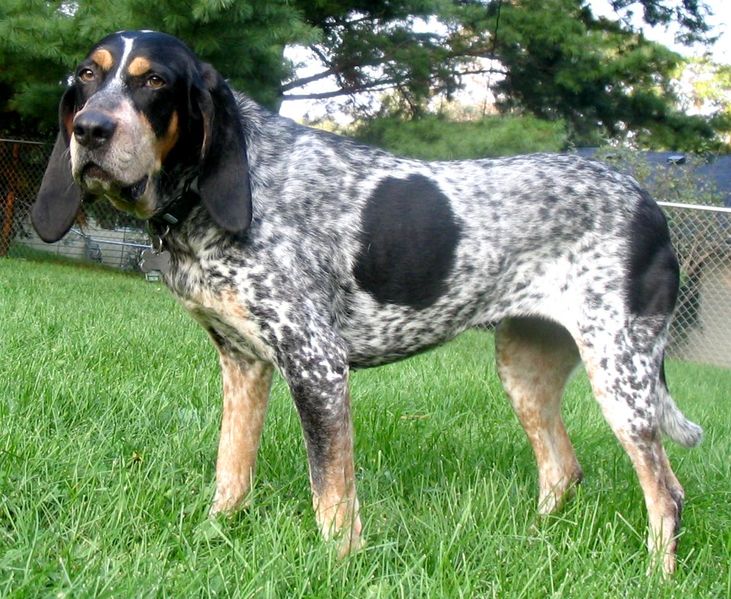
There are six different breeds of dogs used for coon hunting.  Carrying unique names like red-bone and blue-ticks, they all appear to have the common lean, rangy appearance and lazy or indolent look in their eyes.  Most are pretty docile, lay around in their pens or under the front porch of their owners but they come to life when placed on a trail.  They are fast, have endurance, the ability to pick up a scent and, most of all, a deep baying voice that carries for miles.  Successful great hunting dogs might have the value of a small car; especially those that competed and won in the big hunting tournaments held yearly across mid-America. 

Coon hunting is a sport still practiced throughout the mid-west and south.  Men of my community would sit on coke crates or rickety chairs around the pot-bellied stove at the store and elaborate on the abilities of their prized hound.  Some of the elaborations would compete with the best fish tales ever told.  Recently, the Reverend Bob Freeman of Russellville shared his experience of competing in a contest.  As the most inexperienced member of a crew consisting of a hound and three men, his task was to climb into the tree and knock the coon from its perch.  The two men and dog below would then pounce upon the coon, place it in a tow-sack and submit it to the judges.  Rev. Freeman climbed to the top branches of the tree, pursuing the coon who was anything but the friendly little rascal we see on T.V. programs.  Perched precariously on some of the upper branches, he grasped for the rodent.  The animal, hearing all the commotion created by the hound and two men waiting below, decided his best option was to fight the good reverend.  During the ensuing battle, won by the raccoon, Bro. Freeman tumbled from the tree, striking every limb on the way down.  Having no team successful in bagging a coon, the judges awarded the bruised and battered reverend the trophy for surviving his fall.  

Good days, good times, and good memories of growing up in the South.