75.2 F
Fort Smith
Monday, July 6, 2026
Home Blog Page 456

Obituary – Shirley June Morgan Kerlin (1938-2021)

Shirley June Morgan Kerlin of Waldron, Arkansas went to be with her Lord and Savior, Sunday, December 26, 2021 in Waldron, Arkansas with her loving family by her side. Shirley was born June 5, 1938 in Blackfork, Arkansas to John Thomas Burnett and Elizabeth Beatrice (Formby) Burnett. She was 83 years old.

Shirley was a kind, warm and gentle woman. She was welcoming to everyone she met. Shirley enjoyed working and being outside. To know Shirley was to know her love and devotion to the Lord. Her strength, her faith and her belief was evident in her daily life. She shared the gospel with everyone she crossed paths with. A true testament of a Godly person. Shirley loved her family and treasured time spent with them.

Shirley leaves behind to cherish her memory, her children: Denise Pittard and husband John of Albertville, Alabama, Tonya Morgan of Waldron, Arkansas, Butch Morgan and wife Leanne of Waldron, Arkansas and Johnny Morgan of Calico Rock, Arkansas. NANNIE will forever remain in the hearts of her 21 grandchildren, 7 great grandchildren Shirley will be missed by all that knew her and the many whose lives she impacted including a host of extended family, friends and neighbors she loved dearly.

Shirley was preceded in death by her parents, JT & Bea Burnett, her husband Don Kerlin, one daughter, Penny Elizabeth Morgan, one son, Lee Anthony Morgan and grandchildren, Trey Barker, Ginger, Fawn and Dawson Morgan.

Shirley’s life celebration will be 10:00 a.m., Wednesday, December 29, 2021 at the Mt. Moriah Church in Hale Town, Arkansas with Butch Morgan & John Pittard officiating. Interment will follow in the Union Hill Cemetery in Union Hill Arkansas.

Shirley’s pallbearers will be grandsons: Bobby John Hunt, Jacob Morgan, Colter Morgan, Gage Morgan, Gunner Morgan, Morgan Barker and Zed Barker.

Shirley’s visitation will be Tuesday, December 28, 2021 from 4:00 p.m. until 6:00 p.m. at the Heritage Memorial Funeral Home in Waldron, Arkansas. 

Sheriff Holds Press Conference Following Escapes from the ADC

On Monday, December 27 at 2:30 p.m., Sebastian County Sheriff Hobe Runion held a press conference regarding the recent escapes from the adult detention center.

Here is what we know about the escape and capture of Dustin Smith and Jeremiah Slavens:

Method of Escape:  The two were able to force up a light in the shower of AA pod.  They were able to create a hole in the ceiling which allowed them to enter the void between the ceiling and the roof.  They used an electronic tablet which had not been turned in for their light source.  They found an iron worker’s sleever bar in the ceiling that could have been there for decades.  They were able to pry a joint in the roof with the bar and access the roof.  Once on the roof, they used a water hose they found to rappel down the north-side of the building.  They had made a rope of bedsheets but left it behind. 

Timeline:  Around midnight on 12-24-21 they were seen on camera running from the north-side of the Detention Center.  At around 2:00 pm on 12-24-21 detention personnel discovered the two were missing.  At around 6:00 pm on 12-24-21, the Sheriff and his administration were notified.  A press release was put out soon thereafter and several tips were received.  Slavens was arrested off of Grand Avenue in Fort Smith at around 11:30 pm on 12-24-21.  Investigators worked through the night following leads on the whereabouts of Smith.  This work led to information being developed on Smith’s location.  This information led investigators to the Fort Coffee area.  In Fort Coffee deputies found a vehicle which was reported stolen from Roland, Oklahoma from the previous night.  A subsequent consensual search of a residence gave confirmation Smith was in the area.  Another tip called in gave a better location and Smith was arrested after a foot search on a farm off Highway 9A between Fort Coffee and Arkoma.  He was found hiding in some bushes on the property and captured shortly after 1:00 pm on Christmas Day.         

Causation:  Procedures and policies were not followed as to shift headcounts and pod inspections.  Timely notifications were not made.

Kickstart 2022

The beginning of a new year is always an exciting time! It’s a great time to create some new habits and take care of some things you have been putting off. I have created a list of one thing to do a day that will help me kick off 2022 with productivity!

Day 1- Take a look at your budget and adjust where needed, create a budget if you currently don’t have one.

Day 2- 10 minute declutter

Day 3- Read a book or listen to an audiobook/podcast that inspires you for 20 minutes

Day 4- Declutter your phone

Day 5- Add birthdays and important days to your calendar or planner

Day 6- Clean a clutter spot for 10 minutes

Day 7- Organize your junk drawer

Day 8- Get outside

Day 9- Remove expired items from your pantry

Day 10- Schedule a meet up with a friend

Day 11- Set your goals for 2022

Day 12- Work on a meal plan

Day 13- Clean out your medicine cabinet

Day 14- Write down your long term goals

Day 15- Wake up 15 minutes earlier

Day 16- Do something for yourself, or schedule something for yourself to do

Day 17- Start the habit of putting anything you touch completely away and not just putting it down

Day 18- Lay out your clothes the night before

Day 19- Fold all clean laundry and put away

Day 20- Create a to-do list

Day 21- Make your bed

Day 22- Drink water as soon as you wake up

Day 23- Wipe down the bathroom counter while brushing your teeth

Day 24- Organize your workplace

Day 25- Deep clean under furniture

Day 26- Sort and trash paper clutter as needed

Day 27- Return or donate any gifts you will not be using

Day 28- Take a walk

Day 29- Declutter a hot spot area for 10 minutes

Day 30- Take a day off social media

Day 31- Gather your tax documents and get them in order

26 Things About Parenting

For my birthday last year I shared 25 things I had learned in my 25 years. This year I wanted to share 26 things I have learned about being a mother. I don’t claim to know it all. I’m pretty sure I’m unqualified to have three children. But I have them, and some days I think I know something about this parenting thing.

1. Miscarriage is hell. There is no other way to put it. It’s the most confusing range of emotions and questions. The grieving never ends. Even with three healthy, beautiful babies who I would never trade for anything in the world, some days are still just hard.

2. Do something for yourself, even if you think there is no time. I shower every day. If your baby is fed, changed, and burped they can cry for a couple minutes while you at least rinse off. Especially in those first days when there is milk everywhere, jump in the shower if it will help you. Have a cup of coffee, or whatever it is that’s going to make you feel a little more human. You need it.

3. Breastfeeding, formula feeding, and pumping are all perfect ways to feed your baby. Whatever works for your family is the solution.

4. People like to tell you your hands are full. Get used to it.

5. People also really like to comment on age differences. I have a 4 year old, 18 month old, and newborn. I get number 4 a lot, and wild looks for having the babies 17 months apart.

6. I’m convinced there is no good age gap. There are 2 years and 9 months between my boys- they fight. There are 4 years and 17 months between the boys and my baby girl. It’s still hard.

7. Adding more children is always hard. One to two may have been a smidge easier than two to three.

8. Baby wearing saves lives. I’m sure on some level that is true. It does allow me independence. I can manage stores with three kids as long as at least one is attached to me.

9. Tandem baby wearing is also a life saver, but it’s not always practical.

10. Every baby is different. The boys have night and day personality differences. The girl is one month old as I write this, so her personality hasn’t came yet. My oldest is cautious, my youngest is reckless.

11. Parenting is hard.

12. Sometimes you have to ask for help. It makes me really anxious to ask for help, but I cannot manage it all alone.

13. Magnet tiles might be the best toy ever invented.

14. Take lots of photos, and videos. It all goes so fast.

15. The adage “the days are long but the years are short is so true”

16. A sense of humor is essential.

17. It’s okay to let the chores wait, and it’s okay to do the chores. No one deserves to live in filth. Scroll past those cutesy poems on social media that make you feel bad for cleaning. Cleaning is part of being a good parent.

18. Kids can help, and should help. My four year old is the best helper, my middle child not so much- but it’s important that he does little tasks to help him clean up after himself.

19. Prioritize outside time whenever possible.

20. Taking trips is great, but memories are also made at the kitchen table and on your own trampoline. Don’t underestimate the day to day.

21. If you think you are a bad mom, you probably aren’t. Bad parents don’t care and are not looking to improve.

22. Postpartum depression encompasses a lot of things; anxiety, OCD, and rage also happen and may not be talked about since it doesn’t appear like depression. Even though they are “normal” and common- there is no reason to suffer. Tell your doctor and get help.

23. Give hugs often.

24. There’s nothing wrong with not finishing a baby book or doing monthly photos. I didn’t accomplish either for any of mine. They are still so loved.

25. Just add water is the single best parenting advice I’ve ever heard. Bath time, a glass of water, a run in the sprinkler, etc. Water is a mood changer.

26. Not everyone is a Pinterest mom, it takes all kinds of kinds. She isn’t doing better than you because she executed the best craft, and if that’s you- kudos! We are all applauding what you can accomplish.

Area Holiday Basketball Tournaments Highlighted by Mansfield’s Bill Frye Classic

Note to readers: This is the first part of a two-part story on the Bill Frye Holiday Basketball Tournament Classic. The tournament is held each year at Mansfield High School for three days during the last week in December. The second part of this story will publish the night of New Year’s Eve, December 31. Watch for special tournament coverage, as well as part two of Coach Frye’s interview on December 31 in Resident Press.

It’s that time of year again. Santa Clause has fulfilled his promises for yet another year, and all of us have gained ten pounds from the wonderfully delicious holiday foods over the past four weeks. High school basketball has taken a brief break so that players and coaches alike can spend treasured time with their families during the Christmas and New Year’s holidays. But in addition to all of the family activities and the sounds of reindeer hooves on our roof tops, another tradition will resume next week around high school sports.

Many schools will play in invitational holiday basketball tournaments for a few days following Christmas Day. The tournaments are a chance to get a few more non-conference games under the teams’ belts before the resumption of conference play in January. And, as I remember all too well, it is a chance to work on conditioning and to work off all of the holiday calories before the schedule resumes for real in January.

Some tournaments are traditional and are played every year. When I think of those, I think of the King Cotton tournament in Pine Bluff that features every year the very best of high school basketball talent, not only in Arkansas, but from around the country. And some have already been played, such as the Fort Smith Northside Tournament of Champions. In that tournament, host school Fort Smith Northside defeated Greenwood for the tournament championship.

But closer to home, there is a River Valley tournament that is held every year by Mansfield High School. The Bill Frye Classic, named after the former Mansfield basketball and baseball coach, is played every year over three days during the last week of December. This year’s tournament will be held December 28-30. Locally, the Paris Eagles boys basketball team will play in the tournament starting December 28. Boys and girls basketball teams from Arkansas and Oklahoma will play in the tournament, and all teams will be guaranteed to play three games. As mentioned before, the tournament is attractive to coaches because it affords their teams a chance to get three non-conference games in to get ready for the resumption of their regular season schedules in January.

But the Mansfield tournament is unique from one special aspect: it’s name sake is still alive! That may sound a little rugged to our readers, but it is something that Bill Frye himself openly jokes about to anyone who brings it up. In fact, in a recent interview, Coach Frye told me the story of a coach in the early days of the tournament that saw him at the tournament and said, “I thought you were dead.” And, if you have ever spent much time around coaches, you know that Coach Frye’s remarks are very much in keeping with the humor that coaches share inside their circles. Bill is certainly no different.

But before I continue, I must, in the spirit of full disclosure to my readers, let everyone know that Bill Frye is a former colleague of mine when I was an administrator in the Mansfield school district, and, I very much consider him a dear friend. So, I think it is important that our readers know this up front, and I think when you read his interview below, you will be as impressed with him and his career as I always have been.

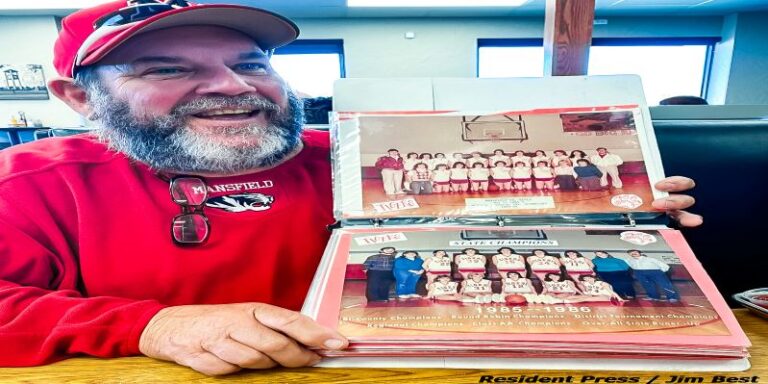
A few weeks ago, Bill sat down with me and my wife, Elaine, at a restaurant in Greenwood to visit with him and to record his interview for this, the first part of a two-part series on the Bill Frye Classic. And although Bill coached most of his career in Mansfield, his career actually started out in Altus.

So, I asked him to start by telling us about his career, and Coach Frye began by saying, “I coached for 38 years. Thirty-eight and a fourth, actually. When I graduated from the College of the Ozarks, I applied for the Altus job. When I applied for the job, Cindy (Bill’s wife), was in the tenth grade at Altus High School.” Bill was hired as the boys basketball coach. “The first year, the gym was condemned. We practiced outside; it was terrible. We never won a game. Then, we got into baseball season, and we were pretty good. That was in 1976-77. The next year at Altus, we had a new gym. But still, we struggled. I worked in the summers at Cargill. I then had a job at Hartford, because someone had quit. I went to Coal Hill (now Johnson County Westside) for a year, and then I applied to Mansfield. Coach Sparks was at Mansfield at the time, and I ran into him at the mall in Fort Smith, and he said, “Hey, I need a coach.” So, I interviewed and got the job at Mansfield in 1980-81 as an assistant football coach.” And from that time on, Coach Frye remained at Mansfield for the rest of his career.

His stint as an assistant football coach, “Kind of worked into basketball. Assistant football coach, 7th grade football coach, and they gave me a junior high boys team. We went 21-4 that year, so then I was given the junior girls. We went 15-5 that season and got beat by Clarksville in the district tournament finals. So then, I got the senior girls, and junior girls. I did junior girls for 18 years and senior girls for twenty some-odd years. We won the state championship our third year.”

In a piece of trivia that Bill shared with us in his interview, he recalled the year, 1990-91, that University of Central Florida and former Auburn University head football coach, Gus Malzhan, applied for the head football coach position at Mansfield High School….and did not get the job. Malzhan was deemed not to have enough experience for the Mansfield job at the time. According to Frye, Malzhan was “fresh out of college” at the time. But as this story goes, life takes unexpected turns and twists, but things always seem to work out they way they were intended.

And such was the case with Bill Frye. Frye amassed 399 victories as a high school girls basketball coach. Toward the end of his coaching career, Frye was reassigned from girls basketball to baseball. And that is where the story of the Bill Frye Holiday Basketball Tournament Classic really begins.

At the time, Mansfield athletic director Floyd Fisher, who is currently the Mansfield Middle School principal, recalled in a conversation that now A.D. John Mackey, and then coach Brent Reeves, were instrumental in having a holiday tournament and naming it after Coach Frye. In fact, as a salute to Frye’s career and contribution to the basketball program at Mansfield, the coaches invited Bill to sit as an honorary coach on the bench for one game so that Frye would win his 400th girls basketball victory of his career. A move that was made as a result of the love and respect Bill’s colleagues have for him and his work as a coach in the district.

The 2005-06 school year was the final year of Frye’s coaching career. “There is a long story behind that.” And again, in full disclosure to our readers, it is not my intent to point fingers, assign blame, or editorialize my opinion as to what happened to end Coach Frye’s coaching career. He speaks of the district with great affection and loyalty to this day, and his wife, Cindy, still works in the district office, serving the students and staff at Mansfield. The Fryes are a class act, and it is not my intention to cast a shadow on any aspect of their careers or tenure in the district.

However, it is significant to consider that regardless of the political environment at that time in both the community and within the district, Coach Frye’s colleagues at that time felt so strongly as to name the tournament after Bill Frye. Quite a compliment to Coach Frye when it may have been easier for those coaches to not to take the risk in doing so. But, again, if you know Bill the way I do, you can certainly understand the respect those coaches have for him, and why they stepped out to make the tournament happen in celebration of Coach Frye’s career.

But his coaching career did come to a close, and as an administrator in the district, including years as the high school principal on the staff that Frye served, I had the honor and pleasure of working with him each day. We became great friends, and remain so to this day. He has influenced many students throughout his career, and each one of them know that he loved them and wanted nothing but the best for each student.

So the 2021 edition of the Bill Frye Classic will begin on December 28. I will be in Mansfield on December 29 & 30 to cover the tournament and the play of the Paris Eagles boys team. But, I am especially looking forward to my second interview with Coach Frye, and, doing a lot of damage with Coach in the tournament’s hospitality room where, every year, there is great food for the coaches and officials in the tournament. Coach Frye will present the winners’ trophies on the final night of the tournament, and Resident Press will be there to bring you photos from the trophy presentation.

Make sure you don’t miss part two of this story as told by Coach Bill Frye. It will be a great way to end 2021 and begin the new year on a very positive and inspirational note.

Thanks again to all of our Resident Press readers! You are what inspire us every day!

Five ways to fight CWD in Arkansas

Randy Zellers Assistant Chief of Communications

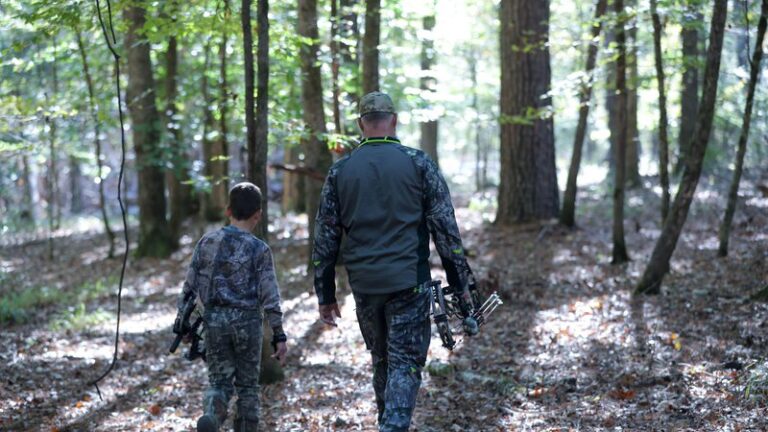
LITTLE ROCK — The recent news of chronic wasting disease being found far away from any previous detections has caused some hunters to worry about the future of deer hunting in The Natural State. CWD is a cause for concern for the health of Arkansas’s deer herd, but it does not mean the end of deer and deer hunting in Arkansas. Here are five ways hunters can help fight CWD and ensure our hunting traditions continue well into the future.

Keep Hunting
According to Dr. Jenn Ballard, state wildlife veterinarian for the Arkansas Game and Fish Commission, the best thing hunters can do to help fight the disease is to keep enjoying deer season, and even harvest an extra deer or two for the freezer if possible. 

“Reducing the density of deer in areas where CWD is known to occur can help slow the spread to new areas. Deer naturally disperse less from lower density herds,” Ballard said. “The added samples from around the state also help us monitor the occurrence of the disease across the landscape.”

Get Your Deer Tested
When you do shoot a deer, get it tested for CWD at one of the AGFC’s many free testing locations. A.J. Riggs, wildlife health biologist for the AGFC, works daily to retrieve samples and submit them to the Arkansas Veterinary Diagnostic Laboratory and the Wisconsin Veterinary Diagnostic Laboratory.

“We have more than 100 drop-off locations for hunters with at least one in every county,” Riggs said. “We also have a network of taxidermists available throughout the state who will pull samples as well. We’re always looking for ways to promote testing your deer for CWD, so even if you don’t harvest a deer, we appreciate spreading the word about these free options.”

Tests normally take 10 to 15 business days to process, and anyone with a CWD-positive test result will be contacted via phone to notify them of the situation.

Visit www.agfc.com/cwd for a list of test locations and instructions on how to get your deer tested for free.

Avoid Artificial Congregation
There’s no preventing deer from coming into contact with the same natural food source or area, but hunters can help slow the spread by not fanning those flames. Activities such as supplemental feeding that artificially congregate deer can increase disease transmission and hinder other management efforts. Mineral licks also can create a biological sink that can transfer diseases for many years as the salt and minerals can leach into the soil and continue to attract deer for many years after the salt block’s removal. It is highly recommended not to bait or offer supplemental feed using feeders and to neutralize mineral sites by removing the salt block and covering the area with dirt from an area that does not have the salt deposits. In situations where baiting is necessary to effectively hunt, it is preferred to only bait in small quantities and short durations to minimize repeated exposures to the same location.

Keep it Local
The best way to fight CWD is to prevent it from spreading to a new area in the first place. Avoiding the introduction of infected deer, either live or dead, prevents disease introduction through human activities. Hunters should limit moving any deer from an area known to have CWD to prevent its spread.

The carcasses of deer taken in areas known to have CWD or areas within the AGFC’s CWD Management Zone should be kept in those areas. Deboned meat, antlers, cleaned skull plates, hides, teeth and finished taxidermy from these deer can all be moved outside of the area, as these are all low-risk for transmission of prions. The animal’s bones, nervous system and organs should be disposed of properly, either at an approved, lined landfill or buried where scavengers cannot spread the carcass. If a landfill or burial is not possible, returning the post-processed carcass as near as possible to the area of harvest is preferred.

Report Sick or Dead Deer
Anyone who sees a deer displaying the clinical signs of CWD or found dead with no apparent injuries is encouraged to contact the AGFC immediately. Call 800-482-9262 to report any deer that show a lack of awareness, poor posture, insatiable thirst or and extremely emaciated look. Dispatchers are available to take calls 24 hours a day/seven days a week.

“There are other diseases that cause some signs similar to CWD, so we can’t jump to the conclusion that a deer is positive simply from observation,” Ballard said. “We will do our best to dispatch someone to quickly and humanely remove the deer from the population and have it tested.”

Don’t shoot the animal yourself unless instructed to do so. If there is not a staff member available to retrieve a sample, it may deteriorate to a point of not being viable for testing.

“A deer displaying signs of CWD is likely not going to go very far,” Ballard said. “The best thing to do is get exact coordinates of the last sighting and call us.”

Visit www.agfc.com/cwd for more information on CWD in Arkansas, including the latest detection in south Arkansas.

Donate your Christmas tree to boost angling action

Randy Zellers Assistant Chief of Communications

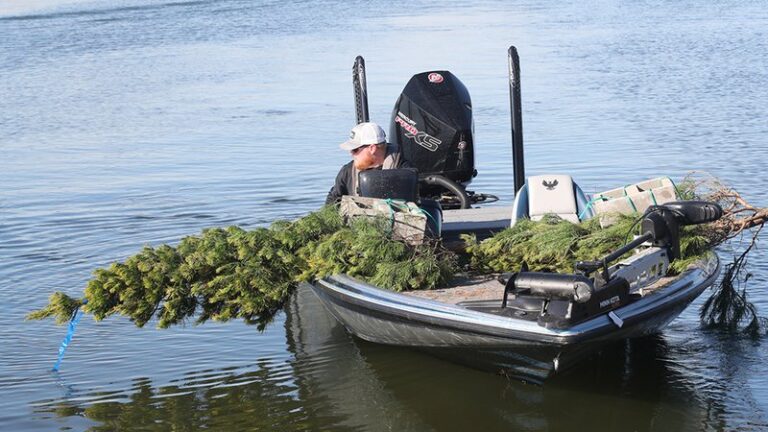
LITTLE ROCK — Once the wrapping paper has been thrown away and the last drop of egg nog has been consumed, few people have a use for that evergreen tree that graced their home during the holiday season. The Arkansas Game and Fish Commission has a new job for those leftover trees: fish habitat.

The AGFC has drop-off locations across the state to let your old Christmas tree have a second life as underwater cover. The small spaces and dense cover offered by fresh Christmas trees make excellent nursery habitat for small fish as well as great places to fish.

Anglers are welcome to remove trees from drop-off locations to create their own fish attractors. Tying the trees to cinder blocks with parachute cord is a popular option to weight the trees down.

The small branches will deteriorate quickly, so it’s best to sink the trees in groups. The trunks of the trees will last much longer, offering some woody cover long after a single tree’s attractiveness wanes.

Trees should be clean of all ornaments, lights and tinsel before they are dropped off. Artificial Christmas trees should not be used as fish habitat, either.

Trees can be dropped off at any of the following locations until the end of January:

Northwest Arkansas
Beaver Lake – Highway 12 Access, AGFC Don Roufa Highway 412 Access and Monte Ne Boat Ramp Access
Lake Elmdale – Boat Ramp Access
Bob Kidd Lake – Boat Ramp Access
Crystal Lake – Boat Ramp Access

North Arkansas
Bull Shoals Lake – Any U.S. Army Corps of Engineers boat ramp
Norfork Lake – Any U.S. Army Corps of Engineers boat ramp

Northeast Arkansas
Jonesboro – Craighead Forest Park Lake boat ramp
Lake Bono – Boat Ramp Access
Lake Walcott – Crowley’s Ridge State Park Boat Ramp Access
Lake Charles – West parking lot at Highway 25 Boat Ramp Access

Central Arkansas
Arkansas River – Riverview Park Access in North Little Rock
Lake Barnett – Reed Access
Lake Conway – Lawrence Landing Access
Greers Ferry Lake – Sandy Beach (Heber Springs), Devils Fork Recreation Area and Choctaw Recreation Area (Choctaw-Clinton)
Harris Brake Lake – Chittman Hill Access
Lake Pickthorne – Boat Ramp Access
Lake Overcup – Lake Overcup Landing
Cox Creek Lake – Cox Creek Lake Public Access
Lake Hamilton – Andrew Hulsey State Fish Hatchery Access Area
Jack Nolen – Boat Ramp Access at Fire Station
Sugar Loaf Lake – Boat Ramp Access

East Arkansas
Horseshoe Lake — Boat Ramp Access
Wynne Sports Complex Family and Community Fishing Pond

Southeast Arkansas
Lake Chicot – Connerly Bayou Access Area
Lake Monticello – Hunger Run Access
Cook’s Lake – Potlatch Conservation Education Center at 625 Cook’s Lake Road, Casscoe, or the bus lot across from Grand Avenue United Methodist Church in Stuttgart

South Arkansas
Camden – AGFC Regional Office on Ben Lane, next to the National Guard Armory
Upper White Oak Lake – Upper Jack’s Landing
Magnolia – Columbia County Road Department Yard on Highway 371
El Dorado – City recycling center drop-offs: one behind Arby’s and one on South Jackson
Smackover – Recycling Drop-Off Center (these will be transported to El Dorado)

Southwest Arkansas
Bois d’Arc Lake – Kidd’s Landing or Hatfield Access
Millwood Lake – Cottonshed, White Cliffs Recreation Areas and the Millwood State Park ramp on the point
Dierks Lake – Jefferson Ridge South Recreation Area
De Queen Lake – Any U.S. Army Corps of Engineers boat ramp
Gillham Lake – Any U.S. Army Corps of Engineers boat ramp
Lake Greeson – New Cowhide Cove and Self Creek Recreation areas
South Fork Lake – South Fork Lake Access
Terre Noire Lake – Terre Noire Lake Access
Hope – AGFC Regional Office on U.S. Highway 67 East
Lake Dieffenbacher – Bobby Ferguson Park Pavilion

Timepiece: Train Tracks to Nowhere

By Dr. Curtis Varnell

Until the middle of the last century, trains were the primary means of travel for most Americans.  Virtually every town had a train depot and the whistle and roar of trains passing through a town was a common occurrence.

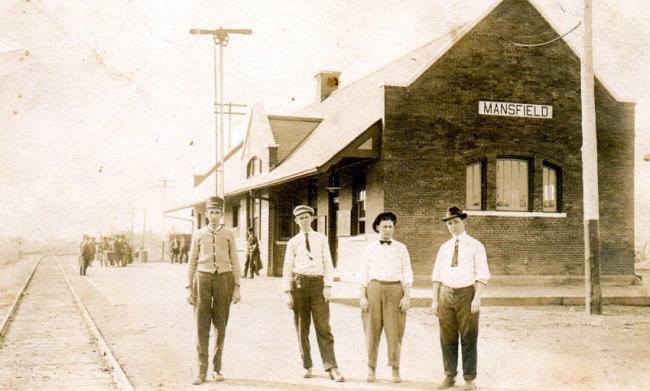
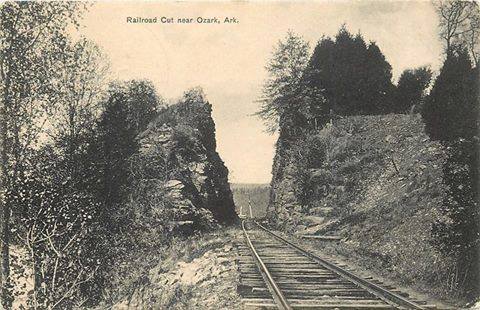
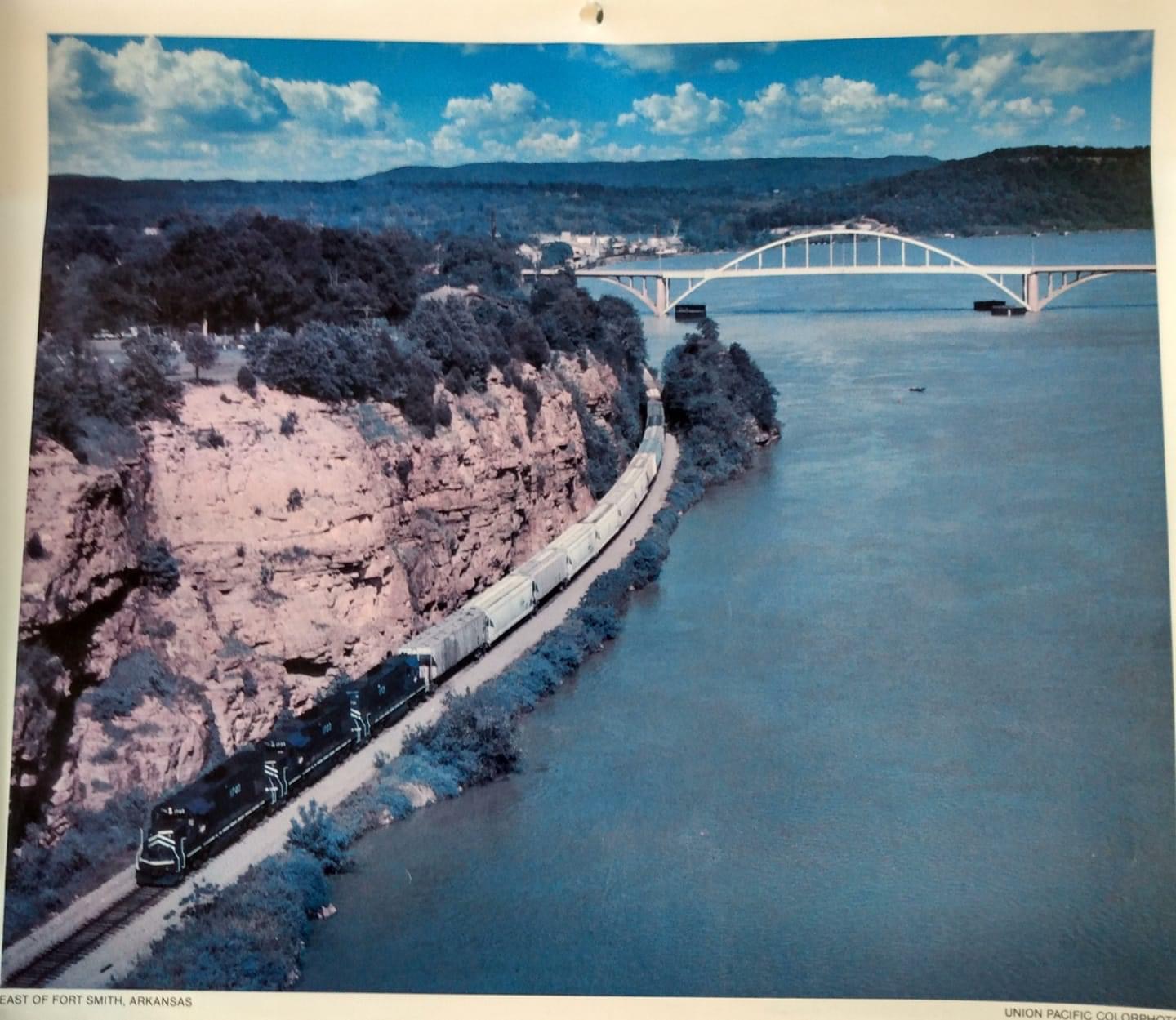
When the Civil war ended, Arkansas had only thirty-eight miles of track in the entire state.  That quickly changed and rapid expansion of railway systems soon created railroad lines across the state.  By 1874, Fort Smith became the center for the north-south track running from Cairo, Illinois into Arkansas and eventually, fueled by local coal, through Hackett, Hartford, Mansfield and further South.  The east-west line ran from Memphis, through Little Rock, Clarksville, Ozark and into Fort Smith.  The competing lines were eventually bought up by Jay Gould, one of the big time financial giants of the age of expansion.  Gould once visited Fort Smith is his state-of -the art coach and hundreds showed up at the station to view the financial giant only to have him remain in his coach, too important and elite to concern himself with the locals.

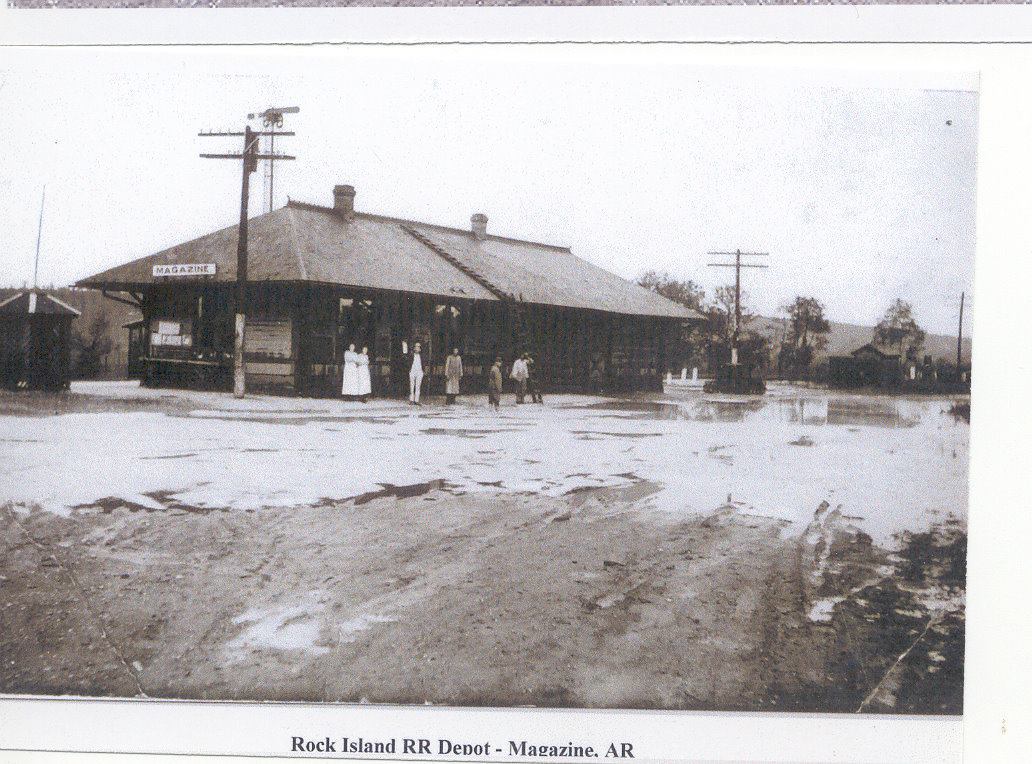
By 1890’s, various railways began to expand into smaller communities. Fort Smith, Charleston, and Paris contributed money and land to the rail system to begin expansion down what is now highway 22 and the first train arrived in Paris in 1898.  A year later, the Rock Island connected Fort Smith to Mansfield, Booneville, and then into Ola. The initial impetus for expansion was the transport of farm products, especially cotton, to the international market.  When high grade coal was found in Charleston, Paris, and later Scranton, trunk lines were built into those towns connecting the entire region with Dardanelle.

The rail system opened up the world to the scattered and isolated regions.  People from the delta began taking excursions to the mountaintops of Nebo, Magazine, and Petit Jean in order to escape from the summer heat and humidity.  Hotels, complete with swimming pools, golf courses, and even running water were constructed to relieve the tourists of their excess greenbacks.  One today can little imagine the willingness of a person to exit a train at Dardanelle, Havana, or Blue Mountain and take a horse-driven hack miles up the side of a mountain to spend a few days in a rustic retreat.  On Magazine Mountain, the terrain was so rough that passengers had to walk carrying their luggage up the last few hundred yards.

Locals took shorter tours, traveling to Confederate park in Charleston to picnic or to Mansfield to play the locals a baseball game.  Sunday travel tours were common with people dressing in their Sunday best for a coach ride through the country side.  At Blue Mountain, one could exit the train, travel up the mountainside a few miles to twin falls and enjoy man-made swimming pools complete with changing areas, a dance floor, and probably some illegal moonshine during prohibition days.

Bonneville was a divisional center for the Rock Island and a layover point for rail employees.  Its extensive depot became the Grier house restaurant and was a favorite dining and lodging place for travelers throughout the region.

With the ending of WW11, travel changed to the automobile.  Coal fields closed down, agriculture moved to California and points west.  Slowly, the rail systems to small towns stopped, the depots crumbled or burned, and a way-of-life ended.  Remnants of the lines remain, a bridge here and there, the old upraised rail road path, and in a few places, rusted train tracks that now lead nowhere.

Part Two: The Army / Navy Game; It’s a Big Deal

“It was a great weekend, but the game…” That was the response I got from retired Army Colonel Jeff O’Neal after his return from the annual Army / Navy football game. He and his wife Michelle spent the weekend in New Jersey at the game and had the opportunity to visit their son, Jackson, who is a junior at West Point. Army lost a close game, 17-13, to the Navy Midshipmen who were playing their final game of the 2021 season. Army’s season will end today when the Black Knights play the Missouri Tigers in the Lockheed-Martin Armed Forces Bowl today in Fort Worth, Texas. That will be the culmination of a good season for Army, but make no question, their annual battle with Navy is perhaps more meaningful to Army than any bowl game. For both academies, the Army / Navy game is, “A big deal.”

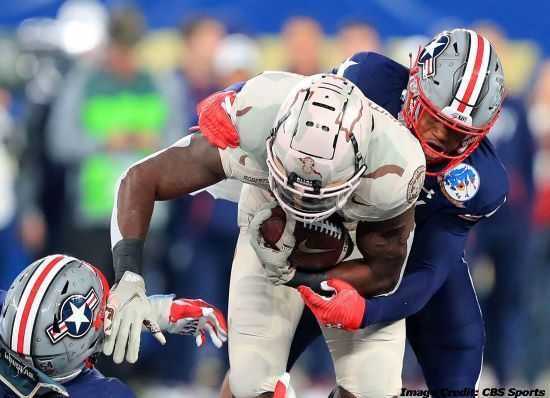
Each year, football fans anticipate the special uniforms the Army and Navy players will wear in their annual battle. Both academies go all out with special commemorative uniforms that highlight a special aspect, group, or unit of their branches of the military. And this year, both academies again donned very special uniforms for the Annual Classic. For Navy, the midshipmen wore blue uniforms trimmed in silver and red that paid tribute to Naval aviation and the F/A -18 that was featured in the 1980s movie, “Top Gun”. Across the line of scrimmage, the Army cadets wore uniforms that honored the Army special forces that immediately responded to fight the Taliban in Afghanistan after the 9/11 terrorists attacks on New York City, Washington, DC, and Shanksville, Pennsylvania.

Navy won a hard-fought game over Army, 17-13 (Image courtesy of CBS Sports)

But as everyone knows, the event is more than a football game. It is, in this author’s opinion, one of the last remaining true traditions of our nation in which patriotism and military service to our country is both honored and celebrated. The football game is almost symbolic of the readiness of each cadet and midshipman and their preparation to potentially go to battle for the defense of our great nation. Professional football careers are not the objective of the players, but becoming professional military officers and great servants to their nation is the higher and more honorable goal and desire of each player. And for former West Point graduate and now retired Army colonel Jeff O’Neal, the game was not only a return to support his Alma Mater, but was yet another chapter in his family’s service as he and his wife, Michelle had the opportunity to visit their son, Jackson, who is a third year cadet at West Point and who will follow in his dad’s foot steps as an Army officer when he graduates in a little less than 18 months,

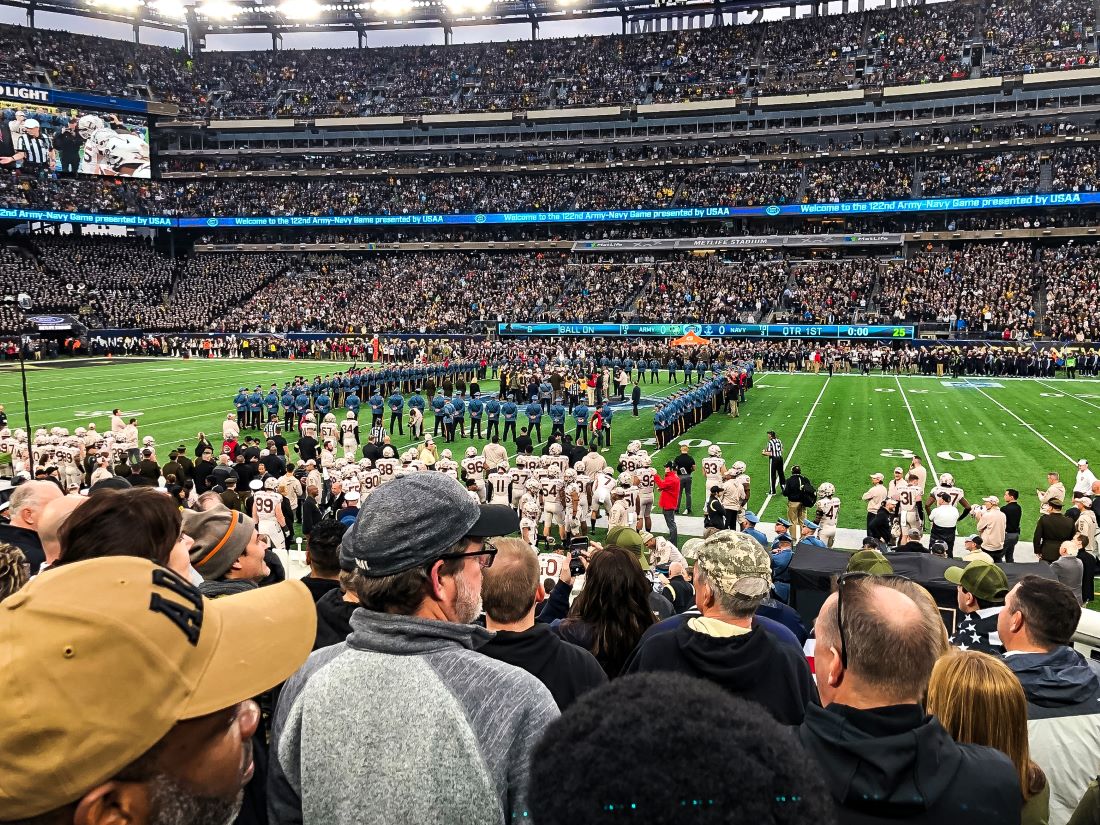
The Army & Navy “March On” of cadets and midshipmen during pregame is a traditional highlight of the annual game. Pictured above is the pregame coin toss with surrounding members of the New Jersey State Police (Image special to Resident Press; published with permission of Jeff O’Neal)

I focused on Colonel O’Neal’s military service and his experience at West Point in the first part of this story. If you missed it, you can still find it on the Resident Press website. So, in our second interview, I asked Colonel O’Neal to share with me what his wife’s support has meant to him throughout his military service and their marriage. I asked him in part because I was struck by his comments in our first interview about his possible advancement to the rank of General during his career. To paraphrase, I left the interview with the impression that he had a possible path to advancing to this rank, but his marriage to Michelle compared to the time commitment that would be required at a higher rank was a determining factor for Colonel O’Neal. In short, he did not want to take on more time and responsibility with a higher rank at the expense of his time with Michelle. This, from a man who had a tremendous career and who gave me the impression that his reputation as a good officer and having dedicated his life to taking care of his military personnel who served under him, as well as his family, made the decision to prioritize his wife and family first. That impression of Colonel O’Neal speaks the loudest to me, and on top of every accomplishment he shared with me, that may be the single most significant characteristic of Colonel O’Neal that I admire about him the most. He is a quality man, and my two interview sessions with him have left me with only the highest respect I could have for anyone. He is a tribute to his wife and family, as well as to our nation’s military. And it was my honor to write his story.

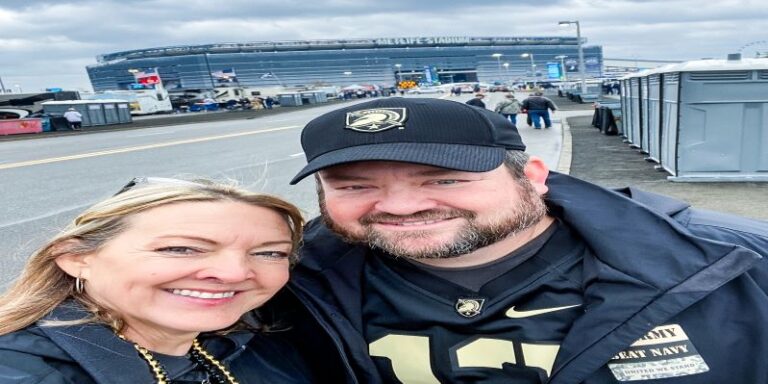
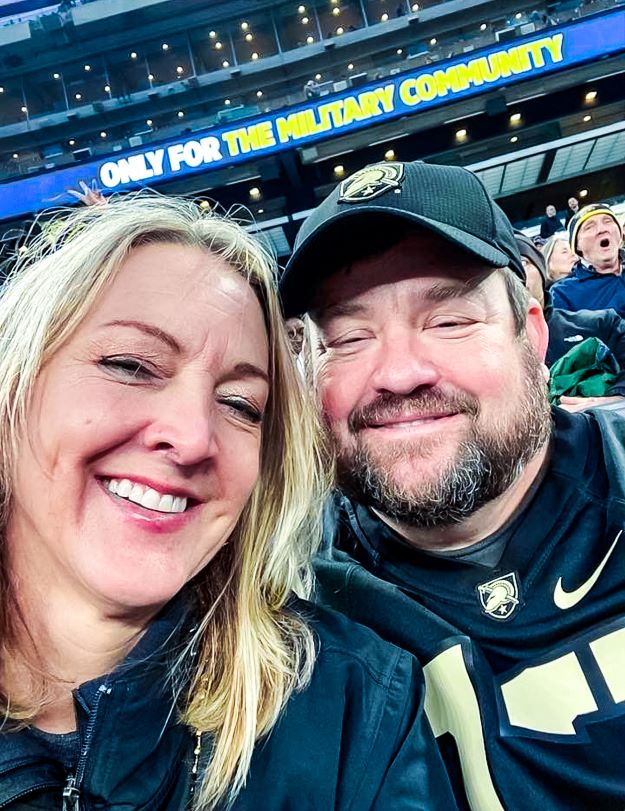
Retired Army Colonel Jeffrey O’Neal and his wife, Michelle, pictured here at the 2021 Army / Navy Football Classic (Image special to Resident Press; published with permission from Jeff O’Neal)

But all in all, it was a great weekend at the game for the O’Neals. Colonel O’Neal shared, “Jackson was able to come down (from West Point) on Friday.” Four of the grads who were fellow cadets with O’Neal from the Class of 1990 had dinner with the O’Neals and also had children who are currently cadets at West Point.

The O’Neals attended the Class of 1986 tailgate party. Class, graduates included Mike Pompeo, former US Secretary of State, Mark Esper, Secretary of Defense. Esper attended the tailgate party on Saturday.

The “march on” of Army cadets took place at 12 noon during on-field, pregame ceremonies. Their son, Jackson, had to report to the stadium parking lot no later than 10 a.m. O’Neal went on to say that “The Army theme and uniforms were dedicated to “Task Force Dagger” which was the group of special forces that rode on horse back and confronted the Taliban immediately after 9/11. Those guys were there at the tailgate. The Army uniforms were replicas of desert camouflage. This year’s game was the 20th Anniversary of 9/11, and those guys were our first response, twenty years ago.”

I asked Colonel O’Neal what it felt like to be in the stands as a West Point graduate and to watch his son march on to the field as a West Point junior. He immediately answered, “Very proud. I remember doing it (marching onto the field) and thinking at the time, “Man this is so cool.” It is so cool to go out there and represent the Corps, and you see all the symbols of your country and patriotism. I remember walking out when it was at Veterans’ Stadium in Philadelphia and we all had to watch Eagles football games, Eagles / Cowboys football games, and thinking how cool it was that we were on that field. And my senior year, we did it at Giants Stadium in East Rutherford, New Jersey, and it was just a real honor to do it. You think about all of the other cadets throughout history who have done it. I just remember how cool it was and that I would remember it forever. And then I thought how cool it was to see my son do it and see it in his eyes. I told him just before he left the hotel to remember to think how cool this experience is and to look around the stadium and appreciate how cool it is. I told him to take it all in.”

As the conversation went on, I asked him about his wife Michelle and the importance of her to their marriage and his career. “She has been everything. We were pretty good friends when we knew each other living in the County Line area, and I have a picture somewhere were she wrote, “When you get as tall as I am someday we will get married.” We were dating when I went to West Point and we broke up my freshman year. She was the one who got away from me. We started dating again when I was stationed at Fort Campbell (Kentucky). We got married soon thereafter. I had an offer to return to West Point, and Michelle was not a fan of West Point. I declined the offer, saying, “It is not a good time for me to go back to West Point right now.” We got married and moved down to Fort Polk, Louisiana.”

Later on, Michelle agreed to move to Fort Drum, New York where Colonel O’Neal would train with the 10th Mountain Division. “Great guys up there; that is why you go places is because of the guys you will work with. So, we had two little boys while we were there, pregnant with our daughter, Rachel…so if we could make it through that we could make it anywhere.” The divorce rate was high among officers and their wives, and the O’Neals were one of few surviving marriages at that time. “After 9/11, you were either deploying, prepping for deployment, or training someone else for deployment. That’s what my life was after 9/11.”

The O’Neals have a daughter, Rachel, who is a junior at Paris High School. Rachel played on the state champion Paris Lady Eagles volleyball team and is currently playing basketball for the Paris Lady Eagles, as well. Rachel, according to Colonel O’Neal, has considered following in the family foot steps at West Point, but now appears to be leaning at attending the University of Arkansas to major in nursing. “She wants to be an Army nurse. They have a nursing mission at the U of A and she has a chance to compete for a four-year ROTC scholarship that will pay for tuition and fees She could also go off during the summer for four or six weeks to work in an Army hospital in Germany or Hawaii to get some on the job training. For her to do nursing, she would be commissioned as a second lieutenant and then as an Army nurse. They Army will send her off for some sort of specialized, professional training in nursing. She will also have the opportunity to train to be a nurse practitioner and the Army will pay for that, as well.”

So, as our second interview began to wind down, it became increasingly apparent to me how special Colonel O’Neal and his family are and what a value they are to the Paris community. No one can fully appreciate the accomplishments and the service this family has give to our community and to our nation through their service and sacrifice. It was an honor to interview Colonel O’Neal, and having the privilege of sharing his story with our readers is very special to me and something I will forever appreciate. If you ever see Colonel O’Neal, or any other veteran, make sure you show your appreciation by thanking them for their service. And don’t forget to show appreciation for their families, as well. They are the backbones behind the men and women who serve our nation.

Yes, the Army / Navy game is a big deal…..and the men and women of our military are even more special. Thank you all, from the bottoms of our hearts, for your unselfish service to our nation that protect the freedoms who cherish so much.

And in the words of Colonel O’Neal….BEAT NAVY!

The Most Impactful Benefits of Vertical Farming

Vertical farming has revolutionized the agriculture industry. Through advanced methods, commercial growers can produce large quantities of crops quickly and efficiently. While traditionalists may resist new farming techniques, there are so many advantages to this new way of growing crops that are difficult to ignore. Here are the most impactful benefits of vertical farming.

Reliable Crop-Production

One huge limit that holds traditional farming back is reliance on seasons. With vertical farming, you can grow crops year-round, regardless of the weather. Farmers can meet customer demands more reliably when they don’t have to fight dry seasons. Vertical farming also reduces harvest times and allows farmers the freedom to grow whatever they want, whenever they want.

Environmentally Friendly

One of the most impactful benefits of vertical farming is its environmentally friendly qualities. Vertical farming uses significantly less water, nutrients, and fertilizers than traditional farming methods. In addition, this technique doesn’t cause any land surface disturbance, which improves the area’s biodiversity. There is also no need for fossil fuels since vertical farming doesn’t need to power farming equipment to get the job done.

Protected From Nature

Vertical farming allows growers to maintain crops indoors, which protects them against the destructive forces of nature. Excessive rain, extreme heat, and strong winds can destroy produce before growing is complete, wasting the valuable time and resources put into cultivation. With vertical farming, you won’t have to worry about or rely on ideal weather conditions to grow healthy crops.

Saves Space

Crops need room to grow and fertile land to thrive, which isn’t always possible depending on your location. When comparing vertical farming to outdoor cultivation methods, the former is way more adaptable when it comes to utilizing limited space. Stacking systems allow crops to grow upwards instead of outwards, allowing farmers to optimize their area and produce crops at a higher rate, no matter how small of a space.

Vertical farming is a unique agricultural trend that is only rising in popularity. Experts are refining technology every day, providing innovative solutions to an industry that struggles to meet the demands of a growing population. In time, the future of farming will operate more efficiently, thanks to vertical farming.