
95.6 F
Fort Smith
Thursday, July 9, 2026
Home Blog Page 457

Part Two: The Army / Navy Game; It’s a Big Deal

“It was a great weekend, but the game…” That was the response I got from retired Army Colonel Jeff O’Neal after his return from the annual Army / Navy football game. He and his wife Michelle spent the weekend in New Jersey at the game and had the opportunity to visit their son, Jackson, who is a junior at West Point. Army lost a close game, 17-13, to the Navy Midshipmen who were playing their final game of the 2021 season. Army’s season will end today when the Black Knights play the Missouri Tigers in the Lockheed-Martin Armed Forces Bowl today in Fort Worth, Texas. That will be the culmination of a good season for Army, but make no question, their annual battle with Navy is perhaps more meaningful to Army than any bowl game. For both academies, the Army / Navy game is, “A big deal.”

Each year, football fans anticipate the special uniforms the Army and Navy players will wear in their annual battle. Both academies go all out with special commemorative uniforms that highlight a special aspect, group, or unit of their branches of the military. And this year, both academies again donned very special uniforms for the Annual Classic. For Navy, the midshipmen wore blue uniforms trimmed in silver and red that paid tribute to Naval aviation and the F/A -18 that was featured in the 1980s movie, “Top Gun”. Across the line of scrimmage, the Army cadets wore uniforms that honored the Army special forces that immediately responded to fight the Taliban in Afghanistan after the 9/11 terrorists attacks on New York City, Washington, DC, and Shanksville, Pennsylvania.
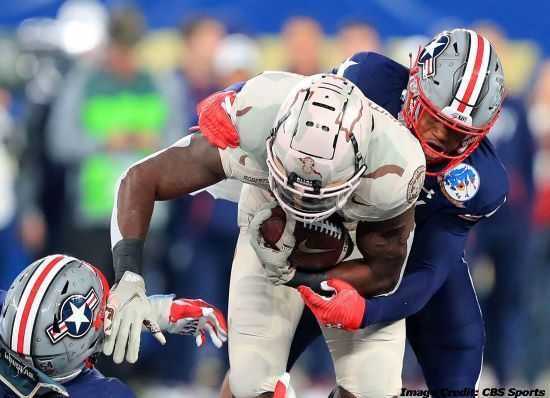
Navy won a hard-fought game over Army, 17-13 (Image courtesy of CBS Sports)

But as everyone knows, the event is more than a football game. It is, in this author’s opinion, one of the last remaining true traditions of our nation in which patriotism and military service to our country is both honored and celebrated. The football game is almost symbolic of the readiness of each cadet and midshipman and their preparation to potentially go to battle for the defense of our great nation. Professional football careers are not the objective of the players, but becoming professional military officers and great servants to their nation is the higher and more honorable goal and desire of each player. And for former West Point graduate and now retired Army colonel Jeff O’Neal, the game was not only a return to support his Alma Mater, but was yet another chapter in his family’s service as he and his wife, Michelle had the opportunity to visit their son, Jackson, who is a third year cadet at West Point and who will follow in his dad’s foot steps as an Army officer when he graduates in a little less than 18 months,
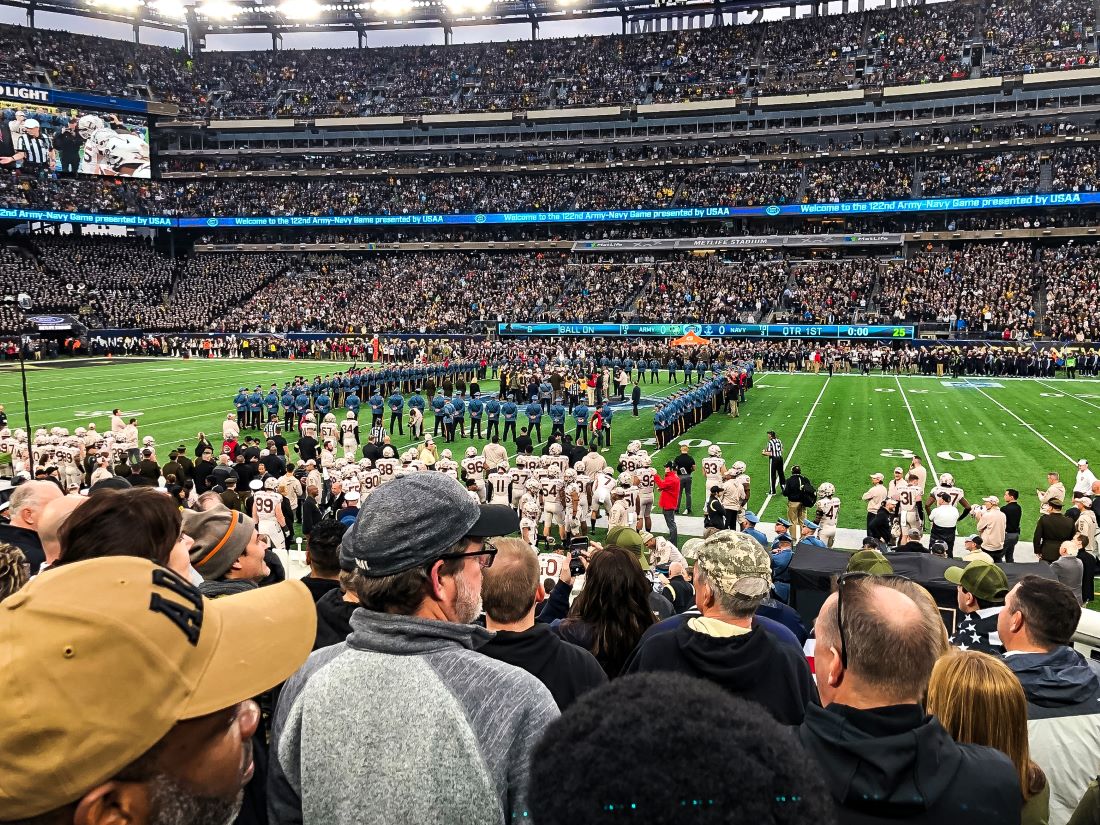
The Army & Navy “March On” of cadets and midshipmen during pregame is a traditional highlight of the annual game. Pictured above is the pregame coin toss with surrounding members of the New Jersey State Police (Image special to Resident Press; published with permission of Jeff O’Neal)

I focused on Colonel O’Neal’s military service and his experience at West Point in the first part of this story. If you missed it, you can still find it on the Resident Press website. So, in our second interview, I asked Colonel O’Neal to share with me what his wife’s support has meant to him throughout his military service and their marriage. I asked him in part because I was struck by his comments in our first interview about his possible advancement to the rank of General during his career. To paraphrase, I left the interview with the impression that he had a possible path to advancing to this rank, but his marriage to Michelle compared to the time commitment that would be required at a higher rank was a determining factor for Colonel O’Neal. In short, he did not want to take on more time and responsibility with a higher rank at the expense of his time with Michelle. This, from a man who had a tremendous career and who gave me the impression that his reputation as a good officer and having dedicated his life to taking care of his military personnel who served under him, as well as his family, made the decision to prioritize his wife and family first. That impression of Colonel O’Neal speaks the loudest to me, and on top of every accomplishment he shared with me, that may be the single most significant characteristic of Colonel O’Neal that I admire about him the most. He is a quality man, and my two interview sessions with him have left me with only the highest respect I could have for anyone. He is a tribute to his wife and family, as well as to our nation’s military. And it was my honor to write his story.
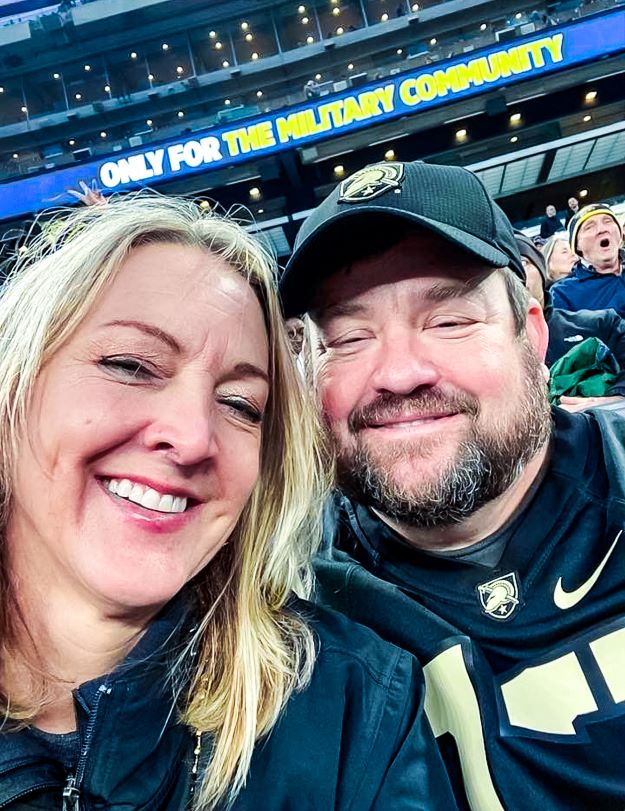
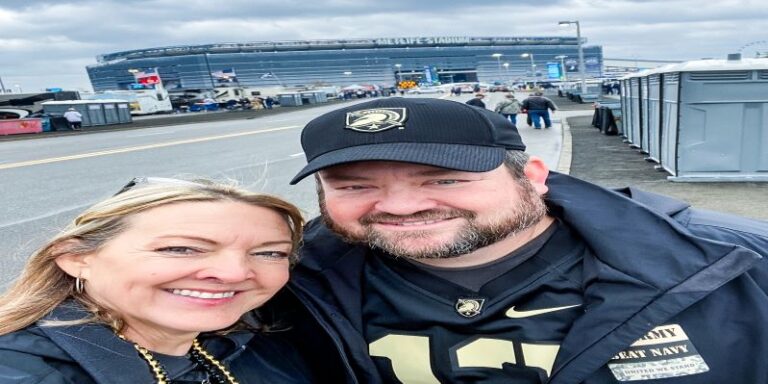
Retired Army Colonel Jeffrey O’Neal and his wife, Michelle, pictured here at the 2021 Army / Navy Football Classic (Image special to Resident Press; published with permission from Jeff O’Neal)

But all in all, it was a great weekend at the game for the O’Neals. Colonel O’Neal shared, “Jackson was able to come down (from West Point) on Friday.” Four of the grads who were fellow cadets with O’Neal from the Class of 1990 had dinner with the O’Neals and also had children who are currently cadets at West Point.

The O’Neals attended the Class of 1986 tailgate party. Class, graduates included Mike Pompeo, former US Secretary of State, Mark Esper, Secretary of Defense. Esper attended the tailgate party on Saturday.

The “march on” of Army cadets took place at 12 noon during on-field, pregame ceremonies. Their son, Jackson, had to report to the stadium parking lot no later than 10 a.m. O’Neal went on to say that “The Army theme and uniforms were dedicated to “Task Force Dagger” which was the group of special forces that rode on horse back and confronted the Taliban immediately after 9/11. Those guys were there at the tailgate. The Army uniforms were replicas of desert camouflage. This year’s game was the 20th Anniversary of 9/11, and those guys were our first response, twenty years ago.”

I asked Colonel O’Neal what it felt like to be in the stands as a West Point graduate and to watch his son march on to the field as a West Point junior. He immediately answered, “Very proud. I remember doing it (marching onto the field) and thinking at the time, “Man this is so cool.” It is so cool to go out there and represent the Corps, and you see all the symbols of your country and patriotism. I remember walking out when it was at Veterans’ Stadium in Philadelphia and we all had to watch Eagles football games, Eagles / Cowboys football games, and thinking how cool it was that we were on that field. And my senior year, we did it at Giants Stadium in East Rutherford, New Jersey, and it was just a real honor to do it. You think about all of the other cadets throughout history who have done it. I just remember how cool it was and that I would remember it forever. And then I thought how cool it was to see my son do it and see it in his eyes. I told him just before he left the hotel to remember to think how cool this experience is and to look around the stadium and appreciate how cool it is. I told him to take it all in.”

As the conversation went on, I asked him about his wife Michelle and the importance of her to their marriage and his career. “She has been everything. We were pretty good friends when we knew each other living in the County Line area, and I have a picture somewhere were she wrote, “When you get as tall as I am someday we will get married.” We were dating when I went to West Point and we broke up my freshman year. She was the one who got away from me. We started dating again when I was stationed at Fort Campbell (Kentucky). We got married soon thereafter. I had an offer to return to West Point, and Michelle was not a fan of West Point. I declined the offer, saying, “It is not a good time for me to go back to West Point right now.” We got married and moved down to Fort Polk, Louisiana.”

Later on, Michelle agreed to move to Fort Drum, New York where Colonel O’Neal would train with the 10th Mountain Division. “Great guys up there; that is why you go places is because of the guys you will work with. So, we had two little boys while we were there, pregnant with our daughter, Rachel…so if we could make it through that we could make it anywhere.” The divorce rate was high among officers and their wives, and the O’Neals were one of few surviving marriages at that time. “After 9/11, you were either deploying, prepping for deployment, or training someone else for deployment. That’s what my life was after 9/11.”

The O’Neals have a daughter, Rachel, who is a junior at Paris High School. Rachel played on the state champion Paris Lady Eagles volleyball team and is currently playing basketball for the Paris Lady Eagles, as well. Rachel, according to Colonel O’Neal, has considered following in the family foot steps at West Point, but now appears to be leaning at attending the University of Arkansas to major in nursing. “She wants to be an Army nurse. They have a nursing mission at the U of A and she has a chance to compete for a four-year ROTC scholarship that will pay for tuition and fees She could also go off during the summer for four or six weeks to work in an Army hospital in Germany or Hawaii to get some on the job training. For her to do nursing, she would be commissioned as a second lieutenant and then as an Army nurse. They Army will send her off for some sort of specialized, professional training in nursing. She will also have the opportunity to train to be a nurse practitioner and the Army will pay for that, as well.”

So, as our second interview began to wind down, it became increasingly apparent to me how special Colonel O’Neal and his family are and what a value they are to the Paris community. No one can fully appreciate the accomplishments and the service this family has give to our community and to our nation through their service and sacrifice. It was an honor to interview Colonel O’Neal, and having the privilege of sharing his story with our readers is very special to me and something I will forever appreciate. If you ever see Colonel O’Neal, or any other veteran, make sure you show your appreciation by thanking them for their service. And don’t forget to show appreciation for their families, as well. They are the backbones behind the men and women who serve our nation.

Yes, the Army / Navy game is a big deal…..and the men and women of our military are even more special. Thank you all, from the bottoms of our hearts, for your unselfish service to our nation that protect the freedoms who cherish so much.

And in the words of Colonel O’Neal….BEAT NAVY!

The Most Impactful Benefits of Vertical Farming

Vertical farming has revolutionized the agriculture industry. Through advanced methods, commercial growers can produce large quantities of crops quickly and efficiently. While traditionalists may resist new farming techniques, there are so many advantages to this new way of growing crops that are difficult to ignore. Here are the most impactful benefits of vertical farming.

Reliable Crop-Production

One huge limit that holds traditional farming back is reliance on seasons. With vertical farming, you can grow crops year-round, regardless of the weather. Farmers can meet customer demands more reliably when they don’t have to fight dry seasons. Vertical farming also reduces harvest times and allows farmers the freedom to grow whatever they want, whenever they want.

Environmentally Friendly

One of the most impactful benefits of vertical farming is its environmentally friendly qualities. Vertical farming uses significantly less water, nutrients, and fertilizers than traditional farming methods. In addition, this technique doesn’t cause any land surface disturbance, which improves the area’s biodiversity. There is also no need for fossil fuels since vertical farming doesn’t need to power farming equipment to get the job done.

Protected From Nature

Vertical farming allows growers to maintain crops indoors, which protects them against the destructive forces of nature. Excessive rain, extreme heat, and strong winds can destroy produce before growing is complete, wasting the valuable time and resources put into cultivation. With vertical farming, you won’t have to worry about or rely on ideal weather conditions to grow healthy crops.

Saves Space

Crops need room to grow and fertile land to thrive, which isn’t always possible depending on your location. When comparing vertical farming to outdoor cultivation methods, the former is way more adaptable when it comes to utilizing limited space. Stacking systems allow crops to grow upwards instead of outwards, allowing farmers to optimize their area and produce crops at a higher rate, no matter how small of a space.

Vertical farming is a unique agricultural trend that is only rising in popularity. Experts are refining technology every day, providing innovative solutions to an industry that struggles to meet the demands of a growing population. In time, the future of farming will operate more efficiently, thanks to vertical farming.

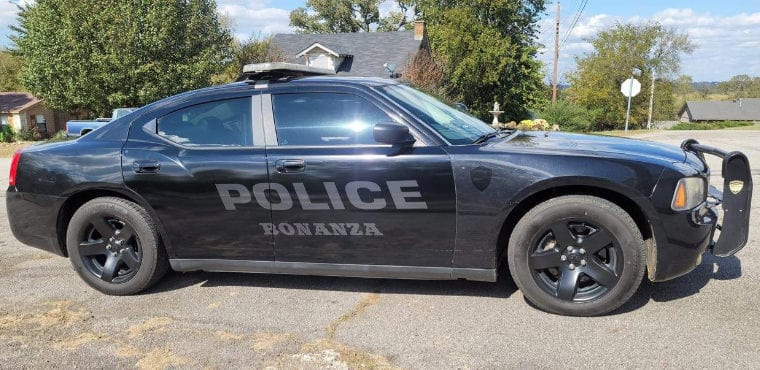
Bonanza PD Awarded Lifesaving Equipment Grant to Help Keep Community Safe

Bonanza, Ark  The past year and a half have been difficult for many, impacting first responders and communities across the country. As we continue to battle health crises and natural disasters, front-line heroes constantly expose themselves to dangerous situations, creating a need for updated lifesaving equipment. 

Recognizing this need, Firehouse Subs Public Safety Foundation®continues to be a valuable resource for first responders across the nation and recently provided a $29,874 grant to the Bonanza Police Department. The funding will be applied toward the purchase of radios for Bonanza officers and patrol vehicles, which will be used to ensure greater lifesaving capabilities for first responders in the community. 

“We are grateful to Firehouse Subs Public Safety Foundation and our local Firehouse Subs in Fort Smith, for awarding us this grant,”said Bonanza Police Chief Mike Barber. “By providing radios, ourfirst responders will be able to serve the people of Bonanza duringemergency situations, especially during the upcoming holiday season.”

During the most recent grant cycle, the Foundation awarded 126grants to public safety organizations nationwide. The 126 grants totaling nearly $2.7 million were given to organizations in need of critical lifesaving equipment and resources. 

To donate and learn more about Firehouse Subs Public Safety Foundation, visit FirehouseSubsFoundation.org.

Timepiece: Everything but the Squeal

By Dr. Curtis Varnell

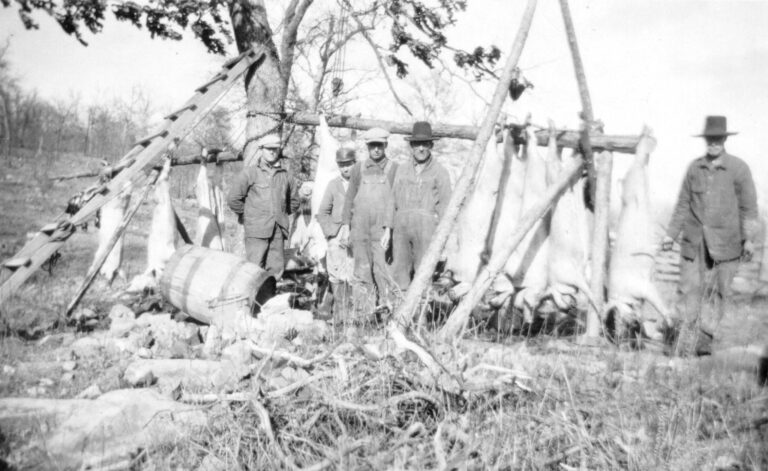
As we exited the house, the cold air burned our lungs and formed clouds of steam as we exhaled.   The trees and grass were covered by a glaze of alabaster frost.   It was hog butchering weather and a collection of kin folk were gathered to help with the task.  Lindal Parson’s, dad, and my step-grandfather William had been up early and had a fire blazing under two fifty-gallon barrels filled with water.  Planks laid across two saw horses formed tables on which the men planned to work.  On the tables lay the various knifes, saws, and utensils essential to completing the job.

My Uncle William James used the 22 rifle to end the life of the three hogs selected for butchering.  The pigs were pulled out of the mud and mire of the pen, hoisted upside down and bleed out.  Next, each hog was dropped into the steaming vats of water, scalded, and then removed and scraped. The heart, liver and other edible parts were removed and set aside.  

The hog was then quartered and divided into the traditional cuts.  Much of the fat was removed and thrown into the large black pots that one now sees decorating various yards.  Lard was rendered from the fat and was used for cooking or to make lye soap.  My grandmother even made her own lye by boiling ashes, skimming off the lye residue that rose to the top, and then mixing it with the lard and other ingredients to form soap. Crackling, the meaty material left when the lard was rendered, was kept and ate by itself or mixed with corn bread to form crackling bread.

All of the meat trimmed from the hams, shoulders, and back were thrown into a container. After going through the hand grinder, the fatty mixture was mixed with sage, salt, pepper and other spices to make sausage.  Some more enterprising neighbors cleaned the lower intestine and used it to make stuffed sausage links or cooked the intestine to make chitlins.  We generally just disposed of them. 

The back strap was usually cut into small pieces and used first.  Larger cuts, such as the hams and shoulders, were covered in sugar cure, a concoction of salt, brown-sugar, and spices.  Within in a few days, the salt dried and preserved the meat because refrigeration was minimal unless one had one of the new-fangled deep freezers.  Hog feet were boiled, placed in vinegar, and consumed as pickled hog’s feet.  The bones were cut into pieces and cooked along with collard greens or pinto beans.

The head was boiled until all the flesh left the bones; the resulting meat, gristle, and “lord only knows what,” was mixed with spices, cooled into a gelatinous concoction and cut into a lunch meat called souse.  My dad loved the stuff and I was always glad to give him, other kids, or even the dog my share. Even worse was the hog jowl which, combined with black-eyed peas, were supposed to bring you better luck in the New Year.  If you had to eat jowl and peas to start the year, you needed better luck!!

As the day waned, we put up the equipment, dumped the barrels of water, and sent tired neighbors home with fresh liver and choice cuts that required immediate preparation.  There was little to clean-up after they departed.  As my relatives stated, “we ate every part of those pigs except the squeal.”  

Thirty-seven Arkansas 4-H members attend centennial National 4-H Congress in Atlanta

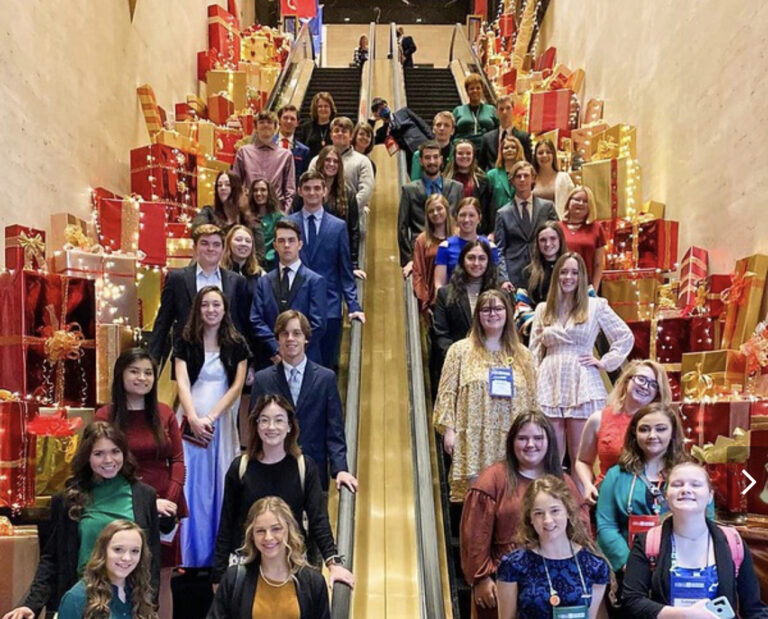
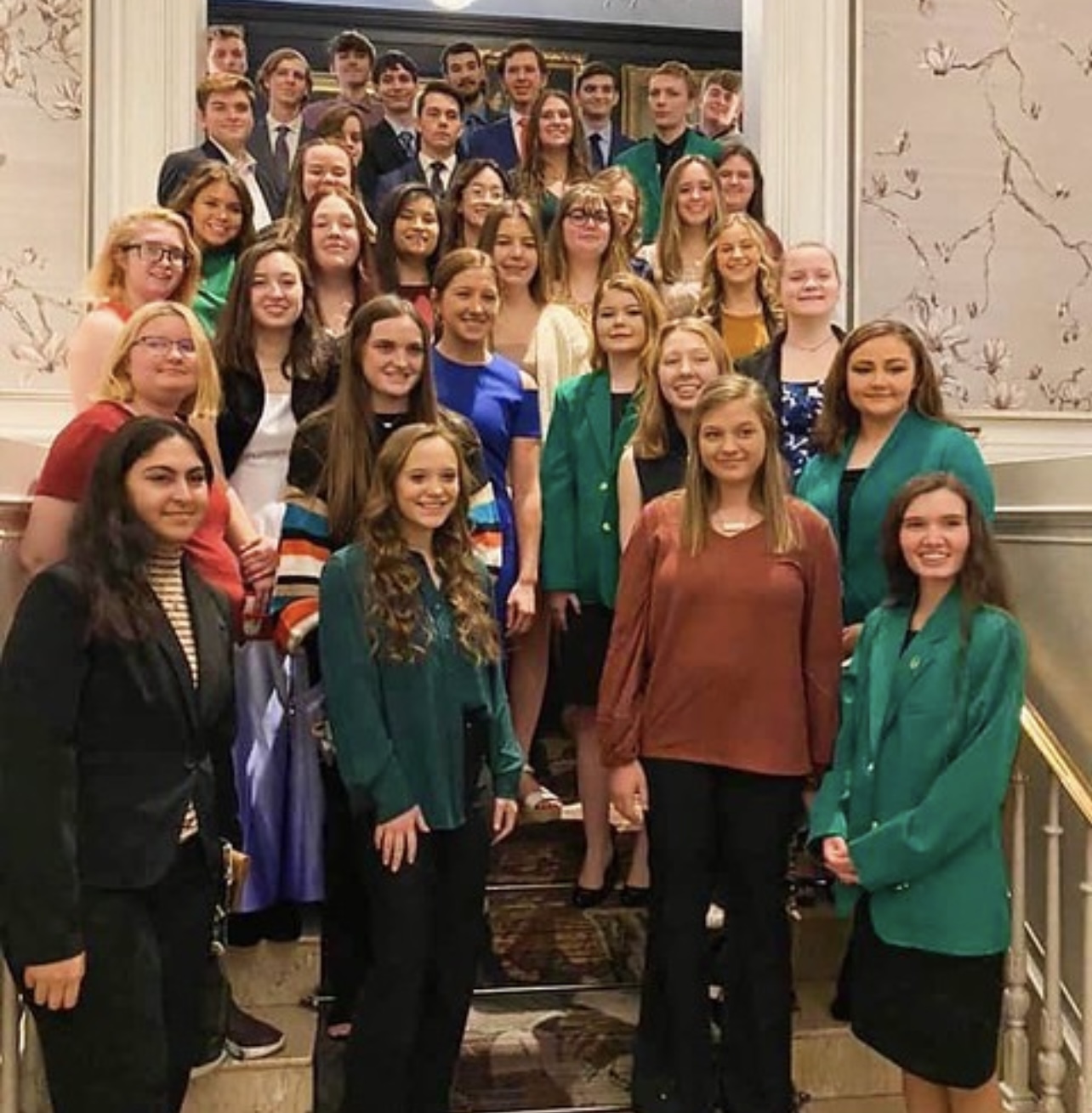
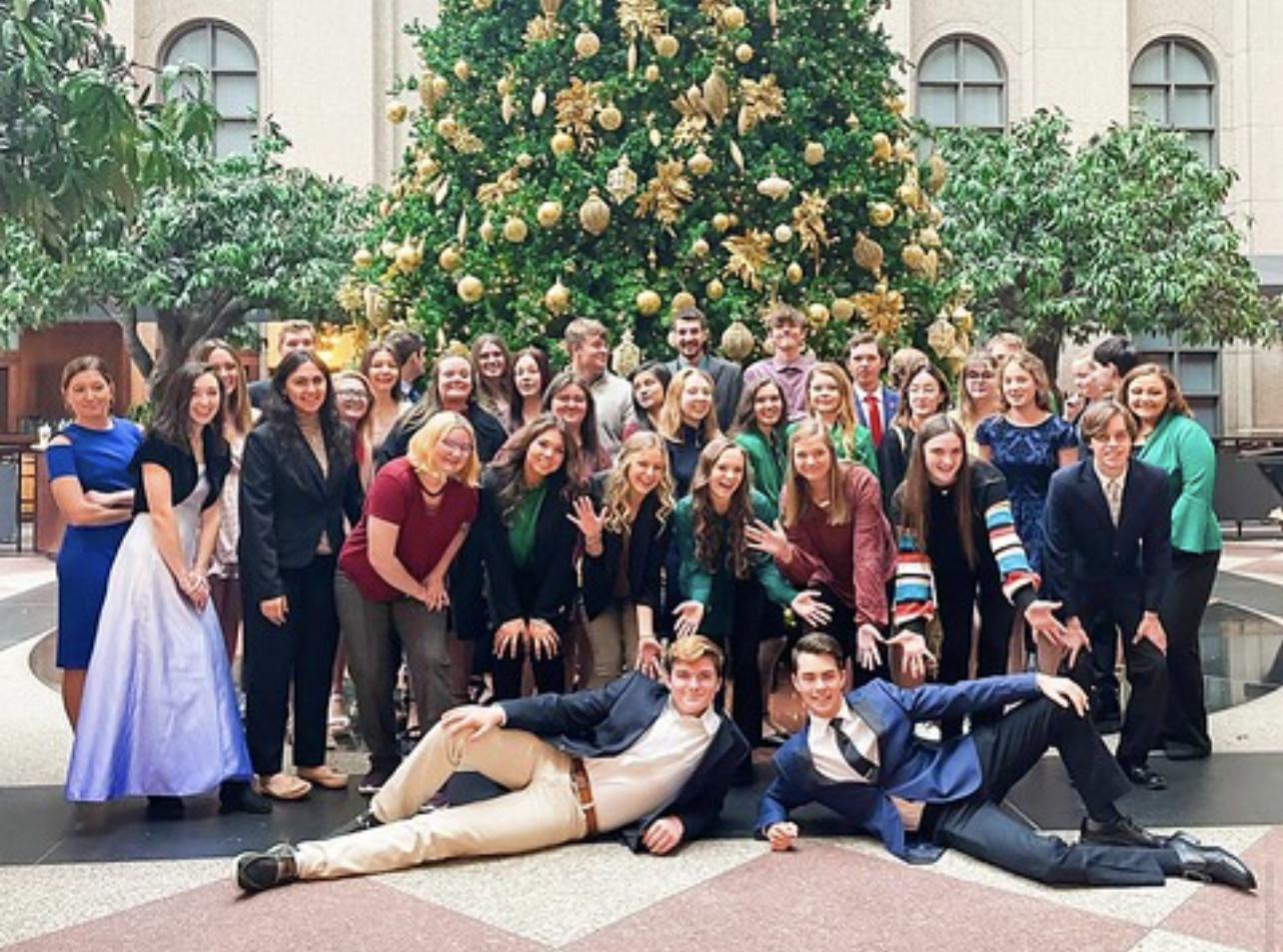
Thirty-seven Arkansas 4-H members are back from National 4-H Congress in Atlanta, where they were recognized for their achievements and continued learning about leadership, citizenship, global awareness and inclusion.

National 4-H Congress in Atlanta is the premier leadership event for senior 4-H members, and all attendees had winning project record books at the state level, a requirement to attend.

This year’s event was all the more special because it was the 100th National 4-H Congress.

“We were thrilled to take a busload of Arkansas 4-H’ers to Atlanta, on our first face-to-face 4-H national event in nearly two years,” said Angie Freel, interim associate department head for Arkansas 4-H. “Our 37 4-H members joined 800 other 4-H’ers from across the country and participated in service-learning projects, international education, and workshops led by national leaders. It’s a grand tradition in Arkansas to attend Congress, and we look forward to attending many more.”

The group left early on Nov. 26, the day after Thanksgiving, from the Little Rock state office of the Cooperative Extension Service, part of the University of Arkansas System Division of Agriculture. Last year’s trip was canceled due to the COVID-19 pandemic.

“This has been one of the best trips of my life,” said Sarah Barber, a 4-H member from Independence County. “I met people from all over the country, and now I can say I have friends in other states.”

This year’s conference theme — “A Century of Empowering Youth” — focused on leadership, citizenship, global awareness and inclusion.

The group, made up of high school students and a few college freshmen, attended numerous educational workshops, service-learning events and performed community service while in Atlanta, said Arkansas 4-H events coordinator Priscella Thomas-Scott, who organized the trip. Attendees heard nationally known speakers, including Zippy Duvall, president of the American Farm Bureau, and Dr. Carrie Castille, director of the U.S. Department of Agriculture National Institute of Food and Agriculture.

“It was an incredible opportunity to network with my fellow 4-Hers from across the country,” Abby Frizzell of Johnson County said. “While at Congress there was a motivational speaker who talked about climbing your mountain, and it inspired me to choose a mountain that I want to climb — working toward the Arkansas Governor’s Award.”

The Arkansas Governor’s Award is the highest award an Arkansas 4-H member can receive. It is awarded each year at the Arkansas 4-H State O-Rama.

The Arkansas 4-H Foundation funded the trip. Highlights of the five-day trip included a tour of Atlanta, visits to the Atlanta History Center, Martin Luther King, Jr. Visitor Center, Georgia Aquarium, Atlanta Zoo, Hall of College Football Fame and other attractions.

Cross County 4-H member Carlee Nguyen said a workshop called “Expanding the Horizons” made her think more about her community and her place in it.

“It opened my eyes to the fact that though we may be very different, we should work together to get to the same goal,” she said.

Arkansas 4-H events coordinator Priscella Thomas-Scott accompanied the youth, along with Dave Freeze, Green County extension agent; Jessica Street, Benton County extension agent; and Tami Barer, a 4-H volunteer from Independence County.

Congratulations to the following delegates:

Arkansas County — Rob Phillips and Magon James
Benton County — Tayte Christensen, Emma Davis, Brandt Bowen, Karlie Lindsay, Jessica Hope, Wyatt Jackson and Conner LaBrecque
Clark County — James Colby Daniell and Xander Adams
Columbia County — Mallie Dooly
Conway County — Kristin Lehmann
Cross County — Carlee Nguyen
Faulkner County — Victoria Puckett and W. Jonah-Leo Smith
Green County — Jasa Reed and Wesley Watkins
Howard County — Alexander Trombley
Independence County — Sarah Barber
Johnson County — Abby Frizzell
Madison County — Aaron Mahan and Sarah Mahan
Montgomery County — Baylie Clay
Pope County — Gracey Killins, Sidnye Nealy and Spencer Warren
Sebastian County — Jenna Frederick, Kimber Campbell and Lindsey Garretson
Washington County — Tarik Biswell, Emma Gardner and Janna Morse
White County — Annabelle Ferren, Delaney White, Aspen White and Will Pruitt

To learn more about 4-H and other extension programs in Arkansas, contact your local Cooperative Extension Service agent or visit www.uaex.uada.edu. Follow us on Twitter and Instagram at @AR_Extension.

About the Division of Agriculture

The University of Arkansas System Division of Agriculture’s mission is to strengthen agriculture, communities, and families by connecting trusted research to the adoption of best practices. Through the Agricultural Experiment Station and the Cooperative Extension Service, the Division of Agriculture conducts research and extension work within the nation’s historic land grant education system.

The Division of Agriculture is one of 20 entities within the University of Arkansas System. It has offices in all 75 counties in Arkansas and faculty on five system campuses.

The University of Arkansas System Division of Agriculture offers all its Extension and Research programs and services without regard to race, color, sex, gender identity, sexual orientation, national origin, religion, age, disability, marital or veteran status, genetic information, or any other legally protected status, and is an Affirmative Action/Equal Opportunity Employer.

HOLIDAYS: Prepare Early to Make Tax Filing Easier

By Rebekah Hall
U of A System Division of Agriculture

As the year winds down, taxpayers can prepare early for the 2022 tax filing season.

Laura Hendrix, associate professor of family and consumer science for the University of Arkansas Division of Agriculture, said getting a head start on the process offers several advantages.

“The main advantages of preparing for taxes before January 2022 are planning ahead to maximize retirement contributions and estimating taxes to plan ahead if payments will be needed,” Hendrix said.

Charitable contributions

Preparing for tax season is also important for charitable contributions, which may be tax-deductible and must be made by Dec. 31, 2021 to count as an itemized deduction for the 2021 tax year. Hendrix advised that taxpayers keep good records of charitable donations and contributions to help ease the filing process.

“Special recordkeeping rules apply to any taxpayer claiming a charitable contribution deduction,” Hendrix said. “Usually, this includes obtaining an acknowledgment letter from the charity before filing a return and retaining a canceled check or credit card receipt for contributions of cash.”

For details on recordkeeping rules for substantiating gifts to charity, see Publication 526, Charitable Contributions, available at www.IRS.gov.

Standard vs. itemized deductions

Organized recordkeeping is also critical for individuals planning to itemize deductions on their federal tax income return. Taxpayers can either itemize deductions or use the standard deduction, although itemization requires documentation for each of the items, Hendrix said.

“Deductions reduce the amount of your taxable income,” Hendrix said. “The standard deduction amount varies depending on your income, age, and filing status, and it changes each year. You should itemize deductions if your allowable itemized deductions are greater than your standard deduction, or if you must itemize deductions because you can’t use the standard deduction.”

Both standard and itemized deductions require acknowledgment of charitable contributions. To determine standard deductions, use the online form at www.irs.gov/help/ita/how-much-is-my-standard-deduction.

Retirement contributions

The end of the year is also an opportune time to plan how to maximize retirement contributions. Hendrix said there are limits to how much employers and employees can contribute to an individual retirement plan (IRA) each year.

“The plan must specifically state that contributions or benefits cannot exceed certain limits, and the limits differ depending on the type of plan,” Hendrix said. “The basic limit on elective deferrals is $20,500 in 2022, $19,500 in 2020 and 2021. Catch-up contributions may also be allowed if the employee is age 50 or older. You can make 2021 IRA contributions until April 15, 2022.”

There are several different types of employee contributions: 

  • Salary reduction/elective deferral contributions are pre-tax employee contributions that are generally a percentage of the employee’s compensation. Some plans permit the employee to contribute a specific dollar amount each pay period. 401(k), 403(b) or SIMPLE (Savings Incentive Match Plan for Employees) IRA plans may permit elective deferral contributions.
  • Designated Roth contributions are a type of elective contribution that, unlike pre-tax elective contributions, are currently includible in gross income but tax-free when distributed. 401(k), 403(b) and governmental 457(b) plans can allow them. If a plan permits designated Roth contributions, it must also offer pre-tax elective deferral contributions.
  • After-tax contributions are contributions from compensation (other than Roth contributions) that an employee must include in income on his or her tax return. If a plan allows after-tax contributions, they are not excluded from income and an employee cannot deduct them on his or her tax return.
  • Catch-up contributions if permitted by a 401(k), 403(b), governmental 457(b), SARSEP or SIMPLE IRA plan. Participants who are age 50 or over at the end of the calendar year can also make catch-up elective deferral contributions beyond the basic limit on elective deferrals.

Tax credits

Tax credits, including the Earned Income Tax Credit (EITC), can increase a taxpayer’s refund or lower the amount owed.

“If you or your child are in college, you may qualify for the American Opportunity Tax Credit or the Lifetime Learning Credit,” Hendrix said. “Parents may qualify for the Child Tax Credit. Most qualifying parents received half the total credit amount in advance monthly payments. Advance payments were sent automatically to eligible people who did not opt out. The other half will be claimed upon filing the 2021 income tax return.”

Letter 6419, sent by the IRS to those receiving the Child Tax Credit, lists the total amount of advance payments that were sent in 2021. Hendrix said taxpayers should keep this letter for their tax records and to claim the remainder of the credit. If an individual’s income or family situation has changed, the IRS will reconcile the difference in Child Tax Credit payments on the tax return form for higher income earners.

Paid preparation and online filing

For complicated tax returns, a paid tax preparation service or accountant may be the best option, but paid tax preparation can be expensive, although there are low-cost and no-cost options available.

“If you are fairly computer savvy and your taxes are straightforward, you may want to file your taxes online with a purchased software,” Hendrix said. “If your adjusted gross income is $72,000 or less, you qualify to file for free using IRS Free File.”

Individuals who make $57,000 or less qualify for free in-person filing with Volunteer Income Tax Assistance (VITA), Hendrix said.

“Free tax volunteers are trained and certified each year by the IRS to ensure accuracy,” she said.

Hendrix said an additional advantage to preparing to file taxes before the end of the year is a swifter refund.

“The fastest way to receive your refund is to file early, file electronically, and direct deposit,” Hendrix said. “By having all of your records in order before January, you will be ready to file as soon as the IRS allows.”

Visit www.IRS.gov for more details on IRS Free File and VITA, and visit the UAEX Money Blog to learn more about online resources and tax aid.

To learn about extension programs in Arkansas, contact your local Cooperative Extension Service agent or visit www.uaex.uada.edu. Follow us on Twitter and Instagram at @AR_Extension. To learn more about Division of Agriculture research, visit the Arkansas Agricultural Experiment Station website: https://aaes.uark.edu. Follow on Twitter at @ArkAgResearch. To learn more about the Division of Agriculture, visit https://uada.edu/. Follow us on Twitter at @AgInArk.

About the Division of Agriculture

The University of Arkansas System Division of Agriculture’s mission is to strengthen agriculture, communities, and families by connecting trusted research to the adoption of best practices. Through the Agricultural Experiment Station and the Cooperative Extension Service, the Division of Agriculture conducts research and extension work within the nation’s historic land grant education system. 

The Division of Agriculture is one of 20 entities within the University of Arkansas System. It has offices in all 75 counties in Arkansas and faculty on five system campuses.  

The University of Arkansas System Division of Agriculture offers all its Extension and Research programs to all eligible persons without regard to race, color, sex, gender identity, sexual orientation, national origin, religion, age, disability, marital or veteran status, genetic information, or any other legally protected status, and is an Affirmative Action/Equal Opportunity Employer.

Obituary – Rosa Lea Wagner (1955-2021)

Rosa Lea Wagner of Walron, Arkansas passed from this life, Sunday, December 19, 2021 in Danville, Arkansas. Rosa was born May 10, 1955 at home in Parks, Arkansas to Joe Herbert Curtis and Daisy Catherine (Thomas) Curtis. She was 66 years old. 

Rosa cherished time with her family. She loved to fish and enjoyed taking care of her flowers and garden. Rosa had various jobs, but the one she treasured most was being a home health aide. Her patients were like family to her and she loved to care for them. Rosa was notorious for her chocolate pie and fried chicken. 

Rosa leaves behind to cherish her memory, her children: Donald Lee Slater, Melinda Kay May Slater and Fiance’ Donald Kelly and Samuel Slater and wife Amy. Grandma will forever remain in the hearts of her grandchildren: Seth (Chelsey) Slater, James Trey Ezra (Marisol) Slater, Adrianna Slater, Samantha Slater, Ethan Pritchard, Samuel Roy Allen Slater, Lindzee Slater, Donald Ray Slater, Kyra Slater, Kendra Slater and Darrenger Slater, great-grandchildren: James Trey Ezra Slater Jr. and Veronica Yazmine Slater. Rosa is also survived by her siblings: Raymond Curtis, Monette (Junior) Austin, and Linda Beth (Bubby) Rogers. Rosa will be missed by all that knew her and the many whose lives she impacted including a host of extended family and friends she loved dearly. 

Rosa was preceded in death by her parents, Joe and Daisy, brothers, Henry Curtis and Paul Curtis, her sisters: Lillian (Morris) Cunningham, Daisy Oleta Shaddon, Dortha Broomfield, Wanda Rogers and her beloved granddaughter, McKayla Slater.

Rosa’s celebration of life will be 10:00 a.m, Thursday, December 23, 2021 at the Heritage Memorial Funeral Home in Waldron, Arkansas with Rev. Mike Shaddon officiating. Interment will follow in the Chant Cemetery in Y-City, Arkansas. Arrangements are being entrusted to the Heritage Memorial Funeral Home in Waldron, Arkansas.

Rosa’s pallbearers will be Joe David Curtis, Donald Kelly, David Brother Rogers, Adam Austin, Jared Wagner and Michael Curtis. Honorary pallbearers will be Roy Bo Rogers, Chad Strunk, Eddie Fisher, John Shaddon, Shawn Curtis, Billy Wayne Curtis, Brian Curtis and Billy Fisher.

Rosa’s visitation will be Wednesday, December 22, from 4:00 p.m. until 6:00 p.m. at the Heritage Memorial Funeral Home in Waldron, Arkansas.

Obituary – Earl Bates (1941-2021)

Earl Edward Bates of Waldron, Arkansas went to be with his Lord and Savior on Thursday, December 16, 2021 in Fort Smith, Arkansas. He was born to Royce Anthony Bates and Eva Gladys (Essman) Bates on January 27, 1941 in Waldron, Arkansas. He was 80 years, 10 months and 16 days old.

Earl loved spending time with his family, fishing, deer hunting, tinkering with his tractor, riding his four-wheeler and most of all he enjoyed taking his grandchildren hunting. He spent most of his time at his cabin and in the summer he could be found spending time in his garden.

Earl leaves behind to cherish his memory, his wife Shirley Taylor Bates of 61 beloved years, of the home, two daughters, Janet Moore (Brad Evans) and Karen Bates (Robert Marsh) and one son Rickey Bates (Pam Bates) all of Waldron, Arkansas. Papaw will forever remain in the hearts of his grandchildren: Rachel Himes, Levi Moore, Brandy Marsh, Kasey Hurst and one grandson waiting on him in Heaven, Chase Don Bates, as well as his great grandchildren: Dalton, Ridge, Mason, Kaylee, Aaron, Tinley and Thomas. Earl is also survived by one sister, Freda Ballard, sister-in-law Mina Atnip and brother-in-law Bob Ballard. Earl will be missed by all that knew him and the many whose lives he impacted including a host of extended family, friends and neighbors he loved dearly.

Earl was preceded in death by his parents, Royce and Eva Bates, brother, Mearl Bates and sister Frankie Mae Hunt.

Earl’s life celebration will be 11:00 a.m, Wednesday, December 22, 2021 at the Heritage Memorial Funeral Home in Waldron, Arkansas with Rev. Jack Smith officiating. Interment will follow in the Pleasant Grove #3 Cemetery in Waldron, Arkansas. Arrangements are being entrusted to the Heritage Memorial Funeral Home in Waldron, Arkansas.

Earl’s pallbearers will be Kelley Hunt, Mike Bates, Rick Black, Miles Dozier, Lewis Wayne James and Stanley Brewer.

Earl’s visitation will be Tuesday, December 21, 2021 from 6:00 p.m. until 8:00 p.m. at the Heritage Memorial Funeral Home in Waldron, Arkansas.

Obituary – Loyd Leon Moore (1944-2021)

Loyd Leon “Shorty” Moore, 77, departed this life for his Heavenly Home on Wednesday, December 15, 2021. He was born October 29, 1944 in Waldron, AR to Loyd and Ruby Moore. 

He later joined the United States Army and was deployed to Korea during the Vietnam War. It was during this time he would begin writing letters to his Sweet Suzy. When at last they met, it was a surprise. He showed up at her doorstep and caught her in hair rollers. He always said that she was a beautiful sight!

In 1967 the couple would marry and make their home in Mansfield, AR. Together they had three daughters, Lisa, Angie and Tammy. This beloved son, husband and father would work hard to provide for his family, often working several jobs to make ends meet. With a house full of girls, he never wavered from his loving disposition. He led his family in Godly paths, leading them in church. He left a wonderful Christian legacy, an example for ALL of us to follow. He taught his daughters the importance of hard work, dedication and integrity. 

In his earlier years, he enjoyed hunting and fishing. Later in life, he would take up tractor restoration and become a proud member of the Arkansas Valley Antique Tractor Club. He was a jack of all trades, if he couldn’t fix it, it couldn’t be fixed. One of his favorite hobbies was serving as the community mechanic, keeping the teenagers’ cars running and on the road. When his daughters learned his handy ways, he would beam with pride when they would declare, “it’s because we’re Shorty’s daughter!” He worked at Southwest Rebuilders in Fort Smith, AR until they closed their doors. He would then go to work at Whirlpool Corp. until he was eligible for retirement in 2004. In 1996 his first grandson, Matthew, was born. The two shared the same birthday and a special bond. In 1997, another grandson, Zachary, was born. Both boys were the apple of his eye. 

Leon is survived by his wife and best friend of 54 years, Sue Norris Moore. Additionally, three daughters and their spouses, Lisa Sue Moore Nichols and Nelson Nichols, Angela Christine Moore Brown and Donnie Brown, Tammy Leann Moore Teague and Jason Teague, all of Mansfield, AR. Leon is also survived by two grandsons, Matthew Nichols and his wife Kimberly Nichols, and Zachary Brown, three sisters, Darlene Jacobs, Charlene Alewel, both of Kansas City, KS, and Julia Moore of Crossville, TN, a cousin, Tommy Baker of Arizona, and a host of other family and friends. 

He is preceded in death by his parents, Loyd and Ruby Moore, a twin brother, Leonard Moore, two brothers, Howard Moore and Terrell Moore, and a sister Jane Yancey. 

Leon’s Celebration of Life will be held at Heritage Memorial Funeral Home on Tuesday, December 21 at 2 p.m. with Rev. Donnie Wagner and Rev. Les Elmore officiating. Interment will be at Pine Log Cemetery, near Booneville, AR. 

Visitation will be at Heritage Memorial Funeral Home on Monday, December 20, from 5-7 p.m.

Pallbearers are Nelson Nichols, Jason Teague, Matthew Nichols, Zachary Brown, Tommy Norris and Kevin Jolley. Honorary Pallbearers are Donnie Brown, Bill Weaver, Carl Nichols, Bill Mullens, and Advel Ricks. 

If Leon were here, his parting words to you would be “make sure your life is right with Jesus so that it’s not goodbye, but see you soon.”

Lavaca Tops the Tigers in Friday Conference Match-up

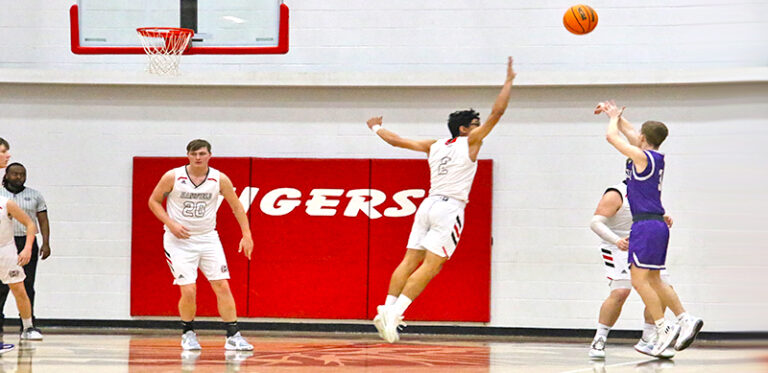
Mansfield and Lavaca got together on Friday night to play a conference game before heading into Christmas Break.  Lavaca came out on top 75-40.  Coach Brown stated “We knew coming in they were really good and that we would have to have a great game. They play really good defense, physical and in your britches, and they execute offensively on the other end of the floor. They did that tonight very well. I have a lot of respect for Coach Reed and the program that he has helped build.”

 Lavaca got the night started off with a baseline drive from Kolby Glidwell.  Jetson Wagner would hit the first of 12 Arrow three pointers, making the score 5-0.  Zayne Dugan would get the Tigers on the board with a put back basket making the score, 5-2, with 4:37 left in the first quarter of play.  Drake Grantham would hit another 3 for the Arrows and Tyler Escalante would add two free throws for the Tigers.  Alex Hobbs would hit a three on the next possession for Lavaca extending the lead to 11-4.  With 1:20 left in the quarter Luke Watson would score his first field goal of the game but Clint Stovall would answer for the Tigers with a three point basket, making the score 13-7, Lavaca.  The Arrows would end the first quarter on a 7-0 run, ending the first with a 20-7 lead. 

The Tigers would start the 2nd quarter on an 8-0 run led by back to back threes from Travis Tobey and a jumper from Zayne Dugan.  This would be the closest the Tigers would get as the score was 20-15 with 5:26 to go in the half.  The Arrows would use a 20-0 run over the next four minutes, knocking down four threes in that stretch.  Drew Elmore would stop the run with a turnaround jumper, making the score 40-17.  After two free-throws from Watson, Clint Stovall would hit a three from the corner.  With 4.5 second sot go in the half, Grantham would add two free throws for the Arrows. Clint Stovall would take the inbound and watch a half-court heave, bank in, to make the halftime score, 44-23.

Glidwell would make a free throw for the Arrows to start the second half.  Tyler Escalante would add a three for the Tigers, netting the score at 45-26.  Lavaca would use an 11-3 run to make the score 56-29 with 2 minutes left in the third quarter.  Stovall would hit his fourth 3 of the game.  The Arrows would outscore the Tigers 5-1 from that point to end the third, 61-33.

The teams would exchange points from the free throw line to begin the fourth quarter.  J. Wagner would hit his third 3 pointer of the game to extend the lead, 66-35.  The Golden Arrows would outscore the Tigers, 12-5 over the final five minutes, giving us the final of 75-40.

“We will get back to practice next week before giving our guys some time off for Christmas.  I thought our guys played really hard tonight.  Thought they never gave up.  Lavaca is a great team and I think you will see them in the conversation come March.  With that being said I think we could be a great team.  We just have to continue to improve each day and I believe our guys will“, stated Mansfield Coach Brown. 

The Tigers will be back in action against Paris in the first round of the Bill Frye Invitational on Tuesday December 28th.

Q1Q2Q3Q4FINAL
Lavaca2024171475
Mansfield71610740

Mansfield: C. Stovall (16), T. Escalante (7), T. Tobey (6), Z. Dugan (4), E. Pettus (2), D. Elmore (2), G. Baggett (1), Z. Hayslip (1), B. Byers (1)

Lavaca: K. Glidwell (13), J. Wagner (13), D. Grantham (10), L. Watson (10), A. Walker (9), A. Hobbs (6), J. Armistead (6), P. Owen (2), J. Johnson (2), A. Johnson (1)