90.1 F
Fort Smith
Monday, July 6, 2026
Home Blog Page 463

3 Top Tips on How To Winterize Your Home

When disaster strikes, it always seems to happen when you least expect it. During the winter, your home is more susceptible to damage from the elements, but you can take steps to prevent this from happening.

Although it might take some effort, it’s much more preferable and less costly than repairing your home after an accident. With that in mind, here are three top tips on how to winterize your home.

Check Out Your HVAC System

For your home to be warm enough to get through the cold season, you need to make sure that a professional can service your HVAC system before it gets too late. You should do this at least once per year so that residue doesn’t build up in your furnace, chimney, and boiler. Also, replacing your air filter is one of the best ways to prepare your HVAC system for cold weather.

Changing the air filter prevents dirt and dust from clogging, which causes your HVAC system to work harder to heat your home. This can also damage your HVAC system and cause a fire if things get out of hand, so scheduling a professional inspection and changing the filter are essential tasks for proper maintenance.

Prevent Your Pipes From Freezing

If you don’t insulate your pipes, they could freeze, later causing them to burst and flood your home. When the temperature starts dropping significantly, run water from each of your taps drop by drop to prevent them from freezing.

Also, you can keep the cabinets under your sink open to allow the heat from your home to warm your pipes. Setting your thermostat at a decent temperature will keep you and your pipes warm enough to survive the winter.

Put Away Your Hose

You must drain and put away any remaining garden hoses in your backyard to protect your pipes from freezing. These hoses draw water that can freeze if left unabated, damaging your hose, pipes, and home. You can prevent this from occurring by shutting the valve off and insulating the hose faucet with a Styrofoam faucet cover.

Overall, following the right tips will prevent major headaches down the road. Now that you know three top tips on how to winterize your home, you can rest easy and enjoy the holiday season.

Bulldogs Finish 3rd in Duel at the Dome

After falling to the Berman Panthers in the semifinals of the Duel at the Dome, the Bulldogs would take on the Gentry Pioneers in the 3rd place game. This could have easily been a trap game for the Dogs since this was their 4th game that they had played in five days, but Coach Atchley had his team ready and motivated to take on the Pioneers.

The Dogs came out with their usual starting lineup of Ethan Mayberry, Drew Owens, Trenton Hunt, “Fish” McConnell, and Camdon Holcomb. As expected, Waldron started a little slow and had trouble scoring in the 1st, but after Lidge Stinson checked into the game for the Dogs he made his presence felt quickly. He sliced through the defense and got a tough layup to fall to make the score 4-7 advantage Gentry. After Payton Justice took a charge, Stinson brought the ball down a buried a three pointer and got fouled while shooting to complete the rare 4-point play to put the Dogs up 8-7. The Dogs began to press in the final minutes of the 1st quarter, but Gentry was able to beat it and got two 3-pointers to fall to make the score 8-13 Gentry advantage to end the 1st.

Holcomb got the 2nd quarter going for the Dogs as he added two inside layups off nice post moves to bring the Dogs within one. Waldron would switch between full-court press and half-court man-to-man defenses to try to throw the Pioneers off, but this caused the Dogs to get in foul trouble which led to a lot of free throws from Gentry. Stinson was able to make a pull-up jumper to end the half with a score of 18-24 Gentry advantage.

Waldron came out of the half and immediately began to press the Pioneers. The Dogs forced many turnovers and were able to capitalize on them. Holcomb and Stinson scored 11 points straight for the Dogs as they were each able to get an and one layup to fall to put the Dogs up 31-29. The tables turned in the 2nd half as the Dogs were the ones that got in bonus early and were able to attempt a lot of free throws. Hunt was able to score 4 points from the line during the 3rd quarter. Owens ended the quarter with a left-handed floater to make the score 35-31 advantage Waldron.

The Dogs were firing on all cylinders in the 4th quarter. They pounded the ball inside the paint and were able to pull away from the Pioneers. Mayberry scored two lay-ups in a row to put the Dogs up 43-37, and then the Dogs would score 14 unanswered points. The Dogs were able to get out in transition and get some easy baskets led by Holcomb who scored 6 points in the 4th quarter. The Dogs improved their record to 8-3 with a final score of 57-40.

Although the Dogs were not happy with 3rd place, they proved a lot this week. They showed that they are a deep team that can cause havoc with their press defense. The Dogs ran into a good Bergman team in the semifinals that went on the win the Duel of the Dome.

Camdon Holcomb posted a double-double on the night with 15 points and 13 rebounds. Stinson was able to score 12 and Hunt added 9.


The Bulldogs will travel to Dardanelle on Tuesday, December 7th to take on the Sand Lizards. The JV girls will begin action at 5:00 followed by JV Boys, Senior Girls, and Senior Boys.

Obituary – Patricia Wendorff (1940-2021)

Patricia Wendorff , better known as Pat, of Waldron, Arkansas went to be with her Lord and Savior, Tuesday, November 16, 2021 in Waldron, Arkansas. She was born May 7, 1940 in Emmett, Idaho to Charles Oliver Hower and Beverly (Wickes) Hower. She was 81 years old.  Pat was a very active member of Waldron First Baptist Church.

Pat loved quilting and camping. She was a fun loving person who loved to laugh and bring joy to those around her. She was a friend, sister and most importantly she was a mom to her 3 kids that she loved whole heartedly. She looked forward to spending time with her family and adventures with her sister.

Pat leaves behind to cherish her memory, her children: Barbara Kerlick and husband Keith of Greenwood, Arkansas, Robert Wendorff and wife Debra of Washington and Steven Wendorff of Oregon. Pat is also survived by numerous grandchildren and great grandchildren as well as her siblings: Mary McKinnley of Waldron, Arkansas, Chuck Hower and wife Joann of Idaho and Meg Sosinsky and husband Kevin of Maryland. Pat will be missed by all that knew her and the many whose lives she impacted including a host of extended family and friends she dearly loved.

Pat was preceded in death by her husband Dwane Wendorff and her parents.

Arrangements and cremation are being entrusted to the Heritage Memorial Funeral Home & Crematory in Waldron, Arkansas.

Obituary – Bonnie Sue Nix (1943-2021)

Bonnie Sue Nix of Parks, Arkansas went to be with her Lord and Savior, Wednesday, December 2, 2021 in Parks, Arkansas surrounded by her loving family. Bonnie was born April 3, 1943 to Otto Rogers and Susie (McCullar) Rogers. She was 78 years old.

Bonnie attended Boles school She met the love of her life, Douglas Nix and married December 18, 1959. They enjoyed 61 years together. She was retired from the Waldron Furniture Factory. She enjoyed spending time with family, spoiling grandkids and going to yard sales.

Bonnie leaves behind to cherish her memory, her children: Cindy Claunts and Jackie Nix and wife Donna all of Parks, Arkansas. Granny will forever remain in the hearts of her grandchildren: Scott Claunts of Parks, Arkansas, Danielle Stipe of Cheyenne Wyoming, Tammy Claunts of Waldron, Arkansas and Ava Nix of Waldron, Arkansas as well as her great grandchildren: Destiny Claunts, Joey Stipe, Chance Gossett, Alexis Gossett, Destry Stipe, Linken Stipe, Courtney Atnip and Landon Marsh and one great great grandchild Jacelynn Sanders. Bonnie is also survived by one sister, Marybeth McConnell and one brother Bernis Rogers. Bonnie will be missed by all that knew her and the many whose lives she impacted including a host of extended family and friends she loved dearly.

Bonnie was preceded in death by her loving husband of 61 years, her parents, Otto and Susie Rogers, and her siblings: Ben Crump, Jimmy Rogers, Bernice Rogers, Billy Rogers and Shirley Castleberry.

Bonnie’s life celebration will be 2:00 p.m., Monday, December 6, 2021 at the Heritage Memorial Funeral Home Chapel in Waldron, Arkansas with Rev. Pat Ray Biggs officiating. Interment will follow in the Chant Cemetery in Y-City, Arkansas. Arrangements are being entrusted to the Heritage Memorial Funeral Home in Waldron, Arkansas.

Bonnie’s pallbearers will be Larry Boren, David McConnell, Shane McConnell, Butch McConnell, George Crump and Chance Gossett.

Bonnie’s visitation will be Sunday, December 5, 2021 from 4:00 p.m. until 6:00 p.m. at the Heritage Memorial Funeral Home in Waldron, Arkansas.

Lady Tigers Cage Cossatot River Eagles in Overtime

The Mansfield Lady Tigers got off to a hot start against the Cossatot River Eagles that cooled way down by the end of the first period. Second and Third periods went back and forth in offense, defense, fouls, turnovers on both sides of play.

Time running out in the fourth period, 50-48 in favor of the Eagles, Kynslee Ward stepped up, shot and missed a three-point attempt, rebounded by Skylynn Harris who passed to Alyson Edwards for the easy 2-point layup. Tied ballgame, 50-50. Into overtime, they go.

mansfield-tigers-cossatot river-eagles-basketball

Skylynn Harris got the Tigers on track with a deep 3-point shot in the beginning of overtime. The Tigers made quick work of scoring with a standing strong defense. As time elapsed towards the final seconds of overtime, Seven Sanderson pulled a rebound with a follow-up lay in for 2-points.

Final Score: Mansfield – 61 | Cossatot River – 56


Alyson Edwards (Soph) – 18 pts

Sadie Roberts (Senior) – 14 pts

Kynslee Ward (Soph) – 10pts

Skylynn Harris (Junior) – 8pts

Seven Sanderson (Junior) – 8pts

Natalie Allison (Junior) – 3pts

Timepiece: Whole Lot of Shaking Going On

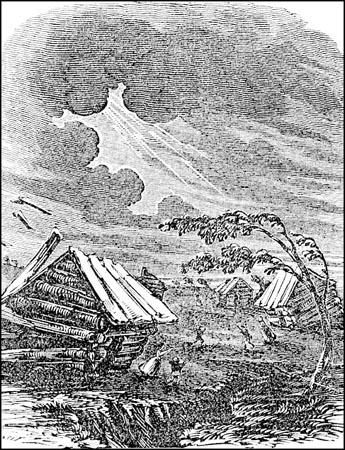
The shaking began around 2 A.M. on December 16, 1811 and continued through February of 1812.  Known as the New Madrid earthquake, it was one of the most violent to ever hit North America.  People from as far away as Pittsburg and Norfolk, Virginia were awakened by the shock waves and the wild ringing of church bells.  

The few people who lived in Missouri, Arkansas, and Tennessee were more than awakened.  Huge holes opened up in the earth, swallowing some buildings.  In the delta region, rocks deep beneath the earth shifted, throwing gouts of sand dozens of feet in the air.  Large fissures, so wide that they could not be crossed by horseback, were formed in the soft alluvial soils.  Rivers changed course, creating huge lakes in some places, wetlands in others.  It was said that the Mississippi river ran backward, the water cresting with waves mover than 10 ft. in height.  One account in the Annals of St. Louis described his experiences like this; “I was awakened by a crash like thunder…, the ground was shaking and a great wave came back north upstream and carried us for more than a mile with the water spreading out two or three miles inland. We saw many dead bodies floating down the river.”

The earthquake was a horrifying incident and one that would forever impact the state of Arkansas.  When the quakes ended, the land from Memphis to Little Rock was impassable and remained that way for years. Western Arkansas was shaken but, located on a more solid rock subsurface, escaped with relatively minor damage. In the delta, huge tracts of farm land were destroyed, along with the homes and business’s located on them. Congress provided aid by allowing people to move further west and provided free land for them.  Many settled in the River Valley and in the Ouachita’s and resulted in forcing the Indian population further west.  

Travel, what there was of it, was often restricted to keel boatsand later steamboats moving up the rivers systems of the state.  During the 1830 trail of tears movement, a group of women, children, and older adult natives were transported from Memphis to Little Rock by steamboat, there to await the men and boys who were bringing their wagons and livestock by land.  Two weeks later, men were sent to locate them, only to find them near the present town of Lonoke, delayed by swamps, mud, and malaria. 

Fort Smith, Arkansas would be the natural location for the Arch that now graces St. Louis as the gateway to the west.  What we know as I-40 was the natural route west to the gold-fields and California but the obstruction of swamp-lands left by New Madrid was just too great. Even railroads, which were expanding rapidly in the 1850’s, avoided Arkansas.  Only one small line from Memphis to Forrest City existed prior to the Civil War.

In teaching Arkansas history, I always inform my students that the two greatest impacts on the development of Arkansas was the Civil War and the New Madrid earthquake.  Earthquakes occur in cycles, influenced by the movement of land masses pushing up against each other until the pressure becomes so great that underlying rock is crushed with resulting movement and upheaval of the earth.  The Missouri Geological survey estimates that New Madrid is 30 years overdue to have and earthquake of 6.5 or above.  If the earthquake like New Madrid occurred today, there would be 86,000 casualties, 715,000 damaged buildings, 7.2 million displaced people and an economic loss of $300 billion dollars. 

Most geologists feel that the region is relatively stable and we should always expect and hope for the best.  Just the contemplation of the alternative could leave one with “a whole lot of shaking going on!”

Memorialize their first outdoors adventure with a first duck, first deer certificates from AGFC

Want to memorialize those unforgettable first Arkansas hunting and moments? The Arkansas Game and Fish Commission has a special way to say, “Welcome to the hunting community,” with customizable certificates that can be given to a person for their first success in the field.

When your new hunter connects with their first duck or deer, just visitwww.agfc.com/en/resources/brochures and scroll to the bottom of the page to download a fillable PDF document. Versions are available to include an image of the young hunter and their harvest or you can use one of the AGFC’s standard certificates with an image of an animal in the field. Fill out the document online, print it and present it to the successful hunter. Versions also are available for a hunter’s first rabbit, squirrel, dove or fish.

HOLIDAYS: Think outside the gift box

By Tracy Courage
U of A System Division of Agriculture

With end-of-the-year shopping in full force, personal finance experts are warning against overspending and starting the new year in debt.

Many retailers have extended offers well beyond Thanksgiving, Black Friday, Small Business Saturday and Cyber Monday. Analysts with the National Retail Federation are expecting shoppers to spend an average of $993.73 on gifts, holiday items and non-gift purchases for themselves and their families this year. That’s only slightly below the pre-pandemic high of $1,047.83 in 2019. 

Excessive spending, however, isn’t necessary to make a holiday memorable.

“It’s easy to overspend in an attempt to create an extravagant holiday experience, but the truth is that the gifts aren’t really the most important part of holiday memories,” Laura Hendrix, associate professor of personal finance and consumer economics with the University of Arkansas System Division of Agriculture, said. “Many of us just need to focus outside the gift box and focus on the spirit of the season instead of gifts.”

Hendrix, an accredited financial counselor, offers these tips for creating joyful memories without breaking the bank.

LIMIT GIFT GIVING – Trim your gift list to save money. Limit the number of gifts purchased and the amount spent per gift. Pare down the shopping list by exchanging gifts with closest family members and friends only. With larger, extended families, draw names for gift-giving instead of buying for everyone. Have children prioritize items on their wish lists.

SHARE TIME AND TALENTS – Be creative in thinking of special gifts that use your time and talents, rather than your pocketbook. Memorable and meaningful gifts can be as simple as a pair of knitted mittens, homemade cookies or candies, coupons for babysitting, a camping trip or another experience.

BUILD TRADITIONS – The best family traditions don’t have to cost a lot. They can be as simple as listening to favorite holiday music while decorating a tree, watching holiday movies together, or decorating gingerbread or sugar cookies. 

PLAN BEYOND THE HOLIDAY – Much attention is focused on opening gifts. Plan activities that emphasize shared family time and activities. These can be just as rewarding.

For more money-saving tips and personal finance resources, visit www.uaex.uada.edu/money. For other extension programs in Arkansas, contact your local Cooperative Extension Service agent or visit www.uaex.uada.edu. Follow us on Twitter at @AR_Extension.

About the Division of Agriculture 

The University of Arkansas System Division of Agriculture’s mission is to strengthen agriculture, communities, and families by connecting trusted research to the adoption of best practices. Through the Agricultural Experiment Station and the Cooperative Extension Service, the Division of Agriculture conducts research and extension work within the nation’s historic land grant education system.  

The Division of Agriculture is one of 20 entities within the University of Arkansas System. It has offices in all 75 counties in Arkansas and faculty on five system campuses.   

The University of Arkansas System Division of Agriculture offers all its Extension and Research programs to all eligible persons without regard to race, color, sex, gender identity, sexual orientation, national origin, religion, age, disability, marital or veteran status, genetic information, or any other legally protected status, and is an Affirmative Action/Equal Opportunity Employer. 

HOLIDAYS: How to care for the festive poinsettia plant during and after the holiday season

By Rebekah Hall
U of A System Division of Agriculture

The vibrant red, green and white foliage and flowers of the poinsettia plant make it a favorite gift and decoration during the holiday season and beyond.

The festive plant also has a special connection to Arkansas history: the state’s Poinsett County and the poinsettia plant both derive their names from Joel Roberts Poinsett, a U.S. Congressman and botanist from South Carolina. Poinsett first brought clippings of the poinsettia plant to the United States from its native Mexico in the early 1800s.

Poinsett served as secretary of war under President Martin Van Buren, and though he never visited Arkansas, Poinsett was a friend of Arkansas Congressman Archibald Yell.

The poinsettia’s association with the holiday season is in part due to the plant’s geographical home. Native to southern Mexico, poinsettias are in bloom during this time of year.  

“Poinsettia flower buds are initiated as our nights naturally get longer in the fall,” said Berni Kurz, extension consumer horticulture educator for the University of Arkansas System Division of Agriculture. “This is a phototropic response, and we call plants that respond to long nights ‘short day’ plants.”

The poinsettia, with its colorful leaves and bright flowers, has long been included in Mexican celebrations of Christmas. The plant’s popularity in the United States took hold in the 1960s, when the Ecke family – who owned poinsettia nurseries in California – successfully branded poinsettias as the Christmas flower by sending free plants to television studios for their holiday specials, including those of Bob Hope and “The Tonight Show.” With plenty of screen time during Christmas programming, poinsettias then became a holiday staple.

The poinsettia plant’s beauty can be maintained throughout the year with a bit of care and attention from growers — read on to learn how to care for the plant during and after the holidays:

When you first receive it:

  • Avoid exposing the plant to extreme heat (above 80 degrees Fahrenheit) or extreme cold (below 50 degrees), as this can cause the plant to lose its leaves or even kill the plant. Cover and protect the plant when transporting it from the florist, greenhouse, or retailer, and once inside, avoid placing the plant near hot or cold drafts.
  • Poinsettias are happiest when placed in bright environments, such as near a window, and kept at a moderate temperature (60 to 65 degrees).
  • Poinsettias prefer moist soil. When the top of the soil feels dry to the touch, water thoroughly with warm tap water and allow excess water to drain from the bottom of the container. Poinsettias are susceptible to root and stem diseases, so draining the excess water is a key step. If the plant is wrapped with decorative foil, punch a hole in the foil beneath the pot to allow excess water to escape. The plant should be placed on a saucer to prevent damage to the furniture or carpet.
  • Though most poinsettias do not require additional nutrients during the holiday season, you can use a standard houseplant fertilizer to maintain healthy foliage and blooms. Follow the fertilizer recommendations listed on the package.
  • Poinsettias are not very toxic to pets, though the plant has “received bad press in the past,” Kurz said.
  • Kurz said the poinsettias’ milky sap can be a mild irritant to the mouth of pets when the plant is chewed.

After the holidays, this plant can live on in Arkansas:

  • Remove any decorative wraps from the planter and place a saucer underneath the plant. This creates better air circulation for the roots during the rest of the growing season.
  • Water and fertilize at regular intervals.
  • As the plant grows, move it to a larger container with new potting mix.
  • If the poinsettia starts to become long and leggy, cut it back 5 to 6 inches. You can also periodically cut the tips of the branches to encourage more side branching and maintain a fuller appearance.

Throughout the year:

  • In the summer, move your poinsettia outside to an area with indirect sunlight. This is also the time to increase fertilizer to at least twice the frequency.
  • In mid-summer, trim the plant as necessary to keep a manageable size and fullness, and then move to a location with full sunlight.
  • After Labor Day, move the plant inside to a location that gets at least six hours of sunlight, preferably more. This helps the plant start preparing for its flowers and colorful foliage. This is also when you should begin reducing the frequency of fertilizer.
  • Toward the end of September, your poinsettia needs long periods of darkness to achieve its bright colors. At this stage, it must have at least 13 hours of uninterrupted darkness and 11 hours of bright light each day. Try placing the plant in a basement, a closet, or beneath a box during the required hours of darkness. And during the periods of bright light, be sure to rotate your plant so it receives even light on all sides.

In the days just before Thanksgiving, you can stop the dark periods, reduce the amount of water and fertilizer used, and place your poinsettia in a sunny spot that receives at least six hours of direct light.

To learn more about poinsettias, visit its Plant of the Week entry on the Cooperative Extension website here: https://www.uaex.uada.edu/yard-garden/resource-library/plant-week/poinsettia.aspx

You can also visit the Arkansas Division of Agriculture’s YouTube page for informational videos, including this video about different color varieties of the poinsettia: https://www.youtube.com/watch?v=dpOz85M–4w.

To learn about extension programs in Arkansas, contact your local Cooperative Extension Service agent or visit www.uaex.uada.edu. Follow us on Twitter and Instagram at @AR_Extension.

To learn more about Division of Agriculture research, visit the Arkansas Agricultural Experiment Station website: https://aaes.uark.edu.

Follow on Twitter at @ArkAgResearch. To learn more about the Division of Agriculture, visit https://uada.edu/. Follow us on Twitter at @AgInArk.

About the Division of Agriculture

The University of Arkansas System Division of Agriculture’s mission is to strengthen agriculture, communities, and families by connecting trusted research to the adoption of best practices. Through the Agricultural Experiment Station and the Cooperative Extension Service, the Division of Agriculture conducts research and extension work within the nation’s historic land grant education system. 

The Division of Agriculture is one of 20 entities within the University of Arkansas System. It has offices in all 75 counties in Arkansas and faculty on five system campuses.  

The University of Arkansas System Division of Agriculture offers all its Extension and Research programs to all eligible persons without regard to race, color, sex, gender identity, sexual orientation, national origin, religion, age, disability, marital or veteran status, genetic information, or any other legally protected status, and is an Affirmative Action/Equal Opportunity Employer.


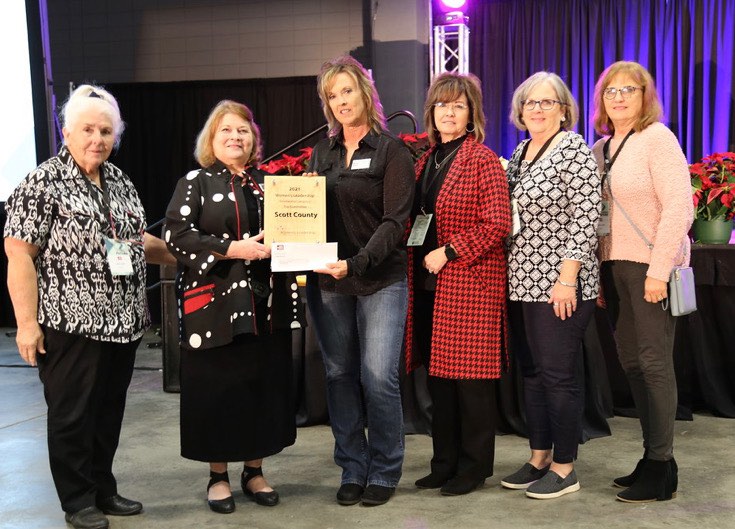
Scott County Women’s Leadership Committee Takes First Place at State Convention

The Scott County Farm Bureau Women’s Leadership Committee took first place for the second year in a row at this year’s state convention. Farm Bureau’s 87th State Convention was held in Little Rock on Thursday, December 3.

“We did it again,” stated Women’s Leadership Committee President Regina Oliver. “This is huge for Scott County. We have won this two years in a row and out of 75 counties in the state!”

“Congratulations to our leader of Scott County Farm Bureau Women’s Leadership Committee – Regina Oliver,” shared committee member Belina Woodard Wright. “In 2021, she spent endless hours working, brainstorming and organizing ideas for our committee so that we could bring AG awareness to our community. Congratulations Regina!”

The committee excels in educating youth on agriculture and community involvement. The Women’s Leadership Committee took in $1,500 to continue that education.