

81.2 F
Fort Smith
Wednesday, July 15, 2026
Home Blog Page 498

Paris Block Party Defeats Hot Springs Fountain Lake and Farmington in Straight Sets

It was a festive night at Paris Gymnasium on Thursday as the high school volleyball season started with preseason games to benefit the Arkansas Activities Association. Paris played host to Class 4A Farmington and Hot Springs Fountain Lake in a round-robin of two-set matches with each school. The night’s games were the final tune-ups before the official start of the season on Monday, August 23. On that date, the Lady Eagles will travel to Russellville to open the season against the Lady Cyclones.

And what a difference a year makes! Unlike the COVID year of 2020 where teams were allowed very limited activity late in the summer, teams throughout the state had the opportunity this summer to play club sports and to attend regular workouts all summer long. The only break players have had this season was during the mandatory two weeks of AAA mandated “dead weeks” where formal, organized practices are not allowed. And even then, players worked out individually on their own, or with small numbers of fellow teammates who organized their own workouts. After enduring the heartbreak a year ago of seeing courts and playing fields empty due to COVID, it was refreshing to see a big crowd and a court full of happy high school athletes being able to play the sport that they love!

All three schools played well. Farmington is an improved team from last year, and Fountain Lake, playing their second year in Class 4A, is reasserting their dominance that they enjoyed as a 3A school. Paris will travel to Fountain Lake in a few weeks to play the Lady Cobras in a regular season, non-conference match. The Lady Cobras have a good program and are well-coached, and there is a good relationship between the coaches at Hot Springs and Paris. Both schools benefit in conference play by playing each other in non-conference play.

Paris is returning a very deep, talented, and experienced team from a year ago. The team finished as state runner-up a year ago with a predominantly sophomore and junior team, and all of those players return this year. Senior Jacee Hart has stepped up to take over the important position of setter that will maximize the impact of the impressive Paris front line. Hart’s contribution as a setter could be the last piece in the puzzle for the Lady Eagles to return to the state championship.

After a little bit of a slow start in the first set against Fountain Lake, the Lady Eagles got on track and proceeded to dominate their competition. Last evening, Paris looked like a state title contender. They are deep and talented, and most importantly, focused on returning the state championship to Paris.

But the Lady Eagles will find out a lot about themselves and their state of readiness to make a playoff run with a very challenging first week of regular season volleyball starting on Monday. The Lady Eagles travel to Russellville on Monday, at Lavaca on Wednesday, and at home on Thursday against a very good Fort Smith Southside team. The tough non-conference schedule will undoubtedly pay dividends in September and October when the Lady Eagles are in the meat of their conference schedule.

Resident Press will be here to bring you all of the action! And as they are now, photos will also be available on Facebook at Paris Eagles Sports for fans of all schools to have of their favorite players and teams!

So…see you in Russellville on Monday!

Don’t ‘Treat’ Wildlife Like Livestock

By Randy Zellers Assistant Chief of Communications

As summer progresses and people begin to see deer more frequently in the open, many of the deer they witness will be seen with ticks or bare spots in their fur from scratching at parasites on the skin. It’s human nature to want to help, but according to Dr. Jenn Ballard, state wildlife veterinarian for the Arkansas Game and Fish Commission, treating free-ranging wildlife is rarely effective and can cause many more troubles than it prevents.

While some over-the-counter products are available to help livestock in a closely managed situation, land managers are strongly encouraged not to use such treatments for wildlife.

“Wildlife like white-tailed deer are well-adapted to handle the normal parasite loads found in their habitat,” Ballard said. “All wildlife will have some parasites, which is why wildlife agencies advise wearing gloves when field-dressing or handling harvested game.”

Topical or ingested treatments also can cause more harm than good as there’s no way to regulate the dosage a wild animal would receive.

“You’re leaving the deer to self-medicate, which will lead to some not getting enough and others getting too much,” Ballard said. “Those that under-medicate are particularly concerning because they will expose parasites to the drugs without killing them all. The remaining parasites can develop drug resistance. Those parasites can then attack livestock and pets and be resistant to conventional treatments.”

Distributing medications meant for livestock to free-ranging deer also can be illegal, as it violates the policy purchasers make when buying over-the-counter medicines.

“Deviating from the specific species and conditions listed on the label of the medicine violates federal law,” Ballard said. “These laws are there to avoid drug residues in food, which is a public health concern. It’s best to stick to the instructions on the label, which do not allow for wildlife.”

Ballard says the presence of too many ticks or parasites on deer can be an indicator of a larger problem.

“Abnormally heavy parasite loads can be caused by an overpopulation of deer,” Ballard said. “This will result in habitat degradation and higher rates of disease transmission. Treating the external parasites is just a Band-Aid on the bigger problem that should be addressed through balancing the herd with the available habitat.”

Ballard suggests landowners and leaseholders consult with one of the AGFC’s Private Lands Biologists about ways to increase habitat quality on their property. The Deer Management Assistance Program also can help land managers by developing plans focused at improving the quality and health of deer on their property.

Visit www.agfc.com/habitat for more information on DMAP and the AGFC’s Private Lands Program.

Timepiece: Homeplace

By Dr. Curtis Varnell

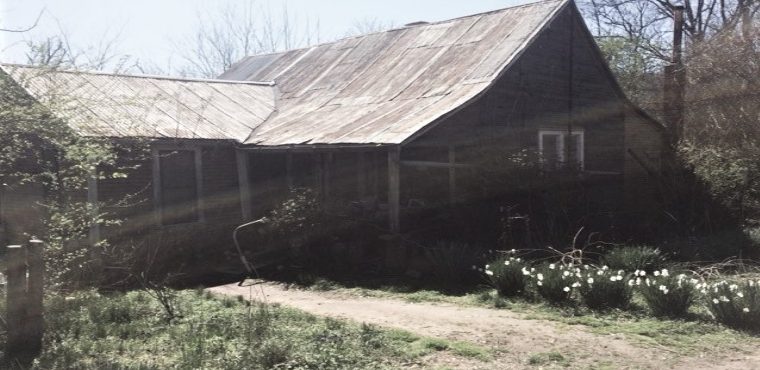
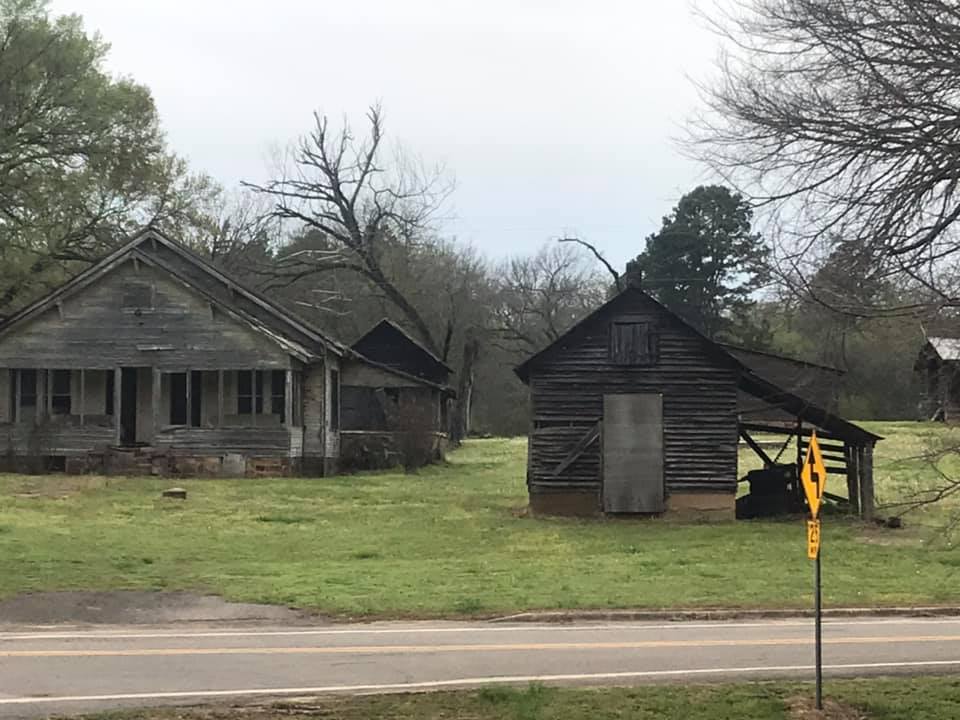
I must have passed by a hundred such old homes.  Situated just off the gravel road, it looked old and forlorn in its isolation.  Tattered grey brick siding hung limply from some of the outside walls, exposing the tarpaper beneath.  The tin metal roof was rusted but still intact, protecting the few contents left by prior owners. 

Built in the early 1900s, the building once housed a large family.  The living room set in front, just off the small porch entryway.  One could still see where the coal-burning heating stove sat, its stovepipe running into the central chimney that extended into the ceiling.  The kitchen sat just behind, very small by our standards, and connected to the world by a screen-enclosed porch.  A few storage cabinets were situated on the walls, yellow paint peeling from the real wood surfaces below.  The sink and washbasin sit outside on the porch, handy for a last-minute cleaning before coming in to eat. 

Two bedrooms extended to the left, an old iron rail bed still standing in isolation in the center of the floor. Single light bulbs dangled on wires, probably added in the ’50s as electricity was extended to rural areas.  The walls are covered in sheets of rollout paper, once red but bleached by the years to an off-orange.  The paper is held in place by tacks inserted through brass taps.  My mom used to explain that those tacks and wallpaper were the only things preventing the wind from sweeping through the house on winter days.

Outside, a pulley hung on beams extended above the well, the old well bucket still attached.  Morning would find someone drawing water from the well for daily use.  Just beyond, surrounded by a rusting hog wire fence, sat the abandoned garden spot.

The lawn is overgrown in tufts of grass and weeds but one can see the care once supplied by the owners.  In a long gingham dress, probably with a sunbonnet over her head, the wife had once dug, hoed, and planted a plethora of flowers and bushes which adorned her country home.  Daffodils, which in Arkansas are called Easter flowers, grow profusely across the yard, over-spilling the rock flower garden that once held them in place.  Iris plants of all colors edge the property with rose of Sharon and azalea bushes filling in the areas around the front porch.  It must have been a colorful scene when all were abloom.

In my mind’s eye, I can see young boys busy playing marbles in the dust of the front yard.  Drawing large circles or diamonds, they played for “keeps” knocking the opponents cat-eyes and milky marbles from the dirt designs and keeping the marbles.  Playing keeps was forbidden at school, it resulted in far too many kids coming home with black eyes or bruises from the ensuing fights.  Mumbley-Peg was another favorite game and involved flipping a two-bladed pocket knife from various parts of your body and, hopefully, sticking it into the ground close to your opponent without doing too much physical damage.  Small girls in pig-tails chased about the yard scattering the chickens or played hop-scotch.  In the fifties, the entire group of kids might have tried their luck with the hula-hoop, a fad that swept the country.  Children grow up and depart for greener pastures, the parents pass away and are interred at the local cemeteries.

The house stands alone and forgotten, a shadow of what once existed.  A house is a building; a home is where memories are stored.

Obituary – Thongsy (Sundara) Vongvilay (1930-2021)

Thongsy Vongvilay, 91, passed away at her home in Waldron, AR on Monday, August 16, 2021 with her daughter by her side.

Thongsy was born in Vientiane, Laos on February 1, 1930 to Soun and Dam Sundara. She grew up in a big family with 4 sister and 3 brothers.

Thongsy met Ngun Vongvilay after high school and married shortly after. They would go on to have 4 children of their own. Kongkeo, Kongkham, Kong Ngeun, and Kongthong. Thongsy’s children were her life. Thongsy moved to the United States to provide childcare for her children. She would go on to move from one house to the next until the kids were grown. On her free time, she loved watching movies, playing cards, and going for walks.

Thongsy is survived by her daughters, Kongkham (Singthong) Manosack, Waldron, AR; and Kongkeo Vongvilay Vientiane, Laos; son, Kongthong (Toukata) Vongvilay, South Elgin, IL; her sisters, Douangmaly Sundara Vientiane, Laos; and Lap Sundara CA; brother, Khamsouk Sundara Vientiane, Laos; and many grandchildren and great-grandchildren.

She was preceded in death by her parents, Soun and Dam Sundara; brothers, Khamsing Sundara and Khamseng Sundara; sisters, Bounmy Sundara and Choummaly Sundara; her son, Kong Ngeun Vongvilay.

We remember Thongsy for her dedication to her family, her generosity, and strength. She had an extraordinary way of welcoming guests even with a language barrier between them. She was known to serve food and beverages or made sure her grandchildren served food and beverages to any guest(s) walking in. Thongsy had a well-lived life and will be dearly missed by her family and all who knew her.

Scholarship Awarded to Hartford Agriculture Student

The Arkansas Department of Agriculture recently awarded $20,000 in scholarships to eight students attending Arkansas universities with agricultural programs. The universities include Arkansas State University, Southern Arkansas University, the University of Arkansas, and Arkansas Tech University.  

The scholarship recipients include the following students:  
Arkansas State University – Jacob Holloway, Griffithville, AR; Agribusiness – Agriculture Economics and Finance Major – Landon G. Smith, Jacksonport, AR; Agribusiness – Agriculture Economics and Finance Major   Southern Arkansas University – Brieanna Shaw, Pine Bluff, AR; Agriculture Science Major – Courtland Mixon, Prescott, AR; Agriculture Science Major – Hannah Boyte, Oak Grove, AR; Agriculture Science Major – Hannah Helms, Gurdon, AR; Agriculture Business Major   Arkansas Tech University – Cheyenne Massey, Hartford, AR; Agricultural Education Major   University of Arkansas – Kelby Biswell, Prairie Grove, AR; Horticulture, Landscape, and Turf Sciences and Agricultural Education Major

Tick Threats to Livestock

Researchers with the University of Arkansas System Division of Agriculture will be expanding their search this fall for various ticks that may transmit anaplasmosis, a disease that can kill cattle.

Anaplasmosis turns an animal’s immune system against itself, destroying both healthy and infected red blood cells, which can starve the animal of oxygen. If anaplasmosis does not kill the infected animal, the animal carries anaplasmosis for life, becoming a reservoir for the disease.

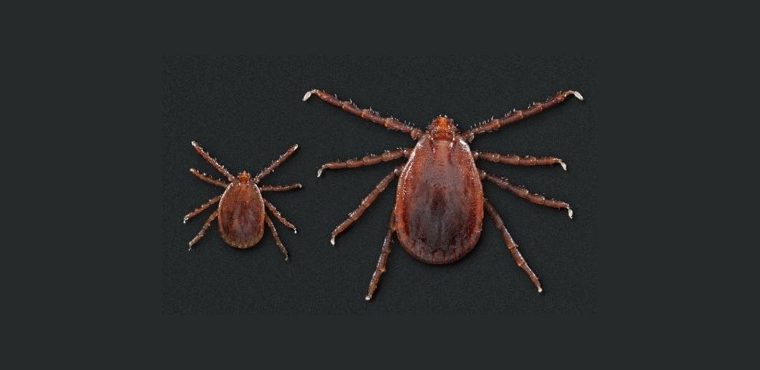
In addition to the further research of anaplasmosis, the Asian longhorned tick has been confirmed in Missouri and Arkansas. The tick is less attracted to human skin and poses a bigger threat to livestock. The Asian longhorned tick is unlike others because a single female can produce as many as 1,000 offspring at a time without mating. The tick is light brown and can be smaller than a sesame seed, making it difficult to identify.

For additional information about anaplasmosis research visit the University of Arkansas System Division of Agriculture website. The CDC website contains more resources regarding Asian longhorned ticks.

West Fraser’s Mansfield Mill Receives Safety Award

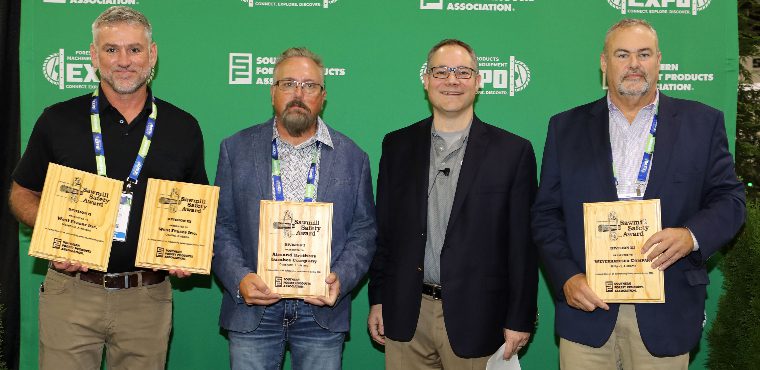
The West Fraser Inc. sawmill in Mansfield, AR is the recipient of the 2020 Sawmill Safety Award in Division II, presented by the Southern Forest Products Association (SFPA).  This is the first time the Mansfield mill has received this respected award.

SFPA Lumber Manufacturer members are considered for the award based on information submitted regarding occupational injuries and illnesses. The results for 2020 included reports from 43 mills that recorded nearly 14 million employee hours. Safety performance is judged by how each mill’s safety record stacks up against facilities with comparable lumber output throughout the year. Division II covers facilities that produce 51-150 million board feet of Southern Pine lumber annually.

The Mansfield operation joined three other sawmills, all Lumber Manufacturer members of the Southern Forest Products Association, that received awards this year recognizing outstanding safety records during 2020.

“Safety is important in all business, and the sawmill business is no different,” said SFPA Executive Director Eric Gee. “We are proud of West Fraser’s Mansfield mill for earning this achievement and commend them for striving to make their workplace a safe environment,” he added.

The award was presented during a brief, in-person ceremony at the Forest Products Machinery & Equipment Exposition on August 12, 2021, in Atlanta, Georgia. Chuck Watkins, Vice President of Capital and Technology for West Fraser accepted the award on the mill’s behalf.

Mansfield Man Takes Plea Deal in Sexual Abuse Case

Thomas J. Boyd of Mansfield was booked into the Sebastian County Detention Center on Wednesday, August 18 at 2:58 p.m. after accepting a plea deal and pleading guilty to sexual abuse charges.

Boyd was arrested in May of 2020 and charged with sexual assault in the second-degree (guardian), a class B felony. He was granted a $50,000 legally sufficient bond.

Boyd was given a 20 year suspended sentence and fined $1,500. He must register as a sex offender, and have no contact with the victim. Boyd must also have no contact with minors that are not his own children as set out by domestic court order.

He will serve his 120-day sentence at the Sebastian County Detention Center.

Family Photo Wardrobe Tips

Fall is the perfect time to get family photos done. The natural beauty of Arkansas really shines when the leaves begin to change.

Dressing your family for photos can be one of the most difficult parts of your session. You want everyone to coordinate, but does everyone have to wear the same color? No! It actually looks better when families pick color families to stay in!

The best news is almost every color photographs well, but it’s best to avoid stripes or overly busy fabrics, and neons can cast unwanted colors on skin tones. Stripes can cause strange wavy patterns that sometime appear, called moire.

Color Schemes

When choosing your color scheme think of two to three complimentary colors. Jewel tones, blush tones, fall colors, pastel, earthy, or woodsy are terms to take to Pinterest or Google to get better visualizations.

Accessorize

Adding accessories or touches to personalize the group photos to each individual adds more interest and showcases personality!

Location

Where you will take photos is important to consider when choosing your attire to ensure the photos are standing out rather than blending in. For instance a tall grass field in the fall may be very brown, and wearing a lot of tan will cause blending in.

Have fun!

The best thing about family photos is the main goal should be to document your family and love in that moment! It matters much less what everyone is wearing and more that this time is being preserved in a timeless form. Photos are always something to be thankful you have to look back on.

Tips To Help Protect Yourself When Hiring a Home Contractor

It can be challenging to find good help in the housing market. In these trying times, it’s time to whip out our computers and do some research before we hand anyone money, sign a contract, or discuss demolishing parts of our home. Before you say yes to that guy that asked for money upfront, follow our quick guide for the best tips to help protect yourself when hiring a home contractor.

Have a Clear Idea of Your Project

If you don’t know the project, then a contractor won’t work with you. Well-respected home contractors will recommend resources to check out before inquiring about any potential home renovations. Sifting through remodeling magazines can help inspire some ideas to get you started. Write these ideas down and look them over. If one of them needs more explanation, include it. If another is rough, it can still be considered what the contractor thinks you want and what expectations need to be met.

Do Your Research

After you come up with an idea, do your research. Go around your community and contact realtors who can recommend the best contractors in your local area. Don’t hire someone based on one conversation. Get to know their company through multiple discussions that involve their favorite projects. Also, inquire about past customers and reach out to them as references to get an idea of the contractor’s quality of work.

Also, don’t ever pay more than half of a deposit before signing a contract with your home contractor. Researching costs is significant if you know what your budget is. Along your research journey, ensure your reasons for getting a home contractor align with what you’re looking to spend.

Check Their License

Don’t trust anyone that says they’re a contractor until you see their license stating they’re qualified to work on homes. Each state will have its own agency, so you can contact the agency and confirm the home contractor’s license is valid and still active.

Review Every Part of the Contract

Don’t sign a contract until you read all of it and ask the right questions. If you’re unsure of any parts of the agreement, contact a law firm to get the proper guidance on approaching your contract. When going through the contract, ensure you know all of the details, any changes in orders, and that a lien waiver is included. A lien waiver provides payment coverage for all subcontractors working on your project.

Before beginning your journey to renovate your home through a home contractor, consider these tips to help protect yourself from a bad home contractor. These tips will help save you both time and money.