93.8 F
Fort Smith
Saturday, July 11, 2026
Home Blog Page 518

Food Bank Director Receives Hormel’s Hometown Hero Award, Donation for River Valley Regional Food Bank

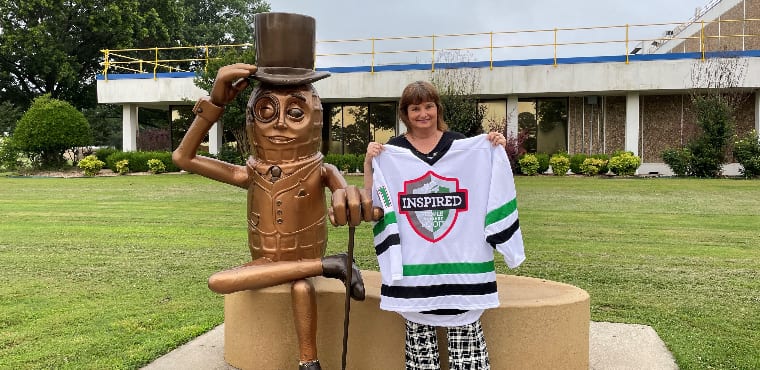
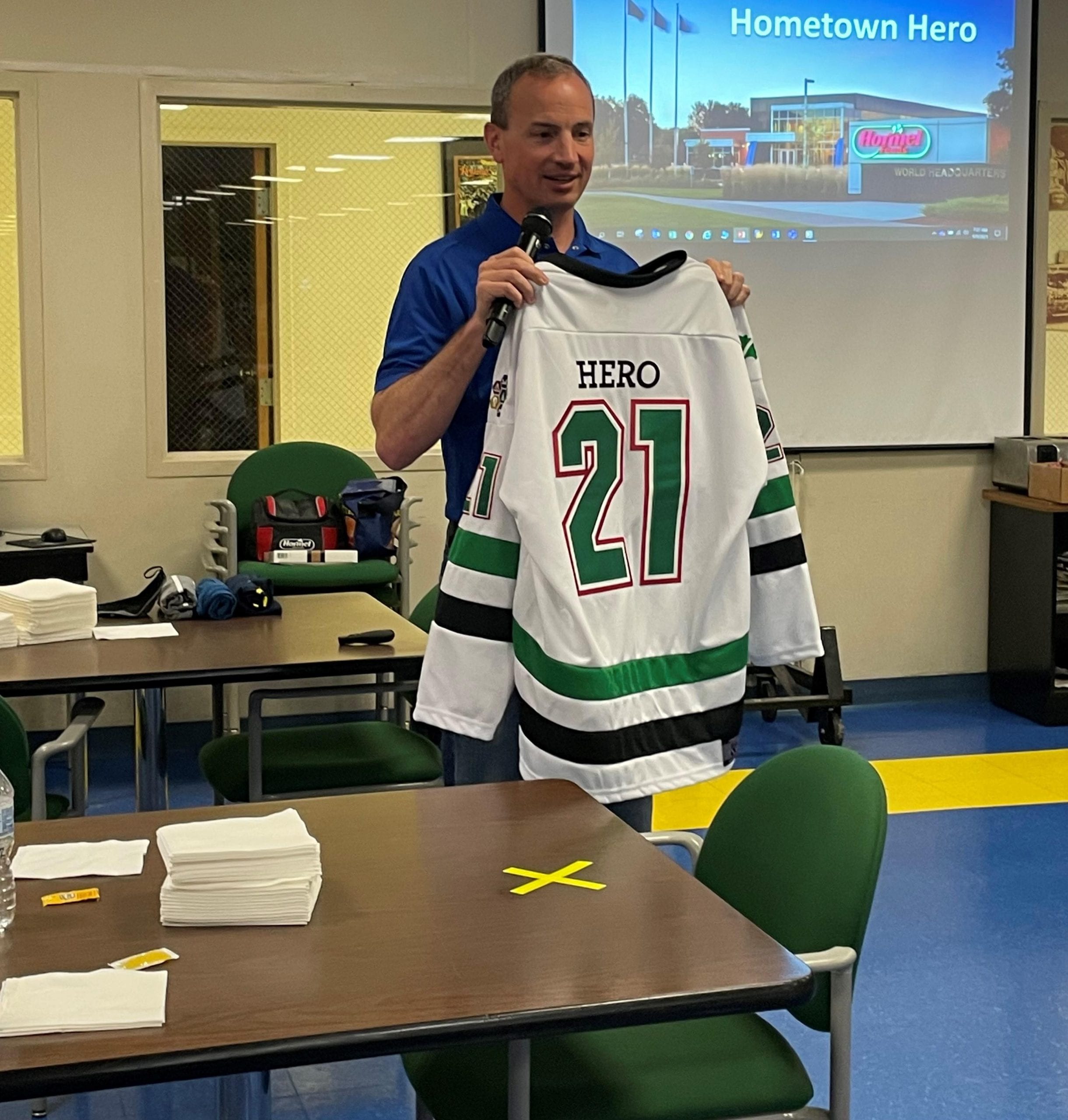
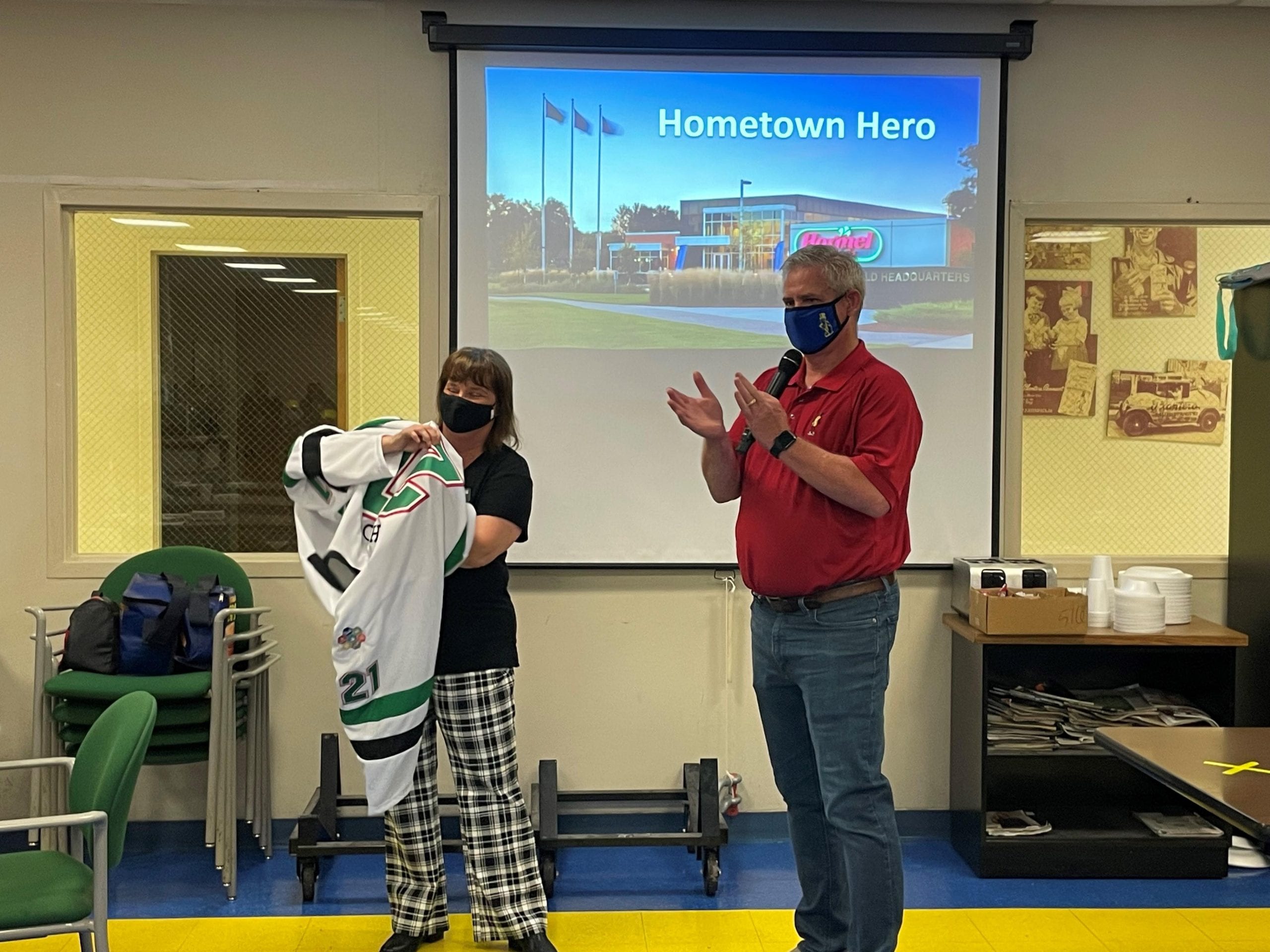
River Valley Regional Food Bank Director Tracy Engel received Hormel Foods’ “Hometown Hero” Award in a ceremony on Wednesday, June 9 at the Hormel Foods/Planter Peanuts facility in Fort Smith.

The Hometown Hero award, a hockey-style jersey, was unveiled in 2019 as a way to recognize people and organizations across the country who positively impact their communities. Today, our director, Tracy Engel, was bestowed with that honor and was gifted a coveted “Hometown Hero” hockey jersey, presented to her by John Forsythe, Hormel’s vice president of operations, and local plant manager Kelly Tiffee, as a recognition of her work and that of the food bank’s work and success in our community.

The award came with an additional $5,000 contribution from the company, which will help the food bank provide 50,000 meals to our community. “We are honored to have Hormel Foods/Planters as an incredible corporate partner,” Engel said. “Our long-standing relationship has led to a great partnership with the company. We appreciate Hormel/Planter’s dedication to fighting hunger in the River Valley and are grateful for their continued support.”

Hartford Family to Represent Sebastian County in Statewide Competition for Arkansas Farm Family of the Year

A Hartford family will be representing Sebastian County in the statewide competition for 2021 Arkansas Farm Family of the Year.

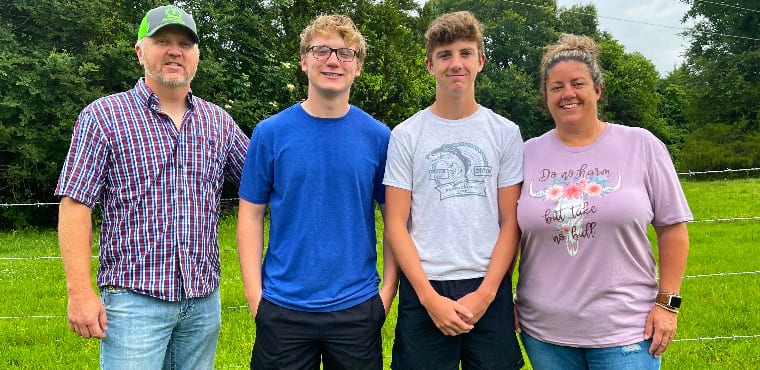
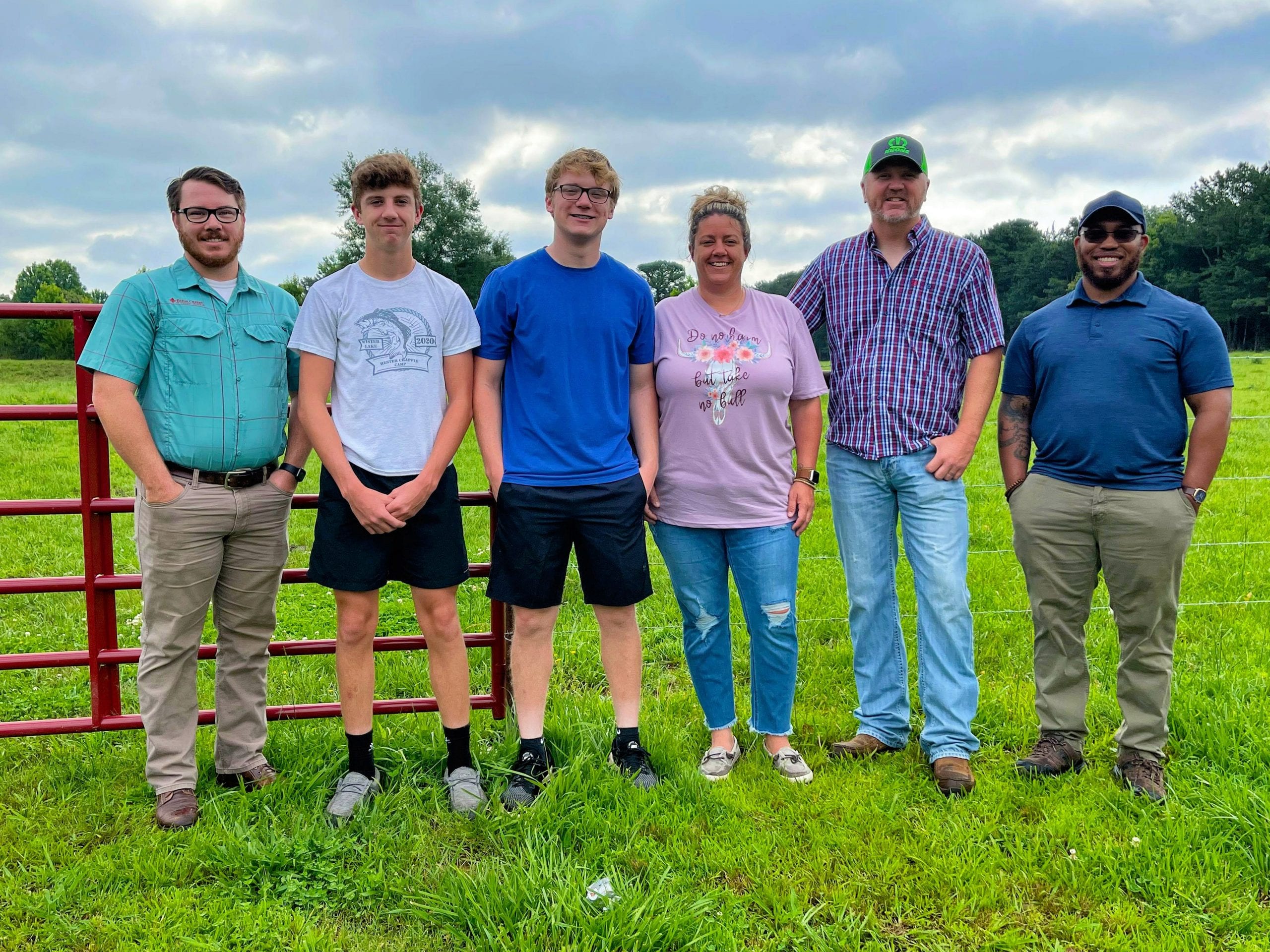
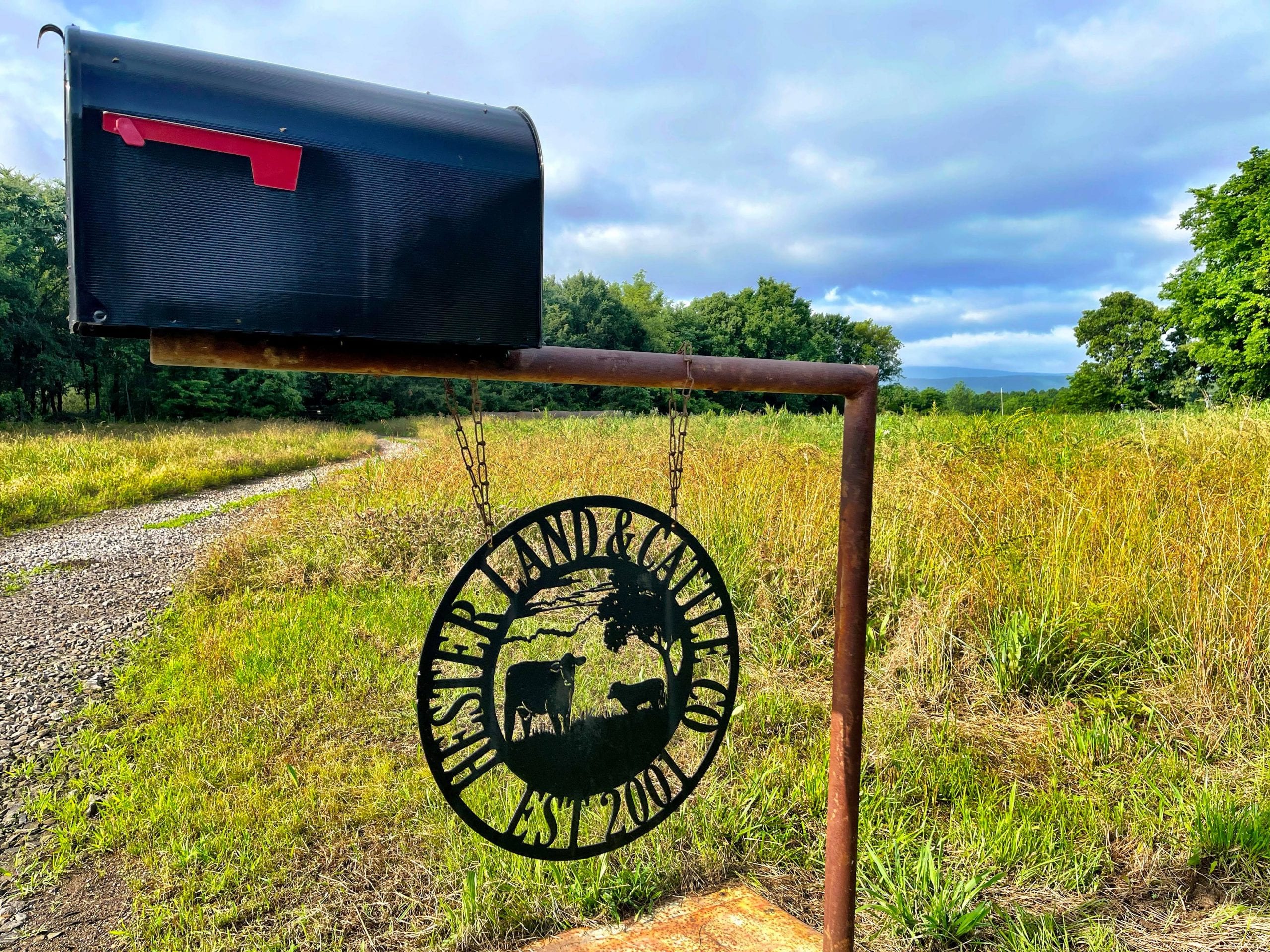
Woody and Amanda Hester, along with their two sons, Cogan and Wyatt, were announced countywide winners in May. The family owns and operates a cattle farm in the West Hartford area.

The family-owned farm spans almost over acres. “My dad never wanted to chase cattle,” shared Woody Hester. “But, this is something I always wanted to do.” That determination and passion ultimately led to the Hesters owning and managing 80 head of cattle.

Judges from the Natural Resources Conservation in Paris, and Farm Credit Services were on site on Wednesday morning, June 9. Travis Caudle, NRCS, and Norm Clayborn, Farm Credit Services, were interested in learning about the Hester’s farming operation. Ultimately, winners are judged on their farm production, efficiency, management, family life, and rural/community leadership.

Travis Caudle, Natural Resources Conservation Services, and Norm Clayborn, Farm Credit Services, joined the Sebastian County Farm Family on Wednesday, June 9.

Since 1947, the Arkansas Farm Family of the Year Program has served as a vehicle to recognize outstanding farm families throughout the state. The objectives of the Farm Family of the year program are: To give recognition and encouragement to farm families who are doing an outstanding job on their farm and in their community. To gain recognition of the importance of agriculture in the community and state. To disseminate information on improved farm practices and management.

Each year the Arkansas Farm Family of the Year program recognizes the outstanding farmers and ranchers who make up our state,” said Rich Hillman of Carlisle, president of Arkansas Farm Bureau. “These families are involved in essential work, not only providing food for my family and yours, but also serving as the ultimate stewards of the land and water resources. “Congratulations to these farm families. We are proud to honor their work and dedication to Arkansas agriculture, our state’s largest economic sector.”

The Farm Family of the Year program begins each year with the selection of top farm families in each county and culminates in December with the selection of the state Farm Family of the Year, who then go on to represent Arkansas at the Swisher Sweets/Sunbelt Expo Southeastern Farmer of the Year.

Sponsors for the program are Arkansas Farm Bureau, Electric Cooperatives of Arkansas, Farm Credit Services of Western Arkansas, AgHeritage Farm Credit Services, and Farm Credit Midsouth. Program partners are the Arkansas Agriculture Department, Arkansas FFA Association, Arkansas Press Association, University of Arkansas Division of Agriculture Cooperative Extension Service, USDA – Farm Service Agency, USDA – Natural Resources Conservation Service, and USDA – Rural Development.

Arkansas Wildlife Officers Alarmed by Increase in Turkey Hunting Violations

By Randy Zellers Assistant Chief of Communications

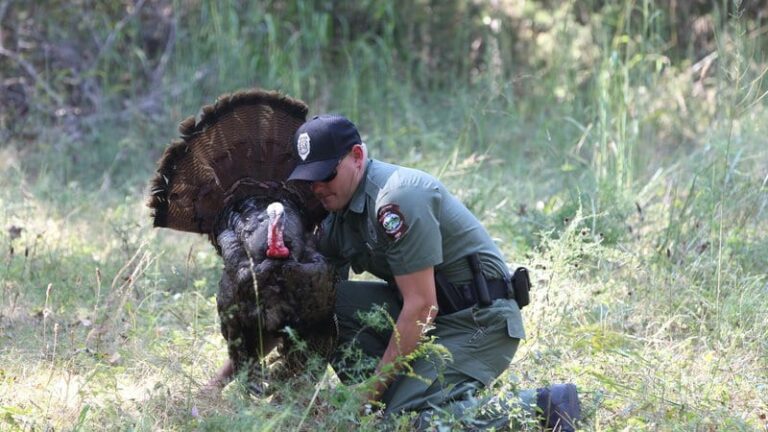
LITTLE ROCK — With just over 7,000 wild turkeys checked in Arkansas this spring, it’s no secret that hunting was a challenge for many in The Natural State. Some couldn’t play by the rules, resulting in an alarming trend noticed by wildlife officers whose business is catching those who cut corners and prevent honest hunters from seeing increased turkey harvest numbers.

“Business was good this spring,” Col. Brad Young, chief of the Arkansas Game and Fish Commission’s Enforcement Division, said. “I’m proud of our officers for catching so many people breaking the law, but I’m concerned that they found so many major violations in the turkey woods this year.”

AGFC officers issued citations for 152 major wildlife violations during this year’s 21-day hunting season. They also assisted Nebraska and Kansas by uncovering 16 violations that occurred in those states during investigations in Arkansas.

Hunting turkeys over bait was the top violation officers found this year, with an alarming 72 cases being made in three weeks.

“We had some regions where we found more baited sites than we had officers to sit on and catch the poacher in the act on opening morning,” Young said. “We might not have caught all of the ones we found, but we will.”

Young says most wildlife officers take particular pride in catching turkey poachers, as the species is seeing a decline in many states across the Southeast and every turkey poached is one that is being stolen from honest hunters and those trying to help turkeys rebound.

Young says officers may have multiple sits on a baited site before the poacher revisits.

“It’s really similar to a hard deer or turkey hunt,” Young said. “The officer has to do their research, scout and get set up earlier than the poacher on the site, getting dropped off at the location or walking in from a long distance so they aren’t detected. You may sit all morning without the poacher showing up, and it may take a few attempts before everything comes together, but our dedicated officers know it’s just a matter of being at the right place at the right time and they’re eventually going to catch the poacher.”

Hunting in a closed season was the second most frequent violation AGFC wildlife officers found with 19 cases being made.

“Catching someone hunting outside the season is another one of those violations that requires a lot of boots-on-the-ground work and dedication on the part of the officer,” Young said. “In most cases, a call from a concerned hunter or landowner sparks an investigation, but by the time we are able to respond, the poacher may be long gone.”

Young says following up on those calls isn’t a one-and-done proposition. Most officers will keep a record of such violations and descriptions of suspects that were gathered by witnesses. It may take multiple visits, but they’ll continue to work the area to try to catch the violator in the act.

“Even if the officer doesn’t catch them on the first few calls, I encourage people to keep calling when they see someone poaching,” Young said. “The more calls and detailed reports we get, the better our chances of catching them.”

In addition to calls, Young says many officers spend hours poring over data on checked birds in their regions.

“We’re a part of our communities, and we love hunting and fishing as much as anyone,” Young said. “Everyone knows who the good hunters are, and everyone has thoughts about who’s cutting corners. Adding data from hunting records and calls from anonymous sources all helps give leads on possible violations that we can follow up on.”

Young mentions that changes to Arkansas’s turkey season structure this year may have contributed to the increase in poaching, but those changes were made to try and help the state’s turkey population and violating them is only hindering the future of the sport.

“I’m an avid turkey hunter myself,” Young said. “It’s not supposed to be easy; you know that going into the hunt. But not following the regulations isn’t just shooting yourself in the foot for next year, it’s taking opportunities from others to enjoy this sport. That’s why we work so hard to keep hunters honest and catch those who won’t play by the rules.”


Top Uses of Propane in the Summer

Propane usage seems to be steadily increasing as more and more people make the switch to save on electricity bills. Whether you’ve recently made that switch or are still thinking about it, we’re sure you haven’t yet figured out all the opportunities that shifting to propane would bring to you. With warm weather on the horizon, we decided to compile a list of the top uses of propane in the summer.

Grilling

We’ll get the well-known one out of the way first. There’s a good chance many of you already use gas grills. Charcoal grills are difficult to operate properly and are fairly messy overall. Gas grills, on the other hand, are very simple and don’t need nearly as much cleaning. Plus, they’re much better at controlling the temperature of your food since they evenly distribute the heat.

Outdoor Kitchen

If grilling outside isn’t enough, you could invest in a full-sized outdoor kitchen. These need much more gas to run, so those little propane tanks aren’t going to cut it. You’ll need to look into getting a residential propane tank if you don’t already have one, so do your research on them before getting serious about an outdoor kitchen. From our experience, however, they’re totally worth it and add a great style to any backyard.

Patio Lighting

Whether you decide to go with a standard torch lamp or a full-blown fire pit, nothing adds to the aesthetic of your backyard more than a gas-powered lighting system. As an added bonus, these lights also bring your guests a heat source for those chilly summer nights.

We want to really highlight how nice gas firepits are while we’re at it. Lighting a bonfire with the flick of a switch is so convenient. No longer needing to chop wood or focus on keeping the fire going gives you more time to relax and socialize with your friends and family.

Pool Heating

If you’re throwing a pool party on those chilly nights we just mentioned, you’re going to need a heated pool, and a propane system is the best way to do that. It’s much more cost-effective than warming it up with electricity, and if gas powers everything else in your backyard already, you might as well go all the way and make your pool gas-powered too.

Backup Power Source

Even though we’ve spent a lot of time talking it up, gas can’t power everything in your house. You’ll obviously still need electricity, which is prone to power outages, especially if you have a strong summer storm coming your way. That’s why having propane as a backup power source is one of the top uses of propane in the summer. If the storm rains out your backyard gathering, you can still move the party inside without worrying about the night getting completely ruined by a power outage.

Mansfield Native Does What Comes “Natural”…. Winning

Most people go their entire lives without ever having the opportunity to accomplish the dreams they set in life. But not John David Chapman. As a teen, JD knew what he wanted, and even though the journey he chose is not always the easiest course to maneuver through, he fought his way to the top while asking the question “Is that all you’ve got?”. A Mansfield, Arkansas native and graduate, Chapman started his boxing career at the age of 18 by going down to the river every day on his lunch break at college, boxing anyone willing to put the gloves on. “One day I decided I’d fight in a Toughman Contest and to prepare, I literally fought in parking lots and at parties for experience to get ready,” Chapman explained.

But it was his small-town upbringing that set John David up for greatness. “My memories growing up always revert back to my football family. We were a tight group. Being from a small town like that back then we literally spent more time together than we did our own family it seemed like. There’s something about suffering a muggy Arkansas summer full of workouts and the hardest two-a-days you could think of together that made us find strength in each other. I was blessed to have been a part of those teams back then. And when I say it takes grit and heart to box, I learned that part very well at our old practice field down by the bus barn in Mansfield. We didn’t have a well-manicured field like most. Grass didn’t stay on the field because we wore it out. We played on dirt and rocks! I think every one of us maintained a few scabs all season long because every practice it would get busted back open.”

“We were tough as hell back then because we had to be. It was demanded of us. Some of my life’s greatest memories were spent on those fields. We weren’t always perfect but we dang sure tried to be. And one thing I can honestly say, no matter the score, not one single team we ever played could out heart us. It just didn’t happen. We gave you all we had every single snap no matter what the score may have been. And it’s that mentality I learned that has taken me to the top of the boxing world and every place in between. I’ve had several coaches in my life in different sports. But coaches John Mackey, Larry Shuck, and Kenny Holcomb gave me the head start I needed, to be where I’ve been and where I plan on being again!”

JD and wife, Jessica

Living life on the ropes, JD decided to go pro in 2002 and by the time he resolved to retire, “The Natural” Chapman held a record of 29-0 with 26 fights coming by way of knockout, multiple titles including the IBF Southern Regional title, the North American Boxing Council title, the WBC Latino title, and the Arkansas State title, and had a world rating of 4th given by the World Boxing Council and Top 15 in the other three sanctioning bodies. But retirement is not always all it’s cracked up to be and at the age of 38 and a 13-year intermission, JD was ready to get back into the “swing” of things. With his wife, Jessica, along with kids, Jadyn, Brazyn, Brooks, Gauge, and Elizabeth by his side, JD re-engaged his boxing career with the intent to compete in his second-round first match in July. But as God proved to Chapman numerous times before, his plans aren’t always the same as ours.

At 6’5 and 294 pounds, heavyweight champ Chapman has a schedule that would make the strongest of men weep. “A typical day for me at the moment is to get up about noon after driving a truck all night until 6 am, go to Family Combat to train for about 2.5 hrs, go home to rest, pick up my kids at 3:30 pm, go home to rest some more, go to Body Masters to lift at about 6:30 pm and then go back to work at 9 pm to start it all over again. I try to eat fairly clean. I actually eat Stu’s Clean Cooking for at least two meals a day and usually drink two protein shakes along with fruit to curb my appetite. Now I’m a heavyweight and always have been so the occasional pizza or Del Sol dinner is very needed!”

After only seriously training for the past month, Chapman received a call that would set his boxing career back in motion. With only a 48 hour notice, JD was invited to go head to head against Tony “Kryptonite” Lopez, who already had over 100 fights under his belt, on Saturday, June 5 at the Springdale Convention Center. Never one to back down from a fight, “The Natural” said yes and it was ON! “My wife, who is my rock and the foundation of this family, was one person who really helped make this happen. We have to get cleared on blood work before we can fight and Jessica stayed on top of the lab people to get my blood work back literally 40 minutes before my fight.”

JD “The Natural” Chapman and Tony “Kryptonite” Lopez

When a boxer steps into the ring, they never really know what the judges are looking for. “Some look at aggressiveness. Some want effective aggressiveness. Punches thrown, punches landed. Ring generalship. Many factors can go into judging. It’s always best to leave it out of the judge’s hands if possible!” After all was said and done, JD “The Natural” Chapman earned his 30th career win, and his climb back to the top was underway. “Tony is a combat legend that has done it all from MMA to bare-knuckle boxing. We took the fight on a two days notice and usually when a fighter does that they’re really not expected to come away with a win. It was apparent from the start they all thought we would be the underdog. Tony was a solid opponent to come back against. He gave me four good rounds to work some ring rust off. He was tough as they come but we outboxed him. He was every bit as tall as me (which is rare) but his bare-knuckle style kinda changes the timing of everything up a bit. It made me want to counter punch more and we did a good job of it. Looking back, it can always get better, and it will. I’m solid right now. But with just a little time and some good work, I’ll get back in the Top 10 of the world. Everything is truly in God’s time. It’s his plan.”

“To those wanting to get into boxing, have a good amateur career. Get with a solid group of guys and a solid trainer who can teach you the basic fundamentals of boxing. Get a good foundation. Then, if you happen to be talented, it comes down to what type of grit and heart you have really!” Chapman is currently working with MMA and UFC legend, Brian Foster as well as promoter, Edward Mendy with Lion Heart Promotions. “Edward is the one that put the wheels in motion to get this show going again. I can’t thank him enough for what he’s doing behind the scenes for us. I’ve had some of the absolute best trainers the business has to offer earlier in my career from Michael Moorer (three-time heavyweight champ of the world), Norman Wilson (trained many champs), Anthony “Chill” Wilson (trained many champs), Jeff Mayweather (Floyd Mayweather’s uncle and many champs of his own), and John David Jackson (middleweight champion of the world). I’ve had decades and decades of boxing knowledge lead me. And I’m always continuing to learn. Brian is able to add his own expertise to what I already have. It’s just a matter of sharpening everything up and taking it to the ring. People always ask me why now? And I reply, “Because it’s just time!”

Key Reasons Farmers Should Test Soil

As a farmer, you depend on your soil for your livelihood. Even if you enjoy successful yields, testing your soil regularly is still crucial. You may think doing so is a waste of time, money, and effort, but that’s not so. You never know when you may have an issue with your soil’s fertility, so it’s essential to stay vigilant. That’s why we’ve prepared a list of the key reasons farmers should test soil.

It’s a Part of Good Soil Fertility Management

If you’re not employing a soil fertility management strategy, you need to start. Doing so will help you maximize your efficiency when it comes to water use and nutrient quality. Create a detailed strategy of when you plan to periodically test your soil. Take your climate, growing conditions, and fertilizer into account for your plan.

From there, it’s all about sticking to your inspection routine. Every time you test your soil, you’ll gain valuable information. Even if everything is fine, you’ve done your due diligence in preventing any issues. If you’re serious about improving your efficiency, then you need to perform regular soil inspections.

You Learn More About Your Soil

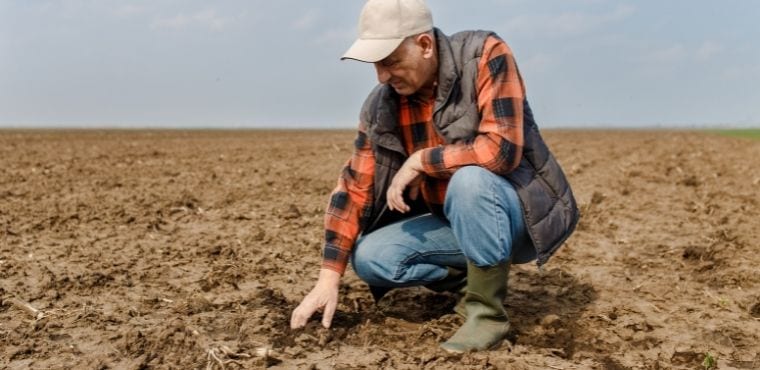
One of the main reasons farmers should test soil has to do with how much they learn. If you don’t test your soil, you won’t know anything about its chemical composition. You also need to do regular visual inspections of your soil—it’s a simple but key method of testing soil. When checking your soil with your eyes, look for the following features:

  • Solid soil texture
  • A rich and robust color
  • A consistent soil structure

Beyond the visual inspection, you also need to do a soil sample test. Even if everything looks okay, you still need to take a sample and have it examined. When you do a soil sample test, you can view:

  • The chemical composition of the soil
  • The pH level
  • The nutrient content

With this knowledge at your fingertips, you can make better decisions for your soil. If the pH level is too high, you can compensate for it by using a low-pH fertilizer. Knowledge is power when you’re dealing with your soil.

You Can Minimize Unnecessary Expenditures

If you’re just guessing what your soil needs, you might waste money on fertilizer. To get the most bang for your buck, you need to test your soil and take samples regularly. That way, you know exactly what type of fertilizer you need and how much to buy. You’ll save yourself a lot of money down the line by performing regular soil tests.

Sebastian County 4-H Youth Share in $30,000+ in Scholarships

By Tracy Courage U of A System Division of Agriculture

Arkansas 4-H youth will head to college this fall with a little less financial strain thanks to 4-H college scholarships.
The Arkansas 4-H Foundation recently awarded $32,900 in college scholarships to 28 high school seniors in 17 counties.

“The 2021 Arkansas 4-H scholarship recipients should be very proud of the accomplishments they have made throughout their 4-H careers. The scholarship application process is highly competitive,” said Angie Freel, associate department head, 4-H and Youth development for the Cooperative Extension Service and the University of Arkansas System Division of Agriculture.

“We are so thankful for the existing 4-H Foundation endowments and our community and association partners who consistently give each year to sponsor these important scholarships to educational institutions of higher learning,” she said. “Without them, we wouldn’t be able to offer these opportunities.”

This year’s scholarship recipients are:
Ada/Tyrell Anderson Scholarship ($6,000) — Matthew Teague, Washington County
Robert and Betty Oliver ($4,000) — Eva Berryhill, Hot Spring County
Farm Credit of Western Arkansas Scholarship ($1,000 each)
Aaron Mahan of Madison County
Zarah Dean of Franklin County
C.A. and Joye Vines Scholarship ($1,000) — Molly Gaskin, White County
Dennis Millard Memorial Scholarships ($1,000) — Katee Johnson, Hot Spring County
Fayetteville Rotary/Dale Killian ($1,000) — Nealie Den Herder of Washington County
Gladys Klepfer/Bo and Peggy Cobb Scholarships:
Victoria Puckett ($1,000), Faulkner County
Faith Fritch ($500), Benton County
Xander Adams ($500), Clark County
John W. White Award ($1,000) — Molly Parker, Hempstead County
Zack/Jennie Jennings ($1,000) — Tania Kelley, Pulaski County
Oaklawn Jockey Club ($625 each)
Rebecca Thomas, Clark County
Karlie Lindsay, Benton County
James Hewitt, Miller County
Katie Boone, White County
Larry Sandage Arkansas Forage & Grassland Council ($500) — Alyssa Butler, Lonoke County
Raymond Cox ($500)
Aubrey Seymour, Sevier County
Kaitlyn Watson, Calhoun County
Maeda Asbell ($400) — Jonathan Cline, Crawford County
Arkansas 4-H License Plate Scholarship ($1,000)
Emily Dunn, Sebastian County
Matthew Exum, Greene County
Mary Pruitt, White County
Governor’s Award Nominees ($2,000 to winner)
Eva Berryhill, Hot Spring County
Jenna Frederick, Sebastian County
Faith Fritch, Benton County
Sarah Gaskin, White County
Raydus Ree and Virginia Williams James 4-H Scholarship ($1,000): Meredith Holman, Franklin County.

Arkansas 4-H is the youth development program conducted by the University of Arkansas System, Division of Agriculture, Cooperative Extension Service and offers programs for youth ages 5-19 in every county in Arkansas.
The Arkansas 4-H Foundation is a non-profit dedicated to supporting Arkansas 4-H youth since 1951. To learn more, visit www.arkansas4hfoundation.org.

Officers Complete Wildland Fire Origin and Cause Determination Course

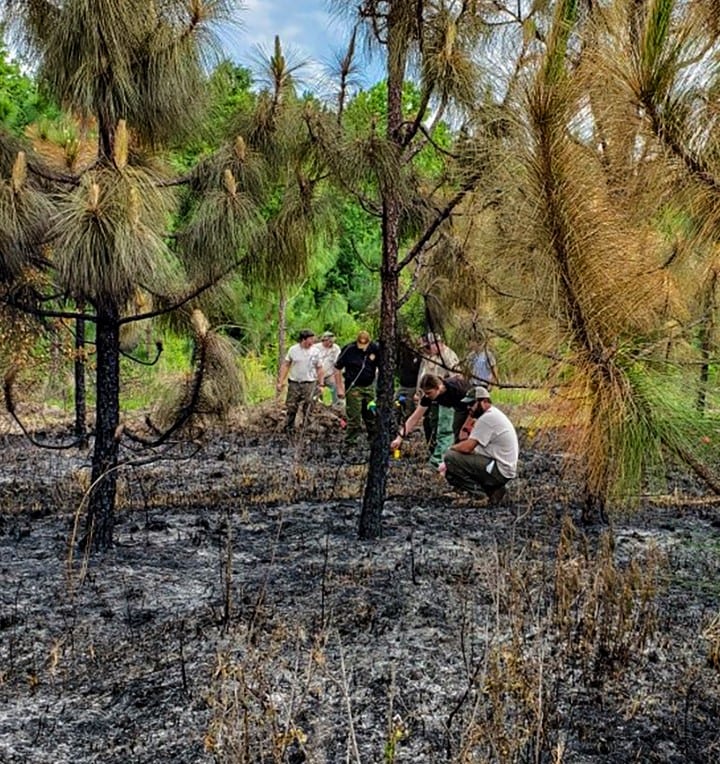
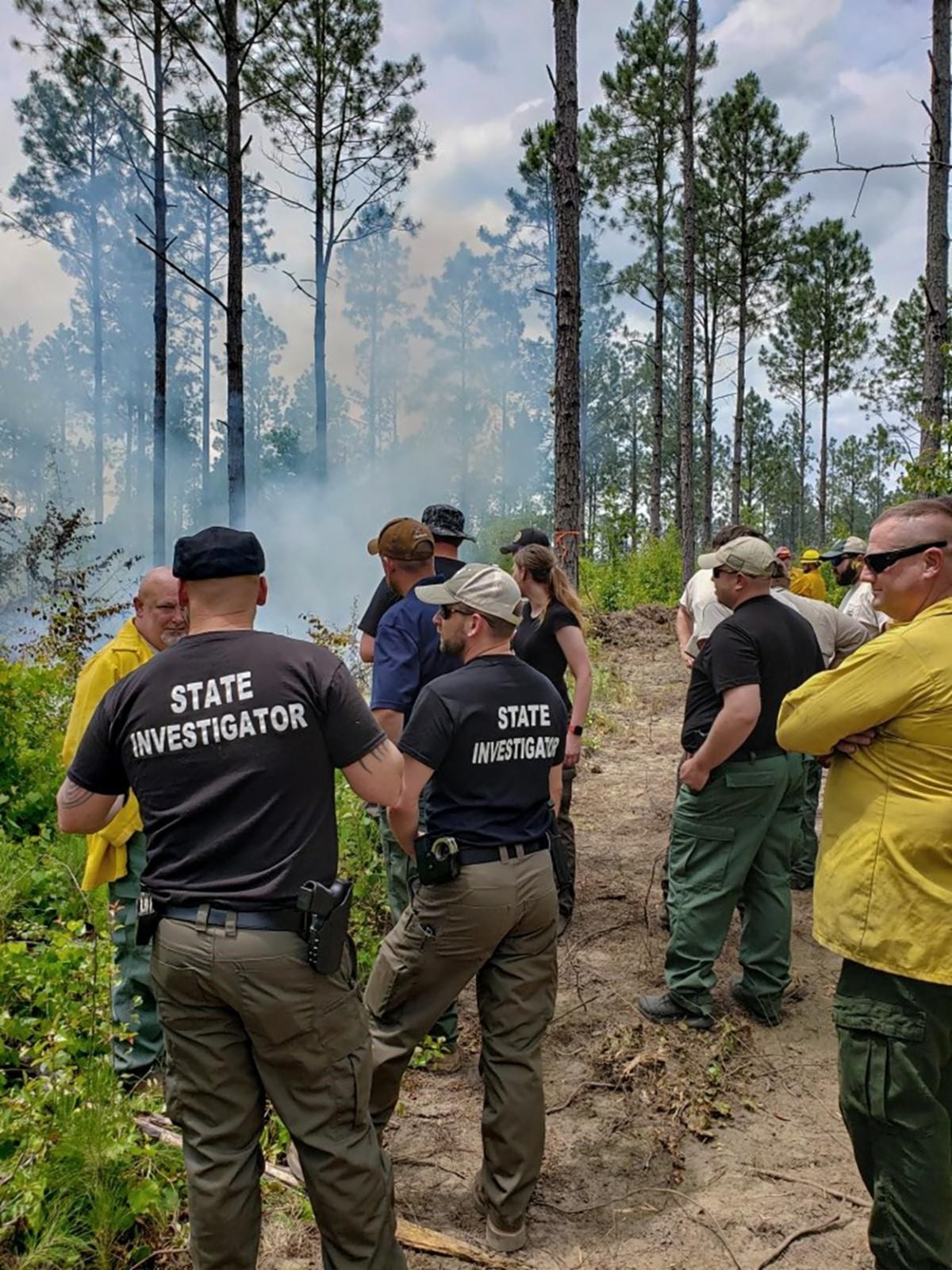
Arkansas Department of Agriculture’s Law Enforcement officers Keith Dedmon and Justin Smith completed Wildland Fire Origin and Cause Determination certification.

The course provides a consistent knowledge and skill base for wildland fire investigators. The concepts taught in the course help an investigator carry out their duties on a national basis without regard to geographic boundaries.

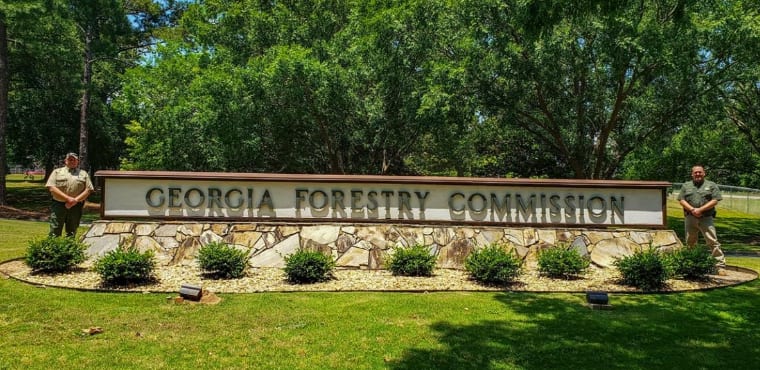
The week-long course was hosted in Macon, Georgia by the Georgia Forestry Commission. Participants were from six different states including Arkansas, Texas, Oklahoma, Louisiana, Tennessee, and Georgia.

The Department’s Law Enforcement officers investigate agricultural crimes that affect any part of Arkansas’s diverse agricultural industry, and enforce the laws and regulations of all agencies under the Department including the Forestry Division, Natural Resources Division, Plant Industries Division, and Livestock and Poultry Division. Investigators work with state, local, and county law enforcement to investigate crimes. Common investigations include wildfire arson, timber theft, livestock theft, agricultural and forestry equipment theft or vandalism, and enforcement of an array of Department regulations.

Obituary – Gaylord “Buck” Lovett (1927 – 2021)

Gaylord “Buck” Lovett of Waldron, Arkansas went to be with his Lord and Savior, Friday, June 4, 2021, in Waldron, Arkansas surrounded by his loving family. Buck was born October 23, 1927, in Boles, Arkansas to Miles and Bertha Lovett. He was 93 years old. Buck attended Keener Freewill Baptist Church. 

As a young man, Buck joined the Army. He proudly served in WWII in the Philippines as an MP and in an Armored Unit where he was awarded the Golden Wreath Medal. Buck was a loving, hard-working man of his word. He loved to tell stories. Buck was an avid hunter and enjoyed sharing that love with his family. Buck retired from Waldron Furniture Factory but his true labor of love was Turkey Track Bluegrass. He was always greeting people with a big ole smile. He was the driving force behind all the hard work that went into getting the park ready, keeping all the maintenance top notch and he could be found on the front row during the festivals enjoying all the bands and the companionship of all the friends and family he was surrounded by. He truly was the face of Turkey Track. 

Buck leaves behind to cherish his memory, his wife Lois, his children: Hershel Lovett (Terrie), Jim Lovett (Connie), Gayla Hudson (Rick), Barbara Isham (Jerry), Bill Lovett (Linda), Brenda Coffey (Tim), and Bobby Lovett all of Waldron, Arkansas. Grandpa will forever remain in the hearts of his grandchildren, great-grandchildren, and great-great-grandchildren. Buck will be missed by all that knew him and the many whose lives he impacted, including a host of nieces, nephews, neighbors, friends, and loved ones dear to his heart.

Buck was preceded in death by the mother of his children, Jewelene, his parents, Miles and Bertha Lovett, and his siblings: Leonard Lovett, Ike Lovett, Doc Lovett, Luke Lovett, Ray Lovett, Ellis Lovett, Ben Lovett Troy Lovett, Rube Lovett, one sister, Lorene Lovett, two granddaughters, Kim Taylor and Michelle Lovett, twin great-granddaughters, Faith and Hope Crane.

Buck’s life celebration will be at 2:00 p.m. Monday, June 7, 2021, at the Heritage Memorial Funeral Home Chapel in Waldron, Arkansas with Rev. Mike Powell officiating. Interment will follow in the Lamb Cemetery near Waldron, Arkansas. Arrangements are being entrusted to the Heritage Memorial Funeral Home in Waldron, Arkansas.

Buck’s pallbearers will be Mark Isham, Bruce Isham, Gatlin Lovett, Dayton Lovett, Brian Lovett, and Dusty Lovett. Honorary pallbearers will be Buck’s granddaughters.

Buck’s visitation will be Sunday, June 6, 2021, from 4:00 p.m. until 6:00 p.m. at the Heritage Memorial Funeral Chapel in Waldron, Arkansas.

For those who want to view the service but can not be in attendance, the funeral service will be live-streamed on our website.

To send flowers to the family or plant a tree in memory of Gaylord “Buck” Lovett, please visit our floral store.

A Town on the Move

As we passed through the small community, my father would always point to the red brick building just off Highway 22 and jokingly state, “I spent the best three years of my life in the fifth grade right there.” The building, currently a general store, was the site of New Blaine schools.

Today, very little of the once-thriving town of New Blaine remains. Zip by the few scattered rock buildings, the Dinner Bucket café, a small post office, and a new Dollar General and you are through town in seconds. Set down with some of the old-time residents like my friend Kent Denton and you will discover there is so much more of the town than what meets the eye today.

The original town was simply Blaine and was named for James G. Blaine, a leading Republican and presidential candidate of the late 19th century. Blaine was involved in several railroad endeavors and was well known in Arkansas. Mr. Denton showed me through Old Blaine, a town I had heard of but never visited. Old Blaine was created as businesses along the old Military Road.

It began around where Elizabeth Hall cemetery is now located and consisted of several businesses and homes scattered on the north and south side of the small dirt road. The Rollan’s family store, a cotton gin, grist mill, and a lumber business made up the business part of the town. In the early 1900s, the Fort Smith, Subiaco, and Eastern railroad decided to connect the rail line from Paris to Dardanelle and then make the loop to Ola, Booneville, and back to Fort Smith. The line ran through the coal town of Scranton, passed through the narrows of Shoal Creek near what is now Shoal Bay recreation area, and on to Dardanelle.

A small depot was built north of Old Blaine. New businesses including a bank, several stores, and a church were built near the depot. The transportation system shifted north and the lumber mill, cotton gin, and stores moved their business and renamed the town, New Blaine.

Many of the old buildings, constructed of native rock by Aaron Moore, John Friga, and Freeborn Lasater still stand today and are part of the National Registry. By the late 1920s, New Blaine was a bustling town with a telephone company, barber, gas station, and several mercantile buildings. In 1929, highway 22 became the first paved road running through western Arkansas. It passed north of the New Blaine school and just south of main street New Blaine.

It offered easy and assessable transportation by truck and automobile but it also opened up a world to many of the younger residents who began to move away for better jobs, a problem exacerbated by the woes of the Great Depression. Farm production dropped, coal fields were depleted, and with them, the need for the rail system. The railroad took up the track and closed in the 1940s. Without the rail system, business again moved and formed a line along Highway 22.

Lasater’s service station, White’s barbershop, and the post office were now on the highway and the school had been consolidated with Paris. In 1962, Lake Dardanelle was built and waters covered many of the old homes and farms and lapped along highway 22. By 1966, a new bridge over shoal creek resulted in a shifting of a portion of the highway to the south and New Blaine was again bypassed.

New Blaine has always been a town on the move. The town’s existence today shows the resiliency of the population, the ability to change and to adapt to the world we inherit.

New Blaine bank
New Blaine post office
Rollans cash store 1932