Greenwood High School Soccer Teams honored their Seniors in-between Varsity games earlier this month.
Lavaca Man Among 14 Charged with Health Care Fraud Following FBI Raid
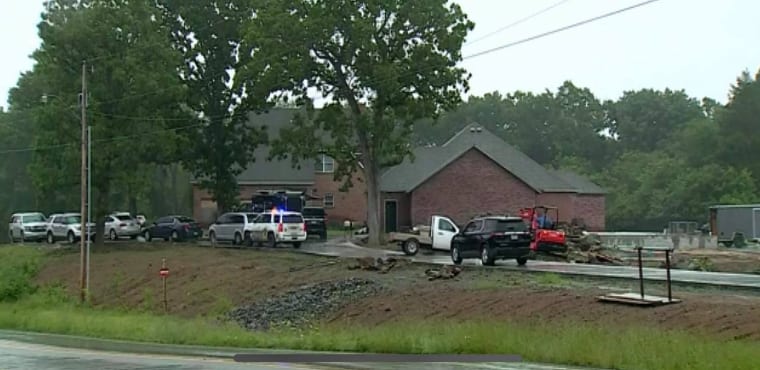
Billy Joe Taylor, 42, of Lavaca, Arkansas, was charged by criminal complaint with health care fraud in connection with an alleged scheme to defraud the United States of over $88 million, including over $42 million in false and fraudulent claims during the COVID-19 health emergency that were billed in combination with claims that were submitted for testing for COVID-19 and other respiratory illnesses.
Taylor, the owner and operator of Vitas Laboratories LLC and Beach Tox LLC, two testing laboratories, allegedly used access to beneficiary and medical provider information from prior laboratory testing orders to submit fraudulent claims for urine drug tests and other laboratory tests, including respiratory pathogen panel and COVID-19 tests, that were not actually ordered or performed.
The complaint also alleges that hundreds of claims were submitted for beneficiaries after they had died or otherwise ceased providing samples. The case is being prosecuted by Senior Litigation Counsel James Hayes and Trial Attorney D. Keith Clouser of the National Rapid Response Strike Force, and Assistant U.S. Attorney Kenneth Elser of the U.S. Attorney’s Office for the Western District of Arkansas.
The Department of Justice today announced criminal charges against 14 defendants, including 11 newly-charged defendants and three who were charged in superseding indictments, in seven federal districts across the United States for their alleged participation in various health care fraud schemes that exploited the COVID-19 pandemic and resulted in over $143 million in false billings.
“The multiple health care fraud schemes charged today describe theft from American taxpayers through the exploitation of the national emergency,” said Deputy Attorney General Lisa O. Monaco. “These medical professionals, corporate executives, and others allegedly took advantage of the COVID-19 pandemic to line their own pockets instead of providing needed health care services during this unprecedented time in our country. We are committed to protecting the American people and the critical health care benefits programs created to assist them during this national emergency, and we are determined to hold those who exploit such programs accountable to the fullest extent of the law.”
Additionally, the Center for Program Integrity, Centers for Medicare & Medicaid Services (CPI/CMS) separately announced today that it took adverse administrative actions against over 50 medical providers for their involvement in health care fraud schemes relating to COVID-19 or abuse of CMS programs that were designed to encourage access to medical care during the pandemic.
“Medical providers have been the unsung heroes for the American public throughout the pandemic,” said FBI Director Christopher Wray. “It’s disheartening that some have abused their authorities and committed COVID-19 related fraud against trusting citizens. The FBI, along with our federal law enforcement and private sector partners, are committed to continuing to combat healthcare fraud and protect the American people.”
The defendants in the cases announced today are alleged to have engaged in various health care fraud schemes designed to exploit the COVID-19 pandemic. For example, multiple defendants offered COVID-19 tests to Medicare beneficiaries at senior living facilities, drive-through COVID-19 testing sites, and medical offices to induce the beneficiaries to provide their personal identifying information and a saliva or blood sample. The defendants are alleged to have then misused the information and samples to submit claims to Medicare for unrelated, medically unnecessary, and far more expensive laboratory tests, including cancer genetic testing, allergy testing, and respiratory pathogen panel tests. In some cases, and as alleged, the COVID-19 test results were not provided to the beneficiaries in a timely fashion or were not reliable, risking the further spread of the disease, and the genetic, allergy, and respiratory pathogen testing was medically unnecessary, and, in many cases, the results were not provided to the patients or their actual primary care doctors. The proceeds of the fraudulent schemes were allegedly laundered through shell corporations and used to purchase exotic automobiles and luxury real estate.
“It’s clear fraudsters see the COVID-19 pandemic as a money-making opportunity — creating fraudulent schemes to victimize beneficiaries and steal from federal health care programs,” said Deputy Inspector General for Investigations Gary L. Cantrell of Health and Human Services – Office of Inspector General (HHS-OIG). “Our agency and its law enforcement partners are aggressively and effectively investigating these egregious crimes, which is made equally clear given the results of this takedown. We will continue to support the unprecedented COVID-19 public health effort by holding accountable people who use deceptive tactics to profit from the pandemic.”
In another type of COVID-19 health care fraud scheme announced today, defendants are alleged to have exploited policies that were put in place by CMS to enable increased access to care during the COVID-19 pandemic. For example, pursuant to the COVID-19 emergency declaration, telehealth regulations and rules were broadened so that Medicare beneficiaries could receive a wider range of services from their doctors without having to travel to a medical facility. The cases announced today include first in the nation charges for allegedly exploiting these expanded policies by submitting false and fraudulent claims to Medicare for sham telemedicine encounters that did not occur. As part of these cases, medical professionals are alleged to have offered and paid bribes in exchange for the medical professionals’ referral of medically unnecessary testing.
The law enforcement action today also includes the third set of criminal charges related to the misuse of Provider Relief Fund monies. The Provider Relief Fund is part of the Coronavirus Aid, Relief, and Economic Security (CARES) Act, a federal law enacted March 2020 designed to provide needed medical care to Americans suffering from COVID-19.
The Fraud Section is prosecuting the cases in the following districts: Western District of Arkansas, Northern District of California, Middle District of Louisiana, Central District of California, Southern District of Florida, District of New Jersey, and the Eastern District of New York.
Today’s enforcement actions were led and coordinated by Assistant Chief Jacob Foster and Trial Attorneys Rebecca Yuan and Gary A. Winters of the National Rapid Response Strike Force of the Health Care Fraud Unit of the Criminal Division’s Fraud Section, in conjunction with the Health Care Fraud Unit’s Medicare Fraud Strike Forces (MFSF) in Miami, Los Angeles, the Gulf Coast, and Brooklyn, as well as the U.S. Attorneys’ Offices for the Northern District of California, Western District of Arkansas, and Middle District of Louisiana.
The MFSF is a partnership among the Criminal Division, U.S. Attorneys’ Offices, the FBI and HHS-OIG. In addition, U.S. Postal Inspection Service, Internal Revenue Service Criminal Investigation, Veterans Affairs Office of Inspector General, Department of Defense Office of Inspector General, Federal Deposit Insurance Corporation, Louisiana Medicaid Fraud Control Unit, and other federal and state law enforcement agencies participated in the law enforcement action.
The law enforcement action was brought in coordination with the Health Care Fraud Unit’s COVID-19 Interagency Working Group, which is chaired by the National Rapid Response Strike Force and organizes efforts to address illegal activity involving health care programs during the pandemic.
The Fraud Section leads the Medicare Fraud Strike Force. Since its inception in March 2007, the Medicare Fraud Strike Force, which maintains 15 strike forces operating in 24 federal districts, has charged more than 4,200 defendants who have collectively billed the Medicare program for nearly $19 billion. In addition, the HHS Centers for Medicare and Medicaid Services, working in conjunction with the HHS-OIG, are taking steps to increase accountability and decrease the presence of fraudulent providers.
The Department of Justice needs the public’s assistance in remaining vigilant and reporting suspected fraudulent activity. To report suspected fraud, contact the National Center for Disaster Fraud (NCDF) at (866) 720-5721 or file an online complaint at: https://www.justice.gov/disaster-fraud/webform/ncdf-disaster-complaint-form. Complaints filed will be reviewed at the NCDF and referred to federal, state, local, or international law enforcement or regulatory agencies for investigation.
To learn more about the department’s COVID response, visit: https://www.justice.gov/coronavirus. For further information on the Criminal Division’s enforcement efforts on PPP fraud, including court documents from significant cases, visit the following website: https://www.justice.gov/criminal-fraud/ppp-fraud.
An indictment, complaint, or information is merely an allegation, and all defendants are presumed innocent until proven guilty beyond a reasonable doubt in a court of law.

The Different Irrigation Systems for Farms
If you’re new to farming irrigation, it can seem a bit overwhelming. There are many different irrigation systems out there, making it hard to know which one is suitable for your farm. That’s why we’re here to arm you with the knowledge that you need to pick one. Read on and learn about the different irrigation systems for farms.
There are four categories of irrigation systems. They are:
- Flood
- Sprinkler
- Drip
- Micro
Flood Irrigation
First, we’ll look at flood irrigation systems. There are two types of distribution systems for flood irrigation.
- Furrow Irrigation. The irrigation water runs down specially designed furrows. Due to their slope and angle, they can provide a uniform application of water to your field. Water gets supplied through a PVC pipe that peeks above the ground. The opening is the ‘gate,’ where you pump in the water. You can adjust the entrance to control the flow of water to your furrow.
- Graded Border Irrigation. A narrow strip of your field features raised earth borders on each side. The water runs down the middle, and the barriers keep it from flowing elsewhere. The lengths of the edges get graded to a specific slope. That way, the water can disperse evenly among the field. An underground pipeline with a riser and valve supplies the water to the high ends of the border.
Sprinkler Irrigation Systems
Farms make unique use of sprinkler systems to irrigate their fields. The techniques include:
- Hand Move Pipes. You attach your sprinkler to the ends of 40-foot PVC pipes and divide your field into rows called laterals. You place each sprinkler head at the end of each lateral to ensure you water the entire area.
- Solid Sets. You install a permanent underground PVC pipe beneath your entire field. Risers come up out of this pipe with sprinkler heads attached. You can space out the sprinkler heads based on the size of the field.
With big processes like these, you’ll need to stay conscious of any signs of faulty irrigation.
Drip Irrigation
Drip systems use small poly tubing with emitters on top. These systems can apply water to small areas such as the root zone of your crops. You can install drip systems above ground or bury them to hide the tubing. Drip systems are popular due to their precision and versatility—they’re also huge in the world of hydroponics!
Micro Irrigation
Finally, we have micro irrigation systems. These get their name from small sprinklers that use low volumes of water. Micro irrigation systems are ideal for vineyards and orchards instead of large fields.
With so many options to choose from, make sure you select the right irrigation systems for your farm. It makes a big impact.
McPherson Announces Run for Scott County Sheriff
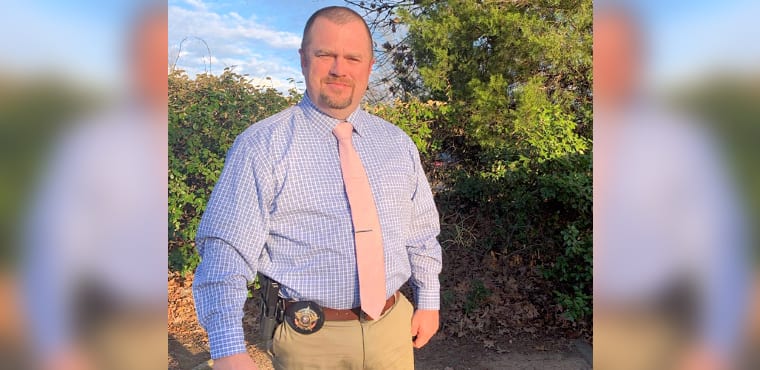
Scott County Deputy Clint McPherson has made an early announcement that he plans to seek the office of Sheriff in the 2022 election.
McPherson, 40, and his wife Tracy have two sons, Warren and Caleb. A Texas native, McPherson moved to Arkansas in 2001. The McPhersons settled in Scott County in December of 2015.
“We moved to the area because I used to travel through this region frequently for work and I always wanted to move to this part of the state,” shared McPherson. “I love the outdoors and we were able to buy a piece of property in the Nella/ Blackfork area.”
In January of 2016, McPherson embarked on a new career with the Scott County Sheriff’s Office.
“I had always wanted to be a peace officer. Prior to moving here I had worked for 15 years in the oilfield service industry and traveled the country,” McPherson added. “But once we moved here, I promised my family that we were done moving around and that it was time to put down our roots. I decided to pursue a career in law enforcement. I love this country and this state. I also love history, how and why our country was founded. That is why I applied with the sheriff’s department. Of all the elected positions across this country, the sheriff is the only elected law enforcement official in our system of government. The sheriff works for the people of his or her county and answers to them, and them alone.”
The decision to run for the office he holds in high esteem was not an easy one. “I plan on making my case to the people of Scott County and having the tough discussions about what we can do better and explain where I stand on issues as they relate to the Sheriff’s Department,” McPherson added.
McPherson has worked as a jailer and is a certified law enforcement and narcotics officer. Additionally, he has 15 plus years of business experience and management in the private sector.
“A good leader leads, and leads from the front and by example,” McPherson concluded. “That means making a decision and sticking with it, even if it’s an unpopular one at the time. You must own your mistakes as well as your successes. A good leader will continually improve, learn, and build up a great team. A team that is united in a common goal. As for a Sheriff, he must do all those things and keep his oath. To protect and defend the Constitution and to protect people’s rights from any and all threats, to know that our rights are not temporarily suspendable, and to secure the liberties of the citizens of this county. A sheriff needs to be proactive in the community and engaged with the people.
McPherson stated that his priorities, if elected, would be making himself available to the people, and providing increased training for the deputies and jailers. “It is currently lacking. Training gives them the tools they need to make a significant difference in the drug problem we have here.”
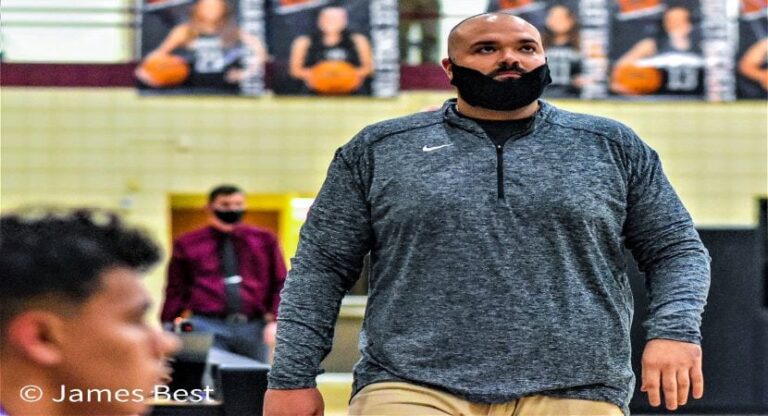
Winds of Change: Eagles Welcome New Boys Basketball Coach, Josh Ferrell, to Paris
The winds of change have once again made their presence known in the Eagles boys basketball program. Paris head coach Blain Brewington has resigned and has accepted a similar position at Bartlett High School in Memphis, Tennessee. The Paris board of education met in a special board meeting on Tuesday evening, May 25 to accept Brewington’s letter of resignation and to hear and approve a recommendation to hire his replacement, Josh Ferrell, who is currently the head basketball coach at Caddo Hills High School in Arkansas. It was a whirlwind change to the boys basketball program that will enter the 2021-22 season with its third head coach in as many years.
In a press release from the Paris school district, Josh Ferrell was announced as its new boys basketball coach:

The new Paris boys basketball coach comes to the Eagles from a basketball-rich family and coaching tree. Josh’s father, David, is the head basketball coach at the New School in Fayetteville. Recently, Josh’s team won a playoff game over The New School that featured a match-up between he and his father.

Ferrell’s hometown is West Fork where he attended high school and played basketball for the Tigers. In his high school career, he averaged 22 points per game, 6.9 assists per game, and 5.3 steals per game. He had a reputation as being a tenacious guard at West Fork that eventually gave him the opportunity to play college basketball at the University of the Ozarks.
He made an immediate impact at the U of O by being named as the ASC Conference Freshman of the Year and also being named to the conference’s All Freshman Team. In the next three years, he started every game, and was named as the conference’s ASC Sportsmanship Athlete of the Year at the end of the 2015-16 season.
Ferrell’s success followed him to Caddo Hills where he is currently the head boys basketball coach. According to Max Preps, his team was ranked 12th overall in Arkansas Class 2A, and 2nd in the 2A-7 conference. This past year, his team had impressive playoff wins over Mansfield, Melbourne, and Earle. His only playoff loss was a seven point loss to Marianna Lee.
Resident Press will have an exclusive story on Josh Ferrell in Friday’s online edition. By all indications, this is a very big hire for Paris, and Eagles basketball fans have a lot to look forward to this winter when the Eagles take the court. On behalf of Resident Press, we would like to welcome Josh to Paris, and we wish him the best of success in leading the Eagles boys basketball program.
Watch for more on this story in Resident Press!
Fayetteville Opens Gate For Track Multi-Athletes
Pictured: Mansfield athletes Danielle Lillie, John Branche, Victor Steffen, and Makayla Strutton finish the year at the Fayetteville hosted decathlon/heptathlon
Fayetteville was a busy town this past week as athletes of various types graced the city.
At the University of Arkansas’s Bogle Park, college softball began its regional tournament. At Baum-Walker Stadium, the Razorback baseball team wrapped up its SEC overall conference title. Then just down the street at Fayetteville High School’s track complex, elite high school athletes from across the state competed in the 2021 Decathlon/Heptathlon.
The two-day event geared towards athletes that compete in multiple track events ended the season for high schoolers across the state.
The Decathlon/Heptathlon was open to all classifications. Schools could enter up to two men and two women to compete. Among the many were four Mansfield Tiger track athletes that took on the task that closed the 2021 season.
Mansfield’s Makayla Strutton and Danielle Lillie represented in the heptathlon portion for women. Tigers Victory Steffen and John Branche enrolled in the decathlon section for the men.
The heptathlon consisted of seven individual events spread out over the two-day period beginning on May 19 and running through May 20. Day one consisted of the 100m hurdles, long jump, discus, and 200m dash. Day two brought on the high jump, shot put, and 800m run.
The decathlon consisted of ten events with five being completed each day. The first five events for the men were the 100m dash, long jump, shot put, high jump, and 400m dash. The second round finished with the 110m hurdles, discus, pole vault, triple jump, and 1500m run.
Strutton was the veteran multi-event athlete of the Mansfield nucleus. The senior competed in the same event in 2019. The others which included seniors Lillie and Steffen along with junior Branche were all first-timers at the year-end specialty track event.
Strutton’s experience paid off as she was the highest finisher by placement out of the core four. Mansfield’s recently announced 2021 Track Player of the Year scored 2765 total points at the heptathlon. It placed her 39th among all female contestants.
Strutton scored 2573 points in 2019, the previous year any heptathlete was allowed to compete due to the 2020 Covid shutdown. Her newest heptathlon mark was a 192 point improvement.
The 2021 Mansfield graduate and recently signed collegiate basketball player had her best events with the 100m hurdles and high jump. She collected 523 points for her 17.67 mark in the hurdles. She tallied 460 points for a 4’ 5” clearance in the high jump.
“Makayla was the third fastest hurdler at state,” proclaimed Mansfield track coach John Mackey. “You could tell she was most comfortable in her primary events. I’m proud of the way she competed in all the events. She had that mentality that made her a prized high school player.”
Steffen was Mansfield’s highest-rated competitor in the men’s events. His placement was 44th overall with 3566 points.
Steffen amassed his largest contributions from his favored events. The high jump hauled in 504 points for a 5’ 5” clearance. The 100m dash afforded him another 466 points.
“Victor was motivated to learn such new events as the pole vault and triple jump to get another chance to compete,” revealed Mackey. “This decathlon was something he wanted to do to continue a solid track career. He learned these new events in a matter of just a few lessons and found a way to succeed. He really enjoyed his time with track and this was a fun way to end a career.”
Lillie totaled 2299 points for her effort at the heptathlon. That total placed her 61st among all female participants.
She garnered a large amount of her total through the 100m hurdles. That ten barrier race captured 486 points off an 18.02 clocking. She then surprised with her second-best point getter through the newly learned shot put.
Lillie took 438 points from the shot put ring with a throw of 28’ 2.25”.
“Danielle had some good trainers when it came to shot and discus,” said the coach. “Some of our regular throwers gave her some quality tips and secrets to their success. Danielle’s overall athleticism took it from there.”
Lillie’s teammate, Strutton, also profited from the advice of Mansfield throwers. Her shot put mark measured 28’ 9.75” for 450 points.
Branche, the youngest of the Mansfield group, had a tougher time mastering the many skilled events involved in his decathlon section. The 2020 Mansfield Cross Country Runner of the Year was primarily a runner through track season and rarely competed in jumps or throws.
“John decided late that he wanted to attend the decathlon,” said one member of the Mansfield coaching staff. “That put him learning several skilled events in a short period of time. That’s tough on a player that only runs during the year.”
Branche finished with 2099 points putting him well below the meet contenders at 58th place. Take into consideration that that total score included a pair of zeroes attached to no heights gained in the pole vault and high jump. Those were two of the skills just recently learned by the junior with little to no practice.
The 100m dash was the best mark offered by Branche. He completed the short sprint in 13.23 seconds for 430 points. He followed that with a 335 point offering from his 15’ 7” long jump for his second-best mark.
Mansfield has had two champions from this type of specialty meet in its storied track and field history. Two past players have won the overall heptathlon championship. No decathlete has been awarded such distinction.

Crystal Kemp won the 2005 heptathlon for Mansfield. Jessica Otto won the 2010 state heptathlon.
The 2020-2021 Mansfield sports calendar became complete when Strutton finished the 800m run at the Fayetteville hosted track meet. She was officially the last Tiger to compete in any sport or race for the school this year.
Cast Iron Skillet Tips
Cast iron skillets have been around since. 1707, and there is a reason they are still popular 300 years later. There are some tricks to using cast iron, and like everything it does get better with practice. Once you achieve that wonderful nonstick coating on your skillet you may never want to use another pan.
1. Cast iron must be preheated. In order to really take advantage of the nonstick coating that is built up on it, preheat your pan with oil or butter or whatever you will be using.
2. If you have a good coating with lots of layers, soap is okay. Yes, someone probably gasped. If you aren’t comfortable using soap that’s okay, but it can be used. Just use a small amount should there be something particularly stuck on the pan. After using soap I make sure to rinse thoroughly, dry with a flour sack towel and then add a thin layer of avocado oil. I’ll place on the stove on low heat so the pan can absorb the oil.
3. Salt is a great scrubber for stuck on foods! If soap still isn’t your thing, or the pan in your kitchen doesn’t have a thick coat yet then sprinkle salt in a warmed pan and scrub. The abrasiveness of the granules work to remove the leftovers.
4. For best results avoid metal utensils. With any cookware it’s best to avoid metal utensils, really. Prevent scratches and opt for wood, plastic, or silicone materials.
5. When purchasing cast iron there is a good chance it’s going to come preseasoned. Go ahead and season it again. To do this heat it in the oven then add a thin layer of oil and set it back in the oven. Find detailed directions here.
Cast iron is not as difficult as it may seem in the beginning. The diverse uses for it such as baking, frying, grilling, outdoor cooking, etc. make it so versatile every kitchen should have at least open.
Cluck Trades Pirate Seas For Eagle Skys
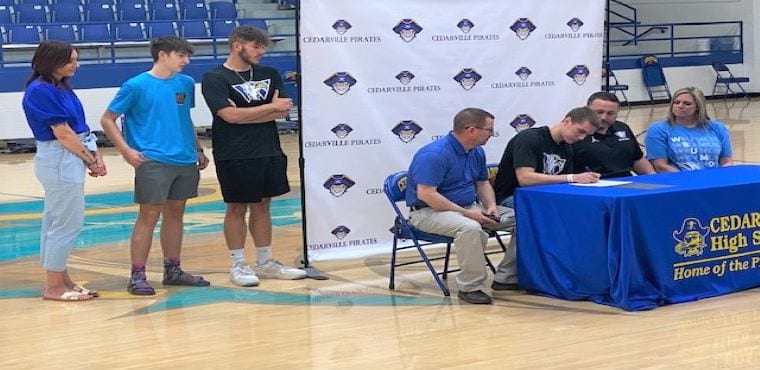
Cedarville Pirate, Austin Cluck, is preparing to “Fly Like an Eagle” after he signed his letter of intent to continue his basketball career at Williams Baptist University. Cluck saw great success during his time as a Pirate averaging 15.1 points, 6.2 rebounds, and 3.8 assists per game. He shot 45.3% from a 3-point distance and made 91.3% of his free throws. During the 2021 season, Cluck led the Pirates to a Regional Runner-Up honor and a berth into the 3A State Basketball Tournament. Cluck earned 3A All-Conference, 3A All-State, and 3A All-State Tournament Team.
Cluck was equally as impressive off the court excelling in the classroom and earning the Governor’s Distinguished Scholarship, which requires a 32 on the ACT, along with being named one of the four valedictorians at Cedarville High School. “I’m super excited to start on this new journey with the Williams Baptist Eagles,” expressed Cluck. “The Christian environment at WBU is something I’m very eager to be a part of, and I’m especially blessed to be able to play basketball as well. While I’ll miss Cedarville, for all its kindness, community, and unity, I look forward to joining this new family. I hope over these next four years, I’ll learn everything I can to be the best basketball coach and educator that I can be. More importantly, I’d like to grow in my faith and have true fellowship with a family of believers.”
Congratulations Austin, for choosing to continue the sport you love while furthering your education!
Everything To Consider When Buying a Fixer-Upper
Many homeowners have begun buying fixer-uppers as they shop for their dream houses because doing so gives them a chance to customize. Before you start shopping, educate yourself on everything to consider when buying a fixer-upper so that your vision is realistic. You’ll also want to carefully analyze the floor plan of each property you look at to ensure it aligns with the remodel you have in mind.
Establish a Budget
Before you start investigating properties, have a budget in place. You’ll need to assess your finances so that you have enough money to buy a new home. Additionally, make sure you save money for the renovation projects you have in mind.
Consider talking to a contractor or interior designer as you draw up a budget to understand your expected expenses. You may need to hire various professionals, including an architect, a pest inspector, a carpenter, or an interior designer. Each of these experts will help you create your dream home and carry out essential tasks. Before buying your fixer-upper, you may also want an electrician or a structural engineer to evaluate whether the property works for your vision.
Why You Need a Budget
Establishing a budget ensures you buy a property you can afford. Moreover, it allows you to set aside money for any unexpected expenses.
Before buying, you should assess the property and look for what you’ll need to fix. Evaluate the roofing, plumbing, garage door, and more to ensure they’re in good condition. For instance, you’ll want to recognize the signs of a garage door needing repair, such as strange squeaking or banging sounds. You don’t want an unexpected blow to the budget, so make sure you know the signs of damage.
Do What You Can Yourself
Things to consider when buying a fixer-upper also include seeing what you can do yourself. If there are any projects you can do on your own, do them—DIYing saves money as you customize your home.
Remember to take time to think this through. You don’t want to overcommit to a project or attempt something you don’t understand. For example, if you’ve never hung cabinets, this is a job for a contractor—but you could take care of repainting yourself.
Know What To Expect
You may have to compromise, since a home may not allow you to have your dream kitchen and a playroom for the kids. Additionally, remember that delays will inevitably come up, since remodeling a house takes time. For a while, things will be all over the place, but this is part of the process. So long as you wait it out, you’ll have the home of your dreams!
UAFS Geoscience Students Explore Research With Full Fellowships
Three UAFS geoscience graduates have demonstrated a wide range of research and disciplines in the program, and their graduate school plans and prestigious graduate fellowships, reflect the same diversity.
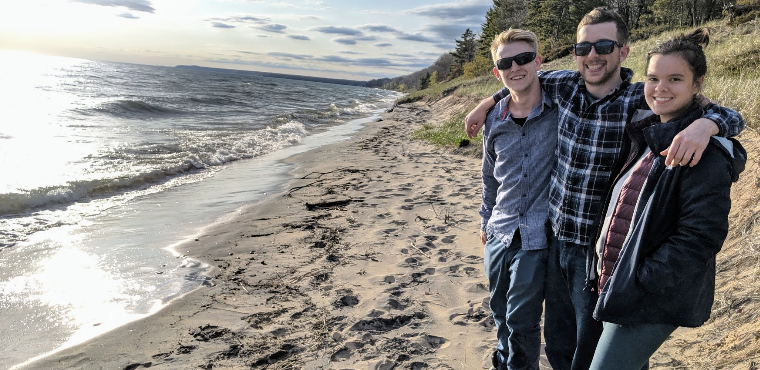
Samantha Barnett, Preston Liles, and Logan Pearson traveled with Dr. Maurice Testa, associate professor in the UAFS Physical Science department, to the Upper Peninsula of Michigan, where they identified a 400 million-year-old Silurian reef in the Hiawatha National Forest in the summer of 2019.
Testa and the three students took part in a joint venture between UAFS, the National Forest Service, and Shawnee State University at Portsmouth, Ohio. The investigators were initially charged with finding the prehistoric reef. But they found much more, according to Testa.
“Not only did we find the reef, we found an entire reef system composed of dozens of smaller reefs in the Hiawatha National Forest,” Testa said.
Liles collected high-resolution scans of the reef surfaces using a Gigapan camera, Testa said. Barnett and Pearson did a detailed analysis of the main reef and identified its marine fossils. The three worked with students from Shawnee State, conducting groundwater analysis and mapping ancient striations within the National Forest.
With graduation approaching, the three students have plans for the fall that take their studies in different directions.
Barnett, of Fort Smith, has accepted a fully funded position at Northern Arizona University to seek a master’s degree in Geosciences. She will be working in climate science and glaciology.
Liles, of Van Buren, has accepted a fully funded position at Mississippi State University. He will seek a master’s degree in Geospatial Science with a particular interest in remote sensing. He has also accepted an internship for this summer at Mississippi State’s Gulf Coast research center using an underwater drone to image the seafloor.
Pearson, of Greenwood, also has accepted a fully funded position at Mississippi State. He will be working toward a master’s degree in Geology with a concentration in Paleontology. He will be working on Cretaceous mosasaurs and Eocene whales.
The students’ broad interests and the different applications of their scholarship are the nature of Geosciences, Testa said.
“Geoscience is a diverse discipline that combines knowledge of Chemistry, Biology, Physics, and Mathematics to better understand the earth. Our Geosciences students are a diverse group who pursue research in Paleontology, Volcanology, Petroleum, Environmental Engineering, and Planetary Geoscience,” he said. “If you have a love for being outside, constantly learning new things, and solving problems that are millions of years in the making, Geosciences might be for you.”
From the student’s position, Pearson sees it this way.
“One of my favorite parts of the geoscience program is also one of the most valuable parts, the ability for me to build a future and career for myself. I’ve made lots of connections as well as friends, and I’ve been a part of a great program. There are wonderful professors who give students the opportunity to do research that involves going into the field and collecting data. I’ve been able to travel all over the country doing/presenting research and opened up a multitude of possibilities that I didn’t have before joining the program.”