77.6 F
Fort Smith
Friday, July 3, 2026
Home Blog Page 641

3 Ideas To Help You Lead a More Sustainable Life

Becoming more eco-friendly doesn’t have to involve huge lifestyle changes. Even the smallest steps can make a difference for your local environment. However, a sustainable lifestyle benefits more than just the world you live in. You can reap the benefits of lower energy bills, less clutter, and an overall healthier life. Start making simple yet effective changes to your daily habits with these ideas to help you lead a more sustainable life.

Reduce Waste

These days, single-use, disposable objects are around every corner. From plastic dishware to disposable food storage, the amount of trash you throw out every day can add up quickly. Do your best to cut down on the number of disposable products you use. Invest in reusable water bottles, food containers, and other products that you would normally throw out after one use. You can also put some time and effort toward upcycling broken possessions rather than simply getting rid of them. For example, can you reupholster an old armchair instead of setting it out by the dumpster? Perhaps you can turn that torn dress into a decorative pillow covering. Find unique ways to keep using products rather than letting them pile up in a landfill.

Eat Local (Or Grow Your Own!)

Produce that comes from halfway across the world uses a lot of fossil fuels to power the boats, planes, and trucks that bring it to your grocery store. When you buy your food locally instead, you cut those carbon emissions out of your life. Buying local also means supporting local farmers and business owners. You don’t have to stop there, however. Other ideas to help you lead a more sustainable life are to grow fruits and vegetables at your home or raise your own livestock. You can cultivate your own garden to provide yourself with fresh, organic, and free produce. The same goes for backyard animals, such as chickens or goats. You can keep a flock of egg-laying chickens to give you delicious, farm-fresh eggs, or fill your fridge with delicious goat milk or cheese.

Use Less Energy at Home

Most households use more energy than they need. Not only does this increase your carbon footprint, but it can also add up to a lot of unnecessary costs in your utility bills. Fortunately, there are plenty of ways to trim your household energy use. You can take bigger steps, such as investing in energy-efficient appliances and installing window treatments that offer good insulation. For a smaller step, try swapping your lightbulbs for LED lights and other eco-friendly options. Even habits like turning the lights off when you leave a room or turning off the AC and opening your windows on a nice day can help you cut down on the amount of energy you use in your home.

Mansfield Jr Tigers “Scale” Past Rattlers

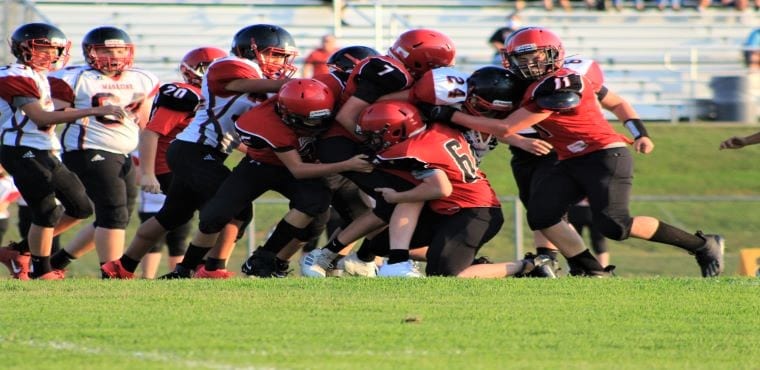
COVID-19 has shut down a lot of fun and exciting things so far. It has taken our sanity. It has taken our time. But one thing it can’t take is our FOOOOOOOOOTBALLLLLLL!!! A great glimpse into what the season holds was on display at Tiger stadium Monday night as Mansfield’s 7th and 8th grade took on the Magazine Rattlers in a defensive heavyweight bout.

#6 Austin Oldham

Both teams started off playing tag with each other as they tried to get the COVID-19 rust off. It was an anything you can do I can do better match-up. The Tigers gave and received big hits but never backed down holding the Rattlers scoreless for the entire game. Linemen Dakota Deer, Eli Garner, James Olinghouse, and James Bausley waged war in the trenches stuffing attempts by Magazines offense on multiple occasions. Passes and runs around the end weren’t very easy for Magazine either. Mansfield was able to stretch out the Rattler’s defense to the sidelines and make team tackles multiple times. Pressure by linebackers Jeremy Strozier, Toby Towe, and Alex Hecox created chaos in Magazine’s backfield all night. Zander Walters was the sole turnover king though when he jumped on a loose Magazine snap giving the Tigers great field position.

#7 Jeremy Strozier with the take-down

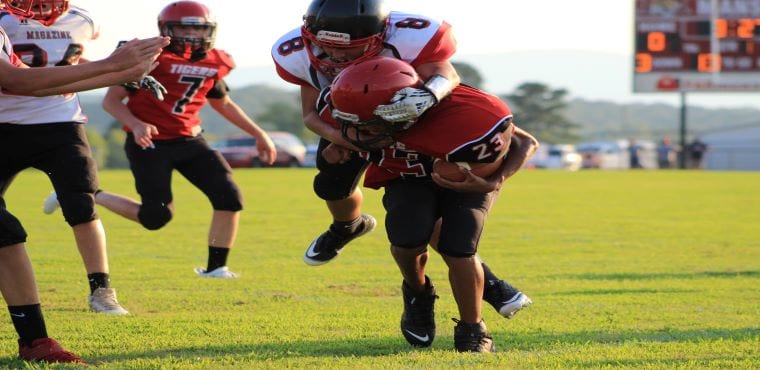
Although there were a few kinks in the Tigers offense, they showed glimpses of great promise. Workhorse running back Trey Powell took more handoffs than the Olympic torch averaging four yards a carry and broke free for big runs a few times. Strozier plowed his way through the snake pit with several runs even striking the bullseye on a few passes. One of Strozier’s favorite targets all evening was Austin Oldham. Oldham was the sole scoreboard contributor of the night when he snagged a Strozier pass bobbing and weaving through Magazines fang-filled defense for a 57-yard touchdown. Strozier capped things off with a two-point conversion to set the score at 8-0 Tigers. With time winding down, it was up to the Tigers defense to stop for one more Magazine drive. The Rattlers ran the ball hard, but the Tigers pushed the Magazine running back right into the waiting arms of Cisco Fildes who put the nail in the coffin for Mansfield’s first win of the season.

#23 Trey Powell

Although the teams combined their 7th and 8th grade teams for the scrimmage, everything will go back to normal on Thursday, August 27 as the 7th-Grade and Jr High Tigers head south to take on the Mena Bearcats in what is sure to be one for the ages.

Jr Rattlers Hold Tight To Tigers Tail

Pictured is Magazines #8 Connor Droemer

When it comes to Jr High football, most spectators try to keep their expectations on the lower side when it comes to the outcome of the games. Especially considering this is the time in a player’s sports career that they are learning big boy football. But on Monday night when the 2A Magazine Jr High Rattlers and the 3A Mansfield Jr High Tigers stepped onto the field, fans were given a real treat. Each team played with knowledge and maturity that even their senior high counterparts would be proud of. And with the Magazine freshmen playing up on the senior team, the Rattler roster consisted solely of 22 seventh and eighth-graders.

#24 Kolton McCubbin

Leading the Jr High Rattler den is Coach Beau Sikes. Coach Sikes has been at Magazine for seven years where he started out as part of the two-man crew under the former head senior high coach, Doug Powell. Sikes also doubles as the Defensive Coordinator of the senior high team. The goal going into last night’s scrimmage was pretty cut and dry. While still getting to know the 7th graders, Coach Sikes wanted to focus on each player’s abilities when placed in different spots. “I have solid support from Coaches Ryan Chambers and Dakota Suttles in the secondary. With Coach Chambers calling plays from the sidelines, we wanted to see how the team would hold up to the fast pace. The team struggled with the heat along with trying to figure out the water situation.” Due to the new AAA guidelines set in place, each player must use their own water bottle during matches so teams are still trying to find the best way to get water to their players during water breaks. “We still have a few things we need to tweak.”

#64 Jaxon Pickartz and #34 Chakong Yang

With a final scrimmage score of 8-0 Mansfield, offensively the Jr Rattlers were led by the unhesitating fast-moving footwork of Aiden Carter who delivered an electric 12-yard run in the second half on the game and Chakong Yang, who also in the second half, carried out a massive 26-yard dash for the Rattlers. Magazines defense was a lockdown fortress for most of the game giving up very little yardage. If Mansfield tried to run outside, there were ground Rattlers. If they tried to pass, there were flying Rattlers. Getting in on that action was Casey Carter, Jaxon Pickartz, Kolton McCubbin, and Chakong Yang. “One strength our players bring to the table is that they are aggressive. They love contact, they love to tackle and our size up front is good. Dialing back aggression is better than having to teach someone to be aggressive.”

Because of a “great group of little league coaches along with the support of Coach Doug Powell and Josh Scott getting the ball rolling coupled with great guys running the system” this group of seventh and eighth graders are now the products of that system. “We also have awesome parent support. With this being our biggest Jr High group, we are hoping to get up to 30 players next year and be able to play a regular conference schedule for the first time in two seasons.” When it comes to team goals, the coaches leave that up to the players. “We allow the players to set their own individual and team goals. If individual goals are met then team goals are usually met as well.” Some of those individual goals this season are to be stronger, faster, and to make more tackles/receptions along with being undefeated.

#34 Chakong Yang

On September 11th, the Jr Rattlers will take on the Warriors at Lamar. “Coach Josh Jones always does us a solid by setting up these games multiple times a season for our players,” Coach Sikes concluded.

July Cattle Placements Hit Highest Level Since 2011

By Mary Hightower
U of A System Division of Agriculture

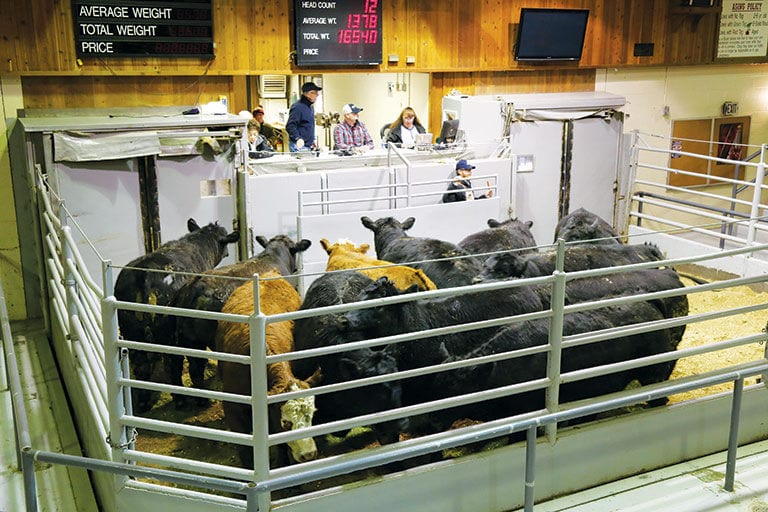
Cattle feedlots are beginning to fill again, according to the August Cattle on Feed Report from the U.S. Department of Agriculture.

COVID-19 disruptions in meat processing this spring caused a backlog of cattle at the farm level. The Aug. 24 report from USDA’s National Agricultural Statistics Service showed a restart in the flow of cattle to feedlots.

“The most significant figure in this month’s report was the placements figure. At 1.893 million head, July placements were considerably higher than anybody’s pre-report expectations,” said John Anderson, head of the agricultural economics and agribusiness department of University of Arkansas System Division of Agriculture and the Dale Bumpers College of Agricultural Food and Life Sciences.

“This is the highest July placements figure since 2011,” he said.

The increase can be attributed to a couple of factors.

“First, it suggests that feedlots are trying to refill their pens from the gap in placements that occurred earlier this spring,” he said. “Due to COVID-related disruptions, feedlots have had relatively large inventories of cattle with a relatively long time on feed.”

Anderson said that with a total on-feed inventory at, or even below, the prior year’s level, this suggests a relatively small inventory of newer placements, consistent with the huge drop in placements from February to April. The July placement figure will help feedlots fill in that gap.

Drought

Weather is playing a role as well. According to the Aug. 20 Drought Mitigation Center report, about 54 percent of the 48 contiguous states had some level of drought (see: https://droughtmonitor.unl.edu/CurrentMap/StateDroughtMonitor.aspx?conus)

“The July placement figure suggests that dry conditions, which expanded around the country in July, may have forced more cattle off of pasture and into feedlots,” Anderson said. “July is typically at or near the seasonal low in placements. However, dry summer weather can significantly influence placement decisions by affecting forage availability. Dry conditions became considerably more widespread across the Southeast and Midwest over the past month.”

Reducing the backlog

Anderson said that cattle marketings in July were about even with last year.

“With feedlots at least keeping pace with year-ago marketings, the backlog in fed cattle that built up during the disastrous April and May experience has been reduced considerably,” he said.

The calculated number of cattle on feed for more than 120 days as of Aug. 1 is about 9 percent higher than a year ago.

“If progress in August has come close to matching July, the backlog of fed cattle that resulted from COVID disruptions should by now be just about taken care of,” Anderson said. “That should be good news for the cattle market heading into fall.”

Find this analysis and others at https://bit.ly/AR-Ag-Eco-Impacts2020.

To learn about extension and research programs in Arkansas, visit www.division.uaex.edu, Follow us on Twitter at @AgInArk, @uaex_edu or @ArkAgResearch.

Victims, Suspect Named in Scott County Homicide

 The Arkansas State Police is investigating the murders of two Scott County residents whose bodies were discovered early Monday morning, August 24, inside the couple’s home at 4642 Highway 270 near Boles, south of Waldron.  Special Agents of the state police criminal investigation division were requested by the Scott County Sheriff to conduct the homicide investigation.
 The bodies of Bobby Slagle, 81, and his wife, Martha, 69, were discovered in a bedroom at the residence.
 The Scott County Sheriff’s Department received a phone call about 1 a.m. Monday from an individual at the Slagle’s home reporting he had cut his foot and needed assistance.  A sheriff’s deputy dispatched to the home later arrested Dustin Wayne Shores, 35, who was found inside the residence.  Shores is being held at the Scott County Detention Center awaiting the filing of formal criminal charges.

Paris Lady Eagles Volleyball Opens Season with 3-0 Road Win at Farmington

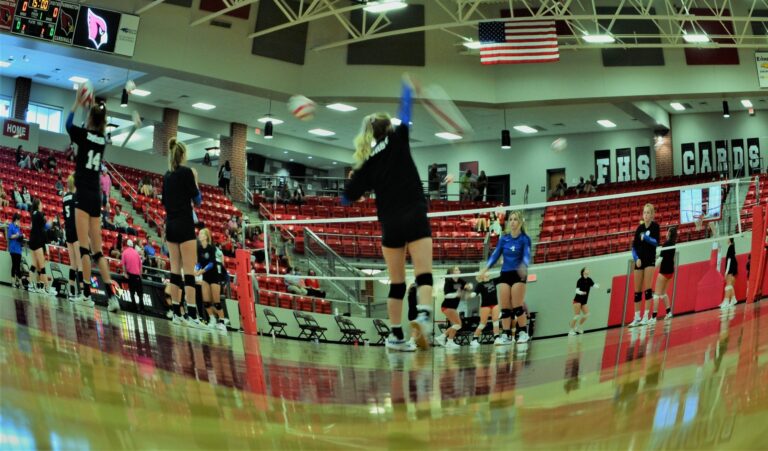
As high school students went back to school across Arkansas, the Paris Lady Eagles volleyball team went on the road to play Class 4A Farmington in the season opener for both schools. The game was played on August 24 which was supposed to be 11 days after the start of classes for the new school year. With the delayed opening of school this year, the Lady Eagles found themselves playing away from home on the first day of classes.

This year’s Paris volleyball team may be one of the youngest and inexperienced teams in recent memory. Although it is a team with great talent throughout the roster, it is a team that has not had much opportunity to play together on the senior high level. Many sophomores on the team played their very first high school game last evening. Add to this the abbreviated spring and summer practices that were available due to the COVID pandemic, and you have a Lady Eagles team that will be learning by on-the-job experience throughout the early weeks of the season. But also for Paris and other teams in their district, there is not much time to gel as a team. In fact, the Charleston Lady Tigers come calling tonight in just the second day of school, and already, the first conference match-up of the season.

Paris defeated Farmington in three straight sets to win the match 3-0. To the honest observer, a win, is a win, is a win….but…it was not, what shall we say, a match for the ages. Perhaps as a sign of the lack of preparation time that all teams have suffered through across the state, the quality of play was not that impressive. The young Lady Eagles showed flashes of what they will soon become…but early on, this group of young, talented players will need everyone’s patience as they just need court time to play together and develop the team chemistry they will have to have for the state playoffs.

Paris coach Jordan Devine was happy to get a road win against a Class 4A opponent on Monday night, and indicated that it was good for this young team to win their first time out, especially on the road. Coach Devine said the Lady Eagles were a little sloppy, but the win was a win, and the team knows going forward what they need to fix and focus on as they move through the schedule.

But there is no time to rest and evaluate corrections that need to be made. Paris, on 24 hours rest, will host Charleston coach Ryan Rachuy and the Charleston Lady Tigers. Coach Rachuy has rapidly built a contending volleyball program at the state level, and his Lady Tigers will be primed tonight when they enter Paris Gymnasium. Both Charleston and Paris lost several seniors to graduation in 2019, but much talent remains on both squads. And of course, anytime Paris and Charleston get together, regardless of the sport, you know it will be a fun and highly competitive night.

Last year’s regular season series between Paris and Charleston had a little bit of everything. The Lady Eagles won the first match in Paris in dominating fashion. The return match in Charleston was perhaps one of the greatest high school matches in recent history. In a back and forth match, the Lady Eagles hung on in a fifth and deciding set that saw Paris come back from a large deficit in the fifth set to pull out the victory. In the district tournament, the Lady Eagles defeated Charleston for a third time; the three losses to Paris being the only regular season losses for Charleston. Tonight, the Lady Tigers will be ready for the young Lady Eagles, and Paris has to put the trip to Farmington behind them quickly and be ready to play tonight.

First match begins at 4 p.m. this afternoon. Tickets for tonight’s match can be obtained in the Paris school district office. All fans must have an advanced ticket before paying at the gate. Face masks, social distancing, and other Arkansas Department of Health regulations will be in effect.

So tonight is game two of a grueling three match week for the Lady Tigers. On Thursday, Paris will again go on the road to play at Fort Smith Southside. But for now, the match that is most critical is the conference match-up with Charleston. Resident Press will be there to catch all of the action. Look for a game recap of the Charleston match on Wednesday afternoon.

See you tonight!

ASP Investigates Double Homicide in Scott County

 
The Arkansas State Police is investigating the murders of two Scott County residents whose bodies were discovered earlier today, Monday, August 24, inside a residence south of Waldron.
Special Agents of the state police criminal investigation division were requested by the Scott County Sheriff to conduct the investigation.
  
The sheriff’s department received a phone call about 1 a.m. today from an individual stating he had cut his foot and needed assistance.  A sheriff’s deputy dispatched to the home found the murder victims in a bedroom.
  
An investigation is continuing and more information is expected to be released as early as tomorrow.
Meanwhile, authorities are attempting to notify next of kin.

Original Artwork on Display at Greenwood Walmart

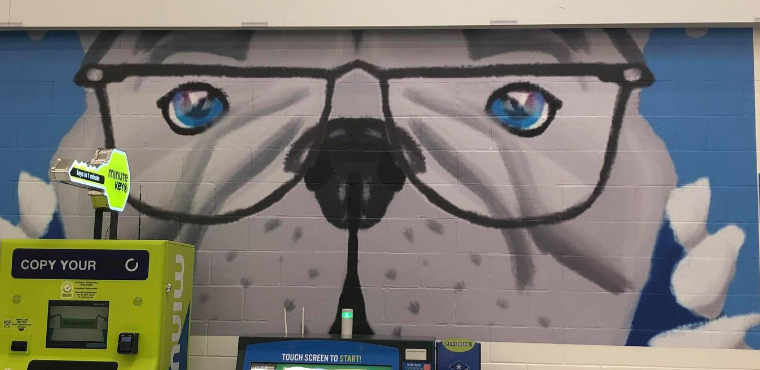
The Greenwood Walmart is proudly displaying the original artwork of 12- year-old Tegan Stimac.

Stimac, a student at Greenwood Junior High, titled the work “Four-Eyed Bulldog.” According to the credits, Stimac is an “aspiring artist” and “can often be found at her desk, sketching digital drawings and blasting Broadway tunes. She enjoys composing music, writing fiction, and planning for her future as a prosecutor.”

The artwork is part of the Walmart Community Mural Program, a national celebration of community. Stimac’s art will be on display at the store located at 551 Liberty Drive in Greenwood for a limited time.

Water Gardens Gaining Ground on Arkansas Fisheries

By Randy Zellers

When Sean Lusk graduated from Auburn University with a master’s degree in fisheries management, he never dreamed his future would include taking up water gardening in Arkansas, but during the last two years he and other biologists have been hard at work planting, potting and growing aquatic vegetation in an effort to restore the once vibrant fishery at DeGray Lake.

DeGray was once known for thick beds of aquatic vegetation, which included non-native species such as hydrilla and Brazilian elodea that grew to as deep as 20 feet in some places and caused issues with boating and other recreation. In 2008 and 2009, extremely low water throughout winter exposed the root systems of this vegetation, killing much of it. Spring rain in each of those years then flooded the system quickly, placing what vegetation remained under many feet of muddy water with very little sunlight penetration, snuffing it out.

Lusk, a fisheries management biologist at the Hot Springs Regional Office and avid angler, says AGFC staff have put hundreds of hours into trying to get aquatic grasses back into DeGray to improve available habitat for bass, crappie and other sport fish. Their latest attempt includes some innovative floating enclosures to give plants a jump-start.

“The AGFC has worked with the [U.S. Army] Corps of Engineers for years to reestablish beneficial aquatic vegetation and add other forms of cover to the lake when we could,” Lusk said. “But getting native vegetation to come back has been a big challenge.”

Two major obstacles have stood in the way: extreme water level fluctuation in the flood-control reservoir and predation of the aquatic grasses by turtles and other wildlife before it can become established.

“We consulted with Lynde Dodd, a habitat restoration specialist with the Corps’ Engineering, Research and Development Center, last June, and she began developing a road map on options to move forward,” Lusk said. “Cages were needed to protect the vegetation from herbivory until enough became established. Those cages needed to rise up and down with the water level, but still allow seeds and fragments from the plants to disperse into the lake.”

AGFC biologists are focusing their efforts on four native plants, some of which were present at DeGray before the die-off.

“The four species of plants we’re working with are eelgrass, American pondweed, Sago pondweed and coontail,” Lusk said. “They offer a variety of benefits to fish in different depth ranges, and they are tolerant to low-light conditions if we have muddy water come through the reservoir. We’re growing the plants in greenhouses owned by the Corps and renovated to establish aquatic vegetation.”

The planting team includes Lusk, AGFC Fisheries Supervisor Brett Hobbs, AGFC Black Bass Program Biologist Jeff Buckingham, and Samuel Scott and Levi Rengstorf, regional fisheries staff at the AGFC’s Hot Springs office. Together they have spent many days during the summer collecting, planting, repotting and transplanting the aquatic grasses into the special floating cages throughout the lake.

“Scott Jones and Jonathan Spurgeon at the University of Arkansas at Pine Bluff worked with us to determine the areas of the lake that had the most potential to benefit the lake if the vegetation began to reproduce,” Lusk said. “We don’t want the entire lake to be full of vegetation, because too much is just as bad as not enough, so we want to concentrate our efforts on areas that have the best benefit.”

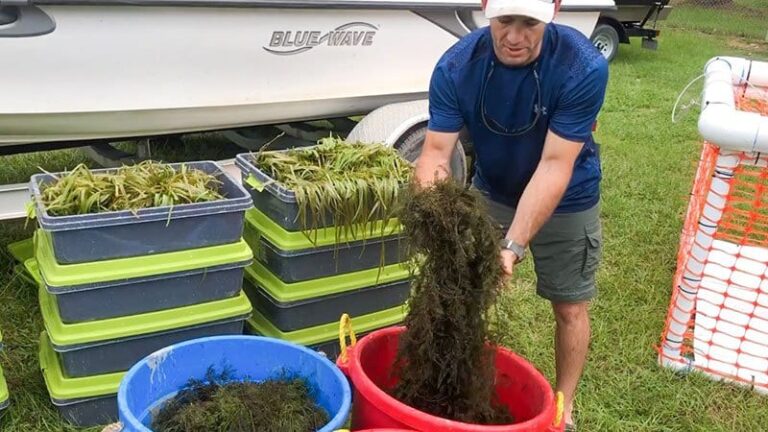
Cages are constructed of PVC and plastic construction fencing. They are anchored in place much like floating docks, where they may float freely in the water column and adjust to any fluctuations. Biologists altered the designs to fit the needs of particular plants being used in each cage.

“Coontail does just fine as a free-floating grass, so we have it in cubes that are open on all sides,” Lusk said. “But eelgrass and pondweeds need to be rooted, so we developed cages that had rigid bottoms that support potted plants.”

Lusk says the aquatic cages and nurseries have come with a large learning curve. Biologists already have made changes to their original designs based on results from the first year of the project.

“The coontail would grow so thick that it actually started shading itself out,” Lusk said. “We’ve learned that we’re better off to have more cages of coontail that are smaller than to have a few larger cages. We’re also learning just how devastating aquatic turtles can be on some vegetation. Some small turtles were able to fit through the gaps in the snow fencing of one enclosure that had a foot-tall pondweed in it. After a short time in the enclosure,the turtles had completely stripped the vegetation clean. It was like scorched earth on the water. We’ve since added additional layers of smaller-sized mesh to help keep them out.”

Once the vegetation takes hold, biologists hope it is able to outproduce what turtles and other wildlife eat; it’s just a matter of getting it established.

“We know from history that the lake was full of vegetation with these predators around and we know these areas are productive, we just need to get the seed in the right place at the right time,” Lusk said.

The effects of the project will be evaluated in the next year, once again calling on the assistance of Jones and Spurgeon at UAPB.

“If we can get some reproduction, this will be huge, you just can’t understate the value of aquatic vegetation to a fishery,” Lusk said. “When we’re transplanting these plants, they’re just full of insects and crustaceans that will provide food for growing fish, and the cover provided by the vegetation will help young fish survive. It also gives predators a place to ambush prey much more efficiently and exhibit better growth rates.”

Even though a formal evaluation is still to come, biologists have seen enough promise in the technique that it is being applied to other bodies of water in Arkansas. Similar cages have been placed at Greers Ferry and Greeson lakes to try to get plants established in those fisheries, both of which have a history of having difficulty establishing native aquatic vegetation.

“It’s exciting to see the technique being shared in other lakes,” Lusk said. “It’s hard work and we’re constantly learning how to improve our process, but aquatic vegetation is that much of a game-changer that it’s worth the effort for our anglers. We’ve even come across some anglers who said they didn’t really like fishing in vegetation, but the benefit of the grass is for the fish, which ends up being a benefit to them in the long term as well.”

Visit the Arkansas Game and Fish Commission’s AGFC Black Bass Management Facebook Page for updates on the DeGray Vegetation Project and many other efforts AGFC biologists are undertaking to improve the quality of angling in The Natural State.


Wild Man of the Mountain

By Dr. Curtis Varnell

My former student, Bobby Mackey, best describes the Civil War in Arkansas in his book title; The Uncivil War. This region was torn between North and South and it was often a no-holds bared battle of survival.

The inhabitants of the Arkansas River Valley were much divided in loyalty as the war began. Many were members of the home guard, a group similar to the National Guard of today, and were called into duty for the Confederacy. After Pea Ridge, many of these men returned home and determined they would never again fight for the Confederacy. A group of several hundred of these men organized under a former confederate, William Heffington. Heffington was raised around Belleville and knew Magazine Mountain well. He organized a large contingent of men of similar interest and began raiding confederate sympathizers throughout the region. At Indian Springs near Danville, he raided a union camp of 220 men, killing many of the men without mercy. He raided within miles of Dardanelle and terrorized the region. As the result of his actions, he was given the name of “Wild Bill.”

In February of 1863, he led over one hundred local men into Fayetteville and joined the Union Army as the 1st Arkansas Infantry. A list of the recruits read like a roll book from Franklin, Logan, and Yell counties. Familiar names included the Whites, Rogers, Massongill, Adams, Parker, Finks, Lipe, and others. The locals got their first initiation in battle in April at the Battle of Fayetteville and were able to hold their own against the southern forces.

Fayetteville-first-light-artillery
Fayetteville First Light Artillery

Wild Bill and some of his men returned to Magazine Mountain to recruit additional men. A group of the men hid out on snake knob right off the peak of the mountain and lived in the many caves that riddled the mountain. From the flat-top of the ridge, they could see their homes. Wives would hang out colored clothing to let them know it was safe to come home for short visits. Continuing to raid the region and attack wagon trains of confederate supplies, the commander of the Southern forces at Dardanelle sent some 125 men to capture the wild man. Heffington and his men ambushed the Confederates as they came up the gap at Snake gap and defeated them in the ensuing battle.

Running low on supplies, Wild Bill, now with a $1,500 price on his head, determined he would seek out the regular Union army and get assistance. Traveling secretly, he decided to hide his favorite rifle, Silversides, in the cleft of a rock cliff. Caleb McBride, a relative, supposedly knew of Bills plans and informed the enemy. Bill was caught and, according to which story you prefer, hung, shot, or drowned by the confederates as he tried to cross the Mulberry River.

So ended the life of one of the notorious men of the Civil War era. After the war, the Grand Army of the Republic veteran’s post was named the Heffington Post. Several years later, families living in Cox valley located a civil war rifle in a cleft of rock. The rifle was sold to a museum collector in Kansas. Later, a civil war pistol was found in a nearby pasture and is still owned by Elda Bynum. Recently, a hideout was discovered on the south side of Magazine. Remnants of the Civil War and “Wild Bill?” Sometimes history leaves much to be answered!!