
82.8 F
Fort Smith
Saturday, July 11, 2026
Home Blog Page 672

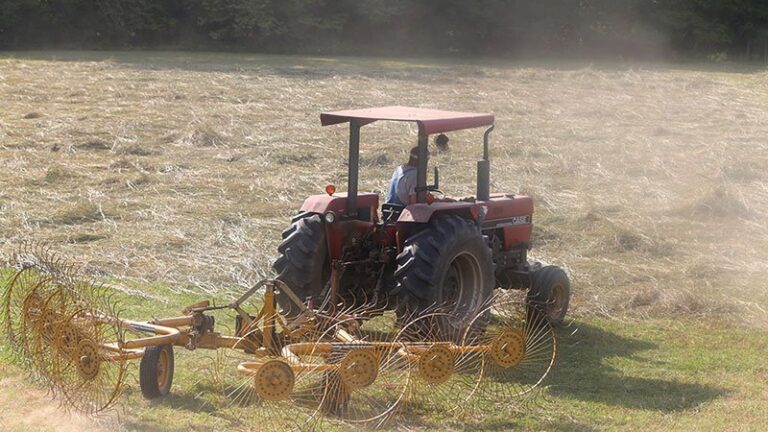
Haying Your Pasture with an Eye for Wildlife

Randy Zellers Assistant Chief of Communications

With all the spring rains, most landowners are ready to hit the field to cut hay. There are a few things to consider this year before you get on that tractor.

Nothing changes the landscaping of your property overnight like hay-cutting your fields. A hay-cutting operation can transform a field’s wildlife use almost overnight, usually not for the better. With a little extra planning, you can minimize the disturbance to wildlife while still realizing profit from your hayfields.

Ted Zawislak, statewide private lands supervisor for the Arkansas Game and Fish Commission, says timing hay-cutting operations to avoid nesting season is an excellent start if possible.

“Try to delay haying until July 15 or later if you can,” Zawislak said. “This will allow ground-nesting birds time to hatch their broods.”

Cutting a little higher on the stem also can save quite a few nests and ground-dwelling wildlife. Terrapins and small mammals can be spared from the mower blades by simply raising the deck of the mower 4 inches above ground level. Installing Plexiglas around the leading edge and sides of a mower also can prevent wildlife from being drawn into mower blades.

Flushing bars also can save many grassland critters from the dangerous blades of a haybine or sickle bar mower. You can make a flushing bar by hanging 28 inch lengths of chain about 2 feet apart on a 10-foot section of angle iron mounted to the front of your tractor. The chains should be long enough to ride just above the surface of the ground. The first chain should be located 36 inches from the tractor frame. This method has been shown to effectively scare wildlife such as rabbits, turkeys, and some fawns away before they are hit by the hay cutter.

Zawislak says one way to help wildlife escape the mower and baler is to work from the inside out. Just as prescribed burns don’t completely surround an area until the last possible moment, you want to allow animals as much time to escape as possible.

“Begin cutting in the middle and move to outer borders if possible,” Zawislak said. “This allows young and adult wildlife to stay in existing cover and not become trapped inside an ever-decreasing circle.”

Once you get to the edge of the property, leave a little wild edge along the sides to give displaced wildlife a little shelter from predation. An uncut 30-foot or wider strip of hay around the outside of a field offers food, nesting, escape and brood cover for wildlife. Try to make the borders irregular shapes to prevent predators from keying in on a turkey or quail dinner.

“You can come back later in fall after nesting is not an issue and bush hog that 30-foot strip,” Zawislak said.

Hay cutting has some long-term positives for the landscape such as removing competition so the grass stand does not get too thick, however it’s the short term effects, primarily during nesting, that can be detrimental to wildlife. Hopefully, these few easy steps can make a landowner’s next hay-cutting operation more wildlife-friendly.

Visit www.agfc.com/habitat for more information on how you can improve and maintain your land for wildlife.
Haying Your Pasture with an Eye for Wildlife

Randy Zellers Assistant Chief of Communications

With all the spring rains, most landowners are ready to hit the field to cut hay. There are a few things to consider this year before you get on that tractor.

Nothing changes the landscaping of your property overnight like hay-cutting your fields. A hay-cutting operation can transform a field’s wildlife use almost overnight, usually not for the better. With a little extra planning, you can minimize the disturbance to wildlife while still realizing profit from your hayfields.

Ted Zawislak, statewide private lands supervisor for the Arkansas Game and Fish Commission, says timing hay-cutting operations to avoid nesting season is an excellent start if possible.

“Try to delay haying until July 15 or later if you can,” Zawislak said. “This will allow ground-nesting birds time to hatch their broods.”

Cutting a little higher on the stem also can save quite a few nests and ground-dwelling wildlife. Terrapins and small mammals can be spared from the mower blades by simply raising the deck of the mower 4 inches above ground level. Installing Plexiglas around the leading edge and sides of a mower also can prevent wildlife from being drawn into mower blades.

Flushing bars also can save many grassland critters from the dangerous blades of a haybine or sickle bar mower. You can make a flushing bar by hanging 28 inch lengths of chain about 2 feet apart on a 10-foot section of angle iron mounted to the front of your tractor. The chains should be long enough to ride just above the surface of the ground. The first chain should be located 36 inches from the tractor frame. This method has been shown to effectively scare wildlife such as rabbits, turkeys, and some fawns away before they are hit by the hay cutter.

Zawislak says one way to help wildlife escape the mower and baler is to work from the inside out. Just as prescribed burns don’t completely surround an area until the last possible moment, you want to allow animals as much time to escape as possible.

“Begin cutting in the middle and move to outer borders if possible,” Zawislak said. “This allows young and adult wildlife to stay in existing cover and not become trapped inside an ever-decreasing circle.”

Once you get to the edge of the property, leave a little wild edge along the sides to give displaced wildlife a little shelter from predation. An uncut 30-foot or wider strip of hay around the outside of a field offers food, nesting, escape and brood cover for wildlife. Try to make the borders irregular shapes to prevent predators from keying in on a turkey or quail dinner.

“You can come back later in fall after nesting is not an issue and bush hog that 30-foot strip,” Zawislak said.

Hay cutting has some long-term positives for the landscape such as removing competition so the grass stand does not get too thick, however it’s the short term effects, primarily during nesting, that can be detrimental to wildlife. Hopefully, these few easy steps can make a landowner’s next hay-cutting operation more wildlife-friendly.

Visit www.agfc.com/habitat for more information on how you can improve and maintain your land for wildlife.

The Timepiece

By Dr. Curtis Varnell

History begins at our own back door. As we travel up and down the roads of our region or walk through our forests, we see reminders of our ancestors. Chimneys, foundation stones, old railroad tracks, occasional cans or bottles, and once tame flowers tangled in the meadows mark places where our ancestors struggled to make a living from the earth. All of these have a story as do the pictures we have scattered in old boxes; tales of the lives of people that came before us.

The River Valley is full of such tales; the stories of our forefathers and the lives they lived. Few people realize that Sam Houston, George Catlin, Washington Irving, and probably Wyatt Earp traveled up the Arkansas River, passing by and perhaps stopping at the busy port at Russellville. Benjamin Booneville, an early explorer and as famous in his time as Lewis and Clark, journeyed through and mapped our region and future President Zachary Taylor served in Fort Smith for an extended period of time. Jack Titsworth, an early settler, had a life and adventures that comes with that of Davy Crocket.

Even more than that is the story of the hard-working men and women that go to work every day and complete the thousands of tasks necessary to support and raise their families. Paris, Booneville, Scranton, Charleston, Magazine and the many small communities scattered in the River Valley are full of such people. The results of their efforts are everywhere; the small business that stands on the corner, the beautiful church down the block, the daffodils and hedges marking where homes once stood, and the deserted cemeteries scattered across the region.

Ours is the history of the farmers who once raised cotton and corn in the bottoms and hillsides and of those who later ran dairy farms and then built chicken houses for the poultry industry.

The story of local coal miners, lumberjacks and railroad men. The story of the pants factory, Cloye’s Gear, Ace Combs, Today’s Kids and even further back, the shake mills and gins that formed the economic basis for our area.

Written by Dr. Curtis Varnell, each week the Timepiece will explore the history, geography and culture of the region. It will tell the stories of ordinary people in an ordinary world in the hope of preserving the stories of our world.The more we understand local history, the more we understand about ourselves. We cannot know where we are going if we don’t know from where we came.

Dr. Varnell is the science and social studies coordinator for the Guy Fenter Education Service Cooperative at Branch, a long-time teacher in the area, and the author of several books on local history.

Greenwood Baptist Health Holds Covid-19 Testing Drive

By Lindsay LaChapelle

Greenwood Baptist Health held a Covid-19 testing drive on Wednesday, June 10, from 8 a.m. – 11 a.m. Healthcare workers saw an impressive turnout.

Police Chief William Dawson shared that  there had not been a lull in cars lining up since the drive opened. Everyone in attendance from Medical Professionals to Law Enforcement was wearing proper protective gear, maintaining social distancing best practices and using hand sanitizer.

The testing process is quick, lasting less than 20 seconds and the entire experience from beginning to end took approximately ten minutes. Results from today’s drive will be ready in three days. It will also give health officials much better data to work with when it comes to estimating those affected in Greenwood.

While CDC officials are still working to fully understand the protections that these antibodies give, the hope is that those who do carry antibodies will have the ability to resume work and normal daily life much quicker.

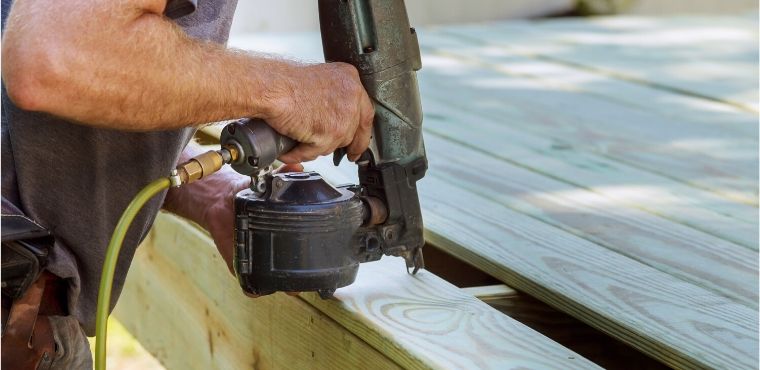
Tips for Building a Backyard Deck

A backyard deck is a great place to recline outside during restful moments of the day and evening. It is also a structure that you can set about designing and creating yourself. You might, therefore, choose to build one on your own as a commendable home-improvement project. If so, follow these tips for building a backyard deck.

Get the Required Permits

Learn if there are any local regulations that stipulate when and how you can build a deck in your backyard. Find out what restrictions apply to decks, and keep them in mind as you lay out the design. You should be clear in your intentions, as you may need to show your local government the design before getting the go-ahead. Apply for the necessary permits, and don’t start work until you’ve acquired them.

Hide Deck Board Ends

A tip for building a backyard deck that looks polished and complete is to find a way to hide the rough board edges. One way to do this is to measure the fascia boards that will attach to the ends of the deck longer so that they not only form the sides of the deck but also cover the ends of the boards laying on the top of the deck. You could also use a perimeter board that lies on top of the vertical fascia board like the deck boards. The perimeter boards create an enclosed top frame around the deck boards to hide their ends.

Pick Lasting Deck Materials

Your deck needs to last through 365 days every year of outdoor wear and tear. Therefore, the materials you select to build it with will make a big difference. Wood is the most popular choice, but you will need to treat it with a sealant periodically so it doesn’t deteriorate from moisture and other elemental forces. For a more carefree option that you can rely on, plastic lumber may work well for you. It has the overall appearance of wood but does not rot, discolor, or warp as easily since it is composed of inorganic compounds. It is also an eco-friendly material since it’s the product of recycled plastic waste and doesn’t require potentially harmful sealing chemicals applied to it.

Former Lady Tiger Attacks Mountain Run Series

Former Mansfield Lady Tiger, Megan Rose, is shown running up Mount Magazine in a 15K race on June 6.

As the world adjusts to new normals, one former Mansfield Lady Tiger continues old habits. Megan Rose, who will enter her junior season of collegiate cross country racing next fall, continues her passion for running even during the off-season. Rose recently entered a Mountain Run Series sponsored by the River Valley Runners Association. The three race series started Saturday, June 6 with a 15K (9 miles) race up Mount Magazine. This was Megan’s first competitive race since her sophomore track season at Southeastern University in Durant, OK which was unexpectedly shut down in March because of the Covid-19 pandemic.

Decisions made by the NCAA soon after the shutdown was good news for the former Mansfield long-distance runner. Per NCAA mandates, Rose will be able to retain her sophomore status for track next season. “When word came down,” started Rose in an interview Monday morning, “I thought about how I would get the season back. My college coach (Ron Hair) suggested being a graduate assistant. Since I’m an education major, I could GA during cross country season, run track, and work on my masters that fifth year of school.”

In the meantime, Rose’s old habits die hard. She works out seven days a week with prescribed mileage from the Southeastern coaching staff. And with permission, she enters an occasional road race like the one she ran last Saturday. “I did pretty well,” spoke Rose in her typically humble demeanor. “I finished 23rd out of about 100 runners. We got lost in the early sections around the streets of Havana so I really did 10 miles instead of nine.” The 19-year-old Savage Storm athlete finished with a time of 1:46:09.09. That included the extra rerouted distance at the start and the remaining almost exclusive uphill mileage to the top of Mount Magazine.

“This was my second time to run this race. The miles are starting to pay off. I’m a little older and more experienced now so it wasn’t as hard as the first time I ran it.” Officially, Rose was 23rd overall out of 105 runners regardless of age or gender that finished the course. In the women’s division, Rose was 11th. Kaitlin Bounds, a 29-year-old female runner from Russellville, was the overall winner of the nine-mile trek to the top. A 28-year-old Dover woman was second followed by a 59-year-old Gravette man in third. And a teenage boy from Clarksville was fourth. 

Daniel Sanderson, who was the fourth-place 15-year-old Clarksville Panther, had a peripheral connection to Mansfield. He was invited and participated in the Farm Bureau River Valley All-Star Cross Country Race hosted by Mansfield last November. Chloe Weathers, another 15-year-old cross country phenom from Clarksville, was an RV All-Star nominee but ran the larger Arkansas-Oklahoma All-Star race that same November day. She was the 11th person to finish the Mount Magazine race and the fifth female finisher.

Rose’s Southeastern teammate, Regan Ramos, also ran the race. Starting the race together, the college runners both ran the extra misguided distance before navigating the true course up the hill. “It was fun having one of my teammates run with me,” explained Rose. “Regan usually stays ahead of me during cross country season. This time I beat her by about ten minutes. I don’t think she was used to the elevation.” Rose and Ramos had been following individual track workouts at their respective homes since being sent away from the Southeastern campus because of the virus. Those daily six-mile runs with a 10-mile recovery on Sunday changed to a lighter schedule when off-season officially started in May.

Now, Rose and her teammates do volunteer workouts, still at home, but the mileage has dropped to 4.5 mile runs each of the first six days of the week with a 7.5-mile recovery jog on Sundays. Rose explained that her coach allows some extra rest when she competes in an approved road race. She also said because of NCAA regulations she has to send an email every two weeks that she chooses to participate in voluntary workouts. “I actually took off the day before Mount Magazine and the day after the race,” confessed Rose. “It took quite a bit out of me. I was kind of glad for the rest.”

On the day of this interview, Rose was back to her normal practice routine. This particular morning she included a segment through parts of her old high school cross country course on the MHS campus. “I’m looking to get more PR’s (personal records) next season and stay in the top three of my team,” stated the motivated former Lady Tiger. “I got my time down to 19:56 for the 5K last season.” In the meanwhile, look for Rose to complete the final two legs of the River Valley Mountain Run Series. The next event in that three-race circuit is a 10K run up Mt. Nebo. The final race in the sequence is a 5k race through the Petit Jean Mountain Trails. 

According to Rose, each race issues a medal that’s similar to a puzzle piece. When competitors complete each phase, they are awarded the wooden medallions that snap together to make a larger medal keepsake. As history has shown, Rose is sure to collect all three pieces. Snapping the pieces together may be another example of the new norm, but earning accomplishments is an old habit for the former Lady Tiger.

Southeastern University distance runners, Megan Rose and Regan Ramos stand on top of Mount Magazine after a 15K race during their off-season training.

Article contributed by John Mackey

UPDATE: AAA Board Votes to Waive the Required 2020 Summer Dead Period

In a Twitter announcement that posted a few minutes ago, the Arkansas Activities Association (AAA) board has voted to waive the mandatory summer dead period that normally takes place the last week in June and the first week in July. The AAA’s Twitter announcement further stated that individual school districts may opt to waive or continue to observe the traditional dead period.

This may be an indication that contact sports may be cleared to resume practice on July 1. Arkansas governor Asa Hutchinson stated earlier that he would “revisit” contact sports and their possible resumption on June 30.

Stay with Resident Press for more on this story as it unfolds.

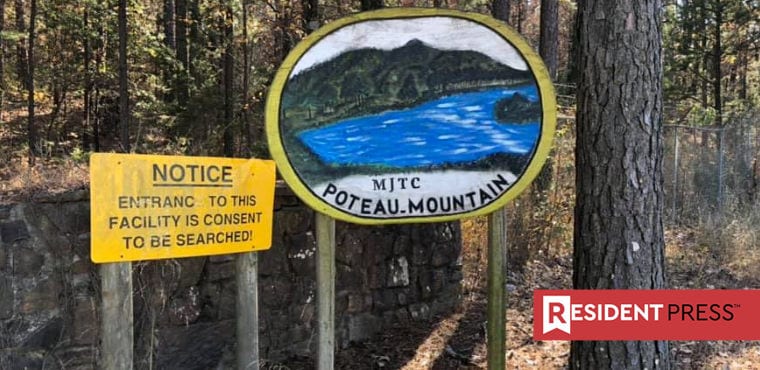
Rite of Passage Poised to Take Over Juvenile Services at Mansfield

Effective July 1, at midnight, Nevada based Rite of Passage will complete the transition of youth services.

Part of that transition will include implementing the “ROP way,” explained Executive Director for the Southeast Region, Mike Cantrell. “We will be working to help turn the lives of these kids around.”

Cantrell added they have been working closely with the Division of Youth Services to make sure necessary changes are being made. For example, lighting, cameras, and lawn equipment. Cantrell added that they have also requested a new vehicle. “We want to improve the safety at the campus and improve the appearance,” he added.

From day one, Cantrell stated that a seasoned ROP team will be working on site to assist the Mansfield staff. “It is easier for us if the employees who are already there, stay,” he added. Although Cantrell did admit that changes are being implemented due to the reduction of clients at the facility. “It was originally staffed for 50 kids. But, under the governor’s juvenile reform plan, there will only be between 24-30 kids.” Cantrell went on to explain that staffing changes were necessary and a good business decision. “For example,” Cantrell explained, “there were four case managers for 24 kids…those people may not be offered case manager positions, but they will be offered other positions. It is easier for us if they stay.”

The MJTC will remain an all male facility, housing moderate to high offenders.

Fletcher Joins Mansfield Police Department

0

Officer Chelcie Fletcher, 26, has been hired as a full-time police officer for the City of Mansfield.

Fletcher, the daughter of Erich and Amy Fletcher, graduated from Paris High School. She has been in law enforcement since 2013, and completed Arkansas Law Enforcement Reserve classes in 2016.

“I wanted to partake in a career that gave me the chance to make a positive impact on people’s lives with hopes of making a difference within the community,” Fletcher stated.

Fletcher worked with Mansfield Police Chief Wayne Robb while he was a deputy in Scott County. “I resided in Mansfield at that time, and I really got a hometown feeling while I was there. It’s a small tight knit community that has the ‘nobody is a stranger’ type of camaraderie. So once I heard of an opening with the Mansfield Police Department, I was delighted at the opportunity to serve in a community such as this one.”

Fletcher is currently at the Arkansas Law Enforcement Training Academy in Camden, AR. She is scheduled to complete that training in August.

Tips for Building a Backyard Deck

A backyard deck is a great place to recline outside during restful moments of the day and evening. It is also a structure that you can set about designing and creating yourself. You might, therefore, choose to build one on your own as a commendable home-improvement project. If so, follow these tips for building a backyard deck.

Get the Required Permits

Learn if there are any local regulations that stipulate when and how you can build a deck in your backyard. Find out what restrictions apply to decks, and keep them in mind as you lay out the design. You should be clear in your intentions, as you may need to show your local government the design before getting the go-ahead. Apply for the necessary permits, and don’t start work until you’ve acquired them.

Hide Deck Board Ends

A tip for building a backyard deck that looks polished and complete is to find a way to hide the rough board edges. One way to do this is to measure the fascia boards that will attach to the ends of the deck longer so that they not only form the sides of the deck but also cover the ends of the boards laying on the top of the deck. You could also use a perimeter board that lies on top of the vertical fascia board like the deck boards. The perimeter boards create an enclosed top frame around the deck boards to hide their ends.

Pick Lasting Deck Materials

Your deck needs to last through 365 days every year of outdoor wear and tear. Therefore, the materials you select to build it with will make a big difference. Wood is the most popular choice, but you will need to treat it with a sealant periodically so it doesn’t deteriorate from moisture and other elemental forces. For a more carefree option that you can rely on, plastic lumber may work well for you. It has the overall appearance of wood but does not rot, discolor, or warp as easily since it is composed of inorganic compounds. It is also an eco-friendly material since it’s the product of recycled plastic waste and doesn’t require potentially harmful sealing chemicals applied to it.