

84 F
Fort Smith
Tuesday, June 30, 2026
Home Blog Page 684

DHS Amends Contract with Rite of Passage to Manage Juvenile Treatment Centers

In February 2020, the Chairman and CEO of Youth Opportunity Investments, Ronald Hunter, notified the Department of Human Services of their intent to sever ties with the state. On April 15, the Department of Human Services released a statement naming Rite of Passage as the new contractor.

YOI cited financial woes as its reason for discontinuing their services. In Hunter’s letter he stated, “it is evident to those who understand that all businesses are sustained by generating at least as much money as they spend to provide their goods/services. Youth Opportunity Investments is not in a position to continue its relationship with the State of Arkansas.” Hunter added that YOI will complete its obligations under the terms of the one-year agreement.
(view complete transcript)

ROP will immediately begin working with YOI to transition the centers to new management, with the official takeover date of July 1. Rite of Passage, the same company who was initially awarded the contract for youth services, will assume operations at all state juvenile treatment centers in Arkansas, including Mansfield.

Amy Webb, Chief of Communications, stated “ROP has had a contract to handle the day-to-day management of the state’s Arkansas Juvenile Assessment and Treatment Center in Saline County since August 2016. The other four facilities in Lewisville, Mansfield, Dermott, and Harrisburg are overseen by Youth Opportunities Investments (YOI). In mid-February, YOI notified DYS that it would not continue with its oversight of those facilities after June 30 due to financial concerns. As a result, DHS presented an amendment to ROP’s contract to the State Legislature today.”

The amendment allows ROP to take on the day-to-day management of the treatment centers in Dermott, Mansfield, and Harrisburg. With the center in Saline County, there are 230 residential beds and 20 assessment beds available across all these centers. According to Webb, ROP may use the Lewisville campus to operate a substance abuse treatment program, if funding is available.


Lady Tigers Softball Stands Tall After Season Cut Short

With five games in the bag before their softball season was canceled, the Mansfield Lady Tigers were just starting to gain momentum. The girls had just earned an 11-1 conference win over Greenland when news broke that the AAA was going to suspend the remainder of the season. “I was looking forward to this year’s group of girls,” stated coach, Erica McKay, who although having experience on the field as the assistant softball coach, was excited to launch her first season as head coach. “Not only did we play some really great teams but each time that we stepped on the field, we were showing growth in areas that had been lacking.”

Chloe Creekmore

The Lady Tigers closed shop with a 1-0 conference record and a 2-3 overall record with their second win coming from shutting down Lavaca 11-0. “I just had this feeling that this group of Lady Tigers was going to go far this season. They had the talent, drive, and hard work to be successful. That is definitely the hardest part of the situation we are in. It’s obviously a hard time for this group of girls and especially the seniors. But all we can do as coaches is to be there and support them.” This year’s softball team will be losing three seniors.

Amber Elmore

Playing varsity ball since freshman year, Maggie Strunk has seen great success as a starting pitcher striking out a total of 58 batters during 67.1 innings. “She has really stepped up in her pitching role while also being a leader for this team.” Maggie concludes her high school softball career with 55 games played, 72 hits, 24 RBI, 42 runs, a .426 batting average, 18 stolen bases, 116 putouts, and 63 assists.

Maggie Strunk

Kyli Davidson “has developed into a very consistent outfielder for us over the last four years.” With a fielding percentage of .862 from 50 games played, Kyli also finishes with 22 putouts, three assists, four stolen bases, 15 RBI, 26 hits, and 12 runs. And during her three-season ride, Abby Morgan “has contributed many hits at the plate for the Lady Tigers” acquiring a .315 batting average. Abby competed in a total of 22 games earning her 17 hits, 14 runs, 10 RBI, one home run, nine putouts, one stolen base, and 12 assists.

Kyli Davidson

“I know it’s hard for my girls to stay positive when it comes to coping with the loss of a season, but keep taking it day by day. We have to focus on why we are having to take these precautions and it’s all for the safety of our loved ones. Stay active and enjoy the time you have with your family.”

Abby Morgan

“The softball program at Mansfield is looking very bright for the upcoming seasons. We will be gaining quite a few athletes here in the next couple of years that will contribute greatly to the success of this program. Coming back from this pandemic, I believe these girls will really cherish the moments they have left with any sport they love. Playing every game like it’s your last is a cliche phrase, but this pandemic just shows the real truth behind that and I believe the next group of Lady Tigers will take that to heart. The future is bright for the Mansfield Softball Program!”

Photos courtesy of Michele Ann Elmore

Census Takers Needed in Sebastian County

Want to make a difference in your community, and earn extra income by doing it? Now is your chance! The U.S. Census is hiring 132 more census takers for Sebastian County.

Most 2020 Census positions will last several weeks. They feature:

  • Competitive wages
  • Weekly paychecks
  • Flexible hours (20-40 hours per week)
  • Paid training

Why Apply?

Competitive Wages

Could you use extra income? Jobs for the 2020 Census offer competitive wages that are paid weekly. Authorized expenses, such as mileage, are reimbursed for employees doing field work.

Support Your Community

Census results are used to determine your representation in Congress, and they help inform how billions of dollars are distributed for hospitals, schools, roads, and more. Help ensure that everyone in your community is counted in the 2020 Census.

Fit Your Schedule

Temporary positions for the 2020 Census feature flexible hours—a perfect fit if you are looking to earn extra money, even if you already have other commitments.

Be a Part of History

Every 10 years since 1790, the United States has undertaken the momentous task of counting its population. This is your chance to play a role.

Job Qualifications

To be eligible for a 2020 Census job, you must:

  • Be at least 18 years old.
  • Have a valid Social Security number.
  • Be a U.S. citizen.*
  • Have a valid email address.
  • Complete an application and answer assessment questions. (Some application questions are available in Spanish. However, an English proficiency test may also be required.)
  • Be able to speak, read, and write in English, if applying in the 50 states or Washington, D.C. (Bilingual applicants are needed and are encouraged to apply.)
  • Be registered with the Selective Service System or have a qualifying exemption, if you are a male born after December 31, 1959.
  • Undergo fingerprinting and pass a criminal background check and a review of criminal records performed by the Census Bureau.
  • Commit to completing training.
  • Be available to work flexible hours, which can include days, evenings, and weekends.

Most jobs require employees to:

  • Have a valid driver’s license and access to a vehicle, unless public transportation is readily available.
  • Have access to a computer with internet and an email account (to complete training).

It only takes about 30 minutes to apply. If you are interested, you can go to the Census website and apply today!

Stormy Sunday on the way!

While today was gorgeous across the area, Sunday will be a completely different story. Scattered rain showers/storms will be possible through much of the day. By Sunday afternoon, we could notice an uptick in thunderstorm intensity. While the greatest threat of severe weather will exist south and east of our coverage area, I won’t rule out the possibility for a severe thunderstorm.

The Storm Prediction Center (graphic below) has included regions of the Resident News Network viewing area in their latest categorical outlook.

SPC Outlook for 4-19-20

Places like Waldron, Mena and surrounding areas may have a better chances at seeing severe weather tomorrow. Essentially the further south you travel, your chances will increases.

I would suspect that by noon into the evening hours a few of us will see a stronger storm or two. These storms could contain gusty winds and larger hail. There is a tornado threat, but it’s very low and for now I’m not over-concerned regarding it.

By Sunday evening the severe weather threat will diminish as thunderstorms move east out of the area. Once this system exits, cooler air will wrap around into the region and settle in by Monday morning.

Statewide Temperatures (Monday AM)

While temperatures won’t cool into the 30’s and 20’s like last Monday, we will be fairly cool to start off the day. Temperatures should range from the low to mid 40’s, with maybe a few 30 degree readings in higher elevations. We will eventually warm back up on Monday afternoon into the mid-70’s.

Thanks for reading! Remember you can follow me on Facebook and Twitter for continued Arkansas weather related information.

-Zach

City Council Meets, Approves Bond Refinance

At the first of the year, the City of Waldron began looking at refinancing their 2015 bond for the purpose of acquiring a more favorable rate. On Thursday evening, April 16, the council approved that motion to refinance with Ordinance number 2020-2.

Kevin Faught, Senior Vice President of Public Finance with Stephens, Inc., was present to explain in more detail the structure of the existing and refinanced bond. “As we discussed the refinance, we began to look at extending the term and keeping the payment close to the same amount for the purpose of obtaining additional construction funds to be used for additional water and wastewater improvements,” explained Faught. “The City has existing funds for improvements from a 2016 Sales Tax Bond; however, the funds are not sufficient to complete the scope of work that is needed.  The refurbishing of our water storage tanks has become more of a priority and will be a costly endeavor, leaving only a small amount for other improvements in the system. The refinance of this bond along with an extension on the bond will provide approximately $900,000 in construction funds that will used for rehab and repair of the water storage tanks, fire hydrants, manholes, water line replacements, sewer line replacements, and other system upgrades.”

The move lowers the city’s interest rate to 2.93% and extended the term for five years. “We anticipate our rates to continue on the same schedule, that includes a slight annual increase,” stated City Clerk/Treasurer Sherry Johnston. “All the new construction will be financed by the bond.”

The council unanimously approved Ordinance 2020-2, and enacted the emergency clause.

Box Turtles Making Moves Across Arkansas

By Randy Zellers, Assistant Chief of Communications

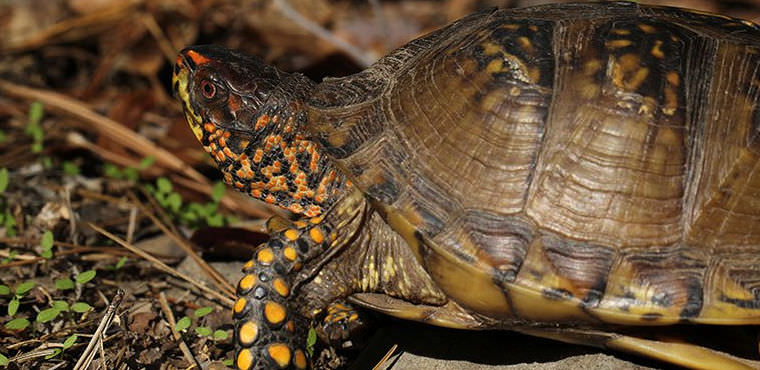
LITTLE ROCK — Arkansas is home to 16 species of turtle, but only two are land dwellers — the three-toed box turtle and the ornate box turtle. Box turtles are the only turtles in North America with a flexible hinge on their belly to close the front and rear halves of the shell tightly like a “box.”

The three-toed box turtle is found statewide in grassland and woodland habitats and is the most frequently encountered of the two species. The ornate box turtle is limited to prairie remnants in a formerly wider distribution in the Arkansas River Valley ecoregion, northwestern Arkansas, and the Grand Prairie region of the Delta. Both species have a high-domed shell and average about 5 inches long as adults. Three-toed box turtles are a uniform yellowish-brown and some individuals have radiating black markings on the upper shell (carapace), while the belly (plastron) is a uniform yellowish tan. Three-toed box turtles get their name for having only three toes on their hind feet. The ornate box turtle gets its name for the ornate yellow markings on the upper and lower shells against a black background.

Box turtles mature 5-10 years after hatching and breed from late April–October. Females dig a nest chamber in the soil in open areas to let plenty of warming sunlight reach the nest and lay from one to seven eggs. Females may nest two or three times per year. Incubation of the eggs takes approximately 90 days. Research has confirmed that box turtles can live more than 70 years, with a few cases of turtles older than 100. They eat plant and animal material; ranging from mushrooms, flowers, fruits, insects, earthworms, and all manner of invertebrates. Box turtles also have been reported eating small amphibians, reptiles and young rodents.

Box turtles live their lives within a “home range” of about 10-14 acres, and multiple adult turtles will have overlapping home ranges. They have a strong homing instinct, and, if removed from their home range, are capable of making long-distance treks back to their original home range. However, if a turtle is displaced many miles from its original home range it will likely never be able to return, especially if it must cross roadways, increasing its likelihood of being run over by a vehicle.

Given its rarity due to limited habitat, the Ornate Box Turtle is protected from take and possession by Arkansas Game and Fish Commission regulations. The AGFC does allow a person to possess a three-toed box turtle as a wildlife pet, but once removed from the wild, it is against AGFC regulations to release that turtle back into the wild without first relinquishing it to a wildlife rehabilitator for evaluation. This is intended to prevent the potential spread of diseases in wild turtle populations. Scientific reports in the last 20 years have demonstrated viruses and bacteria have caused significant disease outbreaks in wild box turtle populations in the eastern United States, and diseases continue to be a major concern in the conservation of reptiles and amphibians around the world. This re-enforces why it is illegal to bring many wild-caught animals (turtles, frogs, toads, etc.) from different locations into close contact with each other and release them back into the wild. This is precisely what occurs during turtle or toad races. Similar to the current COVID-19 crisis, where health and government authorities tell people not to practice “social distancing” to help stop the spread of the virus, it is important to not gather live, wild-caught animals together under stressful conditions and then disburse them back out onto the landscape, possibly spreading a virus, fungus or other pathogen to wild populations.

Painting or coloring turtles’ shells also can be harmful, because some paints can be toxic, prevent absorption of sunlight needed for the turtle’s metabolism, or prevent the turtle from growing naturally if the hard coat of paint prevents the plates on the shell from being shed as the turtle grows. Paints or glued-on fake gems or other materials also can make a turtle stand out to potential predators.

Many well-intentioned people are kind enough to help a box turtle by picking it up from a roadway to get it out of harm’s way. However, they often transport them long distances away to be released in less traveled areas, where the turtle will wander in an attempt to return to its original territory, but that turtle can also be carrying a disease that could infect otherwise healthy local turtles. It also can be dangerous for people to get out on roadways to remove box turtles. If you do want to help the turtle cross the road, it is best to just move it to the other side. If a person feels like they must relocate the turtle it is better to move the turtle as short a distance from its point of capture as possible to release it.

Hoppity, Hoppity, Hoppity, Let’s Go Froggin’

Although turkey season and fishing get top billing in April, another season opens each April 15, and to those who chase this quarry, it’s a powerful draw. Frogging season runs April 15-Dec. 31 in Arkansas, and offers a great escape that’s a little different than most folks are accustomed to. 

Bullfrogs are the only species of frog allowed to be caught during frogging season, and participants must have a valid fishing license to participate. The daily limit on bullfrogs is 18, and a day is measured from noon to noon. 

Frogs can be found at the water’s edge of many small ponds and backwaters, especially at night. A bright spotlight or headlamp can be used to scan the shoreline for them in the dark. The frog’s eyes will shine back at you in the light, and the bright beam will dazzle them momentarily, allowing you to sneak within striking distance. 

Although some people try for bullfrogs with a bow and fishing arrow, most froggers harvest tool of choice is a gig. Similar to a long spear made of bamboo or cane, a gig will have three or four needle-sharp, barbed tines at the end that are jabbed into the frog then brought back to the user to be placed in a drawstring mesh bag or cooler. Some gigs are tipped with a metal set of jaws that snap closed around the frog instead of stabbing it. 

Some people will tell you the only way to hunt frogs is by hand, choosing to challenge themselves by having to get within grabbing distance before striking a dazed frog. The only drawback to hand grabbing frogs is the need to get closer to your target, and the possibility of leaning too far and toppling out of your boat. 

Boats must be able to reach very shallow water, so an aluminum flatbottom, kayak or canoe are all options for frog duty. Combined with a 12-volt trolling motor and battery-powered spotlight, a small jonboat is often the best built craft for the job. Two hunters can work together – one using the light and piloting the craft while the other mans the gigging pole. 

Frogs tend to sit on a bank very close to the water. A quiet approach is needed with the light shining squarely on the frog. Get close enough, then use a quick thrust with the gig. 

Once caught, frogs can be cleaned by skinning and removing the hind legs. The legs can be prepared just like chicken legs or thighs. Some people prefer them deep-fried in batter, but sauteing the legs in garlic butter also lends itself well to the delicate texture of the meat. Be aware, frog’s legs have a particular quirk that may look like a scene from a science fiction movie. When salt contacts the muscle of freshly skinned frog’s legs before cooking, the legs have a tendency to twitch and wiggle. Old gossips may mention frog’s legs hopping clear out of the frying pan, but these tales are often very exaggerated. The extra movement is a chemical reaction between the muscle and the salt and only lasts for a few moments before cooking. The only movement you’ll see from the legs once they’ve been cooked is watching them disappear from the plate at the dinner table.

A Letter to the Community From a Local, Obsessive Germaphobe

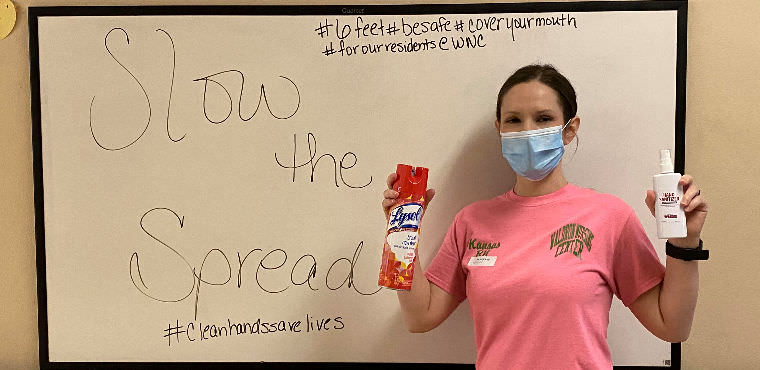
By Kansas Hunt, RN, IPCO (Infection Preventionist and Control Officer) at Waldron Nursing Center, Inc.

Although I admire all effort put forth in the community related to slowing the spread of COVID-19, I feel like many are missing key points. Therefore, I feel obligated to redirect.

Yes, they are encouraging people to stay home. Less social interaction will result in less spread. However, this is not mandated. It is known that people will have to make trips to the store for food and other household necessities to survive. That is why they are encouraging you to first and foremost maintain a 6-foot distance from other that you are not already exposed to (people who live with you are fine.) This distance recommendation is because when we speak, certain movements that are made to form words (th, sh) produce droplets…spit. These droplets can land on a person’s face, which they might later touch and then touch a mucous membrane (eyes, nose, mouth) allowing the virus to invade and possibly infect.

It is true that the only masks effective at keeping airborne participles of this virus out when worn are N95s. That is why they are reserved for healthcare workers who are taking care of people who are known or suspected to have COVID-19. This is absolutely the way it should be. The CDC has approved basic surgical masks for healthcare workers who are caring for a patient who is known or suspected so long as they are not receiving an aerosol producing procedure. These procedures can include breathing treatments, oxygen suctioning, intubation, BIPAP, or CPAP. This is because those procedures can cause the virus particles to become airborne (aerosolized.) In these cases, eye protection is also required. Otherwise, a surgical mask is effective.

Basic surgical masks are effective at keeping germs in. That is why the public has been encouraged to wear them when they go out. If you are sick and don’t know it yet, you could spread it to others through close conversation. If you have a cough, your droplets are contained in your mask, protecting those around you. They are also encouraged because having something over your face is better than nothing right? Please remember to wash your homemade masks daily after use.

Moving on to gloves. Oh, my goodness y’all. Gloves give you a false sense of security. That’s it. Hard truth. Gloves are worn to protect you when touching something that might be contaminated. However, say what you touch is contaminated, then what? What you touch next? Your phone? Your face? Your keys? Your steering wheel? Your cash register? The next customer’s bananas? Congratulations! Now, when you remove the gloves and wash or germ-x your hands, then touch your phone, guess what? The gloves are pointless. Unless you change your gloves after touching each possibly contaminated object, YOU ARE SPREADING MORE GERMS!! And to who? The little elderly lady in line who is now going home to eat one of those bananas? Think about it, please.

Lastly, hand hygiene. Y’all, I am so proud that hand washing and sanitizing is now a thing. But it’s not how often you do it, it’s when. Again, this should be done after touching something dirty and before you touch your phone, keys, food, face, etc. Rubbing down with germ-x every five minutes while you’re out in public, but touching the cart and then rubbing your eye is just wasting precious germ-x.

So, wear a mask if you want, stay 6 feet away from those not in your household, and wash your hands or sanitize before you touch your face and you should be fine.

Please feel free to contact me with any questions you have. I will be glad to help in any way I can. My goal is to keep our residents, employees, and community healthy!

Young Hunters Check 882 During Youth Turkey Hunt

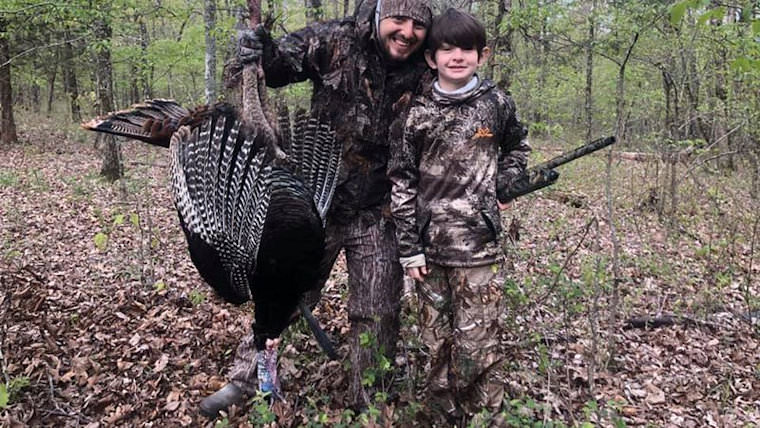
Despite a major cold front and Easter services for many families last weekend, the annual Arkansas youth turkey hunt showed a 27 percent increase from last year. Hunters under the age of 16 checked 882 birds during the two-day hunt to open the 2020 spring turkey season.

The increase came despite more than a few circumstances working against the hunters. The timing of the hunt this year happened to fall on Easter weekend, which may have prevented some hunters from participating, particularly on Sunday morning. Additionally, current concerns over the spread of coronavirus may have kept some hunters at home, as many campgrounds and even one wildlife management area cooperatively managed by the Arkansas Game and Fish Commission and the National Park Service had to be closed. Top all this off with a major storm front that blew through the state Sunday, and conditions were stacked in favor of the turkeys. But many youths and their mentors found a way to bring home their bird during the hunt.

“Opening day had pretty decent conditions, and we saw almost a 50 percent increase in harvest compared to opening day last year,” Wood said. “Sunday did see a drop, but there were still plenty of people able to connect with a bird. There were a few portions of the state that saw a few hours of good conditions on Sunday afternoon that some youth hunters capitalized on.”

Regular turkey season began April 13 and runs through April 28 in turkey zones 1, 2, 3, 4B, 5, 5B, 6, 7, 7A, 8, 9, 10 and 17 with a two-bird bag limit. Zones 1A, 4, 4A, 5A and 9A close April 21 and have a one-bird bag limit. Only youth hunters may harvest immature gobblers (jakes), and they may only take one per season.

Wood says the front that may have affected Sunday’s harvest also brought some cold, windy conditions that have made for a tough start to the regular season.

“It’s been hard to hear the birds gobbling on the limb in the wind during morning hunts,” Wood said. “But, it looks like we’re going to get some good weather to close out the week for hunters continuing to chase birds on into the weekend.”

Wood said there are still many ways hunters can contribute to turkey conservation in Arkansas. One way is to purchase a voluntary $9.50 turkey stamp, now in its inaugural year. The stamp, available through any license dealer or agfc.com is not required to hunt, but the proceeds go to turkey conservation in Arkansas.

“Hunters also can continue to help us track turkey populations by participating in the 2020 Spring Gobbler Hunting Survey right now, and the annual summer Quail and Turkey Brood Survey this summer,” Wood said. “Counting checked birds gives us one piece of the puzzle, but these surveys help us get a clearer picture of how the turkey flock is doing and responding to different management practices.”

Visit https://www.agfc.com/en/hunting/turkey for more information on turkey seasons, harvest summaries and ways you can help in turkey conservation.

Council Meets, Talks Pressing City Business

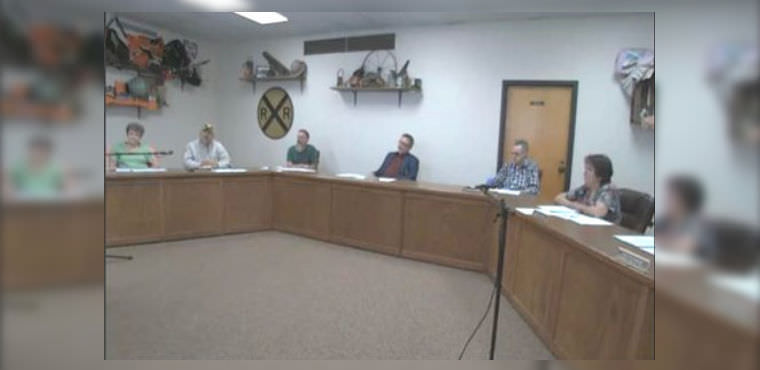
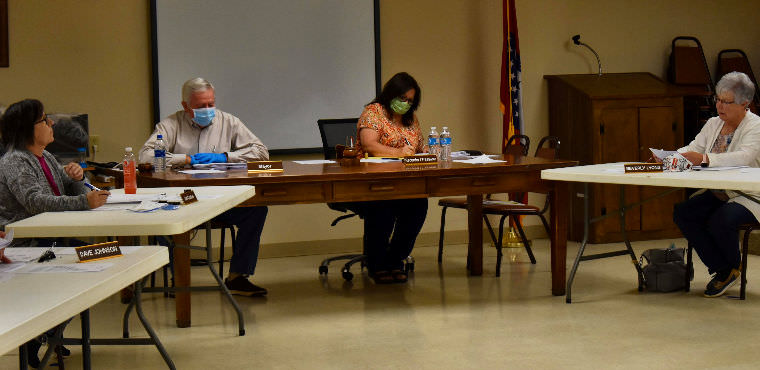
The Mansfield City Council had postponed their meeting in March, and hosted a live stream video of this month’s meeting held Thursday evening, April 16.

All members of the council were present, observing social distancing and utilizing personal protective gear. Also present Mansfield Mayor Buddy Black and Recorder/Treasurer Becky Walker.

After approving the minutes of the previous meeting, the council reviewed the city services reports. Due to COVID-19 restrictions, the Public Works Director, and Fire Chief were not in attendance.

In the matter of unfinished business, Mayor Buddy Black stated that there had been an agreement with the Cities of Hartford and Midland on sewer rate increases.

Next, Black asked the council to review proposed Ordinance 2020-2. The ordinance addresses employee training expense reimbursement. For example, if the city pays for training and that employee quits within one month, they would be responsible for reimbursing the city for the cost of training. The council took no action on the proposed ordinance, and tabled it until the next meeting.

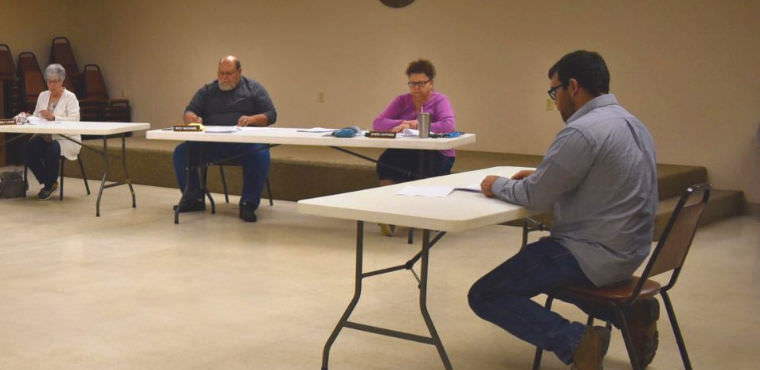
In new business, the council heard from former Mansfield Police Officer Josh Huskey. Huskey had appealed his recent termination to the council. In his appeal, Huskey addressed the reasons for his termination and the cause for his actions.

Josh Huskey addresses the Mansfield City Council.

After hearing from Huskey, Mansfield Police Chief Wayne Robb also addressed the council.

Alderman Rick McDaniel then made the motion to go into executive session. Upon reconvening, the council voted unanimously to support the termination of Huskey.

In the last items of business, the council formally approved the repairs for Slate Road. Mayor Black then announced that the Mansfield Fourth of July Fireworks show would be canceled. Due to the unknown future with COVID-19, and the requirement to purchase the fireworks in advance, the decision was made to cancel this year’s festivities.

Lastly, Black commented on the low numbers of self-reporting with the Census. He urged everyone to participate, and be counted. Additionally, to encourage family and friends to do the same.

With no other items of business, the meeting of the Mansfield City Council was adjourned.